

Introduction
Fillers and reinforcements are a broad class of solid additives used in plastics to reduce cost, modify processing, and tailor performance, with the most significant effects seen in stiffness, dimensional stability, heat resistance, shrinkage control, conductivity, and surface appearance. In plastics engineering, filler is often reserved for relatively inert particulate materials, while reinforcement usually refers to higher-aspect-ratio or higher-strength constituents, especially fibers, fabrics, mats, and certain treated particles that contribute more directly to load bearing and strength enhancement.
The distinction is not always rigid in industrial practice, because many materials occupy a middle ground as reinforcing fillers when particle shape, aspect ratio, surface treatment, or interfacial chemistry allows them to contribute both economic and mechanical benefits. Common examples include calcium carbonate, talc, clay, mica, silica, glass fiber, carbon fiber, carbon black, and a wide range of mineral, organic, and hybrid systems used in thermoplastics, thermosets, elastomers, adhesives, and sealants.
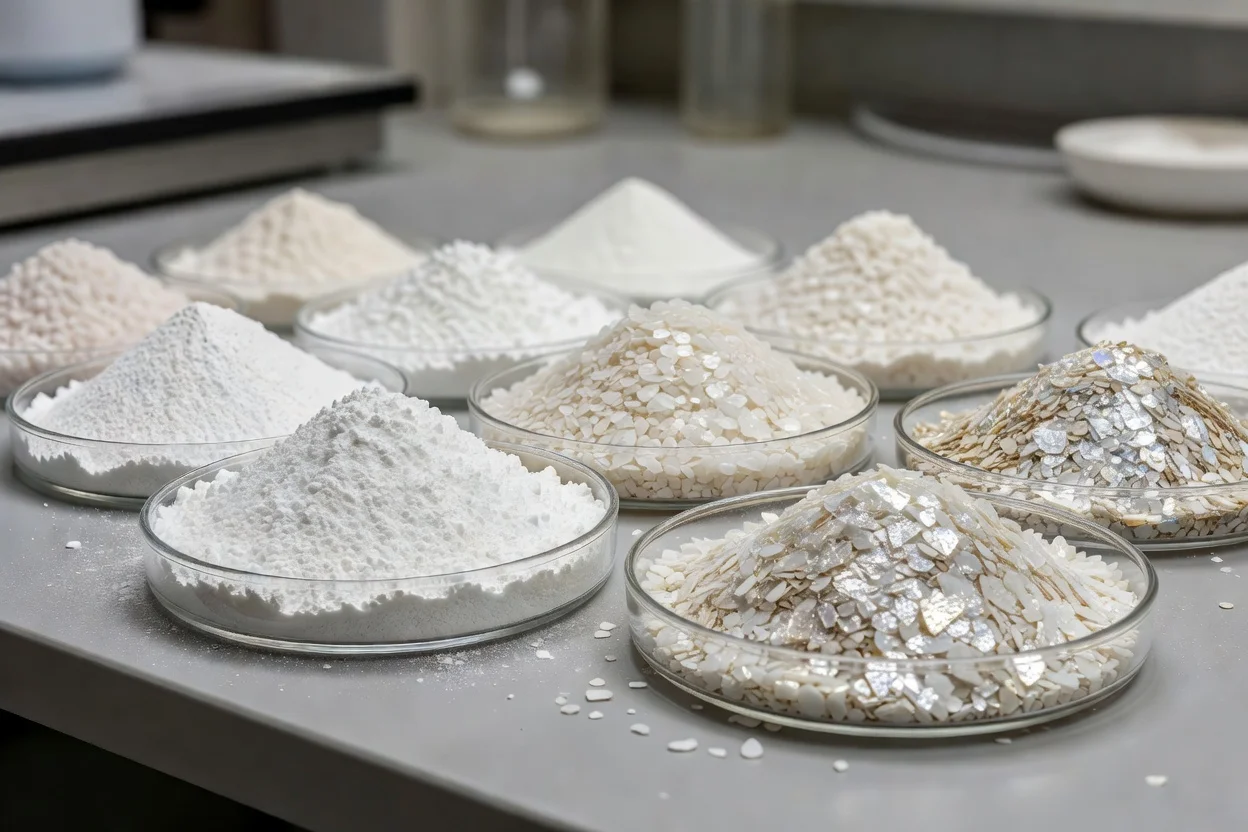
Their importance extends across the plastics value chain. Fillers and reinforcements enable lighter automotive parts, tougher construction materials, better-dimensioned molded components, more durable cable compounds, and improved barrier or flame-retardant formulations, while also supporting cost optimization and circularity strategies such as downgauging and recycled-content compounding. At the same time, they create trade-offs: high filler loadings can increase density, viscosity, abrasion, and recyclability complexity, and some reinforced systems are difficult to separate or remelt economically at end of life.
Recent industry and technical literature increasingly emphasizes multifunctional formulations, where one additive family simultaneously improves mechanical performance, processing stability, and sustainability outcomes. The future of fillers and reinforcements is therefore closely linked to surface-engineered minerals, bio-based fibers, nanofillers, recycled mineral streams, and compatibilized composites designed for lower carbon intensity without sacrificing performance.
History and Development
The use of fillers predates modern plastics and includes mineral extenders in rubbers, natural resins, paints, and early thermosets; industrial plastics later adopted these concepts as compounding became central to polymer performance engineering. Early formulations used inexpensive minerals primarily to reduce resin cost, but the development of composite science revealed that particle size, shape, dispersion, and interface control could produce substantial gains in stiffness, wear resistance, and thermal stability.
The distinction between simple extenders and true reinforcements became more important as structural plastics expanded into automotive, electrical, aerospace, and construction applications. The introduction of glass fiber-reinforced plastics marked a major step in making polymers load-bearing materials rather than merely decorative or low-stress components.
More recently, the field has moved toward surface-treated minerals, coupling-agent chemistry, nano-scale fillers, and hybrid systems combining fibers with particulate fillers. This shift reflects a broader design philosophy: optimize the polymer matrix, filler geometry, and interfacial adhesion together rather than treating additives as simple cost reducers.
Chemical Structure and Key Properties
Fillers and reinforcements are defined more by morphology and function than by a single chemical class. They may be:
- Mineral particulates, such as calcium carbonate, talc, kaolin, mica, silica, and alumina trihydrate.
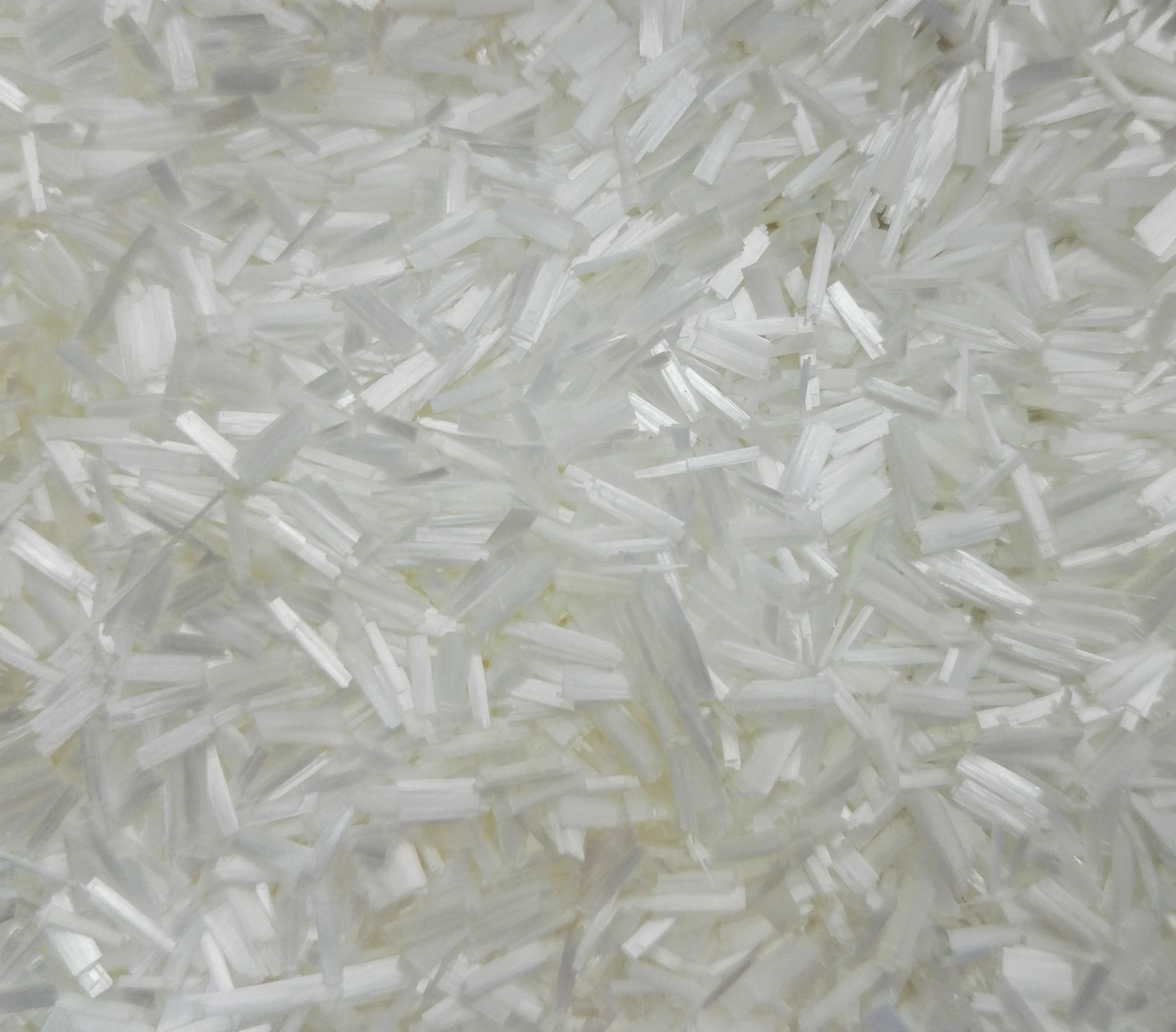
- Fibrous reinforcements, such as glass fiber, carbon fiber, aramid fiber, basalt fiber, or natural fibers like flax, hemp, and jute.
- Carbon-based additives, such as carbon black and certain conductive carbons.
- Specialty micro- and nano-fillers, including hollow glass microspheres, nanoclay, nanosilica, graphene derivatives, and carbon nanotubes.
Main property effects
- Modulus increase: rigid particles and fibers restrict polymer chain mobility, increasing stiffness.
- Strength increase: fibers and well-bonded reinforcing fillers transfer stress from matrix to additive.
- Reduced shrinkage and warpage: fillers lower resin contraction during cooling or cure.
- Improved thermal stability: mineral loadings can raise heat distortion resistance and reduce flammability contribution from organic resin.
- Improved wear and abrasion resistance: especially in rubber, conveyor, and engineering plastic applications.
- Adjusted electrical behavior: carbon black and conductive fillers can increase conductivity, while minerals often preserve insulation.
Important limits and workarounds
- Poor impact retention at high mineral loading → brittle stiffness increase → use impact modifiers, lower aspect-ratio fillers, or hybrid formulations.
- Higher viscosity and more difficult processing → filler-particle interaction and increased melt resistance → use surface treatment, better dispersion, screw design optimization, or coupling agents.
- Reduced elongation and ductility → chain mobility restriction and stress concentration at poorly bonded interfaces → improve interfacial adhesion with silanes, maleic-anhydride-grafted compatibilizers, or fiber sizing.
- Higher density can offset lightweighting gains → mineral mass replaces polymer but not always volume equally → use hollow microspheres, low-density fibers, or optimized loading levels.
Typical formulation examples
- Calcium carbonate in polypropylene at roughly 10–30% is widely used to reduce cost, increase stiffness, and improve dimensional control; the particles act as rigid inclusions that limit matrix deformation.
- Fumed silica at low loading in adhesives or sealants often serves as an anti-sag and rheology modifier; its high surface area creates a particle network that raises yield stress and controls flow.
Production Processes and Raw Feedstocks
Fillers originate from either mined, manufactured, or biologically derived feedstocks.
Mineral fillers
Mineral fillers are commonly produced by quarrying, beneficiation, grinding, classification, and surface treatment. Key feedstocks include:
- Limestone for calcium carbonate.
- Talc ore for platy magnesium silicate minerals.
- Kaolin clay for plate-like aluminosilicates.
- Silica and silica fume from quartz sources or industrial by-products.
- Mica for dimensional stability and barrier improvement.
Processing steps are often crucial because particle size distribution, purity, surface area, moisture content, and aspect ratio strongly influence performance.
Fibrous reinforcements
Glass fiber is produced by melting mineral batches and drawing them into continuous or chopped fibers, followed by sizing to improve processing and adhesion. Carbon fiber is typically derived from precursor polymers and thermally converted into high-modulus filaments, while aramid and basalt fibers serve specialized high-performance niches.
Surface modification and compounding
Most modern reinforcing systems are not used “as mined” or “as made.” They are often:
- Coated with silanes, stearates, or polymer-compatible treatments to improve wetting and interfacial bonding.
- Compounded with coupling agents to reduce debonding and improve stress transfer.
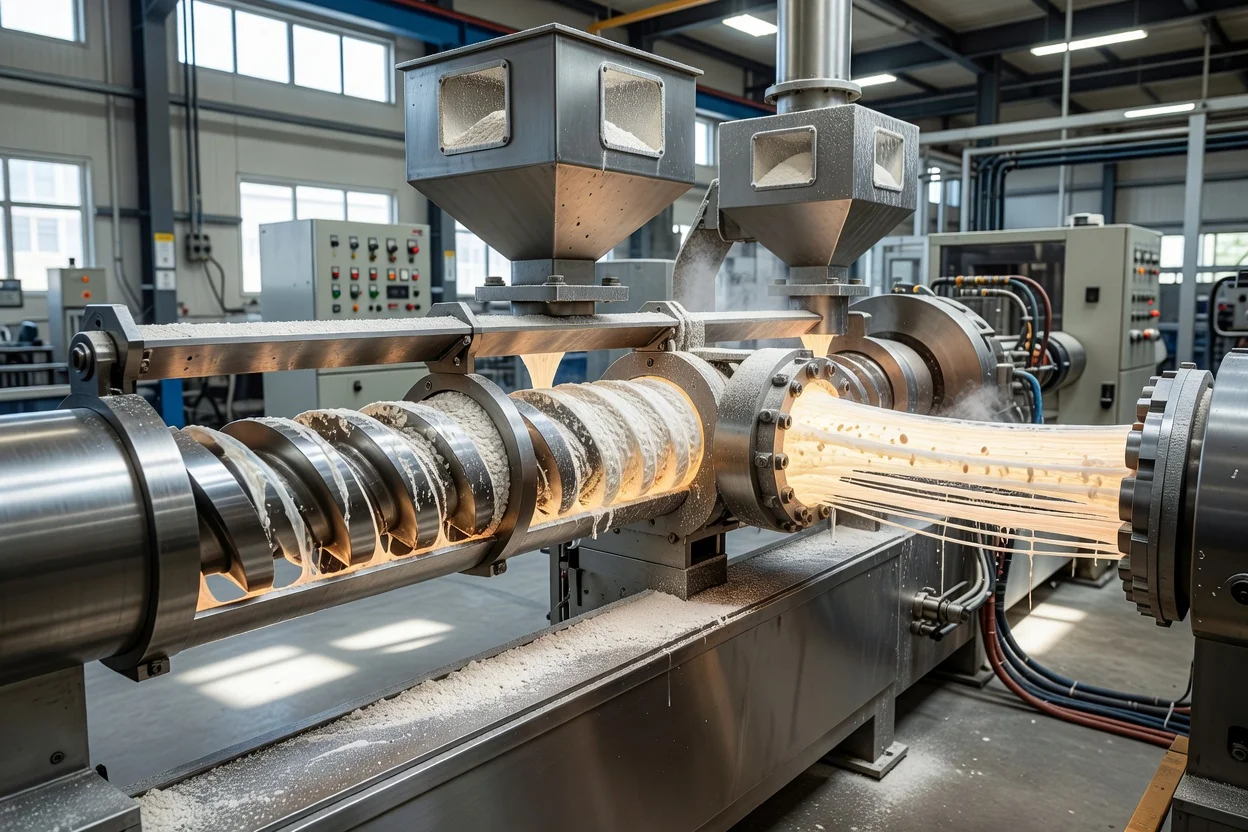
- Dispersed through twin-screw extrusion or intensive mixing to ensure uniform distribution and minimize agglomeration.
The compounding step is often decisive: a well-designed filler can underperform if dispersion is poor, whereas a modest filler can provide outsized benefits when interface chemistry is optimized.
Applications and End-Use Markets
Fillers and reinforcements are used across virtually all major plastics sectors because they allow a balance between cost, performance, and processability.
| End-use sector | Typical additive type | Common polymers/processes | Main function |
|---|---|---|---|
| Automotive | Glass fiber, talc, mica, calcium carbonate | Polypropylene, polyamide, polyester; injection molding, compounding | Stiffness, dimensional stability, weight reduction |
| Construction | Calcium carbonate, talc, glass fiber, silica | PVC, PP, PE, thermosets; extrusion, pipe, profiles | Cost control, rigidity, durability, heat resistance |
| Electrical and electronics | Glass fiber, silica, flame-retardant mineral packages | Epoxy, engineering thermoplastics; molding, laminate fabrication | Insulation, thermal stability, flame performance |
| Packaging | Calcium carbonate, nanoclay, silica, mineral masterbatches | PE, PP, PET; film extrusion, injection molding | Opacity, stiffness, processability, barrier tuning |
| Adhesives and sealants | Kaolin, talc, silica, calcium carbonate | Epoxy, PU, silicone, acrylic systems | Rheology, sag control, strength, permanence |
| Elastomers and tires | Carbon black, silica, mineral fillers | Rubber compounding, vulcanization | Reinforcement, abrasion resistance, traction, wear |
| Consumer goods | Talc, calcium carbonate, glass beads | PP, ABS, nylon; injection molding | Surface finish, stiffness, economy |
| Aerospace and high performance | Carbon fiber, aramid, glass fiber | Epoxy, PEEK, BMI systems | High strength-to-weight ratio, fatigue resistance |
| Medical and specialty | Radiopaque minerals, glass, carbon-based fillers | Specialty polymers and composites | Imaging visibility, stiffness, wear control |
Major use patterns by filler type
- Calcium carbonate: widely used in films, injection molding, pipes, and profiles for cost reduction and stiffness increase.
- Talc: common in polypropylene automotive interior parts and appliance housings for dimensional stability and heat resistance.
- Glass fiber: standard reinforcement in engineering thermoplastics and thermoset composites where high stiffness and strength are required.
- Carbon black: essential in rubber goods and also used for UV protection and conductivity in plastics.
- Silica and silica fume: used in epoxy systems, sealants, and high-performance composites for strength, shrink control, and thixotropy.
- Mica and kaolin: favored in adhesives, sealants, and electrical components for plate-like reinforcement and barrier improvement.
One poor-fit use
- Highly transparent optical lenses are a poor fit for conventional fillers and reinforcements because scattering from particles or fibers usually reduces clarity; low-impurity, nano-engineered systems or unfilled optical-grade polymers are generally preferred.
Environmental and Sustainability Aspects
Fillers and reinforcements can reduce the total polymer fraction in a part, which may lower resin demand and sometimes improve material efficiency, but the sustainability picture is mixed and highly application-dependent. A mineral-filled part may have a lower polymer content, yet the added mass can increase transport impacts, and glass or carbon fiber composites can be difficult to recycle mechanically at high quality.
Recyclability
- Thermoplastic-filled systems are often easier to recycle than thermoset composites because they can be remelted, although property drift after reprocessing remains a challenge.
- Highly reinforced thermosets may require downcycling, grinding, chemical recycling, or recovery in composite-specific recycling streams.
- Mineral fillers can sometimes improve the economics of mechanical recycling by lowering resin content, but excessive contamination or poor compatibilization can reduce reclaimed properties.
Bio-based and natural alternatives
Natural fibers such as flax, hemp, jute, and cellulose-based fillers are increasingly used as lower-density, renewable reinforcement options, particularly in interior automotive parts and consumer products. These materials can offer lower embodied carbon and good stiffness-to-weight performance, but moisture sensitivity, variability, and durability constraints remain important.
Carbon footprint considerations
- Mineral fillers can lower the polymer fraction, but quarrying, grinding, and transport still carry environmental burdens.
- Glass and carbon fiber provide exceptional performance, yet they are energy-intensive relative to many mineral systems.
- Optimization matters more than blanket substitution: the environmental benefit depends on whether the additive reduces part mass, extends service life, or enables a lower-temperature or lower-waste process.
Economic and Global Market Impact
Fillers and reinforcements are among the most economically influential additives in plastics because they directly affect resin usage, part performance, and processing cost. Industrial minerals such as calcium carbonate, talc, kaolin, and silica represent large-volume global markets tied to construction, packaging, automotive, and consumer goods, while glass fiber and carbon fiber support higher-value composite markets.
Leading global producers vary by material class, but the market is broadly shaped by large multinational chemical and minerals suppliers, specialty compounders, and composite fiber producers. Competitive advantage often depends on:
- consistent particle size and purity,
- surface-treatment technology,
- local feedstock access,
- compounding expertise,
- and application-specific technical support.
Because these materials are embedded in so many downstream products, changes in construction activity, vehicle production, appliance demand, and infrastructure spending can strongly influence filler and reinforcement demand.
Current Challenges and Innovations
Main challenges
- Dispersion control: agglomerates can act as defects and reduce strength.
- Interface engineering: poor adhesion between additive and matrix undermines stress transfer.
- Processing wear: hard mineral and glass fillers increase screw, die, and mold abrasion.
- Recycling complexity: multi-material, fiber-reinforced structures are harder to recover economically.
- Property trade-offs: stiffness gains often come with reduced toughness or elongation.
Innovation directions
- Surface-functionalized fillers that bond more effectively with specific polymers.
- Hybrid reinforcement systems combining minerals, fibers, and impact modifiers to balance stiffness and toughness.
- Nanofillers such as nanoclay, nanosilica, graphene, and carbon nanotubes for multifunctional performance at low loadings.
- Natural-fiber composites for lower-density and lower-carbon components.
- Recycled mineral and circular feedstocks that reduce reliance on virgin raw materials.
- Simulation-guided compounding to optimize particle size distribution, orientation, and loading for target properties.
Future Outlook
The future of fillers and reinforcements will likely be defined by performance-per-kilogram, processability, and circularity rather than by cost reduction alone. In automotive, electrical, and construction applications, growth is expected in compounds that combine mineral fillers with engineered interfaces to meet stricter thermal, mechanical, and regulatory requirements.
Several trends are likely to shape the field:
- More multifunctional formulations that integrate reinforcement, flame resistance, conductivity, and dimensional control in one package.
- Greater use of bio-based reinforcements where moisture and variability can be managed.
- Design-for-recycling approaches that favor thermoplastic composites, compatible filler packages, and simpler material architectures.
- Higher demand for low-carbon compounding as customers increasingly evaluate additives by lifecycle impact, not only by upfront cost.
Summary
Fillers and reinforcements are essential plastic auxiliaries that shape the economics, processability, and final properties of polymer products. Fillers are often used to reduce cost and modify behavior, while reinforcements are selected to deliver substantial gains in strength and stiffness, though many modern systems overlap these categories through interface engineering and morphology control. Their role will remain central as plastics manufacturers pursue lighter, stronger, more functional, and more recyclable materials across global end-use markets.
References
- •
What's the difference?™ Fillers & reinforcements. (2022, January 19). Avient. https://www.avient.com/resource-center/knowledge-base/article/what-s-difference-fillers-reinforcementsLink
- •
Part one polymers and fillers. (n.d.). Wiley-VCH. https://application.wiley-vch.de/books/sample/3527323619_c01.pdfLink
- •
Composite fillers and reinforcements selection guide. (2025, January 1). GlobalSpec. https://www.globalspec.com/learnmore/materials_chemicals_adhesives/composites_textiles_reinforcements/fillers_reinforcementsLink
- •
Differences of reinforcing agents and fillers. (2025, January 14). Goyenchemical. https://www.goyenchemical.com/en/product/differences-and-classifications-of-reinforcing-agents-and-fillers/Link
- •
The role of fillers and reinforcements in plastics. (2006, December 5). Taylor & Francis. https://www.tandfonline.com/doi/abs/10.1080/03602557608063110Link
- •
Matrix, reinforcements, fillers, and applications [PowerPoint slides]. (2026, March 5). SlideShare. https://www.slideshare.net/slideshow/comprehensive-overview-of-polymer-composites-matrix-reinforcements-fillers-and-applications/286350257Link
- •
Fillers and reinforcing agents. (2025, January 1). Pollen. https://www.pollen.am/fillers_general_introduction/Link
- •
Reinforcing filler: An overview. (n.d.). ScienceDirect. https://www.sciencedirect.com/topics/engineering/reinforcing-fillerLink
- •
Fillers and reinforcements for plastics. (n.d.). American Chemical Society. https://pubs.acs.org/doi/pdf/10.1021/ba-1974-0134.ch001Link
- •
Fibers are the reinforcement [Lecture notes]. (n.d.). NPTEL. https://archive.nptel.ac.in/content/storage2/courses/105108124/pdf/Lecture_Notes/LNm2.pdfLink
- •
Fillers for enhanced performance. (n.d.). Tangram Technology. https://tangram.co.uk/wp-content/uploads/Plastics-Topics-Fillers-for-enhanced-performance.pdfLink
- •
Introduction to fillers. (n.d.). IIT Kharagpur. http://www.idr.iitkgp.ac.in/xmlui/bitstream/handle/123456789/945/NB14332_Introduction.pdf?sequence=4&isAllowed=yLink
- •
The design of novel strong, stiff and tough polymer composites [Doctoral thesis]. (n.d.). Nottingham Trent University. https://irep.ntu.ac.uk/id/eprint/46459/1/Thesis%20-%20Isaiah%20Fasanya%20N0666228_2021.pdfLink
- •
A review on reinforcing rubber goods for different valuable applications. (n.d.). Egyptian Journal of Chemistry. https://ejchem.journals.ekb.eg/article_275504_8a427985a02bfdce30120187a8c690e9.pdfLink
- •
Plastics molding & manufacturing/Plastic additives. (2022, January 1). Wikibooks. https://en.wikibooks.org/wiki/Plastics_Molding_&_Manufacturing/Plastic_AdditivesLink
- •
16-Polymer additives. (2025, May 3). Scribd. https://www.scribd.com/document/502312226/16-POLYMER-ADDITIVESLink
- •
PDF Classification of composites based on geometry of reinforcement [Lecture notes]. (n.d.). Farabi University. https://farabi.university/storage/files/33331358576911c11ba9cf4134728884_Lecture%202.pdfLink
- •
Filler – Knowledge and references. (2019, September 1). Taylor & Francis. https://taylorandfrancis.com/knowledge/Engineering_and_technology/Materials_science/Filler/Link
- •
Additives, fillers, and reinforcements. (2025, May 18). Scribd. https://fr.scribd.com/document/37411143/afreLink
- •
The influence of fillers on the reinforcement capabilities. (2025, June 27). PMC. https://pmc.ncbi.nlm.nih.gov/articles/PMC12252313/Link
- •
(a) What are fillers and reinforcing agents? (b) What is their purpose? (2025, January 1). Homework.Study.com. https://homework.study.com/explanation/a-what-are-fillers-and-reinforcing-agents-b-what-is-their-purpose.htmlLink
- •
Injection molding: Filler & reinforcement in plastics. (n.d.). Ji-Horng. https://www.ji-horng.com/plastic-injection-molding-filler-and-reinforcementLink
- •
Kaolin applications in adhesives and sealants. (2020, May 9). Jinyang Kaolin. http://www.jinyangkaolin.net/page5?_l=en&article_id=135Link
- •
Silica fume microsilica (white) [PDF]. (n.d.). IMIMG. https://5.imimg.com/data5/SELLER/Doc/2025/5/515334720/OI/QT/AW/236/silica-fume-microsilica-white.pdfLink
- •
Types of reinforcement in composites [PDF]. (2026, April 21). Scribd. https://www.scribd.com/document/804202811/Areviewoncomposites-Selectionanditsapplications-3Link
- •
Polymer composites: Reinforcing fillers. (n.d.). Wiley. https://onlinelibrary.wiley.com/doi/abs/10.1002/0471440264.pst130.pub2Link
- •
Reinforcement fillers for elastomers: Advanced material. (2025, November 10). CFI Carbon Products. https://www.cficarbonproducts.com/reinforcement-fillers-for-elastomers/Link
- •
Plastic fillers: Glass, carbon, and mineral-filled. (2025, July 18). Fictiv. https://www.fictiv.com/articles/plastic-fillers-for-injection-moldingLink
- •
Materials - Additives and fillers. (2018, March 6). Discover Composites. https://discovercomposites.com/what-are-composites/materials/additives-and-fillers/index.htmlLink
- •
Selecting fillers and extenders for adhesives and sealants. (2026, April 30). SpecialChem. https://www.specialchem.com/adhesives/guide/fillers-and-extenders-for-adhesive-sealant-formulationLink
- •
Filler application: An overview. (2016, October 10). ScienceDirect. https://www.sciencedirect.com/topics/engineering/filler-applicationLink
- •
How to reinforce plastics using polymer additives? (2024, August 21). SpecialChem. https://www.specialchem.com/polymer-additives/guide/reinforced-plasticLink
- •
Theory and mechanisms of filler reinforcement in natural rubber. (2013, December 5). RSC Books. https://books.rsc.org/books/edited-volume/1042/chapter/857478/Theory-and-Mechanisms-of-Filler-Reinforcement-inLink
- •
Biomedical applications of polymer-composite materials using fuzzy ARAS method [PDF]. (n.d.). Rest Publisher. https://restpublisher.com/wp-content/uploads/2026/02/Biomedical-Applications-of-Polymer-Composite-Materials-using-Fuzzy-ARAS-Method.pdfLink
- •
Influence of filler material on properties of fiber-reinforced. (2022, January 1). De Gruyter. https://www.degruyterbrill.com/document/doi/10.1515/epoly-2022-0080/htmlLink
- •
Filler. (2004, June 12). Cameo. https://cameo.mfa.org/wiki/FillerLink
- •
Study on filler reinforcement in polymer matrix composites – A review. (n.d.). ScienceDirect. https://www.sciencedirect.com/science/article/abs/pii/S2214785323034843Link
- •
Study of the mechanisms of filler reinforcement in elastomer. (2014, July 14). ACS Publications. https://pubs.acs.org/doi/10.1021/ma500947gLink
- •
Filler (materials). (2007, July 27). Wikipedia. https://en.wikipedia.org/wiki/Filler_(materials)Link