
Introduction
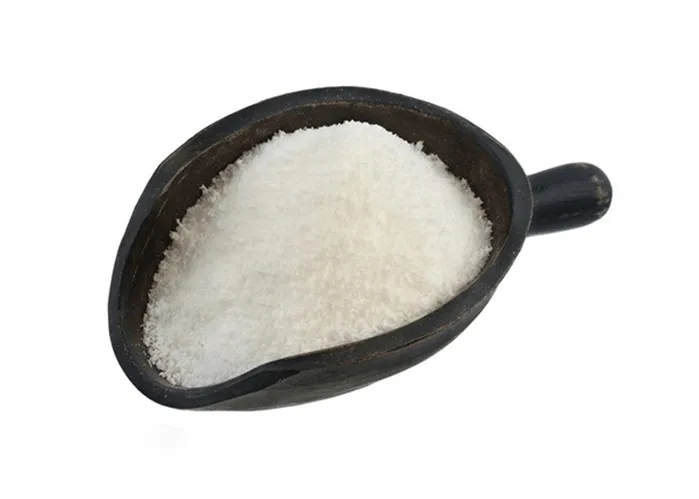
Impact modifiers are polymer additives designed to increase toughness and reduce brittle fracture in plastics by absorbing and redistributing impact energy. They are widely used in compounded resins where a balance of stiffness, processability, clarity, weatherability, and low-temperature impact resistance is required, especially in PVC, engineering plastics, and certain polyolefin systems.
In practical terms, impact modifiers act as a rubbery or elastomeric second phase within a more brittle matrix, promoting controlled deformation mechanisms such as crazing and shear yielding rather than rapid crack growth. This has made them essential in construction profiles, pipe compounds, automotive parts, packaging, consumer goods, and other applications where mechanical shock or drop resistance matters.
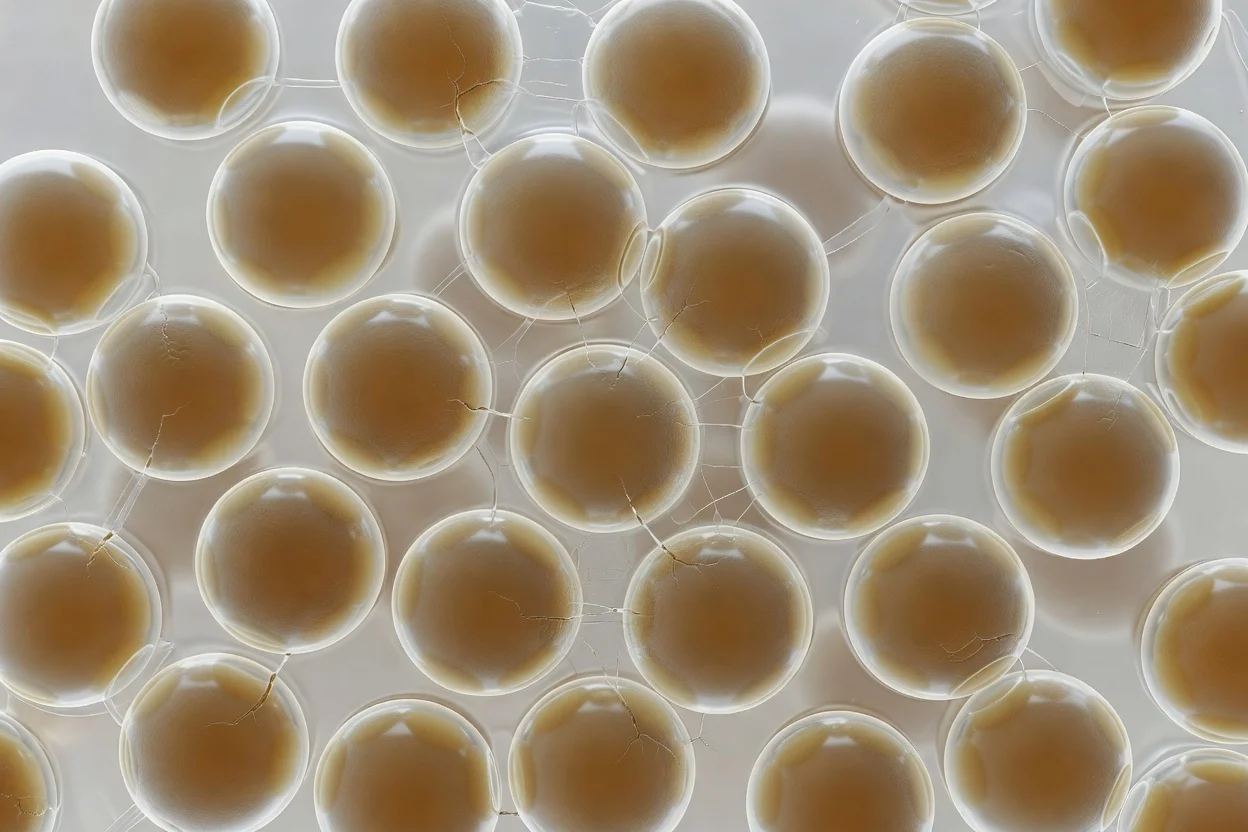
The class includes several major families, notably acrylic, MBS (methyl methacrylate-butadiene-styrene), ABS, CPE (chlorinated polyethylene), EVA, and other elastomeric or core-shell systems tailored to specific resins and service conditions. Recent product development has focused on maintaining optical clarity, improving weathering performance, and enabling compatibility with recycled or bio-based polymer systems.
Environmental considerations are increasingly important because impact modifiers are typically used at relatively low dosages, yet they can affect downstream recyclability, compound formulation complexity, and overall carbon footprint depending on their chemistry and end use. The market is therefore evolving toward more efficient toughening systems, lower-VOC processing packages, and modifiers designed for circular-economy-compatible formulations.
History and Development
The use of impact modifiers grew from broader advances in polymer toughening, especially as rigid thermoplastics such as PVC and styrenics became widely commercialized and needed improved damage tolerance for real-world service. Early systems relied on rubber blends and simple elastomeric additives, while later generations introduced more controlled morphologies such as core-shell particles and compatibilized multiphase structures.
PVC applications were especially important in driving modifier innovation because rigid PVC offers good chemical resistance and dimensional stability but is inherently brittle without modification. Over time, modifier technology expanded from basic toughness improvement toward more specialized objectives, including transparency retention in clear formulations, low-temperature impact performance, improved weathering, and optimized processing on extrusion and injection molding lines.
In parallel, the growth of engineering plastics and automotive lightweighting created demand for modifiers compatible with polyolefins, ABS, and other technical polymers. More recent development has also been influenced by sustainability goals, with suppliers introducing impact modifiers for biopolymers such as PLA and for recycled-content formulations.
Chemical Structure and Key Properties
Impact modifiers are not a single chemical substance but a family of additives whose performance depends on morphology, polarity, glass-transition behavior, particle size, and compatibility with the host polymer. Their common function is to create dispersed soft domains that absorb stress and alter fracture behavior without excessively lowering stiffness or heat resistance.
Main structural types
- Core-shell modifiers: typically a rubbery core surrounded by a harder, chemically compatible shell that improves dispersion and adhesion in the matrix.
- Acrylic modifiers: often used in PVC and transparent systems because they can deliver high impact resistance with relatively good clarity and weatherability.
- MBS and ABS-based modifiers: commonly used in PVC and styrenic systems for strong toughening performance, with formulation choices affecting transparency and thermal stability.
- CPE modifiers: widely used in rigid PVC because chlorinated polyethylene provides flexible domains and good cost-performance balance.
- EVA, EPDM, EPR, and other elastomeric modifiers: used in polyolefins and selected engineering polymers, particularly where low-temperature toughness is important.
Mechanism of action
The dominant toughening mechanism is the initiation of local yielding around dispersed rubber particles, which consumes energy and blunts crack tips. In practical compounding terms, this often shifts failure from sudden brittle fracture to a more ductile mode, increasing resistance to drops, blows, and thermal shock.
Representative limits and workarounds
- Lower stiffness after toughening → rubbery phase increases ductility and can reduce modulus → workaround: use core-shell or acrylic systems with optimized particle size and lower loading, or combine with rigid reinforcements.
- Reduced transparency in some systems → phase separation and refractive-index mismatch scatter light → workaround: select transparent acrylic or MBS grades designed for clear PVC and other optically sensitive applications.
- Compatibility constraints in nonpolar matrices → poor interfacial adhesion limits stress transfer → workaround: use compatibilized elastomeric modifiers, grafted polymers, or maleic-anhydride-functionalized blends where appropriate.
Typical formulation note
Impact modifier loadings are usually chosen to meet a target impact level rather than a fixed standard dosage, but many commercial formulations use low-to-moderate percentages relative to the base resin. For example, acrylic or MBS modifiers in rigid PVC compounds are commonly used in amounts sufficient to improve impact strength while preserving clarity and processing stability, whereas polyolefin toughening may require different elastomer ratios depending on the matrix and end-use severity.
Production Processes and Raw Feedstocks
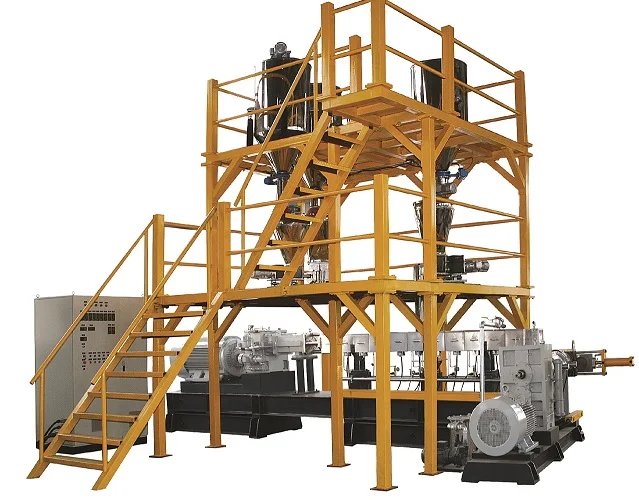
Impact modifiers are produced through polymerization, copolymerization, chlorination, grafting, emulsion processes, or reactive blending, depending on the chemistry. The exact route depends on whether the product is a core-shell acrylic, a chlorinated polyethylene derivative, an MBS terpolymer, or an elastomeric olefin copolymer.
Common raw-material pathways
- Acrylic modifiers: typically derived from acrylic ester chemistry and emulsion polymerization, with shell composition tuned for compatibility and processing behavior.
- MBS modifiers: produced through graft and/or emulsion polymerization routes that combine rubbery and styrenic components to balance toughness and appearance.
- CPE modifiers: made by chlorinating polyethylene, which changes polarity, flexibility, and compatibility with rigid PVC.
- EPDM/EPR/POE-type modifiers: based on olefin polymerization and designed for polyolefin toughening.
- ABS and related systems: produced by grafting and multiphase polymerization routes, with impact performance coming from the dispersed rubber phase.
Process considerations
Modifier performance is highly sensitive to particle size distribution, gel content, shell chemistry, and dispersion quality during compounding. Poor dispersion can reduce impact efficiency, increase haze, and create processing variability, so pellet design and downstream mixing conditions are critical.
Applications and End-Use Markets
Impact modifiers are used wherever a resin must survive sudden loads, low temperatures, repeated handling, or demanding processing operations. Their role is particularly important in rigid formulations that would otherwise be too brittle for service.
Major application sectors
| Sector | Typical resin systems | Common modifier types | Usual performance goal |
|---|---|---|---|
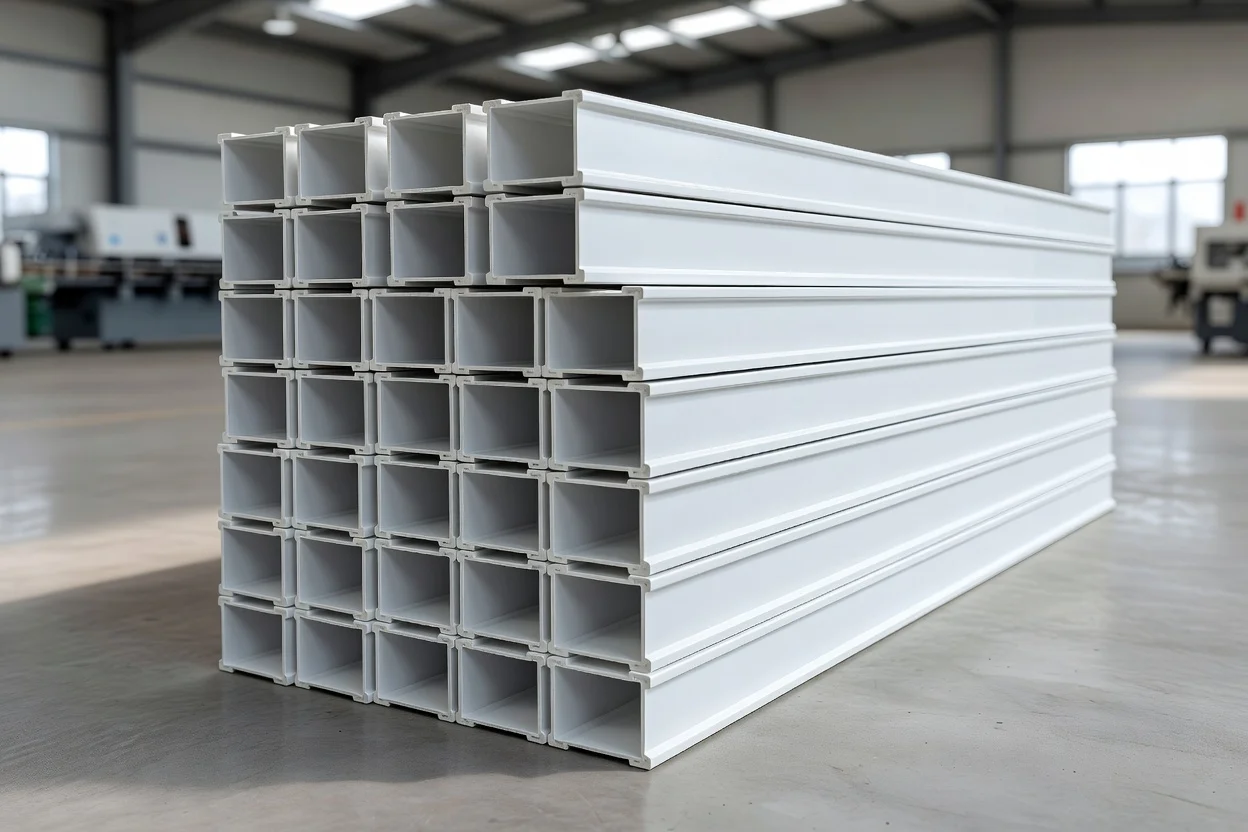
| PVC profiles, siding, windows, fittings | Rigid PVC | Acrylic, MBS, CPE | High impact, weatherability, clarity where needed |
| Pipe and conduit | PVC, some polyolefins | Acrylic, CPE, elastomeric modifiers | Drop resistance, pressure-pipe durability, installation robustness |
| Film and sheet | PVC, selected engineering polymers | Acrylic, MBS, EVA | Tear resistance, handling toughness, process stability |
| Automotive parts | PP, TPO, ABS, PVC | EPDM, EPR, POE, TPE-type modifiers | Low-temperature impact and vibration durability |
| Consumer goods | ABS, PS, PVC, polyolefins | Core-shell, rubber modifiers | Drop resistance and service life |
| Cable and wire | PVC compounds | CPE, acrylic, EVA | Flexibility, impact and abrasion resistance |
| Agriculture and geomembranes | PVC and related flexible compounds | Elastomeric modifiers | Puncture and handling resistance |
| Rotomolding and thick-wall parts | Polyolefins | Elastomeric modifiers | Improved toughness in large parts |
| UHMWPE wear and medical niches | Specialty systems | Application-specific toughening aids | Durability and crack resistance |
| PEX-related systems | Crosslinked polyolefin formulations | Formulation-dependent auxiliaries | Impact tolerance and handling durability |
Notes by end use
- PVC profiles and siding are among the most established markets because rigid PVC is highly efficient structurally but requires toughening for installation and service impacts.
- Low-temperature applications often favor modifiers that retain elasticity in cold conditions, including EPDM- or EPR-based systems in polyolefin matrices.
- Transparent applications such as clear rigid PVC rely on modifiers that do not unduly compromise optical properties, with acrylic and selected MBS grades commonly used.
- A poor-fit use is highly load-bearing, heat-sensitive engineering applications where the modifier would excessively reduce stiffness or heat distortion unless carefully balanced with reinforcement and matrix selection.
Environmental and Sustainability Aspects
Impact modifiers contribute indirectly to sustainability by extending product lifetime, reducing breakage, and enabling downgauging or lighter structures in some applications. In durable goods, improved toughness can lower scrap rates during processing and reduce premature replacement in service.
At the same time, modifiers complicate recycling when they introduce additional phases that are difficult to separate or that alter the properties of the recycled stream. This is especially relevant in mixed-plastic recycling, where additive packages may accumulate and affect melt behavior, clarity, or odor.
Sustainability themes
- Recyclability: impact-modified PVC and multilayer compounds can be recyclable in defined closed-loop systems, but formulation consistency is important.
- Bio-based alternatives: suppliers have begun developing modifiers for biopolymers such as PLA, reflecting growth in renewable-material applications.
- Carbon footprint: the climate impact depends on the chemistry, dosage, and whether the modifier enables service-life extension or material reduction elsewhere in the system.
- Circular design: the preferred direction is toward modifiers that preserve recycling compatibility and work effectively at lower loadings.
Economic and Global Market Impact
Impact modifiers are a mature but innovation-driven niche within the additives industry, with demand closely linked to PVC construction products, automotive lightweighting, consumer durables, and specialty packaging. Because they are used across many resin families, the market is diversified and less dependent on a single end-use sector than commodity polymers themselves.
Leading suppliers typically include large global additives and polymer companies with portfolios spanning acrylic, core-shell, MBS, and elastomeric technologies. Commercial competition is often based on impact efficiency, clarity retention, weatherability, process stability, and cost-performance balance rather than on the lowest raw-material price alone.
Current Challenges and Innovations
The main technical challenge is to improve toughness without compromising other key properties such as rigidity, transparency, heat resistance, weldability, or weathering performance. In addition, the additive must remain effective across different processing windows and resin lots, including recycled or bio-based feedstocks.
Active innovation areas
- Core-shell optimization for better energy absorption with less loss of stiffness.
- Clear-formulation development for transparent PVC and specialty sheet applications.
- Weatherable acrylic systems for outdoor building products and long-life profiles.
- Recycling-compatible modifiers that minimize contamination of recovered polymer streams.
- Biopolymer toughening for PLA and other renewable resins, where brittleness is often a major limitation.
A practical formulation example is the use of acrylic impact modifiers in clear rigid PVC to raise impact resistance while preserving transparency and outdoor durability, whereas EPDM-based modifiers are often chosen in polyolefins when low-temperature toughness is more important than optical clarity.
Future Outlook
The future of impact modifiers is likely to be shaped by three converging forces: higher-performance lightweight materials, circular-economy requirements, and the expansion of biobased and recycled polymer streams. Demand should remain strong in PVC and automotive applications, but innovation will increasingly focus on additives that are more selective, more efficient at lower loadings, and more compatible with recycling.
More broadly, impact modifiers are evolving from simple toughness enhancers into multifunctional formulation tools that can influence appearance, weatherability, processing latitude, and sustainability performance at the same time. That shift is likely to strengthen their role in the broader plastics value chain, especially in compounds that must deliver reliable service with less material and lower environmental burden.
Summary
Impact modifiers are specialized additives that toughen plastics by introducing a deformable phase that absorbs impact energy and suppresses brittle cracking. They are central to PVC, polyolefin, ABS, and other formulations used in construction, automotive, consumer, and industrial applications, and their development is increasingly shaped by clarity, weatherability, recyclability, and low-carbon material design.
References
- •
Course modifier definition in psychology. (n.d.). Arab Psychology. https://encyclopedia.arabpsychology.com/course-modifier/Link
- •
Impact modifiers: How to select the right grade for plastics? (2025, July 18). SpecialChem. https://www.specialchem.com/polymer-additives/guide/impact-modifiers-for-polymersLink
- •
Impact modifier - Thermoplastic polymers, elastomers and ... (2022). Mexpolimeros. https://www.mexpolimeros.com/eng/impact%20modifier.htmlLink
- •
What are impact modifiers? Their role in the plastics industry. (2025, April 8). Vichem. https://vichem.vn/en/what-are-impact-modifiers-their-role-in-the-plastics-industry/Link
- •
Impact modifiers. (2025, November 5). Dow. https://www.dow.com/en-us/product-technology/pt-plastic-additives/pg-plasticadd-impact-modifiers.htmlLink
- •
Understanding impact modifiers variations and their ... (2025, May 18). HTX Chem. https://www.htxchem.com/blog/impact-modifier/Link
- •
Impact modifiers in injection molding: Types selection and ... (2026, March 10). Evokpoly. https://evokpoly.com/feeds/blog/impact-modifiers-injection-moldingLink
- •
What are the types of impact modifiers? (2021, January 26). SL Chemtech. https://www.slchemtech.com/news/what-types-impact-modifiers.htmlLink
- •
3.3: Impact modifiers. (2005). GlobalSpec. https://www.globalspec.com/reference/50632/203279/3-3-impact-modifiersLink
- •
The ultimate checklist for choosing the best impact modifier ... (2025, July 15). HTX Chem. https://www.htxchem.com/blog/ultimate-checklist-for-choosing-impact-modifier/Link
- •
Hua Zhou's post. (2025, January 3). LinkedIn. https://www.linkedin.com/posts/hua-zhou-2a6a262bb_what-is-activity-7280811791054479361-ykYoLink
- •
Mastering impact modifiers in polymer chemistry. (2025, May 30). Number Analytics. https://www.numberanalytics.com/blog/ultimate-guide-impact-modifiers-polymer-chemistryLink
- •
Impact modifiers. (n.d.). Jai Chemicals. https://jaichemicals.in/impact-modifiers/Link
- •
Impact modifier - Knowledge. (2023, July 24). CJSPVC. https://www.cjspvc.com/info/impact-modifier-84660466.htmlLink
- •
Impact modifier. (2023, May). Additives for Polymer. https://www.additivesforpolymer.com/impact-modifier/Link
- •
Impact modifiers. (2025, June 26). SpecialChem. https://www.specialchem.com/polymer-additives/pf-impact-modifiersLink
- •
CPE impact modifier vs acrylic impact modifier: Key differences. (2025, March 14). SD Hairuite Chemical. https://www.sdhairuitechemical.com/blog/cpe-impact-modifier-vs-acrylic-impact-modifier.htmlLink
- •
Impact modifier masterbatch. (2025, June 19). LinkedIn. https://www.linkedin.com/pulse/impact-modifier-masterbatch-praveen-vishwakarma-pzu7fLink
- •
Key points – bias, confounding, and effect modification. (n.d.). Population Medicine. https://www.populationmedicine.org/sites/default/files/2025-03/CEPH%201_Session%204_Bias%20Confounding%20Effect%20Modification%20Key%20Points_0.pdfLink
- •
Modifier genes: Unlocking your hidden psychological potential definition in psychology. (n.d.). Arab Psychology. https://encyclopedia.arabpsychology.com/modifier/Link
- •
Impact modifier. (2010). Ataman Chemicals. https://www.atamanchemicals.com/impact-modifier_u35901/Link
- •
Impact modifier. (2025, January 20). Alibaba. https://www.alibaba.com/showroom/impact-modifier.htmlLink
- •
The modifier effect and property mutability. (n.d.). ScienceDirect. https://www.sciencedirect.com/science/article/abs/pii/S0749596X1000104XLink
- •
Confounding and effect modification. (n.d.). ICTR Johns Hopkins. https://ictr.johnshopkins.edu/wp-content/uploads/2013/07/7.23.13.BandeenRoche.Confounding-Comparing-Two-Groups.pdfLink
- •
Modeling the impact of modifiers on emotional statements [PDF]. (n.d.). EPFL. https://www.epfl.ch/labs/gr-pu/wp-content/uploads/2022/07/Modeling-the-Impact-of-Modifiers-on-Emotional-Statements.pdfLink
- •
Impact modifiers: How to make your compound tougher. (n.d.). ScienceDirect. https://www.sciencedirect.com/science/article/pii/S1464391X0400203XLink
- •
The modifier effect and property mutability [PDF]. (n.d.). City University of London. https://openaccess.city.ac.uk/id/eprint/1004/1/Hampton%20Passanisi%20&%20Jonsson%20JML%202011.pdfLink
- •
The use of semantic modifiers in the Asian ... [PDF]. (n.d.). Utrecht University. https://studenttheses.uu.nl/bitstream/handle/20.500.12932/36740/Scriptie%20Kristof%20van%20Boven.pdf?sequence=1Link
- •
Chapter 7: Effect modification and interaction. (n.d.). ENCePP. https://encepp.europa.eu/encepp-toolkit/methodological-guide/chapter-7-effect-modification-and-interaction_enLink
- •
Effect modification. (2020, October). Oregon State University. https://open.oregonstate.education/epidemiology/chapter/effect-modification/Link
- •
The role of reasoning and pragmatics in the modifier effect. (n.d.). Wiley. https://onlinelibrary.wiley.com/doi/pdf/10.1111/cogs.12815Link
- •
Confounders and effect modification … … what is the ... (2020, August 12). Medium. https://medium.com/@conankoh/confounders-and-effect-modification-what-is-the-difference-between-them-e7a1d1adbfcdLink
- •
Modifier在线翻译_英语. (n.d.). Dict.cn. http://dict.cn/big5/modifierLink
- •
Pengubah efek dalam penelitian [PDF]. (2025, November 25). Scribd. https://id.scribd.com/presentation/666373226/Effect-Modifier-Pengubah-Efek-Dewanto-AndokoLink
- •
Qualifiers and intensifiers: A grammar guide. (2018, September 24). K.L. Wightman. https://klwightman.com/2018/09/24/qualifiers-intensifiers-grammar/Link
- •
Welcome to this presentation focused on effect modification [PDF]. (n.d.). OUHSC. https://osctr.ouhsc.edu/sites/default/files/2020-02/Module%208%20Part%20V%20Notes.pdfLink
- •
Treatment effect modifiers in a randomized trial of the ... [PDF]. (n.d.). University of Manchester. https://pure.manchester.ac.uk/ws/files/198256133/Humphrey_et_al_GBG_CACE_JCCP_accepted_version.pdfLink
- •
The modifier effect in within-category induction: Default [PDF]. (n.d.). City University of London. https://www.staff.city.ac.uk/~sc318/PDF%20files/Jonsson%20&%20Hampton%20LCP.pdfLink
- •
Microsoft Word - CogSci-final.doc [PDF]. (n.d.). City University of London. https://www.staff.city.ac.uk/hampton/PDF%20files/cogsci09.pdfLink
- •
Effect modification (statistical interaction) [PDF]. (n.d.). Alex Kaizer. https://www.alexkaizer.com/bios_6618/files/bios6618/W12/effect_modification.pdfLink
- •
Impact modifiers for toughness and durability. (2026, June 23). The Compound Company. https://thecompoundcompany.com/products/impact-modifiers/Link
- •
Acrylic impact modifiers. (n.d.). Arkema. https://plasticadditives.arkema.com/en/technology/acrylic-impact-modifiers/Link
- •
Four types of effect modification: A classification based... : Epidemiology. (n.d.). LWW Journals. https://journals.lww.com/epidem/pages/articleviewer.aspx?year=2007&issue=09000&article=00006&type=FulltextLink
- •
Measures of modifiers of the response to stress [PDF]. (n.d.). APA. https://www.apa.org/pubs/books/supplemental/Preventive-Stress-Management-Organizations-Second-Edition/copingmeasures.pdfLink
- •
تعديل التأثير والتفاعل والوساطة: نظرة عامة على الرؤى ... (2017, June 8). PMC. https://pmc.ncbi.nlm.nih.gov/articles/PMC5476432/Link
- •
Understanding what makes behavior modification work. (2018, October 2). Psychology Today. https://www.psychologytoday.com/us/blog/comparatively-speaking/201810/understanding-what-makes-behavior-modification-workLink
- •
The harmful effects of behaviour modification. (2023, August 5). Project Haans. https://projecthaans.com/the-harmful-effects-of-behaviour-modification/Link
- •
Cognitive bias modification for threat interpretations. (2020, April 17). PMC. https://pmc.ncbi.nlm.nih.gov/articles/PMC7299169/Link
- •
Common behavioral health modifiers. (2024, August 19). Medwave. https://medwave.io/2024/08/common-behavioral-health-modifiers/Link
- •
Effects of psychological capital on mental health and ... [PDF]. (n.d.). University of Nebraska–Lincoln. https://digitalcommons.unl.edu/cgi/viewcontent.cgi?article=1008&context=pdharmsLink