

Introduction
Epoxy resins are a family of reactive thermosetting polymers defined by epoxide-containing oligomers or prepolymers that cure into tightly crosslinked networks with high adhesion, chemical resistance, low shrinkage, and strong electrical insulation properties. In plastics and composites, they occupy a central role as matrix resins, structural adhesives, protective coatings, encapsulants, and casting compounds, with performance tailored by resin backbone, curing agent, stoichiometry, fillers, and modifiers.
From a materials perspective, epoxy resins are valued less for a single intrinsic property than for the way their formulation can be engineered to balance toughness, stiffness, viscosity, cure speed, glass transition temperature, and environmental durability. The dominant commercial chemistries include bisphenol-A-based liquid epoxy resins, higher-molecular-weight solid grades, novolac epoxies for higher chemical and heat resistance, and specialty low-chlorine, waterborne, or flame-retarded variants.

Historically, epoxies became commercially important in the mid-20th century as manufacturers learned to exploit epoxide ring-opening reactions to build durable, low-shrinkage networks for coatings, adhesives, electronics, and fiber-reinforced composites. Their importance has since expanded alongside growth in infrastructure protection, wind energy, electronics miniaturization, and lightweight composites.
At the same time, epoxy resins face persistent sustainability challenges because most conventional grades are derived from fossil feedstocks and are difficult to recycle once crosslinked. Industry and research efforts are therefore focusing on lower-chlorine production, bio-based epoxies, recyclable thermosets, solvent-free or waterborne systems, and improved life-cycle performance in demanding applications.
History and Development
Epoxy chemistry emerged from the broader development of thermosetting resins and polymer reaction engineering in the first half of the 20th century. Commercial success followed the identification of practical synthesis routes for glycidyl ether resins, especially those based on bisphenol-A and epichlorohydrin, which enabled reproducible manufacture at industrial scale.
The technology matured as formulators recognized that epoxies could be adapted across many end uses simply by changing the hardener, accelerator, diluent, filler, or pigment package. This flexibility helped epoxy resins displace or complement older thermosets in high-performance coatings, structural bonding, electronics encapsulation, and composite matrices.
In recent decades, development has shifted toward lower-emission processing, reduced residual halogen content, better UV stability, tougher networks, and compatibility with circular-economy targets. Patents and product announcements also show continuing work on ultra-fast curing, low-temperature cure, and improved processing efficiency for coatings and advanced manufacturing.
Chemical Structure and Key Properties
Epoxy resins are reactive oligomers or polymers containing at least two epoxide groups, also called oxirane rings, that undergo ring-opening cure reactions with amines, anhydrides, phenols, thiols, or other hardeners. The curing step creates a three-dimensional network rather than a melt-reprocessable plastic, which is why epoxy systems are classified as thermosets.
Representative structure types
- Bisphenol-A diglycidyl ether types: the most common general-purpose liquid epoxies, valued for balanced viscosity, adhesion, and cost.
- Bisphenol-F types: generally lower viscosity and often used where improved handling or higher solids content is needed.
- Novolac epoxies: higher functionality and higher crosslink density, typically used where chemical and thermal resistance are prioritized.
- Specialty epoxies: low-chlorine, waterborne, flexible, flame-retarded, and reactive-diluent systems for application-specific performance.
Key performance profile
| Property | Typical significance |
|---|---|
| Adhesion | Strong bonding to metals, glass, concrete, wood, ceramics, and fibers. |
| Chemical resistance | Good resistance to many fuels, solvents, oils, and alkaline environments. |
| Shrinkage on cure | Low shrinkage compared with many other thermosets, supporting dimensional accuracy. |
| Electrical insulation | High dielectric strength makes epoxies important in electronics and power equipment. |
| Mechanical strength | Cured epoxies can deliver high tensile, flexural, and compressive properties, especially in filled or reinforced systems. |
| Thermal stability | Formulation-dependent; high-performance systems can reach elevated glass transition temperatures. |
Real technical limits and workarounds
- Poor ultraviolet resistance → aromatic epoxy networks yellow and embrittle under prolonged UV exposure → use UV absorbers, hindered amine light stabilizers, pigmented topcoats, or aliphatic/specialty epoxy systems.
- Brittleness in unmodified high-crosslink formulations → dense network structure increases stiffness but reduces crack tolerance → add tougheners, rubber modifiers, core-shell particles, thermoplastic tougheners, or adjust crosslink density.
- Poor reprocessability after cure → thermoset crosslinking prevents remelting → use design-for-repair, mechanical recycling of composites in limited cases, or emerging recyclable covalent-network concepts.
- Residual chlorinated impurities in conventional production → synthesis routes using epichlorohydrin can leave trace chlorides if purification is insufficient → apply low-chlorine grades, improved washing, and tighter process control.
Formulation examples
- 0.5–5 wt% reactive diluent may be used to reduce viscosity while participating in cure, which improves wetting and fiber impregnation without simply evaporating like a solvent.
- Around 1–5 wt% phosphorus flame retardant can be incorporated in some epoxy formulations to improve fire performance, typically by promoting char formation and reducing flammability.
Production Processes and Raw Feedstocks
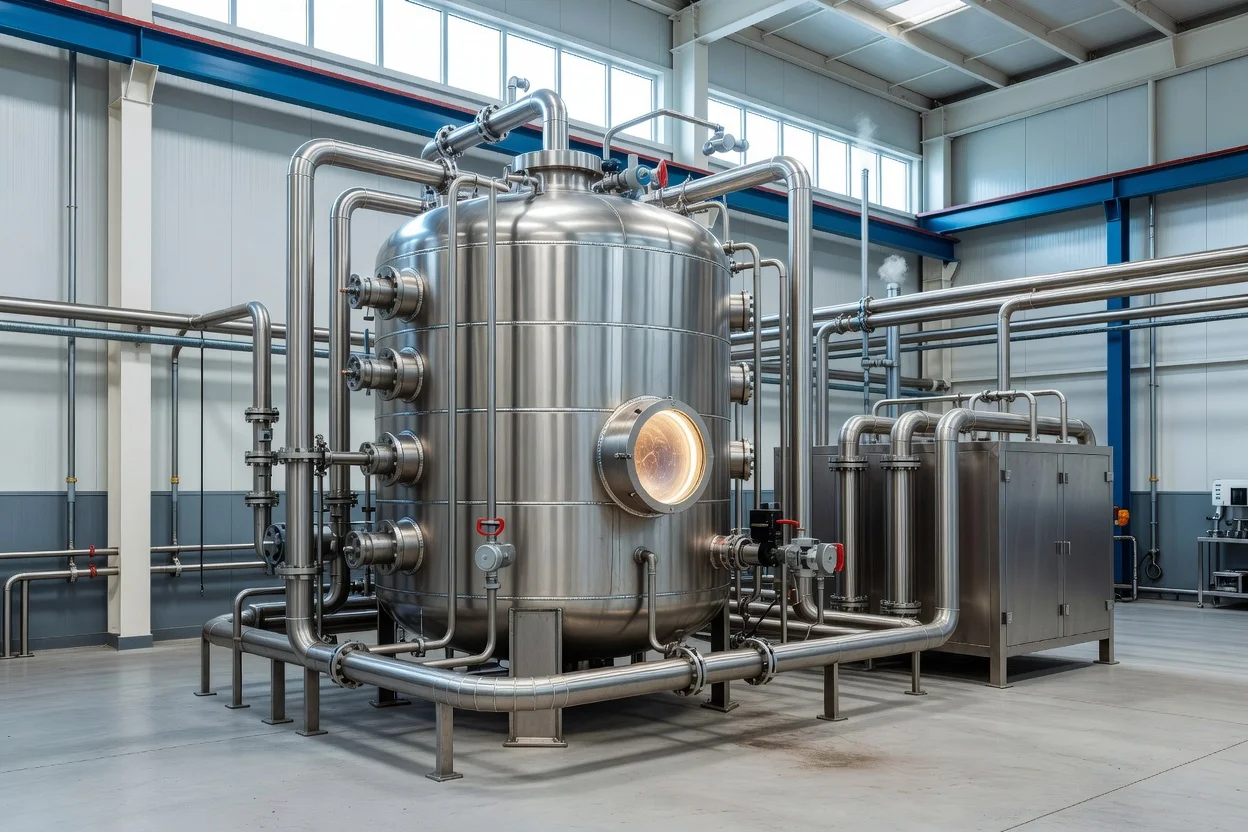
The most common commercial route for liquid epoxy resin uses bisphenol-A and epichlorohydrin in the presence of an alkaline catalyst, followed by dehydrohalogenation, phase separation, washing, and purification. Solid epoxy resins are typically produced by advancing the liquid resin to higher molecular weight, increasing viscosity and functionality.
Main feedstocks
- Bisphenol-A or related phenols: provide the aromatic backbone and contribute to rigidity and heat resistance.
- Epichlorohydrin: introduces the epoxide functionality and is central to the dominant industrial route.
- Sodium hydroxide or other bases: drive dehydrohalogenation and ring closure during synthesis.
- Solvents and wash water: used in purification, separation, and viscosity control in certain process schemes.
- Additives and modifiers: chain extenders, reactive diluents, fillers, pigments, tougheners, and flame retardants are introduced later in compounding.
Manufacturing sequence
- React phenolic precursor with epichlorohydrin or related halohydrin chemistry.
- Carry out alkaline dehydrohalogenation to form the epoxide ring.
- Separate salt by-products and remove excess epichlorohydrin.
- Wash and purify the resin to reduce residual caustic, chloride, and color.
- Convert liquid resin to solid grades by controlled advancement when needed.
- Blend in application-specific additives for final performance.
This manufacturing logic is important because final resin properties are strongly influenced by epoxide equivalent weight, molecular weight distribution, residual chloride, viscosity, and color.
Applications and End-Use Markets
Epoxy resins are used wherever a combination of adhesion, chemical resistance, structural strength, and dimensional stability is required.
Major end uses
| Sector | Typical epoxy grade or system | Why it is used |
|---|---|---|
| Protective coatings | Liquid bisphenol-A or bisphenol-F epoxies with amine or polyamide curing agents | Corrosion protection on steel, concrete, tanks, pipelines, and marine structures. |
| Structural adhesives | Toughened liquid epoxies, paste systems, two-part adhesives | Bonds metals, composites, glass, ceramics, and concrete with high cohesive strength. |
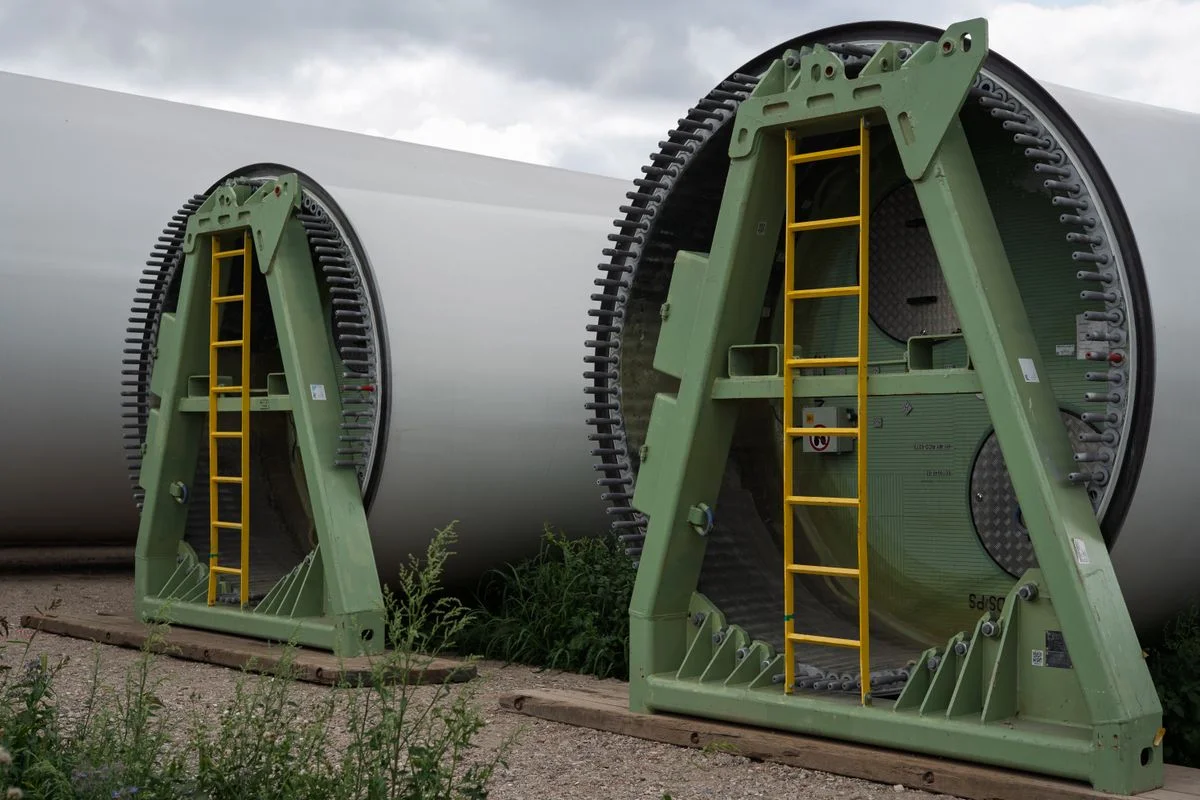
| Composites | Low-viscosity laminating epoxies, infusion systems, prepreg resins | Fiber wet-out, load transfer, fatigue resistance, and high performance in aerospace, wind, automotive, and marine parts. |
| Electrical and electronics | Encapsulants, potting compounds, PCB laminates, cast resins | Electrical insulation, moisture resistance, and dimensional stability. |
| Construction | Grouts, repair mortars, anchoring systems, flooring | High bond strength and resistance to chemicals and wear. |
| Tooling and industrial fabrication | Mold-making systems, casting resins, fixtures | Accurate replication and low shrinkage during cure. |
Usual process-property match
- Film and coating applications typically use lower-viscosity liquid resins that can wet substrates and cure into continuous barrier films.
- Composite infusion and prepreg systems require carefully balanced viscosity and cure kinetics to enable fiber impregnation before gelation.
- Electrical encapsulation uses low-ionic, low-shrinkage grades to protect circuits and maintain dielectric performance.
- High-chemical-resistance linings often use novolac or similarly high-functionality epoxies for aggressive process environments.
A poor-fit use
Epoxy resins are generally a poor fit for high-volume, low-cost flexible packaging, because cured epoxies are thermosets, relatively rigid, and not suited to the low-cost, heat-sealable, fully recyclable structures typically used in packaging films.
Environmental and Sustainability Aspects
Epoxy resins present a mixed sustainability profile. On the positive side, they extend the service life of infrastructure, reduce corrosion losses, enable lightweight composites, and improve energy efficiency in transportation and wind power. These service-life gains can materially offset impacts associated with resin manufacture in many applications, especially where failure avoidance is economically and environmentally costly.
On the negative side, many mainstream epoxy systems are still fossil-based and depend on feedstocks linked to petrochemical supply chains. Their cured networks are not readily remelted, which makes conventional mechanical recycling difficult and often limits end-of-life outcomes to downcycling, grinding as filler, incineration with energy recovery, or specialized recovery routes.
Current sustainability directions
- Bio-based epoxies: derived partly from bio-aromatics, plant oils, lignin-derived precursors, or other renewable intermediates, aiming to reduce fossil carbon intensity.
- Low-chlorine and higher-purity grades: reduce residual halogen content and improve regulatory and performance profiles.
- Waterborne and high-solids formulations: reduce solvent emissions during application.
- Recyclable thermosets and reworkable chemistries: seek reversible covalent bonding or cleavable network architectures, though industrial penetration remains limited.
- Long-life design: in coatings and composites, extending service life remains one of the most effective sustainability strategies for epoxies.
Economic and Global Market Impact
Epoxy resins are a major thermoset category in the global plastics and specialty materials economy because they serve infrastructure, electrification, mobility, wind energy, and electronics supply chains. Demand is closely tied to industrial production, construction spending, energy infrastructure, and composite adoption rather than to consumer packaging volumes.
The competitive landscape is shaped by large integrated resin producers and specialty formulators. Prominent global names include Westlake Epoxy, Hexion, Olin, Aditya Birla Chemicals, Kukdo Chemical, and Nan Ya Plastics, along with regional producers and downstream formulators. Product differentiation is often based on viscosity, color, chlorine level, cure speed, purity, and regulatory compliance rather than on simple commodity pricing alone.
Supply-chain economics are influenced by the cost and availability of bisphenol-A, epichlorohydrin, energy, freight, and environmental compliance costs associated with halogenated process streams and wastewater treatment. As a result, process efficiency and feedstock diversification remain important strategic levers.
Current Challenges and Innovations
Key challenges
- End-of-life management: cured thermosets remain difficult to recycle at scale.
- Health and regulatory scrutiny: workplace handling, residual monomers, and certain precursor chemistries require careful exposure control and compliance management.
- Brittleness and crack sensitivity: especially in highly crosslinked unmodified systems.
- UV and weathering limits: necessitate stabilization in outdoor service.
- Sustainability pressure: demand is rising for lower-carbon, lower-solvent, and bio-based alternatives.
Notable innovations
- Toughened epoxy matrices for composites and structural adhesives, using rubber, thermoplastic, or particle modifiers to improve impact resistance.
- Low-viscosity and reactive-diluent systems that improve processing for infusion, electrical casting, and high-solids coatings.
- Flame-retarded epoxy systems incorporating phosphorus-based additives for electronics and transport applications.
- Ultra-low-temperature and fast-cure systems for powder coatings and high-throughput processing.
- Low-chlorine formulations aimed at higher electrical reliability and better purity control.
Future Outlook
Epoxy resins are likely to remain indispensable in high-performance coatings, composites, adhesives, and electronics because few materials combine their blend of adhesion, chemical resistance, and formulation flexibility. Growth is expected to be strongest where durable infrastructure, electrification, and lightweight materials create high value per kilogram of resin used.
The most important medium-term shift will be toward more circular and lower-carbon epoxy systems, including renewable feedstocks, improved processing efficiency, and network chemistries designed for repair or eventual depolymerization. In parallel, performance targets will continue to rise, especially for wind turbine blades, electrical insulation, aerospace structures, and corrosion protection in harsher service environments.
Summary
Epoxy resins are high-performance thermosets whose commercial significance comes from their curable epoxide chemistry, exceptional adhesion, chemical resistance, and broad formulation latitude. They are foundational in coatings, adhesives, composites, and electrical materials, but their future will depend increasingly on sustainability improvements, better end-of-life strategies, and continued innovation in cure chemistry and feedstocks.
References
- •
About Epoxy Resin — History, Chemistry, Curing, Properties. (n.d.). https://epoxy.ac/about-epoxy-resin.htmlLink
- •
An Overview of Epoxy Resins. (2019, October 3). https://dragonplate.com/an-overview-of-epoxy-resinsLink
- •
Applications of Epoxy Resin: Adhesives, Coatings, and .... (2025, October 2). https://www.intechopen.com/chapters/1222710Link
- •
Epoxy resin - A113. (2021, March 11). https://compositeskn.org/KPC/A113Link
- •
What Is Epoxy Resin? From Chemistry to Aerospace Applications. (2025, September 5). https://www.jotamachinery.com/academy/advanced-composite-materials/what-is-epoxy-resin/Link
- •
What Is Epoxy Resin? Properties & Uses Explained | ConRo Blog. (n.d.). https://www.conro.com/Blog/What-is-epoxy-resin/Link
- •
Résines époxy EP. (n.d.). https://www.inrs.fr/dam/jcr:c2f1585c-e5c2-4ab0-9921-9f81d47985fc/POLYMERE_EP.pdfLink
- •
Epoxy Resins: Uses in Coatings, Adhesives, and Materials. (2026, May 18). https://www.chemicalsafetyfacts.org/chemicals/epoxy-resins/Link
- •
Résines époxy (EP) - Base de données Plastiques, risque et .... (n.d.). https://www.inrs.fr/publications/bdd/plastiques/polymere.html?refINRS=PLASTIQUES_polymere_48Link
- •
Epoxy Resin for Laminating: Uses, Benefits & Products. (2025, April 21). https://www.resinlibrary.com/knowledge/article/epoxy-resin/Link
- •
EP: Epoxy resin. (n.d.). https://analyzing-testing.netzsch.com/en-US/polymers-netzsch-com/thermosets/ep-epoxy-resinLink
- •
Epoxy. (2003, April 17). https://en.wikipedia.org/wiki/EpoxyLink
- •
Exolit™ EP Flame Retardants for Epoxy Resins. (2026, May 5). https://www.clariant.com/en/Business-Units/Additives-and-Adsorbents/Flame-Retardants/Product-Line-Overview/Exolit-EPLink
- •
Epoxy - an overview | ScienceDirect Topics. (n.d.). https://www.sciencedirect.com/topics/materials-science/epoxyLink
- •
What is Epoxy? Properties, Applications & Manufacturing .... (2025, September 30). https://www.protolabs.com/en-gb/resources/blog/what-is-epoxy/Link
- •
Low-chlorine epoxy resins. (n.d.). https://www.adeka.co.jp/en/chemical/products/functional/pro143c.htmlLink
- •
Epoxy resins: How to select the right grade?. (2026, April 13). https://www.specialchem.com/plastics/guide/epoxy-resinLink
- •
PROCESS FOR CONTINUOUS PRODUCTION OF EPOXY RESINS - European Patent Office - EP 2294108 B1. (n.d.). https://data.epo.org/publication-server/rest/v1.2/publication-dates/20130220/patents/EP2294108NWB1/document.pdfLink
- •
Epoxy Resin Material: Comprehensive Analysis Of .... (n.d.). https://eureka.patsnap.com/materials/epoxy-resin-material-analysisLink
- •
A Complete Guide to Epoxy Resin. (2023, August 29). https://uk.rs-online.com/web/content/discovery/ideas-and-advice/epoxy-resin-guideLink
- •
Epoxy resins - ADEKA. (n.d.). https://www.adeka.co.jp/en/chemical/products/functional/pro142c.htmlLink
- •
EPエポキシ樹脂|KDAのプラスチック加工技術. (n.d.). https://www.kda1969.com/materials/pla_mate_ep.htmLink
- •
Cast resin, Epoxy resins (EP) yellow, 5000g. (2025, April 12). https://www.hellermanntyton.com/products/cast-resin-technology/ep-20-hardener-part-b-5000g/435-00473Link
- •
ADEKA EP-4000S Epoxy Resin – Low-Viscosity, High-Adhesion for .... (2026, August 17). https://www.ericwchem.com/products/adeka-ep-4000s-epoxy-resin.htmlLink
- •
Epoxy thermosets and their applications I. (n.d.). https://engineering.unt.edu/mse/research/labs/lapom/sites/default/files/epoxyjme1.pdfLink
- •
EP – Epoxy Series. (n.d.). https://everlight-uva.com/products/eversorb/performance/eversorb-ep-seriesLink
- •
Functional Polymers|Chemical Products - ADEKA. (n.d.). https://www.adeka.co.jp/en/chemical/products/functional/Link
- •
EP (epoxy resin) | 38891-59-7 - ChemicalBook. (2026, August 28). https://www.chemicalbook.com/ChemicalProductProperty_EN_CB83076963.htmLink
- •
EPエポキシ樹脂(物性表1a)|KDAのプラスチック加工技術. (n.d.). https://www.kda1969.com/materials/pla_mate_ep2a1.htmLink
- •
Epoxy Resin Adhesives: Modification and Applications - IntechOpen. (2022, January 9). https://www.intechopen.com/chapters/79976Link
- •
TECNNICAL INFORMATION. (n.d.). https://www.epakem.com/upload/files/EP-100-TDS.pdfLink
- •
EPOCAST Epoxy Resin, EP-3000. (2016, July 3). https://shop.metallographic.com/products/ep-3000Link
- •
Epoxy Ester Resins. (n.d.). https://www.biesterfeld.com/en/de/product/epoxy-ester-resins/Link
- •
5 Amazing Uses of Epoxy Resin - PVL. (2024, September 20). https://pvl.co.uk/blogs/blog/5-amazing-uses-of-epoxy-resinLink
- •
EPエポキシ樹脂(物性表2)|KDAのプラスチック加工技術. (n.d.). https://www.kda1969.com/materials/pla_mate_ep2b.htmLink
- •
EPD LER A websites. (n.d.). https://www.lcastudio.cz/dokumenty/epd219.pdfLink
- •
EPON™ Resin 826. (2022, June 23). https://www.specialchem.com/plastics/product/westlake-epoxy-epon-resin-826Link
- •
[PDF] EP-L160 - Easy Composites. (n.d.). https://media.easycomposites.co.uk/datasheets/EC-TDS-EL160-High-Temperature-Laminating-Resin.pdfLink
- •
Epoxy Resins for Adhesives and Sealants. (2025, July 7). https://www.specialchem.com/adhesives/guide/epoxy-resins-for-adhesives-and-sealantsLink
- •
Epoxy Resin Production_ Detailed Steps | PDF. (2026, February 24). https://www.scribd.com/document/980504110/Epoxy-Resin-Production-Detailed-StepsLink
- •
COMMODITY PRODUCTION COSTS. (n.d.). https://cdn.intratec.us/docs/icc/previews/REPORT-ICC-PREV-210-D-PREM-USA.pdfLink
- •
LIQUID EPOXY RESIN. (n.d.). https://cenia.gov.cz/wp-content/uploads/2019/05/EPD_S-P-00219_20190101(1).pdfLink
- •
Manufacturing process of Epoxy resins. (2021, October 12). https://www.valcogroup-valves.com/faq-2/epoxy-resins-manufacturing-process-of-epoxy-resins/Link
- •
Epoxy Resin Production Plant DPR 2026, Setup Guide, Machinery Cost and ROI. (2026, March 12). https://www.openpr.com/news/4421441/epoxy-resin-production-plant-dpr-2026-setup-guide-machineryLink
- •
METHOD FOR MANUFACTURING ULTRA-LOW-TEMPERATURE, FAST-CURABLE EPOXY RESIN, AND POWDER COATING COMPOSITION COMPRISING RESIN MANUFACTURED THEREBY - European Patent Office - EP 4067452 A1. (n.d.). https://data.epo.org/publication-server/rest/v1.0/publication-dates/20221005/patents/EP4067452NWA1/document.pdfLink
- •
Process for manufacturing liquid epoxy resins. (2009, March 24). https://patents.google.com/patent/EP2260067A2/enLink
- •
Liquid Epoxy Resin Manufacturing Process | PDF | Chemical Reactor. (2026, March 3). https://www.scribd.com/document/424987560/ResinLink
- •
1. (n.d.). https://pdfs.semanticscholar.org/67f5/ceab5f7102583cab286001fc7c6ac4430dc8.pdfLink
- •
Making Epoxy Resins. (2005, January 1). https://pslc.ws/macrog/eposyn.htmLink
- •
epoxy resin production, liquid - Europe - ecoQuery. (2026, August 22). https://ecoquery.ecoinvent.org/3.9.1/cutoff/dataset/3008/historyLink
- •
Process for manufacturing an epoxy resin - European Patent Office - EP 2669306 A1. (n.d.). https://data.epo.org/publication-server/rest/v1.2/publication-dates/20131204/patents/EP2669306NWA1/document.pdfLink
- •
Printed by Jouve, 75001 PARIS (FR). (n.d.). https://patentimages.storage.googleapis.com/41/8c/fc/bdcc68b36183d7/EP3563927A1.pdfLink
- •
Epoxy Resin Manufacturing Process Overview | PDF. (2025, May 2). https://www.scribd.com/document/512331327/326031763-Manufacturing-Process-of-Epoxy-Resins-With-Formulation-Synthesis-Epoxy-Resin-Adhesives-and-Epoxy-Resin-CoatingsLink
- •
Understanding the Manufacturing Process of Epoxy Resins. (2025, April 22). https://www.vertecbiosolvents.com/understanding-the-manufacturing-process-of-epoxy-resinsLink
- •
US4582892A - Process for the preparation of epoxy resins. (2005, May 28). https://patents.google.com/patent/US4582892A/enLink