
Introduction
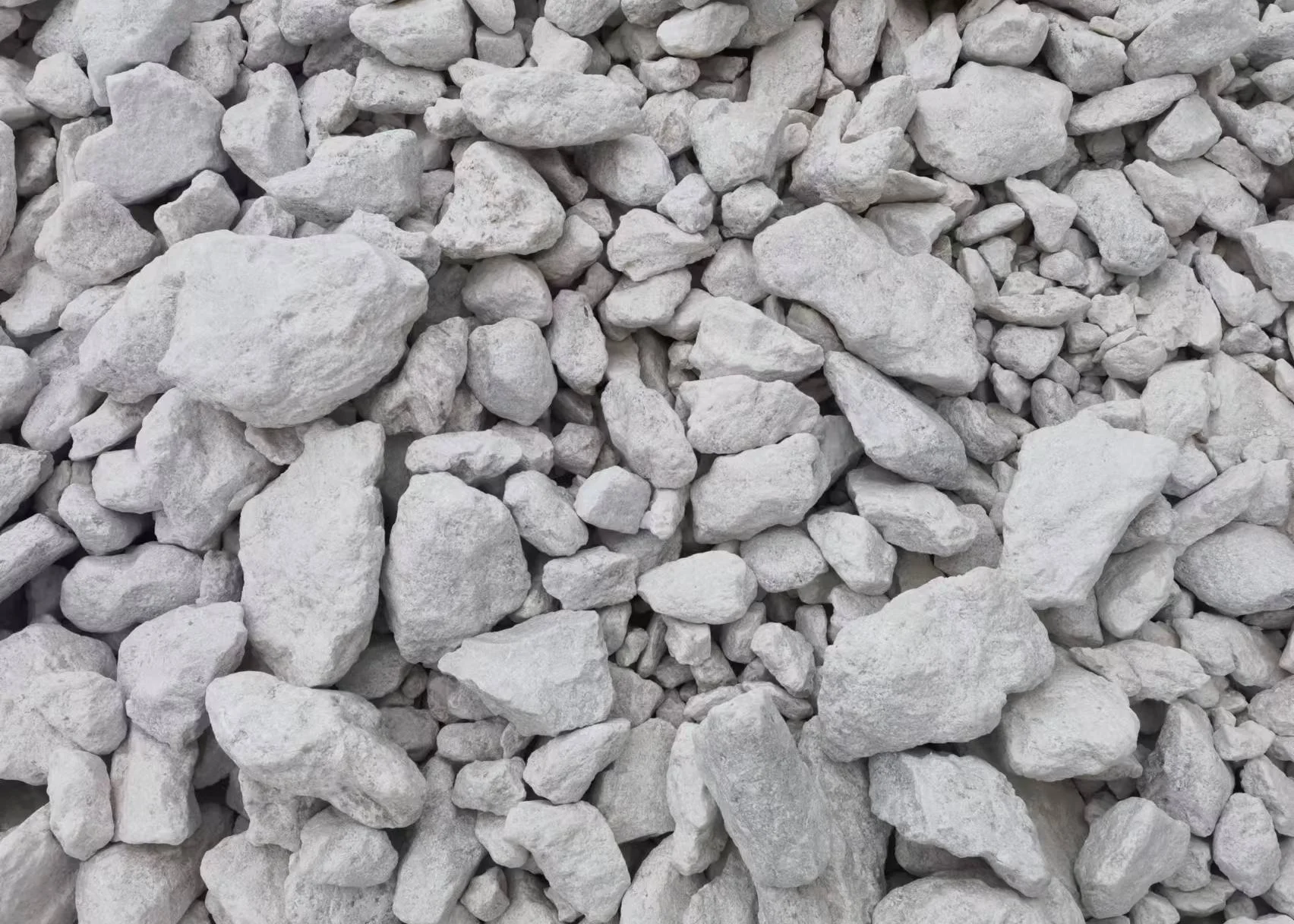
Talc is a naturally occurring hydrous magnesium silicate mineral that is widely used as a functional mineral additive in plastics and many other industries because of its softness, platy particle shape, chemical inertness, lubricity, and thermal stability. In plastics, talc is primarily valued as a reinforcing filler, nucleating agent, and processing aid, where it can improve stiffness, dimensional stability, heat resistance, and cycle time, especially in polypropylene-based compounds.
Talc occupies an important place in the plastics raw-materials chain because it bridges geology, mineral processing, compounding, and end-use performance. Commercial talc products vary by purity, brightness, particle size, lamellarity, and trace-mineral content, and these differences strongly influence suitability for polymers, coatings, paper, ceramics, adhesives, cosmetics, and pharmaceuticals. At the same time, talc’s role in plastics is increasingly shaped by sustainability concerns, including lower-material-use lightweighting, recyclability of talc-filled polyolefins, and the need for rigorous impurity control, particularly with respect to asbestos contamination in certain non-technical applications.
History and Development
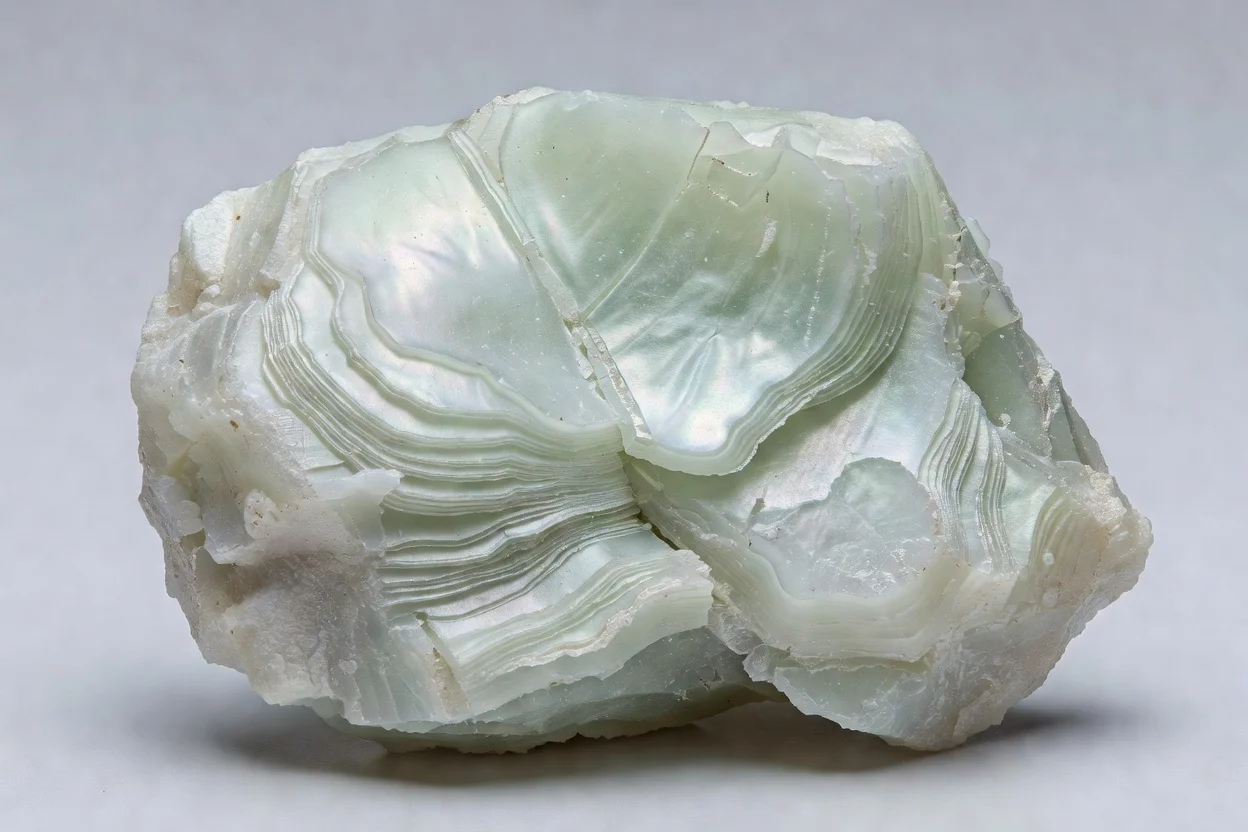
Talc has been known and used since antiquity, first as a soft, easily worked mineral and later as a powder with industrial value. Its modern technical use expanded with the growth of mineral processing and polymer compounding, especially in the 20th century, when talc became a standard mineral filler for thermoplastics, paper, paints, rubber, and ceramics.
In plastics, talc’s adoption accelerated when formulators recognized that its plate-like particles could improve stiffness and heat resistance more effectively than many inert extenders. The development of finer, better-characterized grades further increased its use in high-volume applications such as polypropylene automotive parts, appliance housings, packaging, and industrial sheets.
Chemical Structure and Key Properties
Talc is a layered magnesium silicate with the idealized composition Mg3Si4O10(OH)2. Its structure consists of weakly bonded sheets, which explain its characteristic softness, cleavage, lubricity, and platy morphology. It is the softest mineral on the Mohs scale, with hardness 1.
Core physical and functional properties
| Property | Practical significance in plastics |
|---|---|
| Layered, platy morphology | Improves stiffness and shrink control through particle orientation |
| Softness and lubricity | Reduces friction during compounding and processing |
| Hydrophobic and organophilic surface character | Enhances compatibility with many polymer matrices, especially nonpolar resins |
| Chemical inertness | Low reactivity with most polymers and additives |
| Thermal stability | Suitable for melt-processing temperatures used in commodity thermoplastics |
| High brightness in refined grades | Useful in light-colored compounds and masterbatches |
Talc is insoluble in water and weak acids or alkalis, and it is generally chemically stable under normal processing conditions. It is also nonflammable and has a melting point around 1500°C, though it begins to dehydroxylate above about 900°C and recrystallizes into enstatite-type phases at higher temperatures.
Technical limits and workarounds
- Low impact toughness → Talc can raise stiffness but may make compounds more brittle at higher loadings → use impact modifiers, blend with tougher polymers, or optimize particle size and aspect ratio.
- Poor oxygen and grease barrier performance → Talc-filled plastics do not provide high barrier performance by themselves → use multilayer structures, barrier coatings, or dedicated barrier polymers.
- Low surface energy before treatment → Talc-filled polyolefins may still show poor printability or adhesion without surface activation → use corona/plasma treatment, primers, or compatibilizers.
Production Processes and Raw Feedstocks
Industrial talc is produced from talc-bearing ores mined from metamorphic deposits, then crushed, ground, purified, and classified to the required particle size and brightness. The exact mineralogy matters because commercial talc may contain carbonates, chlorite, dolomite, quartz, or traces of other silicates, and these impurities affect whiteness, hardness, odor, and reinforcement behavior.
Typical processing route
- Mining of talc ore from underground or open-pit deposits.
- Primary crushing and beneficiation.
- Grinding to controlled particle size distributions.
- Purification by flotation, magnetic separation, or other upgrading steps.
- Air classification or micronization for specific industrial grades.
- Optional surface treatment for improved dispersion in polymer systems.
For plastics, the most valuable talc grades are usually those with controlled lamellarity, narrow particle-size distribution, and low abrasive impurity levels, because these traits improve dispersion and minimize wear on screws, barrels, and dies.
Applications and End-Use Markets
Talc is used in plastics mainly as a performance filler rather than a low-cost extender. Its benefits depend strongly on polymer type, loading level, and particle engineering.
Major plastics applications
| End use | Usual polymer/grade | Main role of talc | Typical performance effect |
|---|---|---|---|
| Automotive interior and exterior parts | Polypropylene compounds | Reinforcing filler, nucleator | Higher stiffness, heat deflection, dimensional stability |
| Appliance housings | PP, PE blends, engineering thermoplastics | Stiffness and scratch resistance | Better rigidity and surface feel |
| Packaging rigid articles | PP, PET in selected uses | Nucleation and processing aid | Faster crystallization, shorter cycles |
| Electrical and cable compounds | Polyolefins, PVC | Filler and dimensional stabilizer | Improved heat resistance and shape retention |
| Construction products | PP, PE, PVC, sheets | Cost-performance modifier | Better stiffness and processability |
| Agricultural films and sheets | Polyolefins | Processing aid in selected formulations | Improved handling and stiffness |
| Rotomolding compounds | PE | Stiffness modifier | Reduced sag, improved modulus |
| Specialty wear components | UHMWPE or related systems | Minor functional filler in niche uses | Reduced friction in selected formulations |
| Crosslinked pipe systems | PEX and related compounds | Limited auxiliary role | Dimensional support in some formulations |
Talc is especially important in polypropylene because it acts as a nucleating agent, increasing crystallization rate and usually producing finer spherulitic morphology, which contributes to improved stiffness and faster molding cycles. In practice, talc loadings in PP compounds commonly fall in the low-to-moderate range, with the exact level chosen to balance modulus, impact strength, processability, and cost.
A useful rule in formulation work is that higher talc loading increases stiffness more reliably than it increases toughness. As a result, highly filled compounds often need elastomer modification if impact performance is critical.
One poor-fit use
Talc is a poor fit for highly transparent monolayer packaging films, because its mineral particles scatter light and reduce optical clarity. In such cases, formulators typically use alternative additives, finer-treated minerals, or non-mineral approaches depending on the performance target.
Environmental and Sustainability Aspects
Talc is a mineral resource, so it is not renewable on human timescales, but it can contribute to material efficiency by replacing part of the polymer matrix and enabling lighter or stiffer compounds. In some applications, talc-filled plastics can reduce resin use per part and improve processing efficiency through faster crystallization, shorter cycle times, and better dimensional stability.
Sustainability considerations
- Recyclability: Talc-filled thermoplastics are generally recyclable within the same polymer family, although repeated reprocessing can affect dispersion, impact performance, and color.
- Lower carbon intensity per part: Because talc can partially replace polymer, it may lower resin consumption, though total life-cycle impact depends on mining, grinding, transport, and the final application.
- Bio-based alternatives: Bio-based polymers can also use mineral fillers, but talc does not itself provide biogenic content; the main sustainability advantage comes from formulation efficiency rather than renewability.
- Safety and impurity control: Regulatory attention has focused on potential asbestos contamination in talc used in consumer products, making source control, testing, and traceability essential.
In plastics, the environmental debate is therefore not whether talc is inherently “green,” but whether it enables a net improvement in part performance, resin efficiency, and service life compared with alternative formulations.
Economic and Global Market Impact
Talc is a major industrial mineral with a broad global market spanning plastics, paper, paint, ceramics, rubber, adhesives, and personal care. In plastics, demand is closely linked to the automotive, appliance, construction, and packaging sectors, where formulation economics reward a combination of stiffness, thermal performance, and processability.
Leading talc-producing countries and regions commonly include China, India, the United States, and parts of Europe, with regional supply shaped by ore quality, beneficiation capacity, logistics, and downstream compounding demand. Refined filler grades often command higher value than coarse industrial grades because of tighter control over brightness, particle size, and impurity profile.
The economics of talc in plastics are strongly grade-dependent:
- Technical grades command premiums for low impurity and controlled aspect ratio.
- Coarse grades are used where cost control matters more than appearance.
- Micronized grades are preferred for fine surface finish, better dispersion, and improved nucleation.
- Surface-treated grades are used where compatibility and dispersion are critical.
Current Challenges and Innovations
The main technical challenge for talc remains the balance between performance improvement and side effects such as brittleness, abrasion, and opacity. In addition, regulatory and reputational issues around talc safety in certain consumer uses have pushed suppliers toward tighter quality assurance and more transparent sourcing.
Ongoing innovations
- Surface-treated talc: Coupling or coating treatments can improve dispersion in nonpolar polymers.
- Engineered particle morphology: Better control of plate size and aspect ratio improves stiffness and nucleation efficiency.
- Hybrid filler systems: Talc combined with glass fiber, calcium carbonate, or impact modifiers can provide more balanced property sets.
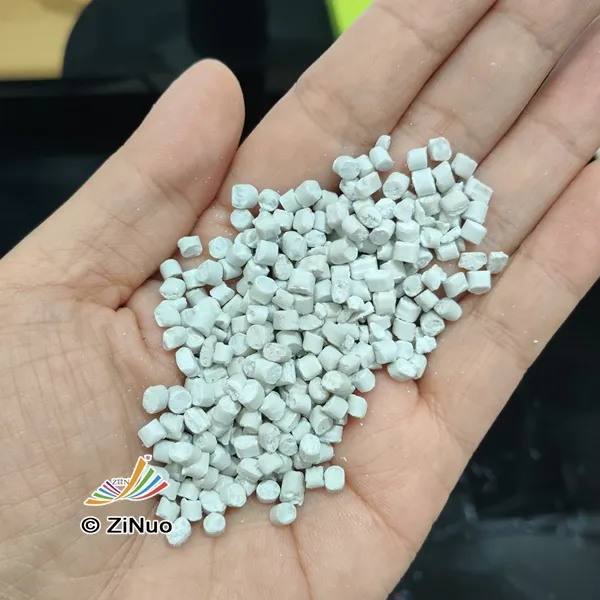
- Low-dust handling forms: Granules and masterbatches reduce occupational dust exposure and improve feeding consistency.
- Application-specific grades: Automotive and appliance compounds increasingly use grades tuned for specific crystallization kinetics and surface requirements.
A practical formulation example is a polypropylene talc compound at roughly 10–30 percent talc, often used to increase modulus and heat resistance in molded parts; the nucleating effect also shortens molding cycles by accelerating crystallization. A second example is a small amount of treated talc in a sealant or adhesive, where it can function as a rheology modifier and anti-blocking additive by increasing internal slip and controlling sag.
Future Outlook
Talc is likely to remain an important mineral additive in plastics because it offers a rare combination of stiffness enhancement, nucleation, and processing benefits at industrial scale. Future demand will depend on three forces: the continued use of polypropylene in durable goods, the push for lighter and more efficient parts, and stricter requirements for traceability and impurity control.
The most likely growth areas are:
- Automotive lightweighting, especially for PP interior and under-the-hood parts.
- Circular compounds, where talc-filled recyclate must meet tighter property and consistency targets.
- Advanced compounding, with better surface treatments and hybrid filler strategies.
- Process optimization, where talc’s nucleating behavior is used to reduce cycle time and energy intensity.
Longer term, talc will compete not only with other mineral fillers but also with fiber reinforcements, recycled fillers, and bio-based design strategies. Its continued relevance will depend on whether formulators can preserve its cost-performance advantage while meeting tighter requirements for sustainability, product safety, and circularity.
Summary
Talc is a soft, layered, chemically inert mineral that serves as one of the most important functional fillers in plastics. Its main value lies in reinforcing polypropylene and related polymers, improving stiffness, dimensional stability, and processing efficiency while also supporting broader uses in paper, ceramics, coatings, cosmetics, and pharmaceuticals.
Its principal limitations are opacity, reduced toughness at high loadings, and the need for strict impurity control. Even so, talc remains a cornerstone additive in the plastics industry because it combines dependable technical performance with broad commercial availability and versatile compounding behavior.
References
- •
Eurotalc. (n.d.). Physico-chemical properties. https://eurotalc.eu/what-is-talc/physico-chemical-properties/Link
- •
Geology.com. (n.d.). The mineral talc: Uses, properties, photos. https://geology.com/minerals/talc.shtmlLink
- •
Talc - Wikipédia. (2004, March 13). https://fr.wikipedia.org/wiki/TalcLink
- •
Essential Minerals Association. (2024, April 26). Talc. https://www.essentialminerals.org/mineral/talc/Link
- •
Finegri. (2022, January 1). About talc: Properties, types, and industrial uses. https://finegri.com/our-products/about-talcLink
- •
Talc - Wikipedia. (2002, February 25). https://en.wikipedia.org/wiki/TalcLink
- •
ChemicalBook. (2026, May 28). Talc | 14807-96-6. https://www.chemicalbook.com/ChemicalProductProperty_EN_CB5853119.htmLink
- •
GKToday. (2019, March 15). Talc. https://www.gktoday.in/talc/Link
- •
Eurotalc. (n.d.). Functions and applications. https://eurotalc.eu/what-is-talc/functions-and-applications/Link
- •
MineralExpert.org. (2018, November 8). Talc - the soapstone. https://mineralexpert.org/article/talc-soapstone-mineralLink
- •
Tariq Al Habtoor. (n.d.). The multifaceted world of talc: Its uses and industries that rely on it. https://tariqalhabtoor.com/talc-uses/Link
- •
National Center for Biotechnology Information. (2010). Exposure data - Carbon black, titanium dioxide, and talc. https://www.ncbi.nlm.nih.gov/books/NBK326506/Link
- •
U.S. Geological Survey. (n.d.). U.S. talc—Baby powder and much more. https://pubs.usgs.gov/fs/fs-0065-00/fs-0065-00textonly.pdfLink
- •
Centers for Disease Control and Prevention. (n.d.). [PDF] Talc. https://stacks.cdc.gov/view/cdc/216866/cdc_216866_DS1.pdfLink
- •
Alliance Chemical. (2025, June 30). Talc in adhesives & sealants: Formulator's performance guide. https://alliancechemical.com/blogs/articles/guide-to-talc-in-adhesivesLink
- •
EBSCO. (2020, September 30). Talc (mineral). https://www.ebsco.com/research-starters/earth-and-atmospheric-sciences/talc-mineralLink
- •
ChemicalBook. (2024, April 25). Talc: Mineral, uses and safety. https://www.chemicalbook.com/article/talc-mineral-uses-and-safety.htmLink
- •
Golcha Minerals. (2020, June 6). Application segment. https://golchaminerals.com/application-segment/Link
- •
University of Waterloo. (2023, November 22). Talc. https://uwaterloo.ca/earth-sciences-museum/resources/detailed-rocks-and-minerals-articles/talcLink
- •
SlideShare. (n.d.). Uses of talc. https://www.slideshare.net/slideshow/uses-of-talc/45208327Link
- •
Science Insights. (2026, March 13). What is talc used for in everyday life and is it safe? https://scienceinsights.org/what-is-talc-used-for-in-everyday-life-and-is-it-safe/Link
- •
20 Microns. (2025, November 4). Talc – The ultimate functional additive for industrial performance. https://20microns.com/blogs/talc-the-ultimate-functional-additive-for-industrial-performance/Link
- •
Health Canada. (2018, December 5). Talc. https://www.canada.ca/en/health-canada/services/chemicals-product-safety/talc.htmlLink
- •
University of Waterloo. (2024, May 21). Talc. https://uwaterloo.ca/wat-on-earth/news/talcLink
- •
Webmineral.com. (n.d.). Talc mineral data. https://webmineral.com/data/Talc.shtmlLink
- •
Britannica. (1998, July 20). Talc. https://www.britannica.com/science/talcLink
- •
Material Insights. (2026, February 5). Talc. https://www.material-insights.org/materials/talc/Link
- •
Health Canada. (2018, December 5). Talc - information sheet. https://www.canada.ca/en/health-canada/services/chemical-substances/fact-sheets/chemicals-glance/talc.htmlLink
- •
CIR Safety. (n.d.). [PDF] Safety assessment of talc as used in cosmetics. https://www.cir-safety.org/sites/default/files/talc032013rep.pdfLink
- •
Vtalc.com. (2025, June 25). What is talc mainly used for? https://www.vtalc.com/news/what-is-talc-mainly-used-forLink
- •
CIR Safety. (n.d.). Safety assessment of talc as used in cosmetics. https://www.cir-safety.org/sites/default/files/talc122012tent_faa_final%20for%20posting.pdfLink
- •
Federal Aviation Administration. (n.d.). Talc C-98 safety data sheet. https://web.faa.illinois.edu/app/uploads/sites/6/2021/05/Talc.pdfLink
- •
Michigan State University. (2022, June 14). What's the risk? Talc-based cosmetic products. https://cris.msu.edu/news/whats-the-risk/whats-the-risk-talc-based-cosmetic-products/Link
- •
PubChem. (n.d.). Talc | H2Mg3O12Si4 | CID 165411828. https://pubchem.ncbi.nlm.nih.gov/compound/TalcLink
- •
SpecialChem. (2022, December 16). TALC. https://www.specialchem.com/cosmetics/inci-ingredients/talcLink
- •
Health Canada. (2018, December 5). Talc - Canada.ca. https://www.canada.ca/fr/sante-canada/services/securite-produits-et-substances-chimiques/talc.htmlLink
- •
Vichem. (2025, May 27). What is talc? The history and applications. http://vichem.vn/en/what-is-talc-the-history-and-applications/Link
- •
Mindat.org. (2007, February 1). Talc: Mineral information, data and localities. https://www.mindat.org/min-3875.htmlLink
- •
New Jersey Department of Health. (n.d.). [PDF] Hazardous substance fact sheet. https://nj.gov/health/eoh/rtkweb/documents/fs/1773.pdfLink
- •
U.S. Food and Drug Administration. (2025, June 25). Independent panel evaluates safety of talc in everyday products. https://www.fda.gov/about-fda/regulatory-news-stories-and-features/independent-panel-evaluates-safety-talc-everyday-products-protect-public-healthLink
- •
NOAA. (2024, January 1). TALC - CAMEO chemicals. https://cameochemicals.noaa.gov/chemical/21058Link
- •
U.S. Environmental Protection Agency. (n.d.). Health assessment document for talc. https://nepis.epa.gov/Exe/ZyPURL.cgi?Dockey=30001O5C.TXTLink
- •
Environment and Climate Change Canada. (2021, April 22). Screening assessment talc. https://www.canada.ca/en/environment-climate-change/services/evaluating-existing-substances/screening-assessment-talc.htmlLink
- •
Environment and Climate Change Canada. (2018, December 5). Draft screening assessment talc (Mg 3 H 2 (SiO 3 ) 4 ). https://www.canada.ca/en/environment-climate-change/services/evaluating-existing-substances/draft-screening-assessment-talc-mg3h2sio34.htmlLink
- •
U.S. Food and Drug Administration. (2026, January 16). Talc - FDA. https://www.fda.gov/cosmetics/cosmetic-ingredients/talcLink