
Introduction
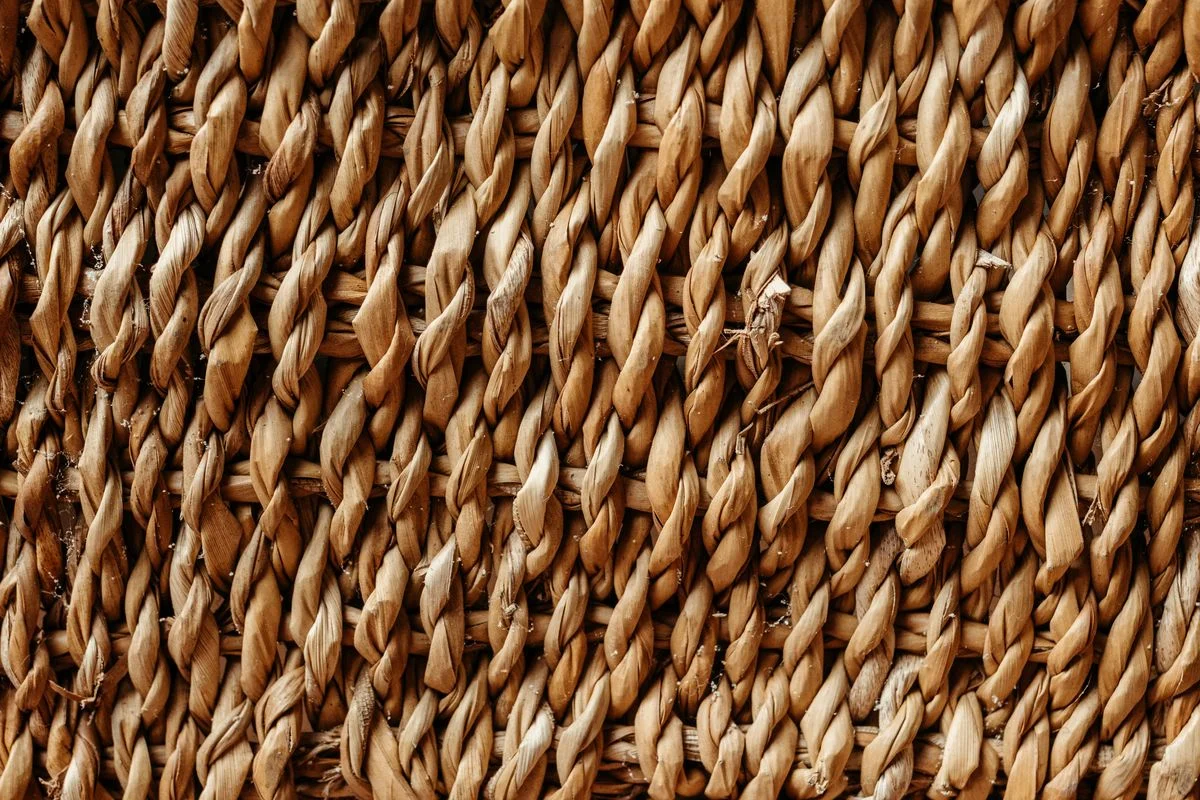
Natural fibers are hairlike raw materials obtained directly from plant, animal, or mineral sources and converted into yarns, nonwovens, paper, textiles, ropes, and composite reinforcements. In the plastics and materials industries, the term usually refers to plant- and animal-derived fibers used as reinforcements, fillers, or functional auxiliaries in polymer composites, where they provide low density, renewability, and good specific stiffness relative to many conventional materials.
Natural fibers occupy a broad family that includes cellulosic fibers such as cotton, flax, hemp, jute, sisal, coir, kenaf, and abaca, as well as protein fibers such as wool and silk; mineral fibers are sometimes included in general textile classifications, though they are less central in polymer-composite markets. Their relevance to plastics has grown because they can reduce composite weight, lower reliance on glass fiber in selected applications, and support bio-based and circular-material strategies, while also introducing processing and durability constraints that must be managed carefully.
The commercial importance of natural fibers spans two overlapping domains: traditional textile and furnishing markets, and engineering uses in thermoplastic and cementitious composites, insulation, geotextiles, packaging, and specialty products. Contemporary development focuses on improved extraction, surface treatment, compatibilization, and hybridization with polymers, alongside sustainability questions involving land use, water demand, biodegradability, agricultural variability, and end-of-life management.
History and Development
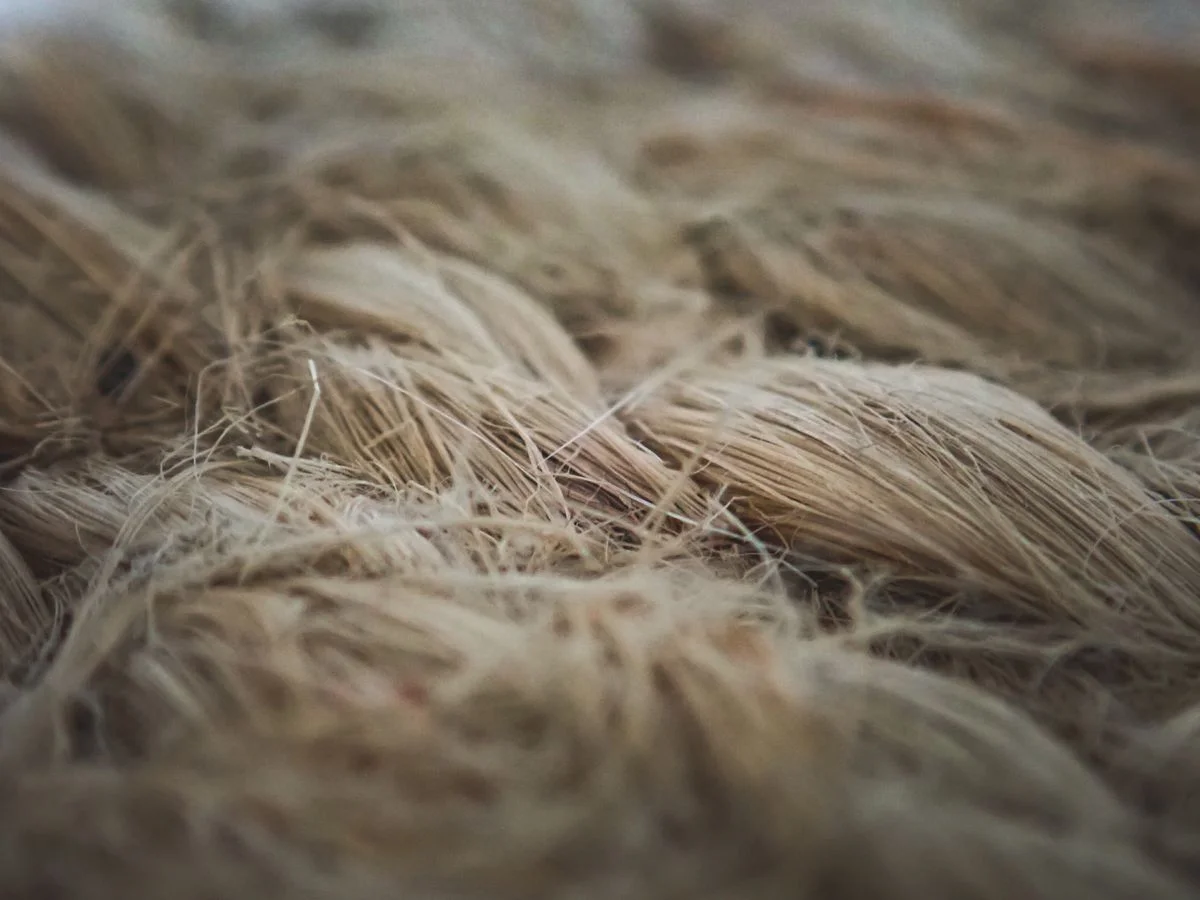
Natural fibers are among the oldest industrial raw materials known to human societies, with long use in clothing, cordage, mats, nets, paper, and shelter materials. Cotton, wool, flax, silk, and jute became foundational materials in regional textile systems, while bast and leaf fibers such as flax, hemp, sisal, and abaca developed important roles in ropes, sacks, and industrial fabrics.
Their role in modern materials expanded when fiber reinforcement was applied to plastics and boards, enabling lighter structures with improved stiffness and better acoustic or thermal performance in selected designs. This shift accelerated as manufacturers sought alternatives to asbestos and, in some applications, partial substitutes for glass fiber, especially where cost, weight, tactile quality, or perceived sustainability were important.
More recently, natural-fiber composites have moved from niche demonstrations into automotive interior parts, building panels, packaging, furniture, and insulation systems. The present phase of development is characterized less by a search for raw fiber availability than by efforts to standardize properties, improve moisture resistance, and integrate fibers into industrial polymer-processing routes.
Chemical Structure and Key Properties
Natural fibers are not chemically uniform; their performance depends on botanical or animal origin, growth conditions, extraction methods, and subsequent cleaning or treatment. Plant fibers are largely composed of cellulose, with variable proportions of hemicellulose, lignin, pectin, waxes, and extractives; these constituents govern moisture uptake, interfacial adhesion, thermal stability, and mechanical response. Animal fibers are protein-based and typically show different moisture and thermal behavior from plant-derived fibers.
Structural features
- Cellulose-rich fibers: generally offer relatively high specific strength and stiffness because of their oriented microfibrillar structure.
- Lignin-containing fibers: often show greater rigidity and weathering resistance but can be less uniform in processing behavior.
- Protein fibers: provide different tactile and thermal characteristics, with applications more concentrated in textiles and specialty products than in polymer reinforcement.
Typical advantages
- Low density and favorable specific properties, which are valuable in lightweight composites.
- Renewability and potential biodegradability, especially for plant-based fibers under suitable conditions.
- Good acoustic and thermal insulation behavior in certain building and furnishing applications.
Real limits and practical workarounds
- High moisture uptake → hydroxyl-rich cellulosic surfaces attract water → alkali treatment, acetylation, silane coupling, or polymer compatibilizers are used to reduce sorption and improve adhesion.
- Property variability → biological source, harvest season, and extraction method change diameter and composition → grading, blending, and specification control are used to stabilize performance.
- Thermal sensitivity → many natural fibers begin to degrade at temperatures relevant to melt processing of engineering polymers → lower-temperature polymers, shorter residence times, and pre-drying are used.
- Poor interfacial bonding with nonpolar plastics → polar fiber surfaces do not naturally adhere well to polyethylene or polypropylene → maleic-anhydride-grafted compatibilizers or surface treatments are used.
Example additives and mechanisms
- In polypropylene natural-fiber composites, maleic-anhydride-grafted polypropylene is commonly used at low percentages as a compatibilizer; it forms interfacial interactions with hydroxyl groups on the fiber surface while remaining compatible with the polymer matrix, improving stress transfer.
- Silane coupling agents are often used in small dosages on fibers; they can create a molecular bridge between the fiber surface and a resin or matrix, improving wetting and reducing fiber pull-out.
Production Processes and Raw Feedstocks
Natural fibers originate from distinct biological feedstocks and extraction routes, which strongly influence quality and end use.
Main feedstock categories
- Seed fibers: cotton, kapok.
- Bast fibers: jute, flax, hemp, ramie, kenaf.
- Leaf fibers: sisal, abaca, pineapple fiber.
- Fruit fibers: coir from coconut husk.
- Animal fibers: wool, silk, and related protein fibers.
Common processing stages
- Harvesting and primary cleaning
- Retting, decortication, scutching, combing, or ginning, depending on source
- Drying and grading
- Cutting, mat formation, spinning, or pulverizing for composite use
- Surface treatment and compatibilization when used with polymers
For polymer composites, the fiber may be supplied as chopped fiber, woven mat, nonwoven mat, or aligned bundle, depending on the target properties and processing route. Thermoplastic systems frequently use press molding, extrusion, injection molding, or compression molding, while fiber mats may be consolidated into panels or semi-structural parts.
Applications and End-Use Markets
Natural fibers serve both conventional textile markets and a growing set of technical-material applications.
| End-use sector | Typical fibers | Common material form | Usual processing route | Notes |
|---|---|---|---|---|
| Apparel and home textiles | Cotton, flax, wool, silk | Yarn, fabric | Spinning, weaving, knitting | High-volume traditional market |
| Ropes, twine, sacks | Jute, sisal, coir, hemp | Twine, cordage | Twisting, braiding | Strong historical industrial use |
| Paper and board | Wood pulp, kenaf, cotton linters | Pulp, sheet | Pulping, sheet forming | Fiber morphology is critical |
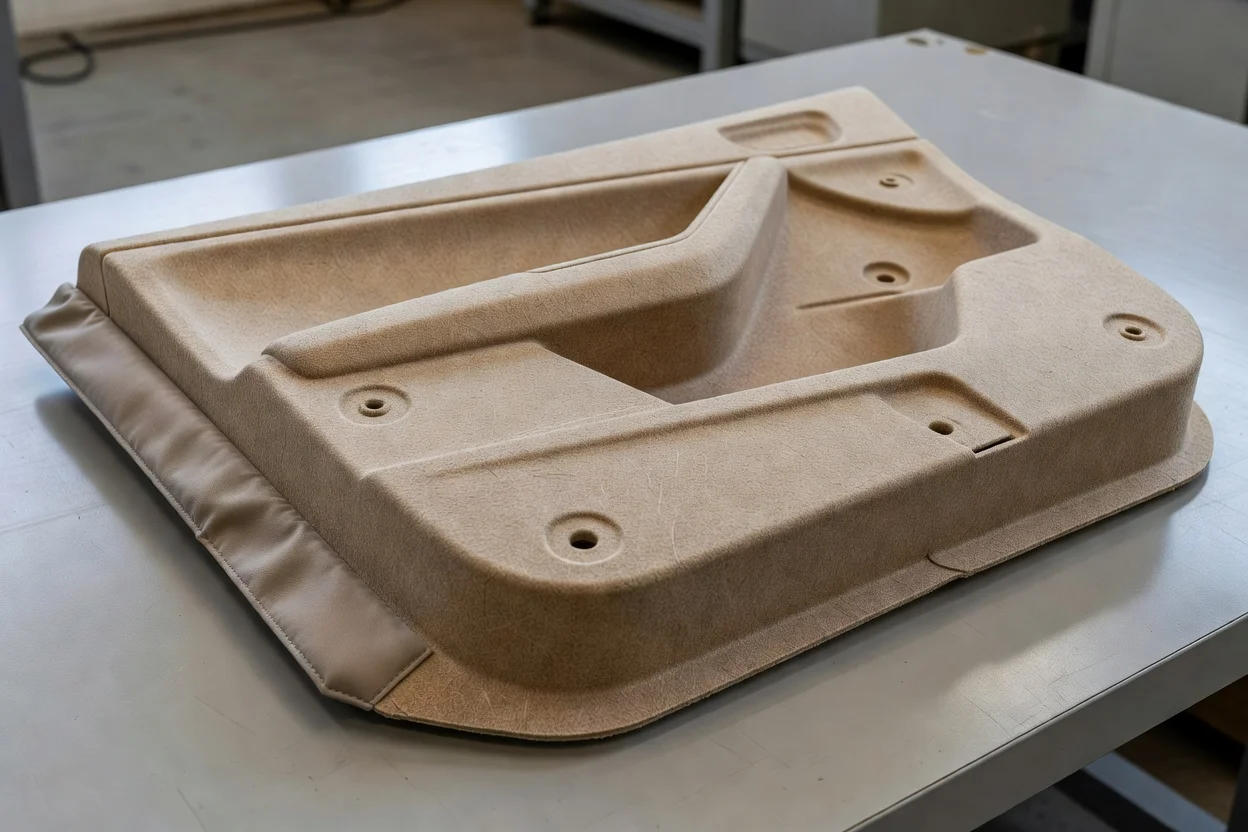
| Automotive interiors | Flax, hemp, kenaf, jute, abaca | Mats, nonwovens, composites | Thermoforming, press molding | Door liners, parcel shelves, rear panels |
| Construction and insulation | Hemp, wool, coir, flax | Batts, boards, panels | Compression, bonding, lamination | Thermal and acoustic performance matter |
| Geotextiles and erosion control | Coir, jute, sisal | Mats, nets | Stitch-bonding, weaving | Temporary stabilization and soil protection |
| Packaging and pallets | Jute, kenaf, agricultural fibers | Boards, molded parts | Consolidation, compression | Often driven by weight and renewability |
| Biomedical and specialty materials | Collagen-rich or cellulose-based fibers, selected plant fibers | Scaffolds, hydrogels, matrices | Functionalization, incorporation in composites | More common in research and niche products |
Natural fibers are especially attractive in lightweight composites for automotive interior linings, furniture, partition panels, roof elements, packaging, and building products. In Europe, natural-fiber mats from flax, hemp, and abaca have been used in press-molded thermoplastic panels for door liners, parcel shelves, seat backs, engine shields, and headrests.
A poor-fit use is high-temperature, moisture-sensitive structural components that require tight dimensional stability and long-term hydrolytic resistance; untreated natural fibers are generally not ideal there because moisture uptake and thermal limitations can undermine performance.
Environmental and Sustainability Aspects
Natural fibers are widely viewed as renewable materials with lower embodied fossil carbon than petroleum-derived reinforcements, and they may store biogenic carbon during plant growth. Their use can also support agricultural value chains and create outlets for co-products such as flax shives, hemp hurds, or coconut husk fibers.
At the same time, sustainability claims require careful qualification.
- Biodegradability is conditional: many natural-fiber composites do not fully biodegrade if the matrix is a conventional thermoplastic or thermoset.
- Land use and water demand vary: crop type, region, and cultivation practice strongly affect environmental performance.
- Processing chemicals matter: retting aids, bleaching, resins, and coupling agents can change the life-cycle profile.
- Contamination and durability trade-offs: treatments that improve moisture resistance can reduce compostability or recycling compatibility.
Recyclability depends heavily on the matrix. Fiber-only products may be compostable or biodegradable under suitable conditions, while polymer composites usually remain limited by the plastic phase. Natural fibers can still support circularity by enabling lightweighting, reusing agricultural residues, or reducing the mass of conventional reinforcements in selected applications.
Economic and Global Market Impact
Natural fibers are globally available and often cost-competitive, particularly where agricultural production is well established and labor-intensive preprocessing is economical. The strongest production bases are typically associated with the crops themselves rather than with a small number of highly concentrated chemical producers, which makes the supply chain more fragmented than that of petrochemical polymers.
In market terms, the largest volume fibers remain cotton and wood-derived pulp, while technical-composite markets rely heavily on flax, hemp, jute, sisal, kenaf, coir, and abaca. Demand is shaped by the automotive, construction, packaging, and furnishing sectors, with interest rising where regulations or brand strategies favor lower-carbon materials.
Current Challenges and Innovations
The principal technical challenge is to reconcile biological variability with industrial quality control. Natural fibers differ in diameter, moisture content, microfibril angle, lignin content, and contamination level, which complicates specification and process repeatability.
Key innovation directions include:
- Surface modification to improve adhesion with polyolefins and other matrices
- Hybrid composites combining natural fibers with glass, basalt, or recycled polymers
- Advanced nonwovens for controlled thickness, flow, and consolidation behavior
- Bio-based resins and recyclable thermoplastic matrices
- Improved preprocessing such as enzymatic retting, plasma treatment, and standardized grading
Research is also expanding into biomedical scaffolds, hydrogels, insulation systems, and multifunctional composites where natural fibers provide texture, absorbency, or controlled degradation behavior.
Future Outlook
The future of natural fibers in plastics will likely be defined by hybridization, standardization, and life-cycle performance rather than by simple substitution of one material for another. Growth is most plausible where natural fibers deliver an optimized combination of weight reduction, tactile quality, acoustic damping, and lower fossil content, especially in semi-structural interior and building products.
Broader adoption will depend on three developments:
- More consistent feedstock grading and supply-chain traceability
- Better compatibilization with recyclable polymer matrices
- More credible environmental accounting across cultivation, processing, use, and end-of-life phases
Natural fibers are therefore likely to remain a strategically important material family at the intersection of agriculture, textiles, composites, and circular materials engineering, with their strongest industrial value arising where performance requirements match their natural advantages and their known limitations can be engineered around.
References
- •
Natural fiber | Definition, Uses, & Facts. (n.d.). Britannica. https://www.britannica.com/topic/natural-fiberLink
- •
Natural fiber. (2005, October 4). Wikipedia. https://en.wikipedia.org/wiki/Natural_fiberLink
- •
Natural fibre - an overview. (n.d.). ScienceDirect. https://www.sciencedirect.com/topics/materials-science/natural-fibreLink
- •
A closer look at natural fibers & materials. (2020, May 25). Design Pool. https://www.designpoolpatterns.com/a-look-at-natural-fibers-materials/Link
- •
Natural fibers: 10 examples & definition. (2022, May 13). Utopia.org. https://utopia.org/guide/natural-fibers-10-examples-definition/Link
- •
Natural fibres: Definition, types, properties, examples & uses. (2026, March 5). Allen. https://allen.in/science/natural-fibresLink
- •
Glossary | Natural fibers. (2026, January 1). Iris von Arnim. https://irisvonarnim.com/us/glossary-natural-fibersLink
- •
Natural fibers: Applications. (2019, October 24). IntechOpen. https://www.intechopen.com/chapters/69714Link
- •
Natural fibers in sustainable materials: Extraction ... (2026, February 23). PMC. https://pmc.ncbi.nlm.nih.gov/articles/PMC12926875/Link
- •
Natural fibres – Textile manufacturing and testing. (n.d.). INFLIBNET. https://ebooks.inflibnet.ac.in/hsp08/chapter/natural-fibres/Link
- •
Natural fibers as sustainable and renewable resource for development of eco-friendly composites: A comprehensive review. (2019, September 27). Frontiers. https://www.frontiersin.org/journals/materials/articles/10.3389/fmats.2019.00226/fullLink
- •
A comprehensive review on natural fibers: Technological ... (2021, December 7). PMC. https://pmc.ncbi.nlm.nih.gov/articles/PMC8707527/Link
- •
Synthetic and natural fibres. (2016, August 11). BYJU'S. https://byjus.com/chemistry/synthetic-natural-fibres/Link
- •
What is a natural fiber? (n.d.). The Plain Thread. https://theplainthread.com/learn/what-is-a-natural-fiberLink
- •
Environmental benefits of natural fibre production and use. (n.d.). FAO. https://www.fao.org/4/i0709e/i0709e03.pdfLink
- •
Multifaceted properties and applications of natural fiber ... (2026, May 18). Taylor & Francis. https://www.tandfonline.com/doi/full/10.1080/15440478.2026.2665751Link
- •
Natural fibres: Types, classification, properties and uses. (2026, June 5). Textile Engineering. https://textileengineering.net/natural-fibres-types-classification-properties-and-uses/Link
- •
22 examples of natural fibers. (2024, January 23). Simplicable. https://simplicable.com/materials/natural-fibersLink
- •
All you need to know about natural fibers. (2022, October 17). Recover Fiber. https://recoverfiber.com/newsroom/all-you-need-to-know-about-natural-fibersLink
- •
Natural fibres. (2022, August 10). BYJU'S. https://byjus.com/biology/fibre/Link
- •
What is a natural fiber? (2019, March 21). Barnhardt. https://barnhardt.net/what-is-a-natural-fiber/Link
- •
Natural fibers. (2022, November 23). Cornell University. https://exhibits.library.cornell.edu/social-fabric-land-labor-and-the-world-the-textile-industry-created/feature/natural-fibersLink
- •
The role of natural fibers in the building industry ... (2025, August 13). PMC. https://pmc.ncbi.nlm.nih.gov/articles/PMC12387356/Link
- •
Natural textile fibers overview & examples. (n.d.). Study.com. https://study.com/academy/lesson/natural-textile-fibers.htmlLink
- •
Natural fiber-based materials for sustainable development. (n.d.). Taylor & Francis. https://www.tandfonline.com/doi/full/10.1080/15440478.2026.2671405Link
- •
Advantages of natural fiber composites for biomedical applications: A review of recent advances. (n.d.). Springer. https://link.springer.com/article/10.1007/s42247-023-00620-xLink
- •
Natural fibers: Why are they still the missing thread ... (2024, July 10). PMC. https://pmc.ncbi.nlm.nih.gov/articles/PMC11270977/Link
- •
Natural fiber. (n.d.). Cambridge Dictionary. https://dictionary.cambridge.org/us/dictionary/english/natural-fiberLink
- •
Natural fabrics: The ultimate guide to eco-friendly textiles. (2024, September 3). Nomad the Label. https://nomadthelabel.com/blogs/blog/natural-fabrics-ultimate-guide-to-eco-friendly-textilesLink
- •
Why natural fibres? (n.d.). FAO. https://www.fao.org/natural-fibres-2009/about/why-natural-fibres/en/Link
- •
COTTON, linen (flax), silk, and. (n.d.). ISBE. https://www.isbe.net/CTEDocuments/FCS-650171.pdfLink
- •
20 natural fibres- which tops the list? (2021, December 20). Online Clothing Study. https://www.onlineclothingstudy.com/2021/12/20-natural-fibres-which-tops-list.htmlLink
- •
A complete guide to natural fibers: Types, sources, and uses. (2024, December 26). Meridian Millhouse. https://meridianmillhouse.com/blogs/blog/a-complete-guide-to-natural-fibers-types-sources-and-usesLink
- •
Pros & cons of natural fibres. (2021, September 30). Goonvean Fibres. https://goonveanfibres.com/news-insights/news/natural-fibres-the-pros-cons/Link
- •
Types of fibers: Natural vs synthetic. (2023, October 2). Meridian Millhouse. https://meridianmillhouse.com/blogs/blog/types-of-fibers-natural-vs-syntheticLink