
Introduction
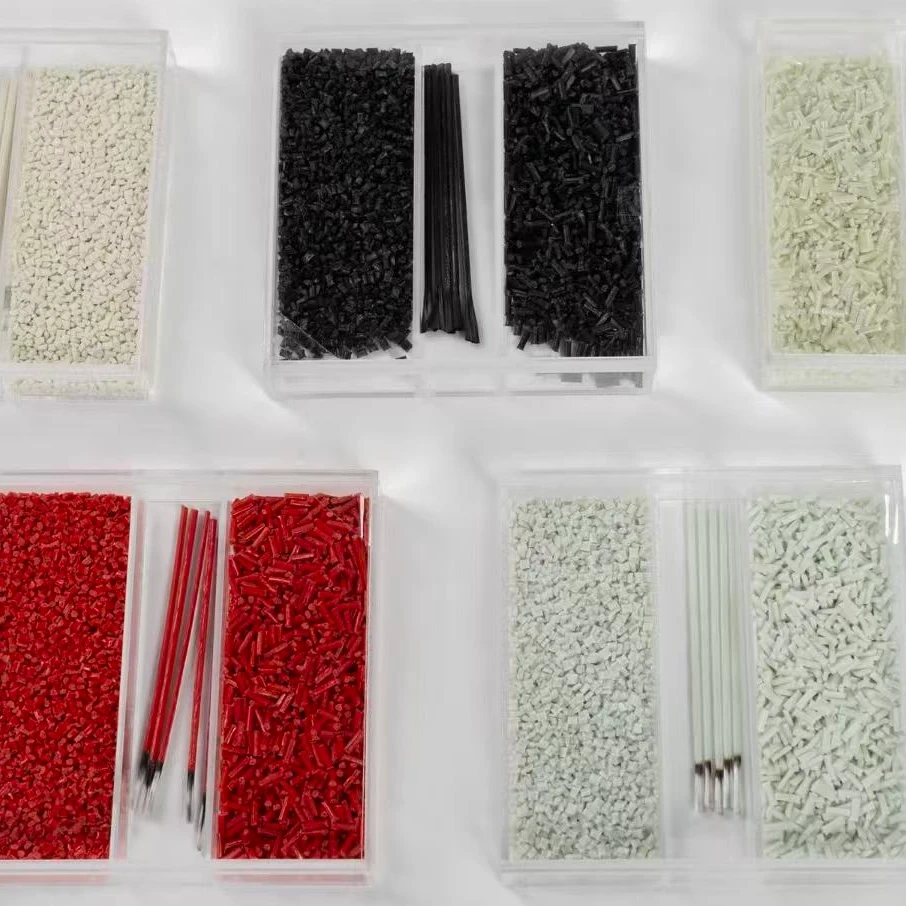
Thermoplastics are a large family of polymers that soften when heated, can be shaped or welded in the softened state, and harden again on cooling without undergoing significant chemical change. This reversibility is the basis of their dominance in modern plastics processing and their comparatively favorable mechanical recyclability, making thermoplastics central to packaging, construction, automotive, electrical, medical, and consumer-goods supply chains.
In practical industrial use, the term covers both commodity resins such as polyethylene, polypropylene, PVC, and PET, and higher-performance engineering or specialty thermoplastics such as polycarbonate, polyamides, acetal, PEEK, and fluoropolymers. Their broad processing window, combined with extensive formulation flexibility through additives and fillers, has made thermoplastics the most widely used type of plastic in many markets.
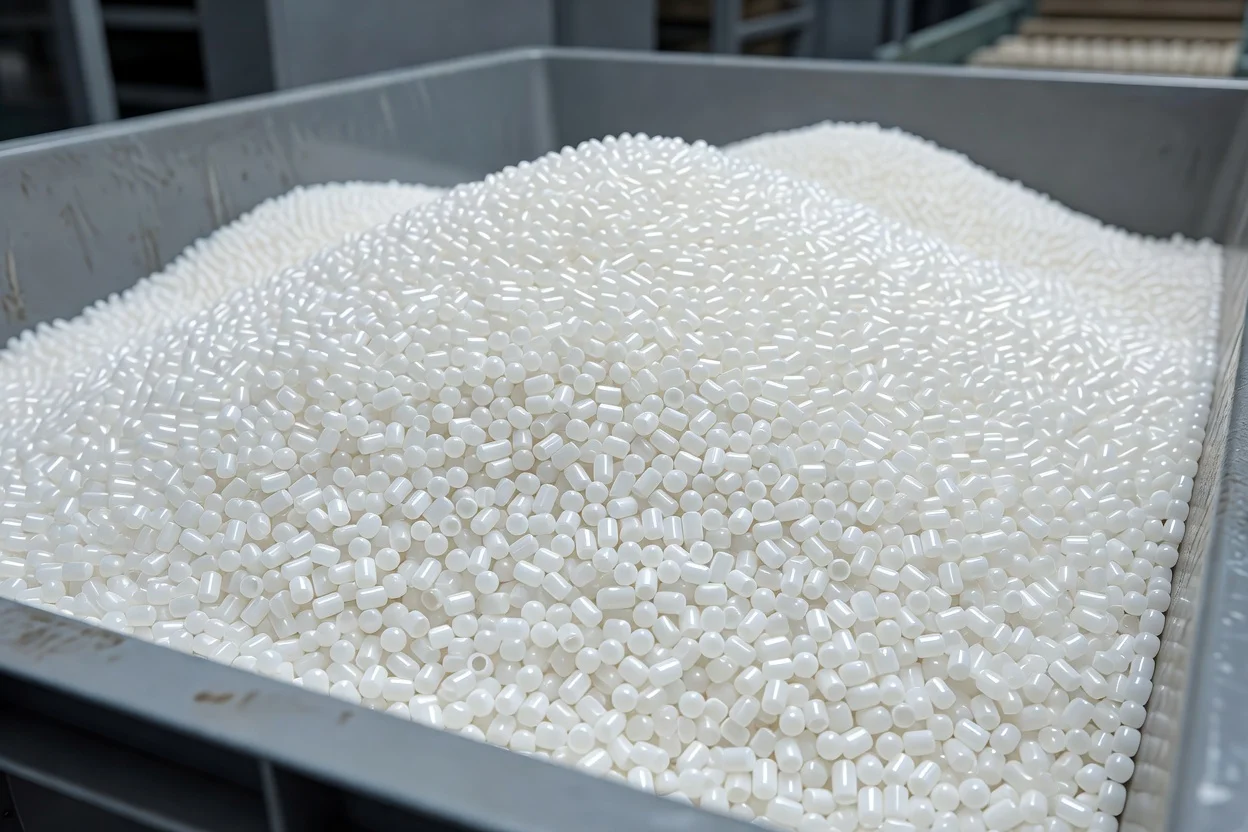
The long-term importance of thermoplastics is now shaped by three competing forces: high material efficiency and versatility, rising pressure to improve recyclability and circularity, and the search for lower-carbon feedstocks such as bio-based, recycled, and mass-balance inputs. Future development is therefore focused not only on performance but also on design-for-recycling, advanced sorting, chemical recycling, and reduced fossil dependence.
History and Development
Thermoplastics emerged as commercial polymers during the twentieth century, as petrochemical feedstocks and controlled polymerization enabled materials that could be repeatedly softened and remolded. Their industrial expansion accelerated alongside the growth of packaging, injection molding, extrusion, and blow molding, which converted polymer chemistry into high-volume manufacturing systems.
The distinction between thermoplastics and thermosets became foundational in polymer engineering because thermoplastics do not rely on irreversible crosslinking during shaping. This difference made them faster to process, easier to weld, and more amenable to reprocessing than thermosetting materials.
Over time, the category expanded from basic commodity polymers to an extensive spectrum of engineering materials with tailored heat resistance, impact strength, transparency, chemical resistance, low friction, or flame performance. At the same time, formulation practice matured: stabilizers, pigments, plasticizers, impact modifiers, nucleating agents, fillers, and reinforcing fibers became routine tools for tuning final properties.
Chemical Structure and Key Properties
Thermoplastics are characterized by chemically independent macromolecules rather than a permanent crosslinked network. When heat is applied, chain mobility increases; depending on the polymer type, the material softens at the glass-transition range, melts in crystalline regions, or both, allowing shaping and subsequent solidification on cooling.
Their most important technical features include:
- Reversibility: heating and cooling can be repeated many times with limited chemical change, supporting remelting, welding, and recycling.
- Processability: they are compatible with extrusion, injection molding, thermoforming, blow molding, film casting, fiber spinning, and rotational molding.
- Formulation flexibility: additives and fillers can modify thermal stability, UV resistance, flame behavior, stiffness, color, barrier properties, or electrical performance.
- Broad property range: thermoplastics can be flexible or rigid, transparent or opaque, low-friction or high-toughness, and commodity-grade or high-performance depending on chemistry and morphology.
Key limits and industrial workarounds
- Poor oxygen and grease barrier in many polyolefins → caused by nonpolar chain structure and relatively high permeability → workarounds include barrier coatings, multilayer coextrusion, EVOH or polyamide layers, metallization, or use of alternative polymers such as PET in barrier-sensitive packaging.
- Low surface energy before treatment → caused by the chemically inert, nonpolar surface of materials such as polyethylene and polypropylene → workarounds include corona, flame, plasma, primer systems, or tie-layer formulations to improve printing, adhesion, and lamination.
- Heat distortion or creep at elevated temperature → caused by chain mobility and, in some grades, limited crystallinity or low glass-transition temperature → workarounds include reinforcement with glass fiber or minerals, use of higher-temperature engineering thermoplastics, heat stabilizers, and design changes that lower stress.
- Moisture sensitivity in some polyamides and polyesters → caused by water uptake and hydrolysis susceptibility → workarounds include drying before processing, hydrolysis stabilizers, copolymer selection, and controlled service environments.
Representative property comparison
| Family | Main traits | Typical strengths | Common constraints |
|---|---|---|---|
| Polyethylene | Tough, chemically resistant, low cost | Films, containers, pipes | Barrier weakness, low surface energy |
| Polypropylene | Light, fatigue-resistant, versatile | Caps, housings, automotive parts | Lower low-temperature toughness than some grades |
| PVC | Rigidity or flexibility depending on formulation | Pipe, profiles, cable | Additive dependence, recycling complexity in mixed streams |
| PET | Strength, clarity, gas barrier | Bottles, fibers, trays | Sensitivity to hydrolysis without drying |
| Engineering thermoplastics | Higher heat and mechanical performance | Auto, electrical, medical | Higher cost, more demanding processing |
Production Processes and Raw Feedstocks
Thermoplastics originate from petrochemical, natural gas, and increasingly recycled or bio-based feedstocks. The specific monomers and polymerization routes depend on the resin family: olefins are commonly produced via cracking and polymerization; vinyl and condensation polymers follow routes tailored to their monomers and target molecular architecture.
Industrial production generally begins with hydrocarbon refining or natural-gas processing, followed by monomer generation, polymerization, compounding, pelletizing, and conversion into finished goods. In many plants, the final resin sold to converters is already formulated with stabilizers, antioxidants, lubricants, impact modifiers, or color concentrates to suit a target processing route.
Major processing methods include:
- Extrusion for pipe, profile, sheet, film, cable insulation, and coating.
- Injection molding for caps, closures, housings, automotive parts, and precision components.
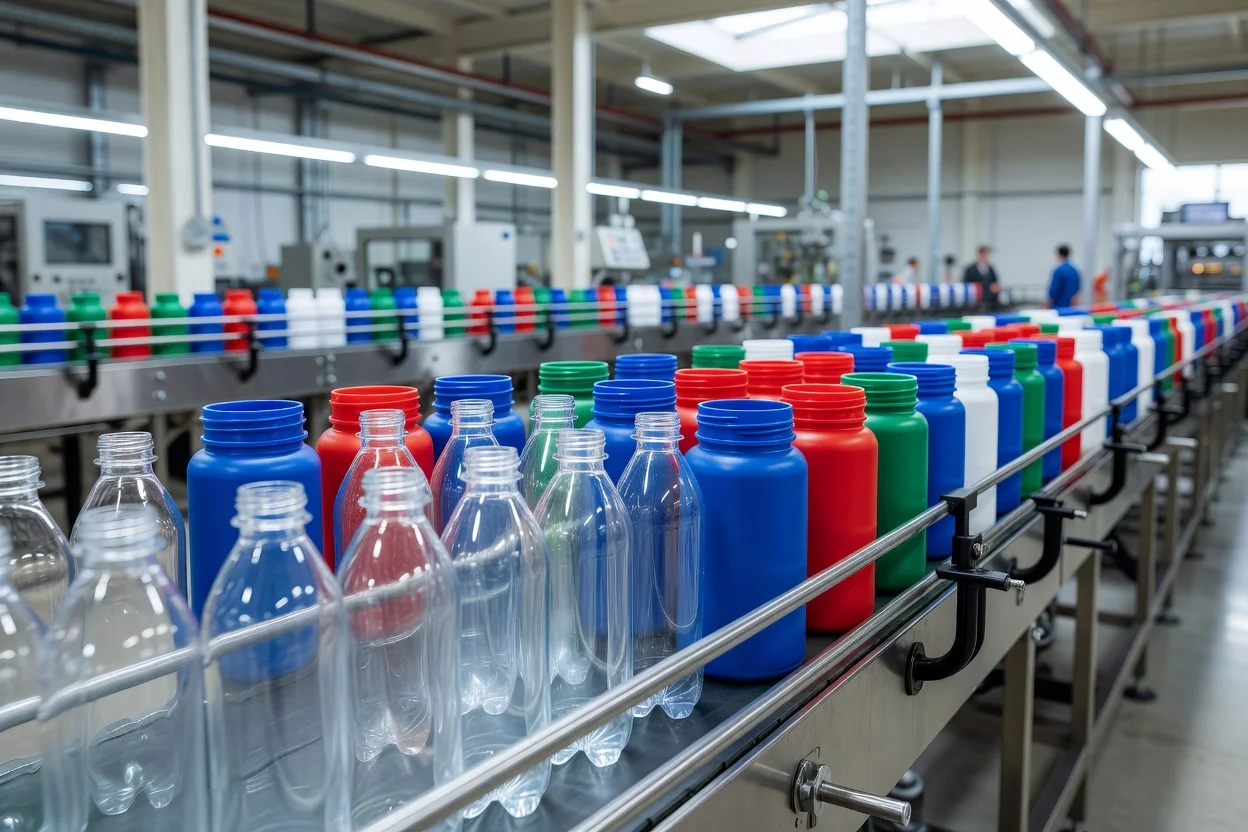
- Blow molding for bottles and hollow containers.
- Thermoforming for trays, blisters, and lightweight packaging.
- Rotational molding for large hollow products such as tanks and geomembranes.
- Fiber spinning for textiles, ropes, and nonwovens.
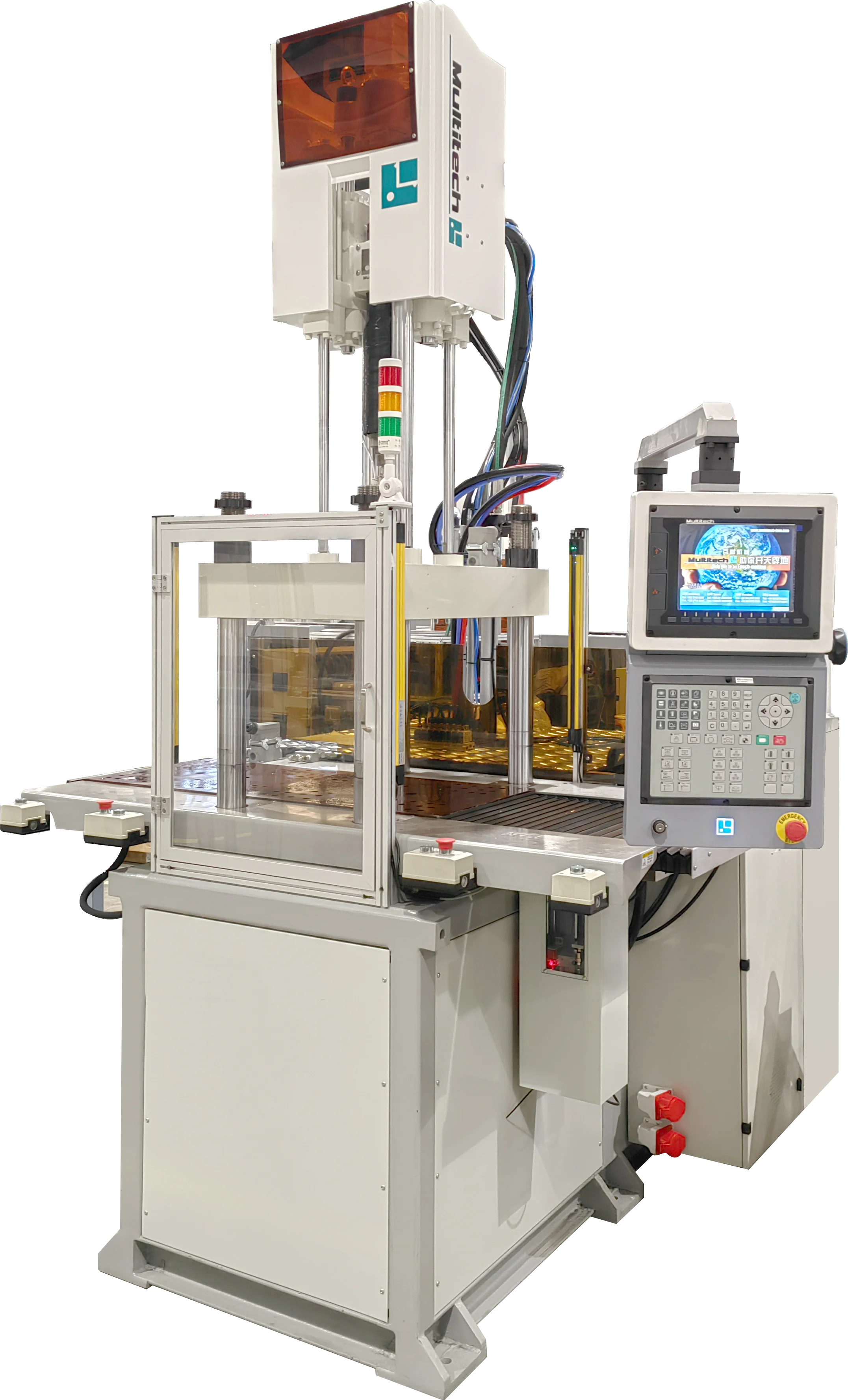
Leading global producers differ by resin, but major players across thermoplastics include ExxonMobil, Dow, LyondellBasell, SABIC, BASF, INEOS, Braskem, Sinopec, Borealis, and TotalEnergies, with market positions varying by polymer family, region, and integrated feedstock access. Commodity thermoplastic supply is heavily shaped by scale, cracker integration, and regional energy costs, while engineering thermoplastics depend more on technology, specialty formulations, and downstream customer qualification.
Applications and End-Use Markets
Thermoplastics are used wherever light weight, mass-producibility, chemical resistance, electrical insulation, transparency, toughness, or weldability is needed. Their market reach spans both high-volume disposable goods and long-life infrastructure.
Major end-use sectors
- Packaging: Films, pouches, bottles, caps, trays, and closures are dominated by polyethylene, polypropylene, PET, and polystyrene, selected according to clarity, barrier needs, stiffness, and sealing behavior.
- Building and construction: PVC and polyethylene are prominent in pipe, cable, roofing membranes, profiles, and geomembranes; these grades are chosen for durability, weather resistance, and ease of fabrication.
- Automotive and transport: PP, ABS, polyamides, PBT, PC, and blends are used for interior trim, housings, under-hood parts, and lightweight structural components.
- Electrical and electronics: Thermoplastics serve as insulating housings, connectors, wire and cable jackets, and flame-retarded enclosures because of electrical insulation and design freedom.
- Medical and healthcare: Transparent, sterilizable, and low-extractables grades are used in syringes, tubing, labware, and device housings.
- Consumer and household goods: Thermoplastics enable appliances, toys, furniture, luggage, and reusable containers through economical molding and aesthetic finishing.
- Agriculture: Films, irrigation components, and silage wrap rely heavily on polyethylene.
- Textiles and fibers: PET and polypropylene are major polymer choices for fibers, nonwovens, and technical textiles.
Typical grade-to-process matches
| End use | Common thermoplastic grades | Usual processing route |
|---|---|---|
| Film and flexible packaging | LDPE, LLDPE, PP, PET | Blown film, cast film |
| Bottles and hollow containers | PET, HDPE | Blow molding |
| Pipe and fittings | PVC, HDPE, PP-R | Extrusion, injection molding |
| Cable insulation and jacketing | PVC, PE, fluoropolymers | Extrusion |
| Automotive interiors and housings | PP, ABS, PC/ABS, PA | Injection molding |
| Geomembranes and liners | HDPE, PVC | Extrusion, calendering |
| Rotomolded tanks and large hollow parts | LLDPE, HDPE | Rotational molding |
| Wear parts and medical implants | UHMWPE | Compression molding, machining, specialty forming |
| Crosslinked piping systems | PEX | Extrusion followed by crosslinking |
One comparatively poor-fit use is high-temperature structural service in unmodified commodity grades, because many thermoplastics soften, creep, or lose stiffness under sustained heat unless specifically engineered for such conditions.
Environmental and Sustainability Aspects
Thermoplastics are often presented as the most recyclable plastic class because they can be reheated and reshaped, unlike thermosets. In practice, however, recyclability depends on collection, sorting, contamination, additive packages, resin compatibility, and product design, not on polymer class alone.
The sustainability profile has several dimensions:
- Mechanical recycling is the principal circularity pathway for many thermoplastics, especially PET, HDPE, and some PP streams.
- Chemical recycling is being developed for mixed, contaminated, or hard-to-recycle streams, although energy use, economics, and product quality remain debated.
- Bio-based thermoplastics reduce fossil feedstock dependence when produced from renewable sugars, starches, oils, or biomass-derived intermediates, but they do not automatically guarantee compostability or low carbon footprint.
- Lightweighting can reduce transport emissions and material intensity, especially in packaging and vehicles.
- Design complexity can undermine recyclability when multilayer structures, pigments, fillers, adhesives, or incompatible blends are used for performance reasons.
A major environmental tension is that thermoplastics often enable efficient, lightweight, long-life products, yet a substantial share of their production still depends on fossil hydrocarbons and dispersed end-of-life systems. The sector’s main decarbonization pathways are recycled content, renewable feedstocks, renewable energy in polymerization and conversion, and product designs that improve sorting and reprocessing yields.
Economic and Global Market Impact
Thermoplastics are a core industrial material class because they combine high throughput with relatively low unit cost for many grades. Their economics are strongly linked to crude oil and natural gas prices, cracker utilization, resin oversupply or tightness, freight costs, and regional policy conditions.
Commodity thermoplastics such as PE, PP, PVC, and PET account for the largest volumes because they serve packaging, construction, and consumer markets at scale. Engineering thermoplastics occupy smaller volumes but higher margins, supported by performance requirements in mobility, electronics, healthcare, and industrial applications.
Market structure is also geographically concentrated. Large integrated petrochemical firms dominate basic resin capacity, while specialty producers compete on formulation, technical service, and qualification support. Downstream converters, brand owners, and regulators increasingly influence resin selection through specifications on recycled content, food contact, flame retardancy, and product traceability.
Current Challenges and Innovations
Current innovation in thermoplastics is concentrated in four areas:
- Circular design: mono-material packaging, removable labels, compatible inks, and easier-to-sort formats.
- Advanced recycling: better washing, delamination, solvent-based purification, depolymerization, and feedstock recycling.
- Performance upgrading: higher-heat grades, tougher blends, barrier improvements, and reduced-density formulations.
- Additive innovation: more efficient stabilizer systems, non-halogen flame retardants, nucleating agents, compatibilizers, and low-migration packages for food and medical uses.
A typical formulation example is 0.1–0.5% antioxidant package in polyolefins, often combining a hindered phenol with a phosphite. The hindered phenol interrupts radical oxidation, while the phosphite decomposes hydroperoxides during processing, improving melt stability and service life. Another common example is 20–40% glass-fiber reinforcement in engineering thermoplastics, which increases stiffness and heat resistance by load transfer from matrix to fiber, though often at the cost of impact toughness and surface finish.
Future Outlook
Thermoplastics are likely to remain the dominant class of plastics because no other material family matches their combination of processability, cost efficiency, and formulation versatility at such scale. The most important strategic shift is not replacement but transformation: higher recycled content, better separability, improved durability where needed, and lower-emission feedstocks.
The strongest growth opportunities are expected in recyclable packaging, lightweight mobility parts, infrastructure, medical disposables, and high-performance materials for electrification and electronics. At the same time, regulation, customer procurement policies, and carbon-accounting requirements will increasingly favor polymers and product systems that can document recycled content, lower embodied emissions, and end-of-life recoverability.
Summary
Thermoplastics are heat-processable polymers whose reversible softening and solidification make them the workhorse materials of the plastics industry. Their value lies in the combination of broad chemistry, adaptable processing, and recyclability, while their main limitations stem from barrier performance, heat resistance in some grades, and the environmental burden of fossil-based production and fragmented waste systems.
References
- •
Thermoplastic. (2003, February 12). Wikipedia. https://en.wikipedia.org/wiki/ThermoplasticLink
- •
Thermoplastics. (2023, September 26). Plastics Europe. https://plasticseurope.org/plastics-explained/a-large-family/thermoplastics/Link
- •
What is a thermoplastic? (Definition and examples). (n.d.). TWI. https://www.twi-global.com/technical-knowledge/faqs/what-is-a-thermoplasticLink
- •
What are thermoplastics? Types, properties & applications. (2022, November 25). UBQ Materials. https://www.ubqmaterials.com/thermoplastics/Link
- •
What are thermoplastics? A beginner's guide. (n.d.). Caplugs. https://www.caplugs.com/thermoplastics-guideLink
- •
Thermoplastics: Types, uses & applications. (2024, November 8). WKH Group. https://wkhgroup.co.uk/blogs/news/thermopolasticsLink
- •
Thermoplastic. (2026, May 18). Merriam-Webster. https://www.merriam-webster.com/dictionary/thermoplasticLink
- •
Thermoplastic: Definition, properties, examples & applications. (2024, May 15). Chemistry Learner. https://www.chemistrylearner.com/thermoplastic.htmlLink
- •
Thermoplastic. (2025, January 1). Cambridge Dictionary. https://dictionary.cambridge.org/us/dictionary/english/thermoplasticLink
- •
Basics of thermoplastics. (2022, July 12). Echo Engineering. https://www.echosupply.com/blog/basics-of-thermoplastics/Link
- •
Thermoplastic: Definition, polymers & types. (2024, October 30). StudySmarter. https://www.studysmarter.co.uk/explanations/engineering/materials-engineering/thermoplastic/Link
- •
Thermoplastics. (n.d.). ScienceDirect. https://www.sciencedirect.com/topics/materials-science/thermoplasticsLink
- •
8 kinds of thermoplastics and what you can do with them. (2022, August 19). TechSling. https://www.techsling.com/8-kinds-of-thermoplastics-and-what-you-can-do-with-them/Link
- •
Definition of thermoplastics. (2024, August 5). Merriam-Webster. https://www.merriam-webster.com/dictionary/thermoplasticsLink
- •
Thermoplastic. (2007, January 9). Simple English Wikipedia. https://simple.wikipedia.org/wiki/ThermoplasticLink
- •
Thermoplastics. (2025, October 2). ScienceDirect. https://www.sciencedirect.com/topics/agricultural-and-biological-sciences/thermoplasticsLink
- •
Thermoplastic. (2025, October 3). Britannica. https://www.britannica.com/science/thermoplasticLink
- •
What is a thermoplastic? (2024, March 8). Kuraray America. https://kuraray.us.com/glossary/thermoplastic/Link
- •
Uses for the top 10 thermoplastics. (2024, June 25). BPL Plastics. https://bplplastics.com/uses-for-the-top-10-thermoplastics/Link
- •
Engineering thermoplastics: Properties and applications. (n.d.). https://ed.iitm.ac.in/~shankar_sj/Courses/ED5312/Materials_for_Automobiles17.pdfLink
- •
10 examples of thermoplastics. (2024, July 30). EuroPlas. https://europlas.com.vn/en-US/blog-1/10-examples-of-thermoplasticsLink
- •
Thermoset vs thermoplastic: Definition, and differences. (2022, June 19). RapidDirect. https://www.rapiddirect.com/blog/thermoset-vs-thermoplastic-differences/Link
- •
Types of thermoplastics and their application. (2022, May 18). SeaskyMedical. https://www.seaskymedical.com/types-of-thermoplastics-and-application/Link
- •
Thermoplastics. (n.d.). British Plastics Federation. https://www.bpf.co.uk/plastipedia/polymers/polymer-thermoplastics.aspxLink
- •
What are thermoplastics? – Classification and applications. (2026, January 28). Vichem. https://vichem.vn/en/what-are-thermoplastics-classification-and-applications/Link
- •
What is thermoplastic? Properties, advantages, and ... (2022, June 21). Fun Play. https://fun-play.co.uk/what-is-thermoplastic/Link
- •
Exploring thermoplastic uses across industries. (2024, July 30). Ensinger. https://www.ensinger-pc.com/resources/blog/exploring-thermoplastic-uses-across-industries/Link
- •
Thermosets and thermoplastics: Definition and differences. (2026, August 18). Infinita Research. https://www.infinitiaresearch.com/en/news/thermosets-and-thermoplastics-definition-and-differences/Link
- •
1.2 Properties and applications of materials - thermosetting plastics and thermoplastics. (2025, May 16). BBC Bitesize. https://www.bbc.co.uk/bitesize/articles/zw47rmnLink
- •
Thermoplastics - physical properties. (2024, April 4). The Engineering ToolBox. https://www.engineeringtoolbox.com/physical-properties-thermoplastics-d_808.htmlLink
- •
Types of thermoplastic resins: Advantages and applications. (2024, February 15). Vantage Plastics. https://vantageplastics.com/vantage-news-updates/types-of-thermoplastic-resins-advantages-and-applicationsLink