
Introduction
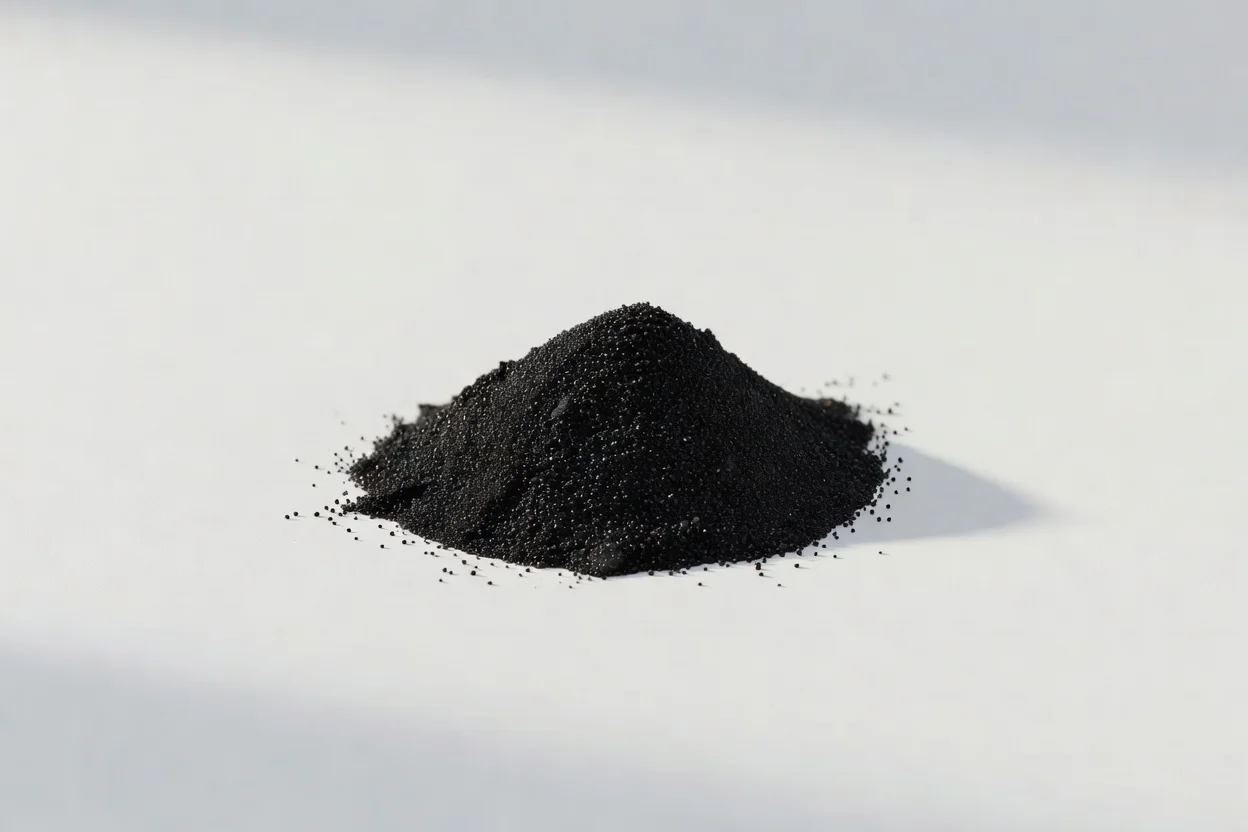
Conductivity agents are additives or filler systems used to impart or improve electrical conductivity, antistatic performance, or in some cases thermal conductivity in plastics, coatings, inks, adhesives, elastomers, and electrochemical materials. In the plastics industry, the term most often refers to conductive fillers and antistatic agents that help polymers overcome their intrinsically insulating nature, enabling controlled charge dissipation, electrostatic discharge protection, and stable current pathways in functional parts and battery electrodes.
The field spans several material families, including carbon black, conductive graphite, carbon nanotubes, graphene, metal powders, metal oxides, and ionic or surfactant-based antistatic compounds. In battery manufacturing, conductivity agents are especially important because they create percolating electron pathways between active particles and current collectors, reducing resistance, limiting polarization, and improving rate capability and cycle life.
Although these materials are often used at low loadings, their impact on processing, cost, safety, and performance can be substantial. Recent industry reporting indicates that the market is being shaped by demand from lithium-ion batteries, electronics, antistatic plastics, and thermal management materials, alongside a strong shift toward pre-dispersed products, carbon nanotube-based systems, and hybrid formulations.
From a materials science perspective, conductivity agents are not a single chemical class but a functional category. Their selection depends on the target mechanism of conductivity, the base polymer or matrix, the processing route, regulatory constraints, and cost-performance balance. As a result, the topic connects polymer compounding, electrochemistry, surface science, and circularity considerations across the plastics value chain.
History and Development
Early conductive plastic formulations relied on simple carbon blacks and graphite to reduce resistivity in otherwise insulating polymers. Over time, this evolved into more specialized grades with controlled particle size, structure, and surface area, especially for antistatic packaging, ESD-safe parts, and battery electrodes.
A major development was the rise of lithium-ion batteries, which created demand for conductivity agents that could form stable, low-resistance networks in dense composite electrodes. This accelerated interest in high-structure carbon blacks, acetylene black, vapor-grown carbon fibers, carbon nanotubes, and graphene-based dispersions.
In parallel, coatings and plastics applications expanded the use of quaternary ammonium compounds, fatty-amine derivatives, and ionic antistatic systems that migrate to the surface and attract moisture, forming a weakly conductive layer. More recently, conductive polymers and hybrid formulations have broadened the category beyond classical carbon fillers.
Chemical Structure and Key Properties
Conductivity agents work through different mechanisms depending on the material family:
- Electronic conductivity: carbon black, graphite, carbon nanotubes, graphene, and metal powders build percolation networks that allow electron transport through contact points, chains, or sheets.
- Ionic conductivity: quaternary ammonium salts, fatty-amine derivatives, and related antistatic additives increase surface moisture retention or ion mobility, improving static dissipation rather than bulk electronic conduction.
- Hybrid conductivity: some systems combine electron-conductive and ion-conductive components to balance processing, conductivity, and mechanical properties.
Main property drivers
- Particle size and specific surface area: smaller particles and higher BET surface area generally improve network formation and conductivity, but can increase viscosity and dispersion difficulty.
- Structure and morphology: branched or high-structure carbons improve contact probability; one-dimensional nanotubes and fibers are effective at low loadings because they bridge larger distances.
- Dispersion quality: agglomeration reduces effective surface area and interrupts the conductive network; this is often the most decisive processing variable.
- Loading level: conductivity improves abruptly after the percolation threshold is reached, but excess loading can damage mechanical properties, processability, and cost efficiency.
Practical limits and workarounds
| Limit | Cause | Workaround |
|---|---|---|
| Conductivity rises only after a threshold, then levels off | Percolation requires enough contacts to form a continuous network | Use high-structure carbon black, CNTs, or hybrid systems to lower the threshold |
| High loading increases viscosity and worsens processability | Fine conductive particles raise surface area and filler-filler interactions | Use pre-dispersed masterbatches, staged addition, or mixed filler systems |
| Poor long-term conductivity in some antistatic systems | Migratory additives can bloom or be depleted from the surface | Use non-migratory fillers or more durable conductive networks |
| Some conductive carbons are difficult to disperse uniformly | Strong agglomeration and van der Waals attraction | Apply high-shear mixing, optimized sequence, and dispersants |
Common material families
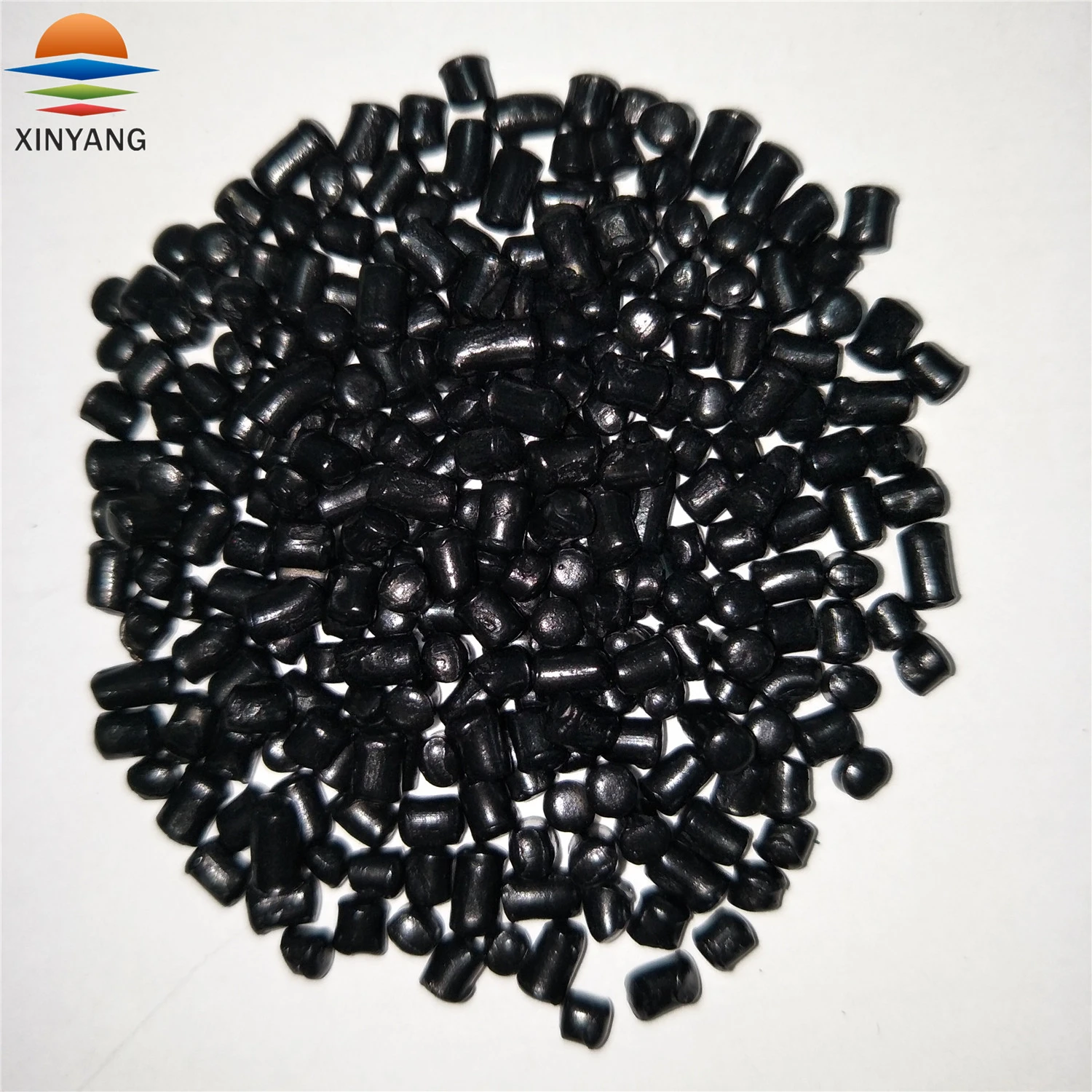
- Carbon black: acetylene black, furnace conductive black, Ketjenblack-type high-structure grades, and Super P-type products are widely used in batteries and conductive plastics.
- Graphite: conductive graphite grades such as KS and SFG series are used where lower cost and layered morphology are acceptable.
- Carbon nanotubes: used at lower weight loadings because of their high aspect ratio and efficient network formation.
- Graphene: offers strong theoretical conductivity and planar contact behavior, but requires especially demanding dispersion control.
- Metal and metal oxide systems: silver, copper, nickel, tin oxide, zinc oxide, and related systems are used where high conductivity or specialty electrical behavior is needed.
- Antistatic chemistries: quaternary ammonium compounds and fatty-amine derivatives are common in coatings and plastics.
Production Processes and Raw Feedstocks
Conductivity agents are produced through several industrial routes depending on the chemistry.
Carbon-based conductivity agents
- Carbon black is made by controlled thermal decomposition or incomplete combustion of hydrocarbons, yielding fine carbon particles with tunable structure and surface area.
- Graphite-based conductive additives are derived from natural or synthetic graphite, then milled, classified, and surface-treated to achieve desired particle size distribution and flake morphology.
- Carbon nanotubes are typically manufactured by catalytic vapor-phase processes, with the product later purified and sometimes pre-dispersed into masterbatches or slurries.
- Graphene and few-layer graphene are produced by exfoliation, reduction, or chemical vapor deposition routes, though many commercial conductive products use graphitic nano-platelet systems rather than ideal single-layer graphene.
Ionic and antistatic agents
- Quaternary ammonium compounds and fatty-amine derivatives are synthesized through standard surfactant and specialty chemical routes, then supplied as liquids or solids for blending into resins, coatings, or masterbatches.
- Some antistatic systems are designed to migrate to the surface and form a thin moisture-attracting conductive film.
Formulation and compounding
In plastics processing, conductivity agents are usually incorporated via:
- direct dry blending,
- masterbatch dilution,
- twin-screw extrusion compounding,
- in-situ dispersion in coatings or adhesives,
- or slurry preparation for battery electrodes.
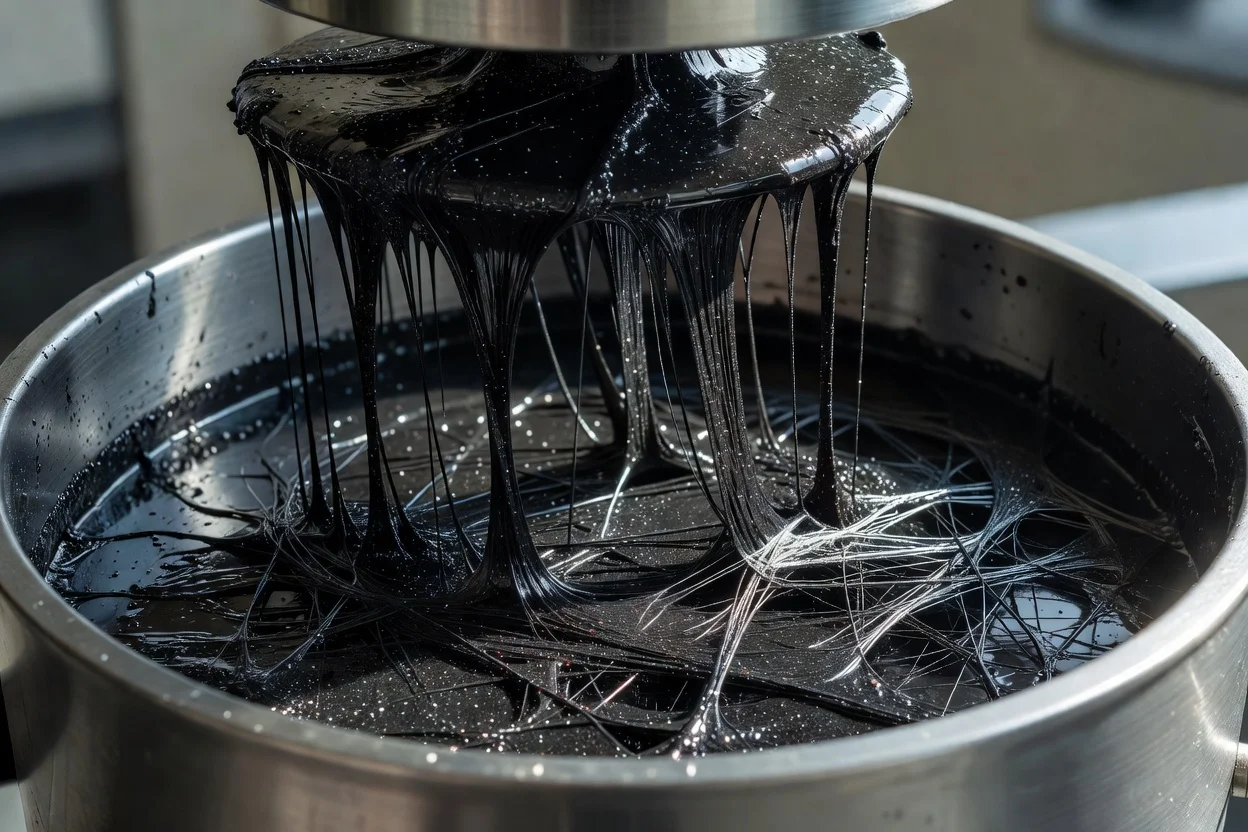
For electrode systems, dispersion order is crucial. A typical formulation may use about 1–3% conductive carbon black in conventional cathodes, while high-rate systems may combine 1–2% carbon black with 0.3–0.8% CNT to improve the conductive network and reduce resistance. The mechanism is straightforward: carbon black fills local gaps, while CNTs bridge longer distances and stabilize the percolation structure.
Applications and End-Use Markets
Lithium-ion batteries
This is the most strategically important application. Conductivity agents are added to cathodes and anodes to reduce internal resistance, improve rate performance, and support higher energy density and longer cycle life.
- Common grades: carbon black, conductive graphite, CNTs, graphene, and hybrid dispersions.
- Typical function: electronic conduction between active particles and current collectors.
- Process fit: slurry mixing, coating, drying, and calendaring require stable rheology and strong dispersion.
Antistatic and ESD plastics
Conductivity agents are used in packaging, trays, housings, floors, footwear components, and industrial parts to prevent static charge accumulation and discharge events.
- Common grades: quaternary ammonium compounds, fatty-amine derivatives, conductive carbon black, and graphite.
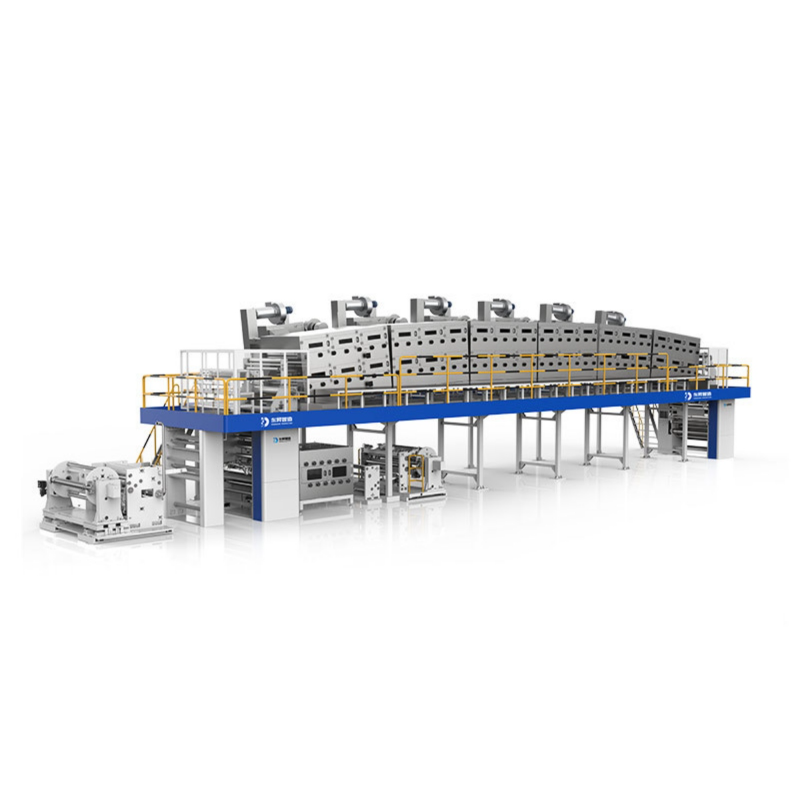
- Process fit: injection molding, extrusion, coating, and film production.
- Mechanism: surface conductivity or bulk conductive network formation.
Conductive coatings and inks
These systems are used for electrostatic spray coatings, EMI-related functionalities, and conductive surfaces in industrial and electronic applications.
- Common grades: conductive carbon black, metal oxides, and ionic conductivity additives.
- Process fit: solventborne, waterborne, and powder coating systems.
- Performance note: in powder coatings, conductivity agents reduce resistivity and improve charging efficiency.
Thermally conductive plastics and composites
Some conductivity agents contribute mainly to thermal transport rather than electronic conduction, especially in electronics housings and thermal interface materials.
Specialty applications
- Adhesives and sealants: conductive or antistatic behavior for assembly and electromagnetic shielding.
- Biomedical hydrogels and functional materials: conductive nanomaterials are used in emerging soft electronics and sensor platforms.
- Lubricants and fluids: in specialized systems, conductivity agents can adjust electrical conductivity for functional fluid behavior.
Poor-fit use case
A poor-fit application is highly transparent plastics, where conventional carbon-based conductivity agents often darken the material and reduce optical clarity. In such cases, transparent conductive oxides or alternative design strategies are generally more suitable.
Environmental and Sustainability Aspects
Conductivity agents raise sustainability issues that differ by chemistry and application.
Recyclability
- Carbon black and graphite can be compatible with many polymers, but they complicate mechanical recycling because they are hard to separate from the matrix once compounded.
- CNTs and graphene may improve performance at lower loadings, which can reduce total additive use, but they also increase cost and can complicate recycling and exposure management.
- Migratory antistatic additives may pose durability trade-offs because they can be depleted over time, reducing long-term effectiveness.
Bio-based and lower-impact alternatives
Bio-based conductivity agents are still limited compared with conventional carbon materials, but research is growing in conductive polymers, bio-derived carbon precursors, and hybrid systems. In plastics, the more immediate sustainability strategy is often reduced loading through higher-efficiency fillers rather than full substitution.
Carbon footprint considerations
The footprint depends strongly on feedstock and process route:
- petroleum-derived carbon blacks are energy-intensive but mature and cost-effective,
- CNTs and graphene can offer performance gains at lower loadings,
- yet their production routes may be more complex and not always lower in total environmental burden on a function-per-kilogram basis.
Trade-offs
The main sustainability trade-off is between material efficiency and manufacturing complexity. Lower-dose advanced fillers may reduce additive mass, but they often require tighter dispersion control, more processing energy, and more expensive upstream production.
Economic and Global Market Impact
According to recent industry analyses, conductivity agents are becoming increasingly important in battery materials, electronics, and antistatic plastics, with demand strongly linked to electric vehicles, energy storage, and miniaturized electronics.
The competitive landscape is shaped by:
- carbon black producers supplying battery and plastics grades,
- specialty carbon nanotube manufacturers targeting high-performance electrodes and composites,
- graphite and conductive carbon suppliers serving broader compounding markets,
- specialty additive companies focused on antistatic and coating applications.
In battery supply chains, the move toward domestic sourcing and pre-dispersion technology is a major industrial theme. Reports indicate that manufacturers are prioritizing conductivity, purity, thermal behavior, and processability while reducing dosage and improving consistency.
Current Challenges and Innovations
Current challenges
- Dispersion control: agglomeration remains the central technical problem, especially for CNTs and graphene.
- Trade-off between conductivity and rheology: higher filler content can damage coating quality and electrode packing density.
- Compatibility with high-silicon anodes and high-nickel cathodes: these systems often need tailored conductive networks because of larger volume changes and stricter process windows.
- Cost volatility: advanced carbon nanomaterials remain significantly more expensive than conventional carbon black or graphite.
Innovations
- Pre-dispersed CNT masterbatches and conductive slurries to simplify processing and improve reproducibility.
- Hybrid conductive networks combining carbon black, CNTs, and graphite to reduce total additive loading while maintaining conductivity.
- Surface-engineered carbons with better wetting, lower impurity levels, and more stable dispersion.
- Functional conductive polymers for niche applications where electronic/ionic balance is required.
- Application-specific design, such as formulations optimized separately for cathodes, anodes, antistatic housings, or coatings rather than one universal grade.
Future Outlook
The future of conductivity agents in plastics will likely be defined by three directions:
- Lower loading, higher efficiency: advanced fillers will be used to achieve conductivity with less material, supporting lighter and more cost-effective formulations.
- Greater pre-dispersion and formulation integration: suppliers will increasingly sell ready-to-use conductive masterbatches, slurries, and hybrid packages rather than raw powders alone.
- Application-specific sustainability: more attention will be paid to recyclability, purity, exposure control, and the full life-cycle footprint of conductive additives.
In batteries, conductivity agents will remain essential as electrode designs become more demanding and as fast-charging, high-energy, and long-life requirements intensify. In plastics and coatings, the strongest growth opportunities are likely in ESD packaging, electronics housings, thermal management, and functional composite parts.
Summary
Conductivity agents are a functional class of additives that give plastics and related materials the ability to conduct electricity, dissipate static charge, or assist thermal transport. Their performance depends on filler chemistry, particle morphology, loading, and dispersion quality, with carbon black, graphite, CNTs, graphene, and antistatic surfactant systems representing the main industrial families.
In the plastics industry, their most important role is to enable functional materials that combine processability with electrical performance. The sector is moving toward more efficient hybrid systems, better dispersion technology, and lower-dose formulations, while continuing to confront cost, recyclability, and environmental trade-offs.
References
- •
导电剂. (2024, December 28). Baidu Baike. https://baike.baidu.com/item/%E5%AF%BC%E7%94%B5%E5%89%82/10538713Link
- •
Conductivity agents market size, share, growth | CAGR. (2026, August 10). Future Market Report. https://www.futuremarketreport.com/industry-report/conductivity-agents-market/Link
- •
导电剂知识梳理(上). (2024, October 15). Yanfa666. https://www.yanfa666.cn/wp-content/uploads/2023/05/%E9%BB%84%E6%99%93%E9%9B%84-%E7%82%AD%E9%BB%91%E7%9F%B3%E5%A2%A8%E7%9F%A5%E8%AF%86%E6%A2%B3%E7%90%86.pdfLink
- •
Conductivity agents market research report 2034. (2021, February 13). Dataintelo. https://dataintelo.com/report/global-conductivity-agents-marketLink
- •
2026年导电剂行业深度调研与发展趋势预测. (2026, March 17). 中研网. https://m.chinairn.com/news/20260317/16421331.shtmlLink
- •
Conductive agent. (2019, March 8). In Wikipedia. https://en.wikipedia.org/wiki/Conductive_agentLink
- •
Conductive control material. (n.d.). Carlit Co., Ltd. https://www.carlit.co.jp/en/business/chemicals/conductive_material.htmlLink
- •
干货|锂离子电池导电剂基础知识及发展趋势解析. (2025, October 3). 电子工程专辑. https://www.eet-china.com/mp/a161566.htmlLink
- •
Liste des produits. (n.d.). Tecmos. https://tecmos.com/wp-content/uploads/2023/08/Conductividad-Agentes-Antiestaticos-.pdfLink
- •
Additives for anti-static equipment of coatings and plastics. (2020, March 19). Deuteron. https://deuteron.com/en/conductivity-agents/Link
- •
扫码登录. (2026, May 8). 实验家. https://www.shiyanjia.com/knowledge-articleinfo-9757.htmlLink
- •
2018年中国新型导电剂行业市场现状、发展优势及竞争格局分析[图]. (2019, December 19). 产业信息网. https://www.chyxx.com/industry/201912/819707.htmlLink
- •
导电剂/导电填料的种类与特点. (2025, January 8). CSDN. https://blog.csdn.net/szsk2003/article/details/145007080Link
- •
浅谈锂电导电剂. (2025, May 2). 博客园. https://www.cnblogs.com/plmshare/p/18857304Link
- •
导电炭黑深度报告:“小而美”电池材料,国产替代进行时. (n.d.). 东方财富. https://pdf.dfcfw.com/pdf/H3_AP202310241602917687_1.pdfLink
- •
导电剂行业专题报告:导电炭黑开启国产替代,碳纳米管渗透持续提速. (2022, June 1). 腾讯新闻. https://news.qq.com/rain/a/20220601A01VWM00Link
- •
2018高能量密度锂离子锂电池新型导电添加剂高峰论坛参会报告(陈志金). (n.d.). 中国科学院宁波材料所. https://battery.nimte.ac.cn/view-14843.htmlLink
- •
Report. (n.d.). SNE Research. https://www.sneresearch.com/en/business/report_view/170/page/0Link
- •
从石墨、炭黑到新型炭材料---锂电池导电剂材料大比拼. (2020, February 19). 搜狐. https://www.sohu.com/a/374188498_120106262Link
- •
导电剂. (2019, November 18). 科晶材料商城. https://www.kjsri.com/types/t000025Link
- •
锂离子电池用导电剂的类型及导电机理. (n.d.). Legion. https://www.legion.com.cn/news/tech/show-781.htmlLink
- •
Selecting conductivity agents for electrostatic spray coatings. (2025, July 10). SpecialChem. https://www.specialchem.com/coatings/guide/conductivity-agents-for-electrostatic-coatingsLink
- •
在锂电池领域,碳纳米管导电剂VS传统导电剂. (2020, November 12). 360doc. http://www.360doc.com/content/20/1112/10/31918354_945424815.shtmlLink
- •
What we do - Report. (n.d.). SNE Research. https://www.sneresearch.com/en/business/report_view/133/page/0Link
- •
Antistatic agents. (n.d.). ChemicalBook. https://www.chemicalbook.com/ProductCatalog_EN/1816.htmLink
- •
复合导电剂在超细炭微球超级电容器中的. (n.d.). 北京理工大学学报. http://journal.bit.edu.cn/zr/cn/article/pdf/preview/10.15918/j.tbit1001-0645.2022.017.pdfLink
- •
Method for controlling electrical conductivity of lubricating oils in electric vehicle powertrains. (2017, October 6). Google Patents. https://patents.google.com/patent/WO2018067903A1/enLink
- •
Research Journal of Pharmaceutical, Biological and Chemical Sciences. (n.d.). RJPBCS. https://www.rjpbcs.com/pdf/2014_5(3)/%5B45%5D.pdfLink
- •
材料性质及浆料制备对锂电池性能影响!. (2025, June 24). 电子工程专辑. https://www.eet-china.com/mp/a385683.htmlLink
- •
Journal of Materials Chemistry B. (n.d.). RSC Publishing. https://pubs.rsc.org/en/content/articlepdf/2023/tb/d2tb02019jLink
- •
Electroconductivity-imparting agent and electroconductive material. (2007, January 4). Google Patents. https://patents.google.com/patent/JP2008163271A/enLink
- •
(19)国家知识产权局. (n.d.). Patent Images. https://patentimages.storage.googleapis.com/7b/b1/f3/e373f49d998e10/CN111736441B.pdfLink
- •
Laboratory dielectric measurements to evaluate the conductivity. (2022, November 18). PMC. https://pmc.ncbi.nlm.nih.gov/articles/PMC9674620/Link
- •
Hydrogels with electrically conductive nanomaterials for biomedical applications. (2023, March 8). RSC Publishing. https://pubs.rsc.org/en/content/articlehtml/2023/tb/d2tb02019jLink
- •
導電性付与剤ならびにそれを含む組成物および成形体. (2009, April 17). Google Patents. https://patents.google.com/patent/WO2009130872A1/jaLink
- •
Modified conductive polymer and conductive element using the same. (n.d.). European Patent Office. https://data.epo.org/publication-server/rest/v1.0/publication-dates/20060614/patents/EP1670003NWA1/document.pdfLink