
Introduction
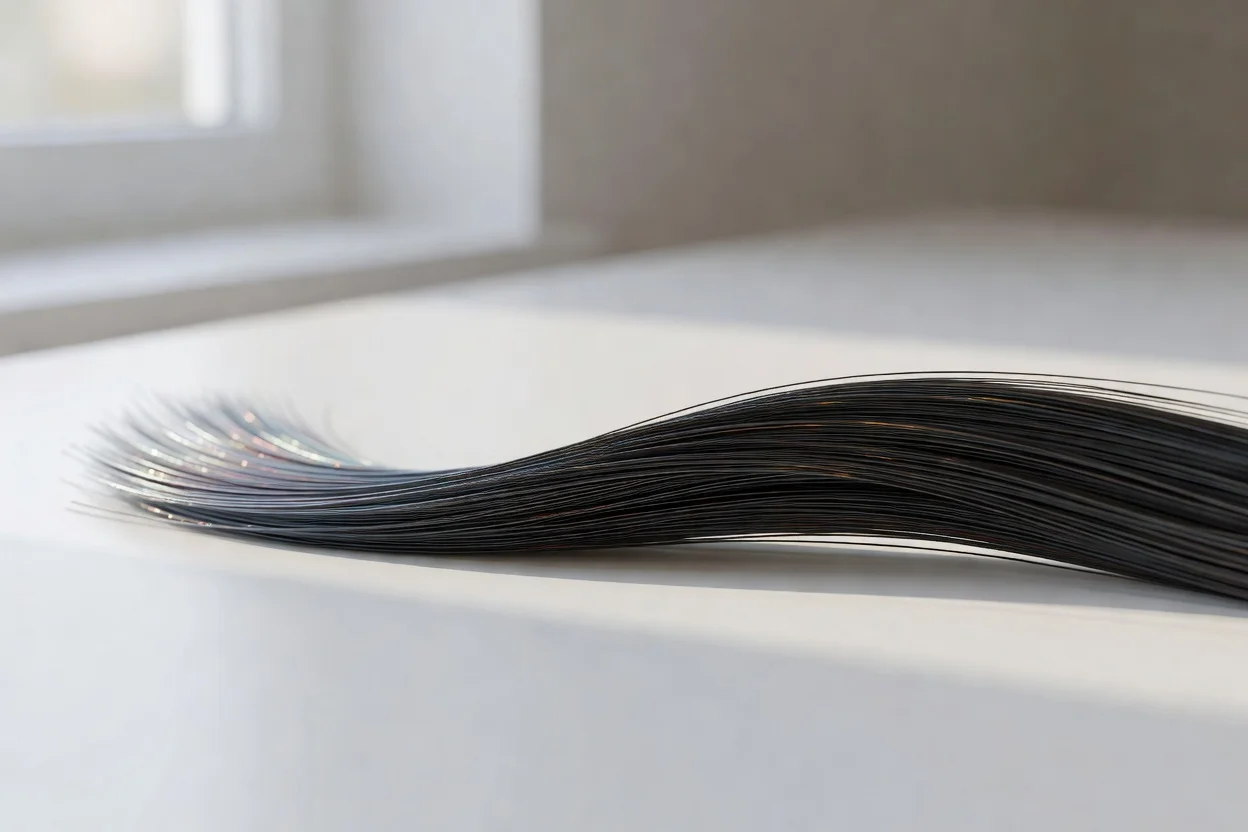
Basalt fiber is an inorganic, non-metallic fiber produced by melting selected basalt rock and drawing the melt into continuous filaments. It occupies a distinctive position in the plastics and composites ecosystem because it combines high temperature resistance, good chemical durability, and solid mechanical performance with a manufacturing route that is simpler than that of many high-performance synthetic fibers. Basalt fiber is used mainly as a reinforcement in polymer composites, but it also has important roles in construction, insulation, fire protection, transportation, and electrical applications.
The material is often discussed alongside glass fiber and carbon fiber. Compared with glass fiber, basalt fiber generally offers better temperature resistance and chemical stability; compared with carbon fiber, it is usually lower in stiffness and tensile performance but more economical and attractive for applications where extreme stiffness is not required. Its growth has been supported by interest in corrosion-resistant materials, fire-safe construction products, lightweight transportation components, and alternatives to asbestos-like or metal reinforcements in aggressive environments.
Basalt fiber is not a single standardized material class. Commercial products include continuous basalt filament, roving, chopped strand, fabric, and reinforcement forms such as basalt rebar and meshes. These variants are tailored to different processing routes, including pultrusion, filament winding, weaving, mat formation, and thermoset or thermoplastic compounding.
History and Development
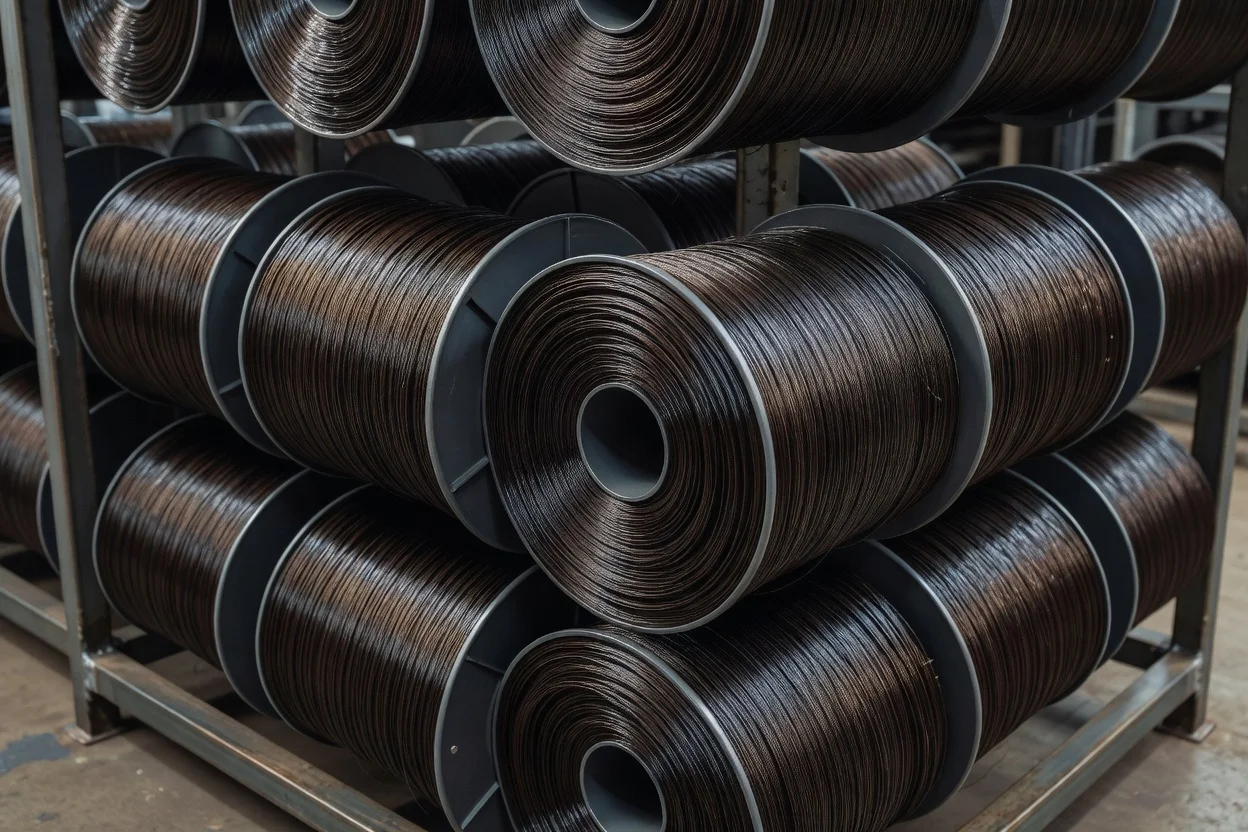
Modern basalt fiber development emerged in the mid-20th century, when industrial researchers recognized that certain volcanic rocks could be melt-spun into usable fibers. Earlier work was limited by furnace materials, melt control, and inconsistent basalt chemistry, but progress in high-temperature melting, platinum-rhodium bushings, and sizing technology made continuous production feasible.
Commercial interest expanded as manufacturers sought a reinforcement material that could bridge the gap between glass fiber and carbon fiber in cost-performance terms. Basalt fiber gained attention particularly in Eastern Europe and parts of Asia, then gradually in global niche markets for civil engineering, fire protection textiles, and composites.
Recent development has focused on:
- more stable melting and filament drawing,
- improved sizing systems for better resin adhesion,
- hybrid composites with glass, carbon, or aramid fibers,
- basalt-reinforced concrete and asphalt systems,
- and recycled or lower-carbon production pathways.
Chemical Structure and Key Properties
Basalt fiber is made from naturally occurring basalt rock rather than from a synthesized polymer precursor. Because basalt is an igneous rock with variable mineral composition, the exact fiber properties depend on the source geology and melt control. In practice, producers select basalt feedstock to maintain consistent silica, alumina, iron oxide, and alkaline earth content, since composition strongly affects viscosity, spinnability, and final fiber properties.
Key technical characteristics
Typical published values place basalt fiber in the following range:
- tensile strength: about 2600 to 4840 MPa,
- elastic modulus: about 80 to 115 GPa,
- elongation at break: about 2.4% to 3.15%,
- density: roughly 2.6 to 2.8 g/cm3,
- service temperature: commonly around 650 to 700 C, with higher short-term resistance reported for some products.
A concise comparison is shown below.
| Property | Basalt fiber | E-glass fiber | Carbon fiber |
|---|---|---|---|
| Density | about 2.6 to 2.8 g/cm3 | about 2.5 to 2.6 g/cm3 | about 1.8 g/cm3 |
| Tensile strength | about 2.6 to 4.8 GPa | about 3.1 to 3.8 GPa | about 3.5 to 6.0 GPa |
| Elastic modulus | about 80 to 115 GPa | about 72 to 78 GPa | about 230 to 600 GPa |
| Service temperature | about 650 to 700 C | about 380 C | about 300 to 500 C |
Real limits and practical workarounds
- Limit: lower stiffness than carbon fiber → Cause: basalt is an inorganic silicate fiber with modulus far below carbon fiber → Workaround: use basalt in hybrids with carbon fiber, or choose higher fiber volume fractions and optimized layups for stiffness-sensitive parts.
- Limit: variable quality across producers → Cause: basalt rock chemistry varies by quarry and affects melt behavior → Workaround: use tightly controlled feedstock selection, melt homogenization, and consistent sizing chemistry.
- Limit: weaker bonding with some polymer matrices without treatment → Cause: the fiber surface is chemically inert and needs tailored interface chemistry → Workaround: apply silane-based sizing or matrix-specific coatings to improve wetting and interfacial shear strength.
- Limit: poor fit for ultra-lightweight structures where density is critical → Cause: basalt is denser than carbon fiber and many polymer reinforcements → Workaround: use basalt where thermal, chemical, and fire resistance matter more than absolute weight minimums.
Important material behavior
Basalt fiber is valued for:
- high thermal stability, especially in fire and hot-zone applications,
- good acid, alkali, and corrosion resistance,
- electrical insulation and non-conductivity,
- UV and weather resistance,
- and a favorable balance of strength and cost.
Production Processes and Raw Feedstocks
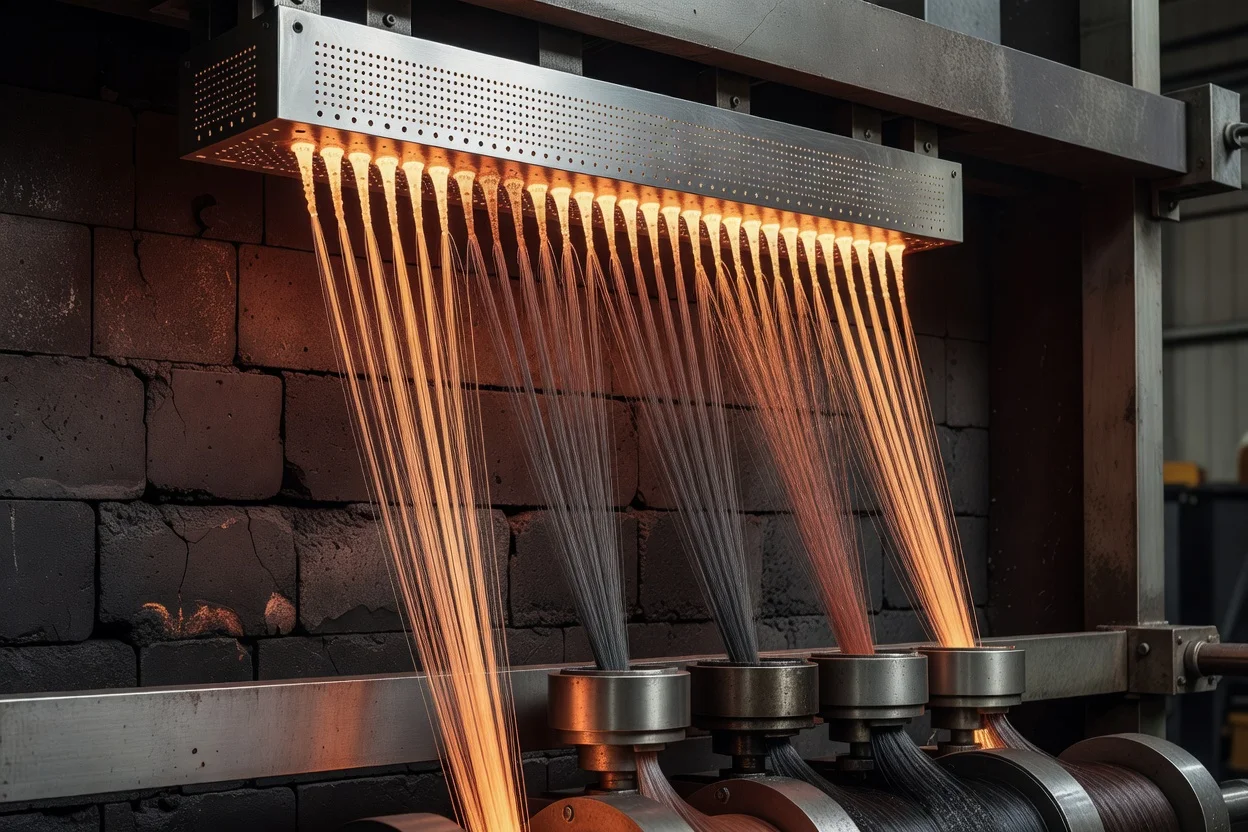
Basalt fiber production begins with quarried basalt rock, which is crushed, screened, and fed into a high-temperature furnace. The rock is typically melted around 1400 to 1600 C, then the molten material is drawn through fine bushing holes into continuous filaments, rapidly cooled, sized, and wound into rovings or further processed into chopped strand, fabric, or other forms.
Typical process chain
- Quarrying and selection of basalt rock
- Crushing and sizing of feedstock
- Melting in a gas-fired or electric furnace
- Homogenization of the melt
- Drawing through platinum-rhodium bushings
- Rapid cooling and filament solidification
- Application of sizing or lubricating finish
- Winding, twisting, chopping, or weaving into downstream forms.
Raw feedstock and auxiliaries
Although basalt is the principal raw material, production depends on several auxiliaries:
- sizing agents, often silane-based or polymer-compatible finishes, to protect filaments and improve matrix bonding,
- lubricants to support winding and handling,
- and controlled furnace energy, which is a major cost and emissions driver.
A typical sizing dosage is low, usually a thin surface treatment rather than a bulk additive; its role is to promote adhesion between the inorganic fiber surface and organic resins through coupling chemistry and wetting improvement.
Processing implications for plastics
Basalt fiber can be compounded into thermoplastics or used in thermosets, but the final performance depends heavily on:
- fiber length retention during compounding,
- dispersion and orientation,
- sizing compatibility with the polymer,
- and processing temperatures that do not damage the surface finish.
Applications and End-Use Markets
Basalt fiber is used most often as a reinforcement, insulation medium, or fire-resistant textile. Its main value is realized where thermal stability, chemical resistance, and moderate-to-high mechanical reinforcement are needed together.
| End-use sector | Usual basalt form | Typical processing route | Main performance benefit |
|---|---|---|---|
| Polymer composites | roving, chopped strand, fabric | pultrusion, filament winding, compression molding, thermoplastic compounding | higher heat and corrosion resistance |
| Civil engineering | mesh, rebar, fabric, chopped fiber | concrete reinforcement, textile-reinforced concrete, asphalt modification | crack control, durability, non-corrosion |
| Fire protection | fabric, blanket, rope | weaving, lamination, insulation assembly | flame resistance, thermal barrier behavior |
| Transportation | woven fabric, prepreg-like composites, roving | composite panel production, winding, molding | lightweight reinforcement, heat tolerance |
| Electrical and industrial insulation | fabric, mat, specialty textile | insulation blankets, filter media | dielectric performance, high-temperature use |
Major application areas
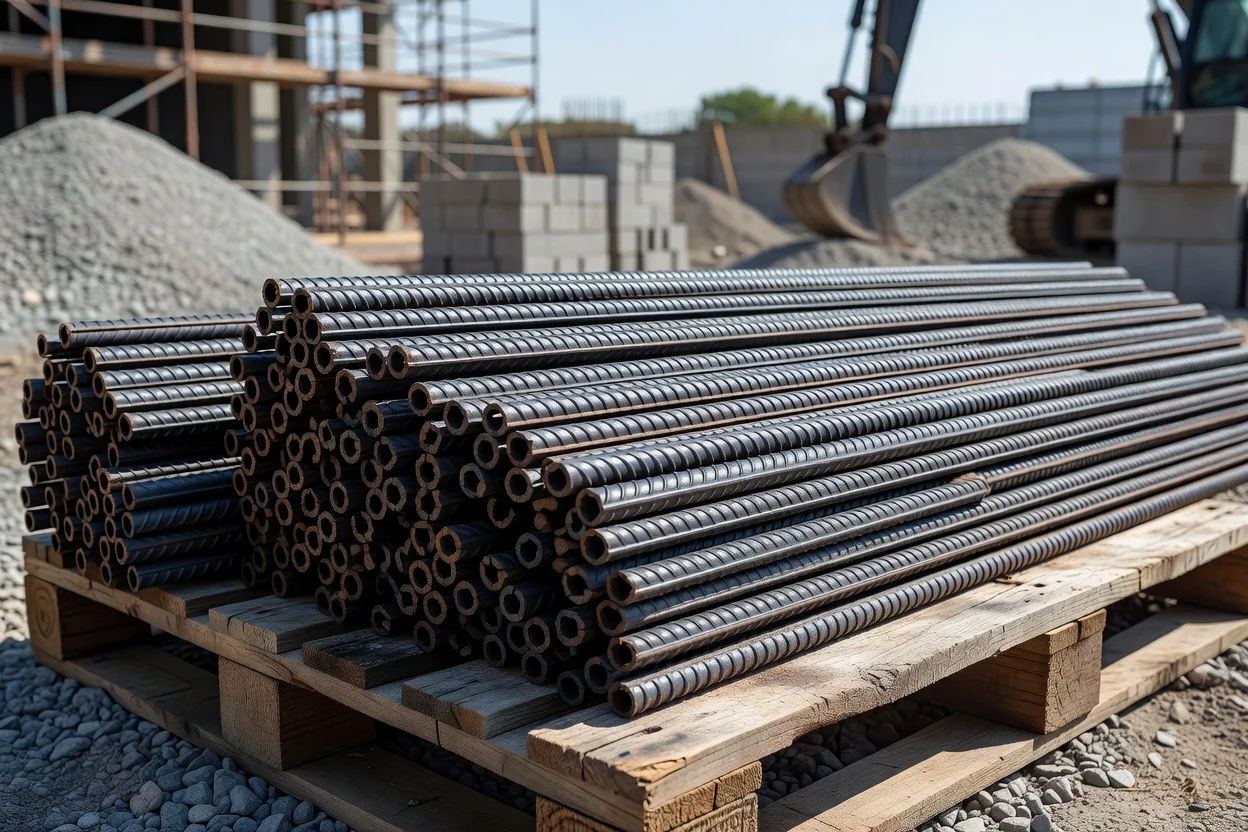
- Construction and infrastructure: basalt fiber is used in concrete reinforcement, bridge and tunnel systems, road materials, and corrosion-resistant meshes or rebars, especially where steel durability is challenged by moisture, salts, or alkali environments.
- Automotive and transportation: it is used in lightweight panels, insulation parts, braking-related materials, and fire-resistant components where a balance of strength, heat resistance, and cost is required.
- Marine and chemical environments: basalt fiber composites are attractive for pipes, tanks, and structural elements exposed to corrosive media.
- Fire protection and protective textiles: basalt fabric can be used in fire blankets, thermal insulation layers, and protective clothing because it retains integrity at high temperatures.
- Electrical and industrial uses: its non-conductive character supports insulation, filter media, and certain electronic or industrial applications.
One poor-fit use
Basalt fiber is a comparatively poor fit for ultra-high-stiffness aerospace primary structures, where carbon fiber’s much higher modulus and lower density provide a stronger performance advantage.
Environmental and Sustainability Aspects
Basalt fiber is often presented as a more environmentally acceptable reinforcement than some conventional high-performance fibers because it is made directly from abundant rock and does not require the complex precursor chemistry associated with carbon fiber production.
Sustainability advantages
- No polymer precursor route: the feedstock is natural basalt rock rather than petrochemical precursor polymers.
- Potentially lower processing complexity: production is generally described as simpler than carbon fiber manufacturing.
- Corrosion resistance: long service life can reduce replacement frequency in aggressive environments.
- Substitution potential: basalt can replace materials that corrode, degrade under UV, or are unsuitable in high-temperature service.
Sustainability trade-offs
- Energy-intensive melting: furnace temperatures around 1400 to 1600 C mean energy use remains significant.
- Non-biodegradable material: like other mineral fibers and composite reinforcements, basalt fiber does not readily biodegrade.
- Composite end-of-life challenge: once embedded in thermoset or multi-material composites, recovery and recycling remain difficult, similar to other fiber-reinforced plastics.
Recycling and circularity
Basalt fiber itself is mineral-based, but practical recycling usually depends on the surrounding matrix:
- thermoplastic composites offer better reprocessing potential than thermosets,
- mechanical recycling can recover mixed material streams at reduced performance,
- and design-for-disassembly remains important for infrastructure and transport parts.
Economic and Global Market Impact
Basalt fiber occupies a niche market between established glass fiber and higher-cost carbon fiber. Its economics are driven by raw rock availability, furnace energy cost, bushing durability, sizing technology, and downstream conversion into high-value composite products.
Market demand is strongest in:
- construction and infrastructure,
- industrial insulation,
- fire protection textiles,
- and corrosion-resistant composites.
Manufacturing capacity has been associated with producers in Eastern Europe, China, and other industrial regions, with companies such as Kamenny Vek frequently cited among recognized suppliers in commercial basalt fiber applications. The market remains smaller and less standardized than mainstream glass fiber markets, but it has benefited from growing attention to durability and fire safety in infrastructure and transport.
Current Challenges and Innovations
Current challenges
- Feedstock consistency: geological variability complicates reproducible fiber quality.
- Standardization: fewer universal grade standards exist compared with glass fiber families.
- Interface engineering: optimal sizing formulations must be matched to epoxy, polyester, vinyl ester, polypropylene, or other matrices.
- Cost competitiveness: basalt must compete with very mature glass fiber supply chains.
- Recycling of composites: the fiber is durable, but the composite article is often hard to reclaim at end of life.
Innovations
- Hybrid composites: basalt combined with carbon or glass can balance stiffness, cost, and fire resistance.
- Civil engineering products: basalt rebar, mesh, and textile-reinforced concrete are expanding use cases in corrosion-prone environments.
- Thermal and fire-safe textiles: demand is increasing for protective fabrics and insulation layers in industrial and transport applications.
- Improved sizings: new coupling chemistries aim to improve bonding in thermoplastics and thermosets.
- Sustainable manufacturing: lower-energy furnaces, waste heat recovery, and cleaner power sourcing are key innovation directions.
Future Outlook
Basalt fiber is likely to remain a specialized reinforcement rather than a mass commodity, but its role can expand where regulations and engineering priorities emphasize fire safety, corrosion resistance, and long service life. Civil infrastructure, industrial insulation, transport safety, and composite systems for harsh environments are the most promising growth segments.
Future progress will depend on:
- better control of basalt feedstock chemistry,
- more consistent sizing systems,
- clearer performance standards,
- and stronger end-of-life strategies for basalt-reinforced composites.
If these issues are addressed, basalt fiber can strengthen its position as a practical intermediate between commodity glass fiber and premium carbon fiber, particularly in applications where durability and thermal resilience matter more than extreme stiffness or the lowest possible mass.
Summary
Basalt fiber is a melt-spun mineral fiber made from basalt rock, valued for its strong balance of mechanical performance, thermal resistance, chemical durability, and electrical insulation. Its main commercial role is as a reinforcement and protective material in composites, construction, insulation, and fire-safe products, with sustainability benefits that are real but constrained by high-temperature production and composite recycling challenges.
References
- •
Kamenny Vek offers basalt fiber products at low prices. (n.d.). https://basfiber.com/applicationLink
- •
Basalt-based fiber-reinforced materials and structural applications in civil engineering. (n.d.). ScienceDirect. https://www.sciencedirect.com/science/article/abs/pii/S0263822318342259Link
- •
Basalt fibre - An overview. (n.d.). ScienceDirect. https://www.sciencedirect.com/topics/engineering/basalt-fibreLink
- •
A complete guide to basalt fiber. (2025, December 3). https://www.samaterials.com/content/a-complete-guide-to-basalt-fiber.htmlLink
- •
Basalt fiber. (2005, February 17). In Wikipedia. https://en.wikipedia.org/wiki/Basalt_fiberLink
- •
What is basalt fiber? Properties, uses & industry guide. (2025, September 19). https://jotaintl.com/about-us/academy/what-is-basalt-fiber/Link
- •
What is basalt fiber? Properties, applications & benefits in ... (2025, August 14). https://www.beskamold.com/basalt-fiber/Link
- •
Basalt fiber properties. (2014, December 10). Basaltfiberworld. https://basaltfiberworld.wordpress.com/basalt-fiber-properties/Link
- •
A short review on basalt fiber. (n.d.). https://allendalefibertech.com/wp-content/uploads/2023/02/Basalt-Technical-Fibers.pdfLink
- •
Basalt fiber products and their versatile applications. (2025, August 19). https://www.basaltbest.com/news/basalt-fiber-products-and-their-versatile-applications/Link
- •
Applications of the basalt fiber. (n.d.). http://www.bafanet.com/anwendungen/?lang=enLink
- •
Basalt - Application. (n.d.). https://www.swicofil.com/commerce/products/basalt/771/applicationLink
- •
HG-GBF basalt fibre | Applications. (n.d.). https://www.hg-gbfbasalt.com/en/the-fiber/applicationsLink
- •
Basalt fiber — How it's made. (2025, June 29). https://optarray.substack.com/p/basalt-fiber-how-its-madeLink
- •
What is basalt fiber: Properties, manufacturing and applications. (2025, September 6). https://textilelearner.net/what-is-basalt-fiber-properties-manufacturing-and-applications/Link
- •
Basalt fiber and its composite manufacturing and applications. (n.d.). https://internationalpolicybrief.org/wp-content/uploads/2025/02/ARTICLE-7.pdfLink
- •
BASALT FIBER. (n.d.). Fibre2Fashion. https://static.fibre2fashion.com/articleresources/PdfFiles/56/5566.pdfLink
- •
Properties and applications of basalt fiber and its composites. (n.d.). https://2024.sci-hub.se/7267/b7880b50dde458d06b6cf296bdd1b342/li2018.pdfLink
- •
Technology of production of basalt fiber, roving. (n.d.). https://fiberbas.com/products/basalt-rebar/Link
- •
Processing and mechanical properties of basalt fibre reinforced composites. (2022, March 17). PMC. https://pmc.ncbi.nlm.nih.gov/articles/PMC8950946/Link
- •
A review on basalt fiber and basalt fiber reinforced polymer. (n.d.). https://scispace.com/pdf/a-review-on-basalt-fiber-and-basalt-fiber-reinforced-polymer-1udwm6uz.pdfLink
- •
Developments and industrial applications of basalt fibre. (n.d.). https://pdfs.semanticscholar.org/853a/77fa4d0612f657b082aba675ab41b1aa916d.pdfLink
- •
A review on basalt fiber composites and their applications in clean energy. (2022, June 12). PMC. https://pmc.ncbi.nlm.nih.gov/articles/PMC9227501/Link
- •
What is basalt fiber. (n.d.). Basalt Fiber Tech. https://www.basaltft.com/hist.htmLink
- •
Continuous basalt fiber technology and equipment. (n.d.). http://basaltfm.com/eng/fiber/technology.htmlLink
- •
Basalt mineral fiber application scenarios analysis. (2026, March 23). https://www.hb-fibre.com/news/basalt-mineral-fiber-application-scenarios-analysis/Link
- •
Basalt fiber production temperature. (2026, January 15). https://basaltfiberchina.com/inside-the-production-line-how-hard-basalt-is-carved-into-golden-fibers/Link
- •
The applications of basalt fiber. (2025, October 15). https://basaltfiberchina.com/the-applications-of-basalt-fiber/Link
- •
Basalt fiber. (n.d.). https://www.hg-gbfbasalt.com/en/the-fiber/basaltLink
- •
How basalt fibre is made: A step-by-step guide. (2025, October 2). https://www.linkedin.com/posts/dr-abdelhakim-ismail-amer-98093b255_basalt-fibre-is-produced-from-natural-volcanic-activity-7379566664012615680-p5rcLink
- •
Basalt fiber in the real world: 5 uses you'll actually see. (2025, October 8). https://www.linkedin.com/pulse/basalt-fiber-real-world-5-uses-youll-actually-qqmzcLink
- •
The weird and wonderful properties of basalt fibre. (2021, October 18). https://researchfeatures.com/weird-wonderful-properties-basalt-fibre/Link
- •
Basalt fibers: An environmentally acceptable and sustainable green material for polymer composites. (2024, July 19). ScienceDirect. https://www.sciencedirect.com/science/article/abs/pii/S0950061824019767Link
- •
Basalt fibre: Properties, manufacturing, and applications. (2025, August 14). https://www.linkedin.com/posts/al-arafat-b91774217_textile-technicaltextile-textilesboutique-activity-7361690042580287488-0Rt7Link
- •
The science behind basalt fiber reinforcement in concrete. (2025, June 12). https://www.pioneerfibre.com/post/basalt-fiber-reinforced-concrete-scienceLink
- •
Fabrics. (n.d.). Basalt Fiber Tech. https://www.basaltft.com/products/fab.htmLink
- •
INDUSTRIAL SAFETY ISSUES IN BASALT FIBER TECHNOLOGY. (n.d.). https://ec.europa.eu/social/BlobServlet?docId=20167&langId=enLink
- •
Basalt fibre: Versatile application possibilities. (n.d.). https://efs-faser.de/en/raw-materials/basalt-fiberLink
- •
Basalt continuous fiber (BCF) production techniques. (n.d.). http://basaltm.com/en/tehnologii/basalt-continuous-fiber-bcf-production-techniques.htmlLink
- •
The still-promised potential of basalt fiber composites. (2019, April 23). https://www.compositesworld.com/articles/the-still-promised-potential-of-basalt-fiber-compositesLink
- •
Properties and applications of basalt fiber and its composites. (n.d.). IOPscience. https://iopscience.iop.org/article/10.1088/1755-1315/186/2/012052/pdfLink
- •
Continuous basalt fiber production (English subtitles). (2006, June 19). https://patents.google.com/patent/EP1736449A1/enLink
- •
Basalt fibre. (n.d.). https://www.final-materials.com/gb/297-basalt-fibreLink
- •
A review on basalt fibre and its composites. (n.d.). ScienceDirect. https://www.sciencedirect.com/science/article/pii/S1359836815000062Link