
Introduction
Polyethylene terephthalate (PET) is a widely used thermoplastic polyester valued for its high strength-to-weight ratio, clarity, chemical resistance, and recyclability. It is a cornerstone material in beverage bottles, food packaging, polyester fibers, and an expanding range of engineering and technical applications, and it remains one of the most important raw materials in the global plastics value chain.
Chemically, PET is a condensation polymer derived mainly from terephthalic acid and ethylene glycol, or from dimethyl terephthalate and ethylene glycol in older routes. Its balance of stiffness, transparency, and processability has made it a dominant material in packaging and textiles, while its semicrystalline nature also supports thermoformed trays, technical films, and glass-fiber-reinforced engineering compounds.
PET is also central to sustainability debates in plastics because it is one of the most established mechanically recyclable polymers and a major target for chemical recycling and circular packaging systems. At the same time, its environmental profile is shaped by feedstock origin, bottle-to-bottle collection rates, fiber contamination, and the energy intensity of polymer production and reprocessing.
History and Development
PET was developed in the early 20th century as part of the broader rise of polyester chemistry, and it became commercially important after methods were established for producing high-molecular-weight fibers and resins. Its first major industrial success was in textiles, where polyester fibers offered durability, wrinkle resistance, and scalable production.
Packaging applications expanded later, especially after stretch blow molding enabled lightweight bottles with excellent carbonation retention and clarity. PET then grew into a global packaging standard, while also finding roles in films, engineering resins, and recycled polyester feedstocks.
Chemical Structure and Key Properties
PET is an aromatic polyester with repeating ester linkages in its backbone. Its aromatic terephthalate units contribute rigidity and thermal stability, while the ethylene glycol segments provide enough flexibility for melt processing and biaxial orientation.
Key property profile
| Property | Practical significance |
|---|---|
| High tensile strength | Supports lightweight bottles, fibers, and load-bearing films. |
| Good transparency | Enables clear beverage containers and display packaging. |
| Moderate gas barrier | Useful for carbonated drinks and packaged foods, though not sufficient for all barrier-sensitive products without modification. |
| Low moisture absorption | Helps dimensional stability in humid service. |
| Semicrystalline behavior | Allows tuning between clarity and stiffness through thermal history and orientation. |
PET has several important limits that define where it performs well and where it does not:
- Oxygen barrier is only moderate → the polymer structure slows gas diffusion, but not enough for long shelf life in highly oxygen-sensitive products → barrier coatings, multilayer structures, or copolymers are used to improve performance.
- Surface energy is relatively low before treatment → this reduces adhesive bonding and print anchorage in some applications → corona, plasma, flame, primers, or coating systems are used.
- Hydrolysis sensitivity at elevated temperature and moisture → ester bonds can cleave during processing if resin is wet → thorough pre-drying is required before molding or extrusion.
- Limited resistance to strong alkalis and some solvents → chemical attack can reduce performance → material selection is adjusted for the service environment.
For PET, a small but important processing factor is moisture control: even low residual water can cause chain scission during melt processing, reducing molecular weight and mechanical performance.
Production Processes and Raw Feedstocks
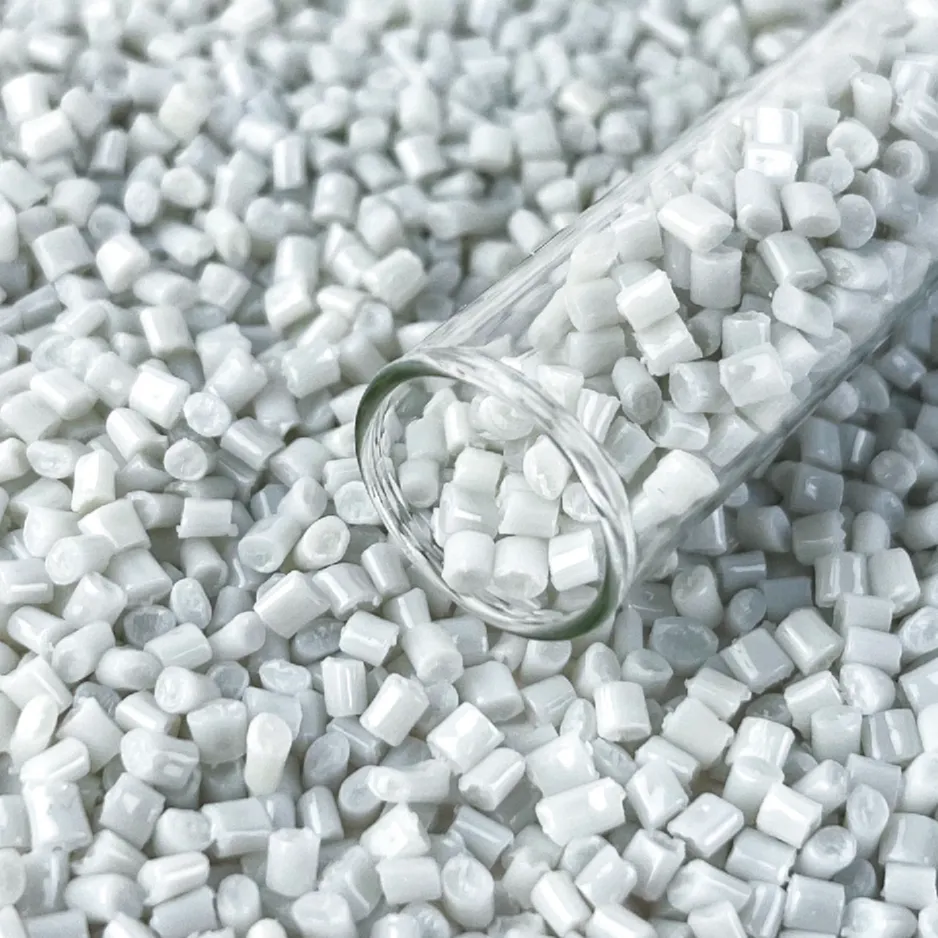
Commercial PET is produced by polycondensation of purified terephthalic acid with ethylene glycol, or by ester exchange routes using dimethyl terephthalate. The process is typically followed by solid-state polymerization when higher intrinsic viscosity is needed for bottle grades or high-performance fibers.
Main feedstocks
- Purified terephthalic acid from petrochemical aromatics chains.
- Ethylene glycol from ethylene-derived chemistry.
- Catalysts, historically antimony-based, with titanium- and germanium-based alternatives also used.
- Additives and modifiers for color control, acetaldehyde management, nucleation, chain extension, and processing stability.
Leading producers and industry position
The PET market is highly globalized and integrated with the broader polyester chain. Large producers and technology leaders include Indorama Ventures, Reliance Industries, SABIC, Far Eastern New Century, Alpek, Sinopec-linked polyester chains, and major regional recyclate suppliers and converters; these firms are significant because of their resin capacity, vertical integration, and role in bottle-grade and fiber-grade supply. Capacity leadership tends to follow access to aromatics, glycol, and downstream fiber or packaging conversion rather than resin chemistry alone.
Applications and End-Use Markets
PET’s dominant applications track closely to its property profile: clarity, stiffness, processability, and recyclability.
Major end-use sectors
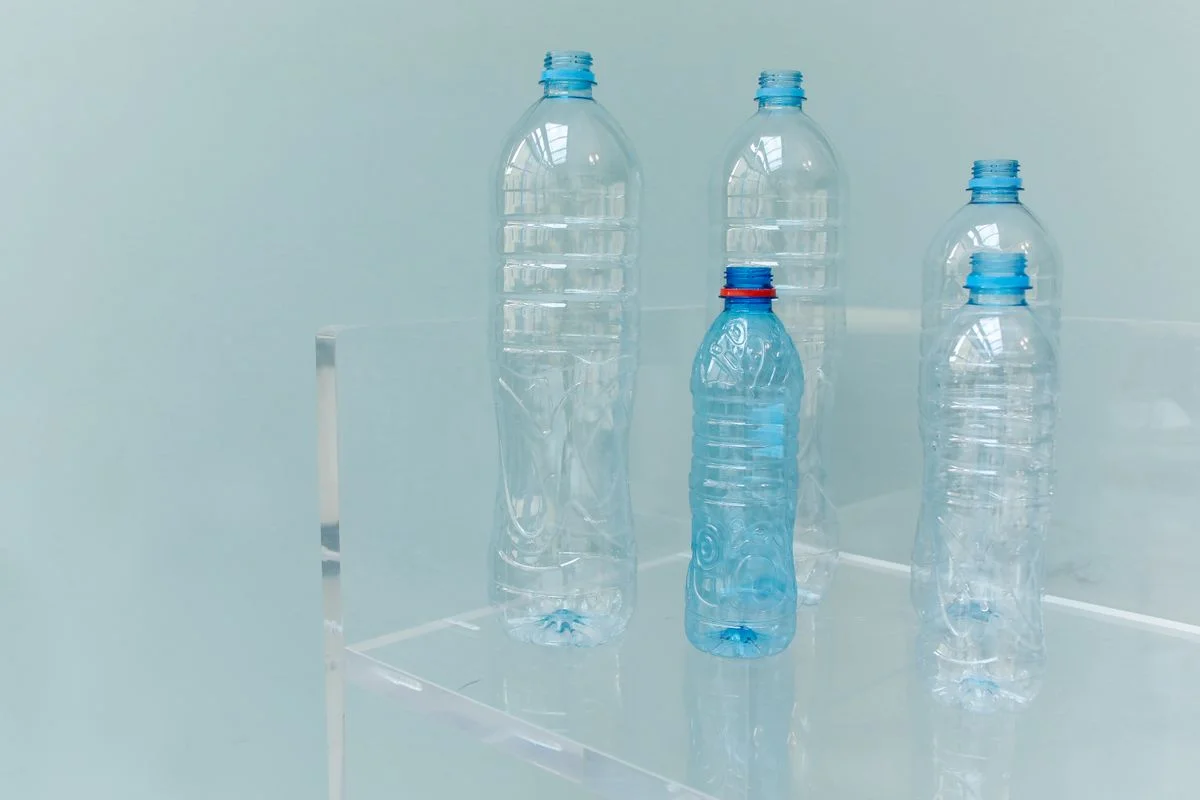
- Beverage bottles: Usually clear bottle-grade PET made by injection stretch blow molding; this is the best-known PET application because orientation improves strength and carbonation retention.
- Food packaging and trays: Often amorphous PET or crystallized PET, depending on whether clarity or heat resistance is prioritized.
- Polyester fibers: Spun from fiber-grade PET for apparel, home textiles, and industrial yarns; this remains one of the largest end-use segments.
- Films and sheets: Used in packaging, electrical insulation, labels, and laminated constructions; technical films benefit from dimensional stability and dielectric performance.
- Engineering plastics: Glass-fiber-reinforced PET is used in electrical, automotive, and mechanical parts where rigidity and heat resistance are needed.
- Recycled polyester products: rPET is widely used in new bottles, fiber, strapping, and nonwovens.
Usual grade and process by application
| Application | Typical PET grade | Typical process |
|---|---|---|
| Carbonated beverage bottles | Bottle-grade, high-IV PET | Injection stretch blow molding |
| Water and juice bottles | Bottle-grade PET | Stretch blow molding |
| Textile fibers | Fiber-grade PET | Melt spinning and drawing |
| Thermoformed trays | Amorphous or CPET grades | Sheet extrusion and thermoforming |
| Electrical films | Film-grade PET | Cast film or biaxially oriented film |
| Automotive/electrical parts | Reinforced PET compounds | Injection molding |
One relatively poor-fit use is continuous high-temperature service above the normal PET range, because standard PET softens and loses dimensional stability as service temperature rises; in such cases, higher-performance engineering polymers or heat-stabilized crystallized grades are preferred.
Environmental and Sustainability Aspects
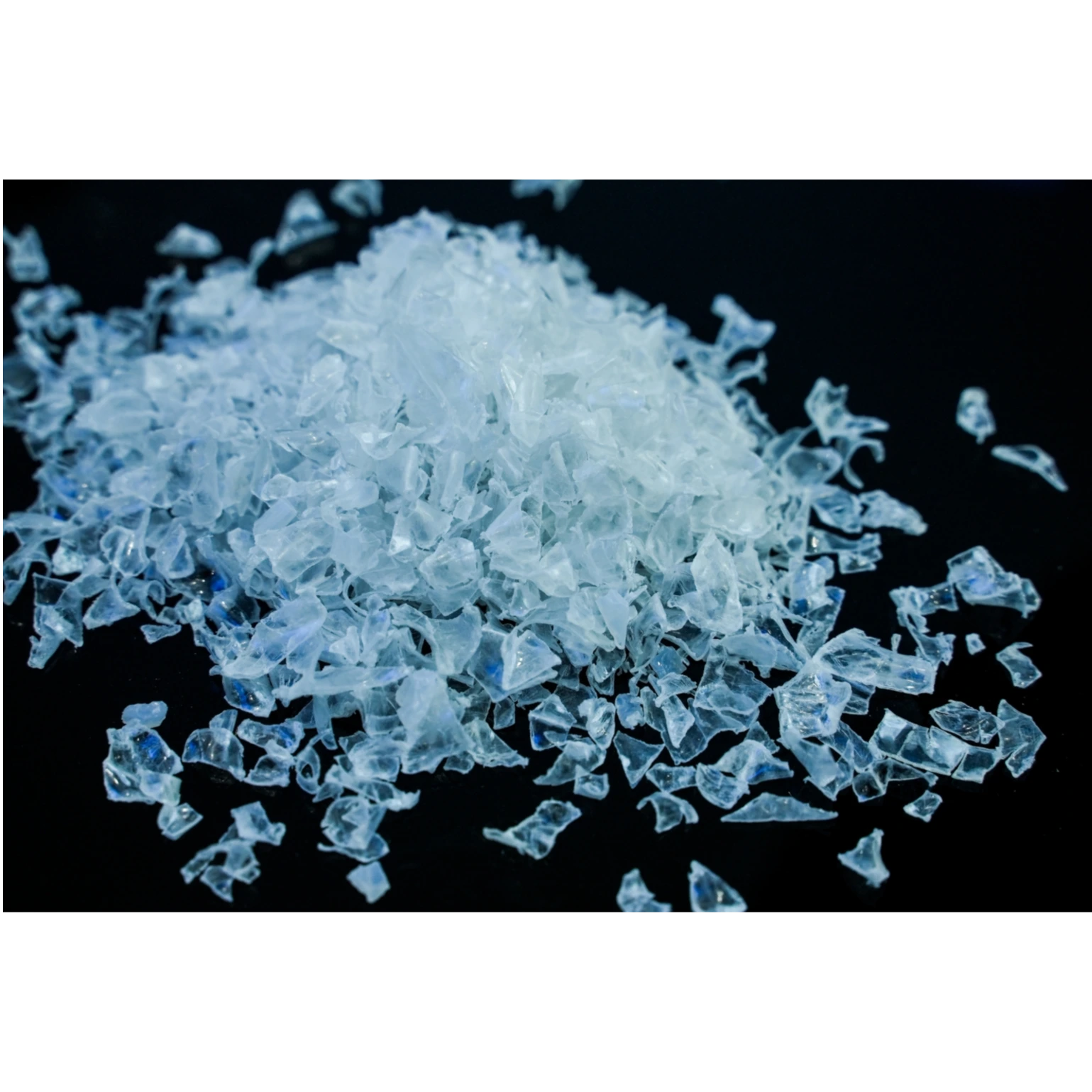
PET is one of the most recyclable plastics in commercial use, and it is widely identified with resin code #1. Mechanical recycling is well established, especially for clear bottle streams, where collected PET can be converted into flake, pellets, fiber, strapping, or even food-contact rPET when regulatory and decontamination requirements are met.
Sustainability strengths
- Established collection and sorting infrastructure for bottles in many regions.
- High potential for closed-loop recycling in beverage packaging.
- Compatibility with lightweighting, which reduces material use per package.
- Potential for bio-based feedstocks, especially bio-ethylene glycol and future renewable aromatics.
Sustainability constraints
- Virgin PET is still predominantly fossil-derived through its feedstock chain.
- Fiber-to-bottle recycling is harder than bottle-to-bottle recycling because textile PET streams often contain dyes, blends, and contaminants.
- Collection losses and sorting inefficiencies limit real-world circularity.
- Chemical recycling remains energy- and capital-intensive relative to mechanical recycling, despite its promise for difficult-to-recycle streams.
Recent technical literature emphasizes that PET’s sustainability performance depends strongly on collection rate, recycled content, conversion efficiency, and end-use lifetime rather than on polymer identity alone. For that reason, PET is often presented as both a success story in plastics circularity and a reminder that recycling systems matter as much as resin chemistry.
Economic and Global Market Impact
PET is among the highest-volume polymers globally, with demand concentrated in packaging and fibers. Its economic importance comes from the scale of beverage packaging, polyester textiles, and recycled polyester markets, all of which are deeply integrated with petrochemicals, logistics, consumer goods, and waste-management systems.
Because PET is used in both short-life packaging and long-life textiles, it occupies two different market logics at once: high-turnover consumer packaging and large-volume fiber manufacturing. This dual role gives PET unusual strategic importance in global plastics, but it also exposes the material to policy pressure over recycling performance, recycled-content mandates, and packaging waste reduction.
Current Challenges and Innovations
Key challenges
- Recycling quality loss in mixed or colored streams.
- Acetaldehyde control in bottle-grade resin, especially for sensitive beverage uses.
- Moisture sensitivity during processing, requiring strict drying.
- Competition from alternative materials such as multilayer barrier plastics, aluminum, glass, and bio-based polymers in certain niches.
- Textile microfibre release, which has intensified scrutiny of polyester apparel and nonwovens.
Innovations
- Chemical recycling via depolymerization back to terephthalic acid, ethylene glycol, or intermediates such as MHET, enabling higher-quality feedstock recovery from hard-to-recycle waste.
- Enzymatic recycling using PET hydrolases and related biocatalysts, a fast-moving research area with strong long-term promise for depolymerization under milder conditions.
- High-rPET bottle grades designed for food-contact applications and improved color control.
- Barrier enhancement systems, including coatings, multilayers, and reactive modifiers to extend shelf life without abandoning PET’s recyclability profile.
- Bio-based PET pathways, especially through renewable ethylene glycol and prospective renewable aromatic inputs.
A practical formulation example is the use of small amounts of chain extenders or branching agents in recycled PET to recover melt strength for sheet or tray production; these additives work by rebuilding molecular weight or creating controlled long-chain branching, which improves processability after multiple recycling loops.
Future Outlook
PET is likely to remain a dominant packaging and polyester fiber material because its combination of performance, cost, and industrial maturity is difficult to replace at scale. The most important future shifts are expected in recycled content, chemical recycling integration, renewable feedstocks, and design-for-recycling packaging formats.
Future competitiveness will depend on whether PET systems can deliver:
- higher closed-loop recycling rates for bottles,
- better sorting and decontamination for textile and multilayer waste,
- lower carbon intensity across the feedstock and polymer chain,
- and improved functionalization for barrier, heat resistance, and compatibility with circular manufacturing.
Summary
PET is a high-volume, high-performance polyester that combines clarity, mechanical strength, processability, and established recyclability. Its industrial importance spans bottles, fibers, films, trays, and engineering compounds, while its future will be shaped by recycling technology, low-carbon feedstocks, and the ability of the plastics sector to build truly circular PET value chains.
References
- •
Polyethylene terephthalate. (2003, August 10). Wikipedia. https://en.wikipedia.org/wiki/Polyethylene_terephthalateLink
- •
Polyethylene terephthalate (PET or PETE). (n.d.). Britannica. https://www.britannica.com/science/polyethylene-terephthalateLink
- •
Polyethylene terephthalate (PET) - Uses, properties & structure. (n.d.). SpecialChem. https://www.specialchem.com/plastics/guide/polyethylene-terephthalate-pet-plasticLink
- •
Polytéréphtalate d'éthylène. (2004, March 1). Wikipédia. https://fr.wikipedia.org/wiki/Polyt%C3%A9r%C3%A9phtalate_d'%C3%A9thyl%C3%A8neLink
- •
PET plastic: Properties, uses & injection molding guide. (n.d.). Dimud. https://dimud.com/what-is-pet-plastic/Link
- •
Polyethylene terephthalate (PET) plastic: Properties and applications overview. (n.d.). Chemdo. https://www.chemdo.com/news/polyethylene-terephthalate-pet-plastic-properties-and-applications-overview/Link
- •
Polyethylene terephthalate. (2025, February 25). Britannica. https://www.britannica.com/print/article/468536Link
- •
Pegoterate. (n.d.). PubChem. https://pubchem.ncbi.nlm.nih.gov/compound/PegoterateLink
- •
Guide to polyethylene terephthalate (PET). (2024, October 8). USEON. https://www.useon.com/polyethylene-terephthalate/Link
- •
Polyethylene terephthalate. (2007, April 24). Simple English Wikipedia. https://simple.wikipedia.org/wiki/Polyethylene_terephtalateLink
- •
Poly(ethylene terephthalate). (2022, October 17). American Chemical Society. https://www.acs.org/molecule-of-the-week/archive/p/poly-ethylene-terephthalate.htmlLink
- •
Occurrence, toxicity and remediation of polyethylene terephthalate as a microplastic. (2022, January 13). PMC. https://pmc.ncbi.nlm.nih.gov/articles/PMC8755403/Link
- •
Polyethylene terephthalate: Definition, properties, and uses. (2022, June 9). Xometry. https://www.xometry.com/resources/materials/polyethylene-terephthalate/Link
- •
Polyethylene terephthalate (PET) recycling: A review. (n.d.). ScienceDirect. https://www.sciencedirect.com/science/article/pii/S2666016424000677Link
- •
Polyethylene terephthalate (PET) in the packaging industry. (2020, October 29). ScienceDirect. https://www.sciencedirect.com/science/article/abs/pii/S0142941820310333Link
- •
PET plastic - Polyethylene terephthalate. (n.d.). Ensinger. https://www.ensingerplastics.com/en/thermoplastic-materials/pet-polyesterLink
- •
PET plastic | Material series for product design. (2026, February 2). First Mold. https://firstmold.com/guides/pet-plastic/Link
- •
Polyethylene terephthalate - An overview. (n.d.). ScienceDirect. https://www.sciencedirect.com/topics/medicine-and-dentistry/polyethylene-terephthalateLink
- •
The ultimate guide to PET plastic. (2021, March 29). 3devo. https://www.3devo.com/blog/ultimate-guide-to-pet-plasticLink
- •
Polyethylene terephthalate | PET structure, properties & uses. (n.d.). Study.com. https://study.com/academy/lesson/polyethylene-terephthalate-structure-uses.htmlLink
- •
What is PET plastic? Engineering and safety guide. (2024, February 8). Petainer. https://www.petainer.com/insights/materials-sustainability/what-is-pet-plasticLink
- •
An overview into polyethylene terephthalate (PET). (2022, October 20). PMC. https://pmc.ncbi.nlm.nih.gov/articles/PMC9603852/Link
- •
Polyethylene terephthalate. (2023, October 20). ScienceDirect. https://www.sciencedirect.com/topics/chemical-engineering/polyethylene-terephthalateLink
- •
What is PET plastic? | Plastic types. (n.d.). The Plastic Bottles Company. https://www.theplasticbottlescompany.com/plastic-types/pet-plastic/Link
- •
Polyethylene terephthalate. (2013, April 5). EBSCO. https://www.ebsco.com/research-starters/chemistry/polyethylene-terephthalateLink
- •
Chemistry polyethylene terephthalate. (2026, January 1). Satheejee. https://satheejee.iitk.ac.in/article/chemistry/chemistry-polyethylene-terephthalate/Link
- •
Polyethylene terephthalate - An overview. (n.d.). ScienceDirect. https://www.sciencedirect.com/topics/agricultural-and-biological-sciences/polyethylene-terephthalateLink
- •
Polyethylene terephthalate - An overview. (n.d.). ScienceDirect. https://www.sciencedirect.com/topics/pharmacology-toxicology-and-pharmaceutical-science/polyethylene-terephthalateLink
- •
What is PET? (2026, March 25). NAPCOR. https://napcor.com/about-pet/Link
- •
Packaging material made from polyethylene terephthalate (PET). (2026, August 13). DLG. https://www.dlg.org/en/mediacenter/dlg-expert-reports/food-technology/dlg-expert-report-04-2016-packaging-material-made-from-polyethylene-terephthalate-petLink
- •
Polyethylene terephthalate. (n.d.). RSC Education. https://edu.rsc.org/magnificent-molecules/polyethylene-terephthalate/2500258.articleLink
- •
Sustainability performance of polyethylene terephthalate. (2022, January 1). Wiley. https://onlinelibrary.wiley.com/doi/full/10.1002/pol.20210495Link
- •
Polyethylene terephthalate. (2025, November 1). ScienceDirect. https://www.sciencedirect.com/topics/earth-and-planetary-sciences/polyethylene-terephthalateLink