
Introduction
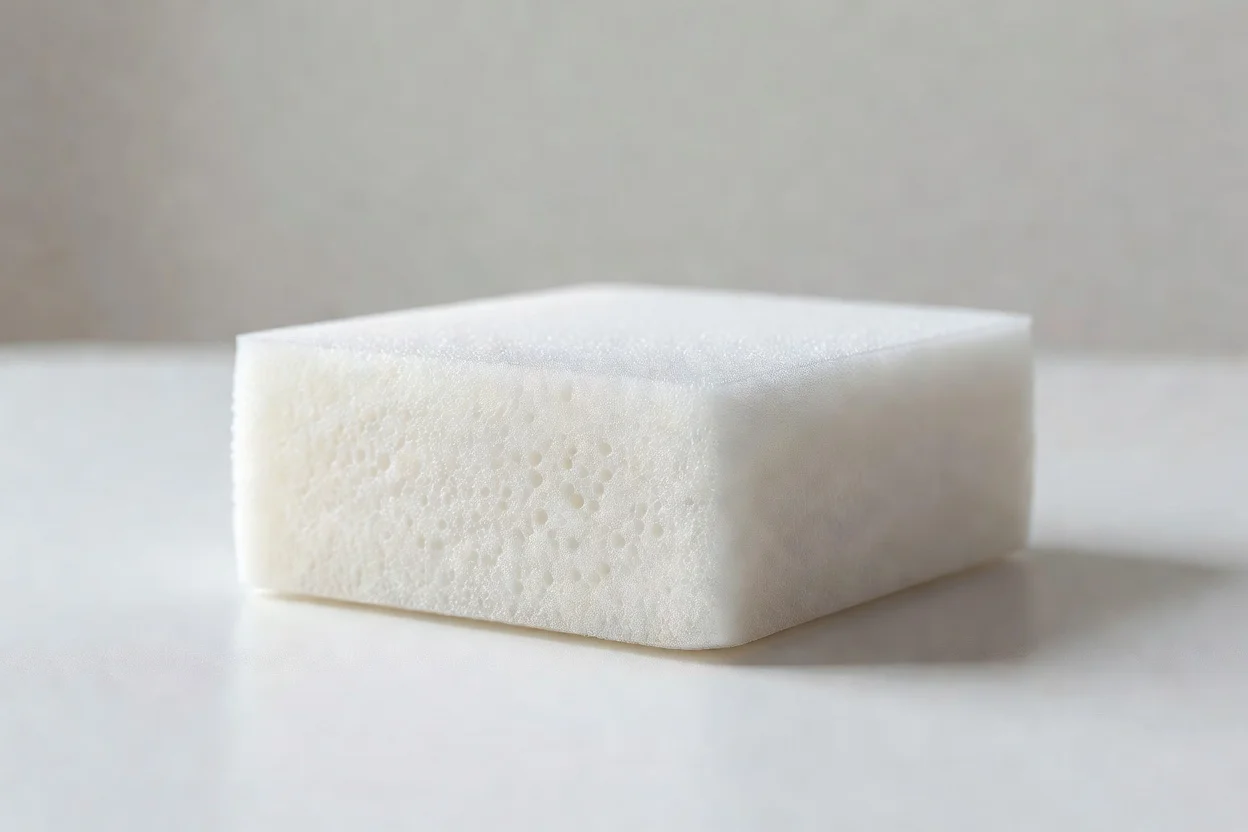
Polyurethane (PU, also written PUR) is a large family of polymers built around urethane linkages and produced by reacting isocyanates with polyols, usually with catalysts and other auxiliaries to tailor performance. It spans materials that behave like soft elastomers, rigid structural plastics, flexible and rigid foams, coatings, adhesives, sealants, fibers, and thermoplastic grades, making it one of the most adaptable raw-material systems in the plastics industry.
Its commercial importance rests on molecular design: by adjusting soft and hard segments, crosslink density, chain extenders, and formulation additives, manufacturers can move from cushioning foams to load-bearing wheels, insulation boards, protective coatings, and medical devices. PU is also a focal point of sustainability debate because conventional routes rely heavily on fossil-derived feedstocks and isocyanates, yet the chemistry is increasingly being adapted toward waterborne systems, lower-VOC formulations, recycled-content routes, and bio-based polyols.
History and Development
Polyurethane chemistry was developed in the 1930s by Otto Bayer and colleagues, and it later expanded into a broad industrial platform after the Second World War as foam, coating, adhesive, and elastomer technologies matured. Over time, the material class diversified into flexible foams, rigid foams, cast elastomers, thermoplastic polyurethane (TPU), and specialty systems for biomedical, automotive, construction, and electronics uses.
A defining feature of this development has been formulation flexibility rather than a single fixed resin identity. The same core reaction chemistry has been adapted to solve very different needs, from thermal insulation in buildings to abrasion resistance in industrial components and comfort in bedding and seating.
Chemical Structure and Key Properties
PU materials contain urethane groups formed through polyaddition chemistry, typically from diisocyanates or polymeric isocyanates plus polyols, with optional chain extenders and catalysts. The resulting morphology often separates into soft segments and hard segments, creating microphase-separated structures that combine elasticity with strength.
Common property advantages include:
- Abrasion resistance and wear durability, especially in elastomers and TPU.
- High tear strength and good load-bearing capacity.
- Wide hardness range, from soft foams to hard plastics and elastomers.
- Good low-temperature flexibility in many formulations.
- Strong adhesion to diverse substrates in coatings and adhesives.
Real limitations include:
- Poor hydrolysis resistance in some polyester-based grades → cause: ester bond cleavage under heat and moisture → workaround: use polyether-based polyols, hydrolysis-stable stabilizers, or design for dry-service conditions.
- Sensitivity to UV and weathering in many aromatic PU systems → cause: photo-oxidation of the polymer network → workaround: use aliphatic isocyanate-based topcoats, UV absorbers, HALS stabilizers, or protective multilayer designs.
- Isocyanate-related occupational hazards during production → cause: reactive, sensitizing monomers → workaround: closed processing, ventilation, exposure controls, and increasing use of prepolymers or alternative waterborne technologies.
- Poor O2 and grease barrier in many PU foams and films → cause: relatively open polymer matrix and formulation-dependent permeability → workaround: barrier coatings, laminates, or multilayer structures.
A few practical property examples illustrate the range: commercial PU elastomers can be formulated around Shore A 20 to Shore D 70, with tensile strength often in the tens of MPa and elongation frequently above 400%, while rigid foams are designed instead for low density and insulation performance rather than extensibility.
Production Processes and Raw Feedstocks
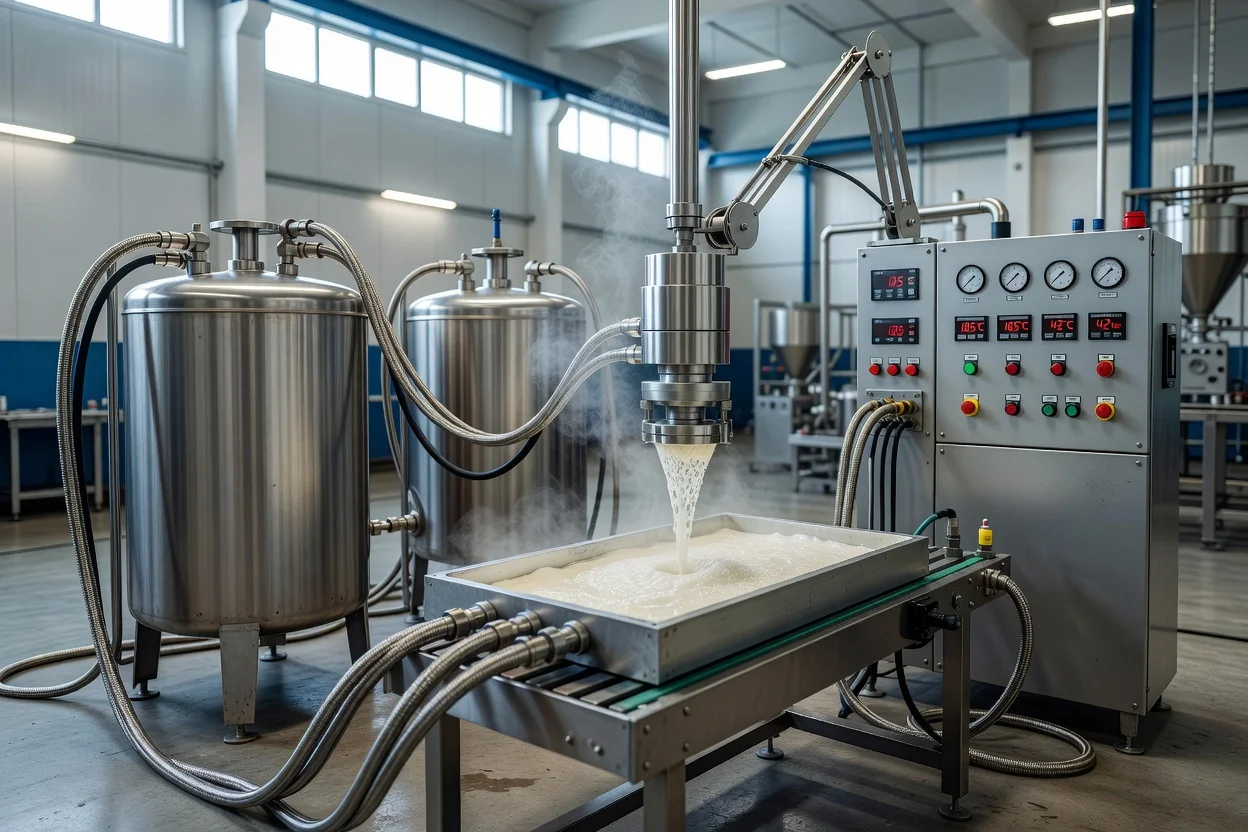
PU production is typically a step-growth process in which an isocyanate stream is combined with a polyol stream, then tuned with chain extenders, catalysts, surfactants, blowing agents, pigments, fillers, flame retardants, and stabilizers. The exact recipe determines whether the output becomes foam, elastomer, coating, adhesive, sealant, or TPU.
Major raw-material inputs include:
- Diisocyanates such as MDI and TDI, which contribute the hard-segment chemistry.
- Polyols, including polyether polyols and polyester polyols, which control flexibility, hydrolysis resistance, and processability.
- Chain extenders such as low-molecular-weight diols or diamines, which increase hard-segment content and mechanical strength.
- Additives, including catalysts, silicone surfactants, flame retardants, pigments, and fillers, which shape reaction rate, cell structure, fire performance, color, and cost.
In foam manufacturing, chemical blowing agents or physical gas generation create the cellular structure, whereas coatings and adhesives rely on carefully balanced reactivity, viscosity, and cure profile. TPU is produced differently from thermoset PU systems in that it is a melt-processable elastomeric polymer, which broadens processing options such as extrusion and injection molding.
Applications and End-Use Markets
PU is used across nearly the entire plastics value chain because the chemistry can be tuned for comfort, insulation, protection, sealing, bonding, and durable load-bearing parts.
| End-use sector | Typical PU form | Usual processing route | Main function |
|---|---|---|---|
| Bedding and furniture | Flexible foam | Slabstock or molded foam | Cushioning and resilience |
| Automotive interiors | Flexible foam, coatings, elastomers, TPU | Foaming, coating, molding | Comfort, weight reduction, abrasion resistance |
| Construction | Rigid foam, sealants, adhesives, coatings | Panel foaming, cartridge application, spray systems | Thermal insulation, bonding, waterproofing |
| Footwear | TPU, elastomers, foams | Injection molding, compression, casting | Soles, midsoles, wear parts |
| Electrical and electronics | Potting compounds, encapsulants | Casting and dispensing | Insulation and protection |
| Medical devices | TPU, coatings, specialty elastomers | Extrusion, molding, coating | Tubing, catheters, wound care, devices |
| Industrial parts | Elastomers, wheels, rollers, seals | Casting, molding | Wear resistance and load bearing |
| Textiles and synthetic leather | Coatings and films | Coating and lamination | Surface finish, flexibility, aesthetics |
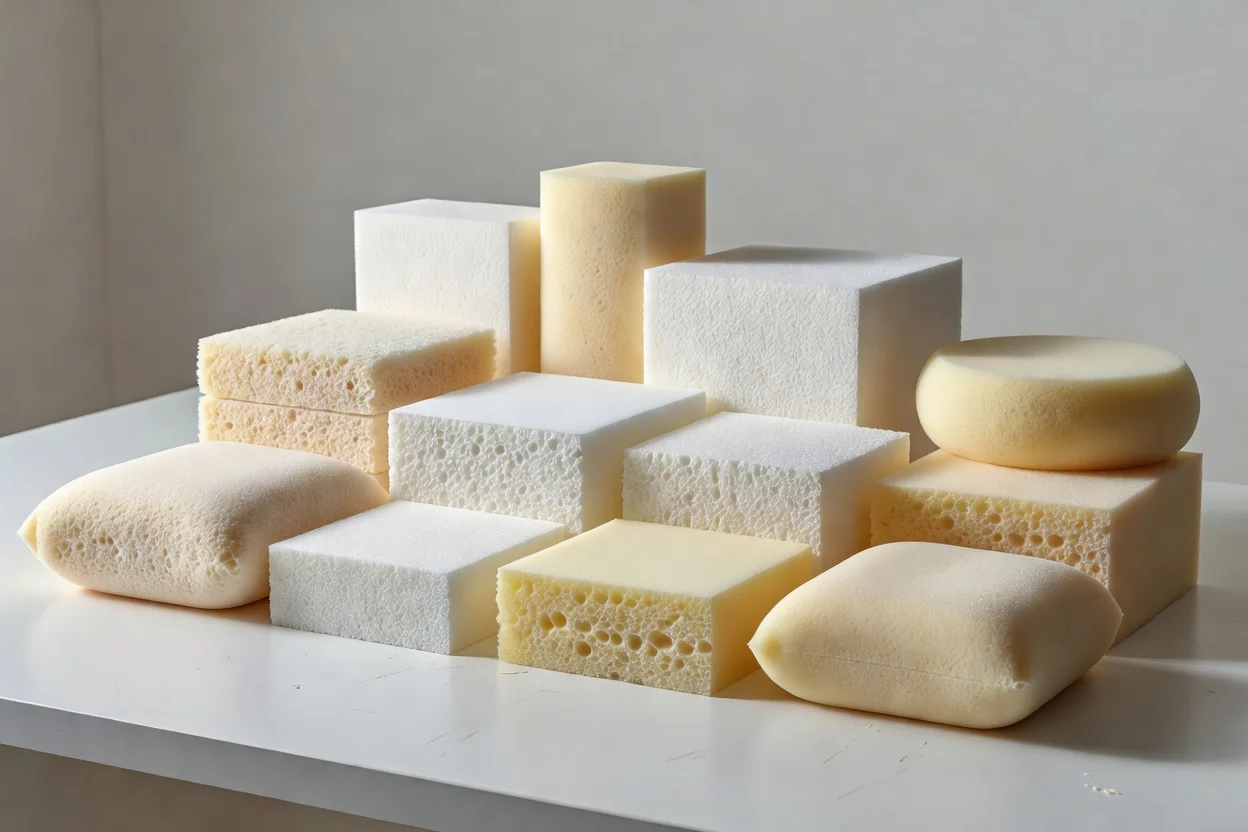
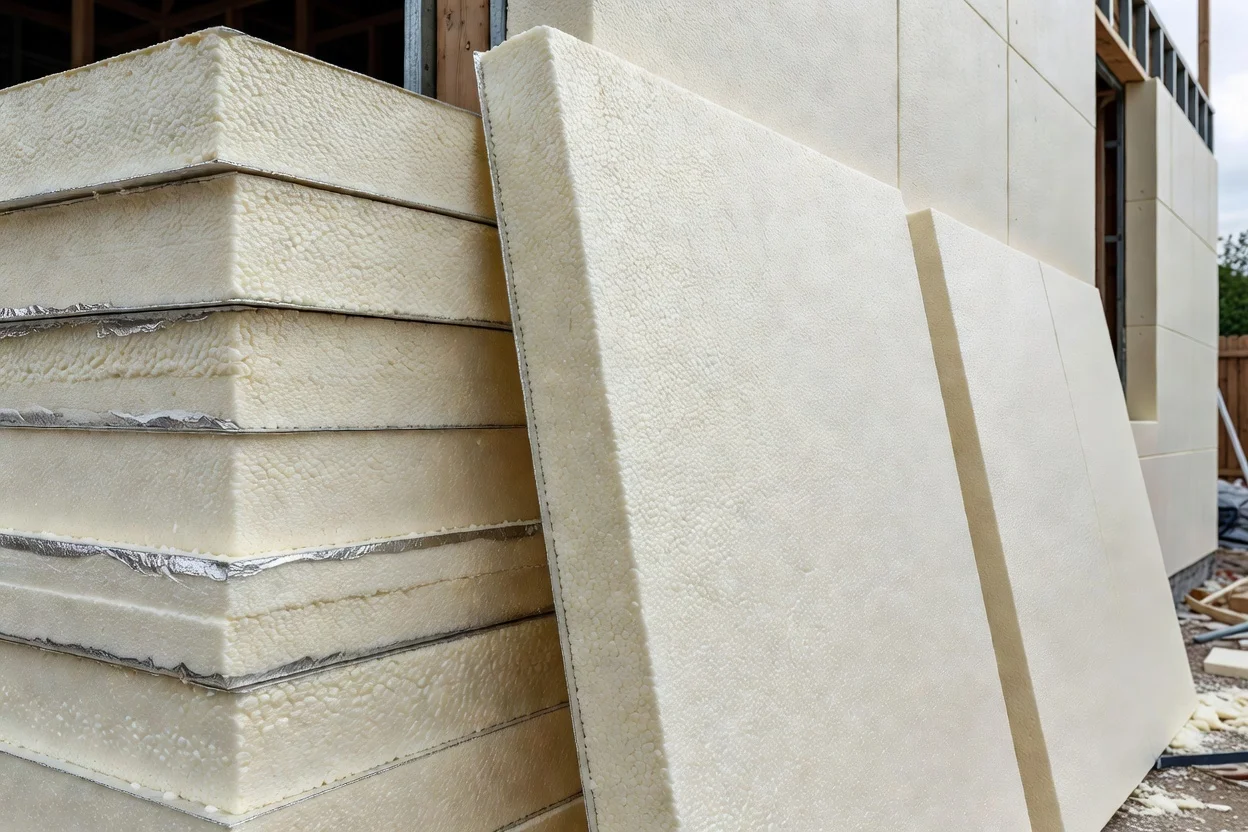
Flexible PU foam is the dominant choice for mattresses, upholstered furniture, carpet underlay, packaging, and automotive seating because it combines resilience, comfort, and efficient mass production. Rigid PU foam is widely used in insulation panels, refrigerators, spray foam, district-energy equipment, and pipe insulation because it offers low thermal conductivity at low density.
PU elastomers and TPU are favored for wheels, rollers, gaskets, seals, belts, cable jackets, and abrasion-prone machine parts, where tear strength and wear resistance are more important than low cost. In medical and biomedical markets, PU is used for tubing, catheters, wound dressings, prosthetics, and some implantable or biointerface materials because it can be formulated for flexibility and biocompatibility.
One poor-fit use is long-term exposure in highly hydrolytic or strongly UV-exposed environments when the formulation is not specifically stabilized, because conventional PU can age faster than more specialized engineering plastics or fluoropolymers in those conditions.
Environmental and Sustainability Aspects
PU presents a mixed sustainability profile. On one hand, rigid foams can deliver substantial lifecycle energy savings in buildings and refrigeration because their insulation performance reduces operational energy demand. On the other hand, most mainstream PU systems remain tied to fossil-based feedstocks, isocyanate chemistry, and complex multi-material products that are difficult to recycle mechanically at scale.
Recyclability is constrained by the diversity of product types:
- Thermoset foams and coatings are generally difficult to remelt and reprocess.
- TPU is more amenable to mechanical recycling because it is thermoplastic.
- Chemical recycling routes, including glycolysis and related depolymerization approaches, can recover polyol-rich fractions, but economics and feedstock purity remain major constraints.
- Design-for-disassembly and mono-material formulations can improve recyclability, especially in automotive and footwear applications.
Bio-based alternatives are expanding, particularly bio-based polyols from plant oils, sugars, lignocellulosic routes, and captured-carbon pathways. These options can reduce fossil carbon intensity, but performance parity, supply scale, and certification remain uneven across grades.
From a formulation perspective, several additives influence sustainability trade-offs. For example, 1 to 3 phr of a silicone surfactant is often used in flexible foam systems to stabilize cell formation, while flame-retardant packages or catalysts can improve performance but complicate recycling and toxicological management; the mechanism is usually interfacial stabilization, reaction-rate control, or char promotion rather than simple bulk strengthening.
Economic and Global Market Impact
PU is a major global plastics platform because it serves both commodity-volume and specialty-value markets. Demand is strongly linked to construction insulation, automotive interiors, furniture, footwear, appliances, and industrial maintenance.
The market is shaped by producers of isocyanates, polyols, and formulated systems, along with large integrated PU processors and compounders. Leading global influence is typically associated with major chemical groups and regional system houses in Asia, Europe, and North America, reflecting the importance of integrated raw-material supply and application-specific formulation capability.
Economic sensitivity is high because PU pricing depends on upstream energy costs, aromatic feedstock economics, logistics, and regulatory compliance around worker exposure and emissions. This makes the sector especially responsive to changes in construction cycles, vehicle production, and appliance demand.
Current Challenges and Innovations
Current challenges include:
- Occupational safety around isocyanate handling and emissions control.
- Recycling difficulty for thermoset-rich and multi-material PU products.
- Fire performance requirements, especially in construction and transport, which often increase additive complexity.
- Durability trade-offs between hydrolysis resistance, softness, and cost.
Innovation is active in several directions:
- Waterborne PU dispersions for lower-VOC coatings and adhesives.
- Non-isocyanate polyurethane-like systems under development to reduce monomer toxicity and regulatory burden.
- Bio-based polyols and renewable-content formulations.
- Self-healing, shape-memory, and smart PU materials for medical, protective, and advanced manufacturing uses.
- Recycling-oriented PU design, including chemolysis-compatible formulations and better waste separation.
A particularly important technical trend is the shift from performance-only design toward performance plus circularity, where formulation teams now consider end-of-life behavior, remanufacturing compatibility, and content traceability alongside mechanical properties.
Future Outlook
PU is likely to remain a central materials platform because its chemistry can be adapted to insulation, durability, comfort, sealing, and bonding needs across many industries. The strongest growth opportunities are likely to come from energy-efficient construction, lightweight mobility, high-value TPU applications, medical devices, and lower-emission coating and adhesive systems.
Future competitiveness will depend on four linked developments:
- broader use of renewable and recycled feedstocks,
- more recyclable product architectures,
- safer and more automated processing systems,
- and continued improvement in durability-to-footprint ratio.
If these transitions accelerate, PU can retain its performance leadership while reducing some of the environmental and regulatory pressures that currently define the material class.
Summary
Polyurethane is a highly tunable polymer family whose chemistry enables foams, elastomers, coatings, adhesives, sealants, and TPUs with very different performance profiles. Its value lies in molecular versatility, but its future depends on safer processing, better recycling, and lower-carbon feedstocks as the plastics industry moves toward circularity.
References
- •
Polyurethane. (2002, April 9). In Wikipedia. https://en.wikipedia.org/wiki/PolyurethaneLink
- •
Polyurethane (PU) polymers: Properties, applications & ... (2026, January 22). Rheolution. https://rheolution.com/application-notes/polyurethane-polymers/Link
- •
Polyurethane applications: A review. (n.d.). IJFMR. https://www.ijfmr.com/papers/2024/3/21368.pdfLink
- •
PU (polyurethane) plastic: Characteristics, applications ... (2025, November 7). Thaiduong Plastics. https://thaiduongplastics.com/en/news/polyurethane-plastics/Link
- •
Polyurethane (PU) based multifunctional materials. (2022, October 10). Wiley. https://onlinelibrary.wiley.com/doi/full/10.1002/app.52832Link
- •
PU polyurethane material characteristics. (2023, August 23). KT Belt. https://en.ktbelt.com/news/70.htmlLink
- •
Updates on polyurethane and its multifunctional applications ... (n.d.). Politecnico di Milano. https://re.public.polimi.it/retrieve/4283ef17-9ea7-4dd0-a8e1-3d496ba2c9d1/Miri_2023_Prog._Biomed._Eng._5_042001_red.pdfLink
- •
Polyurethane. (2004, March 2). In Wikipedia. https://de.wikipedia.org/wiki/PolyurethaneLink
- •
A comprehensive review of polyurethane: Properties ... (n.d.). ScienceDirect. https://www.sciencedirect.com/science/article/abs/pii/S0032386125003477Link
- •
Polyurethane (PU). (2025, October 21). Hydromer. https://hydromer.com/coatings-glossary/polyurethane-pu/Link
- •
What is polyurethane (PU)? Types, properties & uses ... (2021, December 1). Kimpur. https://kimpur.com/en/what-is-polyurethane/Link
- •
Polyurethane (PU/TPU) properties & applications. (n.d.). Rubber Mexico. https://rubber-mexico.com/products/polyurethane-pu-tpuLink
- •
Polyurethanes: Preparation, properties, and applications volume 1: Fundamentals. (2023, November 5). ACS Publications. https://pubs.acs.org/doi/10.1021/bk-2023-1452.ch001Link
- •
Industrial applications of polyurethane resin by sector. (2025, October 16). ChemAnalyst. https://www.chemanalyst.com/Blogs/industrial-applications-of-polyurethane-resin-by-sector-69Link
- •
Polyurethane (PU). (2024, February 29). sensXPERT. https://www.sensxpert.com/glossary/polyurethane-pu/Link
- •
What is PU plastic? Properties, uses, and safety ... (2026, March 9). Science Insights. https://scienceinsights.org/what-is-pu-plastic-properties-uses-and-safety/Link
- •
What is polyurethane (PU) and what properties does it have? (n.d.). Asma Poland. https://asmapoland.com/en/what-is-polyurethane-pu-and-what-its-properties/Link
- •
Technical data sheet polyurethane. (n.d.). Laminated Plastics. https://laminatedplastics.com/polyurethane.pdfLink
- •
Polyurethane (PU) plastic materials. (n.d.). Goodfellow. https://www.goodfellow.com/material/polymers/pu-polyurethaneLink
- •
Polyurethane: Everything you need to know. (2023, June 21). Enri Leblanc. https://www.enri-leblanc.com/polyurethane-everything-you-need-to-know-about-this-material/Link
- •
What is polyurethane rubber (PU): Properties & specifications. (n.d.). Ascent SBR. https://www.ascent-sbr.com/knowledge/information/what-is-polyurethane-rubber-pu-products-properties-structure-specifications-hs-code-molecular-property-formula-specific-density-flakes-solid-powder-pearls-liquidcrystal-liter-solution-material-molecular-property-formula-specific-density-safe-hazarous-harmful-chemical-raw-materials.htmlLink
- •
What is polyurethane? (n.d.). Polyurethanes.org. https://polyurethanes.org/what-is-it/Link
- •
Difference between TPU and PU. (2020, March 10). FacFox. https://facfox.com/docs/kb/difference-between-tpu-and-puLink
- •
Polyurethane. (2009, November 14). In Simple English Wikipedia. https://simple.wikipedia.org/wiki/PolyurethaneLink
- •
Chapter 1. (n.d.). ACS Publications. https://pubs.acs.org/doi/pdf/10.1021/bk-2021-1399.ch001Link
- •
Is polyurethane a plastic or rubber? (2023, July 5). Elastomer. https://elastomer.co.uk/blog/is-polyurethane-a-plastic/Link
- •
Polyurethanes (PUR). (n.d.). PURPLAN. https://www.purplan.com/en/glossary/term/polyurethanes-purLink
- •
Polyurethanes: An introduction. (2024, February 9). AZoM. https://www.azom.com/article.aspx?ArticleID=217Link
- •
An overview of polyurethane fabric. (2023, February 3). Mitchell Faux Leathers. https://mitchellfauxleathers.com/home/faux-leather-viewpoint/viewpoint/2023/02/03/an-overview-of-polyurethane-fabricLink
- •
Polyurethane: Definition, properties, types and applications. (2023, December 15). RTPrototype. https://www.rtprototype.com/what-is-polyurethane/Link
- •
List of polyurethane applications. (2010, February 27). In Wikipedia. https://en.wikipedia.org/wiki/List_of_polyurethane_applicationsLink
- •
Polyurethane coatings: How to formulate them? (2025, July 8). SpecialChem. https://www.specialchem.com/coatings/guide/polyurethane-coatingsLink
- •
Polyurethane adhesive & sealants: Properties, uses & PU ... (2025, June 30). SpecialChem. https://www.specialchem.com/adhesives/guide/polyurethane-resinsLink
- •
Polyurethane: An overview. (n.d.). ScienceDirect. https://www.sciencedirect.com/topics/materials-science/polyurethaneLink
- •
Polyurethane applications. (n.d.). American Chemistry Council. https://www.americanchemistry.com/industry-groups/center-for-the-polyurethanes-industry-cpi/applications-benefits/polyurethane-applicationsLink
- •
Polyurethane material: Foam, leather & uses. (2026, March 14). Pursuit Industries. https://pursuitind.com/polyurethane-material/Link
- •
Polyurethane material introduction and industry insight. (n.d.). Taiwan PU. https://www.taiwanpu.com/en/about/Polyurethane-Material-Introduction-and-Industry-InsightLink