
Introduction
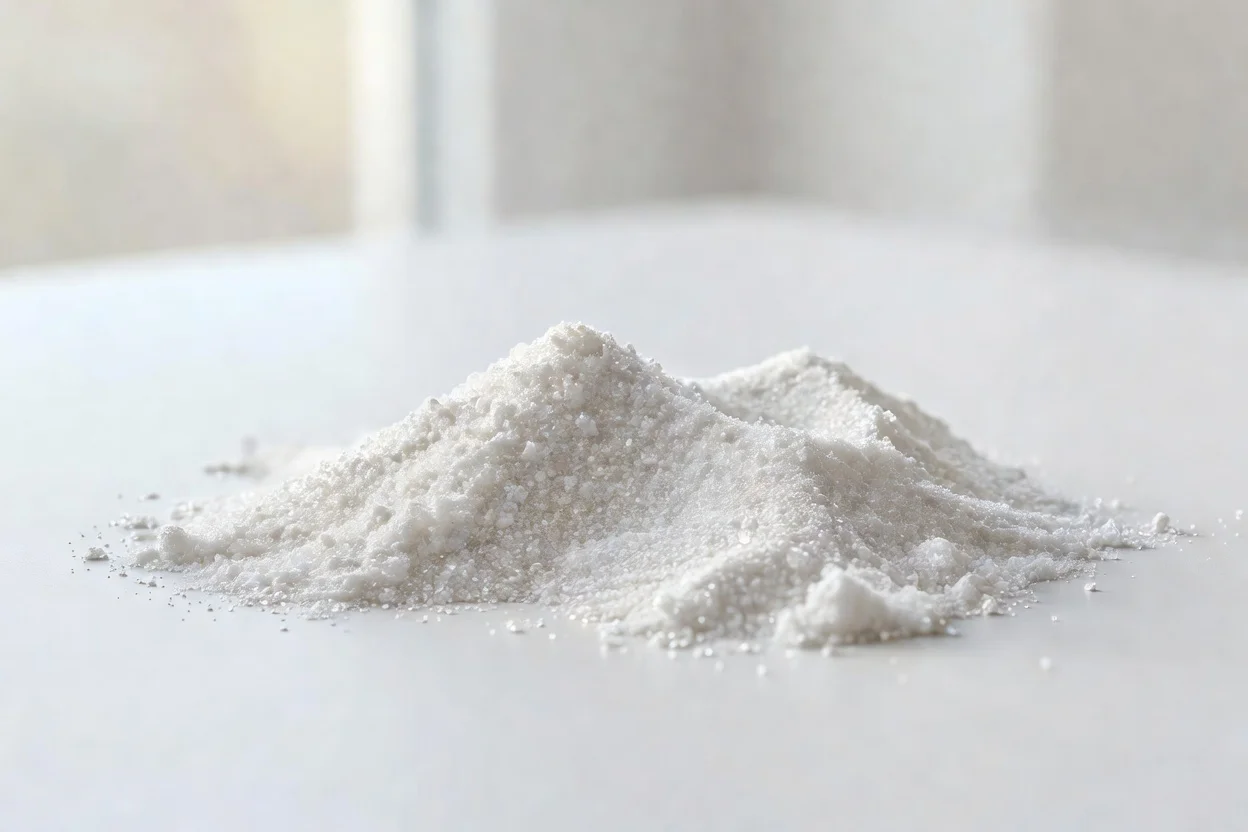
Silicon dioxide is a fundamental inorganic raw material in the plastics value chain and a major industrial mineral used in glass, electronics, construction, food, pharmaceuticals, and polymer compounding. Also known as silica, it exists in crystalline forms such as quartz and in amorphous forms such as precipitated silica, fumed silica, colloidal silica, and silica gel, each selected for different performance and processing functions.
In plastics and auxiliaries, silicon dioxide is valued primarily as a reinforcing filler, rheology modifier, anti-caking agent, matting agent, thickener, and desiccant, while high-purity silica is indispensable in semiconductors, optical fibers, and specialized coatings. Its importance comes from an unusual combination of hardness, thermal stability, chemical resistance, high surface area in engineered grades, and a surface chemistry dominated by silanol groups, which makes many silica grades strongly interactive with polymers, moisture, and polar additives.
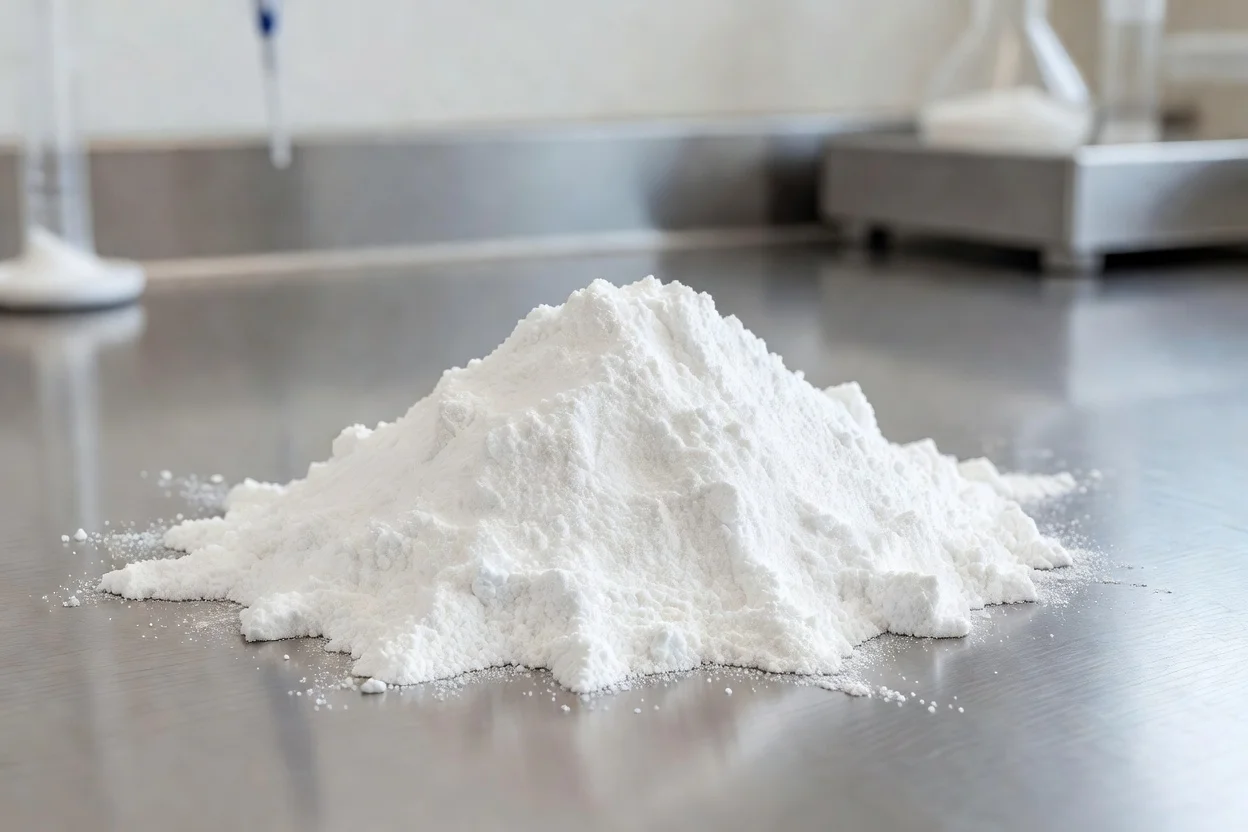
The material has a long industrial history rooted in natural quartz and sand use, but modern value creation increasingly depends on engineered silica produced by precipitation, flame hydrolysis, and sol-gel routes, as well as on purified and micronized natural silica. Sustainability debates now focus on mining impacts, energy intensity in purification and fumed silica production, occupational exposure to respirable crystalline silica, and the role of silica in improving product durability and lightweighting, which can reduce life-cycle material use in downstream applications.
History and Development
Silica is among the oldest industrial materials, having been used for millennia in glassmaking, ceramics, foundry sands, and construction. Its modern role expanded with the rise of polymer science, when amorphous silica became a key functional additive in rubber reinforcement, coatings, sealants, food powders, and pharmaceutical formulations.
A major technological milestone was the development of precipitated silica and fumed silica, which enabled control over particle size, surface area, and structure far beyond what natural sand or quartz could provide. In microelectronics, thermally grown silicon dioxide became one of the most important insulating and passivating materials because it forms a high-quality interface with silicon and remains stable at elevated temperatures.
Chemical Structure and Key Properties
Silicon dioxide is a silicon oxide with the formula SiO2 and an average molar mass of about 60.08 g/mol. Structurally, it is based on a tetrahedral network in which each silicon atom is bonded to oxygen atoms, producing a giant covalent framework in crystalline forms and a disordered network in amorphous forms.
Key properties include high thermal stability, very low water solubility, chemical resistance to most acids, and insulating behavior. Reported values vary with polymorph and morphology, but typical data place density around 2.2 to 2.65 g/cm3, melting behavior above 1600 C, and refractive index around 1.46 for silica-based glassy forms.
| Property | Typical behavior |
|---|---|
| Chemical nature | Inorganic oxide, network covalent solid |
| Solubility | Practically insoluble in water and most acids |
| Thermal stability | Very high |
| Electrical behavior | Excellent insulator in amorphous/thermal oxide form |
| Surface chemistry | Silanol-rich, often hydrophilic |
| Morphology dependence | Strong; properties vary widely by crystalline vs amorphous form |
Important technical limitations are:
- Poor oxygen and grease barrier in many plastic applications → silica does not by itself create a continuous impermeable barrier in polymers → it is usually combined with multilayer structures, barrier resins, surface treatments, or polymer compatibility aids.
- Low compatibility with nonpolar polymers before treatment → the hydrophilic silanol surface interacts poorly with hydrophobic matrices such as polyethylene or polypropylene → silane coupling agents, surface silanization, or masterbatch design are used to improve dispersion and interfacial adhesion.
- Occupational inhalation risk for respirable crystalline dust → fine crystalline silica can become a workplace hazard during mining, milling, and handling → dust control, enclosed systems, and exposure management are required.
The surface chemistry is especially important for engineered silica grades. Hydroxylated surfaces adsorb water, which is why silica gel functions as a desiccant and why fine amorphous silica is effective as an anti-caking agent and flow aid.
Production Processes and Raw Feedstocks
Silicon dioxide used in industry comes from both natural sources and synthetic production.
Natural silica is obtained from sand, quartz, and quartzite through mining, crushing, washing, classification, and purification. High-purity grades for glass, electronics, and optics require stringent impurity control because even trace contaminants can affect transparency, dielectric behavior, or mechanical performance.
Synthetic silica is produced by several routes:
- Precipitated silica: made by acidifying sodium silicate solutions, then filtering, drying, and milling; used widely in rubber, coatings, and food/pharma applications.
- Fumed silica: made by flame hydrolysis of silicon compounds, yielding very high surface area and strong thickening behavior; used in sealants, adhesives, inks, and high-performance elastomers.
- Colloidal silica: dispersed nanoscale silica particles in water or solvent systems; used in polishing, binders, catalysts, and surface treatments.
- Silica gel: porous amorphous silica produced by controlled dehydration or gelation; used as desiccant and adsorbent.
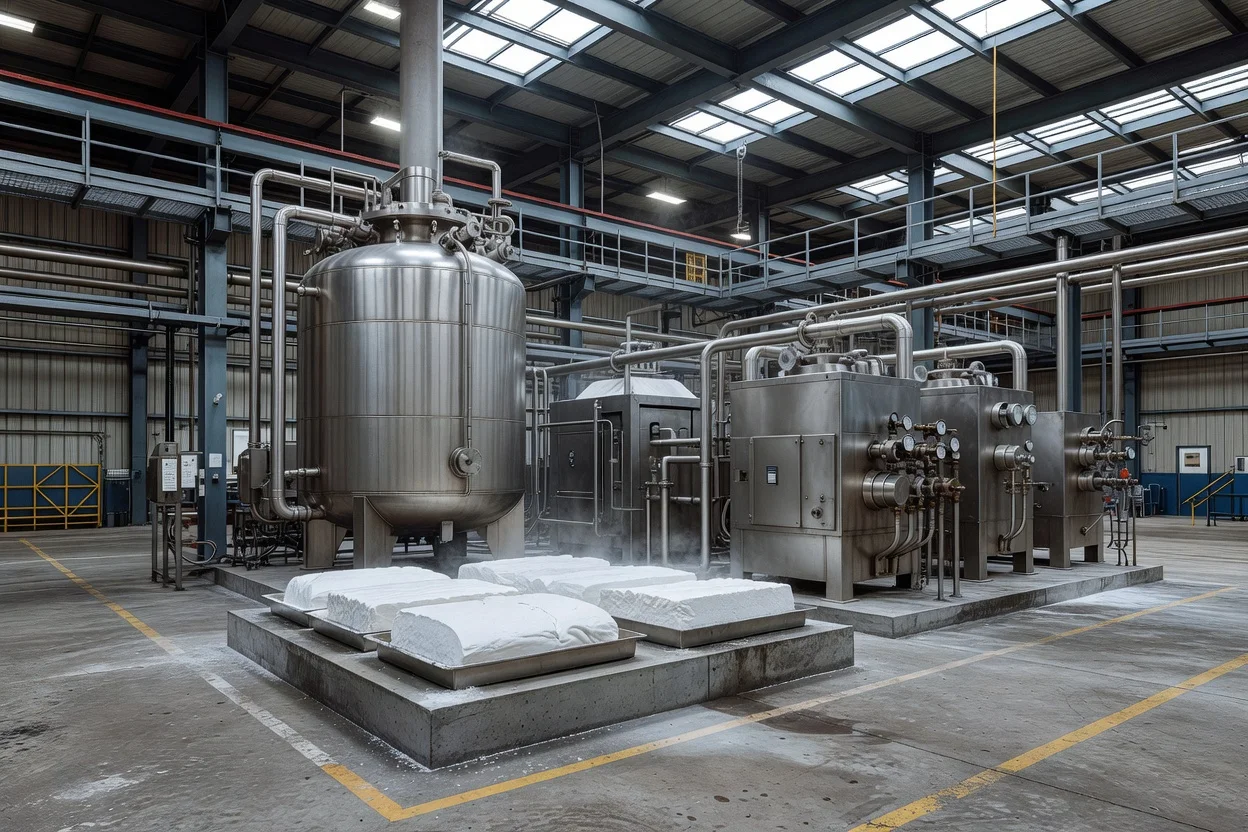
In polymer and plastics manufacturing, the selected silica grade is usually chosen by surface area, particle size, porosity, and surface treatment, not simply by purity. For example, fumed silica at low loading can dramatically increase viscosity in liquid resins because a particle network forms through hydrogen bonding and particle-particle interactions, while precipitated silica is more commonly used as a reinforcement filler in elastomers and as an anti-block or matting additive in plastics and coatings.
Applications and End-Use Markets
Silicon dioxide serves several distinct markets, many of which intersect directly with plastics and auxiliaries.
| End-use sector | Typical silica form | Usual function |
|---|---|---|
| Plastics and elastomers | Precipitated, fumed, surface-treated silica | Reinforcement, anti-block, matting, rheology control |
| Food and feed | Amorphous silica | Anti-caking, flow aid, carrier |
| Pharmaceuticals | Colloidal, amorphous silica | Excipient, glidant, adsorbent |
| Coatings and inks | Fumed, precipitated silica | Matting, thickening, anti-settling |
| Construction | Quartz sand, silica fume | Strengthening, pozzolanic addition |
| Electronics | Ultra-pure silica | Insulation, dielectric layers, substrates |
| Glass and optics | High-purity silica | Glass, fused silica, optical fiber |
| Personal care | Micronized amorphous silica | Abrasion, texture, suspension |
In plastics, silica is commonly used in:
- Films and packaging: anti-blocking and slip-adjacent functions, especially with controlled particle size and surface treatment.
- Masterbatches and compounding: flow improvement and processing stabilization in powder handling.
- Engineering plastics: stiffness, scratch resistance, dimensional stability, and surface finish enhancement.
- Silicones and elastomers: strong reinforcement in sealants, gaskets, cable compounds, and medical elastomers.
- Adhesives and sealants: viscosity control and thixotropy, especially with fumed silica.
- Coatings: matting, abrasion resistance, and anti-sag behavior.
A few concrete examples illustrate its mechanism:
- Fumed silica at about 0.5 to 5 wt% in a resin can create a particle network that raises low-shear viscosity and prevents sagging; this happens because high surface area particles interact through silanol-mediated hydrogen bonding and physical entanglement.
- Surface-treated precipitated silica in rubber compounds can improve wear resistance and reinforcement by increasing filler-polymer interaction; coupling agents are often used to reduce filler agglomeration and improve stress transfer.
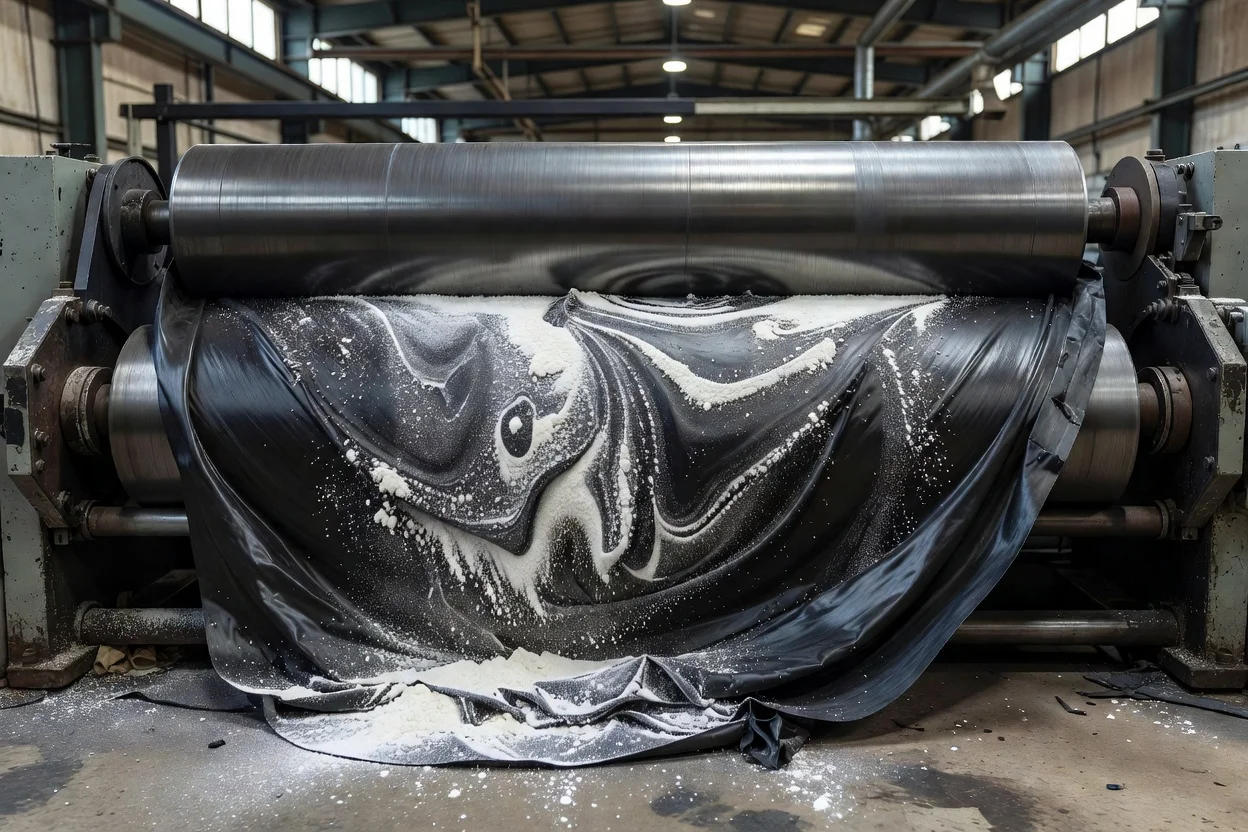
One poor-fit use is as a direct barrier enhancer in packaging films: silica can modify handling and surface properties, but it does not replace dedicated barrier materials when low oxygen transmission is required.
In food and pharmaceuticals, synthetic amorphous silica is widely used as an anti-caking agent, absorbent, and excipient. In cosmetics, it is valued for absorbency, textural control, and soft-focus effects. In semiconductors, silicon dioxide remains central as an insulating layer and diffusion barrier because thermally grown oxide provides an exceptionally high-quality interface with silicon.
Environmental and Sustainability Aspects
Silica’s sustainability profile is mixed and strongly dependent on form and application.
Positive aspects include:
- Durability and resource efficiency: silica improves wear resistance, stiffness, and processability in many products, which can extend service life and reduce material consumption.
- Substitution benefits: in rubber and plastics, silica can replace some carbon-black or higher-load formulations in ways that improve rolling resistance or surface performance in specific applications.
- Circular economy compatibility: silica-filled compounds can be engineered for longer lifetime, and silica-based desiccants and adsorbents are often reusable or regenerable in certain systems.
Challenges include:
- Mining and land disturbance from quartz and sand extraction.
- Energy use in high-purity purification and fumed silica production.
- Dust exposure during processing, especially for respirable crystalline silica, which requires strict industrial hygiene controls.
- End-of-life complexity when silica is embedded in multilayer plastics, rubber, or coatings.
Bio-based alternatives are limited because silica is an inorganic mineral, but sustainability efforts focus on lower-carbon processing, improved recycling of silica-containing composites, renewable power in production, and greater use of waste-derived silica sources such as rice husk ash in some material streams. While these alternatives are promising, they generally supplement rather than replace conventional silica supply.
Economic and Global Market Impact
Silicon dioxide is a globally traded bulk mineral and specialty chemical simultaneously, with value concentrated in high-purity and engineered grades rather than raw sand. Construction and glass consume the largest tonnages, while coatings, rubber, food, pharma, and electronics generate higher value per kilogram.
The market is shaped by:
- Availability of high-purity feedstock
- Energy cost and carbon intensity
- Regulatory pressure on dust and impurities
- Demand from tires, packaging, electronics, and industrial processing
- Growth in surface-engineered silica for advanced materials
Leading producers vary by grade and region, but the global supply base typically includes major industrial mineral companies and specialty silica manufacturers serving rubber, coatings, life sciences, and electronics. In practice, the market is segmented more by application-specific performance than by commodity pricing alone.
Current Challenges and Innovations
Current technical development is centered on performance tailoring and safer, lower-impact manufacturing.
Key innovation themes include:
- Surface functionalization: silanes and other coupling agents improve compatibility with nonpolar polymers, reduce agglomeration, and enhance mechanical reinforcement.
- Nano- and micro-structured silica: controlled particle morphology improves matting, scratch resistance, and rheology.
- High-purity silica for electronics: tighter control of metal ions, moisture, and particle defects supports advanced semiconductor and optical applications.
- Silica from secondary sources: recovery from agricultural and industrial byproducts supports lower-carbon supply chains.
- Low-dust and pre-dispersed formats: masterbatches and slurry systems improve handling safety and processing consistency.
A major technical challenge is balancing dispersion and reinforcement. Very fine silica can provide strong performance gains, but agglomeration can reduce effectiveness and raise viscosity excessively, making compound design and mixing conditions critical.
Future Outlook
Silicon dioxide is likely to remain indispensable because it spans both commodity and high-technology markets. Growth is expected to be strongest in engineered silica for tires, coatings, electronics, precision polishing, adhesives, and functional packaging, where small formulation changes can deliver large performance gains.
In plastics, future demand will likely favor:
- Surface-treated silica for easier compounding
- Low-emission, low-dust grades for safer processing
- Recycled and waste-derived silica sources
- Silica systems optimized for lightweighting and durability
- More selective use in circular packaging and reusable products
The principal strategic tension is that silica can either support sustainability by extending product life and reducing material intensity or add burden through energy-intensive purification and poor end-of-life separability. The most competitive future uses will likely be those where silica delivers measurable performance gains that justify its processing and environmental cost.
Summary
Silicon dioxide is one of the most versatile inorganic materials used in the plastics industry and beyond. Its value comes from a unique mix of chemical stability, surface activity, thermal resistance, and tunable particle morphology, making it essential in fillers, anti-caking agents, rheology control, desiccants, coatings, and high-performance insulation applications.
Its future will depend on more precise grade engineering, lower-carbon production, safer dust management, and better integration into circular manufacturing systems.
References
- •
Silicon dioxide. (n.d.). Sciencemadness Wiki. https://www.sciencemadness.org/smwiki/index.php/Silicon_dioxideLink
- •
Silicon dioxide. (2002, February 25). Wikipedia. https://en.wikipedia.org/wiki/Silicon_dioxideLink
- •
Silicon dioxide | 7631-86-9. (2026, March 13). ChemicalBook. https://www.chemicalbook.com/ChemicalProductProperty_EN_CB8138262.htmLink
- •
Properties: Silica - Silicon dioxide (SiO2). (2026, August 20). AZoM. https://www.azom.com/properties.aspx?ArticleID=1114Link
- •
Silicon dioxide – SiO₂. (2019, April 17). BYJU'S. https://byjus.com/chemistry/silicon-dioxide/Link
- •
Silicon dioxide. (n.d.). Chemeurope.com. https://www.chemeurope.com/en/encyclopedia/Silicon_dioxide.htmlLink
- •
Silicon dioxide. (2019, May 5). GKToday. https://www.gktoday.in/silicon-dioxide/Link
- •
The multifaceted applications of silicon dioxide. (2025, May 27). Unikem Industry. https://www.unikemindustry.com/?news/159.htmlLink
- •
Silicon dioxide. (n.d.). Agricultural Marketing Service, U.S. Department of Agriculture. https://www.ams.usda.gov/sites/default/files/media/Silicon%20D%20report%202010.pdfLink
- •
Silicon dioxide. (2012, August 20). Wikidoc. https://www.wikidoc.org/index.php/Silicon_dioxideLink
- •
2.1 Silicon dioxide properties. (n.d.). TU Wien. https://www.iue.tuwien.ac.at/phd/filipovic/node26.htmlLink
- •
Silicon dioxide: Structure, properties, uses & safety explained. (2025, November 14). Vedantu. https://www.vedantu.com/chemistry/silicon-dioxideLink
- •
Silicon dioxide: Uses, interactions, mechanism of action. (2020, July 1). DrugBank. https://go.drugbank.com/drugs/DB11132Link
- •
Silicon dioxide: Properties, applications & benefits. (2025, October 10). Zhonglian Chem. https://www.zhonglian-chem.com/news/Silicon-Dioxide-Properties-ApplicationsBenefits.htmlLink
- •
Analyzed: Silicon dioxide. (2026, April 24). Nanografi Advanced Materials. https://shop.nanografi.com/blog/analyzed-silicon-dioxide/Link
- •
Silicon dioxide: Know its structure, nature, production & ... (n.d.). Testbook. https://testbook.com/chemistry/silicon-dioxideLink
- •
Silicon dioxide. (2025, April 8). The Anilocus Center. https://anilocus.org/encyclopedia/silicon-dioxide/Link
- •
Silica | SiO₂ | CID 24261. (n.d.). PubChem. https://pubchem.ncbi.nlm.nih.gov/compound/Silicon-DioxideLink
- •
Describe structure of SiO₂. (n.d.). Sparkl. https://www.sparkl.me/learn/cambridge-igcse/chemistry-0620-supplement/describe-structure-of-sio2/revision-notes/2775Link
- •
The application of silicon dioxide. (n.d.). Jinsha Precipitated Silica Manufacturing Co., Ltd. https://www.jksilicas.com/info/the-application-of-silicon-dioxide-25359797.htmlLink
- •
Information. (2025, March 10). Liche Opto. http://en.licheopto.com/News_details/1898946945953386496.htmlLink
- •
Silicon dioxide. (n.d.). Encyclopedia.com. https://www.encyclopedia.com/science/academic-and-educational-journals/silicon-dioxideLink
- •
What is SiO₂ used for? (n.d.). Syron Optics. https://syronoptics.com/blogs/technical-article/what-is-sio2-used-forLink
- •
SiO₂ properties and applications. (n.d.). Enigmatics. http://www.enigmatic-consulting.com/semiconductor_processing/CVD_Fundamentals/films/SiO2_properties.htmlLink
- •
Silicon dioxide. (2024, June 10). ChemSpider. https://www.chemspider.com/Chemical-Structure.22683.htmlLink
- •
Silicon dioxide - an overview. (n.d.). ScienceDirect. https://www.sciencedirect.com/topics/physics-and-astronomy/silicon-dioxideLink
- •
What is silicon dioxide used for? | Benefits & applications. (2025, November 1). Kosnano. https://www.kosnano.com/what-is-silicon-dioxide-used-for/Link
- •
8 benefits of silicon dioxide. (2025, October 22). 33Science. https://33science.com/2025/10/22/benefits-of-silicon-dioxide/Link
- •
Colloidal silicon dioxide - properties and applications. (2023, August 9). AZoNano. https://www.azonano.com/article.aspx?ArticleID=6523Link
- •
Silicon dioxide [PDF]. (n.d.). Device.report. https://device.report/m/dff396ed5ca7b7c105b6bc368ad424dda6988f5210b205d1a721cee6321cac08.pdfLink
- •
Silicon dioxide: Benefits and industrial applications. (2025, November 6). Zhonglian Chem. https://www.zhonglian-chem.com/news/Silicon-Dioxide-Benefits-and-Industrial-Applications.htmlLink
- •
Conclusion. (2025, December 1). Echemi. https://www.echemi.com/cms/2718845.htmlLink
- •
What is silicon dioxide? Silicon dioxide in food. (2025, October 31). ACS Material. https://www.acsmaterial.com/blog-detail/what-is-silicon-dioxide-silicon-dioxide-in-food.htmlLink
- •
Silicon dioxide - an overview. (n.d.). ScienceDirect. https://www.sciencedirect.com/topics/materials-science/silicon-dioxideLink
- •
What is silicon dioxide? (2010, February 6). Stonemania. https://www.stonemania.co.uk/blog/what-is-silicon-dioxideLink
- •
An introduction to silicon dioxide (silica) forms and applications. (2020, October 5). Alfa Test Lab. https://www.alfatestlab.com/en/an-introduction-to-silicon-dioxide-silica-forms-and-applications/Link
- •
Silica | SiO₂ | CID 24261. (n.d.). PubChem. https://pubchem.ncbi.nlm.nih.gov/compound/Silicon-dioxideLink
- •
Silica | SiO₂ | CID 24261. (n.d.). PubChem. https://pubchem.ncbi.nlm.nih.gov/compound/24261Link
- •
Silicon dioxide - an overview. (n.d.). ScienceDirect. https://www.sciencedirect.com/topics/medicine-and-dentistry/silicon-dioxideLink
- •
Silicon dioxide. (2025, July 13). PubChem. https://pubchem.ncbi.nlm.nih.gov/compound/silicaLink
- •
Silicon dioxide: Definition, safety, and effects. (2019, May 8). Medical News Today. https://www.medicalnewstoday.com/articles/325122Link
- •
Re‐evaluation of silicon dioxide (E 551) as a food additive. (2018, January 17). PMC. https://pmc.ncbi.nlm.nih.gov/articles/PMC7009582/Link
- •
News from CRIS: Trending - silicon dioxide. (2023, February 15). Michigan State University. https://iit.msu.edu/news/2023-2-15-CRIS-trending-silicon-dioxide.htmlLink
- •
Silicon dioxide. (2025, January 1). OMRI. https://www.omri.org/silicon-dioxideLink
- •
Silicon dioxide: Food additive applications and regulations. (2018, October 5). UL Prospector. https://www.ulprospector.com/knowledge/8895/fbn-silicon-dioxide-applications-and-safety/Link