
Introduction
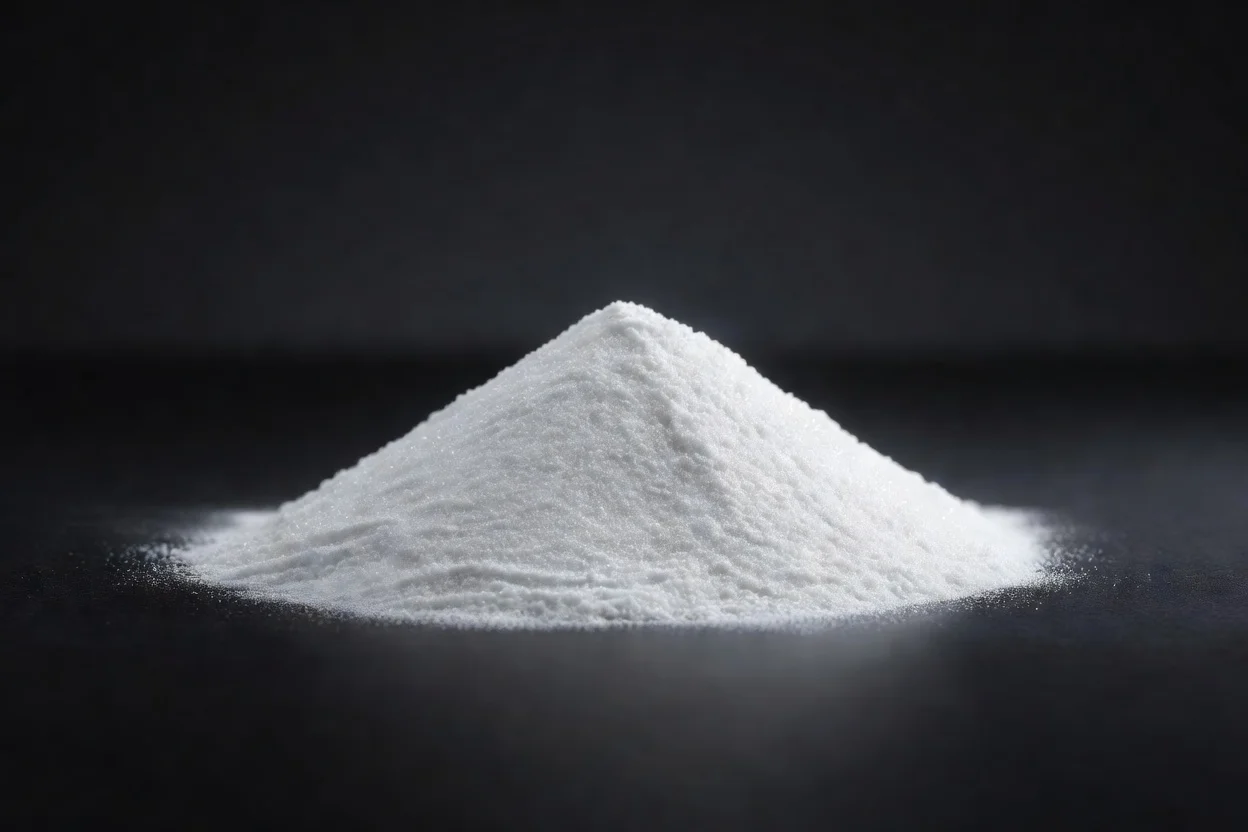
Calcium carbonate is one of the most important mineral raw materials in the plastics industry, valued primarily as a low-cost filler, extender, and property modifier. In plastics, it is used in both natural ground form and engineered precipitated form, with particle size, surface treatment, and purity strongly influencing processing behavior and final performance.
Beyond plastics, calcium carbonate is a foundational industrial mineral used in construction, paper, coatings, pharmaceuticals, food, agriculture, and environmental treatment, which gives it a uniquely broad market base and makes it strategically significant in global mineral supply chains. In polymer formulations, its role is especially prominent in rigid PVC, polyolefins, masterbatches, films, profiles, pipes, and compounds where manufacturers seek lower cost, improved stiffness, and tuned processing characteristics.
The material occurs naturally as limestone, chalk, and marble, and is also produced synthetically as precipitated calcium carbonate for applications requiring tighter control over particle morphology and performance. Its industrial value depends not only on chemical composition but on mineral form, particle shape, surface chemistry, and dispersion quality, which can determine whether it acts as a simple extender or a more functional reinforcing additive.
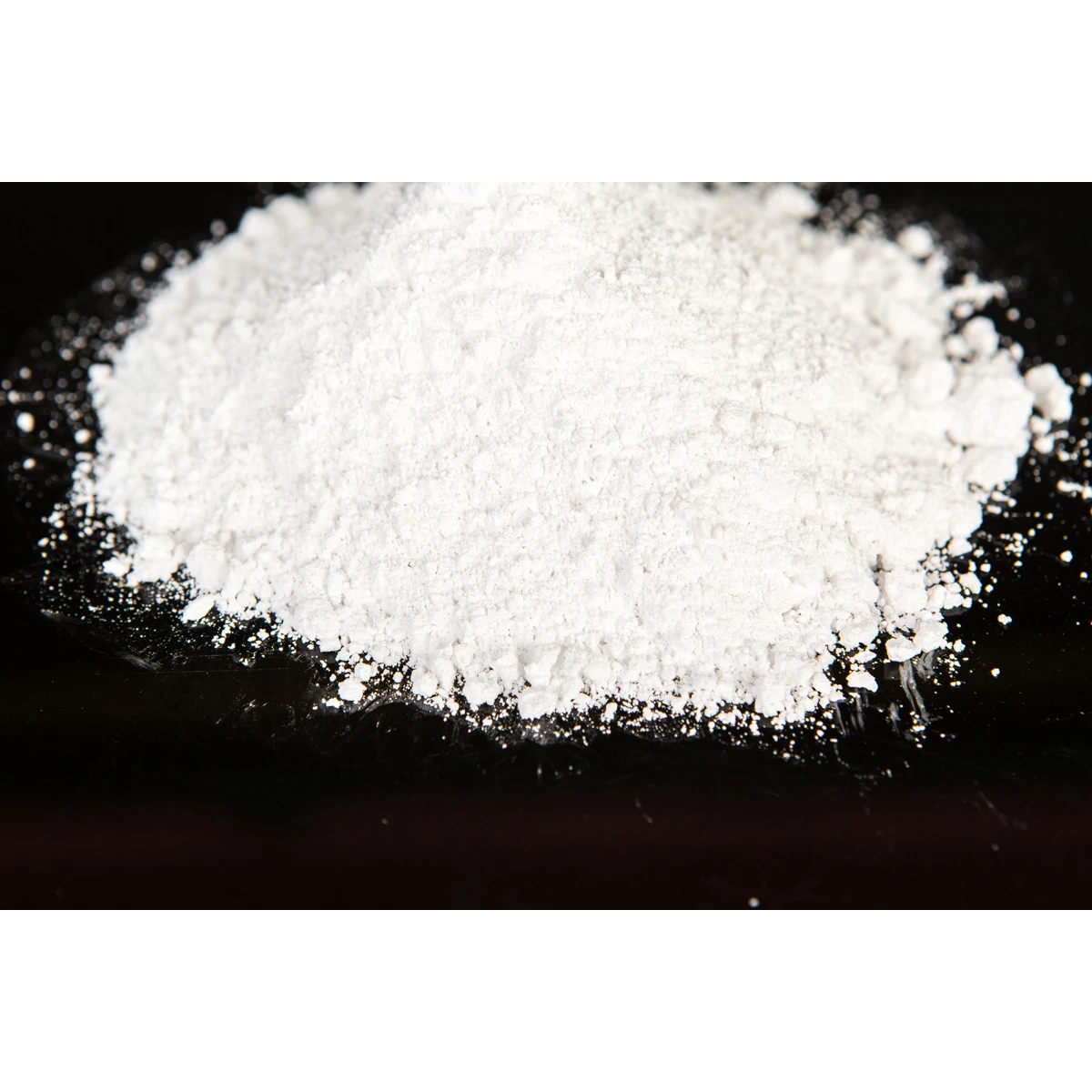
Sustainability discussions around calcium carbonate are nuanced. On one hand, it can reduce resin usage and lower formulation cost, and in some cases it can improve stiffness in a way that enables downgauging or material reduction. On the other hand, it remains a mined mineral, and high loading levels can complicate mechanical recycling and, in some cases, reduce toughness or barrier performance compared with neat polymer systems.
Its future in plastics is likely to be shaped by three trends: higher-performance surface-treated grades, integration into recyclable and circular formulations, and the continued growth of engineered compounds for packaging, building products, transportation, and infrastructure.
History and Development
Natural calcium carbonate has been used for centuries in pigments, construction materials, and fillers because it is abundant, white, and chemically stable under ordinary conditions. Its industrial use expanded sharply with the growth of the modern polymer industry, when manufacturers recognized that mineral fillers could reduce cost and alter stiffness, dimensional stability, and processing behavior.
A major development was the introduction of precipitated calcium carbonate (PCC), which is manufactured rather than simply mined and classified. PCC enabled better control of particle size, crystal habit, and purity, making it more suitable for demanding formulations, including paper coating and higher-value plastics and elastomers. Over time, surface-treated grades became increasingly important in plastics because untreated calcium carbonate is strongly polar and therefore less compatible with nonpolar polymers such as polyethylene and polypropylene.
Chemical Structure and Key Properties
Calcium carbonate is an inorganic salt composed of calcium ions and carbonate ions. It is a white, odorless solid with a typical density around 2.7 to 2.8 g/cm3 depending on crystal form, and it is practically insoluble in water and alcohol. It occurs in several crystalline polymorphs, the most common being calcite, with aragonite and vaterite also known in nature or specialized processing contexts.
In plastics, the most important property is not chemical reactivity but filler behavior. Calcium carbonate is used to increase stiffness, modify shrinkage, reduce cost, and influence rheology and processing windows. Its whiteness also contributes to opacity and brightness, and it can support pigment extension in colored compounds.
A concise technical view is shown below:
| Property | Practical relevance in plastics |
|---|---|
| High whiteness | Supports opacity and light-colored compounds |
| Practically insoluble | Stable during normal processing and service |
| Moderate hardness | Useful as a filler, but not a highly reinforcing mineral by itself |
| High density | Raises compound density at high loading |
| Surface polarity | Requires coupling agents or coatings for better polymer compatibility |
| Thermal stability under processing conditions | Suitable for extrusion and compounding, but not for very high-temperature decomposition conditions |
Two important limitations are central to plastics use:
- Poor compatibility with nonpolar polymers → cause: unmodified calcium carbonate has a polar surface, while many commodity polymers are nonpolar → workaround: use stearic-acid-coated or polymer-compatibilized grades, often with coupling agents or masterbatch delivery.
- Reduced toughness and barrier at high loading → cause: mineral addition can interrupt polymer continuity and create stress concentrators if dispersion is poor → workaround: optimize particle size, surface treatment, loading level, and processing shear to maintain performance.
For plastics formulations, this means calcium carbonate is rarely just “filler”; it is a formulation tool whose effectiveness depends on surface engineering and compound design.
Production Processes and Raw Feedstocks
Calcium carbonate used in plastics is supplied mainly as:
- Ground calcium carbonate (GCC), produced by quarrying limestone, chalk, or marble followed by crushing, milling, and classification.
- Precipitated calcium carbonate (PCC), produced by chemical conversion routes that allow tighter control of particle morphology and purity.
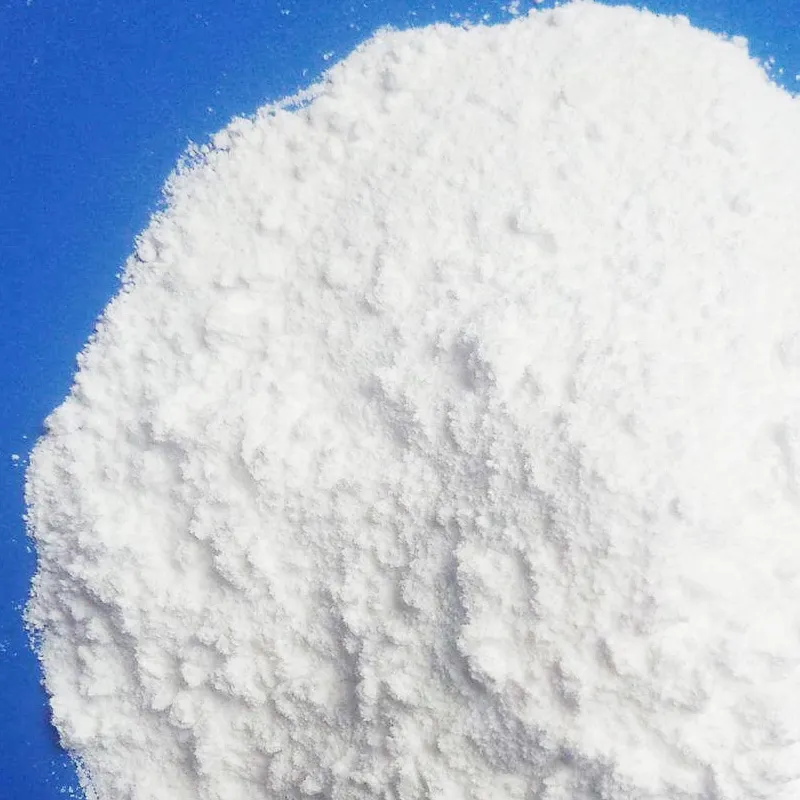
GCC is generally the lower-cost option and is widely used in plastics where cost reduction and basic stiffness improvement are the main goals. PCC is preferred when smaller particle size, improved brightness, narrower distribution, or more controlled performance is needed.
Typical processing steps include:
- mining or quarrying of carbonate rock
- crushing and grinding
- air classification or wet classification
- optional surface treatment, commonly with fatty acids such as stearic acid
- compounding into powders, masterbatches, or finished compounds
Surface treatment is especially important in plastics because it improves wetting and dispersion in the polymer melt, reduces moisture sensitivity, and can lower compound viscosity at a given loading. A typical treated grade may use roughly 0.5 to 2 percent organic surface treatment by weight, enough to improve interfacial adhesion without changing the mineral’s basic function; the mechanism is the formation of a hydrophobic outer layer that reduces particle-particle attraction and promotes polymer wet-out.
Applications and End-Use Markets
Calcium carbonate is used across a wide range of plastic products, but its role differs according to polymer family, product geometry, and processing method.
| End-use sector | Common polymer/compound | Usual role of calcium carbonate | Typical fit |
|---|---|---|---|
| Packaging film | PE, PP | Cost reduction, stiffness, opacity control | Moderate, usually limited loading |
| Rigid profiles and sheet | PVC, PP | Stiffness, dimensional control, cost reduction | Strong fit |
| Pipe and conduit | PVC, PE compounds | Stiffness, extrusion economics | Strong fit in many formulations |
| Cable compounds | PVC, polyolefin jackets | Cost reduction, processing control, flame-system support in some systems | Common |
| Agriculture film | PE | Potential downgauging or opacity tuning | Selective, formulation-dependent |
| Geomembranes | PE | Cost and stiffness adjustment | Limited, because barrier and toughness are critical |
| Rotomolding powders | PE | Cost and stiffness adjustment | Moderate |
| UHMWPE wear and medical components | UHMWPE | Rare, because high purity and wear performance are prioritized | Poor fit |
| PEX and crosslinked systems | Crosslinked polyolefins | Limited use, depending on application | Selective |
Major plastics applications
- PVC pipes, profiles, and siding: calcium carbonate is widely used in rigid PVC because it can lower formulation cost while increasing stiffness and dimensional stability; in many cases, the filler works best when particle size and surface treatment are matched to the extrusion process.
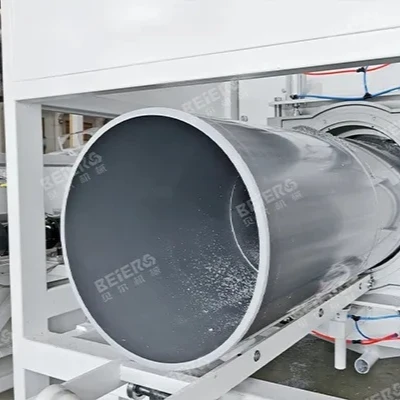
- Polyolefin compounds: in polyethylene and polypropylene, calcium carbonate is used in masterbatches and compounds to improve stiffness, reduce shrinkage, and lower cost, especially in noncritical structural parts and some thin-wall molded items.
- Films and flexible packaging: small to moderate loadings can modify opacity, modulus, and processability, but high filler levels usually reduce tear strength and clarity, making the application more selective than in rigid products.
- Cable and wire jacketing: in PVC and some polyolefin cable compounds, it is used to control cost, hardness, and extrusion behavior.
- Rotomolding and large hollow articles: calcium carbonate may be used to reduce cost and increase stiffness, but it must be balanced against impact resistance and melt flow behavior.
- Geomembranes and technical sheet: use is limited because these applications often demand excellent toughness, durability, and barrier performance.
- UHMWPE wear components and medical products: this is generally a poor-fit use because such applications prioritize ultra-high wear resistance, fatigue performance, and very low contamination risk, which are not typical strengths of mineral-filled systems.
What makes it useful in plastics
Calcium carbonate offers a combination of advantages that few other fillers match simultaneously:
- low cost
- high availability
- whiteness
- ease of incorporation
- good stiffness gain at moderate loading
- compatibility with large-volume compounding operations
At the same time, it is not a universal solution. Its value depends strongly on whether the end product benefits more from stiffness and economy than from toughness, elongation, clarity, or barrier performance.
Environmental and Sustainability Aspects
Calcium carbonate has a mixed environmental profile in plastics.
On the positive side:
- It can partially replace polymer resin, reducing the amount of petrochemical material needed per part or per kilogram of compound.
- It can lower cost and, in some applications, support downgauging by increasing stiffness.
- It is mineral-based, widely available, and established in large-volume industrial supply chains.
On the negative side:
- It is still mined or chemically manufactured, so it carries quarrying, grinding, transport, and processing impacts.
- High loading can make recycling more difficult if compounds are poorly designed, particularly when filler level is high and additives complicate reprocessing.
- It does not itself solve end-of-life problems such as littering, polymer persistence, or collection inefficiency.
In circular-economy terms, calcium carbonate is best understood as a material-efficiency enabler rather than a circularity solution by itself. It can help reduce resin use, but it must be designed carefully so that mechanical recycling, re-extrusion, and reprocessing remain viable.
Bio-based alternatives do exist for certain functions, but they are not direct replacements for calcium carbonate as a mineral filler. In many cases, the more practical sustainability pathway is improved filler engineering, lower loading where possible, better dispersion, and design for recyclability rather than elimination of mineral fillers altogether.
Economic and Global Market Impact
Calcium carbonate is one of the highest-volume industrial minerals in the world, and its market is closely tied to construction, packaging, plastics, coatings, and paper demand. In plastics, its economics are driven by bulk supply, logistics, particle specification, and proximity to compounding or conversion plants.
Leading supply typically comes from large mineral producers and regional specialists that operate quarrying, milling, and surface-treatment networks. The competitive advantage often lies less in the raw mineral itself than in consistent particle engineering, low contamination, narrow distribution, and reliable local delivery.
According to recent industry analyses, demand remains supported by:
- growth in PVC and polyolefin compounding
- continued use in construction-related plastics
- expansion of masterbatch and engineered compound markets
- demand for lower-cost, lighter-weight formulations in emerging economies
A significant part of the value chain is concentrated in masterbatch and compound producers, because plastics processors often buy calcium carbonate in pre-dispersed or treated form rather than as raw powder. This shifts economic value from mining alone toward formulation know-how and processing consistency.
Current Challenges and Innovations
The main technical challenge is balancing cost reduction against property loss. At higher filler levels, calcium carbonate can reduce impact strength, elongation, elongation retention after aging, and in some cases barrier performance or appearance quality if dispersion is inadequate.
Current innovation directions include:
- Nanoscale and ultrafine grades: smaller particles can improve dispersion and stiffness response, though they raise cost and processing sensitivity.
- Advanced surface treatment: optimized coatings improve compatibility with polyolefins, PVC, and engineering blends.
- Hybrid filler systems: combinations with talc, clay, glass, or carbon-based additives can tailor stiffness, shrinkage, and processability more effectively than a single filler.
- Recycling-compatible compounds: formulations are being tuned to preserve mechanical recycling performance while still delivering mineral-based cost reduction.
- Process-integrated masterbatches: concentrated additive delivery improves dosing accuracy and dispersion consistency in downstream processing.
A practical formulation example is a PVC rigid profile containing a treated calcium carbonate masterbatch at a moderate loading level, where the mineral lowers resin cost and boosts stiffness while the surface treatment helps maintain extrusion stability and surface finish. Another example is a polypropylene compound for injection-molded housings, where fine calcium carbonate may be used to increase modulus and dimensional stability, often alongside impact modifiers if toughness must be preserved.
Future Outlook
Calcium carbonate is likely to remain a core plastics auxiliary because it is cheap, abundant, and adaptable. Its future role will probably shift from simple volume filler toward more engineered function in compound design.
The most likely developments are:
- more precisely controlled particle morphology and distribution
- greater use of surface-treated and compatibilized grades
- expansion in circular and recycled polymer systems
- continued use in large-volume construction and infrastructure plastics
- tighter integration with compounding, masterbatch, and localized supply chains
The strongest growth opportunities are likely in applications where stiffness, whiteness, and economics matter more than extreme mechanical or barrier performance. Conversely, applications demanding premium clarity, high impact resistance, or ultra-clean performance will continue to use calcium carbonate only selectively or not at all.
Summary
Calcium carbonate is a cornerstone mineral in plastics, serving mainly as a filler and property modifier that improves economics, stiffness, and processing behavior in a wide range of compounds. Its performance depends heavily on particle size, crystal form, purity, and surface treatment, which determine whether it behaves as a basic extender or a more functional additive.
It is most successful in rigid PVC, polyolefin compounds, profiles, pipes, cable jackets, and other high-volume products, while it is less suitable for applications that require maximum toughness, clarity, or barrier performance. Its sustainability profile is mixed: it can reduce resin use and support cost-efficient material efficiency, but it remains a mined mineral whose benefits depend on thoughtful formulation and recycling-aware design.
References
- •
Calcium carbonate. (2002, March 17). In Wikipedia. https://en.wikipedia.org/wiki/Calcium_carbonateLink
- •
Calcium carbonate | CaCO3 | CID 10112 - PubChem - NIH. (n.d.). PubChem. https://pubchem.ncbi.nlm.nih.gov/compound/Calcium-CarbonateLink
- •
Calcium carbonate. (2023, August 5). In StatPearls. https://www.ncbi.nlm.nih.gov/books/NBK562303/Link
- •
Calcium carbonate (GCC/PCC): Grades, uses & bulk supply. (2024, August 14). Rawsource. https://rawsource.com/calcium-carbonate-faqs-everything-you-need-to-know/Link
- •
Calcium carbonate - what is this substance and what is it mainly used for? (2024, May 21). Foodcom. https://foodcom.pl/en/calcium-carbonate-what-is-this-substance-and-what-is-it-mainly-used-for/Link
- •
Calcium carbonate (CaCO3). (2023, December 26). GeeksforGeeks. https://www.geeksforgeeks.org/chemistry/calcium-carbonate/Link
- •
Calcium carbonate: Uses, dosage, and potential side effects. (2023, November 14). Healthline. https://www.healthline.com/health/calcium-carbonateLink
- •
Calcium carbonate | 471-34-1. (2026, August 25). ChemicalBook. https://www.chemicalbook.com/ChemicalProductProperty_EN_CB2154602.htmLink
- •
Calcium carbonate. (2022, June 20). BYJU'S. https://byjus.com/chemistry/calcium-carbonate/Link
- •
CALCIUM CARBONATE | 1317-65-3. (2026, January 13). ChemicalBook. https://www.chemicalbook.com/ChemicalProductProperty_EN_CB2356871.htmLink
- •
Calcium carbonate applications in industry: Types, production ... (2024, October 22). Vnapex. https://www.vnapex.com/blog/calcium-carbonateLink
- •
CALCIUM CARBONATE†. (2020, December 18). Occupational Safety and Health Administration. https://www.osha.gov/chemicaldata/220Link
- •
What is calcium carbonate used for? (2025, March 4). Vtalc. https://www.vtalc.com/news/what-is-calcium-carbonate-used-forLink
- •
Calcium carbonate. (2025, September 8). Essential Minerals. https://www.essentialminerals.org/mineral/calcium-carbonate/Link
- •
Calcium carbonate applications across key industries. (2026, June 15). Elchemy. https://elchemy.com/blogs/food-nutrition/calcium-carbonate-applications-across-manufacturing-pharmaceuticals-and-food-industriesLink
- •
Calcium carbonate | Formula, uses, names, & facts. (2026, May 11). In Britannica. https://www.britannica.com/science/calcium-carbonateLink
- •
Is calcium carbonate good or bad for you? (2025, May 7). ChemicalBook. https://www.chemicalbook.com/article/is-calcium-carbonate-good-or-bad-for-you.htmLink
- •
10 calcium carbonate uses & benefits + side effects. (2021, September 9). SelfDecode. https://supplements.selfdecode.com/blog/calcium-carbonate/Link
- •
Calcium carbonate applications: Uses, benefits & industry ... (2025, November 20). GLC Minerals. https://glcminerals.com/calcium-carbonate-uses-benefits-glc-minerals/Link
- •
Calcium carbonate uses, properties, structure and formula. (n.d.). Softschools. https://www.softschools.com/formulas/chemistry/calcium_carbonate_uses_properties_structure_uses_properties_structure_formula/297/Link
- •
What are the pros and cons of calcium carbonate? (2025, December 5). Rxwellz. https://rxwellz.com/what-are-the-pros-and-cons-of-calcium-carbonateLink
- •
Calcium carbonate. (2025, May 12). American Chemical Society. https://www.acs.org/molecule-of-the-week/archive/c/calcium-carbonate.htmlLink
- •
Calcium carbonate: Formula, properties, uses & ... (2025, July 17). Allen. https://allen.in/science/calcium-carbonateLink
- •
What is calcium carbonate used for? (And why oolitic ... (2025, July 8). Calcean. https://www.calcean.com/blog/what-is-calcium-carbonate-used-forLink
- •
Benefits and side effects of calcium carbonate supplements. (2024, December 26). ChemicalBook. https://www.chemicalbook.com/article/benefits-and-side-effects-of-calcium-carbonate-supplements.htmLink
- •
What is calcium carbonate and what is it used for? (2022, May 25). PCC Group. https://www.products.pcc.eu/en/blog/what-is-calcium-carbonate-and-what-is-it-used-for/Link
- •
Is calcium carbonate bad for you? 4 uses for CaCo₃. (2025, May 21). Health. https://www.health.com/calcium-carbonate-8714412Link
- •
Calcium carbonate. (n.d.). Chemeurope. https://www.chemeurope.com/en/encyclopedia/Calcium_carbonate.htmlLink
- •
Calcium carbonate - definition, preparation methods, uses ... (n.d.). Aakash. https://www.aakash.ac.in/important-concepts/chemistry/calcium-carbonateLink
- •
Calcium carbonate. (n.d.). https://5.imimg.com/data5/IW/US/MY-3977359/calcium-carbonate.pdfLink
- •
Key uses of calcium carbonate across multiple industries. (2025, October 29). LinkedIn. https://www.linkedin.com/pulse/key-uses-calcium-carbonate-across-multiple-yzsecLink
- •
Calcium carbonate capsules: Uses & side effects. (2023, September 20). Cleveland Clinic. https://my.clevelandclinic.org/health/drugs/18140-calcium-carbonate-capsules-or-tabletsLink
- •
Calcium carbonate. (2025, March 23). ScienceDirect. https://www.sciencedirect.com/topics/chemistry/calcium-carbonateLink
- •
Calcium carbonate capsules: Uses, dosage, side effects ... (n.d.). Medanta. https://www.medanta.org/medicine-detail/calcium-carbonate-capsules-uses-dosage-side-effects-precautionsLink
- •
Calcium carbonate: One of the most useful and versatile ... (2020, September 29). Alfatestlab. https://www.alfatestlab.com/en/calcium-carbonate-one-of-the-most-useful-and-versatile-material-known-to-man/Link
- •
Is calcium carbonate bad for you? Risks and safety. (2026, May 2). Science Insights. https://scienceinsights.org/is-calcium-carbonate-bad-for-you-risks-and-safety/Link
- •
Calcium carbonate (Tums): Uses, side effects, FAQs & more. (2022, January 18). GoodRx. https://www.goodrx.com/calcium-carbonate/what-isLink
- •
Calcium carbonate | CaCO3 | CID 10112 - PubChem. (n.d.). PubChem. https://pubchem.ncbi.nlm.nih.gov/compound/Calcium%20carbonate%20slurryLink
- •
Calcium carbonate uses in industry. (2025, January 22). Elchemy. https://elchemy.com/blogs/food-nutrition/top-industrial-uses-of-calcium-carbonate-applications-across-multiple-sectorsLink
- •
Gallery :: Limestone- calcium carbonate. (n.d.). Future Engineers. https://www.futureengineers.org/namethatmolecule/gallery/3182Link
- •
Calcium carbonate: MedlinePlus drug information. (2024, June 20). MedlinePlus. https://medlineplus.gov/druginfo/meds/a601032.htmlLink
- •
The bottom line. (2016, October 22). Healthline. https://www.healthline.com/nutrition/calcium-supplementsLink
- •
Calcium carbonate: Complete science-based guide 2026 ... (2026, February 22). Dietary Supplement DB. https://www.dietarysupplementdb.com/minerals/calcium-carbonateLink
- •
Calcium carbonate: Uses, side effects, and dosage. (2022, February 9). Ro. https://ro.co/supplements/calcium-carbonate/Link
- •
Calcium: Health benefits, side effects, uses, dose & ... (2021, June 11). RxList. https://www.rxlist.com/supplements/calcium.htmLink
- •
Calcium carbonate and its most surprising applications. Part I. (2020, December 23). Calcinor. https://www.calcinor.com/en/news/product-reviews/calcium-carbonate-and-its-most-surprising-applications-part-iLink
- •
Adverse effects. (2024, July 19). In StatPearls. https://www.ncbi.nlm.nih.gov/books/NBK549792/Link
- •
Calcium carbonate. (2020, September 8). DrugBank. https://go.drugbank.com/drugs/DB06724Link
- •
Choosing a calcium supplement. (2020, October 13). Harvard Health. https://www.health.harvard.edu/diet-and-nutrition/choosing-a-calcium-supplementLink
- •
The good, the bad, and the ugly of calcium supplementation. (2018, November 28). PMC. https://pmc.ncbi.nlm.nih.gov/articles/PMC6276611/Link
- •
Calcium and calcium supplements: Achieving the right ... (2026, January 21). Mayo Clinic. https://www.mayoclinic.org/healthy-lifestyle/nutrition-and-healthy-eating/in-depth/calcium-supplements/art-20047097Link