
Introduction
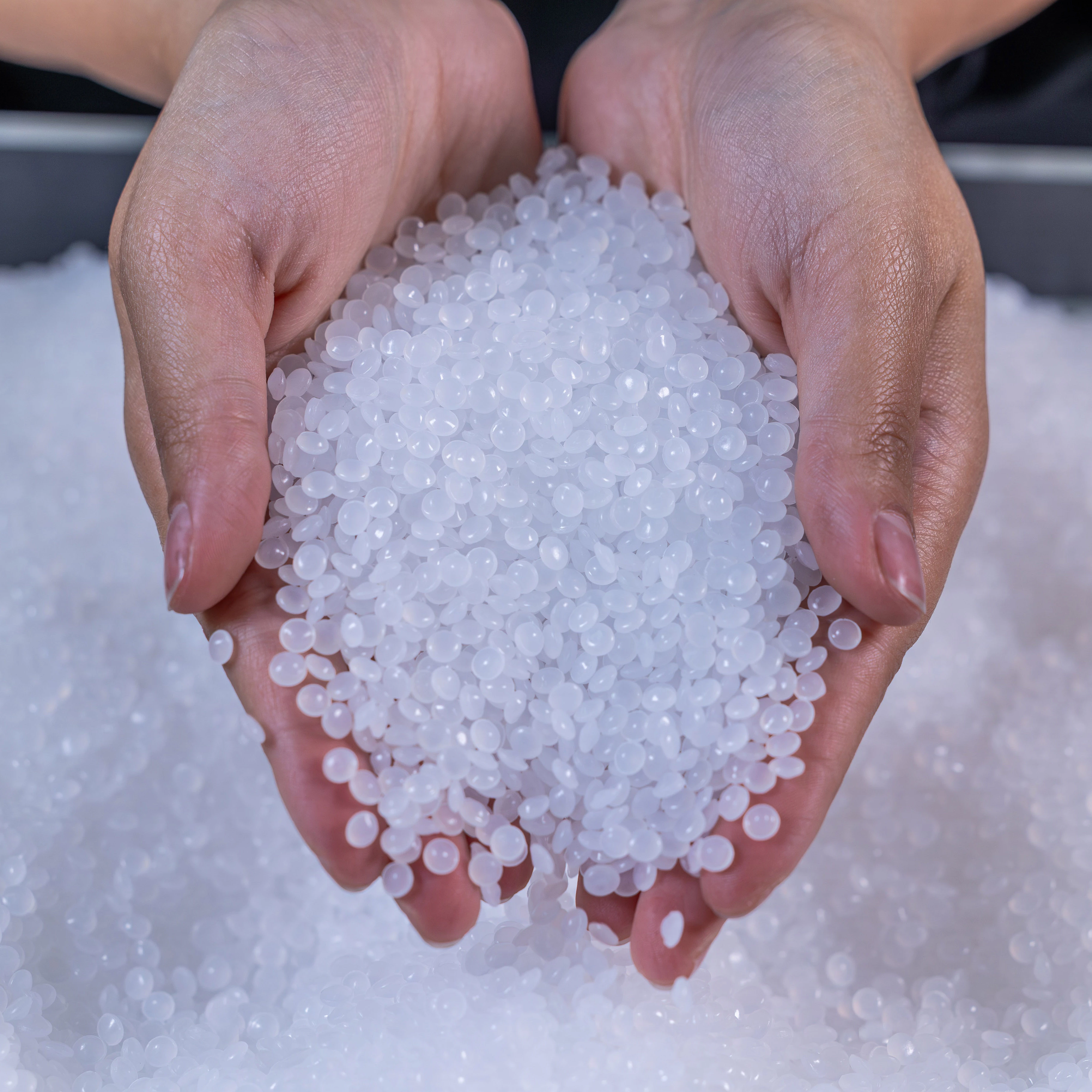
Low-density polyethylene (LDPE) is a versatile polyolefin thermoplastic valued for its softness, flexibility, toughness, chemical resistance, and easy processability. It is one of the foundational materials of the plastics industry, especially in films, flexible packaging, coatings, wire and cable insulation, and many molded consumer and industrial products.
LDPE occupies a distinct position within the polyethylene family because its highly branched molecular architecture lowers crystallinity and density relative to more linear polyethylenes, which in turn improves flexibility and clarity but reduces stiffness and barrier performance. Industrially, it is typically produced by high-pressure free-radical polymerization of ethylene, and its long commercial history has made it one of the most widely used packaging resins in global plastics markets.
The material is closely associated with both the strengths and limitations of conventional plastics: it enables lightweight, economical, hygienic, and sealable products, yet its low gas barrier, low surface energy, and fossil-based origin create technical and sustainability trade-offs. Current development around LDPE therefore focuses on improved recyclability, downgauging, post-consumer recycled content, bio-based feedstocks, and compatibility with circular economy systems.
History and Development
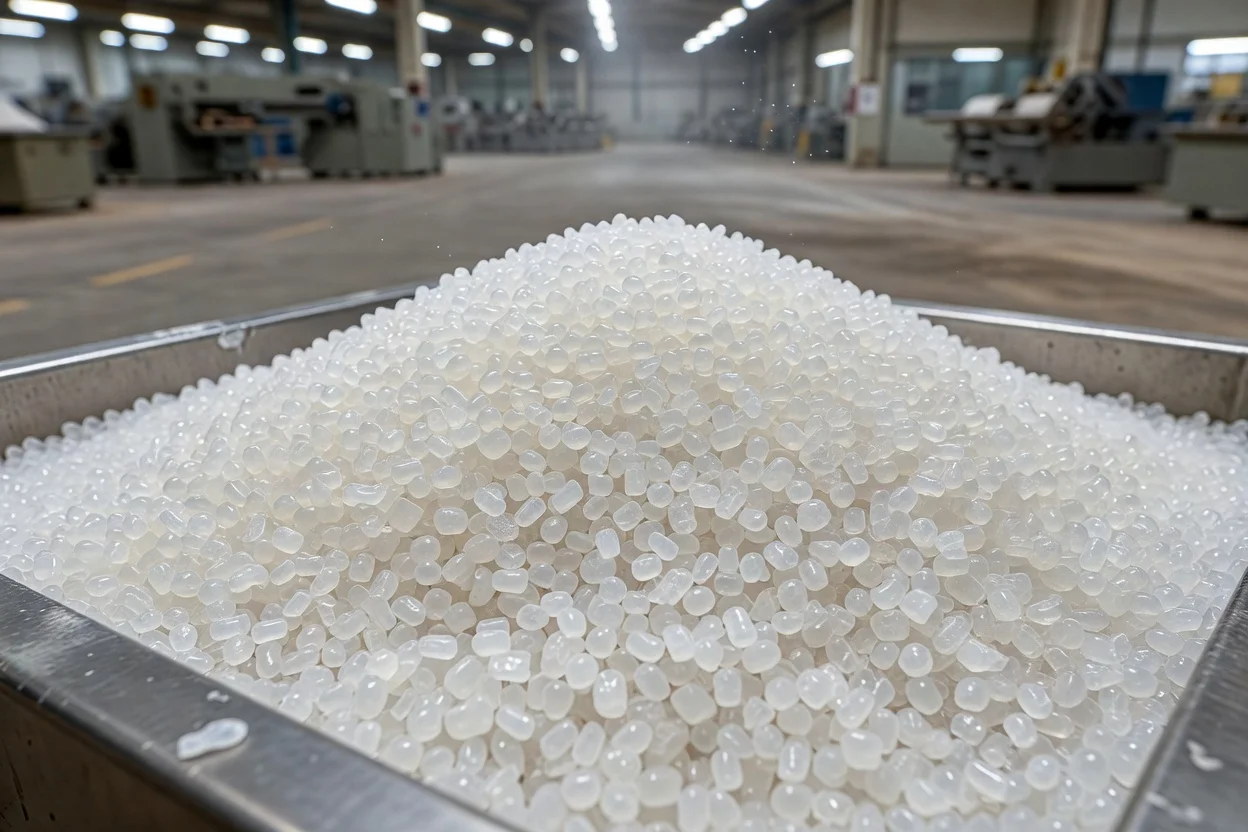
LDPE was among the earliest commercial polyethylenes, made possible by the discovery that ethylene could be polymerized under very high pressure in the presence of radical initiators. This route produced a material with substantial chain branching, which distinguished it from later linear grades and gave it the low density and high flexibility that defined its market role.
As polymerization technology matured, LDPE production shifted from laboratory novelty to large-scale commodity manufacturing in autoclave and tubular reactors. Over time, the resin became deeply embedded in packaging, consumer goods, agricultural films, and cable systems, while also serving as a benchmark against which linear low-density polyethylene and high-density polyethylene are compared.
Chemical Structure and Key Properties
LDPE is a semi-crystalline polyethylene composed of long hydrocarbon chains with significant short- and long-chain branching. This branching prevents dense chain packing, reduces crystallinity, and lowers density to roughly the 0.910 to 0.940 g/cm3 range cited by industry sources. The result is a resin that is soft, flexible, translucent to opaque, and resistant to many aqueous chemicals and weak acids or alkalis.
Key property profile
- Low density and flexibility: branching reduces intermolecular attraction and increases chain mobility.
- Good toughness and impact resistance: especially useful in films, bags, and squeeze bottles.
- Excellent electrical insulation: supports wire and cable jacketing and insulation applications.
- Good moisture resistance: valuable in packaging for dry foods and protective wraps.
- Low surface energy: can limit printing, lamination, and adhesive bonding unless treated.
- Modest gas barrier: oxygen and aroma transmission are relatively high, limiting use for sensitive foods.
Real limits and practical workarounds
- Poor oxygen and aroma barrier → cause: nonpolar, loosely packed, low-crystallinity structure → workaround: use multilayer structures, barrier coatings, or coextruded laminates.
- Low surface energy before treatment → cause: chemically inert polyolefin surface → workaround: corona, flame, plasma, or primer treatment before printing and bonding.
- Limited stiffness and heat resistance → cause: high branching and relatively low melting point → workaround: use thickness increases, blends, reinforcements, or a different polyethylene grade when rigidity is critical.
Typical processing-related examples
- Film extrusion often uses LDPE with melt flow indices in the range suited to blow film or cast film grades, because the resin provides stable melt strength and good sealability in thin-gauge films.
- Extrusion coating and lamination commonly rely on LDPE as a heat-sealable tie layer or moisture barrier, but surface pretreatment is often needed to secure adhesion and print durability.
Production Processes and Raw Feedstocks
LDPE is produced from ethylene, a petrochemical monomer derived mainly from steam cracking of hydrocarbon feedstocks such as naphtha, ethane, or other light hydrocarbons. The polymerization is carried out under very high pressure using free-radical initiators, commonly in autoclave or tubular reactors.
The defining feature of the process is chain branching, which is created through radical reactions under severe conditions. This branching is not a defect but the origin of LDPE’s key property set: lower density, greater flexibility, and improved melt strength compared with more linear polyethylene grades.
Typical process characteristics
- Pressure: extremely high, often described in industry references as up to several thousand bar.
- Temperature: elevated, commonly in the 200 to 300 °C range in technical descriptions.
- Initiation: peroxide or oxygen-based radical systems depending on the process design.
- Reactor types: tubular and autoclave configurations remain the standard industrial routes.
Compared with newer polyethylenes, LDPE production is energy intensive because of the pressure required for polymerization, but the process remains commercially important because it yields a resin with highly valued film-forming and sealing behavior.
Applications and End-Use Markets
LDPE is used wherever flexibility, toughness, low temperature performance, sealability, and moisture resistance matter more than stiffness or high gas barrier.
| End-use sector | Typical LDPE grade or form | Usual process | Why LDPE fits |
|---|---|---|---|
| Flexible packaging | Film grade | Blow film, cast film, lamination | Softness, sealability, clarity, moisture resistance |
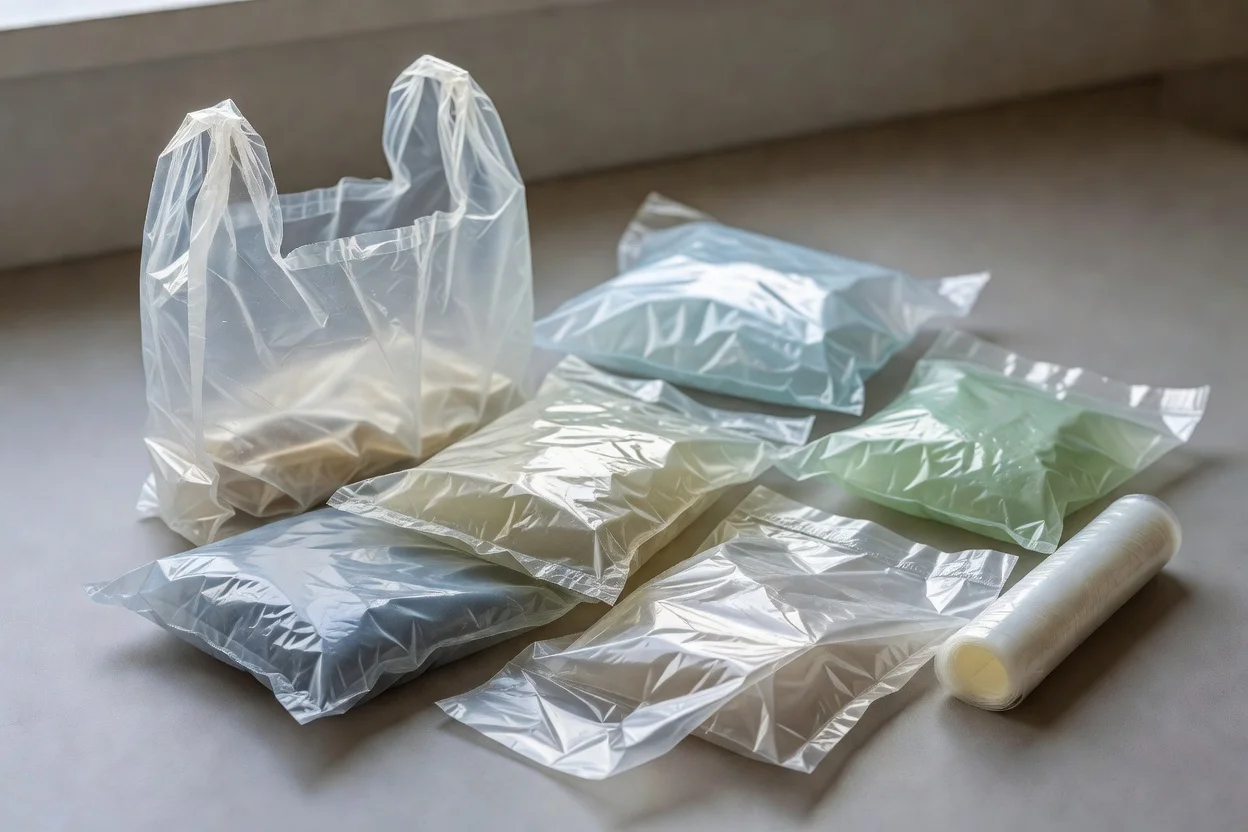
| Shopping and trash bags | Film grade | Blown film | Tear resistance in thin gauges and low cost |
| Food wraps and dry-food packaging | Film grade | Coextrusion, lamination | Heat sealing and moisture barrier |
| Wire and cable | Insulation grade | Extrusion coating | Electrical insulation and flexibility |
| Coatings and extrusion coating | Coating grade | Extrusion coating | Seal layer and moisture barrier |
| Bottles and squeeze containers | Blow-molding grade | Blow molding | Soft squeeze, toughness, chemical resistance |
| Caps, closures, household goods | Injection or blow grades | Injection molding, blow molding | Ease of processing and impact resistance |
| Agricultural films | Film grade | Blown film | Flexibility, cost efficiency, weatherable film design |
| Geomembranes and liners | Heavy-gauge film or sheet | Extrusion, calendering | Chemical resistance and low permeability to water |
| Rotomolded items | Powderized rotomolding grades | Rotational molding | Toughness and low-temperature durability |
| Laboratory bottles and wash bottles | Speciality LDPE grades | Blow molding | Break resistance and chemical compatibility |
| Poor-fit use: high-barrier food or medical packaging | Not preferred as a single layer | Multilayer alternatives | Oxygen barrier is insufficient on its own |
LDPE remains especially important in packaging because it combines manufacturability with economics. However, for applications requiring high gas barrier, rigidity, or high heat resistance, it is usually replaced by other polymers or used only as one layer in a multilayer structure.
Environmental and Sustainability Aspects
LDPE is a fossil-derived polymer in most commercial supply chains, so its climate footprint is linked to hydrocarbon feedstocks, monomer production, and energy-intensive high-pressure polymerization. Its value in lightweight packaging and transport reduction partly offsets upstream impacts, but end-of-life outcomes remain the main sustainability challenge.
Recyclability
LDPE is widely identified by recycling code #4. In principle, it is mechanically recyclable, but actual recycling performance depends on collection systems, contamination, multilayer structure, ink load, and the economics of reprocessing flexible films. Film collection and washing are particularly challenging because LDPE films are light, often contaminated, and frequently mixed with other polyolefins.
Bio-based and circular alternatives
- Post-consumer recycled LDPE is increasingly used in downgauged films, bags, and some industrial packaging where appearance and odor constraints are manageable.
- Bio-ethylene-derived LDPE can be made by polymerizing ethylene from bioethanol or other renewable routes, producing a chemically identical polymer while lowering fossil carbon intensity at the feedstock stage.
- Design-for-recycling packaging seeks to simplify multilayer structures, improve mono-material compatibility, and reduce additives that interfere with mechanical recycling.
Carbon footprint and trade-offs
The carbon footprint of LDPE depends strongly on feedstock, plant efficiency, energy mix, and whether recycled or bio-based inputs are used. From a systems perspective, the main debate is not whether LDPE is sustainable in absolute terms, but whether its lightweight functionality and long service life can be retained while reducing virgin fossil carbon and increasing circularity.
Economic and Global Market Impact
LDPE is a major commodity resin with a large global market because flexible packaging, consumer goods, and agricultural films are enormous-volume sectors. The resin is supplied by major global petrochemical producers and integrated polymer manufacturers, including companies such as Dow, ExxonMobil, SABIC, LyondellBasell, Shell, Chevron Phillips Chemical, and Celanese, among others.
Economic demand is shaped by three durable drivers:
- Food and consumer packaging, where LDPE remains a cost-effective sealing and moisture-barrier material.
- Agriculture, where films are used for mulching, greenhouse covers, silage wraps, and related applications.
- Infrastructure and industrial uses, especially cable insulation, liners, and extrusion coatings.
Price competitiveness is closely tied to ethylene availability, regional cracker economics, plant utilization, and freight conditions. As a commodity resin, LDPE is sensitive to global energy and petrochemical cycles, even when end-use demand remains relatively stable.
Current Challenges and Innovations
LDPE faces several technical and market challenges:
- Recycling of flexible films remains difficult because films are lightweight and often contaminated.
- Packaging regulation and brand commitments are pushing material reduction and recyclability improvements.
- Barrier limitations restrict direct use in oxygen-sensitive foods without multilayer design.
- Competition from LLDPE and specialty polyolefins has reduced LDPE’s share in some film segments where puncture resistance or downgauging is prioritized.
Innovation is concentrated in several areas:
- Catalyst and reactor optimization to improve process efficiency and tailor melt strength.
- Advanced film formulations using slip, antiblock, antistatic, and process aids at low dosage levels, often in the range of a few hundred to a few thousand ppm, to control friction, winding, and handling behavior.
- Compatibilized recycling streams that allow LDPE-rich waste to be reprocessed into lower-spec films or molded goods.
- Monomaterial packaging design that replaces mixed-material laminates with all-polyolefin structures to improve recyclability.
- Bio-circular feedstocks that preserve polymer performance while lowering fossil origin content.
A practical example is the use of corona treatment before printing or adhesive lamination. This does not change the bulk polymer chemistry, but it oxidizes the surface enough to raise surface energy and improve ink wetting and bond strength. Another common example is the use of slip additives in film, such as low levels of fatty amides, which migrate to the surface and reduce coefficient of friction, improving machine handling and package opening behavior.
Future Outlook
LDPE is unlikely to disappear from the plastics landscape because it solves a set of industrial problems that remain economically important: low-cost flexible packaging, reliable heat sealing, moisture protection, and easy extrusion processing. Its future, however, will increasingly depend on how well producers and converters adapt it to circular design requirements, recycled content targets, and lower-carbon feedstock pathways.
The most probable trajectory is not replacement everywhere, but repositioning. LDPE will continue to dominate many film and coating uses, while increasingly being formulated, converted, and collected in ways that improve recyclability and reduce virgin fossil intensity. In higher-performance packaging, it will more often serve as one layer in a designed system rather than as a stand-alone material.
Summary
LDPE is a branched, flexible, high-pressure polyethylene that remains central to packaging, films, coatings, cable insulation, and many molded products. Its strengths are processability, sealability, toughness, and low cost; its limitations are barrier performance, stiffness, and surface bonding without treatment. The main strategic challenge for the sector is to preserve LDPE’s industrial utility while improving recyclability, lowering carbon intensity, and integrating it more effectively into circular plastics systems.
References
- •
Low Density Polyethylene (LDPE). (n.d.). FSRI Materials. https://materials.fsri.org/materialdetail/low-density-polyethylene-ldpeLink
- •
What is LLDPE plastic? (2026, September 22). Shell. https://www.shell.us/business/sectors/shell-polymers/resources-and-insights/lldpe-plastic.htmlLink
- •
Low-density polyethylene (LDPE): Complete technical guide. (2022, February 3). Laird Plastics. https://lairdplastics.com/resources/lowdensity-polyethylene-ldpe-complete-technical-guide/Link
- •
LLDPE plastic overview. (2026, September 22). Shell. https://www.shell.us/business/sectors/shell-polymers/resources-and-insights/lldpe-plastic-overview.htmlLink
- •
Low-density polyethylene. (2005, June 29). In Wikipedia. https://en.wikipedia.org/wiki/Low-density_polyethyleneLink
- •
LDPE. (n.d.). LG Chem. https://www.lgchem.com/product-detail/ldpe?lang=en_USLink
- •
LDPE (low density polyethylene). (2021, September 30). Piedmont Plastics. https://www.piedmontplastics.com/products/ldpeLink
- •
SABIC LDPE. (2020, January 16). SABIC. https://www.sabic.com/en/products/polymers/polyethylene-pe/sabic-ldpeLink
- •
Low density polyethylene (LDPE). (2025, November 5). Dow. https://www.dow.com/en-us/product-technology/pt-polyethylene/pg-polyethylene-ldpe.htmlLink
- •
低密度ポリエチレン. (2007, September 1). In Wikipedia. https://ja.wikipedia.org/wiki/%E4%BD%8E%E5%AF%86%E5%BA%A6%E3%83%9D%E3%83%AA%E3%82%A8%E3%83%81%E3%83%AC%E3%83%B3Link
- •
Low-density polyethylene (LDPE) labware. (n.d.). Thermo Fisher Scientific. https://www.thermofisher.com/us/en/home/life-science/lab-plasticware-supplies/plastic-material-selection/low-density-polyethylene-ldpe-labware.htmlLink
- •
低密度聚乙烯. (n.d.). Baidu Baike. https://baike.baidu.com/item/%E4%BD%8E%E5%AF%86%E5%BA%A6%E8%81%9A%E4%B9%99%E7%83%AF/4905186Link
- •
Marlex® low-density polyethylene (LDPE). (n.d.). Chevron Phillips Chemical. https://www.cpchem.com/what-we-do/solutions/polyethylene/products/ldpeLink
- •
What is low-density polyethylene (LDPE)? (2022, April 29). Xometry. https://www.xometry.com/resources/materials/low-density-polyethylene-ldpe/Link
- •
Polyethylene - low density (LDPE) - material information. (2025, October 23). Goodfellow. https://www.goodfellow.com/eu/resources/polyethylene-low-density-ldpe-material-information/Link
- •
低密度聚乙烯(9002-88-4). (n.d.). ChemicalBook. https://www.chemicalbook.com/ProductMSDSDetailCB5128662.htmLink
- •
Polyethylene (PE). (2025, November 28). In Encyclopædia Britannica. https://www.britannica.com/science/polyethyleneLink
- •
Low density polyethylene (LDPE). (n.d.). LyondellBasell. https://www.lyondellbasell.com/en/our-solutions/products/polymers/resin-type/ldpe/Link
- •
Polyolefins. (2021, October 27). PlasticsEurope. https://plasticseurope.org/plastics-explained/a-large-family/polyolefins/Link
- •
CAS:9002-88-4|聚乙烯. (n.d.). iChemistry. http://www.ichemistry.cn/chemistry/9002-88-4.htmLink
- •
聚乙烯(PE)常见类型、性能及应用. (2023, November 14). https://chem.jgvogel.cn/c1344468.shtmlLink
- •
Low density polyethylene (LDPE) polymers. (n.d.). Celanese. https://www.celanese.com/products/low-density-polyethylene-polymersLink
- •
LDPE plastic uses & properties. (2025, January 30). Curbell Plastics. https://www.curbellplastics.com/materials/plastics/ldpe/Link
- •
低密度聚乙烯与高密度聚乙烯:了解特性、应用和加工工艺的差异. (2025, May 30). FirstMold. https://firstmold.com/zh/tips/ldpe-vs-hdpe/Link
- •
Low density poly-ethylene - an overview. (2017, October 14). ScienceDirect. https://www.sciencedirect.com/topics/engineering/low-density-poly-ethyleneLink
- •
低密度聚乙烯(LDPE) 实验室器具. (n.d.). Thermo Fisher Scientific. https://www.thermofisher.cn/cn/zh/home/life-science/lab-plasticware-supplies/plastic-material-selection/low-density-polyethylene-ldpe-labware.htmlLink
- •
低密度聚乙烯(LDPE). (2024, July 31). WasteTrade. https://www.wastetrade.com/zh_tw/resources/plastics/introduction-to-plastics/types-of-plastics/low-density-polyethylene-ldpe/Link
- •
线性低密度聚乙烯 (LLDPE). (2024, November 19). Wanplas. https://www.wanplas.com/zh-CN/industry-knowledge/plastic-materials/linear-low-density-polyethylene-lldpe/Link
- •
聚乙烯. (2004, September 28). In Wikipedia. https://zh.wikipedia.org/zh-hans/%E8%81%9A%E4%B9%99%E7%83%AFLink
- •
低密度聚乙烯管. (n.d.). Baidu Baike. https://baike.baidu.com/item/%E4%BD%8E%E5%AF%86%E5%BA%A6%E8%81%9A%E4%B9%99%E7%83%AF%E7%AE%A1/1214481Link
- •
聚乙烯塑料. (2024, November 10). Baidu Baike. https://baike.baidu.com/item/%E8%81%9A%E4%B9%99%E7%83%AF%E5%A1%91%E6%96%99/3170473Link
- •
线性低密度聚乙烯. (2024, March 16). Baidu Baike. https://baike.baidu.com/item/%E7%BA%BF%E6%80%A7%E4%BD%8E%E5%AF%86%E5%BA%A6%E8%81%9A%E4%B9%99%E7%83%AF/5259679Link
- •
低密度聚乙烯(LDPE)有哪些生产工艺?参数、加工方法详细公开. (2024, February 15). https://www.163.com/dy/article/IQVQ814O0538097Q.htmlLink
- •
最全面的聚乙烯(PE)材料及产品介绍. (2022, September 22). ChemicalBook. https://www.chemicalbook.com/NewsInfo_48181.htmLink
- •
【行业干货】一文看懂什么是PE,原来聚乙烯这么厉害!. (2023, May 5). Sohu. https://www.sohu.com/a/672915818_466844Link
- •
聚乙烯解决方案. (2025, November 5). Dow. https://www.dow.com/zh-cn/product-technology/pt-polyethylene.htmlLink
- •
低密度聚乙烯. (2024, April 28). In Wikipedia. https://zh.wikipedia.org/wiki/%E4%BD%8E%E5%AF%86%E5%BA%A6%E8%81%9A%E4%B9%99%E7%83%AFLink