
Introduction
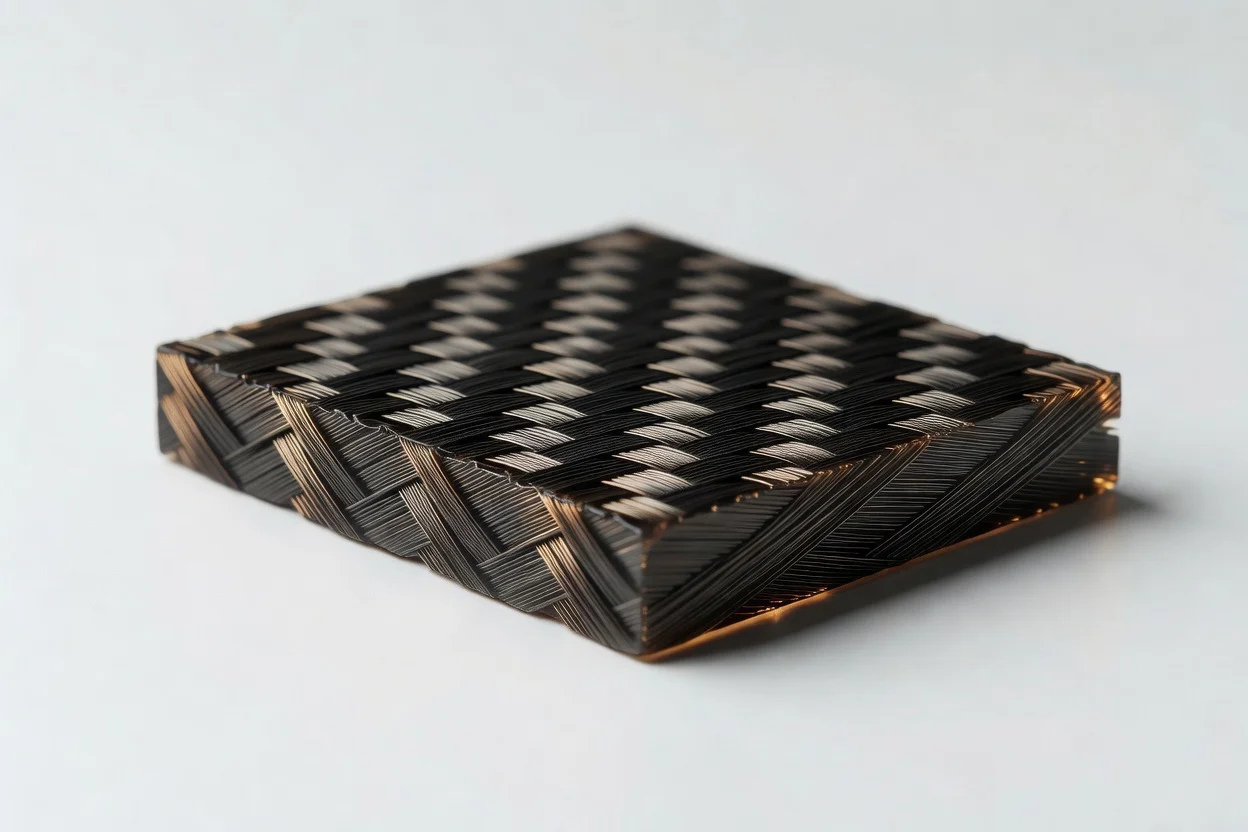
Composites & Reinforcing Fibers refer to the reinforcement phase used in composite materials, especially fiber-reinforced polymers, where strong, stiff fibers are embedded in a matrix to create a material with properties that exceed those of either constituent alone. In plastics and allied materials, reinforcing fibers are central to lightweight structural design because they carry most of the load, while the matrix binds the fibers, transfers stress, protects the reinforcement, and provides processability and environmental resistance.
This subject spans a broad family of materials, including glass, carbon, aramid, basalt, natural fibers, and specialty fibers such as boron, ceramic, and ultra-high-performance polymer fibers. The field has evolved from early fiberglass products to advanced composites used in aerospace, transportation, energy, infrastructure, medical devices, and sporting goods, with continuing innovation driven by durability, cost reduction, recyclability, and lower-carbon feedstocks.
Historical development
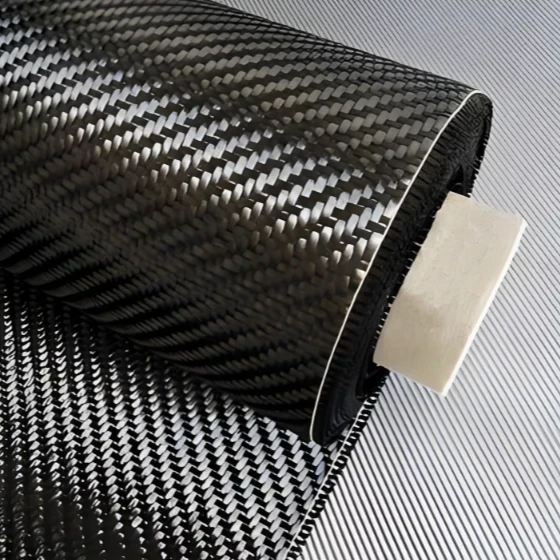
The modern commercial era of fiber-reinforced composites began with fiberglass, which became a practical structural material in the mid-20th century and remains the largest-volume reinforcement class because of its low cost and good balance of properties. As demand increased for higher stiffness, greater fatigue resistance, and lower weight, carbon fiber and aramid fiber became established in advanced applications, particularly aerospace and high-performance transportation.
More recently, the field has expanded toward thermoplastic composites, hybrid reinforcements, natural fibers, recycled fibers, and bio-based systems, reflecting pressure for shorter cycle times, improved damage tolerance, and better end-of-life options.
Chemical structure and key properties
Reinforcing fibers are usually characterized by high aspect ratio, strong molecular or crystalline orientation along the fiber axis, and a property set that is highly anisotropic, meaning performance is much better along the fiber direction than across it. In practice, the composite’s stiffness and strength depend strongly on fiber type, fiber orientation, fiber volume fraction, interfacial adhesion, and the processing route used to place the fibers in the matrix.
Main reinforcement families
| Fiber type | Main advantages | Typical limitations | Common use profile |
|---|---|---|---|
| Glass fiber | Low cost, good strength, electrical insulation, broad availability | Heavier than carbon fiber, lower stiffness | Mass-market composites, automotive, marine, construction, electrical applications |
| Carbon fiber | Very high stiffness-to-weight and strength-to-weight performance | High cost, brittle failure behavior, energy-intensive production | Aerospace, premium automotive, pressure vessels, sports equipment |
| Aramid fiber | Excellent impact resistance and tensile strength | Lower compressive performance, difficult cutting and processing | Ballistic protection, ropes, helmets, impact-resistant laminates |
| Basalt fiber | Good thermal and chemical resistance, moderate cost | Smaller supply base than glass | Infrastructure, thermal and corrosion-resistant parts |
| Natural fiber | Low density, renewable, lower cost potential | Moisture sensitivity, property variability, lower heat resistance | Automotive interiors, consumer products, building materials |
| UHMWPE-based fiber reinforcements | Very high impact resistance and low density | Low temperature resistance, creep and adhesion challenges | Protective composites, selected marine and medical uses |
Real limits and practical workarounds
- Poor through-thickness properties → Most fiber composites are strong in-plane but weaker between layers because fibers are directional → Use woven architectures, z-pinning, stitching, toughened matrices, or hybrid layups to improve interlaminar performance.
- Weak fiber-matrix adhesion in untreated systems → Smooth or chemically incompatible fiber surfaces reduce load transfer → Apply sizing, surface treatments, coupling agents, or plasma/oxidative treatments to strengthen the interface.
- Brittleness in some high-stiffness systems → Very stiff fibers, especially in highly oriented composites, can fail with limited warning → Combine fibers with tougher matrices, use hybrid reinforcements, or design for damage tolerance.
- Moisture sensitivity in natural-fiber systems → Hydrophilic fibers absorb water and swell → Use compatibilizers, alkali treatment, acetylation, coatings, or moisture-resistant matrix selection.
- Limited recyclability in thermoset composites → Crosslinked matrices are difficult to remelt → Adopt thermoplastic matrices, reversible chemistry, mechanical reclamation, or fiber recovery processes.
Production processes and raw feedstocks
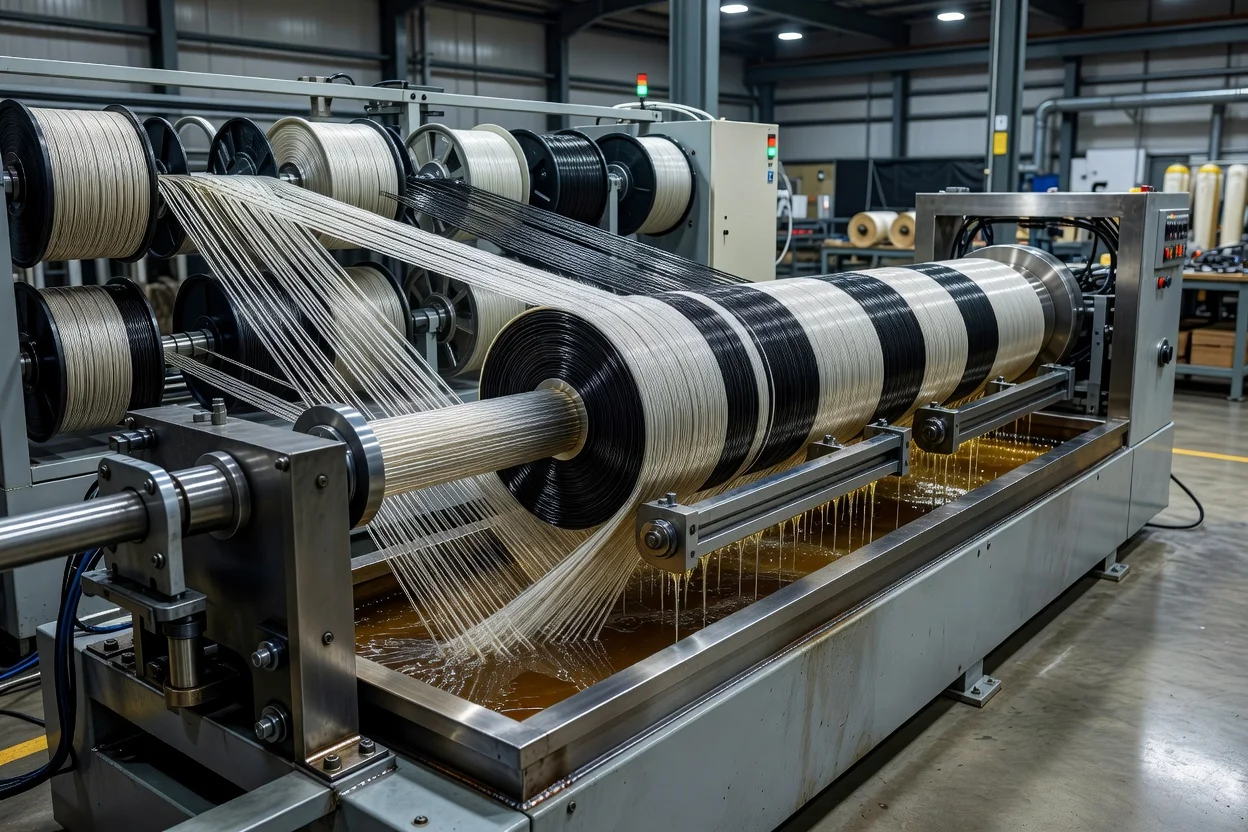
Reinforcing fibers are manufactured from different feedstocks and spinning or drawing routes, depending on the fiber class. Glass fibers are produced by melting mineral raw materials and drawing fine filaments; carbon fibers are commonly made from precursor fibers that are converted and carbonized into highly oriented carbon-rich filaments; aramid fibers are produced by polymer synthesis followed by solution spinning and post-drawing; natural fibers are harvested from plants and processed mechanically and chemically; basalt fibers are made by melting basalt rock and drawing continuous filaments.
In composite manufacturing, the fibers may be delivered as continuous tows, rovings, chopped strands, mats, fabrics, tapes, braids, or preforms. The main downstream processes include:
- Hand lay-up and spray-up for large, cost-sensitive parts with glass fiber reinforcements.
- Compression molding for sheet molding and structural parts.
- Resin transfer molding for medium-complexity composite parts.
- Filament winding for pipes, pressure vessels, and cylindrical structures.
- Pultrusion for continuous profiles, rods, beams, and gratings.
- Prepreg/autoclave processing for high-performance aerospace and premium industrial components.
- Thermoplastic consolidation and overmolding for high-volume, recyclable composite structures.
A key processing detail is sizing, a thin surface coating applied to fibers to protect filaments, improve handling, and promote adhesion to the matrix. In carbon and glass composites, sizing chemistry is often matched to the resin system so the interface can transfer stress efficiently without excessive interfacial brittleness.
Applications and end-use markets
Fiber-reinforced composites are used wherever low mass, high stiffness, corrosion resistance, design flexibility, or fatigue performance are more important than isotropic behavior.
- Aerospace and defense: Predominantly carbon fiber and aramid fiber in epoxy or high-performance thermoplastic matrices for primary structures, fairings, interiors, radomes, and ballistic systems.
- Automotive and rail: Glass fiber remains the most common reinforcement in cost-sensitive body panels, battery enclosures, underbody parts, seats, and structural components; carbon fiber is reserved for premium and performance vehicles.
- Construction and infrastructure: Glass and basalt fibers are widely used in rebars, bridge strengthening, panels, cladding, pipes, and corrosion-resistant reinforcement systems.
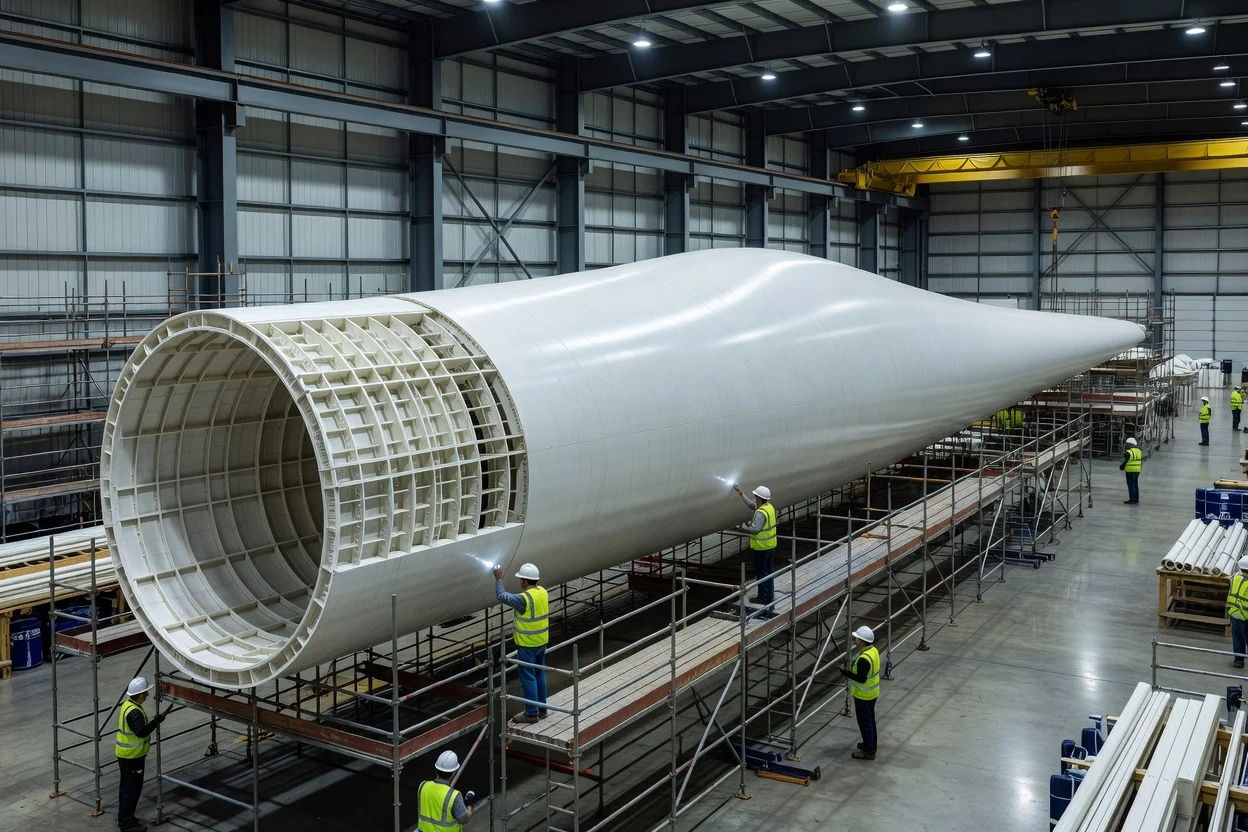
- Energy and electrical: Glass fiber composites are used in wind blade structures, insulators, electrical housings, and cable-related applications because of dielectric performance and dimensional stability.
- Marine and transportation: Glass fiber composites dominate hulls, decks, truck bodies, and specialty enclosures because they combine corrosion resistance with manufacturability.
- Protective and sporting goods: Aramid and carbon fibers are used in helmets, armor, paddles, rackets, and high-stress sporting equipment.
- Consumer and industrial products: Natural-fiber and glass-fiber composites are used in appliance parts, furniture, tools, and equipment housings.
One poor-fit use is unloaded decorative parts that require extreme ductility, because many fiber composites are optimized for stiffness rather than high plastic deformation, and can be over-engineered and expensive for such applications.
Environmental and sustainability aspects
The sustainability profile of reinforcing fibers depends strongly on the fiber type, matrix type, manufacturing energy demand, and end-of-life strategy. Glass fiber is widely available and cost-effective, but its production is energy-intensive and the resulting thermoset composites are not easy to recycle into high-value feedstocks. Carbon fiber delivers outstanding performance at very low weight, but it is costly and typically has a higher embodied energy than glass fiber, especially when used with thermoset matrices.
Natural fibers are attractive because they are renewable, low density, and often lower in embodied carbon, but they typically require moisture management, property stabilization, and careful compatibility engineering. Recycled fibers and reclaimed composites are growing areas of interest, especially where the goal is to reduce landfill disposal and recover reinforcement value from end-of-life parts.
Bio-based alternatives are also advancing on the matrix side, with natural-fiber composites and eco-friendly thermoplastic or bio-derived resin systems receiving increasing attention in recent literature. However, the sustainability case is strongest when the composite is designed for long life, low maintenance, and effective reuse or recycling, rather than simply substituting a renewable feedstock into a short-lived product.
Economic and global market impact
The market is led by glass fiber in volume terms because it offers the best combination of price, availability, and performance for broad industrial use. Carbon fiber dominates the highest-value segment because of its exceptional specific properties, even though its market share is much smaller by tonnage. Aramid fibers remain strategically important in protective and high-impact applications, while natural fibers are gaining relevance in cost-sensitive sustainability-focused products.
Leading producers and supply chains are concentrated across North America, Europe, Japan, and China, with vertically integrated manufacturers supplying fibers, prepregs, fabrics, and finished composite systems. The sector is also shaped by resin compatibility, qualification standards, and certification barriers, especially in aerospace, infrastructure, and pressure-bearing applications.
Current challenges and innovations
The field is being reshaped by several technical priorities:
- Interface engineering: Better sizing chemistries, coupling agents, plasma treatments, and nano-modified interphases are improving load transfer and durability.
- Thermoplastic composites: These offer shorter cycle times, weldability, and improved recyclability compared with many thermoset systems.
- Hybrid composites: Combining glass, carbon, aramid, or natural fibers can optimize cost, stiffness, impact resistance, and failure behavior in a single structure.
- Automated manufacturing: Automation, out-of-autoclave curing, and inline quality control are reducing cost and enabling more complex parts.
- Recycling and reclamation: Mechanical grinding, pyrolysis, solvolysis, and reusable thermoplastic architectures are expanding the practical end-of-life toolbox.
A typical formulation example is a glass-fiber-reinforced polypropylene compound containing roughly 20–40 percent fiber, often chosen for automotive structural parts because the fibers raise stiffness and heat resistance while keeping the material processable by conventional molding routes. Another common example is epoxy with carbon fiber prepreg, where fiber orientation and high fiber volume fraction are used to maximize stiffness and strength in aerospace laminates.
Future outlook
The most important long-term trend is the move from simple reinforcement toward engineered composite systems in which fiber, matrix, interface, and architecture are designed together. Growth is likely to remain strongest in lightweight transportation, renewable energy, infrastructure rehabilitation, and high-performance industrial systems, where composites can reduce mass, resist corrosion, and enable complex geometries.
Future progress will likely depend on whether the industry can combine performance with circularity through recyclable matrices, recovered fibers, lower-carbon feedstocks, and more efficient manufacturing. Natural fibers, recycled carbon fibers, and thermoplastic composite architectures are likely to expand fastest where regulations and procurement standards increasingly reward lower embodied carbon and end-of-life recoverability.
Summary
Composites & Reinforcing Fibers are the load-bearing backbone of fiber-reinforced plastics and many advanced composite systems, enabling high strength, stiffness, and low weight through the interaction of fiber, matrix, and interface. Glass fiber remains the dominant commodity reinforcement, carbon fiber defines high-performance applications, and aramid, basalt, natural, and specialty fibers extend the technology into impact protection, thermal resistance, sustainability-oriented products, and niche industrial uses.
The sector’s future will be shaped by interface engineering, thermoplastic processing, recycling, and lower-carbon feedstocks, with the central challenge being how to preserve structural performance while improving circularity and cost efficiency.
References
- •
科学网-《复合材料指南》(五)增强纤维详解-李彬彬的博文. (n.d.). https://wap.sciencenet.cn/blog-3427017-1388265.html?mobile=1Link
- •
Composites. (n.d.). ASM International. https://www.asminternational.org/wp-content/uploads/files/05373G/05373G-preview.pdfLink
- •
科普复材. (2017, December 6). 中国复合材料学会. https://www.csfcm.org.cn/site/content/765.htmlLink
- •
01Optical_Ch01.indd. (n.d.). ASM International. https://www.asminternational.org/ims/wp-content/uploads/sites/40/2022/11/05303G_Sample_Chapter.pdfLink
- •
COMPOSITE MATERIALS (Web-based Course). (n.d.). Nptel. https://archive.nptel.ac.in/content/storage2/courses/105108124/pdf/Lecture_Notes/LNm1.pdfLink
- •
第2章增强材料. (n.d.). https://courses.gdut.edu.cn/pluginfile.php/416787/mod_resource/content/2/2%20%E5%A2%9E%E5%BC%BA%E6%9D%90%E6%96%9921%E7%8E%BB%E7%92%83%E7%BA%A4%E7%BB%B4.pdfLink
- •
分类. (n.d.). http://www.kepu.net.cn/gb/technology/cailiao/createHTML/html/show_20091216212934156.htmlLink
- •
Polymer matrix composites. (n.d.). Princeton University. https://www.princeton.edu/~ota/disk2/1986/8614/861407.PDFLink
- •
Materials & Processes: Fibers for composites. (2026, September 14). CompositesWorld. https://www.compositesworld.com/articles/the-fiberLink
- •
Reinforcements. (2026, March 20). Exel Composites. https://exelcomposites.com/guide-to-composites/reinforcements/Link
- •
1 CHAPTER 15 COMPOSITES 15.1 Fiber Reinforced .... (n.d.). United States Naval Academy. https://www.usna.edu/NAOE/_files/documents/Courses/EN380/Course_Notes/Ch15_Composites.pdfLink
- •
Materials & Processes: Composites fibers and resins. (2026, September 9). CompositesWorld. https://www.compositesworld.com/articles/composites-101-fibers-and-resinsLink
- •
Fiber-Reinforced Polymer Composites: Pursuing the Promise. (n.d.). U.S. Department of Energy. https://www.energy.gov/sites/prod/files/2014/03/f8/fiber_reinforced_composites_factsheet.pdfLink
- •
Reinforced Polymer Composites. (2021, February 13). PMC. https://pmc.ncbi.nlm.nih.gov/articles/PMC7918194/Link
- •
Chapter 16: Composites. (n.d.). Colorado State University. https://www.engr.colostate.edu/laboratories/ceramics/wp-content/uploads/sites/29/2017/11/Callister_ch16_ZC.pdfLink
- •
Fiber-Reinforced Composites. (2014, June 28). Epoxyworks. https://www.epoxyworks.com/fiber-reinforced-composites/Link
- •
界面工程策略赋能纤维增强树脂基复合材料研究进展. (n.d.). https://www.gfzxb.org/rc-pub/front/front-article/download/133401081/lowqualitypdf/%E7%95%8C%E9%9D%A2%E5%B7%A5%E7%A8%8B%E7%AD%96%E7%95%A5%E8%B5%8B%E8%83%BD%E7%BA%A4%E7%BB%B4%E5%A2%9E%E5%BC%BA%E6%A0%91%E8%84%82%E5%9F%BA%E5%A4%8D%E5%90%88%E6%9D%90%E6%96%99%E7%A0%94%E7%A9%B6%E8%BF%9B%E5%B1%95.pdfLink
- •
https://iaeme.com/Home/journal/IJMET. (n.d.). IAEME. https://iaeme.com/MasterAdmin/Journal_uploads/IJMET/VOLUME_12_ISSUE_2/IJMET_12_02_002.pdfLink
- •
复合材料. (2023, December 28). Baidu Baike. https://baike.baidu.com/item/%E5%A4%8D%E5%90%88%E6%9D%90%E6%96%99/837682Link
- •
Fiber and Polymer Composites: Processing, Simulation .... (2024, December 14). PMC. https://pmc.ncbi.nlm.nih.gov/articles/PMC11677620/Link
- •
先进复合材料(说明). (2021, July 8). Avient. https://cn.avient.com/resource-center/knowledge-base/article/advanced-composites-explainedLink
- •
Natural Fiber Reinforced Composite Material for Product Design. (2021, June 9). PMC. https://pmc.ncbi.nlm.nih.gov/articles/PMC8228744/Link
- •
Development in Fiber-Reinforced Polymer Composites: 1st Edition. (2026, March 28). PMC. https://pmc.ncbi.nlm.nih.gov/articles/PMC13074573/Link
- •
Fiber-Reinforced Polymer Composites: Manufacturing ... - PMC. (2019, October 12). PMC. https://pmc.ncbi.nlm.nih.gov/articles/PMC6835861/Link
- •
科学网-《复合材料指南》全文典藏版-李彬彬的博文. (n.d.). https://wap.sciencenet.cn/blog-3427017-1388273.html?mobile=1Link
- •
Types of fiber reinforcement. (2007, January 1). Fibermax. https://www.fibermax.eu/types-of-fiber-reinforcement.htmlLink
- •
Chapter: 2 Fibers in Composites. (2005, May 9). National Academies Press. https://www.nationalacademies.org/read/11268/chapter/4Link
- •
PowerPoint 演示文稿. (n.d.). https://virtualsim.nuaa.edu.cn/file/up_document/2024/02/J4PTle3J8dQdd_Ep.pdfLink
- •
Composite Materials. (2015, February 20). Wiley Online Library. https://onlinelibrary.wiley.com/doi/full/10.1002/9781118985960.meh110Link
- •
第31卷第6期. (n.d.). https://pubs.cstam.org.cn/data/article/cjsm/preview/pdf/gtlxxb201006004.pdfLink
- •
纤维增强材料. (2022, April 27). Baidu Baike. https://baike.baidu.com/item/%E7%BA%A4%E7%BB%B4%E5%A2%9E%E5%BC%BA%E6%9D%90%E6%96%99/12731103Link
- •
。 (n.d.). https://pubs.cstam.org.cn/data/article/lxjz/preview/pdf/j1987-013.pdfLink
- •
复合材料用增强体. (2024, February 26). Baidu Baike. https://baike.baidu.com/item/%E5%A4%8D%E5%90%88%E6%9D%90%E6%96%99%E7%94%A8%E5%A2%9E%E5%BC%BA%E4%BD%93/55525979Link
- •
纤维增强复合材料. (2016, March 10). Google Patents. https://patents.google.com/patent/CN107405797A/zhLink
- •
先进复合材料. (2023, June 27). Baidu Baike. https://baike.baidu.com/item/%E5%85%88%E8%BF%9B%E5%A4%8D%E5%90%88%E6%9D%90%E6%96%99/2571683Link
- •
连续纤维增强高性能热塑性树脂基复合材料的制备与应用. (2020, August 20). https://html.rhhz.net/CLGC/html/20200805.htmLink
- •
复合材料学报. (n.d.). https://fhclxb.buaa.edu.cn/cn/article/pdf/preview/14755.pdfLink