
Introduction
Lubricants are substances used to reduce friction, heat, and wear between moving surfaces, and they are also used as processing aids or carriers in some industrial formulations. In plastics, lubricants are especially important auxiliaries because they improve melt flow, reduce die build-up and sticking, limit internal and external friction, and help control surface finish during extrusion, injection molding, calendering, and other forming operations.
From a plastics-industry perspective, lubricants are not a single material class but a functional family that includes metal soaps, waxes, fatty amides, ester-based additives, silicone-based materials, and solid lubricants such as PTFE or graphite, depending on the polymer system and end-use requirements. Their role extends beyond tribology: they can influence fusion behavior, demolding, dimensional stability, and long-term performance, while also creating formulation trade-offs with adhesion, printability, and recyclability.
History and Development
Lubrication is an old engineering concept, but modern industrial lubricants evolved with the rise of machinery, polymer processing, and additive chemistry. In plastics, lubricants became especially important as high-throughput extrusion and injection molding demanded tighter control of friction, thermal stability, and release behavior.
The development of synthetic base stocks, engineered waxes, and specialty additives expanded lubricant design from simple “slip” agents into highly tailored processing tools. More recently, sustainability concerns have driven interest in lower-toxicity, PFAS-free, and bio-based lubricant chemistries, as well as formulations designed to support recycling and reduce contamination in circular plastics systems.
Chemical Structure and Key Properties
In plastics, the term lubricant usually refers to a functional additive rather than a single chemical identity. Performance depends on the molecule’s polarity, molecular weight, melting point, crystallinity, and compatibility with the host polymer.
Common lubricant families include:
- Waxes such as paraffin wax and polyethylene wax, which reduce metal and polymer friction and can promote release.
- Fatty acid derivatives such as stearates and amides, which migrate toward surfaces and form low-shear boundary films.
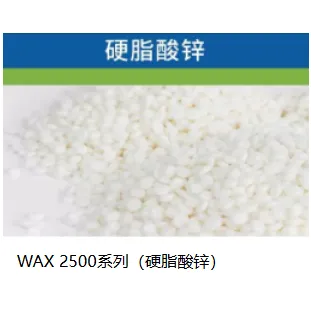
- Metal soaps such as calcium stearate and zinc stearate, which often act as both lubricants and acid scavengers in PVC systems.
- Silicones, which provide very low surface energy and persistent slip.
- Solid lubricants such as graphite, molybdenum disulfide, and PTFE, used where severe friction or temperature conditions make liquid lubrication unsuitable.
Typical performance limits in plastics include:
- Poor compatibility → phase separation or haze → use a more compatible ester, amide, or wax package.
- Excess lubrication → reduced weld strength or interlayer adhesion → lower dosage or shift from external to internal lubrication.
- Migration or bloom → surface contamination and print/paint defects → select higher-molecular-weight or more polar lubricants.
- Thermal degradation at processing temperature → odor, discoloration, or deposit formation → use heat-stable synthetic lubricants and antioxidant packages.
A useful distinction in polymer processing is between internal lubricants, which reduce melt viscosity and intermolecular friction within the polymer, and external lubricants, which reduce adhesion between the melt and metal surfaces such as screws, barrels, dies, and molds.
Production Processes and Raw Feedstocks
Lubricants for plastics are manufactured from several feedstock pathways:
- Petrochemical routes, which supply mineral oils, waxes, and many synthetic base stocks.
- Oleochemical routes, which convert natural fats and oils into fatty acids, fatty alcohols, amides, esters, and metal salts.
- Polymer-based routes, which produce polyethylene waxes and related specialty waxes used in masterbatches and compounding.
- Inorganic and mineral routes, which supply graphite, talc-related slip systems, and other solid-lubricant materials.
In practice, lubricant selection is often made at the compounding stage, where dosage, particle size, melting profile, and compatibility with the base resin are adjusted to meet processing needs. Typical use levels in plastics are generally low, often in the range of fractions of a percent to a few percent, because excessive loading can impair mechanical properties or downstream bonding; the exact level depends on the resin, process, and target effect.
Applications and End-Use Markets
In plastics, lubricants are most often used as processing aids or performance modifiers rather than as stand-alone commodities. Their usual function and fit vary by resin system and process.
| Application area | Typical lubricant role | Common lubricant types | Notes |
|---|---|---|---|
| PVC pipe, profiles, cable | External and internal lubrication, fusion control, die release | Calcium stearate, zinc stearate, waxes | Very important because PVC processing windows are narrow |
| Polyolefin extrusion and masterbatch | Flow improvement, slip, mold release | Waxes, amides, PE wax, silicones | Often used to reduce die build-up and sticking |
| Injection molding | Demolding and cavity release | Wax blends, stearates, silicones | Supports cycle-time reduction |
| Films and flexible packaging | Slip and antiblock balance | Fatty amides, waxes | Lubricant choice affects coefficient of friction and sealability |
| Engineering plastics and thermoplastic compounds | Mold release and wear reduction | PTFE, graphite, molybdenum disulfide | Used where friction and heat are severe |
| Rubber and elastomer compounds | Processing aid and release | Waxes, soaps, internal lubricants | Improves milling and extrusion behavior |
| Food-contact and specialty formulations | Controlled release, compliance-sensitive performance | Food-grade additives, selected synthetic lubricants | Requires strict regulatory review |

One poor-fit use is structural adhesive or paint-bonded plastic parts, where strong surface wetting is needed; in such cases, too much lubricant can reduce adhesion and cause surface defects.
Environmental and Sustainability Aspects
Lubricants affect sustainability in plastics in two opposing ways. On one hand, they can reduce processing energy, improve machine efficiency, lower scrap rates, and extend equipment life by reducing wear and friction. On the other hand, some lubricant chemistries can complicate recycling, raise VOC or odor concerns, or create surface contamination that interferes with remelting, compounding, or post-consumer reprocessing.
Key sustainability issues include:
- Recyclability: Excessive migration, bloom, or incompatible lubricant residues can interfere with melt filtration, color consistency, and adhesion in recycled resins.
- Bio-based alternatives: Oleochemical lubricants derived from renewable oils and fats are increasingly used as substitutes for some petroleum-derived chemistries, although performance and oxidation stability must be validated.
- Carbon footprint: Lower processing temperatures, lower friction, and reduced scrap can cut energy use, but the lifecycle benefit depends on feedstock origin and application efficiency.
- Chemical safety: Regulatory pressure has increased on fluorinated and other persistent chemistries, encouraging PFAS-free lubricant development in certain sectors.
Economic and Global Market Impact
Lubricants are a cross-cutting enabler in the plastics value chain because they influence throughput, quality, and tool life rather than appearing as a finished polymer product. Demand is tied to growth in extrusion, packaging, automotive, cables, consumer goods, construction, and electronics, all of which rely on controlled processing and consistent surface properties.
The largest lubricant-consuming sectors overall are industrial and automotive applications, and plastics processing represents an important subset of specialty demand. Leading global lubricant producers include integrated petroleum and specialty-chemical companies, but the plastics-processing segment is also shaped by additive specialists that formulate waxes, soaps, and tailor-made processing packages for specific resins.
Current Challenges and Innovations
Current technical challenges include:
- balancing lubrication with weld-line strength and bonding performance;
- preventing migration, bloom, and plate-out;
- maintaining thermal stability in high-speed compounding;
- ensuring compatibility with recycled polymers;
- meeting tightening food-contact and environmental regulations.
Innovation is focused on:
- multifunctional additive packages that combine lubrication with stabilization or acid scavenging;
- bio-based ester lubricants with improved sustainability profiles;
- low-odor, low-migration formulations for packaging and consumer goods;
- PFAS-free solid lubricant systems for demanding industrial uses;
- recycling-compatible lubricants designed to minimize contamination and preserve resin value.
A practical formulation example is calcium stearate at low loading in PVC, where it can function as an internal/external lubricant and acid scavenger, helping reduce fusion stress and stabilize processing; the mechanism is the formation of a low-shear interfacial layer and capture of acidic by-products. Another common example is fatty amide slip additives in film, which migrate to the surface and create a boundary film that lowers friction and improves handling.
Future Outlook
Lubricants will remain essential to plastics processing as converters push for higher output, tighter tolerances, and more circular feedstocks. The most significant future developments are likely to be better compatibility with recycled polymers, more renewable feedstocks, improved regulatory profiles, and more multifunctional systems that reduce additive complexity without sacrificing process control.
In the broader plastics ecosystem, lubricants are becoming strategic rather than purely auxiliary: they influence energy efficiency, scrap generation, downstream convertibility, and the economic feasibility of using recycled or bio-based materials.
Summary
Lubricants are indispensable plastic auxiliaries that reduce friction, improve processing, and support final part performance across extrusion, molding, film, pipe, cable, and specialty compounding. Their importance lies in a delicate balance: too little lubrication raises friction and wear, while too much can impair adhesion, recycling, or surface quality.
References
- •
Merriam-Webster. (n.d.). Lubricant. https://www.merriam-webster.com/dictionary/lubricantLink
- •
U.S. Energy Information Administration. (n.d.). Lubricants. In Glossary. https://www.eia.gov/tools/glossary/index.php?id=LubricantsLink
- •
Lubricant. (n.d.). In Wikipedia. https://en.wikipedia.org/wiki/LubricantLink
- •
Merriam-Webster. (n.d.). Lubricants. https://www.merriam-webster.com/dictionary/lubricantsLink
- •
Lubricant. (n.d.). In Cambridge English dictionary. https://dictionary.cambridge.org/us/dictionary/english/lubricantLink
- •
Lubricant. (n.d.). In Collins English dictionary. https://www.collinsdictionary.com/us/dictionary/english/lubricantLink
- •
The Home Depot. (n.d.). Best lubricants for your project. https://www.homedepot.com/c/ah/best-lubricants-for-your-project/9ba683603be9fa5395fab9010ba3ec56Link
- •
Lubricant. (n.d.). In Dictionary.com. https://www.dictionary.com/browse/lubricantLink
- •
Lubrication. (n.d.). In Encyclopaedia Britannica. https://www.britannica.com/technology/lubricationLink
- •
Idemitsu Kosan Co. (n.d.). What is lubricant? https://www.idemitsu.com/en/business/lube/about/index.htmlLink
- •
WEICON. (n.d.). What are lubricants? https://www.weicon.de/en/applications/lubricate-care/what-are-lubricants/Link
- •
RS Components. (n.d.). Lubricants. https://nl.rs-online.com/web/c/facilities-cleaning-maintenance/greases-oils-lubricants/lubricants/Link
- •
Tameson. (n.d.). Lubricant types, uses, and functions. https://tameson.com/pages/lubricantsLink
- •
Repsol. (n.d.). What type of lubricants are there? https://lubricants.repsol.com/en/support/cuales-son-los-tipos-de-lubricantes-que-existen/Link
- •
VAIA. (n.d.). Lubricants. https://www.vaia.com/en-us/explanations/engineering/design-engineering/lubricants/Link
- •
IntechOpen. (2020). Lubricant and lubricant additives. https://www.intechopen.com/chapters/73333Link
- •
OKS Spezialschmierstoffe GmbH. (n.d.). Types of lubricants. https://www.oks-germany.com/en/tribology/types-of-lubricants/Link
- •
United Nations Population Fund. (n.d.). Safe lubricants. https://www.unfpa.org/sites/default/files/pub-pdf/UNFPA_Lubricants%20Specs_web%20v2.pdfLink
- •
Lubricant. (n.d.). In Longman dictionary of contemporary English. https://www.ldoceonline.com/dictionary/lubricantLink
- •
Lubricant. (n.d.). In Oxford learner's dictionaries. https://www.oxfordlearnersdictionaries.com/definition/english/lubricantLink
- •
Danish Environmental Protection Agency. (2024). PFAS and fluorine-free alternatives in lubricants and construction products. https://www2.mst.dk/Udgiv/publications/2024/01/978-87-7038-527-5.pdfLink
- •
DoITPoMS. (n.d.). Lubrication - introduction and types of lubricants. https://www.doitpoms.ac.uk/tlplib/tribology/lubrication.phpLink
- •
Healthline. (2017). Your guide to lube for sex: Types, how to use, and more. https://www.healthline.com/health/healthy-sex/lube-shopping-guide-typesLink
- •
Wirecutter. (2024). The 8 best personal lubricants of 2026. The New York Times. https://www.nytimes.com/wirecutter/reviews/best-personal-lubricants/Link
- •
Aramco. (n.d.). Lubricants. https://www.aramco.com/en/what-we-do/energy-products/refined-products/lubricantsLink
- •
RFSU. (n.d.). Lubricant guide. https://www.rfsu.com/en/inspiration/guides/lubricant-guide-choose-the-right-lube/Link
- •
Boots. (n.d.). What is lube, and which type is best for you? https://www.boots.com/healthhub/sexual-health/lubricants-adviceLink
- •
Ubie Health. (n.d.). Stop! Wrong lube risks: Doctor’s guide to personal lubricants. https://ubiehealth.com/doctors-note/choose-right-lubricant-guide-water-silicone-oil-572e11Link
- •
Petro Online. (2022). What are the different types of lubricants? https://www.petro-online.com/news/measurement-and-testing/14/breaking-news/what-are-the-different-types-of-lubricants/57258Link
- •
Lubricant. (n.d.). In Cambridge English-German dictionary. https://dictionary.cambridge.org/us/dictionary/english-german/lubricantLink
- •
Society of Tribologists and Lubrication Engineers. (n.d.). Selecting the correct lubricant. https://www.stle.org/images/pdf/STLE_ORG/BOK/LS/Additives/Selecting%20the%20Correct%20Lubricant_tlt%20article_March08.pdfLink
- •
Verywell Health. (2025). How to choose the right lube for comfort and protection. https://www.verywellhealth.com/what-is-lube-11745359Link
- •
Healthline. (2018). Types of lube. https://www.healthline.com/health/healthy-sex/vaginal-lubricantsLink
- •
Long Beach Health Department. (n.d.). Fact sheet: What to know about lubricant. https://www.longbeach.gov/globalassets/health/media-library/documents/diseases-and-condition/information-on/hiv-aids/fact-sheet---what-to-know-about-lubricantLink
- •
Woodford, C. (2008). How lubricants work. https://www.explainthatstuff.com/lubricants.htmlLink
- •
Lubrication. (n.d.). In Encyclopaedia Britannica. https://www.britannica.com/summary/lubricationLink
- •
PMC. (n.d.). Approach to lubricant use for sexual activity. National Institutes of Health. https://pmc.ncbi.nlm.nih.gov/articles/PMC12312864/Link
- •
Britannica dictionary. (n.d.). Lubricant. https://www.britannica.com/dictionary/lubricantLink
- •
PMC. (n.d.). Lubricants for the promotion of sexual health and well-being. National Institutes of Health. https://pmc.ncbi.nlm.nih.gov/articles/PMC8942543/Link
- •
International Society for Sexual Medicine. (n.d.). What is a lubricant? https://www.issm.info/sexual-health-qa/what-is-a-lubricantLink
- •
Grainger. (n.d.). Industrial lubricants: Types, uses and how to spot problems. https://www.grainger.com/know-how/equipment/kh-industrial-lubricants-guideLink
- •
National Cancer Institute. (n.d.). Lubricant. In NCI dictionary of cancer terms. https://www.cancer.gov/publications/dictionaries/cancer-terms/def/lubricantLink