
Introduction
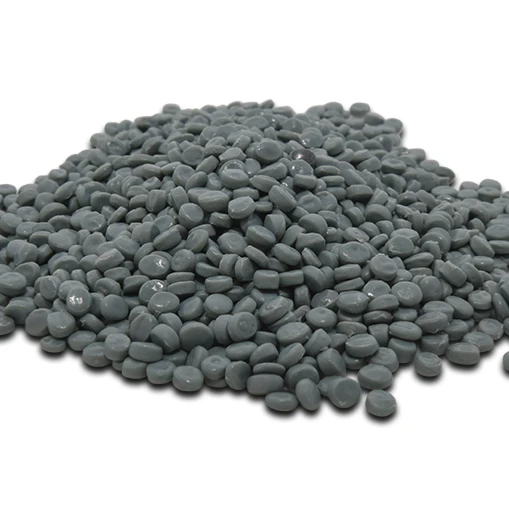
Chemical recycling technology is a family of processes that convert plastic waste into monomers, polymers, or chemical feedstocks by changing the polymer’s chemical structure rather than merely remelting it. It is used mainly as a complement to mechanical recycling for plastic streams that are difficult, contaminated, multi-layered, or otherwise uneconomic to recycle conventionally.
In plastics processing terms, chemical recycling sits “upstream” of new polymer production and can return output to the polymer stage (for example, purified dissolution), the monomer stage (depolymerization), or the feedstock stage (pyrolysis and gasification). The technology has expanded rapidly because it offers routes for hard-to-recycle materials such as films, laminated packaging, mixed polyolefins, and some polyester and polyurethane streams.
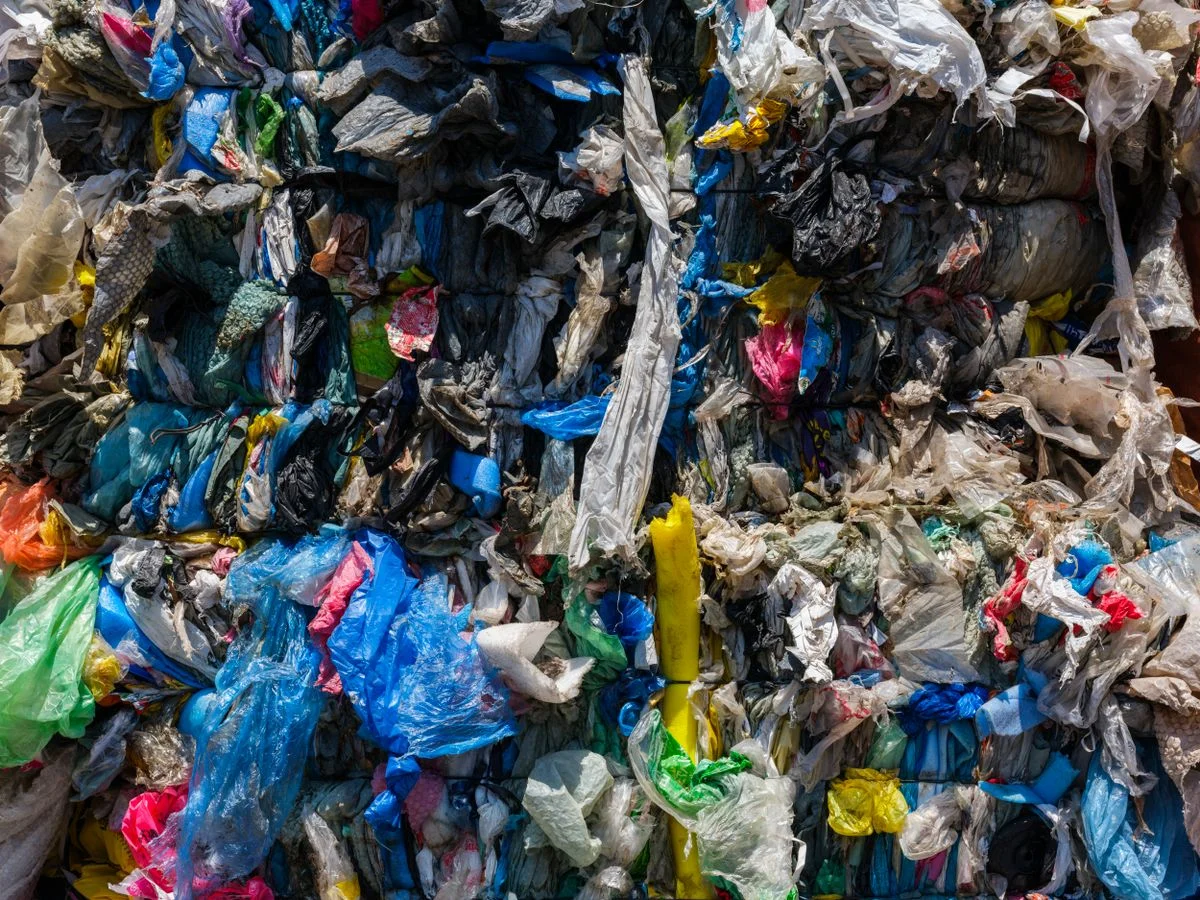
The sector is technically diverse and commercially uneven. Pyrolysis is the best-known conversion route, while solvolysis/depolymerization is often the preferred short-loop method for cleaner, single-polymer wastes such as PET. At the same time, the field remains debated because many routes are energy-intensive, require extensive sorting and purification, and can face challenges in economics, emissions control, and product quality assurance.
History and Development
Chemical recycling emerged from older petrochemical and polymer-processing concepts rather than from a single invention. Three milestones are particularly important:
- Early depolymerization and solvolysis research established that certain condensation polymers, especially PET and polyamides, could be chemically broken back into monomers or intermediates suitable for repolymerization.
- Thermal conversion routes such as pyrolysis and gasification were developed and adapted from refining and waste-to-energy engineering, enabling mixed plastic streams to be converted into oil-like liquids or synthesis gas.
- Commercial scale-up in the 2010s and 2020s accelerated as packaging brands, resin producers, and petrochemical companies sought circular feedstocks and advanced recycling capacity, especially for polyolefin-rich waste.
Recent policy and market discussions have also pushed the field toward clearer definitions, mass-balance accounting, and product certification, because “chemical recycling” is not a single technology but a broad umbrella term with different outputs and environmental profiles.
How It Works
Chemical recycling technologies generally fall into three main functional categories:
- Purification / dissolution
- Depolymerization / solvolysis
- Thermochemical conversion such as pyrolysis and gasification
Purification and dissolution
In dissolution-based recycling, solvents selectively dissolve the target polymer and remove additives, dyes, and contaminants without fully breaking the polymer chains. The recovered polymer can then be re-formulated into recycled plastics with properties closer to virgin material than many mechanically recycled grades.
Depolymerization and solvolysis
Depolymerization uses heat, catalysts, solvents, or reactive agents to split polymers into monomers or oligomers. Common examples include hydrolysis, glycolysis, methanolysis, and aminolysis for condensation polymers such as PET, nylon, and some polyurethanes.
Pyrolysis and gasification
Pyrolysis thermally cracks plastics in the absence of oxygen to produce pyrolysis oil, waxes, and gas; gasification converts waste to syngas consisting mainly of carbon monoxide and hydrogen. These routes are especially relevant for mixed polyolefin waste and contaminated streams that are difficult to use in mechanical recycling.
Key Technical Characteristics
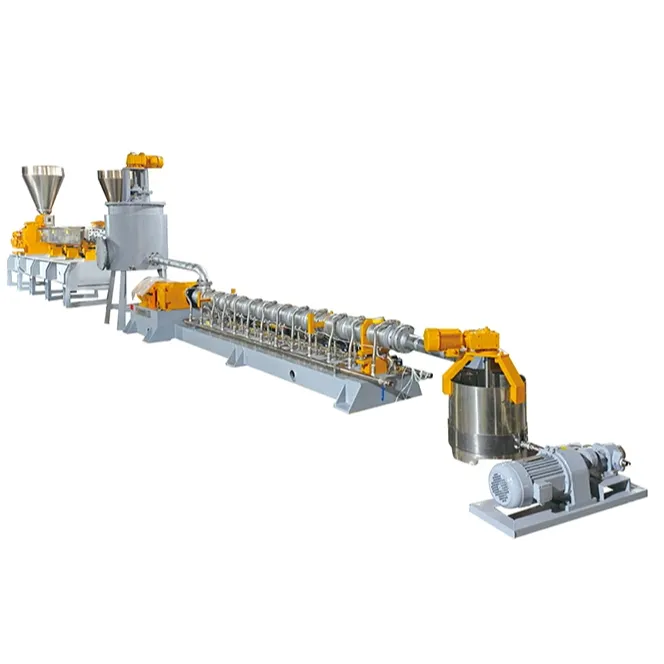
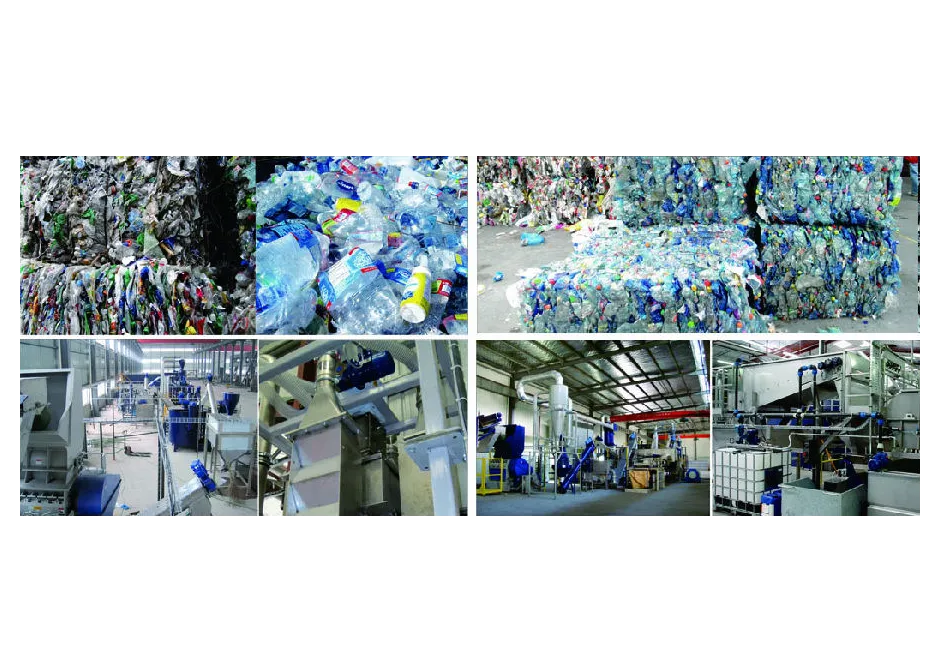
Chemical recycling plants are usually designed as integrated process systems rather than single machines. A typical line includes feed preparation, size reduction, washing or decontamination, reactor conversion, product separation, and downstream upgrading.
Feedstock requirements
- Dissolution and depolymerization generally demand cleaner, better-sorted input streams.
- Pyrolysis can accept mixed polyolefin-rich waste, but excessive PVC, PET, moisture, metals, and inerts can harm product quality and catalyst life.
- Gasification tolerates broader residual waste fractions, but usually at the cost of higher complexity in gas cleanup and synthesis integration.
Operating conditions
- Pyrolysis commonly operates at several hundred degrees Celsius under oxygen-free conditions, with residence time and heating rate tuned to product distribution.
- Gasification typically uses higher temperatures than pyrolysis and requires robust syngas purification before downstream chemical synthesis.
- Solvolysis usually operates at lower temperatures than thermal conversion routes, but may need pressure, catalysts, or large solvent volumes.
Performance benchmarks
Reported performance varies substantially by feed and process design, but industry references commonly describe the following practical ranges:
- Pyrolysis plant throughput: from pilot-scale units of a few hundred kilograms per hour to commercial systems in the multi-ton-per-hour range.
- Gasification throughput: generally favored for larger and more heterogeneous waste streams, often at industrial tonnage scales rather than small modular operation.
- Depolymerization throughput: typically lower than thermal conversion because of tighter feedstock specifications and additional purification steps.
- Rotors, shredders, and granulators in front-end preparation often run at high speeds similar to plastics size-reduction equipment, with output tailored to downstream reactor feeding rather than final pellet quality.
Particle size, moisture, and pre-processing
For plastic feed preparation, post-shredding flakes are commonly reduced to roughly 10–50 mm depending on reactor design and handling system, while finer preparation may be required for dissolution or catalytic routes. Centrifugal or thermal dewatering after washing can reduce residual surface moisture to about 1–5 wt%, though exact values depend on polymer type, washing intensity, and dryer configuration. Lower moisture is especially important for pyrolysis stability and for depolymerization chemistry sensitive to hydrolysis balance.
Energy intensity
Chemical recycling is often described as energy-intensive, especially for routes that include drying, solvent recovery, distillation, high-temperature conversion, and product upgrading. Studies and policy reports consistently note that the overall environmental performance depends heavily on feedstock quality, process yield, energy source, and the amount of downstream purification required.
Main Types and Variations
| Technology | Typical feedstock | Main product | Strengths | Main limitations |
|---|---|---|---|---|
| Purification / dissolution | Selected polymer streams with additives and contaminants | Recovered polymer | Preserves polymer chain; can deliver high-quality recyclate | Needs good sorting; solvent recovery essential |
| Depolymerization / solvolysis | PET, polyamides, some PU and condensation polymers | Monomers or oligomers | Can produce near-virgin raw materials | Feedstock specificity; purification burden |
| Pyrolysis | Mixed polyolefins, films, some mixed plastics | Oil, wax, gas | Handles hard-to-recycle streams | Product upgrading and emissions control required |
| Gasification | Very mixed plastic waste, RDF-like feeds | Syngas | Broad feed tolerance | High capital and cleanup complexity |
Applications and Uses
Chemical recycling is most valuable where mechanical recycling is constrained by contamination, multilayer structures, or polymer composition.
- Flexible packaging and films are major candidates for pyrolysis because they are often too contaminated or multilayered for high-quality mechanical loops.
- PET bottles and industrial polyester waste are well suited to depolymerization routes such as methanolysis or glycolysis, especially when a near-virgin monomer stream is desired.
- Polyamide and polyurethane waste can also be addressed by specific solvolysis chemistries, though economics and selectivity vary widely.
- Mixed residual plastic fractions are often targeted by gasification or pyrolysis when material recycling is not practical.
A poor-fit application is clean, single-polymer bottle-grade PET with straightforward mechanical recyclability, because chemical recycling usually adds cost and energy use where mechanical recycling may already deliver acceptable performance.
Technological Innovations and Automation
Recent development is centered on improving feedstock tolerance, selectivity, energy efficiency, and product purification.
- Catalytic pyrolysis aims to lower reaction severity and steer product selectivity toward desired hydrocarbon ranges.
- Solvent systems and dissolution processes are being refined to improve contaminant removal and solvent recovery efficiency.
- Process control and automation increasingly rely on inline sensors, AI-based feed characterization, and adaptive reactor control to manage variable waste inputs.
- Downstream upgrading is critical, especially for pyrolysis oil, which often requires hydrotreating or fractionation before it can re-enter petrochemical cracking systems.
Environmental and Sustainability Aspects
Chemical recycling is frequently presented as a circular-economy enabler, but its sustainability is highly route-dependent.
Potential benefits:
- Diverts plastics from landfill and incineration.
- Produces feedstocks that can re-enter polymer manufacturing.
- Can process fractions not easily handled by mechanical recycling.
Main concerns:
- High heat and purification demands can make the process energy-intensive.
- The need for solvents, catalysts, hydrogen, and gas cleanup can increase operating burden and cost.
- Environmental performance varies sharply by technology and feedstock, so broad claims of equivalence to virgin resin are not always justified.
Recent technical literature generally concludes that chemical recycling can reduce impacts versus landfill or incineration in some cases, but its performance must be assessed case by case using lifecycle and mass-balance accounting.
Economic and Global Market Impact
Chemical recycling is attracting investment because it addresses waste streams that are otherwise difficult to monetize and because it can supply circular feedstocks to polymer and petrochemical producers. Market growth is also being driven by brand-owner commitments, packaging regulations, and demand for recycled-content materials in applications that require higher purity than many mechanically recycled grades can provide.
At the same time, multiple analyses note that profitability depends on large, steady feedstock volumes, stable energy prices, strong product offtake, and access to upgrading infrastructure. The most commercially mature routes tend to be those with a clear product slate and an existing downstream chemical value chain, such as pyrolysis oil integration into steam crackers.
Current Challenges and Innovations
The principal technical and commercial challenges are well recognized:
- Feedstock variability makes consistent operation difficult.
- Sorting and contamination control remain major cost drivers.
- Downstream purification can erode yield and economics.
- Regulatory uncertainty persists because legal definitions and accounting rules differ across jurisdictions.
- Public scrutiny remains high because some critics argue that certain pathways are too energy-intensive or may function more like fuel production than true recycling.
Innovation is therefore concentrated on:
- Better pretreatment and contaminant removal
- More selective catalysts
- Lower-temperature chemistry
- Solvent recovery and circular solvent systems
- Improved life-cycle assessment and traceability tools
Future Outlook
Chemical recycling is likely to remain a complementary technology rather than a universal substitute for mechanical recycling. Its strongest future roles are expected in the treatment of difficult-to-recycle polymer streams, the production of high-purity monomers for specific resins, and the supply of circular feedstocks to integrated petrochemical complexes.
The direction of the field will probably depend on three factors: tighter policy definitions, lower-carbon process energy, and better feedstock preparation systems. If these improve, chemical recycling could become a more significant part of the plastics circular economy; if not, its deployment may remain limited to niche or regionally concentrated applications.
Summary
Chemical recycling technology converts plastic waste into polymers, monomers, or chemical feedstocks through dissolution, depolymerization, pyrolysis, or gasification. Its strongest value lies in processing plastic fractions that mechanical recycling cannot handle well, but its long-term impact will depend on energy efficiency, emissions control, feedstock quality, and economic integration with the broader chemical industry.
References
- •
Chemical recycling explained: an overview. (n.d.). Pryme cleantech. https://pryme-cleantech.com/chemical-recyclingLink
- •
Chemical recycling technologies: Pyrolysis, gasification.... (2026, April 29). European-recycling.com. https://european-recycling.com/chemical-recycling/Link
- •
Chemical recycling: An overview of technology, market growth, and.... (n.d.). S&P Global. https://energy.spglobal.com/rs/325-KYL-599/images/future-energy-outlooks-special-report-chemical-recycling-2021.pdfLink
- •
Chemical recycling Q&A. (n.d.). Sustainable Packaging Coalition. https://sustainablepackaging.org/wp-content/uploads/2024/06/SPC-Chemical-Recycling-Q_A.pdfLink
- •
Introduction to chemical recycling. (n.d.). Sustainable Packaging Coalition. https://sustainablepackaging.org/wp-content/uploads/2023/08/SPC-101_Introduction-to-Chemical-Recycling.pdfLink
- •
Chemical recycling 101. (n.d.). British Plastics Federation. https://www.bpf.co.uk/plastipedia/chemical-recycling-101.aspxLink
- •
Chemical recycling: Comprehensive overview of methods.... (n.d.). CEVOOH. https://cevooh.cz/wp-content/uploads/2025/04/1.E-Chemical_recycling.pdfLink
- •
RSC sustainability. (n.d.). Royal Society of Chemistry. https://pubs.rsc.org/en/content/articlepdf/2026/su/d5su00505aLink
- •
What is happening in chemical recycling? (n.d.). Sternwald Systems. https://res.cloudinary.com/sternwald-systems/raw/upload/v1/hugoprd/ARTIKEL_ATTACH/D55E28516DA72D37E0531408060A7796/D1D338F7D400390C15013126044380DA/What%20Is%20Happening%20in%20Chemical%20Recycling_%20-%20KUint%2003%202021.pdfLink
- •
Chemical recycling. (2026, February 23). PlasticsEurope. https://plasticseurope.org/sustainability/circularity/recycling/chemical-recycling/Link
- •
Science & tech spotlight: Advanced plastic recycling. (n.d.). U.S. Government Accountability Office. https://www.gao.gov/products/gao-21-105317Link
- •
Chemical recycling: More pollution? Or a sustainability solution for.... (n.d.). Environmental Law Institute. https://www.eli.org/sites/default/files/files-pdf/DebateTEFMayJune2025.pdfLink
- •
Economic viability of chemical recycling. (n.d.). Publications Office of the European Union. https://publications.jrc.ec.europa.eu/repository/bitstream/JRC147061/JRC147061_01.pdfLink
- •
Chemical recycling of polymeric. (n.d.). Ministry of Industry and Trade of the Czech Republic. https://mpo.gov.cz/assets/cz/prumysl/chemicke-latky-a-smesi/reach-povinnosti-a-informace/2021/11/Zprava-Chemicka-recyklace.pdfLink
- •
d4gc03127j 11444..11467 ++. (n.d.). Royal Society of Chemistry. https://pubs.rsc.org/de-at/content/articlepdf/2024/gc/d4gc03127jLink
- •
Chemical recycling of plastics. (n.d.). European Circular Economy Stakeholder Platform. https://circulareconomy.europa.eu/platform/sites/default/files/2023-07/Chemical%20recycling%20of%20plastics_0.pdfLink
- •
Green chemistry. (n.d.). Royal Society of Chemistry. https://pubs.rsc.org/en/content/articlepdf/2024/gc/d4gc03127j?page=searchLink
- •
A new toolbox for materials recycling in industry and the.... (2026, April 16). Royal Society of Chemistry. https://pubs.rsc.org/en/content/articlehtml/2026/su/d5su00505aLink
- •
El Dorado of chemical recycling. (n.d.). European Circular Economy Stakeholder Platform. https://circulareconomy.europa.eu/platform/sites/default/files/2019_08_29_zwe_study_chemical_recycling.pdfLink
- •
Chemical recycling: State of play. (n.d.). CHEM Trust. https://chemtrust.org/wp-content/uploads/Chemical-Recycling-Eunomia.pdfLink
- •
Chemical recycling: Tackling plastic waste. (2025, October 30). Shell. https://www.shell.com/business-customers/chemicals/chemical-recycling-tackling-plastic-waste.htmlLink
- •
3 chemical recycling v6. (n.d.). Royal Society of Chemistry. https://www.rsc.org/globalassets/22-new-perspectives/sustainability/progressive-plastics/explainers/rsc-explainer-6---chemical-recycling.pdfLink
- •
Andrew N. Rollinson, PhD Jumoke Oladejo, PhD. (n.d.). University of Cincinnati. https://www.eng.uc.edu/~beaucag/Classes/PlasticsInACircularEconomy/Chapter3Regulations/Chemical%20Recycling%20CR-Technical-Assessment_June-2020_for-printing.pdfLink
- •
Fundamental, technical and environmental overviews of plastic.... (2024, November 25). Royal Society of Chemistry. https://pubs.rsc.org/en/content/articlehtml/2024/gc/d4gc03127jLink
- •
Chemical recycling in. (n.d.). Netherlands Enterprise Agency. https://www.rvo.nl/sites/default/files/2024-02/online-version_Chemical-Recycling-in-Circular-Perspective-Aug23.pdfLink
- •
Chemical recycling of bioplastics: Technical opportunities to preserve.... (2022, December 12). Royal Society of Chemistry. https://pubs.rsc.org/en/content/articlehtml/2022/gc/d2gc02244cLink
- •
Plastic waste utilization via chemical recycling: Approaches, limitations, and the challenges ahead. (n.d.). Wiley. https://onlinelibrary.wiley.com/doi/pdfdirect/10.1002/cite.202300042Link
- •
Chemical recycling: Savior or saboteur? (2024, February 21). Earth Day. https://www.earthday.org/chemical-recycling-savior-or-saboteur/Link
- •
Chemical recycling and its environmental impacts. (2022, September 28). Environmental Health News. https://www.ehn.org/chemical-recyclingLink
- •
Current state of chemical recycling of plastic waste: A focus on the Italian experience. (2025, February 5). MDPI. https://www.mdpi.com/2071-1050/17/3/1293Link
- •
Fundamental, technical and environmental overviews of plastic chemical recycling. (2024, November 25). Royal Society of Chemistry. https://pubs.rsc.org/en/content/articlelanding/2024/gc/d4gc03127jLink
- •
Chemical recycling. (n.d.). Umweltbundesamt. https://www.umweltbundesamt.de/system/files/medien/5750/publikationen/hgp_chemischesrecycling_englisch_bf.pdfLink
- •
Status, potentials and risks of chemical recycling of waste plastics. (n.d.). Bundesamt für Umwelt. https://www.bafu.admin.ch/dam/de/sd-web/u0cGTewvralL/status-potentials-and-risks-of-chemical-recycling-of-waste-plastics.pdfLink
- •
Plastic waste utilization via chemical recycling: Approaches.... (2023, August 1). Wiley. https://onlinelibrary.wiley.com/doi/full/10.1002/cite.202300042Link
- •
Expanding plastics recycling technologies: Chemical aspects, technology status and challenges. (n.d.). Royal Society of Chemistry. https://pubs.rsc.org/en/content/articlepdf/2022/gc/d2gc02588dLink
- •
Status, potentials and risks of. (n.d.). Bundesamt für Umwelt. https://www.bafu.admin.ch/dam/bafu/en/dokumente/international/externe-studien-berichte/status-potentials-and-risks-of-chemical-recycling-of-waste-plastics.pdf.download.pdf/risks-chemical-recycling-plastics.pdfLink
- •
Chemical recycling: A dangerous deception. (n.d.). https://static1.squarespace.com/static/5eda91260bbb7e7a4bf528d8/t/674f56482360216cb1c253c0/1733252686279/10-30-23_Chemical-Recycling-Report_web.pdfLink
- •
Chemical recycling of waste plastics: Current challenges and.... (2024, February 21). PMC. https://pmc.ncbi.nlm.nih.gov/articles/PMC12167860/Link