
Introduction
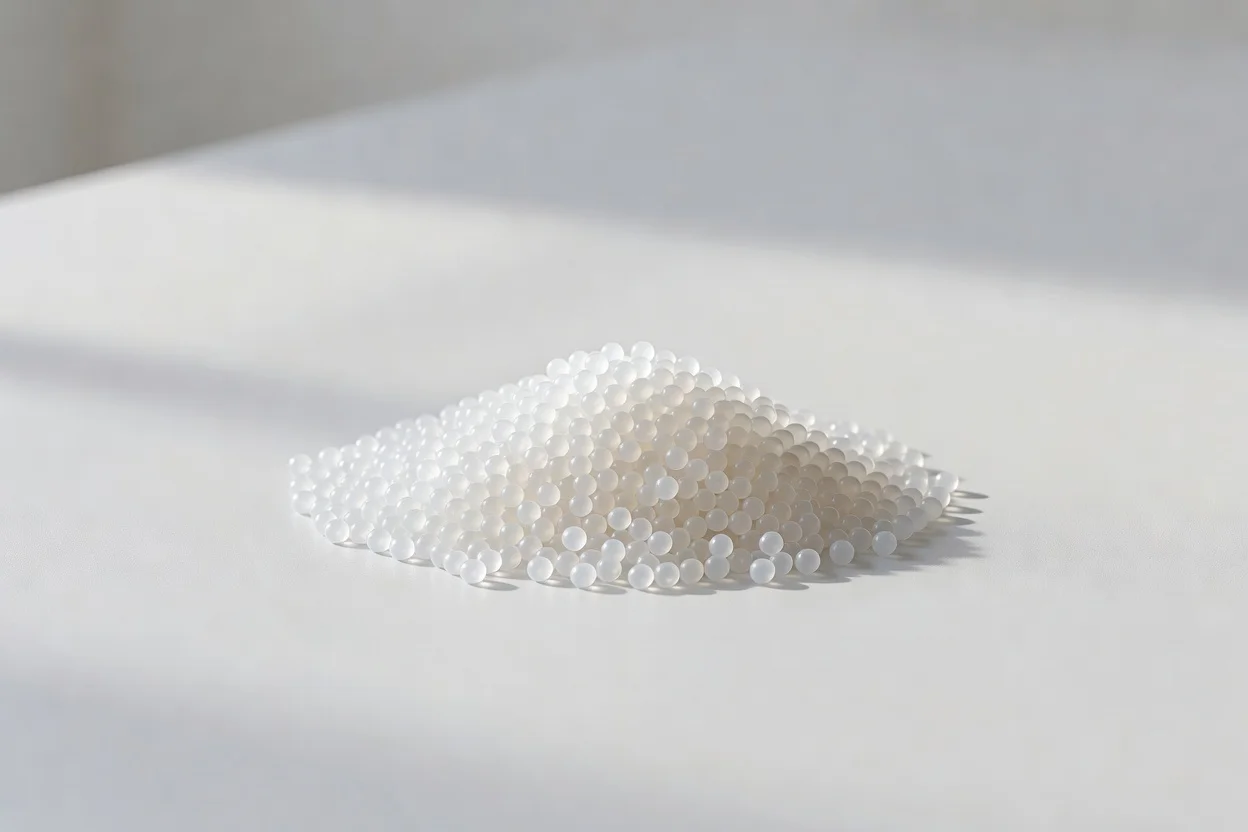
High-density polyethylene (HDPE) is a linear, semi-crystalline thermoplastic polymer used across packaging, piping, containers, cables, geomembranes, and many molded or extruded products. It is defined by a high strength-to-density ratio, low branching, and comparatively high stiffness, which distinguish it from lower-density polyethylene grades and explain its broad industrial utility.
HDPE is produced from ethylene, often with small amounts of comonomers such as 1-butene, 1-hexene, or 1-octene to tailor density, toughness, and processability. The material occupies a central position in the plastics value chain because it can be designed into very different grades, from blow-molding resins for bottles to pipe-grade, film-grade, injection-molding, and high-molecular-weight specialty grades.
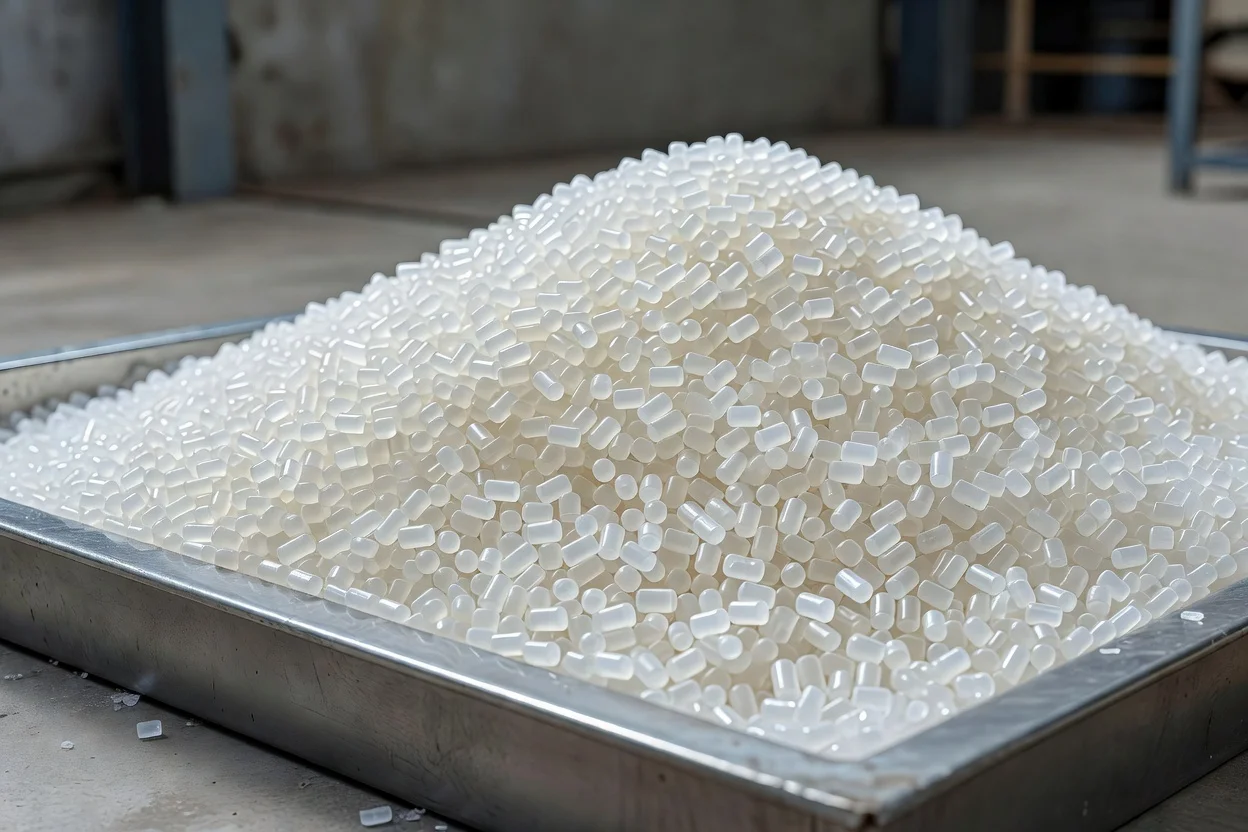
Historically, HDPE emerged as a low-pressure polyethylene family developed with catalysts that enabled more linear polymer chains and higher crystallinity, which in turn produced improved stiffness and chemical resistance. Today, its relevance is shaped not only by performance and cost, but also by recyclability, the expansion of mechanical recycling, and growing interest in bio-based or circular feedstocks.
History and Development
HDPE developed as a distinct polyethylene class after catalytic low-pressure polymerization made it possible to produce predominantly linear chains with few branches. This structural shift created a resin with greater density, higher crystallinity, and better rigidity than conventional low-density polyethylene.
Industrial production expanded as catalyst systems improved, especially Ziegler-Natta and Phillips-type technologies, which allowed better control of molecular weight distribution, comonomer incorporation, and end-use performance. Over time, producers diversified HDPE into specialized grades for pressure pipe, blow-molded bottles, film, injection-molded parts, and rotomolded hollow goods.
Chemical Structure and Key Properties
HDPE is a polyolefin built from long hydrocarbon chains with very low side-branch content, which enables tight chain packing and higher crystallinity. This structure gives the material a relatively high density, strong tensile performance, good chemical resistance, and low moisture absorption.
Key characteristics
- High crystallinity gives HDPE its stiffness, opacity, and dimensional stability.
- Low branching improves packing efficiency and increases strength relative to lower-density polyethylene grades.
- Nonpolar chemistry supports resistance to many acids, bases, salts, and aqueous chemicals.
- Low surface energy makes untreated HDPE difficult to print, bond, or coat reliably.
- Poor oxygen and grease barrier limits use in oxygen-sensitive food packaging unless multilayer structures or barrier coatings are added.
- Weathering sensitivity means outdoor grades often require antioxidants, UV stabilizers, or carbon black.
Typical property profile
| Property | Typical implication |
|---|---|
| Density | Higher than LDPE; usually around 0.94 to 0.97 g/cm3 |
| Melting range | Higher than LDPE, commonly around 120 to 140 C |
| Rigidity | Higher stiffness and hardness than LDPE |
| Chemical resistance | Strong resistance to many chemicals and moisture |
| Electrical performance | Good insulation properties, especially for cable applications |
| Transparency | Generally opaque or low clarity because of crystallinity |
Real limits and workarounds
- Poor oxygen and grease barrier → caused by a nonpolar hydrocarbon structure with limited diffusion resistance → workaround: use multilayer films, barrier coatings, or coextrusion with barrier polymers.
- Low surface energy before treatment → caused by the chemically inert, nonpolar surface → workaround: flame, corona, plasma, or chemical treatment before printing, laminating, or adhesive bonding.
- Environmental stress cracking in some conditions → caused by internal stress plus exposure to surfactants or certain hydrocarbons → workaround: select higher ESCR grades, optimize design, and reduce residual stresses through processing control.
- Limited high-temperature service relative to engineering plastics → caused by its thermoplastic softening behavior near the melting range → workaround: use reinforced alternatives or switch to higher-performance polymers where heat load is severe.
Production Processes and Raw Feedstocks
HDPE is manufactured primarily by polymerizing ethylene using low-pressure processes and catalyst systems that control chain growth and branching. Common reactor technologies include gas-phase, slurry, and solution processes.
Main raw inputs
- Ethylene from steam cracking of naphtha, ethane, or other light hydrocarbons.
- Comonomers such as 1-butene, 1-hexene, or 1-octene for property adjustment.
- Catalysts including Ziegler-Natta and Phillips systems, and in some modern processes metallocene catalysts for tighter architecture control.
- Additives such as antioxidants, UV stabilizers, process aids, slip agents, and antistatic agents depending on the grade and end use.
How structure is tuned
- Lower comonomer content generally increases density, stiffness, and heat resistance.
- Higher molecular weight improves toughness and stress-crack resistance, often used in pipe or blow-molding grades.
- Narrower molecular weight distribution can improve process consistency and property balance, depending on the reactor design and catalyst system.
Typical additive examples
- Antioxidants at low dosage levels, often in the hundreds to low thousands of ppm, inhibit thermo-oxidative chain scission during extrusion and service.
- Carbon black at a few percent by weight in outdoor pipe grades absorbs UV radiation and improves weathering durability.
Applications and End-Use Markets
HDPE serves major plastics markets because it combines economy, toughness, processability, and chemical resistance.
Major sectors and common grade matches
| Sector | Typical HDPE grade or process | Main reason for use |
|---|---|---|
| Film and flexible packaging | Film-grade HDPE by blown-film extrusion | Thin gauge, toughness, moisture resistance |
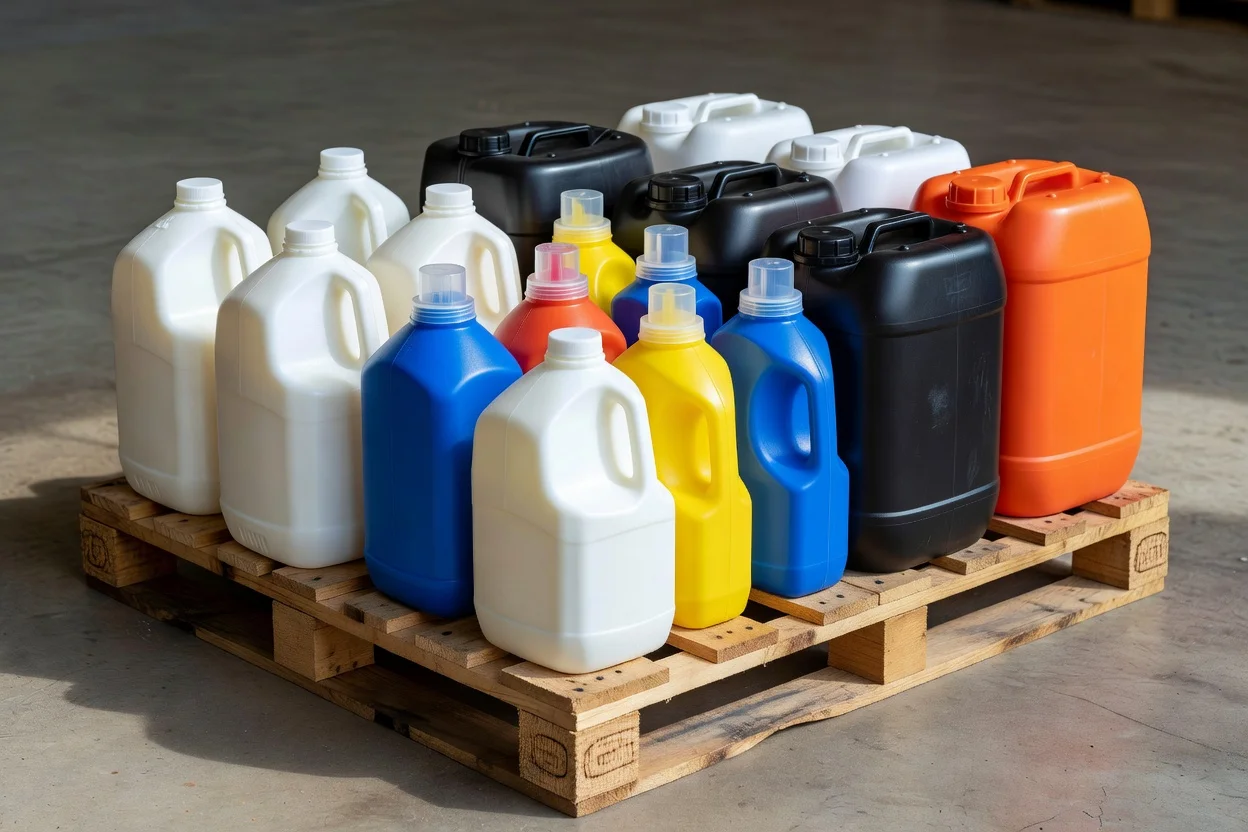
| Bottles and containers | Blow-molding grades | Impact resistance, stiffness, chemical resistance |
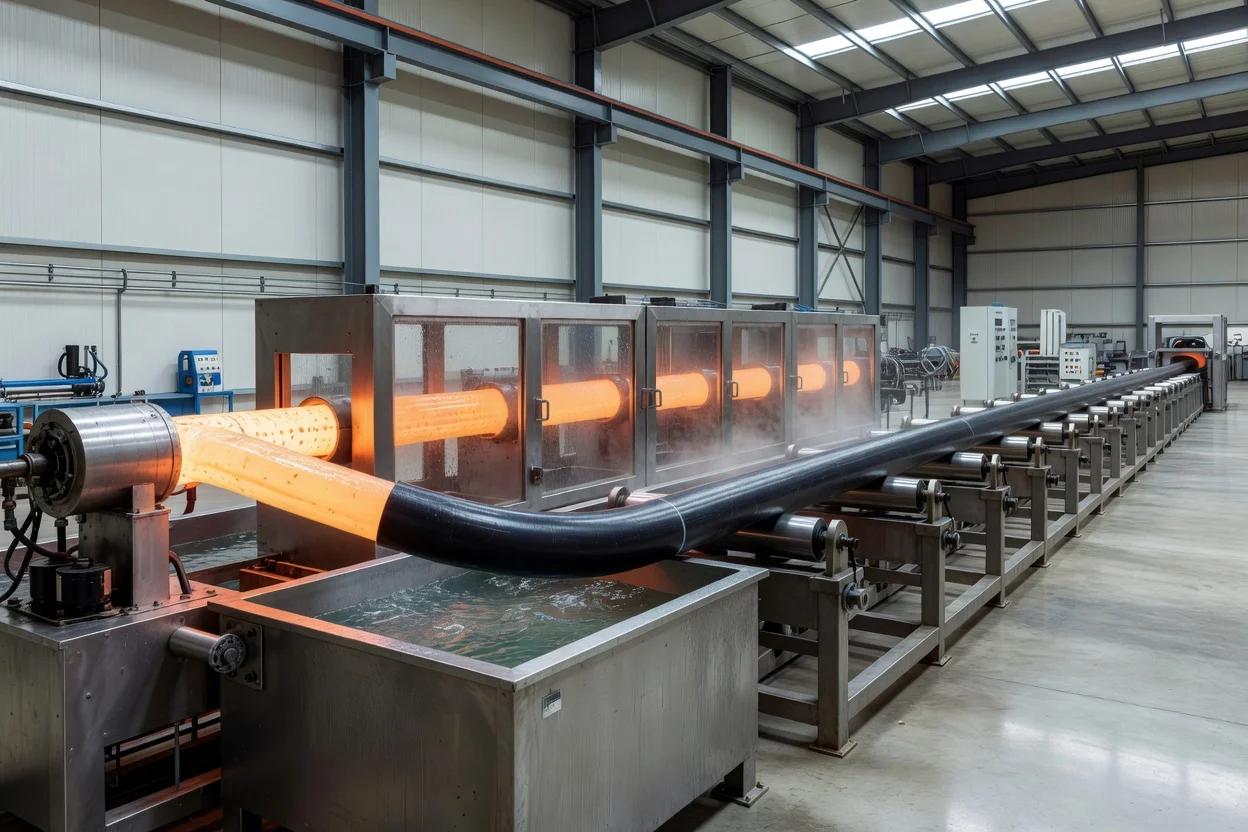
| Pipe and fittings | Pressure-pipe HDPE via extrusion | Corrosion resistance, long service life |
| Cable and wire | Cable-grade HDPE in insulation or jacketing | Electrical insulation, moisture resistance |
| Agriculture | Film, netting, and irrigation-related products | Weatherability, toughness, low cost |
| Geomembranes | High-performance extrusion grades | Chemical resistance, low permeability |
| Rotomolding | Rotomolding powder grades | Large hollow parts, impact strength |
| UHMWPE wear and medical products | Very high molecular weight derivatives, not standard HDPE | Extreme abrasion resistance; specialized use beyond normal HDPE |
| PEX-related systems | Crosslinked polyethylene family adjacent to HDPE/PE materials | Thermal and pressure resistance in plumbing systems |
Common products
- Milk jugs, detergent bottles, cleaning-product containers, and industrial chemical drums.
- Potable-water and sewage pipe, gas pipe, and corrosion-resistant industrial piping.
- Geomembranes for landfills, mining, and containment systems.
- Crates, trays, pallets, and injection-molded industrial parts.
One poor-fit use
- High-clarity, oxygen-sensitive food packaging is a weak fit for standard HDPE because its crystallinity reduces transparency and its barrier performance is limited without multilayer design.
Environmental and Sustainability Aspects
HDPE is widely recyclable and is commonly identified by resin code 2, which supports established collection and sorting pathways in many regions. In practice, recycled HDPE is used in pipes, lumber-like products, containers, crates, and other applications that tolerate property variability better than food-contact packaging.
Recyclability and circularity
- Mechanical recycling is the dominant circular route for post-consumer HDPE, especially from bottles and rigid packaging.
- Closed-loop recycling is most practical where feedstock is relatively clean and sorted, such as bottle-to-bottle streams.
- Design-for-recycling trends favor mono-material structures, simplified labeling, and reduced pigment complexity.
Bio-based and lower-carbon alternatives
- Bio-attributed or bio-based polyethylene can be produced from renewable ethylene, but it is chemically similar to fossil-based HDPE rather than a distinct polymer family.
- Carbon footprint improvements depend heavily on feedstock source, energy intensity, and recycling content, not only on whether the resin is “bio” or “fossil” based.
- Recycled content can lower embodied emissions more directly than simple material substitution in many applications, provided performance requirements are met.
Sustainability trade-offs
- HDPE is durable and lightweight, which can reduce transport emissions and product losses during use.
- Its persistence in the environment remains a major concern if collection and recycling systems are incomplete.
- Additive packages, pigments, and multilayer structures can improve performance but may complicate recycling.
Economic and Global Market Impact
HDPE is one of the highest-volume polyethylene categories in global petrochemicals because demand is sustained by packaging, infrastructure, and consumer products. Major producers and global marketers include Dow, LyondellBasell, SABIC, Chevron Phillips Chemical, OQ, and other large integrated polymer suppliers.
Market economics are shaped by several factors:
- Ethylene feedstock prices and regional cracker economics.
- Demand from pipe, packaging, and construction sectors.
- Competition with PP, LDPE, LLDPE, and engineering plastics.
- Recycling policy, recycled-content mandates, and virgin-resin substitution pressure.
Current Challenges and Innovations
HDPE faces a dual challenge: preserving its cost and performance advantages while reducing environmental impact and improving circularity.
Key challenges
- Recycling quality loss from contamination, mixed polymer streams, and additive complexity.
- Packaging barrier limitations that require multilayer solutions in some food applications.
- Stress cracking and long-term durability concerns in aggressive environments.
- Outdoor aging without stabilizer systems.
Innovation directions
- Advanced catalysts that improve molecular architecture control and reduce processing variability.
- Higher-recycled-content formulations for rigid packaging and industrial goods.
- Compatibilization and additive technologies that improve recycled HDPE performance.
- Mono-material package design to simplify sorting and reduce waste.
- Digital traceability and better sorting for food-grade recycling loops.
Future Outlook
HDPE is likely to remain a foundational polyolefin because its combination of stiffness, toughness, chemical resistance, and processability is difficult to match at similar cost. Future growth will depend less on basic material discovery and more on how the industry manages recycled content, product design, and feedstock decarbonization.
The most important forward trends are likely to be:
- Expansion of mechanically recycled HDPE in durable goods and selected packaging.
- Growth of mass-balance and renewable-feedstock offerings in premium markets.
- Better pipe, geomembrane, and packaging grades with enhanced longevity and controlled additives.
- Stronger regulatory and customer pressure for traceable circular content.
Summary
HDPE is a linear, high-crystallinity polyethylene valued for its stiffness, chemical resistance, low moisture uptake, and versatile processing behavior. It is indispensable in bottles, containers, pipe, geomembranes, cable, and many molded goods, while its main limitations are barrier performance, surface adhesion, and recycling complexity in mixed waste streams.
References
- •
High-density polyethylene. (2005, May 19). Wikipedia. https://en.wikipedia.org/wiki/High-density_polyethyleneLink
- •
High Density Polyethylene (HDPE). (n.d.). FSRI. https://materials.fsri.org/materialdetail/high-density-polyethylene-hdpeLink
- •
High Density Polyethylene - HDPE Solutions. (2022, March 9). OQ. https://oq.com/en/our-business/our-products/polyethylene/hdpeLink
- •
HDPE vs. Polyethylene: Material Differences and.... (2022, December 31). Xometry. https://www.xometry.com/resources/materials/hdpe-vs-polyethylene/Link
- •
High-density polyethylene. (2020, June 15). Britannica. https://www.britannica.com/science/high-density-polyethyleneLink
- •
HDPE. (n.d.). LG Chem. https://www.lgchem.com/product-detail/hdpe?lang=en_USLink
- •
高密度聚乙烯 (HDPE). (2024, November 14). Wanplas. https://www.wanplas.com/zh-CN/industry-knowledge/plastic-materials/high-density-polyethylene-hdpe/Link
- •
高密度聚乙烯 (HDPE). (n.d.). Sinopec. http://hgxs.sinopec.com/hgxs/Resource/pdf/p24.pdfLink
- •
What is High Density Polyethylene (HDPE)? (n.d.). Acme Plastics. https://www.acmeplastics.com/what-is-hdpeLink
- •
Sabic. (n.d.). SABIC. https://www.sabic.com/en/products/polymers/polyethylene-pe/sabic-hdpeLink
- •
Marlex® High-Density Polyethylene (HDPE). (n.d.). Chevron Phillips Chemical. https://www.cpchem.com/what-we-do/solutions/polyethylene/products/hdpeLink
- •
Polypropylene vs. HDPE: Material Differences and Comparisons. (2022, December 31). Xometry. https://www.xometry.com/resources/materials/polypropylene-vs-hdpe/Link
- •
HDPE管材. (2023, December 8). Baidu Baike. https://baike.baidu.com/item/HDPE%E7%AE%A1%E6%9D%90/8819668Link
- •
聚乙烯. (2004, September 28). Wikipedia. https://zh.wikipedia.org/zh-tw/%E8%81%9A%E4%B9%99%E7%83%AFLink
- •
High Density Polyethylene (HDPE). (2025, November 5). Dow Inc. https://www.dow.com/en-us/product-technology/pt-polyethylene/pg-polyethylene-hdpe.htmlLink
- •
聚乙烯(PE)常见类型、性能及应用. (2023, November 14). JGVogel. https://chem.jgvogel.cn/c1344468.shtmlLink
- •
HDPE. (2025, January 30). Curbell Plastics. https://www.curbellplastics.com/materials/plastics/hdpe/Link
- •
High-Density Polyethylene (HDPE). (n.d.). LyondellBasell. https://www.lyondellbasell.com/en/our-solutions/products/polymers/resin-type/hdpe/Link
- •
HDPE - High Density Polyethylene. (n.d.). Cope Plastics. https://www.copeplastics.com/material/hdpe/Link
- •
Polyethylene (High Density) HDPE. (n.d.). British Plastics Federation. https://www.bpf.co.uk/plastipedia/polymers/HDPE.aspxLink
- •
PE 塑料| 设计师必备的材料知识. (2024, June 4). FirstMold. https://firstmold.com/zh/guides/pe-plastic/Link
- •
盘点低密度、中密度、高密度、线性低密度、茂金属、超高分子量等高端聚乙烯的特点. (2023, June 7). JGVogel. https://chem.jgvogel.cn/c1298954.shtmlLink
- •
Polyethylene Products & PE Resin Portfolio. (2025, November 5). Dow Inc. https://www.dow.com/en-us/product-technology/pt-polyethylene.htmlLink
- •
HDPE Plastic Products. (2026, September 25). Shell Polymers. https://www.shell.us/business/sectors/shell-polymers/resources-and-insights/polyethylene-in-everyday-life-common-hdpe-plastic-products.htmlLink
- •
HDPE Plastic. (2026, September 18). Shell Polymers. https://www.shell.us/business/sectors/shell-polymers/hdpe-plastic.htmlLink
- •
高密度聚乙烯. (2023, December 28). Baidu Baike. https://baike.baidu.com/item/%E9%AB%98%E5%AF%86%E5%BA%A6%E8%81%9A%E4%B9%99%E7%83%AF/5259461Link
- •
高密度聚乙烯. (2016, January 1). ChemicalBook. https://www.chemicalbook.com/ChemicalProductProperty_CN_CB6942706.htmLink
- •
High Density Polyethylenes. (2020, October 15). ScienceDirect. https://www.sciencedirect.com/topics/chemical-engineering/high-density-polyethylenesLink
- •
HDPE (High Density Polyethylene) 8 Melt - Black - 55 lb Box. (n.d.). Premier Plastic Resins. https://premierplasticresins.com/products/hdpe-high-density-polyethylene-8-melt-black-55-lb-boxLink
- •
高密度聚乙烯(HDPE) 和低密度聚乙烯(LDPE) 塑料分析. (n.d.). EUROLAB. https://www.eurolab.net/zh-CN/testler/malzeme-testleri/yuksek-yogunluklu-polietilen-(hdpe)-ve-dusuk-yogunluklu-polietilen-(ldpe)-plastik-analizleri/Link
- •
聚乙烯塑料. (2024, November 10). Baidu Baike. https://baike.baidu.com/item/%E8%81%9A%E4%B9%99%E7%83%AF%E5%A1%91%E6%96%99/3170473Link
- •
Everything To Know About High-Density Polyethylene Sheets. (2022, January 13). Tangent Materials. https://tangentmaterials.com/blog/everything-to-know-about-high-density-polyethylene-sheets/Link
- •
高密度聚乙烯. (n.d.). Newton. https://www.newton.com.tw/wiki/%E9%AB%98%E5%AF%86%E5%BA%A6%E8%81%9A%E4%B9%99%E7%83%AFLink
- •
高密度聚乙烯HDPE简介及工艺解析_分子量_催化剂_生产的. (n.d.). Sohu. https://www.sohu.com/a/760069664_465088Link
- •
高密度聚乙烯 (HDPE):發展簡史,材料特性,特徵,生產工藝,分子量,添加劑.... (n.d.). Newton. https://www.newton.com.tw/wiki/HDPELink
- •
高密度聚乙烯板材. (2023, December 23). Baidu Baike. https://baike.baidu.com/item/%E9%AB%98%E5%AF%86%E5%BA%A6%E8%81%9A%E4%B9%99%E7%83%AF%E6%9D%BF%E6%9D%90/7567177Link