
Introduction
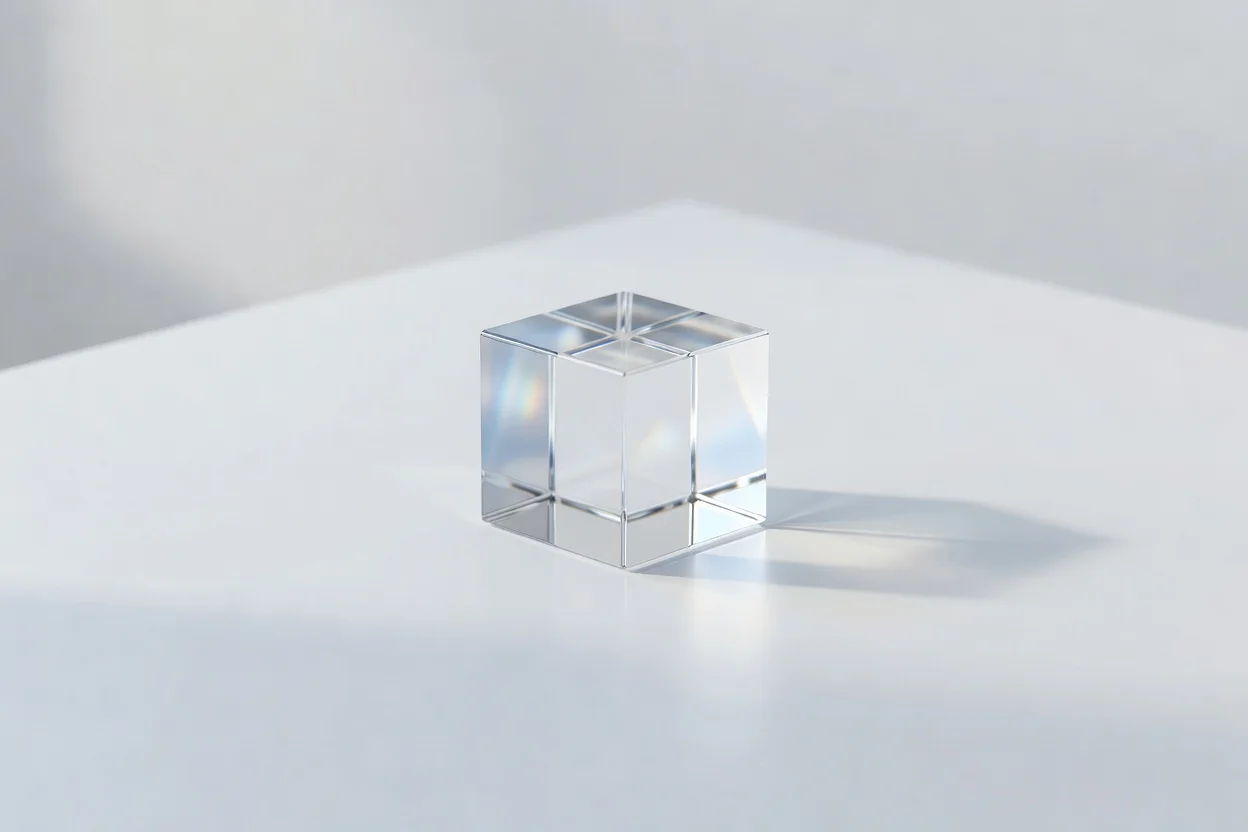
Polystyrene (PS) is a widely used styrenic thermoplastic made by polymerizing styrene, a petrochemical monomer derived primarily from benzene and ethylene value chains. It is valued for its clarity, rigidity, low density, electrical insulation, and ease of processing, and it appears in several major forms: general-purpose polystyrene (GPPS), high-impact polystyrene (HIPS), expanded polystyrene (EPS), and extruded polystyrene (XPS).
In industrial practice, PS occupies an important position across packaging, consumer goods, medical labware, appliance parts, and thermal insulation, while also remaining one of the most debated polymers in sustainability discussions because of its fossil-based feedstock, fragility in collection systems, and variable recyclability by product form. Its technical profile reflects a clear trade-off: PS offers excellent processability and dimensional stability, but its inherent brittleness, modest heat resistance, and poor performance in some barrier and outdoor uses limit where it can be used competitively.
History and Development
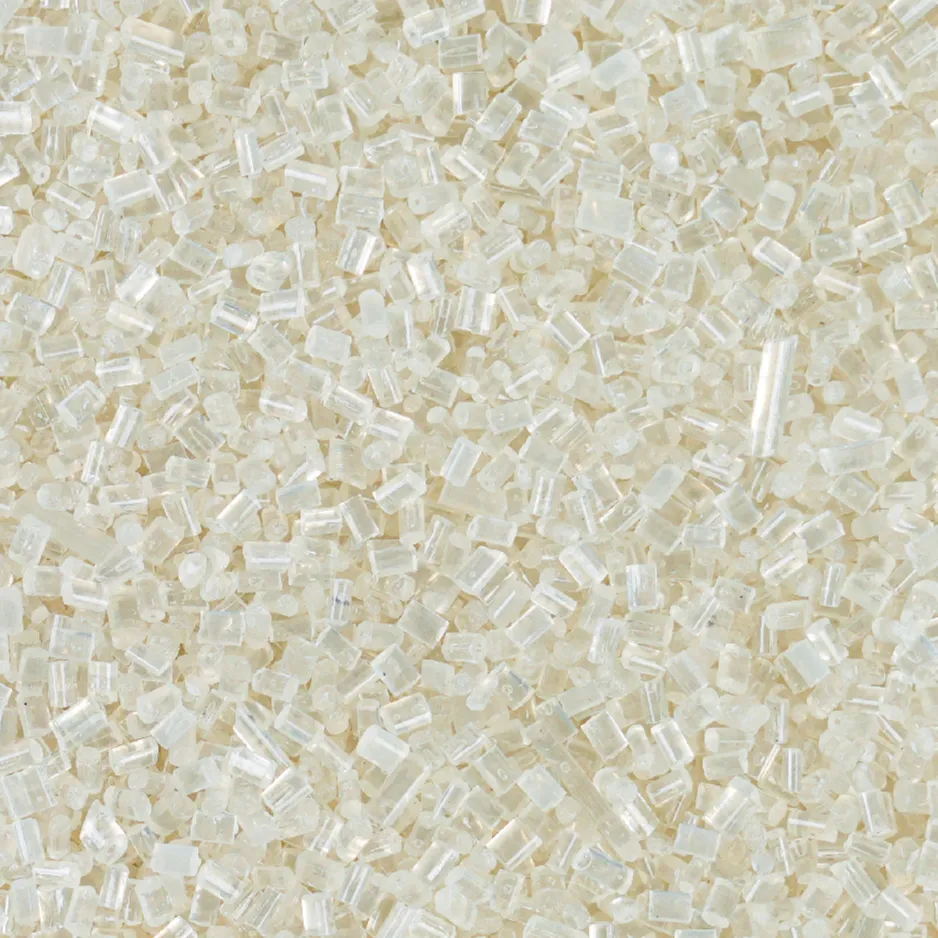
Polystyrene emerged as one of the early commodity plastics developed from the rapid expansion of petrochemical chemistry in the 20th century. Its commercial success was driven by straightforward free-radical polymerization, low-cost production, and a property set that suited mass-market molding, foaming, and sheet conversion.
As the material matured, producers developed specialized grades to overcome its most significant weakness, impact brittleness. HIPS was created by incorporating rubber modifiers, typically polybutadiene-based phases, producing a tougher but less transparent resin. Later, EPS and XPS transformed PS into a major insulation and protective-packaging material, extending its utility beyond rigid transparent products into lightweight foam applications with low thermal conductivity.
Chemical Structure and Key Properties
PS is an amorphous polymer built from styrene repeat units, with pendant aromatic phenyl groups that stiffen the chain and contribute to rigidity, transparency, and a relatively high glass transition temperature around 90 to 100 °C. Because the chains do not crystallize readily, GPPS is naturally clear and glossy rather than opaque.
Typical property profile:
| Property | Typical behavior |
|---|---|
| Appearance | Clear to translucent; can be colored |
| Density | About 1.04 to 1.06 g/cm³ |
| Rigidity | High |
| Impact resistance | Low for GPPS; improved in HIPS |
| Water absorption | Low |
| Electrical insulation | Excellent |
| Heat resistance | Moderate to limited |
| Solvent resistance | Good against water and dilute aqueous media; poor against many organic solvents |
Several practical limits define PS use:
- Poor impact strength → caused by the inherently glassy, amorphous structure and limited chain mobility → workaround: impact modification with rubber phases to make HIPS.
- Moderate heat resistance → caused by a glass transition near 100 °C, above which rigidity drops sharply → workaround: use lower-temperature service conditions, foam insulation, or substitute higher-heat polymers where needed.
- Poor resistance to many organic solvents and aromatic hydrocarbons → caused by solvation of the styrenic matrix and swelling or dissolution → workaround: avoid incompatible chemicals, use protective coatings, or choose a more solvent-resistant resin.
- Limited outdoor durability → caused by photo-oxidation and UV sensitivity → workaround: stabilizers, pigmentation, protective design, or indoor-only service.
- Poor oxygen and grease barrier in packaging uses → caused by the nonpolar but non-barrier nature of the amorphous matrix → workaround: multilayer structures, coatings, or alternative polymers when barrier performance is critical.
PS is also notable for its low surface energy, which makes bonding, printing, and painting more difficult before surface treatment. Corona, flame, plasma, or primer treatments are commonly used to improve adhesion and ink wetting in converted products; this is especially important in packaging, display parts, and decorated housings.
Major Grades and Variants
PS is best understood as a family rather than a single material.
| Grade | Core feature | Typical consequence |
|---|---|---|
| GPPS | Clear, rigid, brittle | Excellent optics, limited toughness |
| HIPS | Rubber-modified | Better impact resistance, reduced clarity |
| EPS | Bead foam | Very low density, strong insulation and cushioning |
| XPS | Extruded foam | Fine closed-cell structure, improved moisture resistance compared with EPS |
GPPS is used where transparency and dimensional stability matter, such as labware, display items, and rigid packaging. HIPS is preferred for refrigerator liners, appliance housings, signs, and cost-sensitive structural parts that need greater toughness. EPS and XPS are used mainly in insulation and protective packaging, where the trapped gas phase provides the key performance benefit rather than the polymer itself.
Production Processes and Raw Feedstocks
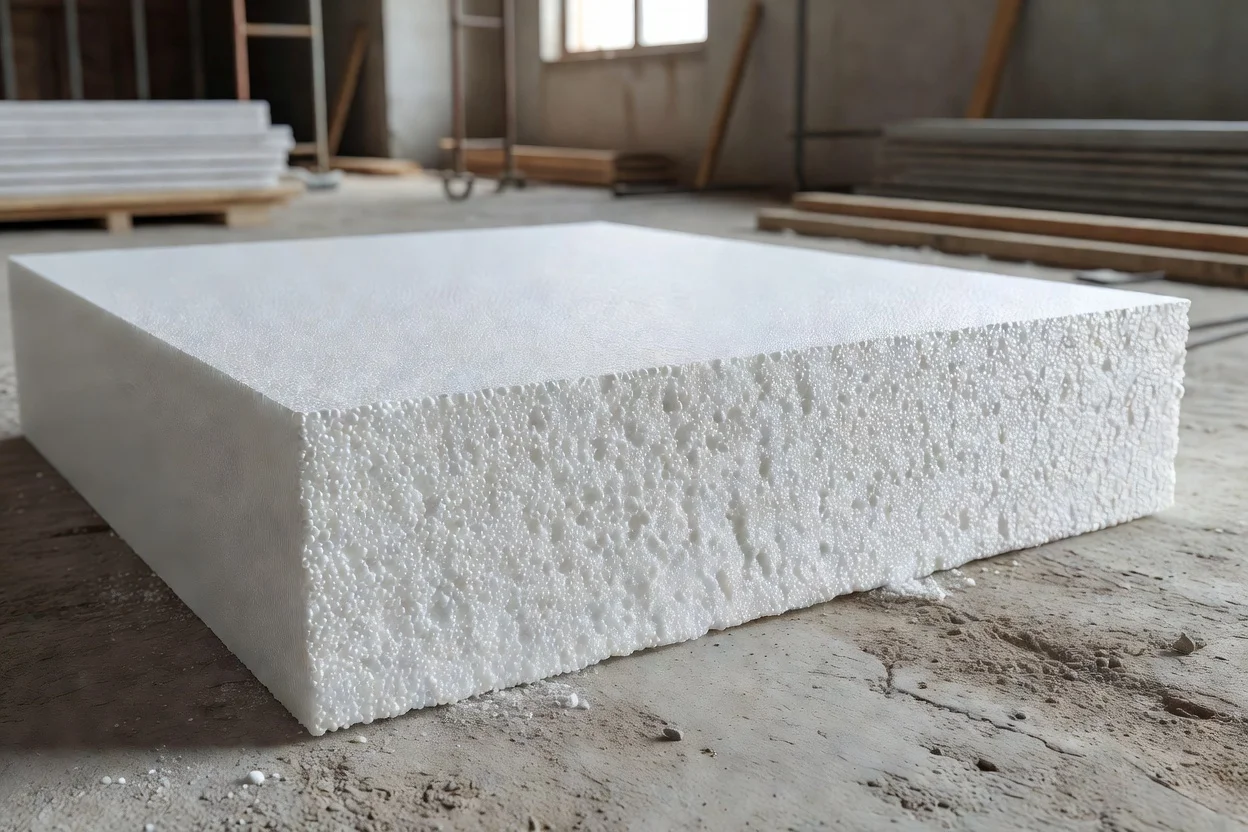
Commercial PS begins with styrene monomer, typically produced from ethylbenzene, which is itself derived from benzene and ethylene petrochemical streams. The polymer is commonly made by bulk, suspension, or solution polymerization, depending on the target grade and morphology.
Main process routes include:
- Bulk polymerization → used for clear GPPS because it can produce high purity and optical clarity.
- Suspension polymerization → widely used for bead polymer and foam precursor production, especially for EPS.
- Impact-modified compounding → used for HIPS, where rubber particles are dispersed to absorb crack energy.
- Foaming and expansion → used to create EPS and XPS, where blowing agents generate closed-cell structures that reduce density and thermal conductivity.
In processing, PS is relatively easy to mold by injection molding, extrusion, thermoforming, and foaming. Processing temperatures are commonly around 200 to 230 °C depending on grade and operation. This ease of conversion is one of the reasons PS became a high-volume commodity resin.
Applications and End-Use Markets
PS is used across a broad set of end markets, but each grade aligns with a distinct performance window.
| End-use sector | Typical PS grade | Usual process |
|---|---|---|
| Food packaging | GPPS, HIPS, EPS | Thermoforming, injection molding, foaming |
| Consumer goods | GPPS, HIPS | Injection molding |
| Medical and laboratory products | GPPS, HIPS | Injection molding, extrusion |
| Appliances | HIPS, EPS | Injection molding, foam insertion |
| Building and construction | EPS, XPS | Board extrusion, foam molding |
| Protective packaging | EPS | Expansion and molding |
| Displays and signage | HIPS, GPPS | Sheet extrusion, thermoforming |
Representative applications include:
- Packaging → cups, lids, trays, clamshells, yogurt pots, blister packs, and protective inserts.
- Building insulation → EPS and XPS boards for walls, roofs, foundations, and cold-chain applications.
- Appliances → refrigerator liners, interior panels, and insulation cores, often using HIPS or EPS.
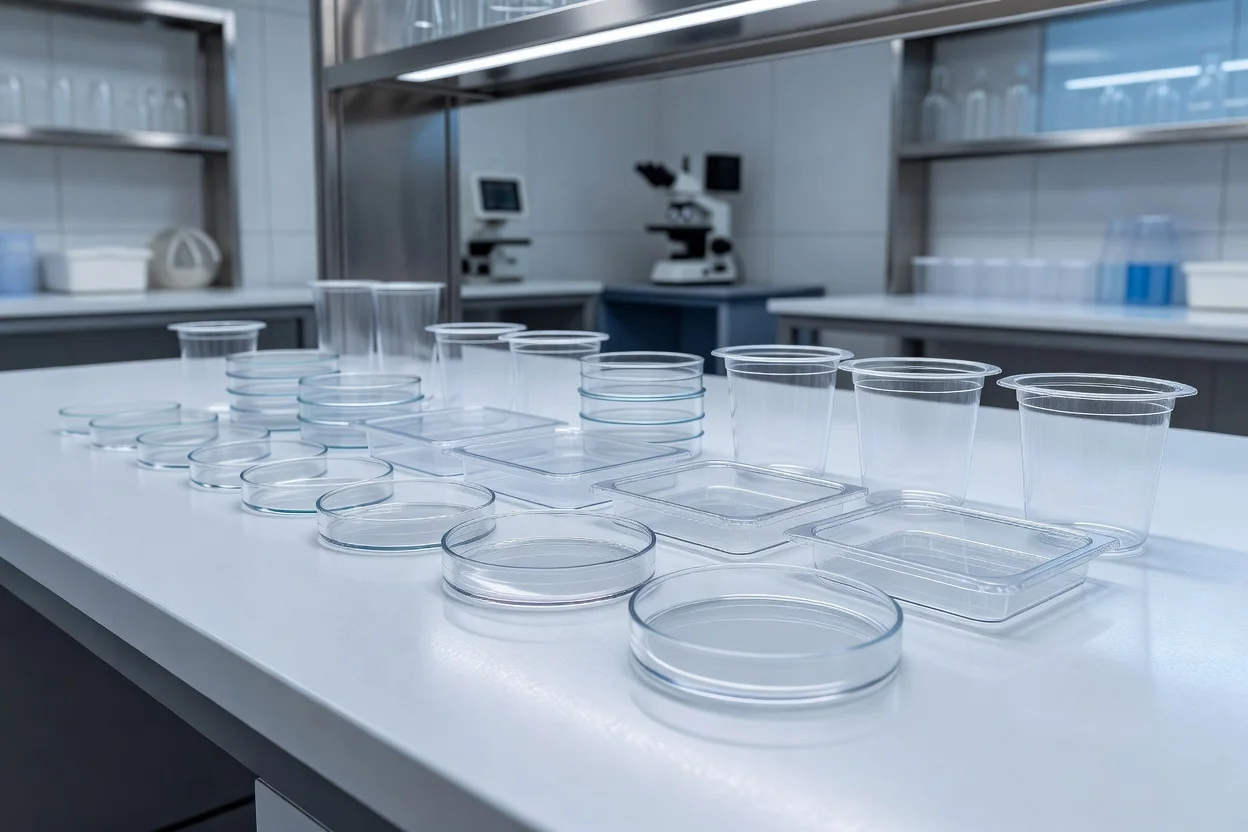
- Laboratory and medical goods → Petri dishes, test tubes, culture trays, diagnostic housings, and disposable labware.
- Consumer and display items → housings, sign boards, cosmetic displays, and transparent presentation parts.
A poor-fit use is long-term outdoor structural service, because PS degrades under UV exposure and is relatively brittle under impact and weathering stress.
Environmental and Sustainability Aspects
PS is a fossil-derived polymer whose environmental profile is shaped by both its chemistry and its product design. Conventional PS is not biodegradable in normal environmental conditions, and its persistence has made litter control and waste management major public concerns.
Recyclability is mixed:
- Rigid PS can be mechanically recycled when clean, sorted, and economically collected.
- EPS is technically recyclable but difficult to collect because of its very low density and contamination risk.
- HIPS can also be recycled, but additives and mixed-material streams reduce quality.
- Food-contact PS often faces higher contamination barriers, which can limit recycling economics.
Bio-based and lower-carbon alternatives are under development, but PS itself is still overwhelmingly tied to petrochemical styrene. Recycled styrene monomer from depolymerization and improved collection systems are among the more credible circularity pathways for future PS systems, especially for clean industrial scrap and selected packaging streams.
From a carbon perspective, the main sustainability leverage points are:
- reducing virgin styrene demand,
- improving product lightweighting and conversion efficiency,
- increasing recycled content,
- designing for mono-material recovery,
- minimizing foam leakage into the environment,
- and substituting lower-impact materials where PS is functionally unnecessary.
Economic and Global Market Impact
PS remains an important commodity resin because it is inexpensive, easy to process, and supported by established supply chains for styrene and foam conversion. Global demand is concentrated in packaging, insulation, and consumer/appliance sectors, where cost-performance balance matters more than premium mechanical properties.
Recent industry commentary commonly places PS behind polyethylene and polypropylene in broad production ranking, but still among the most economically significant thermoplastics due to its scale in foam insulation and disposable packaging. Leading integrated producers and styrenics suppliers are concentrated in North America, Europe, China, Japan, and the Middle East, reflecting the geography of styrene production and downstream conversion capacity.
Current Challenges and Innovations
The main challenges facing PS are well established:
- Waste management → especially for EPS in packaging and food-service applications.
- Brittleness → which limits structural uses.
- Weathering sensitivity → which narrows outdoor durability.
- Recycling economics → which are often unfavorable for low-density or contaminated products.
- Public scrutiny → particularly for single-use foam formats.
Innovation is focused on:
- advanced recycling of styrenics, including depolymerization to styrene feedstock,
- improved compatibilizers and additives for tougher HIPS and better processed foams,
- lightweighting of foam products,
- multilayer and coated structures for better barrier and durability,
- surface activation for printing, bonding, and metallization,
- and bio-attributed or recycled styrene sourcing to lower life-cycle emissions.
For formulation examples, HIPS commonly uses a rubber impact modifier at low-to-moderate loading levels, where dispersed elastomer particles blunt crack propagation and increase energy absorption. In foam applications, blowing-agent control and cell-size management are central to insulating performance because thermal conductivity is governed mainly by trapped gas and cell morphology rather than by the solid polymer alone.
Future Outlook
PS is likely to remain important where clarity, stiffness, insulation, and low cost are decisive. Its strongest long-term positions are expected in insulation, protective packaging, medical/lab disposables, and selected transparent rigid articles, provided regulatory and market pressures continue to favor recyclable design and lower-carbon feedstocks.
The most plausible future path is not replacement across all uses, but segmentation:
- higher recycled-content PS in controlled streams,
- more depolymerization-based circularity for clean PS waste,
- continued use of EPS/XPS where thermal efficiency offsets material intensity,
- and gradual substitution in applications where barrier, heat resistance, or sustainability requirements exceed what PS can economically provide.
Summary
PS is a foundational styrenic commodity plastic whose value comes from an unusual combination of clarity, stiffness, insulation, and low-cost processability. Its commercial family spans GPPS, HIPS, EPS, and XPS, each adapted to different end-use requirements, from transparent rigid goods to high-performance foam insulation. At the same time, its brittleness, limited heat resistance, solvent sensitivity, and recycling challenges continue to shape both technical development and sustainability debate.
References
- •
Polystyrene - an overview. (2020, October 17). ScienceDirect. https://www.sciencedirect.com/topics/chemical-engineering/polystyreneLink
- •
Polystyrene. (2003, January 12). Wikipedia. https://en.wikipedia.org/wiki/PolystyreneLink
- •
What is polystyrene? Properties, structure, uses, and environmental.... (2025, April 23). Infinity Learn. https://infinitylearn.com/chemistry/polystyreneLink
- •
Polystyrene: Structure, properties, uses & exam tips. (2025, October 23). Vedantu. https://www.vedantu.com/chemistry/polystyreneLink
- •
Polystyrene | 9003-53-6. (2026, August 25). ChemicalBook. https://www.chemicalbook.com/ChemicalProductProperty_EN_CB4146768.htmLink
- •
Polystyrene (PS): Properties, uses and processing. (2025, April 10). Useon. https://www.useon.com/polystyrene/Link
- •
Polystyrene (PS): Definition, properties, and uses. (2022, May 21). Xometry. https://www.xometry.com/resources/materials/polystyrene/Link
- •
Poly(styrene) - an overview. (n.d.). ScienceDirect. https://www.sciencedirect.com/topics/chemistry/poly-styreneLink
- •
Polystyrene - an overview. (n.d.). ScienceDirect. https://www.sciencedirect.com/topics/physics-and-astronomy/polystyreneLink
- •
Polystyrene. (2022, January 20). Plastics Europe. https://plasticseurope.org/plastics-explained/a-large-family/polystyrene-2/Link
- •
The introduction of polystyrene. (2026, August 27). ChemicalBook. https://www.chemicalbook.com/article/the-introduction-of-polystyrene.htmLink
- •
Polystyrene (PS) - granule & sheet - material information. (2025, October 23). Goodfellow. https://www.goodfellow.com/usa/resources/polystyrene-ps-granule-sheet-material-information/Link
- •
Polystyrene. (2018, May 18). Encyclopedia.com. https://www.encyclopedia.com/science-and-technology/chemistry/organic-chemistry/polystyreneLink
- •
Polystyrene. (2025, September 11). Britannica. https://www.britannica.com/science/polystyreneLink
- •
Polystyrene: Properties, uses & applications explained. (2024, January 1). Exir Polymer. https://exirpolymer.com/all-about-polystyrene/Link
- •
Polystyrene (PS): Properties, applications and processing. (2022, August 18). K.D. Feddersen. https://kdfeddersen.com/en/products/polymers/polystyreneLink
- •
Polystyrene: Uses, properties, types, and differences to PP. (2025, October 14). Chandra Asri. https://chandra-asri.com/en/blog/what-is-polystyreneLink
- •
Polystyrene. (2013, April 8). EBSCO. https://www.ebsco.com/research-starters/science/polystyreneLink
- •
Polystyrene. (2020, October 29). ScienceDirect. https://www.sciencedirect.com/topics/materials-science/polystyreneLink
- •
Polystyrene: Understand its advantages and applications. (2025, January 28). Recycling Today. https://www.recyclingtoday.org/blogs/news/polystyrene-understand-its-advantages-and-applicationsLink
- •
Know your materials: Polystyrene (PS). (2021, August 5). SyBridge. https://sybridge.com/know-your-materials-polystyrene/Link
- •
Polystyrene - PS. (2024, May 16). AZoM. https://www.azom.com/article.aspx?ArticleID=798Link
- •
Polystyrene: Comprehensive analysis of molecular structure.... (n.d.). Eureka PatSnap. https://eureka.patsnap.com/materials/polystyrene-structure-processingLink
- •
Polystyrene: The pros, the cons, the chemistry. (n.d.). Let's Talk Science. https://letstalkscience.ca/educational-resources/stem-explained/polystyrene-pros-cons-chemistryLink
- •
Singh, A., Chauhan, A., & Gaur, R. (n.d.). A comprehensive review on the synthesis, properties.... Springer. https://link.springer.com/article/10.1007/s44371-025-00125-yLink
- •
What is polystyrene (PS) and what is it used for? (2024, February 16). PCC Group. https://www.products.pcc.eu/en/blog/what-is-polystyrene-ps-and-what-is-it-used-for/Link
- •
Polystyrene as a versatile material! (2025, July 17). Hotwire Systems. https://hotwiresystems.com/what-is-polystyrene-eps-xps-different-uses-of-polystyrene/Link
- •
Polystyrène. (2004, March 1). Wikipédia. https://fr.wikipedia.org/wiki/Polystyr%C3%A8neLink
- •
The problems with expanded polystyrene (a.k.a. EPS or.... (2026, February 12). Beyond Plastics. https://www.beyondplastics.org/fact-sheets/polystyreneLink
- •
Polystyrene. (n.d.). EPA. https://www.epa.gov/sites/default/files/2020-10/documents/c06s06-3.pdfLink
- •
Application of expanded polystyrene (EPS) in buildings.... (2019, January 11). Wiley. https://onlinelibrary.wiley.com/doi/10.1002/app.47529Link
- •
High impact polystyrene properties. (2025, February 3). Curbell Plastics. https://www.curbellplastics.com/materials/plastics/high-impact-polystyrene/Link