
Introduction
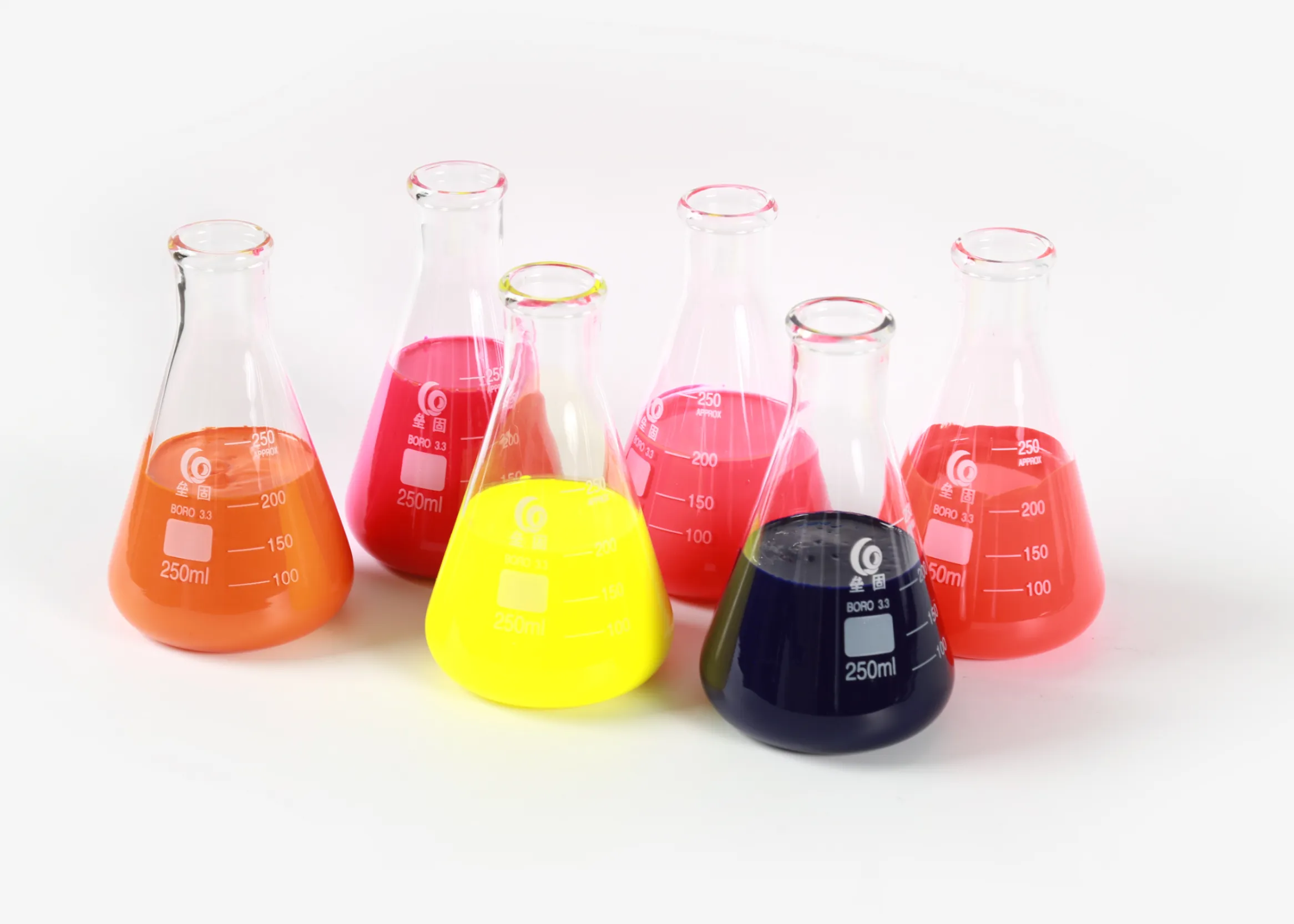
Liquid colour masterbatch (液体色母), also called liquid colour concentrate or liquid colorant, is a prepared dispersion of pigments or dyes in a liquid carrier, usually combined with dispersants, stabilisers, processing aids, and, where required, functional additives. It is metered directly into a thermoplastic, elastomer, plastisol, or other polymer system during processing to produce a specified colour or optical effect.
Unlike conventional pellet masterbatch, which contains concentrated pigments in a solid polymer carrier, liquid colour masterbatch is pumpable and can often be used at very low addition levels. Its main technical advantages are rapid dispersion, efficient colour development, suitability for transparent and translucent shades, low thermal history, and reduced dependence on a pre-coloured resin inventory. Its principal limitations include carrier compatibility, pigment settling, equipment and cleaning requirements, possible screw lubrication or slippage at excessive dosage, and the management of residual liquid and packaging.
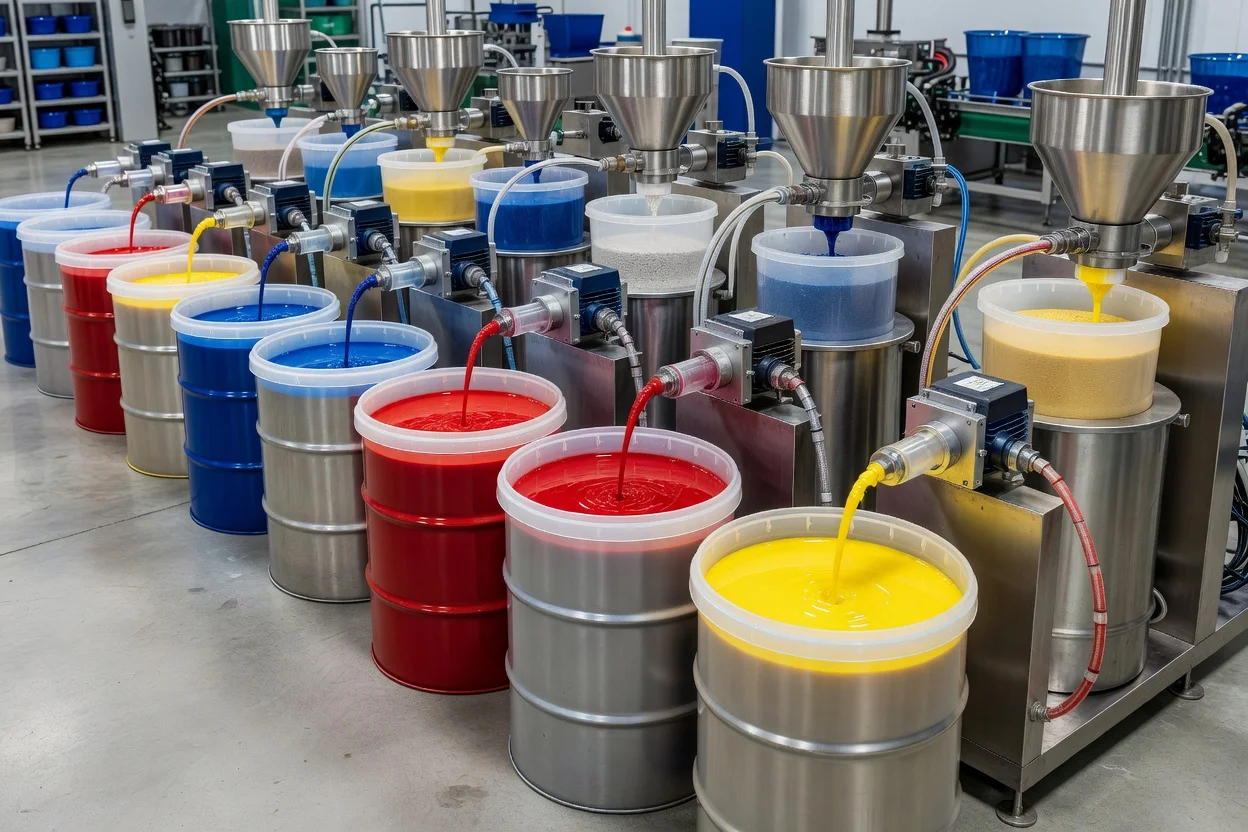
Liquid colour systems have developed alongside high-speed plastics processing, automated dosing, thin-wall packaging, films, fibres, and engineering polymers. They are used in injection moulding, extrusion, blow moulding, film production, fibre spinning, thermoforming, PVC processing, and selected thermoset and elastomer applications. Sustainability considerations increasingly concern carrier selection, recycled and bio-based polymers, dosage reduction, packaging waste, regulatory compliance, and the effect of colourants on mechanical recycling and sorting. Future development is likely to focus on highly concentrated, low-migration, low-odour, bio-based, recyclable, and digitally controlled formulations.
History and Development
Early plastic colouring commonly relied on dry pigments, dyes, coloured compounds, or solid masterbatch. Dry pigments could provide high colour strength but were associated with dust, handling losses, agglomeration, uneven feeding, and difficult housekeeping. Solid masterbatch improved handling and dispersion by incorporating pigments into a polymeric carrier, but it required additional compounding, storage of multiple colour grades, and an adequate let-down ratio.
Liquid colour concentrates emerged as an alternative for applications where very low addition rates, transparent shades, rapid colour changes, or flexible formulation were important. Their development depended on improvements in:
- Pigment wetting and dispersion technology.
- Polymeric and non-polymeric dispersants.
- High-speed dissolvers, bead mills, and three-roll mills.
- Peristaltic, gear, progressive-cavity, and precision metering pumps.
- Volumetric and gravimetric dosing controls.
- Container and hose systems designed to reduce spillage and contamination.
The term “liquid masterbatch” is used broadly. Some formulations are highly concentrated pigment dispersions, whereas others contain a substantial carrier phase and may include additives such as ultraviolet stabilisers, antistatic agents, slip modifiers, optical brighteners, or processing aids.
Chemical Structure and Technical Overview
Basic composition
A liquid colour masterbatch normally contains four functional groups of ingredients:
| Component | Function |
|---|---|
| Colourant | Provides hue, opacity, transparency, fluorescence, metallic effect, or other optical response |
| Liquid carrier | Transports and wets the colourant and helps distribute it through the polymer melt |
| Dispersant | Reduces pigment-particle attraction and limits reagglomeration |
| Stabiliser or auxiliary | Controls settling, viscosity, oxidation, migration, slip, processing behaviour, or long-term storage |
The colourant may be an inorganic pigment, organic pigment, dye, effect pigment, or combination of several colourants. Pigments remain as discrete particles in the polymer, whereas dyes are molecularly soluble in an appropriate phase and generally provide transparent coloration.
Typical carrier families include:
- Mineral and paraffinic oils.
- Vegetable oils and modified vegetable oils.
- Fatty-acid esters.
- Polymeric or oligomeric liquids.
- Polyisobutylene-type materials.
- Alkyd or other resinous binders.
- Polyether or ester-based carrier systems.
- Special carrier fluids designed for PET, polyolefins, PVC, acrylics, polycarbonate, or biodegradable polymers.
The carrier must be selected according to polymer compatibility, processing temperature, viscosity, volatility, migration resistance, food-contact requirements, odour, and the final article’s mechanical and surface properties.
Pigments and dyes
Pigments used in liquid colour masterbatch may include:
- Titanium dioxide for white opacity.
- Carbon black for black coloration, ultraviolet screening, and electrical conductivity in specialised grades.
- Iron oxides for yellow, red, brown, and black shades.
- Organic pigments such as phthalocyanines, quinacridones, azo pigments, and perylenes.
- Effect pigments based on mica, aluminium, bronze, or coated mineral substrates.
- Solvent dyes and polymer-soluble dyes for transparent applications.
- Fluorescent and phosphorescent colourants for specialised visual effects.
Pigment particle size, surface treatment, crystal form, specific surface area, and agglomeration state strongly influence colour strength, haze, gloss, filtration behaviour, and dispersion quality.
Dispersion mechanism
A satisfactory liquid colour masterbatch requires three related steps:
- Wetting of the pigment surface by the carrier.
- Mechanical breakup of agglomerates.
- Stabilisation of the separated particles against reagglomeration and settling.
Dispersants may adsorb onto pigment surfaces through polar, ionic, hydrogen-bonding, or steric interactions. Their carrier-compatible molecular segments then help keep particles separated within the liquid phase. Inadequate dispersion can cause colour variation, specks, filter blockage, reduced gloss, and unstable dosing.
Typical dosage
Liquid colour masterbatch is often used at lower addition rates than pellet masterbatch. In some tinting and transparent applications, dosage may be approximately 0.02–0.5% by mass, although opaque colours and functional formulations can require substantially more. The appropriate level depends on pigment strength, part thickness, colour target, base resin, carrier composition, and equipment configuration.
A simplified formulation calculation is:
Colourant dosage in finished polymer (%) = liquid colour dosage (%) × colourant concentration (%)
For example, a liquid concentrate dosed at 0.20% and containing 40% pigment contributes approximately 0.08% pigment to the finished polymer, before accounting for process losses or density effects.
Important technical limits
- Pigment settling → density differences and insufficient suspension stability → use suitable dispersants, rheology modifiers, controlled particle-size distribution, and agitation or recirculation before dosing.
- Carrier incompatibility → surface blooming, haze, odour, migration, or weak interfacial adhesion → select a carrier compatible with the resin and validate the formulation through heat-aging, extraction, migration, and mechanical testing.
- Screw slippage or over-lubrication → excessive carrier dosage or a highly lubricating carrier → reduce the let-down ratio, change the carrier system, inject the concentrate at a more suitable location, or use an in-line mixing arrangement.
- Colour variation → inaccurate metering, concentration changes, or pigment segregation → use gravimetric dosing, maintain constant agitation, calibrate the pump, and control container changeover.
- Limited high-loading capability → liquid volume or carrier level becomes excessive → use a more concentrated formulation, a compatible solid masterbatch, or a pre-compounded colour compound.
- Surface defects or film instability → carrier migrates to the surface or lowers melt strength → reduce dosage, select a less mobile carrier, or use a solid concentrate.
- Thermal or chemical degradation → unstable dye, pigment, or carrier under the selected processing conditions → select heat- and shear-resistant colourants and conduct residence-time testing.
Production Processes and Raw Feedstocks
Raw materials
The principal feedstocks are:
- Synthetic inorganic and organic pigments.
- Solvent dyes or polymer-soluble dyes.
- Mineral, vegetable, ester, polymeric, or specialty carrier liquids.
- Dispersants and wetting agents.
- Antioxidants and light stabilisers.
- Rheology modifiers and anti-settling agents.
- Processing lubricants or compatibility promoters.
- Functional additives, when the product is designed as a combined colour-and-additive concentrate.
The formulation is normally designed around the target polymer. A carrier suitable for polyethylene may be unsuitable for polycarbonate, PET, polystyrene, or a medical-grade polymer.
Manufacturing stages
#### Formulation and pre-mixing
Pigment, carrier, and dispersant are weighed according to the formulation and mixed under controlled conditions. Pre-mixing promotes wetting and reduces the risk of dry pigment pockets.
#### Dispersion
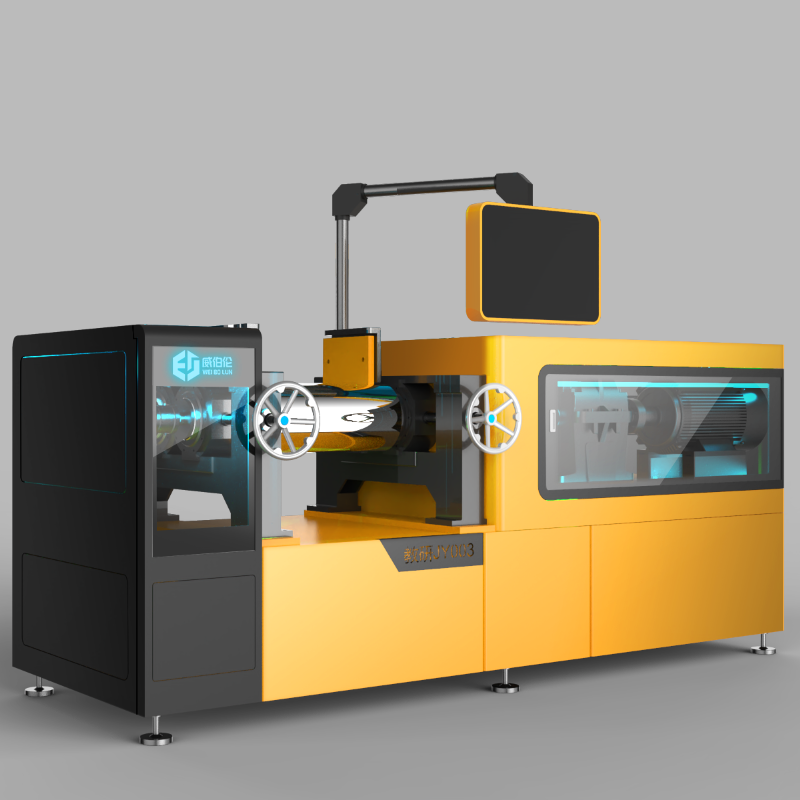
High-speed dissolvers, bead mills, rotor-stator mixers, or roller mills are used to break down pigment agglomerates. Organic pigments often require intensive milling because their high surface area and crystal structure can make dispersion difficult.
#### Adjustment
The batch is adjusted for viscosity, pigment concentration, colour strength, density, flow, and storage stability. Rheology modifiers may be added to slow settling, but excessive thickening can impair pumpability and dosing accuracy.
#### Filtration and quality control
The finished concentrate may be filtered to remove oversized particles or foreign matter. Quality testing can include:
- Colour difference against a standard.
- Tint strength and undertone.
- Particle-size or grind-gauge measurements.
- Viscosity and density.
- Settling and redispersibility.
- Heat stability and lightfastness.
- Migration, extraction, and odour.
- Compatibility with the intended polymer.
- Pumpability and dosing repeatability.
Storage and handling
Liquid colour masterbatch should generally be stored in sealed containers protected from contamination, excessive heat, freezing, and prolonged exposure to air. Some products require periodic agitation or gentle recirculation. Before use, the container may need homogenisation to restore uniform pigment distribution.
Dedicated hoses, pumps, and fittings can reduce contamination and colour-change time. Spill control is important because liquid concentrates can spread over floors and equipment more readily than pellets.
Dosing and Processing Technologies
Volumetric dosing
Volumetric systems meter a defined pump displacement per unit time. They are relatively simple and economical but require calibration against viscosity, temperature, pump wear, and formulation density.
Gravimetric dosing
Gravimetric systems measure the actual mass delivered and can compensate more effectively for changes in flow conditions. They are preferred where tight colour tolerances, very low addition rates, or automated recipe control are required.
Pump types
Common equipment includes:
- Peristaltic pumps.
- Gear pumps.
- Progressive-cavity pumps.
- Screw or piston-type pumps.
- Specialised low-pulsation metering systems.
The pump must tolerate the concentrate’s viscosity, pigment loading, abrasive character, and potential settling behaviour.
Point of addition
Liquid colour can be introduced:
- Into the feed throat of an injection moulding machine.
- Into an extrusion feed zone.
- Through a liquid injection port.
- Into a premixing vessel containing polymer granules.
- Directly into a fibre-spinning or film-extrusion process.
- Through an in-line mixer or static mixer.
Feed-throat dosing is convenient but can produce excessive lubrication if the liquid volume is high. In-line addition can improve mixing and reduce handling, but it requires suitable installation, calibration, and cleaning procedures.
Applications and End-Use Markets
Packaging
Liquid colour masterbatch is widely used for:
- Caps and closures.
- Bottles and containers.
- Cosmetic packaging.
- Pharmaceutical and vitamin containers.
- Thin-wall injection-moulded packaging.
- PET preforms and selected PET extrusion applications.
- Flexible and semi-rigid packaging films.
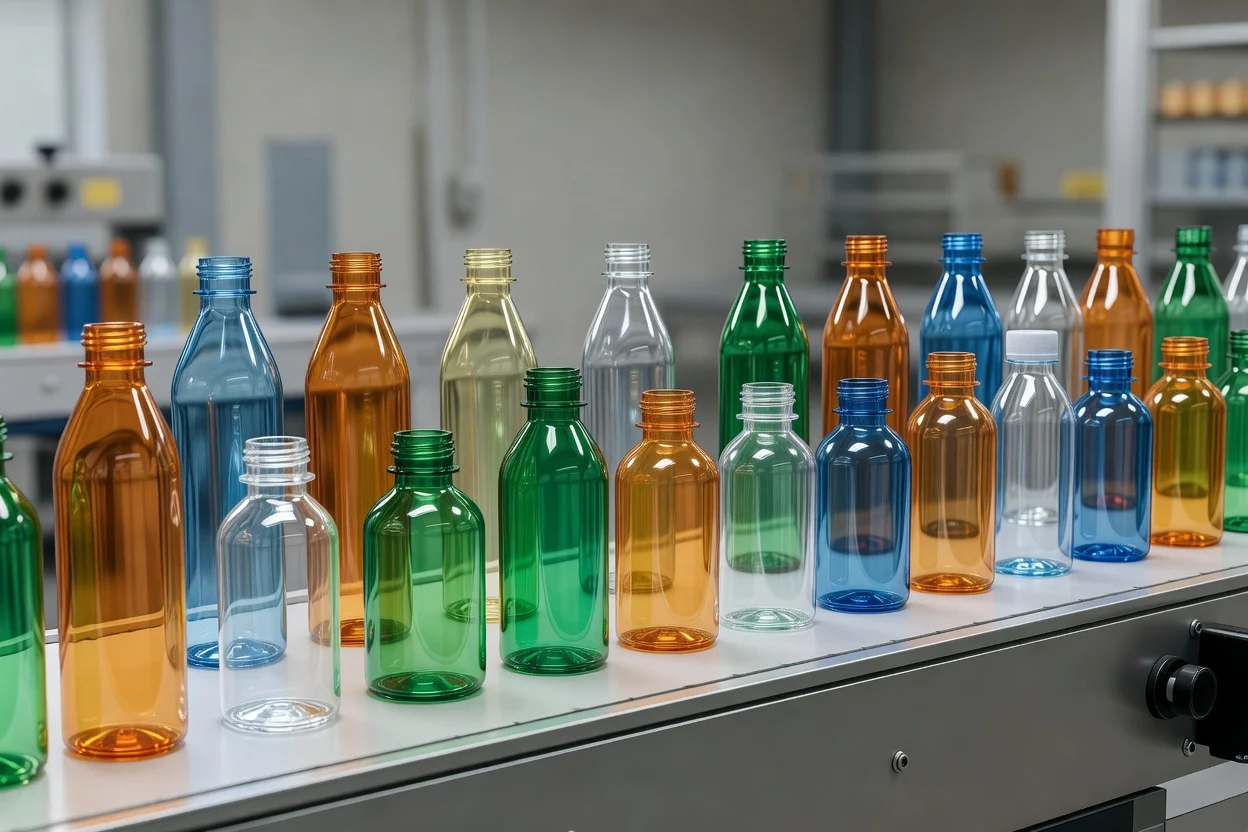
Transparent or translucent packaging benefits from the low addition rate and efficient dispersion of liquid colour. Food-contact applications require compliant pigments, carriers, and additives, together with migration testing and control of unintended substances.
Injection moulding
Typical products include:
- Household articles.
- Toys and consumer goods.
- Storage boxes and office products.
- Appliance components.
- Cosmetic cases.
- Automotive interior and exterior trim.
- Lighting components.
- Caps, closures, and technical mouldings.
Liquid concentrates can be useful when a processor manufactures many colours in relatively small batches because the same natural or uncoloured resin can be used with different liquid formulations. Very high colour loadings, severe precision requirements, or demanding engineering polymers may favour solid masterbatch or pre-coloured compound.
Film extrusion
Liquid colour masterbatch may be used in blown film, cast film, agricultural film, packaging film, and selected laminating structures. It can provide good colour distribution at low addition rates, especially in tints and translucent films.
However, film production imposes strict requirements on carrier compatibility. An incompatible or over-lubricating carrier can reduce melt strength, destabilise the bubble, cause blocking or slip changes, and impair sealing or printing.
Blow moulding
Applications include coloured bottles, drums, containers, and technical hollow articles. Liquid colour is particularly useful where good dispersion and flexible colour changes are required, although high-viscosity or heavily filled systems may be better suited to solid masterbatch.
Fibres and nonwovens
Liquid colour formulations can be added during melt spinning of PET, polypropylene, polyamide, and other thermoplastic fibres. They are used for staple fibre, filament, monofilament, spunbond, meltblown, and related products.
Fibre applications demand excellent filtration behaviour, precise dosing, low volatility, thermal stability, and freedom from particles that could break filaments or block spinnerets.
PVC and construction products
Liquid colour concentrates are used in selected PVC applications, including:
- Profiles.
- Flexible PVC compounds.
- Plastisols.
- Flooring and coatings.
- Sealing products.
- Cables and related construction materials.
The carrier must not interfere with plasticiser balance, fusion behaviour, electrical properties, weatherability, or long-term migration performance.
Automotive and consumer durables
Polycarbonate, acrylic, ABS, polyamide, polypropylene, and other engineering or semi-engineering polymers may be coloured with liquid systems when the formulation meets the resin’s processing and performance requirements. Uses include decorative trim, lighting components, appliance parts, housings, and interior components.
High-temperature engineering polymers require colourants and carriers with adequate heat stability and low volatility. Solid masterbatch or pre-coloured compound may remain preferable for highly demanding applications.
Thermoforming and sheet
Liquid colour can be added during sheet extrusion or to a premixed polymer stream before thermoforming. The main requirements are uniform sheet colour, absence of gels or specks, stable rheology, and compatibility with subsequent heating.
Plastisols, coatings, and elastomers
Some liquid colour systems are formulated specifically for plastisol, polyurethane, silicone, rubber, sealant, or coating applications. These products differ from thermoplastic liquid masterbatch because the carrier must be compatible with the liquid formulation and curing or fusion mechanism.
Poor-fit applications
Liquid colour masterbatch is generally a poor fit where:
- The formulation requires a very high pigment loading.
- The carrier would significantly alter melt rheology or surface properties.
- The polymer is extremely sensitive to contamination or migration.
- Long-term storage without agitation is unavoidable.
- The process cannot accommodate precise liquid dosing.
- The product requires the highest possible colour consistency across multiple plants and machines without equipment standardisation.
Environmental and Sustainability Aspects
Material efficiency
Low addition rates can reduce the total amount of colourant and carrier introduced into a product. Accurate dosing can also reduce off-specification parts, start-up scrap, and colour-change waste. These benefits depend on proper calibration and stable formulation quality.
Liquid concentrates may also reduce the need to manufacture and store multiple pre-coloured polymer grades. A processor can maintain a smaller inventory of natural resin and select colour at the point of use.
Carrier-related impacts
The environmental profile depends strongly on the carrier:
- Mineral-oil carriers are fossil-derived and may contribute to greenhouse-gas emissions and concerns about extractables or migration.
- Vegetable-oil carriers can contain renewable carbon, but their agricultural impacts depend on land use, cultivation, processing, and supply-chain practices.
- Synthetic polymeric carriers may offer superior compatibility and lower migration but can increase material complexity.
- Bio-based feedstocks do not automatically provide lower overall impacts if their production involves high land, energy, or chemical inputs.
A full assessment should consider raw-material sourcing, formulation manufacture, transport, dosing losses, product lifetime, recycling, and end-of-life treatment.
Recyclability
Colour itself does not necessarily prevent mechanical recycling, but it can influence the value and sorting behaviour of recycled polymers. Dark or heavily pigmented products may be difficult for near-infrared sorting systems to identify. Certain carbon-black formulations are especially challenging for conventional optical sorting unless detectable alternatives are used.
Liquid colour masterbatch can support recycling when:
- The carrier is compatible with the base polymer.
- The dosage is low enough not to impair properties.
- The formulation does not introduce restricted substances.
- The colourant does not interfere with identification or reprocessing.
- Production scrap is collected and reintroduced in a controlled manner.
For closed-loop recycling, colour accumulation is a significant issue. Repeated mixing of differently coloured scrap can produce dark, variable material with limited market value. Designing products in lighter, sortable colours and using detectable pigments can improve circularity.
Chemical recycling and biodegradability
In chemical recycling, pigments, carriers, and additives may partition into residues, oils, gases, or char depending on the technology. Their behaviour must be evaluated rather than assumed to be negligible.
For compostable or biodegradable polymers, the colour masterbatch must be assessed as a complete formulation. A biodegradable base resin does not make a conventional mineral-oil carrier or non-compliant pigment compostable. The carrier, dispersant, pigment, and additive package must meet the relevant compostability or biodegradation requirements.
Bio-based alternatives
Bio-based liquid colour systems may use:
- Vegetable oils.
- Modified fatty-acid esters.
- Bio-based polyols.
- Biomass-derived polyether or ester intermediates.
- Bio-based ethylene-oxide-derived carrier components.
These alternatives can reduce fossil feedstock use and, in some cases, product carbon footprint. Their performance must nevertheless be verified for odour, oxidation stability, migration, compatibility, storage life, and processing behaviour.
Residual product and packaging
Liquid concentrates can generate residual material in drums, hoses, pumps, and containers. If the remaining product is classified as hazardous or contains regulated substances, disposal can be more demanding than for empty pellet bags. Returnable containers, collapsible intermediate bulk containers, closed-loop pumping, and low-residue packaging can reduce waste.
Economic and Global Market Impact
Liquid colour masterbatch competes with several alternatives:
- Dry pigment.
- Pellet masterbatch.
- Pre-coloured compound.
- Dye solutions.
- In-line pigment dispersion.
- Surface printing or coating.
Its economic value is determined not only by the price per kilogram of concentrate but also by:
- Let-down ratio.
- Colour strength.
- Resin inventory reduction.
- Equipment cost.
- Cleaning and changeover time.
- Scrap rate.
- Container and waste management.
- Colour-matching efficiency.
- Production scale.
Liquid colour can be particularly attractive for short runs, frequent colour changes, transparent shades, and applications in which pellet masterbatch would require a relatively high addition rate. Conversely, pellet masterbatch may be more economical for long, high-volume runs with standardised recipes and existing solid-feeding equipment.
Major supply regions include East Asia, Europe, and North America, with demand linked to packaging, consumer goods, construction, automotive, fibres, and recycled polymer processing. Market analyses commonly identify low addition rates, automated dosing, reduced colour-change waste, and improved dispersion as principal growth factors, while specialised equipment, carrier compatibility, regulatory requirements, and residual-product disposal remain constraints.
Regulatory and Safety Considerations
Regulatory requirements vary by country, polymer, and end use. Important areas include:
- Food-contact compliance.
- Toy and childcare-product restrictions.
- Medical and pharmaceutical applications.
- Heavy-metal limits.
- Polycyclic aromatic hydrocarbon restrictions.
- Substance-of-very-high-concern requirements.
- Biocidal and antimicrobial claims.
- Recycled-content regulations.
- Waste classification and transport.
- Worker exposure to pigments, solvents, and aerosols.
Safety data should cover pigment dust from dry raw materials, liquid splashing, slip hazards, pump pressure, ventilation, fire properties, and cleaning chemicals. Even when the final colour concentrate is not classified as hazardous, its individual ingredients may require controlled handling.
Current Challenges and Innovations
Improved suspension stability
Researchers and manufacturers are developing dispersant systems that provide stronger steric or electrostatic stabilisation without excessive viscosity. The objective is to prevent settling while retaining accurate pumpability.
High-concentration formulations
Higher pigment loading reduces carrier use and can lower transport and packaging impacts. The challenge is to maintain low viscosity, efficient dispersion, storage stability, and compatibility with the target resin.
Digital colour control
Modern dosing systems can integrate:
- Recipe management.
- Automatic pump calibration.
- Gravimetric feedback.
- Inline colour measurement.
- Statistical process control.
- Remote equipment monitoring.
- Automatic correction of colour drift.
These systems reduce operator dependence and can improve consistency across machines and production sites.
Low-migration and low-odour systems
Packaging, medical, automotive, and consumer applications increasingly require low volatile organic compounds, minimal odour, low extractables, and resistance to surface migration. Polymer-bound dispersants and high-molecular-weight carriers can help meet these requirements.
Sustainable carrier design
Innovation is focused on bio-based, recycled-carbon, low-volatility, and lower-impact carrier systems. The key technical challenge is to achieve a genuine environmental improvement without sacrificing colour strength, storage stability, processing performance, or regulatory compliance.
Compatibility with recycled polymers
Recycled polymers often have variable melt flow, contamination, previous thermal history, and residual additives. Liquid colour systems can provide flexible colour adjustment, but formulation design must account for changing surface chemistry and rheology. Adaptive dosing and inline colour measurement are becoming more valuable as recycled feedstock variability increases.
Detectable and recyclable pigments
New pigment systems are being designed to maintain attractive colours while remaining detectable by sorting technologies. Near-infrared-detectable dark colours and reduced-carbon-black alternatives are particularly relevant to packaging recycling.
Future Outlook
The future development of liquid colour masterbatch will be shaped by the interaction of colour science, automation, polymer recycling, and regulatory design.
Likely priorities include:
- Greater pigment concentration with lower carrier demand.
- More accurate gravimetric and closed-loop dosing.
- Bio-based and recycled-carbon carrier systems.
- Improved compatibility with post-consumer and post-industrial recycled polymers.
- Detectable colours that support automated sorting.
- Low-migration formulations for food, medical, and pharmaceutical packaging.
- Reduced-residue containers and reusable delivery systems.
- Colour systems tailored to biodegradable and compostable polymers.
- Expanded use in thin films, fibres, PET packaging, and advanced injection moulding.
- Digital colour libraries and automated formulation adjustment.
The technology will not replace pellet masterbatch in every application. Solid concentrates remain advantageous when very high colour loading, long-term storage simplicity, minimal liquid handling, or highly standardised large-scale production is required. Liquid colour masterbatch is most competitive where dispersion efficiency, low dosage, rapid colour switching, and flexible on-machine formulation provide measurable value.
Summary
Liquid colour masterbatch is a pumpable pigment or dye concentrate in a compatible liquid carrier, used to colour polymers during processing. Its distinguishing advantages are low addition rates, rapid dispersion, good colour development, suitability for transparent shades, low thermal history, and flexible integration with automated dosing.
Its performance depends on pigment quality, dispersant chemistry, carrier compatibility, suspension stability, metering accuracy, and the processing method. Major applications include packaging, injection moulding, films, blow moulding, fibres, PVC products, automotive components, appliances, thermoformed sheet, plastisols, and selected elastomer systems.
The principal technical risks are settling, carrier migration, screw slippage, film instability, limited high-loading capability, contamination, and cleaning-related waste. Sustainability improvements depend on low-loss dosing, recyclable or bio-based carriers, compatible formulation design, detectable pigments, reduced packaging waste, and verified performance with recycled polymers. As plastics manufacturers pursue greater process flexibility and circularity, liquid colour masterbatch is likely to remain an important specialised technology within the broader colour-concentrate and polymer-additives industry.
References
- •
IndustryARC. (n.d.). Color concentrates market size report, 2020-2025. https://www.industryarc.com/Research/Color-Concentrates-Market-Research-500075Link
- •
Croda Industrial Specialties. (n.d.). Liquid colour concentrates. https://www.crodaindustrialspecialties.com/en-gb/applications/liquid-colour-concentratesLink
- •
Canadian Plastics. (2012, October 1). Taking a fresh look at liquid colorants. https://www.canplastics.com/features/taking-a-fresh-look-at-liquid-colorants/Link
- •
Red Arrow Industries. (n.d.). Gravimetric dosing and feeding machines. https://redarrowind.com/gravimetric-dosing-all-1Link
- •
Liquid color masterbatch composition and its preparation method and application. (2019, March 1). https://patents.google.com/patent/CN110003573A/enLink
- •
Liquid color masterbatch composition, preparation method and application thereof. (2011, October 12). https://patents.google.com/patent/CN102504599A/enLink
- •
KUint. (2015). Liquid masterbatch systems. https://res.cloudinary.com/sternwald-systems/raw/upload/v1/hugoprd/ARTIKEL_ATTACH/002422DF_E43A32F30317/badb9d5aafba4a2a616873d879fa41f1abf8c7c8/KUint_2015_06-07_Liquid-Masterbatch-Systems.pdfLink
- •
Chroma Color Corporation. (2025, February 17). https://chromacolors.com/2025/02/17/Link
- •
Dataintelo. (2019, October 16). Color concentration market research report 2034. https://dataintelo.com/report/color-concentration-marketLink
- •
Dataintelo. (2025, January 7). Plastic color concentrate market report: Global forecast from 2025 to 2033. https://dataintelo.com/report/global-plastic-color-concentrate-marketLink
- •
Thomasnet. (n.d.). Plastic colorant options 101: Liquid vs pellet. https://cdn.thomasnet.com/ccp/00684065/295193.pdfLink
- •
Technical Polymers. (2017, March 16). Products. http://technicalpolymers.in/products.htmlLink
- •
Plastics Technology. (2026, February 20). Liquid color solutions. https://www.ptonline.com/kc/blending-feeding/liquid-color-solutionsLink
- •
Accio. (2026, September 7). Volumetric doser dvs50: High precision dosing solution. https://www.accio.com/plp/volumetric-doser-dvs50Link
- •
Wikipedia. (2011, November 7). Liquid color. https://en.wikipedia.org/wiki/Liquid_colorLink