
Introduction
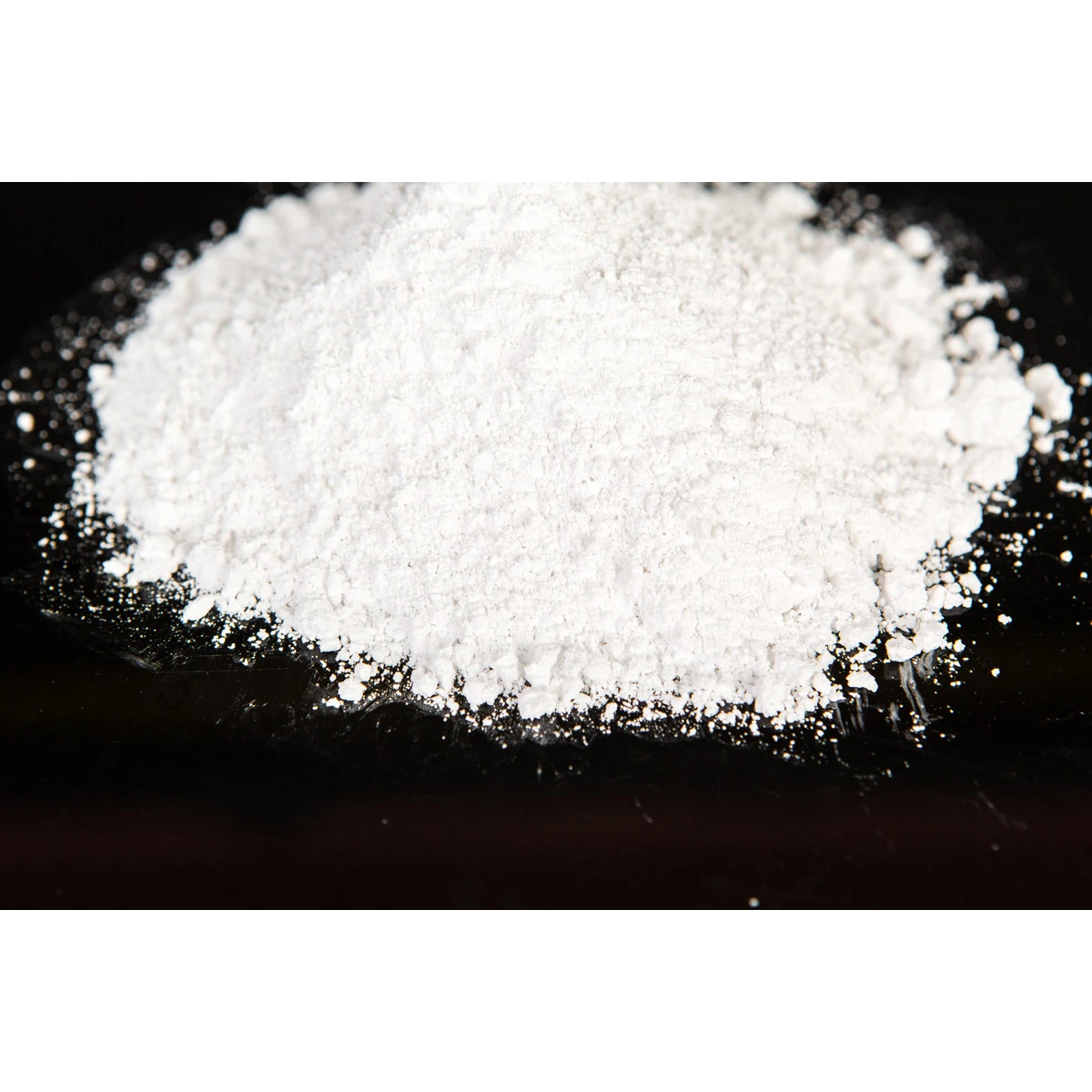
White pigments are inorganic or mineral-based colorants that appear white because they scatter visible light efficiently rather than absorbing it selectively. In plastics and other industrial materials, their main roles are to deliver whiteness, opacity, brightness, UV screening, and in some cases reinforcement or cost reduction through extension and dilution of darker colorants.
The dominant modern white pigment is titanium dioxide, especially rutile grades, which has displaced older materials such as lead white in most industrial uses because of its superior brightness, hiding power, and chemical stability. Other important white pigments include zinc oxide, zinc sulfide, lithopone, calcium carbonate, barytes, talc, silica, and china clay, although many of these function more as extenders or specialty whites than as primary hiding pigments.
Within plastics, white pigments are especially important in masterbatches and compounded formulations for packaging, consumer goods, appliances, construction profiles, automotive parts, cables, films, and engineering plastics. Their significance extends beyond aesthetics: by reflecting ultraviolet radiation and visible light, they can slow photo-oxidative degradation and improve service life, while also influencing heat build-up, surface appearance, and downstream processing behavior.
The history of white pigments traces from natural chalk and lead carbonate to modern synthetic titanium dioxide, reflecting a broader shift from naturally occurring and toxic lead-based materials toward safer and more performance-oriented industrial pigments. Current development is shaped by sustainability pressures, regulatory scrutiny, and innovation in low-carbon production, bio-based or recycled feedstocks, surface-treated pigments, and circular formulations designed to maintain optical performance while reducing environmental burdens.
History and Development
White pigments were among the earliest pigments used by humans, beginning with naturally occurring chalk, lime, and clay-derived whites in prehistoric and ancient art. Lead white became the dominant historical white in Europe and many other regions because of its strong opacity and handling properties, despite its toxicity.
The decisive transition in the twentieth century was the rise of titanium dioxide white pigment, which became widely adopted after industrial-scale production methods matured and offered a brighter, more opaque, and more chemically stable alternative to lead white. By the 1930s, titanium white had largely replaced lead white in European and American markets for many applications.
In industrial plastics, the growth of white masterbatches and high-performance TiO2 grades paralleled the expansion of packaging, consumer goods, building products, and synthetic fibers. More recently, industry attention has shifted toward life-cycle impacts, process efficiency, and regulatory developments affecting pigment production, particularly in relation to energy use, waste salts, and sustainability reporting.
Chemical Structure and Key Properties
White pigments are defined by their optical behavior: they provide whiteness by non-selective scattering of visible light with little or no absorption in the visible range. The most effective white pigments have a high refractive index, small and well-controlled particle size, and a morphology that promotes strong light scattering.
Key property set
- Titanium dioxide: highest practical hiding power, high brightness, excellent weatherability when properly surface-treated, and strong UV-screening behavior.
- Zinc oxide: useful in some specialty white formulations, including rubber and certain protective or functional applications, but generally less opaque than TiO2.
- Lithopone: a mixed white pigment used in some coatings and plastics, generally lower in performance than TiO2 but still useful in specific cost-sensitive formulations.
- Calcium carbonate, barytes, talc, silica, and clay: often used as extenders, fillers, or opacifying auxiliaries rather than primary hiding whites.
Real limits and practical workarounds
- Poor oxygen and grease barrier in many plastic systems → white pigments do not by themselves create an effective barrier layer → use multilayer structures, barrier polymers, or combine TiO2 with dedicated barrier additives and coatings.
- Low surface energy and poor adhesion before treatment in some polymer matrices → untreated pigmented surfaces may print or bond poorly → apply corona, plasma, flame treatment, or suitable coupling/dispersion aids.
- Chalking and yellowing in outdoor exposure for some grades → photo-oxidation or binder degradation can reduce appearance and durability → use rutile TiO2 with inorganic/organic surface treatments and stabilizer packages.
- Abrasion or reduced transparency where opacity is not desired → high TiO2 loading can over-opaque or alter mechanics → use lower-pigment grades, translucent whites, or blended extenders.
Mechanism note
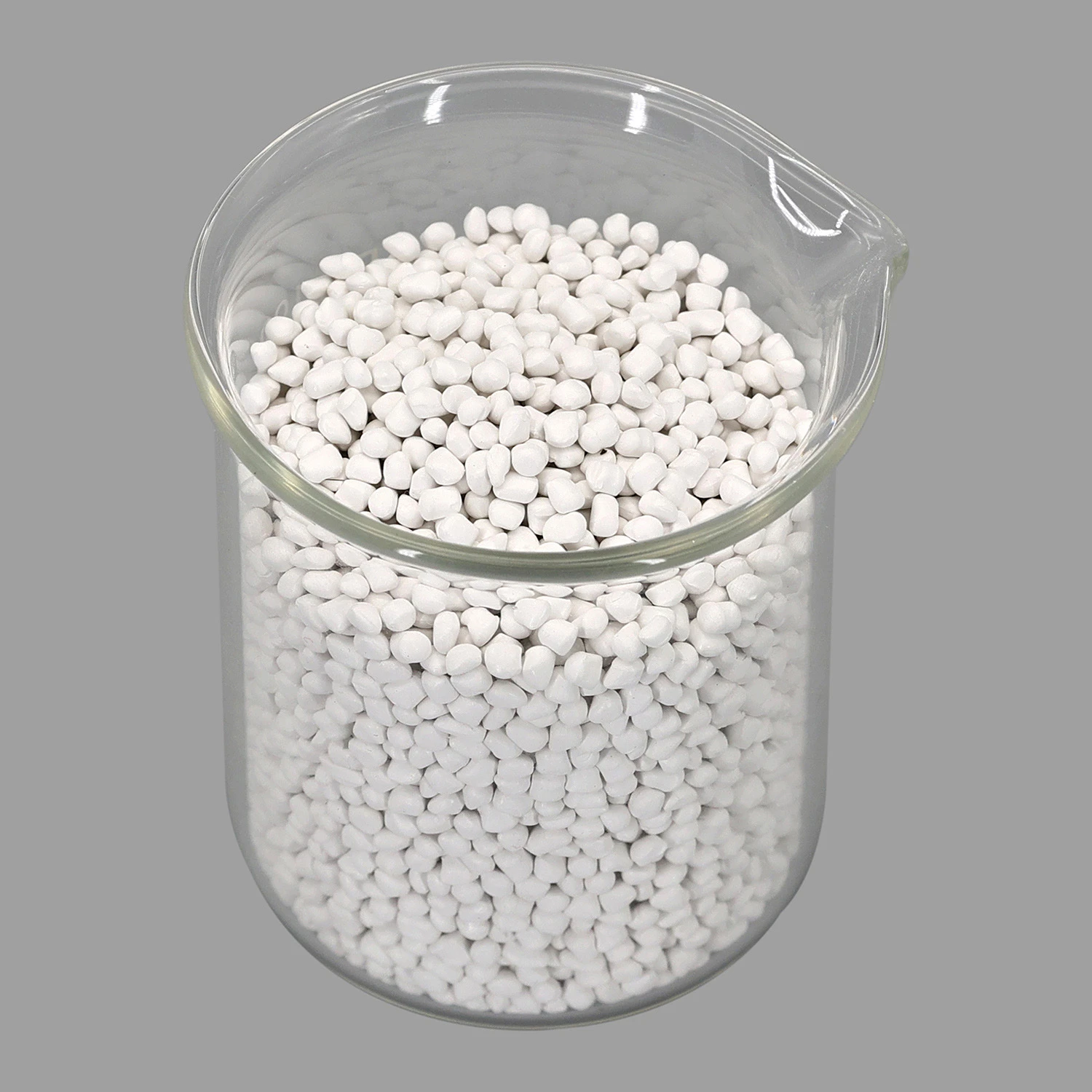
A typical plastics white masterbatch may contain roughly 50–80 percent TiO2 dispersed in a polymer carrier, with dispersants or processing aids used to break pigment agglomerates so the final part achieves maximum scattering efficiency at lower let-down ratios. In practice, performance depends as much on dispersion quality as on pigment chemistry.
Production Processes and Raw Feedstocks
The dominant industrial white pigment is titanium dioxide, produced mainly by the sulfate process or chloride process from titanium-bearing raw materials such as ilmenite, rutile, upgraded slag, or synthetic intermediates. The sulfate route digests feedstock in sulfuric acid and precipitates and calcines TiO2, while the chloride route uses chlorination to produce titanium tetrachloride followed by oxidation to pigment-grade TiO2.
Pigment performance is heavily influenced by post-treatment and particle engineering. Rutile grades are commonly surface-treated with alumina, silica, zirconia, or organic coatings to improve dispersion, weather resistance, and compatibility with polymers and coatings.
Other white pigments are produced from their own mineral or chemical feedstocks:
- Zinc oxide from zinc metal oxidation or related chemical routes.
- Lithopone from zinc sulfide and barium sulfate precipitation.
- Calcium carbonate from mined chalk, limestone, or precipitated routes, mainly as filler/extender.
- Barytes from barite ore, widely used as an inert extender and density modifier.
In plastics compounding, these pigments are typically incorporated through dry blending, masterbatch production, or direct compounding, with twin-screw extrusion commonly used to ensure dispersion and dosage uniformity. Poor dispersion causes color specking, lower hiding power, gloss inconsistency, and sometimes processing instability.
Applications and End-Use Markets
White pigments are used across a broad range of industrial sectors, but their most important markets remain coatings, plastics, paper, inks, rubber, cosmetics, and construction materials.
| End use | Typical white pigment | Usual role | Notes on process fit |
|---|---|---|---|
| Plastics packaging | Rutile TiO2 | Opacity, whiteness, UV protection | Often added as masterbatch for film, caps, closures, and rigid packaging. |
| Films and sheets | Rutile TiO2 with controlled dispersion | Hiding power, light blocking | High dispersion quality is critical to avoid haze and pinholes. |
| Bottles and containers | Rutile TiO2 | Bright white appearance, UV screening | Especially important for opaque cosmetic and household containers. |
| Pipe and profiles | Rutile TiO2 plus stabilizers | Weatherability and long-term appearance | Common in PVC and construction polymers. |
| Cable and wire compounds | TiO2 or zinc oxide in specialty systems | Color control, opacity, protection | Must balance whiteness with electrical and thermal requirements. |
| Agriculture and geomembrane films | Rutile TiO2 | Solar reflectance, UV durability | Helps slow environmental embrittlement and maintain reflectivity. |
| Rotomolding | TiO2 | Uniform bulk coloration | Requires even pigment distribution to avoid streaking. |
| UHMWPE wear and medical parts | Specialty white grades | Clean appearance, identification | Less common than in coatings, but used where whiteness and low contamination matter. |
| PEX | TiO2 or specialty whites | Pipe coloration and appearance | Used for product identification and sunlight resistance. |
| Rubber | Anatase or post-treated whites in some products | Pure white appearance, moderate performance | Anatase is often cited for pure-white rubber with limited chalking demand. |
| Paper | White pigments and extenders | Brightness, gloss, printability | Large-volume consumer of white pigments and coating fillers. |
A poor-fit application is highly transparent plastic articles, where white pigments are generally unsuitable because they destroy clarity and optical transmission. In such cases, transparent nucleating agents or optical brighteners are preferred instead.

Environmental and Sustainability Aspects
White pigments raise sustainability questions mainly because of their production footprint, use intensity, and end-of-life effects rather than because of inherent toxicity in modern primary grades. TiO2 is widely used in plastics because it can reduce material degradation and extend product life, which may offset part of its upstream impact in long-lived goods.
Recyclability
- White pigmented plastics are usually recyclable in principle, but high TiO2 loadings can reduce value in mechanically recycled streams by lowering color flexibility and complicating color matching.
- Pigments do not prevent recycling, but mixed-color or heavily contaminated streams can limit the production of high-value white recyclate.
- In some systems, white packaging is intentionally designed to support closed-loop recycling, although reprocessing often requires careful sorting and re-compounding.
Bio-based and lower-carbon alternatives
- Bio-based plastics can still use conventional white pigments, but the pigment itself is usually not bio-based.
- Research and development increasingly focus on lowering the carbon intensity of TiO2 production, improving process efficiency, and using recycled or alternative mineral feedstocks where feasible.
- In some low-opacifying applications, calcium carbonate or other extenders can partially replace TiO2, reducing cost and pigment burden, though not matching full hiding power.
Carbon footprint and process concerns
- The TiO2 industry is energy-intensive, and the sulfate route in particular has long been associated with waste acid and by-product management challenges.
- Surface treatment and dispersion optimization can lower overall pigment demand by improving optical efficiency per unit mass, which is a practical route to footprint reduction.
- In use, white pigments can contribute positively to durability, reflectance, and thermal management, especially in outdoor plastics and building products.
Economic and Global Market Impact
White pigments, led by TiO2, are among the most commercially important pigment categories in the plastics and coatings industries. Their value lies not only in coloration but also in the ability to reduce formulation cost and improve technical performance, which makes them strategically important across multiple value chains.
Demand is strongest in coatings, plastics, and paper, with plastics especially dependent on white masterbatches for packaging, durable goods, and construction products. Industry sources consistently identify titanium dioxide as the leading global white pigment and the key benchmark for brightness and hiding power.
Leading global producers include large multinational pigment manufacturers in Europe, North America, and Asia, with supply chains tied to titanium mineral mining, chloride or sulfate processing, and downstream compounding operations. Market conditions are shaped by energy prices, ore availability, environmental regulation, and the balance between capacity expansions and closures in major producing regions.
Current Challenges and Innovations
The main technical challenge is to deliver maximum opacity with minimum pigment loading, because higher loading raises cost, density, and sometimes brittleness or processing difficulty. Another challenge is maintaining performance in recycled polymers, where contaminants, prior heat history, and variable base resin quality can reduce whiteness and gloss.
Key innovation directions include:
- Surface-treated rutile grades for better dispersion, weatherability, and reduced pigment demand.
- High-efficiency masterbatches that improve dosing accuracy and reduce plant-side handling dust.
- Hybrid systems combining TiO2 with extenders such as calcium carbonate or barytes to lower cost while preserving acceptable opacity.
- Low-carbon TiO2 production using process heat optimization, improved acid recovery, and cleaner energy inputs.
- Functional whites for infrared reflection, UV shielding, and thermal management in agricultural films, building materials, and outdoor plastics.
A practical formulation example is a white PP or PE masterbatch using rutile TiO2 at moderate-to-high loading, plus a dispersant and a polyethylene carrier; the dispersant improves wetting of the pigment surface, while the carrier ensures uniform dilution during conversion. Another example is outdoor PVC pipe using TiO2 together with stabilizers, where the pigment contributes both appearance and photoprotection.
Future Outlook
White pigments will remain essential because no other pigment class matches TiO2 for combining brightness, opacity, and UV-screening performance across such a broad range of materials. In plastics, future demand is likely to remain strongest in packaging, construction, durable consumer goods, and infrastructure products where appearance and weatherability are both critical.
The next phase of development is likely to be defined by three priorities: lower environmental impact in pigment manufacture, higher optical efficiency per unit mass, and better compatibility with recycled polymers and circular product systems. At the same time, substitution pressure from extenders and alternative opacifiers will continue where full TiO2 performance is not required.
Summary
White pigments are foundational industrial materials whose function is based on light scattering, not chemical color absorption. Titanium dioxide remains the dominant white pigment because of its exceptional hiding power, brightness, and durability, while zinc oxide, lithopone, calcium carbonate, barytes, and related minerals serve important specialty and extender roles.
In plastics, they are indispensable for whiteness, opacity, UV protection, and product identity, but they also introduce challenges in cost, dispersion, recycling, and carbon footprint. Their future will be shaped by more efficient formulations, lower-impact manufacturing, and increasing integration with circular economy strategies.
References
- •
Pigment colour index: White pigments. (2021, September 10). Jackson's Art. https://www.jacksonsart.com/blog/2021/09/10/pigment-colour-index-white-pigments/Link
- •
Overview of white pigments. (2025, November 14). Scribd. https://www.scribd.com/document/571460227/White-pigmentsLink
- •
White pigments: Types, common uses, and science. (2025, July 29). Biology Insights. https://biologyinsights.com/white-pigments-types-common-uses-and-science/Link
- •
White pigments. (n.d.). PrintWiki. https://printwiki.org/White_PigmentsLink
- •
White. (2001, August 10). Wikipedia. https://en.wikipedia.org/wiki/WhiteLink
- •
White paints and pigments. (n.d.). iAMart Art Materials Stores. https://www.iamart.org/articles/_articles/white-paints-and-pigments/Link
- •
White pigments. (2021, August 30). Academic Projects. https://academicprojects.co.uk/white-pigments/Link
- •
White pigments for paint. (2023, January 4). Natural Pigments. https://www.naturalpigments.com/artist-materials/white-pigmentsLink
- •
Intro to the whites. (n.d.). WebExhibits. https://www.webexhibits.org/pigments/intro/whites.htmlLink
- •
White pigments. (n.d.). Surface Technology. https://www.surface-technology.info/topics/encyclopedia/technical-terms/white-pigmentsLink
- •
What is white pigment sales? Uses, how it works & top companies. (2025, October 3). LinkedIn. https://www.linkedin.com/pulse/what-white-pigment-sales-uses-how-works-top-companies-lbusfLink
- •
Science of colour - Types of white pigment for oil painting. (n.d.). Google Sites. https://sites.google.com/site/scienceofcolour/types-of-white-pigment-for-oil-paintingLink
- •
White? Not quite. (n.d.). Anna-Carien Goosen. http://www.annacarien.com/blog/2016/9/5/whiteLink
- •
White pigments in art from lead white to titanium. (2026, January 29). Syntax of Color. https://www.syntaxofcolor.com/post/white-pigments-in-art-from-lead-white-to-titaniumLink
- •
What whites are best for your oil painting? (2023, September 14). Natural Pigments. https://www.naturalpigments.com/artist-materials/best-whites-for-oil-paintingLink
- •
White pigment. (n.d.). ChemicalBook. https://www.chemicalbook.com/ChemicalProductProperty_EN_CB0104926.htmLink
- •
Pigments, techniques, and masterpiece analysis through the age. (2024, December 12). Atelier Tekin. https://www.ateliertekin.com/en/post/the-whites-pigments-techniques-and-masterpiece-analysis-through-the-ageLink
- •
Which white should I use? (2021, January 9). Pigment Tokyo. https://pigment.tokyo/en/blogs/article/white-pigmentsLink
- •
Ancient color - White pigments. (n.d.). University of Michigan. https://exhibitions.kelsey.lsa.umich.edu/ancient-color/map_white.phpLink
- •
News - What is titanium dioxide TiO2 and why is it the most important white pigment in industrial manufacturing? (2026, June 2). Sun Bang TiO2. https://www.sunbangtio2.com/news/what-is-titanium-dioxide-tio2-and-why-is-it-the-most-important-white-pigment-in-industrial-manufacturing/Link
- •
Selecting pigments for paints, coatings and inks. (2025, July 8). SpecialChem. https://www.specialchem.com/coatings/guide/pigmentsLink
- •
Studio craft: Mixing different whites. (n.d.). Assets. https://assets.ctfassets.net/f1fikihmjtrp/5bcZiVEMgTkf4TFwWzSVh5/a9aac35d1cf721c2d8775c43b46dad63/PP_different_whites.pdfLink
- •
The science behind white masterbatch pigments and polymers explained. (2023, May 25). Masterbatch. https://masterbatch.com.vn/news/the-science-behind-white-masterbatch-pigments-and-polymers-explained/Link
- •
Titanium dioxide คืออะไร? ทำไมถึงจำเป็นในวงการอุตสาหกรรม. (2025, October 21). L Eternal Group. https://www.leternalgroup.com/en/titanium-dioxideLink
- •
White. (2022, August 10). Meural. https://my.meural.netgear.com/editorial/340/whiteLink
- •
White pigments. (n.d.). Cameo. https://cameo.mfa.org/wiki/White_pigmentsLink
- •
Pigment white suppliers or manufacturers. (n.d.). Chemball. https://www.chemball.com/category/dyes-pigments-and-their-intermediates/pigment-white/Link
- •
Titanium dioxide white pigment: The whitest thing in the world. (2025, January 6). Wotai Chem. https://wotaichem.com/titanium-dioxide-white-pigment/Link
- •
What makes a white pigment white? (2021, May 18). Nordmann. https://www.nordmann.global/en/news-events/news/what-makes-a-white-pigment-whiteLink
- •
Kemira knows the long value chain of pigments. (2013, February 11). Kemira. https://www.kemira.com/news-and-stories/newsroom/news/kemira-knows-the-long-value-chain-of-pigments/Link
- •
Titanium dioxide whites. (n.d.). WebExhibits. https://www.webexhibits.org/pigments/indiv/overview/tiwhite.htmlLink
- •
Use of white pigments in the rubber industry. (n.d.). RCT. https://rct.kglmeridian.com/view/journals/rcat/36/1/article-p158.xmlLink
- •
Understanding white powder used in paint and coating. (2026, March 4). Alibaba. https://www.alibaba.com/product-insights/white-powder-used-in-paint-and-coating.htmlLink
- •
The history of art in colors: White. (2020, June 4). Chrysler Museum of Art. https://chrysler.org/the-history-of-art-in-colors-white/Link
- •
Practical applications of TiO₂ powder in paints, plastics. (2026, February 25). Vichem. https://vichem.vn/en/news-practical-applications-of-tio%E2%82%82-powder-in-paints-plastics/Link
- •
Inside white pigment manufacturers: Technical details, quality. (2026, March 3). Alibaba. https://www.alibaba.com/product-insights/white-pigment-manufacturers.htmlLink
- •
White pigment USA explained: Key specifications. (2026, March 3). Alibaba. https://www.alibaba.com/product-insights/white-pigment-usa.htmlLink
- •
Process for manufacturing white pigment containing products. (2013, August 8). Google Patents. https://patents.google.com/patent/WO2014029634A1/enLink
- •
What are the white pigments commonly used in ink production. (2021, September 16). Schem. https://www.schem.net/what-are-the-white-pigments-commonly-used-in-ink-production_n76Link
- •
Pigments through the ages - Overview - Lead white. (n.d.). WebExhibits. https://www.webexhibits.org/pigments/indiv/overview/leadwhite.htmlLink
- •
About TiO2. (2026, March 18). Kronos. https://www.kronosww.com/products/about-tio2/Link
- •
Titanium white. (n.d.). Cameo. https://cameo.mfa.org/wiki/Titanium_whiteLink
- •
The history of lead white oil paint and its modern alternatives. (2024, May 2). Jackson's Art. https://www.jacksonsart.com/blog/2024/05/02/the-history-of-lead-white-and-its-modern-alternatives/Link
- •
What are industrial pigments? Which industrial pigments are used the most today. (2020, May 2). Sunrise Colour. http://sunrisecolour.com/what-are-industrial-pigments-which-industrial-pigments-are-used-the-most-today-342510-l-en-l-en-l-en-l-en?l=enLink
- •
White inorganic pigment market. (2025, October 28). Future Market Insights. https://www.futuremarketinsights.com/reports/white-inorganic-pigment-marketLink
- •
White inorganic pigments market size and forecast. (2022, October 13). Verified Market Research. https://www.verifiedmarketresearch.com/product/white-inorganic-pigments-market/Link
- •
Titanium dioxide. (2003, May 1). Wikipedia. https://en.wikipedia.org/wiki/Titanium_dioxideLink
- •
Are there white pigments known for their low opacity? (n.d.). Reddit. https://www.reddit.com/r/paint/comments/ulyh46/are_there_white_pigments_known_for_their_low/Link
- •
Lead white. (2005, June 1). Wikipedia. https://en.wikipedia.org/wiki/Lead_whiteLink
- •
Titanium-dioxide-for-coatings. (n.d.). Ti-Pure. https://www.tipure.com/en/-/media/files/tipure/legacy/titanium-dioxide-for-coatings.pdfLink
- •
History - Titanium dioxide whites. (n.d.). WebExhibits. https://www.webexhibits.org/pigments/indiv/history/tiwhite.htmlLink