

Introduction
Specialty rubber refers to elastomers engineered for demanding service conditions where conventional general-purpose rubbers are insufficient, such as sustained heat, fuels and oils, aggressive chemicals, ozone, UV exposure, low-temperature flexibility, or high gas impermeability. Compared with commodity rubber, specialty rubber typically offers higher performance but also higher cost and smaller production volumes, which often results in higher minimum order quantities and application-specific qualification requirements.
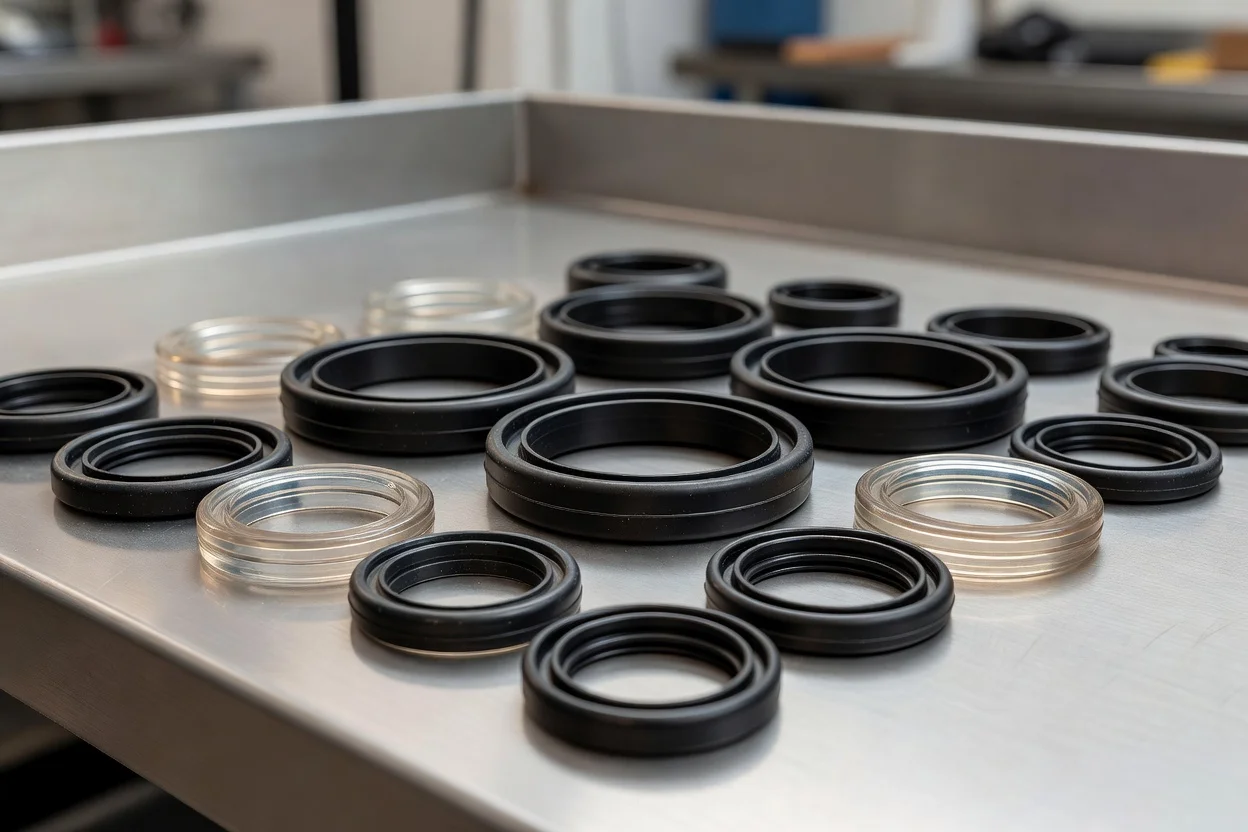
In the plastics and polymers value chain, specialty rubber occupies a critical niche between broad-use elastomers and highly engineered materials. It includes both tailored synthetic rubbers and premium natural-rubber grades adapted for unusual performance needs, with common families including silicone, fluorocarbon elastomers, nitrile variants, butyl rubber, epichlorohydrin rubber, acrylic rubber, chloroprene, polyurethane elastomers, and specialty natural-rubber grades. These materials are indispensable in automotive sealing systems, aerospace components, medical devices, oil-and-gas equipment, industrial hoses, wire and cable, vibration-control parts, and high-reliability consumer and industrial products.
History and Development
The development of specialty rubber followed the broader expansion of synthetic elastomers during the twentieth century, when industry sought materials that could outperform natural rubber in specific environments. General-purpose synthetic rubbers such as SBR, BR, and EPDM established the scale base of the elastomer industry, while specialty grades evolved to solve more difficult problems involving chemical attack, thermal aging, weathering, permeability, and biocompatibility.
A major driver of specialty-rubber development has been the growing complexity of modern systems. Automotive fuel systems, aircraft seals, industrial automation, medical instrumentation, and high-voltage electronics each imposed distinct property requirements that could not be met efficiently by a single universal elastomer. As a result, specialty rubber developed as a family of materials rather than one polymer type, with formulations selected according to end-use environment and compliance needs.
Chemical Structure and Key Properties
Specialty rubber is defined less by one chemistry than by performance-oriented molecular design. Its properties arise from polymer backbone chemistry, side groups, crosslinking system, filler package, and processing aids, all of which influence elasticity, heat resistance, solvent resistance, gas permeability, compression set, and weathering stability.
Representative property advantages
| Specialty rubber family | Primary strength | Typical use logic |
|---|---|---|
| Silicone | Wide temperature tolerance, flexibility, inertness | Seals, medical and electrical parts |
| FKM | Heat, oils, fuels, solvents | Aerospace, automotive, chemical processing |
| NBR / HNBR | Oil and fuel resistance | Hoses, seals, oilfield parts |
| Butyl / halobutyl | Low gas permeability | Tire inner liners, closures |
| EPDM | Ozone and weathering resistance | Outdoor seals, roofing, cable insulation |
| PU elastomers | Abrasion and tear resistance | Wheels, rollers, wear parts |
These materials are selected because the base polymer chemistry is aligned with the target environment. For example, fluorinated backbones enhance resistance to fuels and solvents, while siloxane backbones maintain flexibility over a very broad temperature range. Butyl rubbers are valued for low gas transmission, which is why they are used where air retention matters, such as liners and closures.
Practical limits and workarounds
- Poor oxygen and grease barrier in many elastomers → caused by relatively open polymer free volume and nonpolar chain structure → workaround: use barrier laminates, fluorinated grades, multilayer constructions, or coatings.
- Low surface energy before treatment in silicone and some fluorinated rubbers → caused by chemically inert surfaces that resist wetting and adhesion → workaround: plasma, corona, primer, or adhesion-promoter treatment.
- High material cost in high-performance grades → caused by specialty monomers, complex compounding, and tighter quality control → workaround: use only where the service environment justifies the premium, or redesign with hybrid materials.
Production Processes and Raw Feedstocks
Specialty rubber production begins with monomer selection and polymerization or with modification of existing elastomer chains. The exact route depends on the target family.
Main production routes
- Polymerization of specialized monomers: used for fluorinated elastomers, acrylic rubbers, silicone derivatives, and certain epichlorohydrin or chlorinated systems.
- Hydrogenation or chemical modification: used to improve heat and oxidation resistance, as in hydrogenated nitrile rubber.
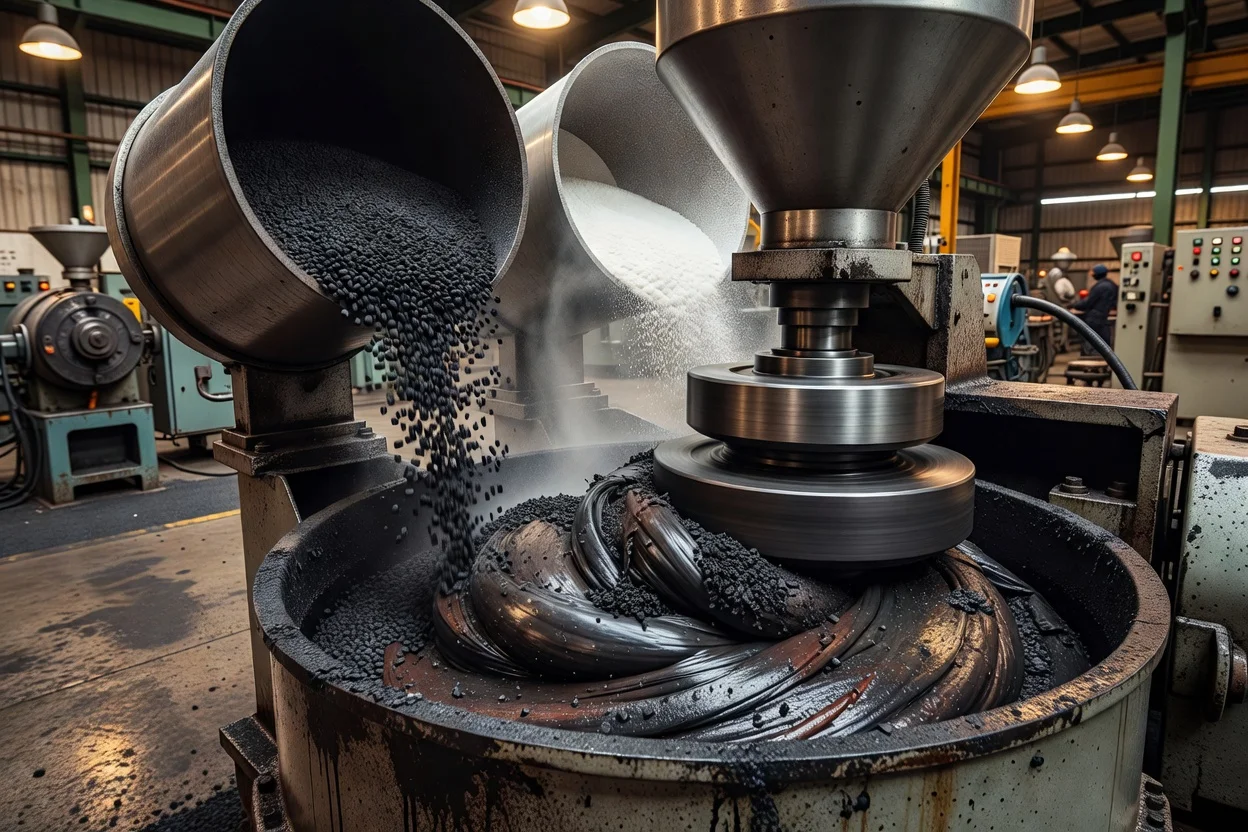
- Blending and compounding: used to tune cure rate, modulus, abrasion resistance, flame retardancy, and dynamic properties through fillers, curatives, plasticizers, antioxidants, and processing aids.
- Natural-rubber upgrading: used to produce technical or specialty natural rubber with tighter quality specifications and more controlled performance.
Raw feedstocks and compounding inputs
Typical raw materials include petrochemical-derived monomers and intermediates, specialized curing agents, carbon black, silica, coupling agents, antioxidants, antiozonants, plasticizers, and reinforcing fibers. In many specialty formulations, the additive package is as important as the base polymer. For example, about 20 to 60 phr carbon black is commonly used in reinforcing rubber compounds, where it increases modulus, abrasion resistance, and tear strength by creating a filler network within the matrix; silica-filled systems are often paired with silane coupling agents to improve dispersion and interfacial bonding.
Applications and End-Use Markets
Specialty rubber is used wherever failure is costly or safety-critical, especially in sealing, insulation, vibration control, and exposure to harsh media.
Major sectors
- Automotive and transportation: seals, hoses, grommets, fuel-system parts, vibration mounts, brake and fluid-system components, and EV thermal-management seals.
- Aerospace and defense: fuel and hydraulic seals, cable protection, inflatable structures, vibration-isolation parts, and components exposed to wide temperature swings.
- Oil and gas / chemical processing: packers, diaphragms, O-rings, hose linings, gaskets, and seals requiring resistance to hydrocarbons, acids, or solvents.
- Medical and pharmaceutical: tubing, stoppers, gaskets, and device seals where cleanliness, flexibility, and biocompatibility are important.
- Electrical and electronics: insulation, grommets, cable jackets, encapsulation-related parts, and EMI/RFI shielding compounds in conductive silicones.
- Industrial machinery: rollers, belts, anti-vibration mounts, protective covers, and wear parts.
Usual grade-to-process fit
| Application | Common specialty-rubber choice | Usual process |
|---|---|---|
| High-temperature seals | Silicone, FKM | Compression molding, injection molding |
| Fuel-contact parts | NBR, HNBR, FKM | Injection molding, extrusion |
| Low-permeation liners | Butyl, halobutyl | Extrusion, calendering |
| Outdoor cable jackets | EPDM, neoprene | Extrusion |
| Wear parts and rollers | Polyurethane elastomers | Casting, molding |
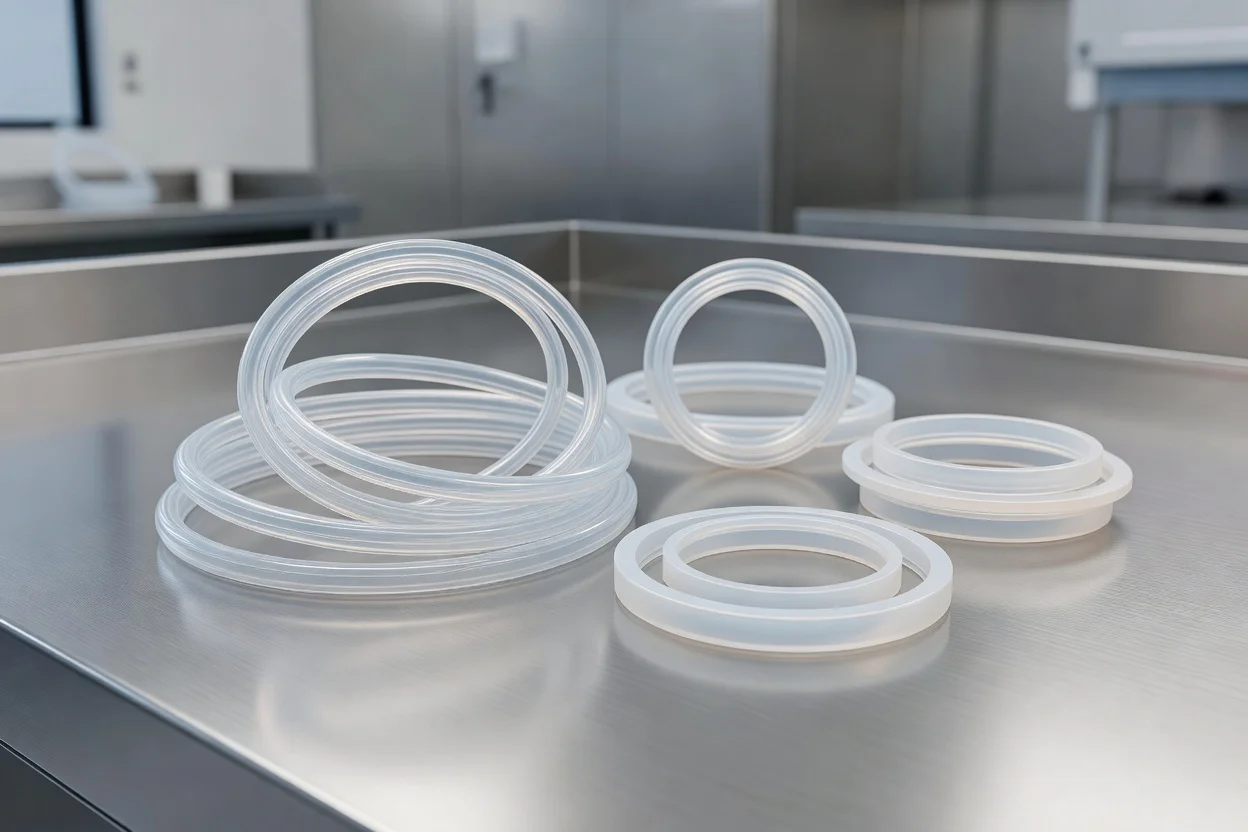
| Medical tubing and seals | Silicone, specialty TP elastomers | Extrusion, clean-room molding |
One poor-fit use is broad, low-cost commodity packaging, where specialty rubber is usually economically unjustified and often technically unnecessary.
Environmental and Sustainability Aspects
Specialty rubber has a mixed sustainability profile. On one hand, its durability can extend product life and reduce leakage, wear, and replacement frequency. On the other hand, most specialty rubbers are still derived from fossil feedstocks and are difficult to recycle once vulcanized, especially when compounded with multiple additives and reinforcement systems.
Key sustainability issues
- Recyclability: thermoset specialty rubbers are generally not remeltable, so recycling often relies on grinding into crumb, devulcanization, or downcycling into lower-value products.
- Carbon footprint: the footprint can be significant because of petrochemical feedstocks, energy-intensive synthesis, and waste from off-spec production, although long service life can partly offset this on a use-phase basis.
- Bio-based alternatives: some research and commercial activity is focused on bio-derived monomers, renewable oils, and higher-content bio-based elastomers, but these options are not yet universal replacements for the most demanding specialty applications.
- Circularity pressure: design-for-disassembly, material simplification, and cleaner compounding are becoming more important, especially in automotive and electronics supply chains.
Economic and Global Market Impact
Specialty rubber represents a smaller but strategically important segment of the elastomer market because it supports high-value, safety-critical applications and often carries a premium price. Demand is closely linked to automotive electrification, aerospace recovery, energy infrastructure, medical manufacturing, and industrial automation.
Its economics are shaped by tighter specifications, smaller batch sizes, and qualification costs, which can create barriers to entry but also protect incumbents with technical expertise. Leading global producers and compounders vary by chemistry, with major participation from multinational elastomer and specialty-chemical companies active in silicones, fluoropolymers, nitrile variants, and engineered sealing compounds.
Current Challenges and Innovations
The specialty-rubber sector is being reshaped by performance demands, regulatory pressure, and manufacturing innovation.
Current challenges
- Regulatory compliance: restrictions on certain plasticizers, residual monomers, and PFAS-related chemistries affect some high-performance rubber families.
- Supply chain risk: specialty monomers and additives may come from a limited supplier base.
- Qualification burden: aerospace, medical, and automotive applications require long validation cycles.
- Processing complexity: high-performance compounds can be harder to mix, cure, and bond reliably.
Innovations
- Low-extractable formulations: designed for medical and pharmaceutical contact applications.
- Conductive and functional elastomers: used for EMI shielding, sensing, and electrically active components.
- Improved barrier systems: multilayer constructions and hybrid elastomer films for gas retention and chemical protection.
- Sustainable compounding: lower-aromatic process oils, bio-based plasticizers, and more recyclable formulations.
- Advanced elastomer architectures: fluorosilicones, hydrogenated nitriles, and specialty TP elastomers are being used to balance processability with high performance.
Future Outlook
Specialty rubber is likely to grow in importance as industries demand more reliable materials for electrification, automation, miniaturization, and harsher operating environments. The strongest opportunities are expected in EV thermal and sealing systems, medical devices, aerospace, energy transition equipment, and high-reliability electronics.
At the same time, future competition will increasingly depend on whether suppliers can reduce carbon intensity, improve recyclability, and simplify formulations without sacrificing performance. In practice, the winning specialty-rubber systems are likely to be those that combine precise property control with lower environmental burden and robust supply security.
Summary
Specialty rubber is the performance-driven segment of the elastomer industry, designed for conditions that exceed the capabilities of commodity rubbers. Its value lies in tailored resistance to heat, chemicals, fuel, weathering, gas permeation, and mechanical wear, making it essential across transportation, energy, medical, electrical, and industrial markets.
References
- •
Commodity rubber vs. specialty rubber. (2023, January 7). Elastoproxy. https://www.elastoproxy.com/commodity-rubber-vs-specialty-rubber/Link
- •
Speciality elastomers for industrial applications. (2025, March 29). Studylib. https://studylib.net/doc/5789634/specialty-polymers-for-industrial-applicationsLink
- •
特种橡胶. (2018, October 16). MBA智库百科. https://wiki.mbalib.com/wiki/%E7%89%B9%E7%A7%8D%E6%A9%A1%E8%83%B6Link
- •
Classification of rubber compounds and their industrial applications. (n.d.). JPRRE. https://www.jprre.com/news/classification-of-rubber-compounds-and-their-industrial-applications/Link
- •
Rubber materials. (n.d.). Redco. https://www.redco1.com/rubber-materialsLink
- •
Technical specified rubber. (2024, March 19). Ganpati Exim. https://www.ganpatiexim.com/products/natural-rubber/technical-specified-rubber/Link
- •
Types, characteristics and uses of general and special rubber. (n.d.). Classic-AP. https://www.classic-ap.com/en/general-industrial-sector/types-characteristics-and-uses-of-general-and-special-rubber.htmlLink
- •
ยางสังเคราะห์. (2007, July 9). Wikipedia. https://th.wikipedia.org/wiki/%E0%B8%A2%E0%B8%B2%E0%B8%87%E0%B8%AA%E0%B8%B1%E0%B8%87%E0%B9%80%E0%B8%84%E0%B8%A3%E0%B8%B2%E0%B8%B0%E0%B8%AB%E0%B9%8CLink
- •
Natural rubber. (n.d.). Akrochem. https://www.akrochem.com/pdf/technical_papers/natural_rubber_sol_sheet.pdfLink
- •
What is specialty nitrile butadiene rubber NBR? Uses, how it works... (2025, October 4). LinkedIn. https://www.linkedin.com/pulse/what-specialty-nitrile-butadiene-rubber-nbr-uses-how-jouicLink
- •
Versatile high-performance elastomers, tires and specialty rubbers. (2017, June 10). Hydrocarbon Processing. https://www.hydrocarbonprocessing.com/news/2017/10/online-exclusive-versatile-high-performance-elastomers-tires-and-specialty-rubbersLink
- •
特种合成橡胶. (2018, October 16). MBA智库百科. https://wiki.mbalib.com/wiki/%E7%89%B9%E7%A7%8D%E5%90%88%E6%88%90%E6%A9%A1%E8%83%B6Link
- •
Types of rubber and basic properties. (n.d.). All Seals Inc. https://allsealsinc.com/type-of-rubbers.htmlLink
- •
Special rubber sheet in the real world: 5 uses you'll actually see... (2025, October 1). LinkedIn. https://www.linkedin.com/pulse/special-rubber-sheet-real-world-5-uses-youll-actually-see-aghffLink
- •
Different kinds of rubber. (2022, December 12). Rubber Mill. https://rubbermill.com/different-kinds-of-rubber/Link
- •
Different types of rubber. (2020, January 27). Martin's Rubber. https://www.martins-rubber.co.uk/blog/what-are-the-different-types-of-rubber/Link
- •
15 common types of rubber you need to know. (n.d.). Weihan Silicone. https://weihansilicone.com/15-common-types-of-rubber-you-need-to-know/Link
- •
The complete types of rubber for your business. (2023, February 21). Weprofab. https://plas-fab.com/rubber-types/Link
- •
Classification of rubber types. (2015, November 16). Scribd. https://www.scribd.com/document/719258981/Rubber-different-types-of-rubberLink
- •
Rubber 101: Understanding different types of rubber &... (2021, October 25). Airboss Rubber Solutions. https://airbossrubbersolutions.com/rubber-101-understanding-different-types-of-rubber-rubber-compounds/Link
- •
11 most important industrial applications of rubber. (2025, August 26). Elastec JSC. https://elastecjsc.com/en/news/industrial-applications-of-rubber/Link
- •
How special rubber works — In one simple flow (2025). (2025, October 13). LinkedIn. https://www.linkedin.com/pulse/how-special-rubber-works-one-simple-flow-2025-d693fLink
- •
Special-purpose rubbers. (2022, February 1). Erteco. https://www.erteco.se/en/materialfamilj-gummi/special-purpose-rubbers/Link
- •
Specialty rubber market growth, trends & future outlook. (2026, August 12). LinkedIn. https://www.linkedin.com/posts/qr-insightdrift_%3F%3F%3F%3F%3F%3F%3F-%3F%3F%3F%3F%3F%3F-%3F%3F%3F%3F%3F%3F-activity-7493195240942772225-lsRxLink
- •
Specialty applications. (2025, June 19). Elastomer Technologies, Inc. https://www.etiroltec.com/industries-served/specialty-applications/Link
- •
Guide to the different types of rubber. (2022, October 3). GMT Rubber. https://www.gmtrubber.com/different-types-of-rubber/Link
- •
Rubber types: Classifications, properties, manufacturing... (2025, January 2). RubberXperts. https://rubberxperts.com/rubber-types/Link
- •
Properties of rubber materials. (n.d.). Walker Rubber. https://www.walker-rubber.co.uk/knowledge-hub/rubber-material-properties-367Link
- •
Industrial rubber parts - Irregular-shaped molded parts. (n.d.). Eutsler Rubber. https://www.eutsler-rubber.com/industries-served/Link
- •
Rubber applications - An overview. (2009, October 9). ScienceDirect. https://www.sciencedirect.com/topics/engineering/rubber-applicationsLink
- •
Types of rubber materials explained. (2026, April 4). Scribd. https://www.scribd.com/document/665169892/78421-v01-16aLink
- •
Top 7 types of rubber: Best options for every industry. (2025, October 29). Elastostar. https://elastostar.com/what-are-the-top-7-types-of-rubber-which-is-the-best/Link
- •
Industrial uses of rubber. (2022, September 21). Industrial Rubber. https://www.industrial-rubber.com/news/industrial-uses-of-rubber/Link
- •
A review on specialty elastomers based potential inflatable structures and applications. (n.d.). ScienceDirect. https://www.sciencedirect.com/science/article/pii/S2542504821000312Link
- •
Industrial rubber products in the real world: 5 uses you'll actually... (2025, October 1). LinkedIn. https://www.linkedin.com/pulse/industrial-rubber-products-real-world-5-uses-youll-vnmifLink
- •
Exploring different types of rubber materials and their uses. (2024, February 22). Golden Gate Molders. https://www.goldengatemolders.com/post/exploring-different-types-of-rubber-materials-and-their-usesLink
- •
22 different types of rubber. (2024, March 7). Inpart24. https://inpart24.com/en/resources/article/59/22-different-types-of-rubberLink
- •
The different types of synthetic rubber. (2025, July 23). Aquaseal Rubber. https://www.aquasealrubber.co.uk/articles/the-different-types-of-synthetic-rubber/Link
- •
The many uses of rubber: 49 things made of rubber. (2024, March 5). Rubber-Cal. https://rubbercal.com/uses-of-rubberLink
- •
Natural rubber. (2002, February 9). Wikipedia. https://en.wikipedia.org/wiki/Natural_rubberLink
- •
Speciality polymers. (2013, July 17). SlideShare. https://es.slideshare.net/slideshow/speciality-polymers/24364469Link
- •
Natural rubber in Pune - Eco-friendly, high-quality rubber products. (2026, June 23). Justdial. https://m.justdial.com/jdmart/Pune/Natural-Rubber/jdm-1075258-ent-2-15523102/page-8Link
- •
What are the top 5 rubber materials and their applications? (2021, November 11). TRP. https://trp.co.uk/blog/what-are-the-top-5-rubber-materials-and-their-applications/Link
- •
Rubber - An overview. (n.d.). ScienceDirect. https://www.sciencedirect.com/topics/materials-science/rubberLink
- •
Rubber compounds: Composition, types, properties,... (2025, April 7). RubberXperts. https://rubberxperts.com/rubber-compounds/Link
- •
How many types of rubber are there? (2025, February 5). Rubber-Cal. https://rubbercal.com/how-many-types-of-rubberLink
- •
Rubber glossary and dictionary of terms. (2025, May 12). WARCO. https://warco.com/resources/rubber-dictionary/Link
- •
What is specialty elastomers? Uses, how it works & top... (2025, October 5). LinkedIn. https://www.linkedin.com/pulse/what-specialty-elastomers-uses-how-works-top-companies-9drlcLink
- •
SAS Industries announces the acquisition of specialty rubber corp. (2021, November 18). Rubber World. https://rubberworld.com/sas-industries-announces-the-acquisition-of-specialty-rubber-corp/Link