

Introduction
Nitrile rubber (NBR), also called nitrile butadiene rubber, Buna-N, or acrylonitrile butadiene rubber, is a synthetic elastomer made primarily from acrylonitrile and butadiene. It is one of the most widely specified oil- and fuel-resistant rubbers in the plastics and rubber value chain because it combines strong resistance to petroleum-based media with useful mechanical strength, abrasion resistance, and relatively low cost.
NBR was developed in Germany in the 1930s and became a major industrial material for seals, hoses, gaskets, and other parts exposed to oils, fuels, and hydraulic fluids. Its performance is strongly governed by acrylonitrile content: higher acrylonitrile levels generally improve oil and fuel resistance but reduce low-temperature flexibility, while lower levels improve flexibility but increase swelling in oils. That tunability, together with compatibility with sulfur or peroxide curing and a wide compounding window, explains why NBR remains a workhorse material in automotive, industrial, oil and gas, and medical-glove applications.
At the same time, NBR has clear limits. Poor ozone, sunlight, and weather resistance → caused by its unsaturated backbone and reactive double bonds → commonly managed through protective additives, surface protection, or by selecting alternative elastomers such as EPDM for outdoor exposure. A second major limitation is limited high-temperature resistance → caused by heat-accelerated aging of the unsaturated polymer network → often addressed with peroxide curing, heat-stabilizing additives, or substitution with higher-temperature elastomers in severe service.
In today’s plastics ecosystem, NBR sits at the intersection of performance and sustainability trade-offs. It remains important where failure is not acceptable, but its future is being shaped by low-VOC compounding, improved recycling of rubber scrap, bio-based and circular feedstock strategies, and the gradual shift toward specialty grades with better heat, chemical, or low-temperature balance.
History and Development
NBR emerged during the rapid expansion of synthetic rubber chemistry in the early 20th century, when industrial users needed materials less dependent on natural rubber supply and more resistant to oils and fuels. The key scientific advance was the copolymerization of acrylonitrile with butadiene, which produced a material with a much more polar backbone than natural rubber and therefore stronger affinity for resistance to nonpolar hydrocarbon fluids.
Commercial development led to a family of grades rather than a single material. Early and still-common distinctions include hot and cold polymerized grades, along with variants optimized for higher acrylonitrile content, lower-temperature service, improved compression set, or latex applications. Over time, NBR moved from general industrial use into precision sealing systems, hydraulic equipment, fuel systems, and disposable gloves, where its combination of durability and fluid resistance is particularly valuable.
Chemical Structure and Key Properties
NBR is a copolymer of acrylonitrile and butadiene, typically formed as an unsaturated elastomer that can be vulcanized with sulfur or peroxide systems. The acrylonitrile units increase polarity, which improves resistance to oils, fuels, and many nonpolar solvents, while the butadiene segments preserve elasticity and processability.
Key property relationships are central to material selection:
| Variable | Typical effect on NBR performance |
|---|---|
| Higher acrylonitrile content | Better oil and fuel resistance; higher hardness and tensile strength; lower low-temperature flexibility |
| Lower acrylonitrile content | Better cold flexibility and resilience; more swelling in oils and fuels |
| Sulfur cure | Common for general-purpose grades; good elasticity and economical processing |
| Peroxide cure | Often used when improved heat aging or compression set is required |
According to technical references, commercial acrylonitrile content commonly ranges from about 18% to 50%, allowing grades to be tuned for specific media resistance and temperature windows. Reported service ranges vary by formulation, but many general-purpose NBR compounds perform roughly in the range of -40 °C to 108 °C, with the practical upper limit constrained by aging and oxidation of the unsaturated backbone.
Important strengths include:
- Oil and fuel resistance against petroleum-based fluids, greases, and many hydraulic media.
- Abrasion and wear resistance, useful in dynamic sealing, rollers, and belts.
- Good compression set behavior in many seal formulations, supporting long-term sealing force.
- Relatively low gas permeability, which supports hose, diaphragm, and sponge applications.
Important limitations include:
- Poor ozone and weather resistance because of unsaturation in the polymer chain.
- Reduced low-temperature flexibility as acrylonitrile content increases.
- Inferior resistance to aromatic hydrocarbons, ketones, esters, aldehydes, and chlorinated solvents in many common grades.
A practical compounding example illustrates the material’s engineering logic: carbon black loading at roughly 30 to 70 phr is often used in NBR seal and hose compounds to increase reinforcement, abrasion resistance, and tear strength, while plasticizers may be added to soften the compound and restore low-temperature flexibility. The mechanism is straightforward: fillers increase polymer-filler interaction and stress transfer, while plasticizers reduce intermolecular friction and raise chain mobility.
Production Processes and Raw Feedstocks
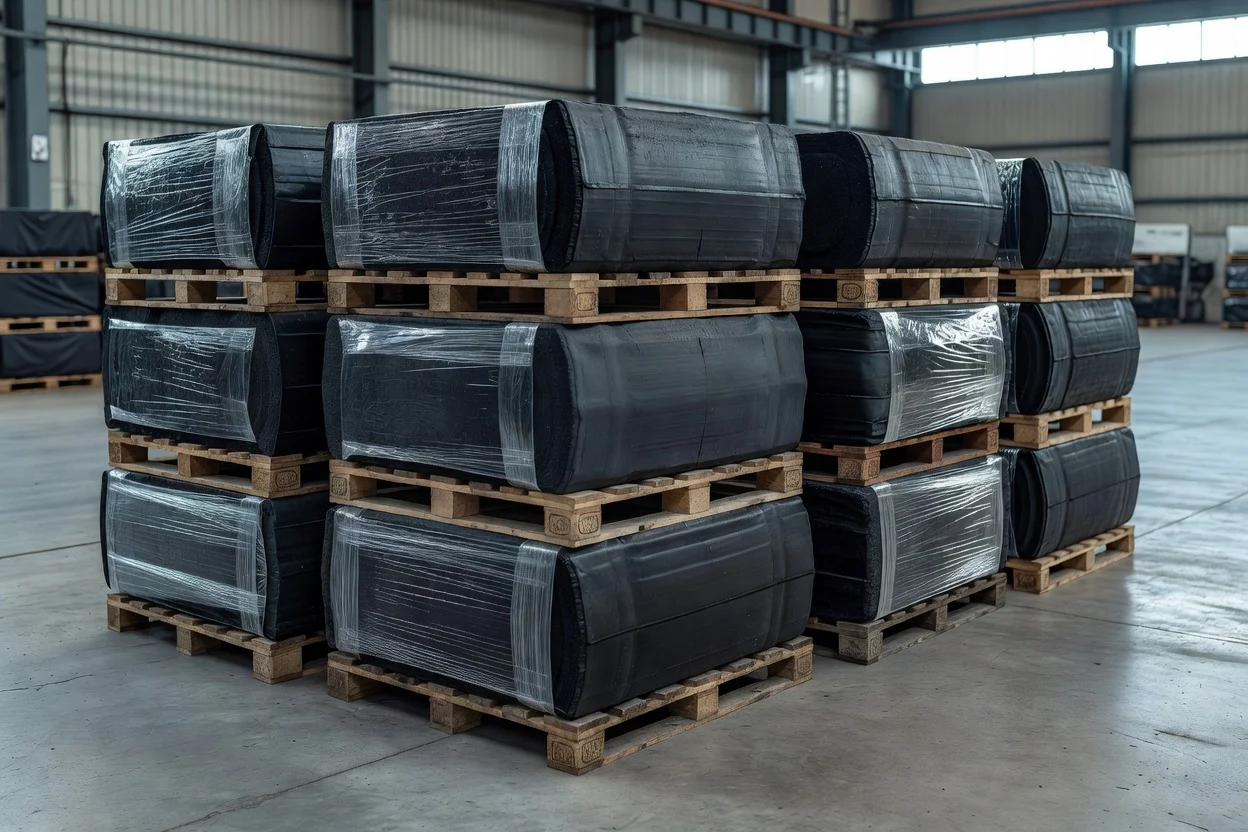
NBR is produced by emulsion copolymerization of acrylonitrile and butadiene, typically using water-based systems and surfactants, followed by coagulation, washing, drying, and finishing into bales or latex concentrates. The polymer can be adjusted during polymerization to control molecular weight, acrylonitrile content, and branching, which then influences viscosity, green strength, and cured performance.
The raw feedstocks are petrochemical in origin:
- Acrylonitrile, which contributes polarity and chemical resistance.
- 1,3-butadiene, which contributes elastomeric flexibility and unsaturation.
Commercial production may be organized into several grade families:
- General-purpose NBR, used for seals, hoses, and molded goods.
- High-acrylonitrile NBR, used when fluid resistance is prioritized.
- Low-temperature NBR, used when flexibility in cold conditions is critical.
- NBR latex, used in gloves, dipped goods, adhesives, and coated substrates.
Vulcanization is a crucial downstream step. Sulfur systems are common for standard elastomer properties, while peroxide cures are often selected when improved heat aging or compression set is needed. This makes NBR not just a base polymer, but a platform for formulation engineering.
Applications and End-Use Markets
NBR is best understood as a performance elastomer for fluid-contact applications where oils, fuels, and hydraulic media are present. Its most important markets are as follows:
| End-use sector | Typical NBR products | Usual grade/process fit |
|---|---|---|
| Automotive | Fuel hoses, oil seals, O-rings, gaskets, grommets, CV joint boots | General-purpose or higher-ACN compounded grades; extrusion and molding |
| Industrial machinery | Seals, rollers, diaphragms, conveyor components, roll covers | Reinforced molded or extruded grades |
| Oil and gas | Wellhead seals, packers, hose components, gaskets | High-performance, oil-resistant compounds |
| Hydraulics | Hydraulic seals, hoses, diaphragms | Low compression set and fluid-resistant grades |
| Aerospace and transport | Fuel-system seals and gaskets | Specified grades with tight property control |
| Gloves and dipped goods | Disposable exam gloves, protective gloves | NBR latex |
| Belts and wear parts | Conveyor belts, drive belts, rollers | Abrasion-resistant compounded grades |
NBR is especially important in:
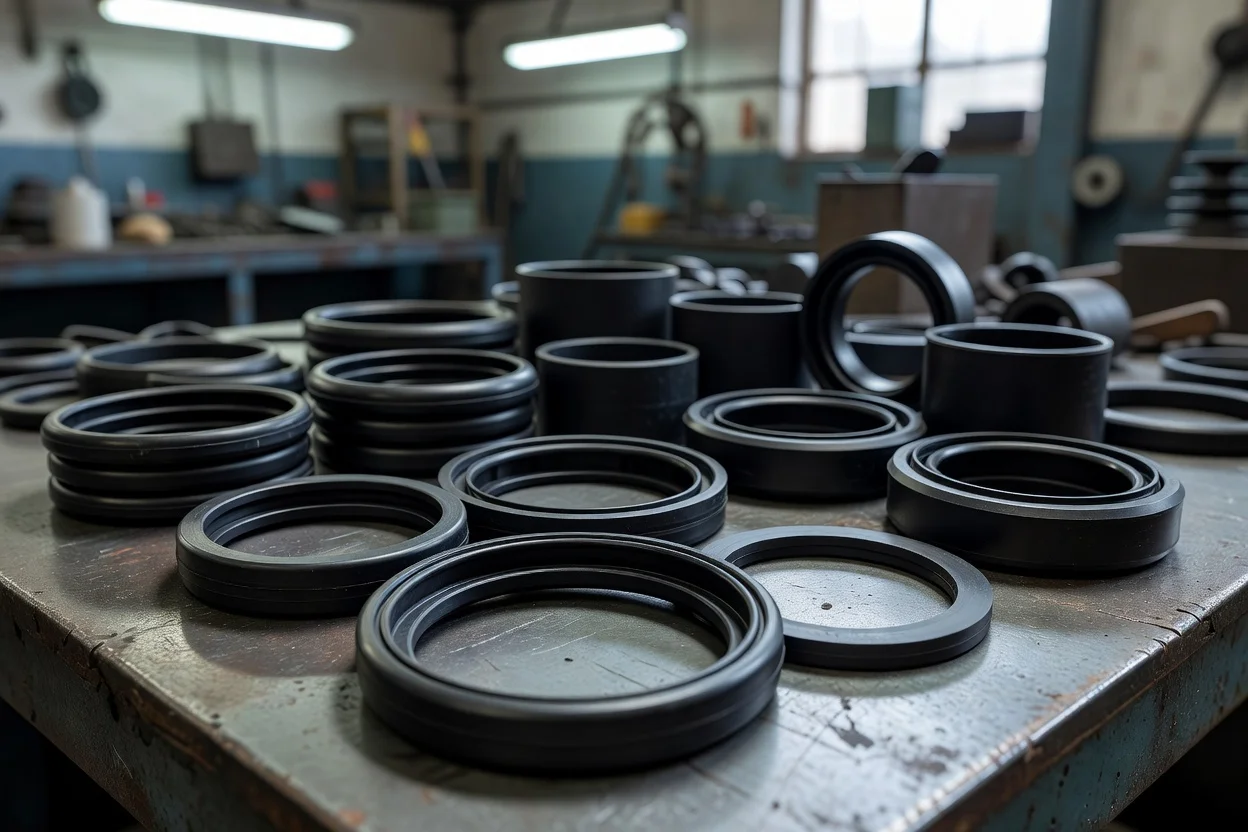
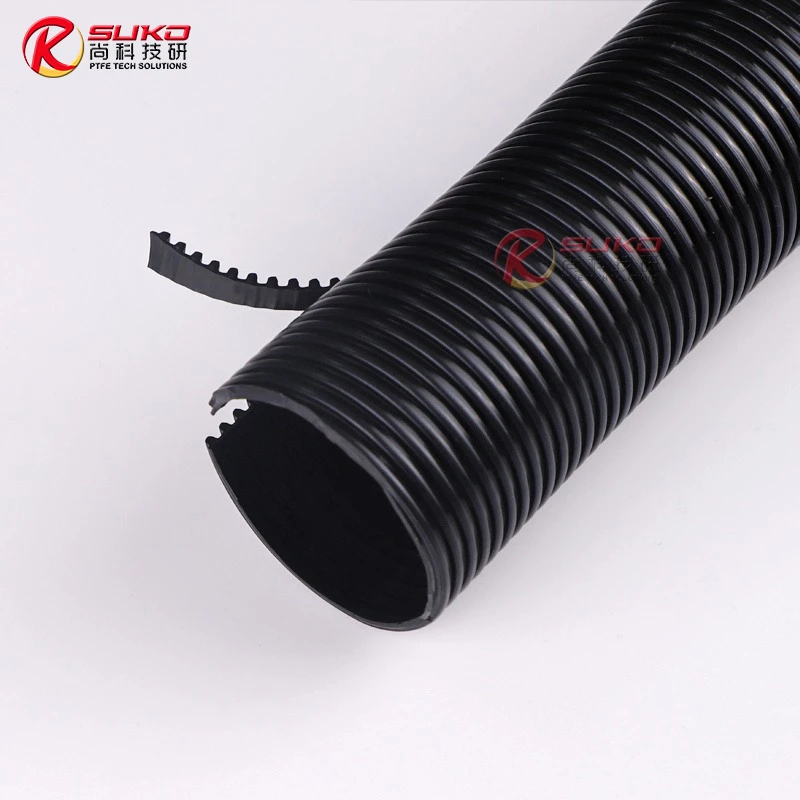
- Fuel hoses and oil seals, where petroleum resistance is essential.
- O-rings and gaskets, where low compression set and sealing reliability are critical.
- Rollers, belts, and wear parts, where abrasion resistance matters.
- Disposable gloves, where puncture resistance and reduced latex-allergy concerns support medical and laboratory use.
A poor-fit use is prolonged outdoor exposure without protection. NBR is generally not the best choice for long-term sunlight or ozone exposure, so outdoor sealing systems often use EPDM or weatherable blends instead.
Environmental and Sustainability Aspects
NBR is a petrochemical-derived elastomer, so its production depends on fossil-based acrylonitrile and butadiene feedstocks. That makes its cradle-to-gate carbon footprint a concern, especially in high-volume uses such as gloves and industrial seals. At the same time, the material can extend service life in demanding environments, which may reduce replacement frequency and associated waste.
Key sustainability considerations include:
- Recyclability: As a vulcanized elastomer, post-consumer NBR is difficult to remelt or mechanically recycle into equivalent high-performance products. Recycling is more feasible for production scrap, devulcanized rubber, or downcycled applications than for closed-loop reuse in critical seals.
- Latex and dipping waste: NBR latex products can create wastewater and solids-management challenges, making process efficiency important.
- Additives and compounding: Carbon black, oils, curatives, and stabilizers affect both performance and end-of-life pathways.
- Bio-based alternatives: There is research interest in partially bio-based feedstocks and lower-impact processing routes, but large-scale substitution remains limited by cost, property demands, and supply-chain maturity.
- Circular strategies: Recovered rubber, devulcanization, and design-for-durability are currently more practical than full material circularity for many NBR applications.
In life-cycle terms, the most defensible sustainability case for NBR is often long service life under severe fluid exposure, because a cheaper or less durable substitute may fail early and create more total material turnover.
Economic and Global Market Impact
NBR is a mature but strategically important commodity-specialty elastomer with steady demand from automotive maintenance, industrial sealing, hydraulics, and glove production. Its market position is supported by the fact that many critical systems require a material with a specific balance of oil resistance, mechanical durability, and cost.
Leading production and supply are concentrated in major petrochemical and synthetic-rubber regions, particularly Asia, Europe, and North America, with capacity linked to acrylonitrile and butadiene availability. Industry discussions commonly identify large integrated synthetic-rubber producers in China, South Korea, Japan, Europe, and the United States, although exact leadership shifts by grade, region, and year.
From a market perspective, NBR competes on:
- Total cost of ownership, not just resin price.
- Specification compliance, especially for seals and hoses.
- Compoundability, which allows custom property tuning.
- Supply security, influenced by monomer volatility and energy costs.
Current Challenges and Innovations
Current technical and commercial challenges include:
- Monomer price volatility, especially for acrylonitrile and butadiene.
- Weathering limitations, which restrict outdoor use.
- Heat-aging constraints, which limit severe under-the-hood or high-temperature service.
- End-of-life complexity for crosslinked elastomer products.
- Regulatory and occupational scrutiny over processing aids, residual monomers, and glove-related supply chains.
Innovation is focused on several pathways:
- Hydrogenated nitrile rubber (HNBR), which improves heat, ozone, and chemical resistance by saturating the backbone after polymerization.
- Improved low-temperature NBR grades through compositional control and plasticization.
- Peroxide-cured formulations for better heat aging and compression set.
- Low-emission compounding systems that reduce volatile processing aids.
- Latex optimization for thinner, stronger dipped products with lower material use.
- Blends and hybrid formulations that combine NBR with other elastomers to balance weatherability, cost, and oil resistance.
A second concrete formulation example is the use of antioxidants such as hindered phenols at low phr levels in seal compounds. These additives slow oxidative chain scission during thermal aging by interrupting radical reactions, which helps preserve tensile strength and compression set performance over time.
Future Outlook
The future of NBR is likely to be shaped less by radical replacement than by specialization. Standard grades will probably remain essential in sealing and hose markets because few alternative elastomers match NBR’s cost-performance balance in oily environments.
Three trends are likely to matter most:
- Higher-performance grades with better heat and chemical resistance, including continued growth in HNBR where budgets allow.
- More sustainable compounding, including lower-VOC systems, improved scrap recovery, and more efficient processing.
- Application-specific optimization, especially in automotive electrification, where NBR may shift from fuel-system dominance toward thermal management, lubrication, hydraulic, and industrial utility roles.
Demand will remain tied to the broader industrial economy, but the material’s long-term competitiveness will depend on how effectively producers improve recyclability, lower environmental intensity, and differentiate NBR in applications where its unique fluid resistance remains difficult to replace.
Summary
Nitrile rubber is a versatile, oil-resistant synthetic elastomer whose value comes from the tunable balance between acrylonitrile-derived chemical resistance and butadiene-derived flexibility. Its strengths in seals, hoses, gloves, and other fluid-contact products have made it one of the most enduring materials in industrial elastomer practice, even as sustainability and weathering limitations continue to drive innovation toward better grades and more circular production models.
References
- •
Nitrile rubber. (2005, October 7). Wikipedia. https://en.wikipedia.org/wiki/Nitrile_rubberLink
- •
The pros and cons of nitrile rubber, NBR or Buna-N. (2016, June 2). Martins Rubber. https://www.martins-rubber.co.uk/blog/the-pros-and-cons-of-nitrile-rubber-nbr-or-buna-n/Link
- •
Nitrile rubber (NBR). (2009, July 22). Britannica. https://www.britannica.com/technology/nitrile-rubberLink
- •
Nitrile Rubber (NBR) | Properties, Grades & Applications. (2026, April 13). Wayne Rubber. https://waynerubber.com/materials/nitrile-rubber/Link
- •
NBR | Properties, Specification - Sinoxe. (2023, November 21). Sinoxe. https://sinoxe.com/nbr/Link
- •
NBR Meaning - Nitrile Butadiene Rubber. (2022, March 17). FST. https://www.fst.com/materials/nbr/Link
- •
What is Nitrile Rubber (NBR)? Properties, Applications, & Uses. (2023, January 17). Lake Erie Rubber. https://lakeerierubber.com/what-is-nitrile-rubber-nbr-properties-applications-uses/Link
- •
All About Nitrile Rubber – Properties, Applications and Uses - Thomasnet. (2025, October 10). Thomasnet. https://www.thomasnet.com/articles/plastics-rubber/all-about-nitrile-rubber/Link
- •
NBR: Everything You Need to Know About This Raw Material - EKI. (n.d.). EKI. https://www.ekibv.com/knowledge-base/nbrLink
- •
NBR (Nitrile Butadiene Rubber): The Workhorse Elastomer. (2023, April 21). Canyon Components. https://www.canyoncomponents.com/post/nbr-nitrile-butadiene-rubber-the-workhorse-elastomerLink
- •
Nbr Vs. Other Rubber.... (2026, May 22). Rubber Mexico. https://rubber-mexico.com/products/nitrile-butadiene-rubber-nbrLink
- •
Nitrile Rubber - Your Quick Guide - WARCO. (2025, September 23). WARCO. https://warco.com/your-quick-guide-to-nitrile-rubber/Link
- •
Nitrile Rubber: Comprehensive Analysis Of Composition, .... (n.d.). Eureka PatSnap. https://eureka.patsnap.com/materials/nitrile-rubber-analysisLink
- •
Properties & Processing of Nitrile Butadiene Rubber. (2026, May 20). Gume. https://www.gume.de/en/nbr-nitrile-butadiene-rubber/Link
- •
Complete Guide to NBR Material: Properties, Composition and Uses. (2025, July 14). GB Gummi. https://gbgummi.com/complete-guide-to-nbr-material-properties-composition-and-uses/Link
- •
Nitrile Rubber (NBR) Properties & Uses | PDF | Polymers. (2026, February 23). Scribd. https://www.scribd.com/document/175277847/Acrylonitrile-Butadiene-Rubber-NBRLink
- •
Nitrile Rubber (NBR, Acrylonitrile-Butadiene Rubber). (n.d.). MatWeb. https://www.matweb.com/search/datasheet_print.aspx?matguid=75d3830136414f58802f3f8a1a1ed9a3Link
- •
The Versatility of Nitrile Butadiene Rubber. (2021, December 13). Monmouth Rubber. https://monmouthrubber.com/the-versatility-of-nitrile-butadiene-rubber/Link
- •
General Properties, Features and Applications of Nitrile Rubber. (n.d.). SSP Seals. https://www.sspseals.com/blog/general-properties-features-applications-nitrile-rubberLink
- •
nitrile butadiene rubber (NBR)- GB Gummi LLP. (2025, November 6). GB Gummi. https://gbgummi.com/nitrile-butadiene-rubber-compound-nbr/Link
- •
NBR - Nitrile Rubber. (2017, July 12). Rahco Rubber. https://rahco-rubber.com/materials/nbr-nitrile-rubber/Link
- •
nitrile butadiene rubber applications and manufacturing. (2024, December 18). LinkedIn. https://www.linkedin.com/pulse/nitrile-butadiene-rubber-applications-manufacturing-ahmed-ragab-tzr1fLink
- •
What is Nitrile (NBR) Rubber?. (n.d.). Custom Rubber Corp. https://www.customrubbercorp.com/services/rubber_materials_used/nitrile-rubberLink
- •
Understanding The Pros And Cons Of Nitrile Rubber (NBR). (2024, December 26). Elastostar. https://elastostar.com/top-5-pros-and-cons-of-nitrile-rubber/Link
- •
Nitrile Rubber: Properties and Applications | PDF. (2025, October 23). Scribd. https://www.scribd.com/presentation/40329950/Nitrile-RubberLink