

Introduction
Styrene-butadiene rubber (SBR) is a family of synthetic diene elastomers made by copolymerizing styrene and butadiene, and it remains one of the most widely used rubbers in the global plastics-and-elastomers value chain. It is valued for its balance of abrasion resistance, processability, cost efficiency, and compound versatility, which is why it is used extensively in tires, conveyor belts, footwear, molded goods, seals, and construction-related formulations.
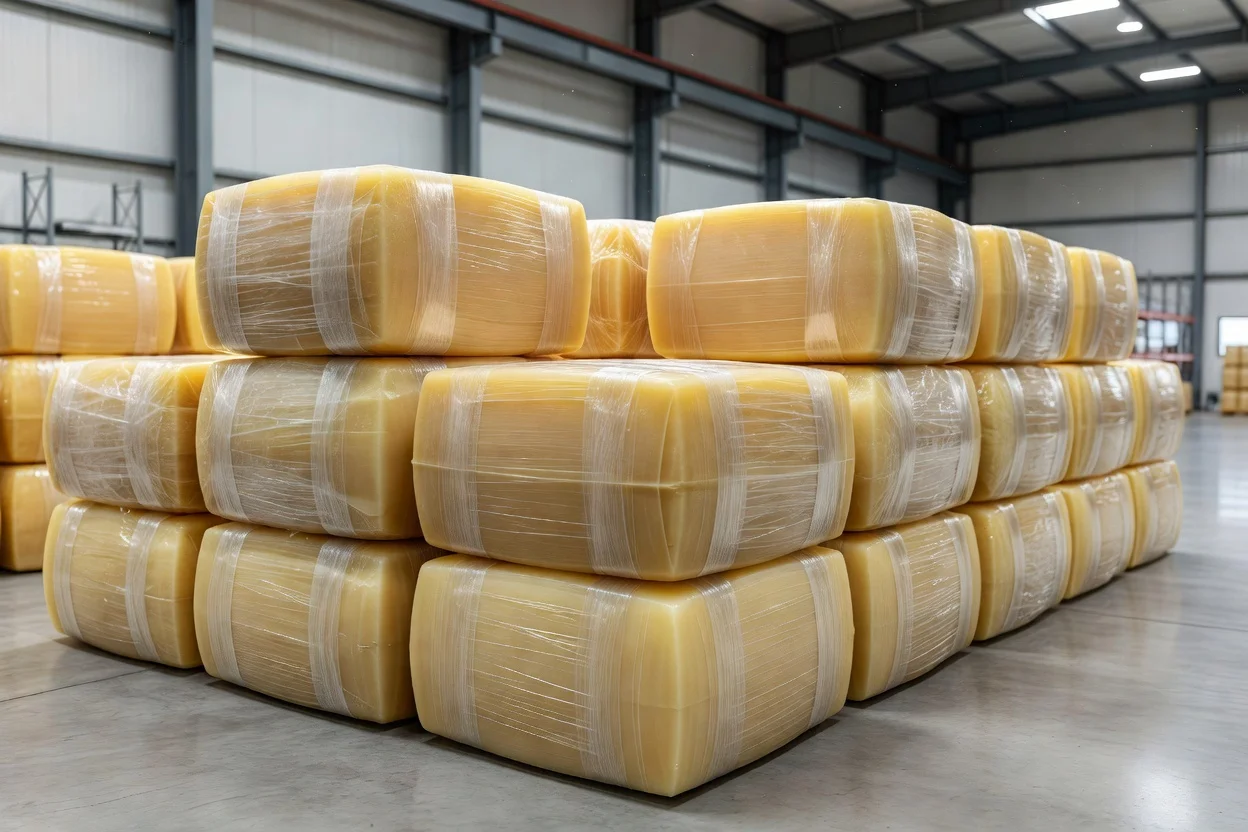
SBR is not a single material but a platform technology with important variants, especially emulsion SBR (ESBR) and solution SBR (SSBR), whose different polymerization routes give different microstructures, filler interactions, and dynamic performance. In practice, the choice between grades is strongly shaped by end-use demands: ESBR has long dominated general-purpose applications, while SSBR has become especially important in tire treads designed for lower rolling resistance and improved wet grip.
The material’s industrial relevance is also tied to its role as a benchmark synthetic substitute for natural rubber in large-volume applications, especially where consistent supply and controlled performance are more important than premium elasticity or very low-temperature resilience. At the same time, SBR sits at the center of sustainability debates because its traditional feedstocks are petrochemical, its largest outlet is tire manufacturing, and its end-of-life pathway is still constrained by the difficulty of recycling vulcanized rubber into equivalent high-performance products.
History and Development
SBR emerged as one of the earliest large-scale synthetic rubbers, developed to reduce dependence on natural rubber supply and to provide a more controllable industrial polymer. Industrial SBR became especially important during periods of raw-material scarcity, and it later expanded into a broad general-purpose elastomer used across automotive, industrial, and consumer sectors.
The evolution of SBR production has been closely linked to advances in polymerization control. ESBR became the classic mass-produced grade, while SSBR developed later as an engineering platform for more precise microstructure control, enabling improved tire performance and lower rolling resistance in modern formulations. More recently, the industry has also focused on modified SBR architectures, functionalized solution polymers, and hybrid compounds designed to improve silica coupling, wear performance, and energy efficiency in tires.
Chemical Structure and Key Properties
SBR is a random copolymer of styrene and 1,3-butadiene, although the exact microstructure depends on polymerization route, monomer ratio, and catalyst system. Styrene segments increase rigidity, raise glass-transition temperature, and improve processability, while butadiene-rich segments provide elasticity and flexibility.
Key property profile
| Property | Typical significance | Industrial implication |
|---|---|---|
| Abrasion resistance | Strong | Core reason for tire tread and conveyor-belt use. |
| Elasticity | Good | Suitable for flexible molded and dynamic parts. |
| Heat aging | Moderate | Better than some general rubbers in many service conditions, but not a high-heat specialist. |
| Oil and hydrocarbon resistance | Poor | Limits use in fuel- and oil-exposed environments. |
| Ozone and weather resistance | Poor | Requires compounding protection or alternate elastomers for outdoor exposure. |
| Low-temperature flexibility | Moderate | Adequate for many uses, but inferior to some specialty rubbers at very low temperatures. |
A major technical limit is poor resistance to oils and hydrocarbons, caused by the nonpolar diene backbone and the absence of strongly polar functional groups; the usual workaround is to select nitrile rubber, fluoroelastomers, or other oil-resistant elastomers for fuel-contact service. Another important limit is poor ozone and sunlight resistance, caused by unsaturation in the polymer backbone; the usual workaround is antioxidant/antiozonant packages, wax bloom protection, or substitution with more weatherable elastomers for exterior service.
A second design lever is styrene content. Increasing styrene generally increases stiffness and thermoplastic-like behavior, while higher butadiene fraction tends to improve elasticity and low-temperature response. In commercial grades, styrene content is commonly around the mid-20% range for general-purpose SBR, though broader formulation windows are used for specialized applications.
Production Processes and Raw Feedstocks
SBR is produced by copolymerizing styrene and butadiene, both of which are typically derived from petrochemical value chains tied to steam cracking and aromatic extraction. The process route strongly influences final performance, economics, and downstream compounding behavior.
Main production routes
- Emulsion polymerization produces ESBR and remains the classic high-volume route for general-purpose rubber.
- Solution polymerization produces SSBR and allows tighter control of microstructure, molecular weight distribution, and filler interaction, which is especially valuable in tire applications.
Typical compounding and vulcanization
Industrial SBR is usually not used alone. It is compounded with curatives and reinforcing or functional additives such as sulfur, accelerators, carbon black, silica, oils, antioxidants, and processing aids before vulcanization. Carbon black reinforcement is especially important for improving wear and tensile properties, while silica-filled SSBR compounds are widely used where rolling resistance and wet grip must be balanced.
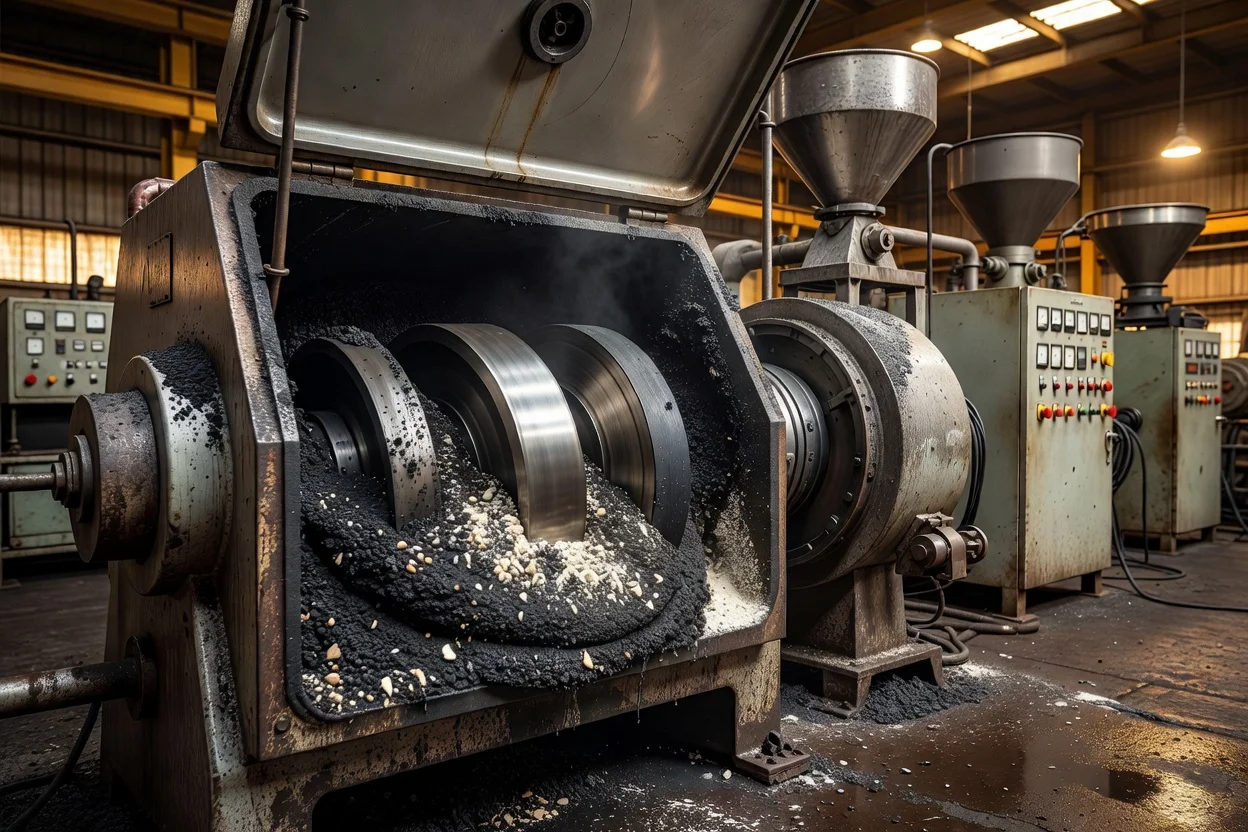
A practical formulation example is a tire tread compound using roughly 20 to 80 phr carbon black or silica with sulfur cure chemistry; the filler network reinforces the rubber matrix and helps tune hysteresis, abrasion, and wet performance. In another common example, antioxidant packages at low loading levels are used to slow oxidative chain scission and extend service life, particularly in compounds exposed to heat and air.
Applications and End-Use Markets
SBR is a broadly used general-purpose elastomer, but its largest and most strategically important market is tire manufacturing. It is also used in a wide range of industrial and consumer applications where cost, abrasion resistance, and processability matter more than resistance to oils or weathering.
Major end uses
| End-use sector | Typical SBR grade or form | Usual performance requirement |
|---|---|---|
| Passenger-car and light-truck tires | ESBR and especially SSBR | Abrasion resistance, rolling resistance balance, wet grip. |
| Conveyor belts and industrial belts | ESBR | Wear resistance and fatigue durability. |
| Footwear soles and heels | ESBR | Abrasion resistance, grip, and low cost. |
| Seals, gaskets, O-rings, and molded goods | General-purpose ESBR | Elastic recovery and economical processing. |
| Wire and cable insulation | Selected grades | Electrical insulation and mechanical protection. |
| Construction latex and mortar modification | SBR latex | Adhesion, flexibility, crack resistance, and waterproofing. |
| Adhesives and sealants | SBR latex or compounds | Bonding strength and flexible film formation. |
A poor-fit use is prolonged exposure to fuels, oils, or aromatic hydrocarbons, where SBR is generally unsuitable because swelling and property loss can be severe. For outdoor infrastructure, unprotected SBR also performs poorly under ozone and sunlight, which is why weather-resistant elastomers are preferred for demanding exterior sealing.
Tire dominance
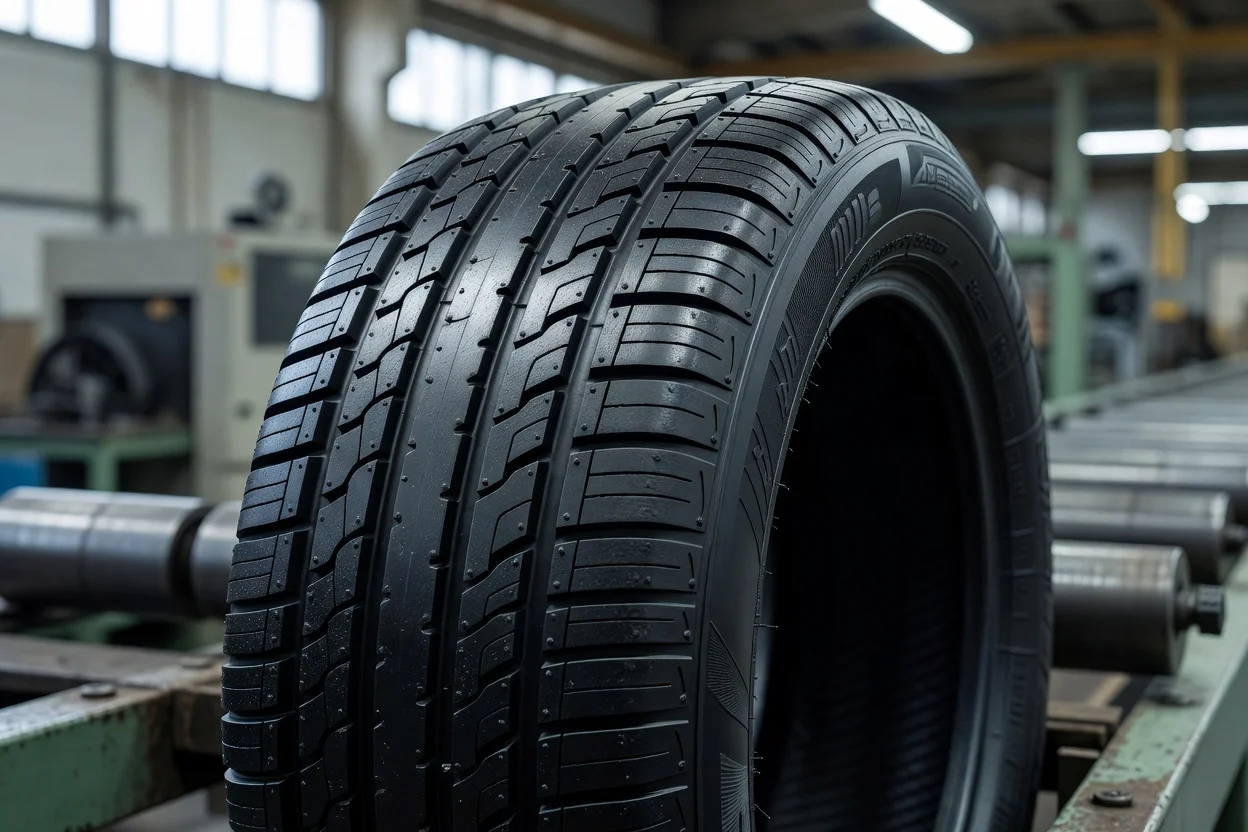
Tire tread is the defining market for SBR, particularly in passenger vehicles, where abrasion resistance and controllable hysteresis are essential. ESBR has long been a core tread polymer, while SSBR is increasingly preferred in high-performance and low-rolling-resistance tread systems because it couples better with silica fillers and can help improve fuel economy or vehicle range.
Construction and latex applications
SBR latex is important in construction chemistry, where it is used to modify cementitious materials, tile adhesives, repair mortars, waterproofing systems, and underlayments. In these applications, the latex acts as a film-forming and adhesion-enhancing phase, improving flexural behavior and reducing brittleness in cured mineral systems.
Environmental and Sustainability Aspects
SBR is part of the broader challenge of decarbonizing petrochemical polymers because its standard feedstocks are fossil-derived and its principal market, tires, creates a substantial end-of-life stream. From a life-cycle perspective, the largest sustainability leverage often comes not from the polymer alone but from tire design, vehicle efficiency, compound durability, and end-of-life management.
Recyclability and end-of-life
Vulcanized SBR cannot be remelted like thermoplastics, which makes direct recycling difficult and often downcycles material into lower-value uses rather than closed-loop equivalents. Common pathways include mechanical grinding into crumb rubber, energy recovery, and limited devulcanization or reclamation routes, each with trade-offs in quality retention and economic viability.
Bio-based and circular alternatives
Interest is growing in bio-based styrene or butadiene routes, mass-balance feedstocks, and circular-capture strategies for tire-derived rubber streams, but these remain limited by cost and scale compared with conventional petrochemical production. In parallel, tire makers and compounders are increasing use of recycled fillers, renewable oils, and design-for-durability strategies to reduce overall life-cycle impact without sacrificing performance.
Carbon footprint considerations
The carbon footprint of SBR depends heavily on feedstock source, energy mix, and end-use lifetime. High-durability applications can partly offset the material’s petrochemical origin by extending service life and reducing replacement frequency, whereas short-life or poorly optimized compounds create higher material intensity per unit of function.
Economic and Global Market Impact
SBR is one of the highest-volume synthetic rubbers in the world and a foundational material for the tire industry. Its market importance is amplified by the scale of global vehicle production, replacement tire demand, and industrial belt and footwear consumption.
Leading producers typically include major tire-material and synthetic-rubber groups in East Asia, Europe, North America, and the Middle East, with capacity distribution closely tied to integrated petrochemical and tire manufacturing clusters. Market competitiveness is driven by butadiene and styrene availability, energy costs, technology licensing, and the ability to deliver application-specific grades for tread, industrial rubber goods, and latex modification.
Current Challenges and Innovations
The main challenge for conventional SBR is that its property balance is excellent for many cost-sensitive uses but less adequate for oil exposure, weathering, and ultra-low rolling resistance without sophisticated compounding. Another challenge is the environmental pressure on the tire value chain to reduce fossil dependence, micro-wear emissions, and end-of-life waste.
Current innovation directions
- Functionalized SSBR for improved silica coupling and lower rolling resistance in tires.
- Advanced filler systems that optimize abrasion, wet grip, and energy loss simultaneously.
- Improved antioxidant and antiozonant packages to extend service life under heat, oxygen, and light.
- Recycling and devulcanization technologies aimed at recovering rubber value from post-consumer tires.
- Bio-derived monomer research to reduce fossil feedstock dependence in the long term.
In practical compounding, one mechanism of performance improvement is silica-silane coupling in SSBR tread compounds: the coupling agent improves interfacial bonding between the polymer and silica, reducing filler agglomeration and helping control hysteresis losses. Another mechanism is antioxidant protection, where low-dose stabilizers interrupt radical oxidation pathways and slow molecular chain scission during heat aging.
Future Outlook
SBR is likely to remain a core elastomer because no other single material combines its cost profile, abrasion resistance, and processing versatility at comparable scale. The most important future growth area is not simply higher volume, but higher-performance and lower-impact grades, especially in tires, where rolling resistance, wet grip, wear life, and recyclability are becoming simultaneous design targets.
Over the longer term, the market is likely to bifurcate further: high-volume ESBR will continue to serve general-purpose applications, while engineered SSBR and functionalized grades will capture more value in premium tire systems and specialty industrial uses. Sustainability pressure will also encourage tighter integration of SBR chemistry with circular feedstocks, improved durability, and end-of-life recovery technologies, although full-scale closed-loop recycling remains technically and economically challenging.
Summary
SBR is a general-purpose synthetic rubber whose industrial importance comes from its balance of abrasion resistance, processability, and cost, especially in tires and industrial rubber goods. Its core limitations are poor oil and ozone resistance, which arise from its unsaturated hydrocarbon backbone, and these weaknesses are typically managed through compounding or by choosing alternative elastomers for harsher service environments.
The material’s future will be shaped by three forces: continued demand from tires and industrial goods, ongoing technical refinement through SSBR and functional fillers, and rising pressure to reduce fossil dependence and improve circularity across the rubber value chain.
References
- •
Styrene-Butadiene (SBR) Rubber: Uses, Structure & .... (2026, March 19). SpecialChem. https://www.specialchem.com/plastics/guide/styrene-butadiene-rubber-sbr-guideLink
- •
Caucho estireno-butadieno. (2006, June 27). Wikipedia. https://es.wikipedia.org/wiki/Caucho_estireno-butadienoLink
- •
Styrene-butadiene. (2004, June 24). Wikipedia. https://en.wikipedia.org/wiki/Styrene-butadieneLink
- •
SBR - styrene-butadiene rubber: the proven all-round talent. (2026, May 20). Gume. https://www.gume.de/en/sbr-styrene-butadiene-rubber/Link
- •
Styrene-butadiene rubber (SBR). (2009, July 22). Britannica. https://www.britannica.com/science/styrene-butadiene-rubberLink
- •
SBR (Styrene-Butadiene Rubber) Technical Guide | Properties .... (2025, August 26). Yh Rubber Tech. https://yhrubbertech.com/en/articles/sbr-styrene-butadiene-rubber-guideLink
- •
39. 3. styrne butadiene rubber (sbr). (n.d.). Nptel. https://archive.nptel.ac.in/content/storage2/courses/103103029/module7/lec39/3.htmlLink
- •
SBR Rubber - Properties - Styrene-Butadiene Rubber. (n.d.). Power Rubber. https://powerrubber.com/en/sbr-rubber-properties-of-butadiene-styrene-rubberLink
- •
Unlock the Power of SBR: Styrene-Butadiene Rubber Insights. (n.d.). Netzsch. https://analyzing-testing.netzsch.com/en/polymers-netzsch-com/elastomers/sbr-styrene-butadiene-rubberLink
- •
SBR Rubber | Styrene Butadiene Properties & Applications. (2026, April 14). Wayne Rubber. https://waynerubber.com/materials/sbr-rubber/Link
- •
Styrene-Butadiene Rubber (SBR). (n.d.). Patsnap Eureka. https://eureka.patsnap.com/materials/sbr-synthesis-propertiesLink
- •
Understanding Styrene-Butadiene Rubber (SBR) and Its Uses. (2026, January 24). Chandra Asri. https://chandra-asri.com/en/blog/styrene-butadiene-rubberLink
- •
SBR - Styrene Butadiene Rubber. (2017, July 12). Rahco Rubber. https://rahco-rubber.com/materials/sbr-styrene-butadiene-rubber/Link
- •
SBR Styrene butadiene rubber. (2022). Mexpolimeros. https://www.mexpolimeros.com/eng/sbr.htmlLink
- •
Styrene-Butadiene Rubber: Comprehensive Analysis Of .... (n.d.). Patsnap Eureka. https://eureka.patsnap.com/materials/sbr-molecular-engineeringLink
- •
All About Sbr Rubber – Properties, Applications and Uses. (2022, November 17). Thomasnet. https://www.thomasnet.com/articles/plastics-rubber/all-about-sbr-rubber/Link
- •
STYRENE BUTADIENE RUBBER. (n.d.). Globalso. https://ecdn6.globalso.com/upload/p/606/source/2024-04/660bb1fa6fe9329623.pdfLink
- •
Styrene-Butadiene Rubber - an overview. (n.d.). ScienceDirect. https://www.sciencedirect.com/topics/engineering/styrene-butadiene-rubberLink
- •
Common Applications Of Sbr. (2023, August 1). Lake Erie Rubber. https://lakeerierubber.com/what-is-sbr-styrene-butadiene-rubber/Link
- •
SBR - Styrene Butadiene Rubber. (n.d.). Everest Rubber. https://www.everest-rubber.com/sbr-rubber/Link
- •
Styrene Butadiene Rubber Elastomer: Comprehensive Analysis .... (n.d.). Patsnap Eureka. https://eureka.patsnap.com/materials/sbr-elastomer-synthesisLink
- •
What is SBR (Styrene-Butadiene) Rubber?. (n.d.). Custom Rubber Corp. https://www.customrubbercorp.com/services/rubber_materials_used/sbr-rubberLink
- •
Versatile Uses of Styrene Butadiene Rubber Across Modern Industries. (n.d.). ChemAnalyst. https://www.chemanalyst.com/NewsAndDeals/NewsDetails/versatile-uses-of-styrene-butadiene-rubber-across-modern-industries-37942Link
- •
Styrene butadiene rubber (SBR). (2023, June 5). Algummi. https://algummi.de/en/knowhow/styrene-butadiene-rubber-sbr/Link
- •
What is SBR?. (2025, January 23). Ris Rubber. https://www.risrubber.com/en/knowledge-base/what-is-sbr/Link
- •
Emulsion Polymerised Styrene Butadiene Rubber (E-SBR). (2026, August 26). AZoM. https://www.azom.com/properties.aspx?ArticleID=1844Link
- •
SBR (Styrene-Butadiene Rubber). (n.d.). Zeon Corporation. https://www.zeon.co.jp/en/business/enterprise/rubber/sbr/Link
- •
1. (n.d.). J-STAGE. https://www.jstage.jst.go.jp/article/gomu/88/8/88_323/_pdfLink
- •
What is SBR rubber (Styrene-Butadiene Rubber)?. (2026, August 24). Circular Rubber Platform. https://circularrubberplatform.com/glossary/styrene-butadiene-rubberLink
- •
The Evolution and Applications of Styrene-Butadiene .... (n.d.). Ruico Global. https://www.ruicoglobal.com/news/the-evolution-and-applications-of-styrenebutadiene-rubber-sbr.htmlLink
- •
Styrene Butadiene Rubber Latex: Comprehensive Analysis .... (n.d.). Patsnap Eureka. https://eureka.patsnap.com/materials/sbr-latex-synthesis-applicationsLink
- •
Styrene-butadiene. (2004, June 24). Wikipedia. https://en.wikipedia.org/?title=Buna-SLink
- •
Styrene Butadiene Rubber. (2025, June 6). Scribd. https://www.scribd.com/document/123456083/Styrene-Butadiene-RubberLink
- •
Key SBR Rubber Properties: Heat, Cold, and Wear .... (2025, November 7). GB Gummi. https://gbgummi.com/key-sbr-rubber-properties-heat-cold-and-wear-resistance-explained/Link
- •
Types And Grades Of Sbr.... (n.d.). Seals Direct. https://www.sealsdirect.co.uk/sbr-rubberLink
- •
Structure and properties of styrene-butadiene rubber (SBR) .... (n.d.). ScienceDirect. https://www.sciencedirect.com/science/article/abs/pii/S0142941817304889Link
- •
General Purpose Styrene Butadiene Rubber. (n.d.). Patsnap Eureka. https://eureka.patsnap.com/materials/general-purpose-sbr-analysisLink
- •
Styrene Butadiene Rubbers (SBR). (2022, February 24). Joss. https://joss.nl/product/styrene-butadiene-rubbers-sbr/Link
- •
Preparation of Styrene-Butadiene Rubber (SBR) .... (n.d.). MDPI. https://www.mdpi.com/2310-2861/8/3/161Link