
Introduction
Chloroprene rubber (CR), also known as polychloroprene or commonly by the trade name Neoprene, is a synthetic diene elastomer valued for its balanced combination of weathering resistance, flame resistance, moderate oil resistance, and useful mechanical durability. It occupies an important middle ground in the elastomer family: stronger against ozone and sunlight than many general-purpose rubbers, more flame-retardant than most hydrocarbon rubbers, and more chemically robust than natural rubber in many outdoor and industrial service conditions.
CR has been used for decades in seals, hoses, cable sheathing, gaskets, belts, vibration-control parts, adhesives, coated fabrics, wetsuits, and protective equipment, and it remains relevant wherever a material must retain flexibility while resisting heat, weather, and intermittent contact with oils or fuels. Its chemistry also creates clear trade-offs: CR performs poorly in strong oxidizing acids, ketones, esters, aromatic hydrocarbons, and some chlorinated solvents, and its electrical insulation is weaker than that of some other elastomers because it can absorb water. These limits help explain why CR is often selected for specific performance envelopes rather than as a universal rubber replacement.
Historically, CR is one of the early major synthetic rubbers, developed in the 1930s and commercialized as an industrial material during the expansion of synthetic elastomers. Today, it remains a mature but still strategically useful polymer, with ongoing innovation focused on compounding, lower-emission processing, improved durability, and more circular end-of-life pathways for rubber products and adhesive systems.
History and development
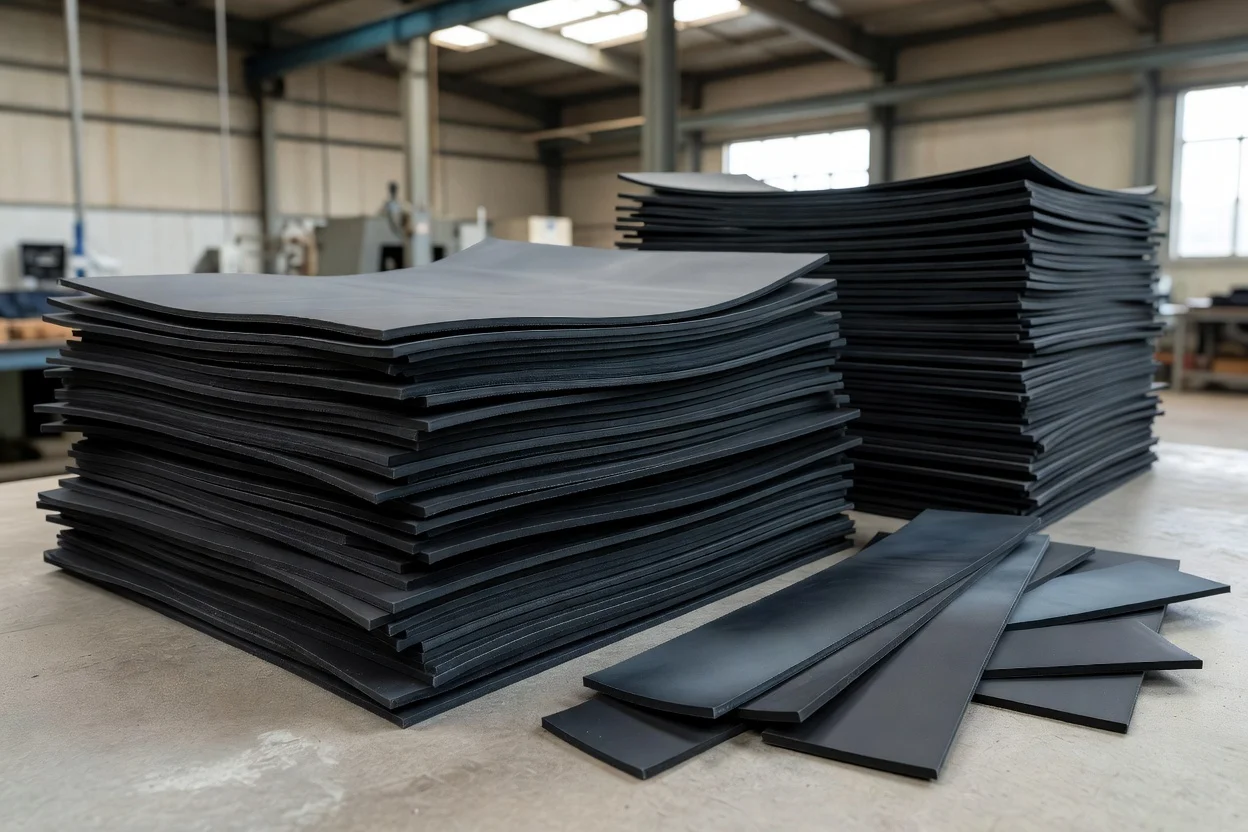
Chloroprene rubber emerged in the early era of synthetic elastomer chemistry, when industry sought alternatives to natural rubber with better resistance to heat, oils, and environmental aging. Its industrial identity became closely linked with Neoprene, one of the earliest widely recognized synthetic rubber brands.
Over time, CR found enduring niches in applications where outdoor exposure, ozone cracking, flame retardancy, and rubber-to-metal bonding mattered more than maximum tensile performance. This application pattern helped CR survive competition from newer elastomers such as EPDM, NBR, HNBR, silicone rubber, and thermoplastic elastomers, each of which may outperform CR in one or two properties but not across the same balanced profile.
Chemical structure and key properties
CR is a polymer of chloroprene, chemically a chlorinated butadiene monomer, and is widely described as a polar synthetic elastomer. The chlorine substituent on the polymer backbone reduces reactivity toward ozone and oxidation and contributes to flame resistance, while also influencing polarity, solvent interactions, and adhesion behavior.
| Property area | Typical behavior of CR | Practical significance |
|---|---|---|
| Weathering and ozone resistance | Excellent | Suitable for outdoor seals, hoses, and profiles. |
| Flame resistance | High, often self-extinguishing | Valuable for cable sheathing, safety components, and transport uses. |
| Oil and grease resistance | Moderate | Works for many mineral oils and greases, but not universal oil service. |
| Mechanical durability | Good abrasion, flex, and fatigue resistance | Supports belts, boots, gaskets, and dynamic parts. |
| Electrical properties | Generally poor relative to specialist insulation rubbers | Limits use in demanding electrical insulation unless compounded carefully. |
| Solvent resistance | Limited against aromatics, ketones, esters, chlorinated solvents | Restricts use in aggressive chemical environments. |
Two practical limitations are especially important:
- Poor resistance to aromatic hydrocarbons, ketones, esters, and chlorinated solvents → caused by the polymer’s interaction with these liquids and the resulting swelling → workaround: select an alternative elastomer such as NBR, EPDM, FKM, or a fluoropolymer, or use protective liners and compound optimization.
- Relatively weak electrical insulation in humid service → caused by water absorption and polarity-related conductivity changes → workaround: use dry-service designs, protective overjackets, or alternative insulation polymers when high dielectric performance is required.
A further practical note is that CR compounds can be formulated across a broad hardness window, with many commercial grades tailored from soft, flexible stock to firmer technical compounds for seals, boots, belts, and mounts.
Production processes and raw feedstocks
CR is produced by the polymerization of chloroprene monomer, after which the polymer is processed into solid rubber, latex, or compounded forms for downstream conversion. Industrial production begins from petrochemical and chlorinated intermediate chemistry rather than from biogenic feedstocks, which places CR firmly within the conventional synthetic rubber value chain.
Typical manufacturing steps include:
- Monomer synthesis and purification
- Polymerization under controlled conditions
- Recovery, drying, and finishing of the polymer
- Compounding with fillers, plasticizers, curatives, antioxidants, and processing aids
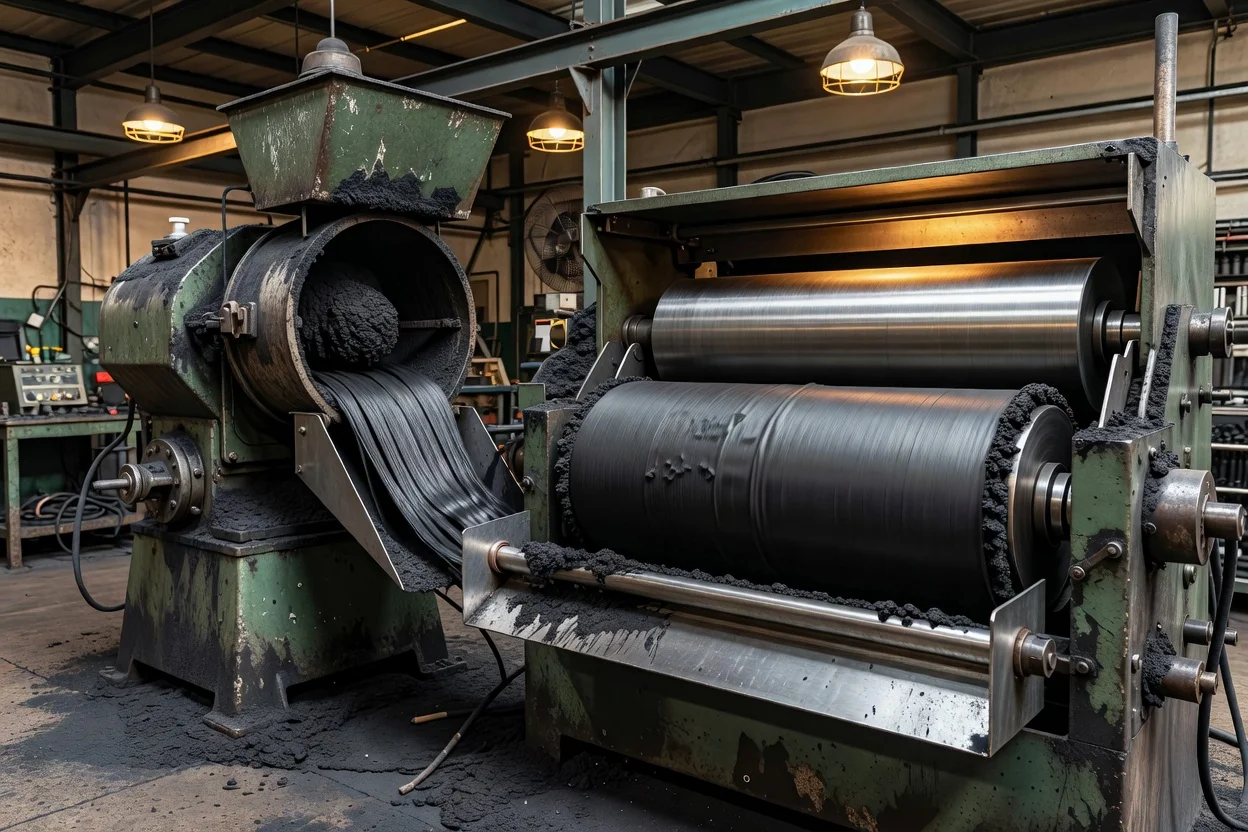
- Conversion by extrusion, molding, calendering, coating, or latex processing
The final properties depend heavily on compounding. For example, carbon black can raise tensile strength and abrasion resistance, while reinforcing fillers and antioxidant packages can improve service life under heat and ozone exposure; conversely, plasticizers can soften the compound and improve processing but may reduce oil resistance or elevate migration risk in some uses. In adhesive grades, CR is also valued as a base resin because it can form strong bonds to many substrates, including rubber-to-metal systems.
Applications and end-use markets
CR is used across several end markets because its performance profile is broad rather than extreme.
| End-use sector | Typical CR products | Usual grade/process fit |
|---|---|---|
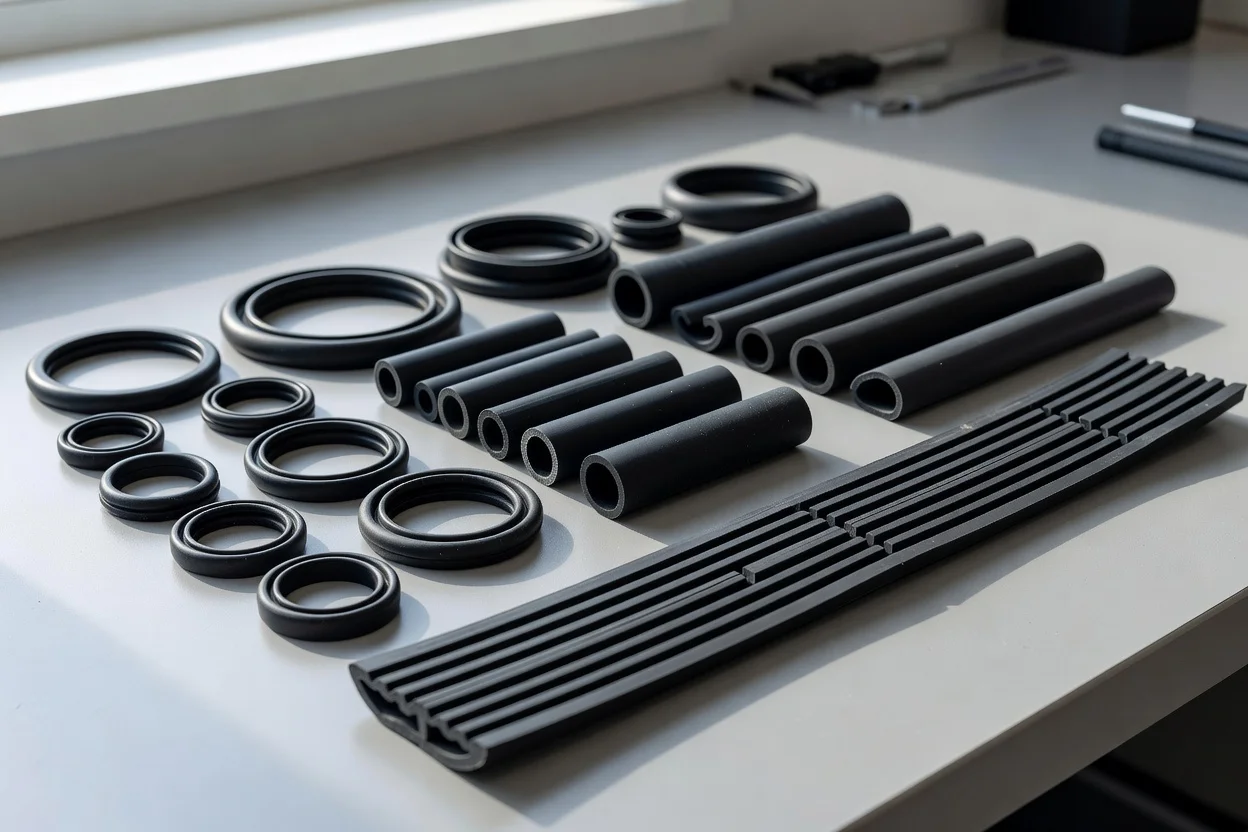
| Automotive and transport | Seals, hoses, drive belts, boots, vibration dampers, wiper parts | Compounded solid rubber; extrusion and molding. |
| Construction and civil engineering | Expansion joints, bridge bearings, window seals, waterproof sheets, profiles | Molded/extruded compounds and laminated products. |
| Wire and cable | Cable sheathing, flame-retardant jackets, protective sleeves | Extruded compounds with flame-retardant packages. |
| Adhesives and coatings | Base resin for solvent-based and water-based adhesives, corrosion-resistant coatings | Latex and resin formulations. |
| Marine and outdoor equipment | Wetsuits, protective clothing, dockside seals, marine gaskets | Foam, coated fabric, and flexible rubber grades. |
| Industrial machinery | Conveyor belts, covers, rolls, anti-vibration parts | Reinforced molded or extruded rubber compounds. |
| Medical and sports goods | Orthopedic supports, braces, padding, protective gear | Soft flexible compounds or foam structures. |
A poor-fit use for CR is long-term exposure to aggressive aromatics or ketones, such as solvent-heavy chemical processing environments, because swelling and property loss can occur. In such applications, a different elastomer family is usually preferred.
Environmental and sustainability aspects
From a sustainability perspective, CR presents both strengths and challenges. On the positive side, its long service life in weather-exposed and flame-sensitive applications can reduce replacement frequency and improve whole-life performance compared with less durable materials. It also enables efficient sealing and protection in infrastructure and transportation, which can indirectly reduce leakage, corrosion, and maintenance demand.
However, CR is a petroleum-derived synthetic polymer, and its end-of-life management is difficult, especially for heavily compounded, bonded, or textile-reinforced products. Like many vulcanized elastomers, it is not easily remelted or mechanically recycled into high-value applications, so most post-consumer products face downcycling, energy recovery, or limited material recovery routes. Adhesive and coated-fabric uses are especially challenging because they create multi-material assemblies.
Bio-based replacements are not yet direct drop-in substitutes for the full CR performance envelope, although research and product development continue in bio-attributed feedstocks, lower-VOC adhesive systems, and improved rubber recycling technologies. In practice, sustainability gains for CR today come mainly from:
- longer service life and reduced maintenance
- lower-VOC and water-based formulation pathways in some adhesive systems
- compounding optimization to reduce hazardous ingredients
- design for durability, repair, and disassembly
- improved collection and devulcanization research for rubber waste
A crucial trade-off is that the environmental case for CR is often strongest when its durability displaces shorter-lived materials in demanding environments, but weaker when the product is disposable, highly mixed, or difficult to separate at end of life.
Economic and global market impact
CR is a mature specialty elastomer rather than a volume commodity on the scale of polyethylene or natural rubber, but it remains commercially important in industrial sealing, adhesives, cable, construction, and protective products. Demand tends to track construction activity, automotive production, industrial maintenance cycles, and safety-related infrastructure spending.
Recent industry descriptions consistently place CR in markets where reliability and compliance matter more than lowest cost, especially for weather-exposed seals, flame-retardant components, and adhesive systems. Because many applications are specification-driven, compound consistency and supply reliability often matter as much as price.
Current challenges and innovations
The main technical challenge for CR is maintaining competitiveness against elastomers that outperform it in one or more critical properties, such as EPDM in weather seals, NBR in oil resistance, silicone in temperature extremes, and FKM in harsh chemical service. This has pushed innovation toward more specialized compound design rather than broad substitution.
Current innovation themes include:
- lower-VOC adhesive formulations based on CR latex or modified resin systems
- improved flame-retardant and low-smoke cable compounds
- enhanced reinforcement packages for dynamic sealing and belt applications
- better compatibility with rubber-to-metal bonding systems
- more sustainable compounding through reduced solvent use and optimized filler loading
- improved waste treatment, devulcanization, and material recovery research for rubber products
One practical formulation example is carbon black reinforcement at roughly 20 to 40 phr in many rubber compounds, where it improves tensile strength and abrasion resistance by forming a reinforcing filler network in the polymer matrix. Another common additive route is antioxidant or antiozonant packages at low phr levels, which slow oxidative chain damage and surface cracking during service. Exact dosages vary widely by grade and application, but the molecular mechanism is the same: reduction of radical-driven degradation and slower embrittlement.
Future outlook
CR is unlikely to become a dominant new-growth polymer, but it is expected to remain important in specialized markets where balanced durability is required. Future demand will probably be supported by infrastructure maintenance, electrical safety applications, industrial sealing, and replacement demand in automotive and construction systems.
The most important forward-looking opportunities are likely to come from:
- higher-performance compounds with better aging and lower emissions
- adhesive systems with improved sustainability profiles
- durability-focused designs that justify CR’s material footprint
- hybrid material systems that combine CR with textiles, metals, or foams for targeted performance
In the longer term, CR’s role will depend on how well the industry can preserve its well-established advantages while reducing dependence on solvent-heavy processing, improving recyclability, and demonstrating value in a circular materials economy.
Summary
Chloroprene rubber (CR) is a mature but still strategically useful synthetic elastomer defined by its balance of weather resistance, flame resistance, moderate oil resistance, and dependable mechanical performance. It is widely used in seals, hoses, cable jackets, adhesives, coated fabrics, and protective goods, while its main limitations are solvent sensitivity, poorer electrical insulation in wet conditions, and difficult end-of-life recycling.
References
- •
Chloroprene rubber. (n.d.).Link
- •
Chloroprene rubber (CR). (2023, June 5).Link
- •
Chloroprene rubber: Its advantages and applications. (2021, October 7).Link
- •
Chloroprene rubber: An overview. (n.d.).Link
- •
Chloroprene rubber (CR). (n.d.).Link
- •
Chloroprene rubber (neoprene) [PPTX]. (2022, February 5).Link
- •
CR & Neoprene rubber properties & sealing applications guide. (n.d.).Link
- •
CR rubber (Neoprene): Comparison with NBR and the .... (2025, August 13).Link
- •
Chloroprene rubber (CR). (2020, September 24).Link
- •
Toxic chemistry: Chloroprene, health & environment. (2025, October 22).Link
- •
Chloroprene: Properties, structure & material comparison. (2026, January 23).Link
- •
Skyprene® CR chloroprene rubber contributes to good mechanical .... (2025, July 14).Link
- •
What is chloroprene rubber (CR): Properties & specifications. (n.d.).Link
- •
Data sheet CR. (n.d.).Link
- •
Chloroprene rubber (CR). (2022, August 3).Link
- •
What is chloroprene rubber (CR)? (2024, December 12).Link
- •
Chloroprene rubber (CR). (2014).Link
- •
CR: Chloroprene rubber. (n.d.).Link
- •
Chloroprene rubber (CR). (2019, April 26).Link
- •
CR: Chloroprene rubber. (2024, July 27).Link
- •
Neoprene (CR). (2025, August 14).Link
- •
CR: Chloroprene rubber. (n.d.).Link
- •
CR polychloroprene rubber. (2025, July 1).Link
- •
CR Neoprene rubber. (2025, June 27).Link
- •
Chloroprene rubber (CR) in the real world: 5 uses you'll .... (2025, October 4).Link
- •
Chloroprene rubber. (n.d.).Link
- •
SDK_polychloroprene_catalog_AE.pdf. (n.d.).Link
- •
Applications of chloroprene rubber [PDF]. (2025, August 29).Link
- •
CR. (2021, February 19).Link
- •
CR rubber. (n.d.).Link
- •
How Europe chloroprene rubber market is creating a .... (2025, October 28).Link
- •
Chloroprene rubber (Neoprene® or CR). (2024, June 5).Link
- •
Introduction to the new copolymer of chloroprene and .... (n.d.).Link
- •
CR 고무 씰. (2024, March 28).Link
- •
Chlorinated rubber in the real world: 5 uses you'll actually see .... (2025, October 20).Link
- •
Хлоропреновый каучук: применение и получение. (n.d.).Link
- •
Neoprene (chloroprene) rubber: Properties & applications. (2026, April 13).Link
- •
Chloroprene rubber (CR) supplier. (2024, November 4).Link
- •
Neoprene rubber: CR rubber: Definition, types, properties, .... (2024, March 7).Link
- •
Chloroprene rubber (CR) market research: Industry data .... (2026, August 20).Link
- •
CR rubber: Chloroprene rubber: Neoprene®. (n.d.).Link
- •
Polychloroprene rubber overview [PDF]. (2025, May 5).Link
- •
Chloroprene rubber vs Neoprene: Key differences, .... (2026, April 30).Link
- •
Different types of chloroprene rubber (CR). (2003, July 2).Link
- •
Chloroprene rubber Neoprene (CR). (n.d.).Link