
Introduction
Low temperature toughening agents are additives or reactive modifiers used to improve the impact resistance, ductility, and crack-growth resistance of polymers and polymer-based composites under sub-zero or cryogenic service conditions. They are especially important in plastics that become brittle as temperature falls, such as epoxy resins, PVC, polypropylene, PLA, ABS, nylons, and certain engineering thermoplastics. Low-temperature toughening is a broader materials-engineering function than a single chemistry: it includes rubbery impact modifiers, thermoplastic modifiers, core-shell elastomers, reactive liquid polymers, block copolymers, nanoparticles, and hybrid systems designed to preserve toughness when chain mobility is reduced by cooling.
In industrial practice, “low-temperature” often refers to performance testing around -40 C, while “ultra-low temperature” may extend to -60 C in cold-climate engineering and aerospace or energy applications. The central design challenge is to increase energy absorption without sacrificing other critical properties such as stiffness, heat resistance, adhesion, flame retardancy, electrical performance, or processability.
History and Development
Early toughening strategies in plastics relied on bulk flexibilization, rubber blending, and plasticization, but these approaches often reduced heat resistance and dimensional stability. Over time, formulation science shifted toward more controlled morphologies: dispersed rubber particles, core-shell latex modifiers, thermoplastic elastomer domains, and reactive compatibilization systems that generate localized yielding or cavitation while preserving the matrix structure.
For thermosets such as epoxy, the development path has been particularly important because traditional epoxies offer high strength and chemical resistance but are intrinsically brittle, especially at low temperatures. Modern low-temperature epoxy toughening increasingly uses reactive liquid polymers, core-shell rubber particles, thermoplastic oligomers, and hybrid nanohybrid systems to improve fracture toughness without severely lowering glass transition temperature or viscosity.
In thermoplastics, low-temperature toughness has been advanced through elastomeric impact modifiers, nucleating agents, and morphology control. For example, in polypropylene systems, beta-crystal engineering, elastomer blending, and trace mineral or nanoadditive additions have been shown to improve low-temperature impact performance by changing crack initiation and energy-dissipation pathways.
Chemical Structure and Key Properties
Low-temperature toughening agents are defined more by function than by one structure, but most belong to one of the following chemical families:
- Elastomeric modifiers such as ethylene-propylene rubbers, POE-type polyolefins, EPDM, and nitrile-based copolymers
- Core-shell impact modifiers with a rubbery core and compatible shell, often acrylic-based
- Reactive liquid polymers with low glass transition temperature segments that become part of the cured network
- Thermoplastic modifiers such as PES or specialized copolyesters for thermosets
- Functional fillers and nanofillers that promote crack deflection, pinning, or controlled voiding
- Hybrid systems combining one or more of the above with compatibilizers or nucleating agents
The most important property requirement is that the modifier remain effective when the base polymer approaches or falls below its brittle-ductile transition temperature. The modifier should create one or more of the following mechanisms:
- particle cavitation followed by matrix shear yielding
- crack pinning and crack deflection
- controlled debonding at the particle-matrix interface
- phase-separated ductile domains that absorb impact energy
- lowered local modulus or increased chain mobility in the stressed region
Two common real-world limits define formulation strategy:
- Low-temperature impact improvement limit → cause: at low temperature, the rubber phase can stiffen and cavitate less readily, reducing the toughening effect → workaround: use lower-Tg elastomers, core-shell systems, or hybrid toughening with a compatibilized second phase.
- Heat resistance trade-off → cause: high loading of soft modifiers can lower stiffness and glass transition temperature → workaround: use reactive modifiers, optimized particle size, or synergistic nucleating/filler systems to preserve matrix integrity.
A useful mechanism example is core-shell acrylic modifiers in thermoplastics: the rubbery core initiates localized cavitation, while the shell improves dispersion and compatibility with the host resin, enabling energy dissipation rather than catastrophic crack growth.
Production Processes and Raw Feedstocks
Production depends on the chemistry class:
- Core-shell impact modifiers are typically made by emulsion polymerization or staged polymerization, forming a rubber-rich core and a compatible shell.
- Reactive liquid polymer tougheners are synthesized from oligomeric or polymeric intermediates bearing functional end groups that react into thermoset networks during cure.
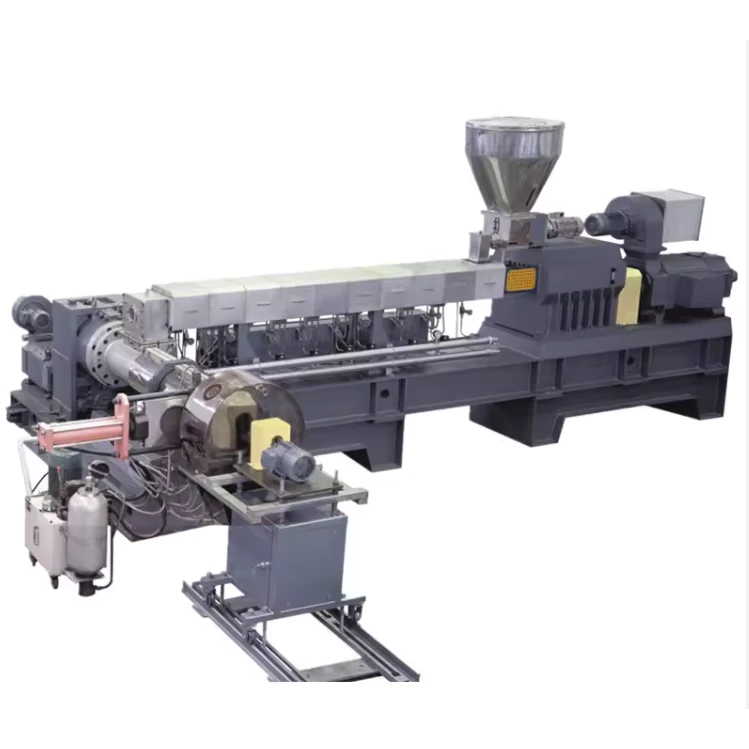
- Thermoplastic tougheners are compounded as pellets, powders, or masterbatches and blended into the host resin by extrusion or melt mixing.
- Nanofiller-based tougheners require careful surface treatment and dispersion control to avoid agglomeration and loss of performance.
Raw feedstocks vary by product type:
- petrochemical monomers and dienes for elastomeric modifiers
- acrylic monomers for core-shell systems
- epoxy- or amine-reactive oligomers for thermoset modifiers
- copolyesters, polyamides, or thermoplastic engineering resins for thermoplastic toughening
- silicas, wollastonite, carbon nanotubes, and other mineral or nanoadditives in hybrid systems.
In industrial compounding, dosage is often modest but highly formulation-dependent. Reported examples include 3% to 8% for some ABS impact-modifier packages and 10% to 20% for tougher thermoplastic or thermoset blend systems, where performance depends strongly on miscibility, interfacial adhesion, and target service temperature.
Applications and End-Use Markets
Low-temperature toughening agents are used across both commodity and high-performance plastics.
| End-use sector | Typical host resin | Usual toughening approach | Functional objective |
|---|---|---|---|
| Structural adhesives | Epoxy, methacrylate | Reactive liquid polymers, core-shell rubber, thermoplastic tougheners | Maintain peel, lap shear, and impact resistance at low temperature |
| Composites and aerospace | Epoxy, vinyl ester | Thermoplastic tougheners, nanohybrid systems, elastomeric modifiers | Improve fracture toughness without excessive viscosity growth |
| Automotive parts | PP, ABS, PA, PVC | Elastomer blends, core-shell modifiers, compatibilizers | Reduce brittle fracture in bumpers, housings, clips, trims |
| Cold-climate pipes and profiles | PVC, CPVC, PP | CPE, acrylic modifiers, elastomeric impact modifiers | Preserve impact strength and processing flow at low temperature |
| Electrical and cable compounds | PVC, polyolefin systems | Flame-retardant compatible tougheners, CPE-type modifiers | Balance low-temperature flexibility with electrical and fire performance |
| Packaging and consumer goods | PLA, PP, ABS | Biobased-compatible modifiers, elastomers, blended copolymers | Improve drop resistance and cold-chain durability |
| Cryogenic and extreme-environment systems | Epoxy composites, specialized thermoplastics | Thermoplastic tougheners, low-thermal-expansion fillers, hybrid systems | Resist cracking under severe thermal contraction |
Several systems are especially prominent:
- Epoxy resins: low-temperature toughening is essential in bonded structures, coatings, composites, and repair materials. Hybrid systems can improve fracture toughness and maintain service temperature, making them suitable for cryogenic tanks, offshore structures, and aerospace repairs.
- PVC: low-temperature impact modifiers such as chlorinated polyethylene are widely used to prevent embrittlement in rigid and semi-rigid PVC products, including profiles, pipes, fittings, and cable sheathing.
- Polypropylene: low-temperature toughness can be improved by elastomer blending, beta-nucleation, and particle or mineral-assisted crack control; this is relevant for automotive and outdoor goods.
- PLA: bio-based PLA is attractive for sustainability, but it is inherently brittle; research shows that carefully chosen toughening agents can significantly improve low-temperature ductility and impact strength.
A poor-fit use is high-loading soft plasticization in high-heat structural parts, because excessive flexibilization can undermine heat distortion resistance, stiffness, and long-term dimensional stability.
Environmental and Sustainability Aspects
Low-temperature toughening agents can improve durability, and durability itself has sustainability value because longer service life reduces premature failure and material replacement. However, the environmental balance depends strongly on chemistry, dosage, and end-of-life compatibility.
Key sustainability issues include:
- Recyclability: multi-phase formulations can complicate mechanical recycling if modifiers are poorly compatible or cause property drift during reprocessing.
- Bio-based alternatives: PLA and other bio-based polymers often require toughening to become viable in real cold-weather applications, but the modifier should not undermine the biobased or compostable claims of the final product.
- Carbon footprint: adding a toughening agent may increase formulation complexity, yet it can also enable lightweighting and longer life, which may lower whole-life emissions in demanding applications.
- Circular design: compatibilized, low-dose, and reactive systems are generally more attractive than highly plasticized systems because they preserve performance and can improve recycling retention.
The most sustainable route is often performance optimization rather than maximal softening: use the smallest effective modifier loading, maximize interfacial efficiency, and design for recyclability from the beginning.
Economic and Global Market Impact
Demand for low-temperature toughening agents is driven by construction, infrastructure, transportation, electrical, coatings, adhesives, and cold-chain packaging. Growth is also supported by the shift toward higher-performance plastics in renewable energy, electric vehicles, lightweight composites, and cold-region infrastructure.
Market structure varies by product class:
- Commodity impact modifiers for PVC and polyolefins are produced by large additive and resin companies with global compounding networks.
- Specialty tougheners for epoxies, composites, and aerospace are more concentrated, with tighter qualification requirements and longer customer validation cycles.
Leading suppliers in the broader impact-modifier and toughener market include major global additive firms such as Arkema, and specialized compounders and modifiers serving PVC, epoxy, and engineering thermoplastics.
Current Challenges and Innovations
Current technical challenges are centered on balancing toughness with other properties:
- Low-temperature effectiveness versus stiffness
- Toughness versus heat resistance
- Impact resistance versus transparency or color
- Compatibility versus recycling simplicity
- Improved impact strength versus process viscosity in thermosets
Promising innovation directions include:
- Hybrid toughening systems that combine rubber, thermoplastic, and nanofiller mechanisms
- Reactive modifiers that become part of the network rather than remaining as migratory additives
- Low-viscosity tougheners for infusion, repair, and low-temperature curing processes
- Morphology engineering in semicrystalline polymers, such as beta-crystal promotion in polypropylene
- Cryogenic-focused nanomodification for composites exposed to extreme thermal contraction
Mechanistically, the field is moving toward additive packages that are not simply “softer,” but more intelligent: they trigger controlled cavitation, shear banding, and crack deflection at the right scale and temperature.
Future Outlook
Future demand is likely to rise in sectors that require reliable impact performance in cold or thermally cycling environments, especially structural adhesives, energy infrastructure, electric mobility, aerospace composites, and cold-climate consumer products.
Research is expected to emphasize:
- better interphase control at low temperature
- multifunctional modifiers that add flame retardancy, UV stability, or electrical performance
- bio-based and lower-toxicity tougheners for circular materials
- formulation strategies that preserve recyclability while improving sub-zero toughness
Low-temperature toughening agents will remain important wherever plastics must perform beyond ordinary ambient conditions. Their value lies not only in preventing brittle fracture, but in extending the usable envelope of polymer materials into colder, harsher, and more technically demanding environments.
Summary
Low temperature toughening agents are a diverse class of plastic additives and reactive modifiers that prevent brittle failure in polymers under sub-zero service conditions. Their effectiveness depends on morphology, interfacial adhesion, and the ability to activate controlled deformation mechanisms such as cavitation, shear yielding, and crack deflection. They are essential in epoxies, PVC, polypropylene, PLA, ABS, and other polymer systems, and they are increasingly shaped by sustainability requirements, recyclability goals, and the need for high-performance materials in cold-climate and cryogenic applications.
References
- •
Toughening and strengthening of low-temperature resistant epoxy resins by introducing high-performance thermoplastic resin with phthalazinone structure. (n.d.). ScienceDirect. https://www.sciencedirect.com/science/article/abs/pii/S0032386122011077Link
- •
How low can ultra-low temperature toughening agents go? (n.d.). https://www.jiuju.com/EngineeringPlasticsModification/UltraLowTemperatureTougheningAgents.htmlLink
- •
Recommended solutions. (2019). ChemPoint. https://www.chempoint.com/guides/paraloid-selector-guide/paraloid-by-application/electronicsLink
- •
Poly (lactic acid) blends with excellent low temperature toughness: A comparative study on poly (lactic acid) blends with different toughening agents. (2022, March 15). PubMed. https://pubmed.ncbi.nlm.nih.gov/35077751/Link
- •
強靭化剤は低温性能を向上させることができますか? (2025, August 7). https://www.kgt88.com/ja/blog/can-toughening-agents-improve-low-temperature-performanceLink
- •
High-performance strengthen impact resistant agent series. (2019). GO YEN CHEMICAL INDUSTRIAL CO LTD. https://www.goyenchemical.com/en/product-category/high-value-functional-additive/strengthen-impact-resistant-agent-series/Link
- •
Impact modifiers. (n.d.). Eversun. https://www.espoly.net/Additive/Impact-modifiers/Link
- •
Poly (lactic acid) blends with excellent low temperature toughness. (n.d.). ScienceDirect. https://www.sciencedirect.com/science/article/abs/pii/S0141813022001416Link
- •
High performance toughening agent for thermosetting resins. (n.d.). Arkema. https://plasticadditives.arkema.com/en/innovation/high-performance-toughening-agent-for-thermosetting-resins/Link
- •
Brittleness mechanisms and toughening strategies of epoxy resins at cryogenic temperature. (2026, July 2). PMC. https://pmc.ncbi.nlm.nih.gov/articles/PMC13325330/Link
- •
Ultrahigh low-temperature toughness of polypropylene composites with low ductile-brittle transition temperature by introducing traces of needlelike wollastonite. (2022, September 2). Taylor & Francis. https://www.tandfonline.com/doi/full/10.1080/00222348.2022.2145751Link
- •
FORTEGRA® 100. (2025, June 30). Palmer Holland. https://www.products.palmerholland.com/products/fortegra-100-epoxy-toughening-agentLink
- •
CLEARSTRENGTH® XT 151. (n.d.). Arkema. https://plasticadditives.arkema.com/assets/arkema/Clearstrength%20XT%20151_8-22.pdfLink
- •
复合固化剂协同增韧技术助力超低温结构胶性能突破. (n.d.). https://metalworld.ustb.edu.cn/cn/article/pdf/preview/10.3969/j.issn.1000-6826.2025.05.2202.pdfLink
- •
Low viscosity and low temperature curing reactive POSS/epoxy resin composites with high toughness and thermal stability. (2024, March 1). RSC. https://pubs.rsc.org/en/content/articlehtml/2024/ra/d3ra08390jLink
- •
Toughening thermosets with reactive liquid polymers. (2023, September 5). Polymer Innovation Blog. https://polymerinnovationblog.com/toughening-thermosets-with-reactive-liquid-polymers/Link
- •
The versatility of CPE 135A: Modification mechanism and wide application. (2025, August 20). WSD Chemical. https://www.wsdchemical.com/technical-support/the-versatility-of-cpe-135a--modification-mechanism-and-wide-application.htmlLink
- •
Single-wall carbon nanotubes as attractive toughening agents in alumina-based nanocomposites. (2003, January 19). PubMed. https://pubmed.ncbi.nlm.nih.gov/12652671/Link
- •
Fracture and toughening mechanisms of silica- and core–shell rubber-toughened epoxy at ambient and low temperature. (n.d.). Springer. https://link.springer.com/article/10.1007/s10853-019-03893-yLink
- •
ABS toughening agent – Boost impact strength. (2025, May 31). FlychemTech. https://flychemtech.com/product/abs-toughening-agent/Link
- •
Low temperature impact modifier archives. (n.d.). Compatibilizer. https://compatibilizer.com/th/product-tag/low-temperature-impact-modifier/Link
- •
CLEARSTRENGTH® XT 100. (n.d.). Arkema. https://plasticadditives.arkema.com/assets/arkema/TDS%20Clearstrength%20XT%20100.pdfLink
- •
Products. (2025, June 30). Huntsman. https://products.huntsman.com/products?category=technologies-composite-materials-additives-functional-additives&page=6Link
- •
Polypropylene-elastomer (TPO) nanocomposites. (n.d.). ScienceDirect. https://www.sciencedirect.com/science/article/abs/pii/S0032386111010494Link
- •
10 common plastic toughening agent combination schemes. (2025, April 28). Hoorenwell. https://www.hoorenwell.com/news/376-en.htmlLink
- •
Toughening carbon fibre composites at cryogenic temperatures using low-thermal expansion nanoparticles. (n.d.). ScienceDirect. https://www.sciencedirect.com/science/article/abs/pii/S1359835X21003316Link
- •
CN113429747B - Low-temperature-resistant toughened epoxy resin and preparation method thereof. (2021, August 17). Google Patents. https://patents.google.com/patent/CN113429747B/enLink
- •
A low-temperature resistant high-strength polyethylene material and its preparation method. (2026, January 29). Kerke Extruder. https://www.kerkeextruder.com/news/industry-news/a-low-temperature-resistant-high-strength-polyethylene-material-and-its-preparation-method/Link
- •
Comparison of toughening effects of several common toughening agents and polycarbonate‐polydimethylsiloxane block copolymer on polyvinyl chloride. (n.d.). Wiley. https://onlinelibrary.wiley.com/doi/10.1002/pat.6013Link
- •
Toughening mechanism in impact polypropylene copolymer containing a β-nucleating agent. (n.d.). RSC. https://pubs.rsc.org/en/content/articlelanding/2016/ra/c6ra01046fLink
- •
How POE-g-MAH enhances nylon's mechanical properties. (2025, September 26). https://www.nbinno.com/article/impact-modifier/mechanism-poe-g-mah-nylon-properties-qwLink
- •
What are the methods for low-temperature toughening of PP? (2021, April 22). Polyrocks. https://www.polyrocks.net/news/low-temperature-toughening-pp.htmlLink
- •
Effect of annealing temperature on low-temperature toughness of β-nucleated polypropylene random copolymer/ethylene-propylene-diene terpolymer blends. (n.d.). Springer. https://link.springer.com/article/10.1007/s10118-015-1579-1Link
- •
What is a toughening agent and how does it work in plastics? (2025, July 10). https://www.kgt88.com/blog/what-is-a-toughening-agent-and-how-does-it-work-in-plasticsLink
- •
Compatibilizers. (n.d.). HONSEA. https://en.honsea.com/material_details/6.htmlLink
- •
Great improvement of low‐temperature impact resistance of isotactic polypropylene/ethylene propylene diene monomer rubber blends by traces of carbon nanotubes and β‐nucleating agents. (n.d.). Wiley. https://onlinelibrary.wiley.com/doi/abs/10.1002/pat.4788Link
- •
Low-temperature and dynamic fatigue toughening mechanisms in asphalt. (n.d.). https://www.nlc-bnc.ca/obj/s4/f2/dsk3/ftp04/MQ55931.pdfLink
- •
A morphology-based model to describe the low-temperature impact behavior of rubber-toughened polypropylene. (2021, July 5). PMC. https://pmc.ncbi.nlm.nih.gov/articles/PMC8271767/Link
- •
Copolymer toughening of epoxy resin systems for low temperature cure. (n.d.). https://www.dst.defence.gov.au/sites/default/files/publications/documents/DST-Group-TR-3344.pdfLink
- •
Plastic toughening agent: Advanced formulations and applications. (n.d.). Eureka. https://eureka.patsnap.com/materials/plastic-toughening-agentLink