
Introduction
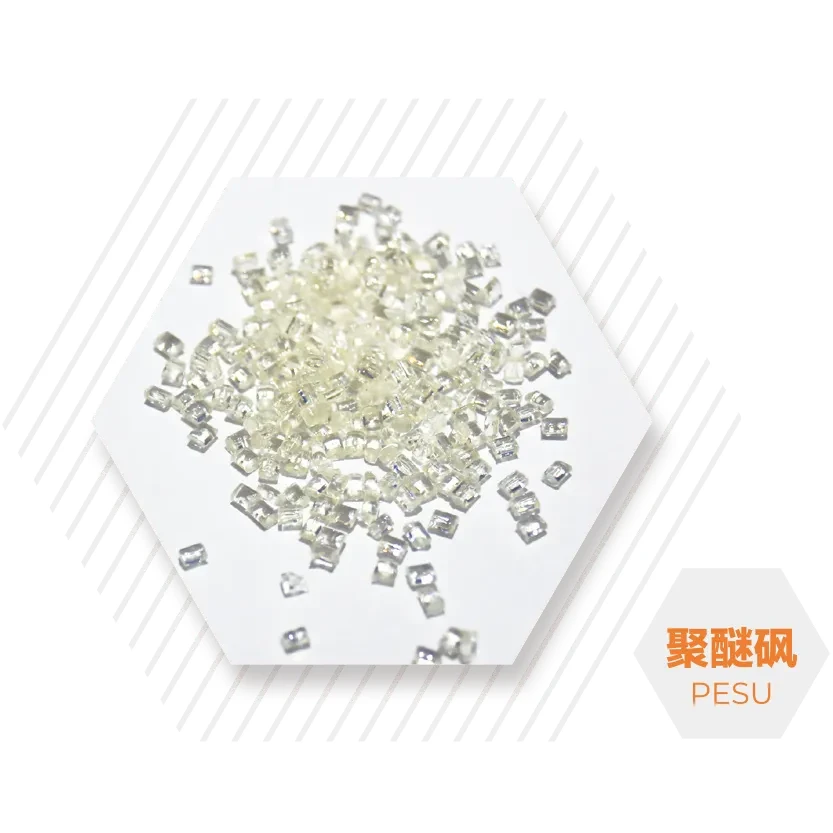
Polyethersulfone (PES) is a high-performance amorphous thermoplastic in the polyarylsulfone family, valued for its combination of high heat resistance, dimensional stability, toughness, transparency, and strong resistance to hydrolysis and many chemicals. It is widely used in demanding applications such as medical devices, sterilizable components, filtration membranes, electrical and electronic parts, and hot-water or steam-exposed industrial hardware.
PES is distinguished by a rigid aromatic backbone containing ether and sulfone linkages, which suppresses chain mobility and gives the polymer its elevated glass transition temperature, typically around 220–230 C. Its industrial importance lies not in commodity-volume markets, but in high-value niches where reliability under thermal, chemical, and sterilization stress is more important than lowest cost.
The material’s development reflects the broader evolution of engineering thermoplastics: from early sulfone polymers toward specialized grades optimized for medical, membrane, and technical uses. Today, PES is also part of a sustainability discussion centered on durability, sterilizability, and service life versus the challenges of end-of-life recovery, solvent-intensive manufacture, and dependence on petrochemical feedstocks.
History and Development
PES emerged as part of the commercial expansion of sulfone-based high-performance polymers, following earlier work on polysulfone and related aromatic thermoplastics. The key breakthrough was the ability to synthesize a polymer that remained processable as a thermoplastic while retaining exceptional thermal and chemical resistance.
As the polymer matured, its use expanded from general engineering parts into sectors that exploit its balance of rigidity, transparency, and hot-wet stability. In particular, membrane science and medical technology helped define the modern PES market, because these fields require polymers that can tolerate repeated sterilization, aggressive cleaning, and prolonged contact with aqueous media.
Chemical Structure and Key Properties
PES is an amorphous aromatic polymer built from repeating ether and sulfone groups in the main chain. The sulfone group increases thermal stability and polarity, while the ether linkages improve processability relative to more rigid aromatic polymers.
Key properties
| Property | Typical behavior |
|---|---|
| Glass transition temperature | About 220–230 C |
| Continuous service temperature | Roughly 175–200 C in many grades |
| Density | About 1.37–1.40 g/cm3 |
| Tensile strength | Around 70–90 MPa for common grades |
| Young’s modulus | About 2.4–2.8 GPa |
| Electrical insulation | Good dielectric performance |
| Hydrolytic resistance | Good resistance to hot water and steam |
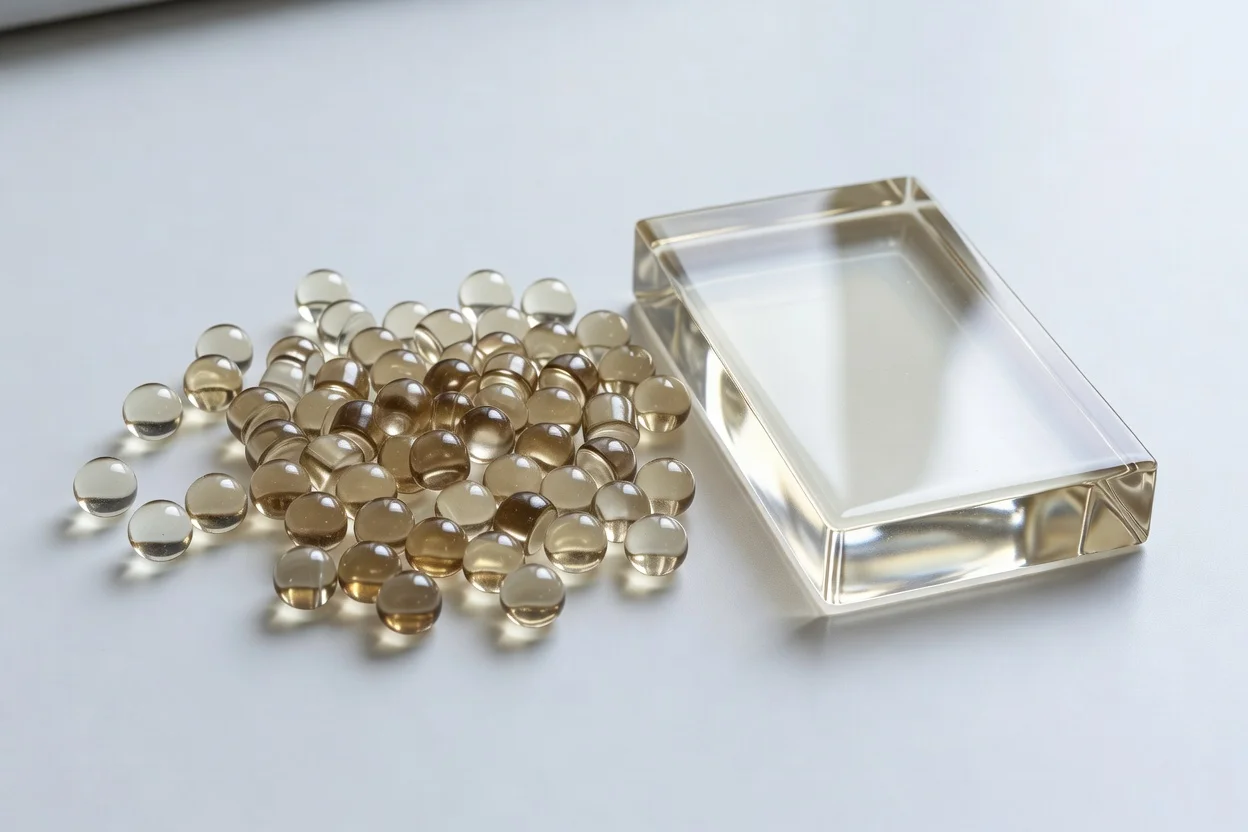
| Transparency | Transparent to translucent, often amber-tinted |
Practical limitations and workarounds
- Poor O2 and grease barrier → PES is not a barrier polymer because its amorphous structure and segmental mobility allow relatively easy permeation of small molecules → use multilayer structures, coatings, or blend systems when barrier performance matters more than heat resistance.
- Low surface energy before treatment → untreated PES can have limited wettability and adhesion in some coating or bonding operations → use plasma treatment, surface primers, or compatibilizers to improve ink, adhesive, or functional-layer adhesion.
- High melt-processing temperature → the polymer requires elevated processing temperatures because of its high Tg and viscosity → use high-temperature injection molding or extrusion equipment with tight thermal control and moisture management.
Production Processes and Raw Feedstocks
Industrial PES is commonly made by nucleophilic aromatic substitution polycondensation between activated dihalodiphenylsulfone monomers and bisphenol-type monomers in polar aprotic solvents with an alkali carbonate or similar base. The reaction forms a high-molecular-weight polymer solution, which is then precipitated, washed, and dried to remove salts, oligomers, and residual solvent.
Typical raw inputs include:
- Activated sulfone monomers such as dichlorodiphenylsulfone derivatives
- Bisphenols or related aromatic diols
- Alkali carbonate bases such as potassium carbonate
- Polar aprotic solvents such as N-methyl-2-pyrrolidone or dimethyl sulfoxide
Processing into finished forms
PES is processed by conventional thermoplastic routes, although at higher temperatures than commodity resins. Common routes include:
- Injection molding for medical housings, connectors, and technical parts
- Extrusion for tubes, profiles, and pipe-like products
- Film formation and phase inversion for membrane substrates
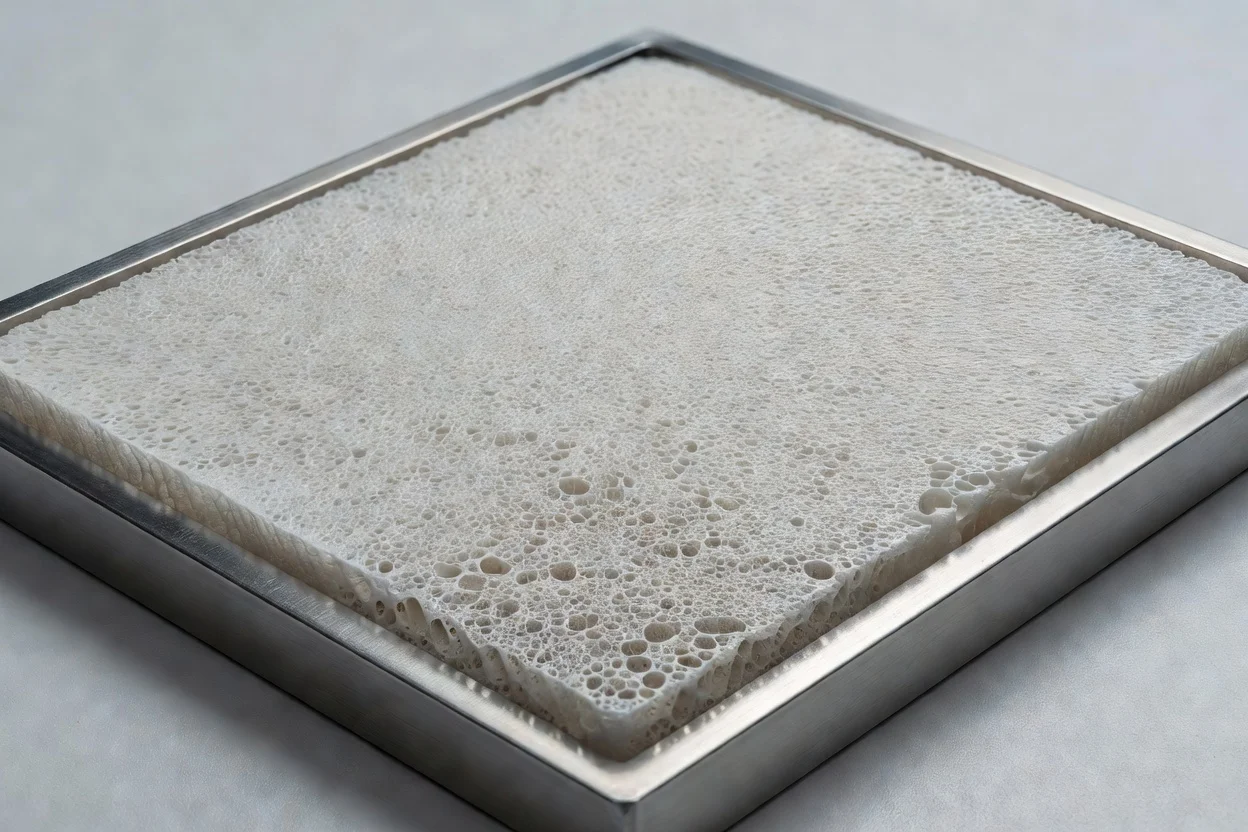
- Electrospinning and composite membrane fabrication for specialty filtration media
Industrial leadership
PES is supplied by a relatively small group of specialty polymer producers compared with commodity plastics, and market position is driven by grade consistency, medical approvals, and membrane expertise rather than sheer volume. Publicly visible technical literature and product portfolios indicate strong participation by specialty materials suppliers serving medical, electrical, and filtration markets, while membrane-value-chain leadership often comes from producers that convert PES resin into high-margin separation products.
Applications and End-Use Markets
PES is used where high heat resistance, sterilizability, and dimensional stability are essential. Its strongest markets are medical, filtration, electrical/electronic, and high-temperature technical components.
| End-use sector | Typical PES grade or form | Common process | Why PES is selected |
|---|---|---|---|
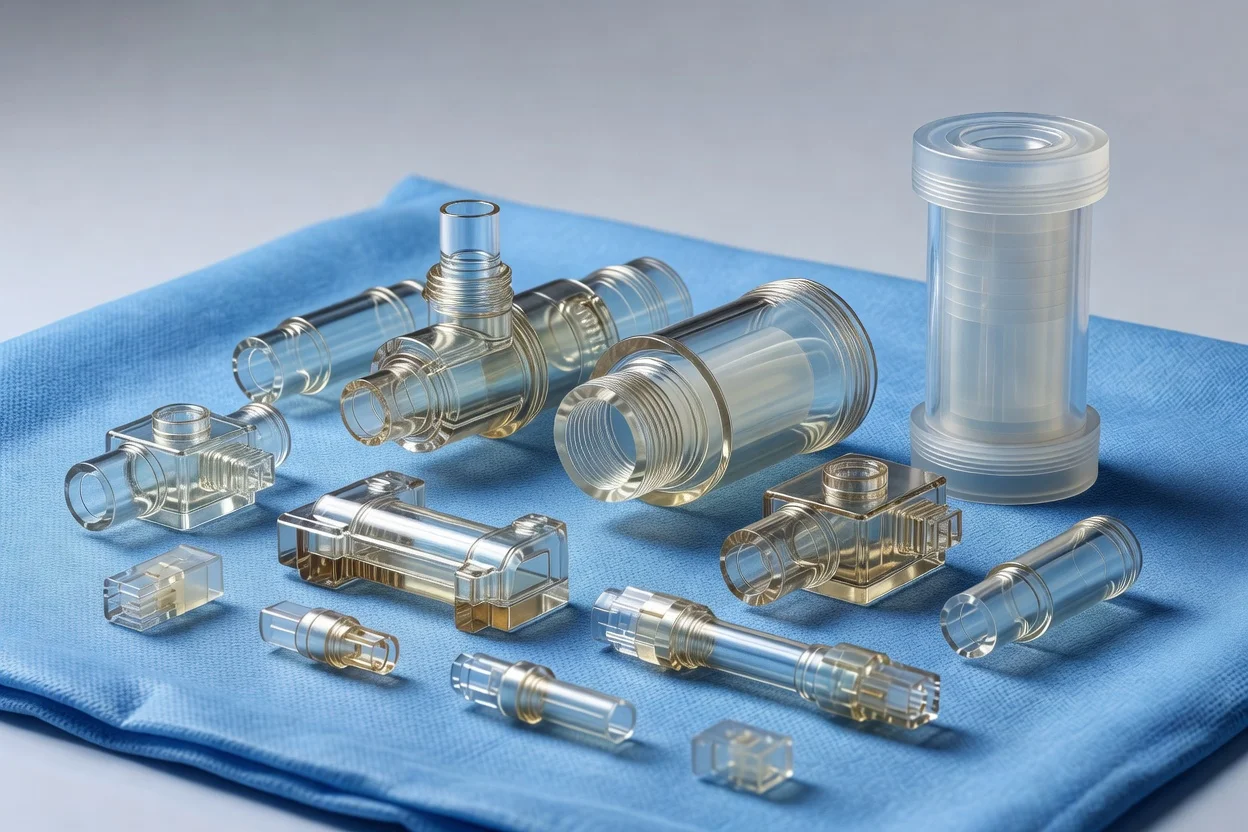
| Medical and healthcare | Medical-grade PES | Injection molding, extrusion, membrane casting | Sterilization resistance, hydrolytic stability, transparency |
| Membranes and filtration | PES membrane resin or modified PES blends | Phase inversion, electrospinning, casting | High flux, wet strength, chemical resistance |
| Electrical and electronics | General-purpose or flame-retardant PES | Injection molding, extrusion | Dielectric performance, heat resistance, low shrinkage |
| Automotive and aerospace interiors | High-heat technical grades | Injection molding | Dimensional stability and flame performance |
| Hot-water and fluid-handling parts | Standard PES | Extrusion, molding | Resistance to hot water, steam, and cleaning cycles |
| Laboratory and biotech equipment | Transparent PES | Molding, machining | Optical clarity plus sterilizability |
| Pipes and tubes | High-viscosity extrusion grades | Continuous extrusion | High-temperature service and chemical resistance |
| Wear or bearing components | Filled or reinforced grades | Molding, machining | Stiffness and creep resistance |
One poor-fit use is commodity packaging film, because PES is too expensive and does not offer the barrier economics or large-scale processing advantages of common packaging polymers.
Concrete formulation examples
- Hydrophilic PES membranes often use surface modification or blending at low additive levels to reduce fouling and improve water flux; the mechanism is to increase surface polarity and reduce protein adsorption during filtration.
- Mineral-filled PES composites may incorporate inorganic fillers to raise stiffness or lower cost, with the filler phase carrying load while the aromatic matrix preserves heat resistance and chemical durability.
Environmental and Sustainability Aspects
PES is a durable polymer with long service life, which can reduce replacement frequency in medical, filtration, and industrial systems. In that sense, its sustainability profile is partly defined by use-phase efficiency: a long-lasting component can offset some of the impacts of its more energy-intensive synthesis.
At the same time, PES has clear sustainability constraints:
- It is generally produced from petrochemical aromatic feedstocks and solvent-based polycondensation chemistry.
- The process can involve polar aprotic solvents and downstream solvent removal, which raises recovery and emissions-management requirements.
- Like many high-performance thermoplastics, post-consumer recycling is limited by small waste streams, contamination, and application-specific additives or composites.
Recyclability is technically possible through mechanical reprocessing of clean industrial scrap, but the economics are much weaker than for high-volume polymers. In many markets, the most realistic circularity pathway is not closed-loop recycling of post-use PES, but longer service life, component remanufacture, and improved collection of clean manufacturing scrap.
Bio-based replacement is not yet a mainstream option for PES itself, although broader industry interest in lower-carbon aromatic feedstocks and solvent reduction may gradually improve its footprint. For membranes and medical components, the strongest sustainability lever is often performance per kilogram rather than substitution with a lower-performance material.
Economic and Global Market Impact
PES occupies a premium segment of the plastics market, where value is driven by technical performance, regulatory compliance, and reliability rather than price competition. Demand is closely linked to healthcare, filtration, and electronics, which tend to be more resilient than cyclical consumer packaging markets.
The largest economic value is created downstream in:
- Sterile filtration cartridges and membrane modules
- Medical housings and fluid-handling devices
- Precision electrical parts and heat-resistant connectors
- High-value industrial tubing and technical components
Because PES is not a commodity resin, regional competitiveness depends on access to specialty monomers, high-purity processing capability, application approvals, and customer qualification cycles. That makes the supply chain more concentrated and more sensitive to quality disruptions than mainstream polyolefins.
Current Challenges and Innovations
Current technical challenges center on processability, cost, fouling behavior in membranes, and end-of-life management. PES must also compete with other high-performance polymers such as polysulfone, polyphenylsulfone, and select high-temperature nylons in some applications.
Key innovation directions include:
- Membrane surface modification to reduce fouling and improve hydrophilicity
- Blend and copolymer design to tune Tg, toughness, and flow behavior
- Nanofiber and asymmetric membrane architectures for higher permeability and selective separation
- Cleaner synthesis routes with better solvent recovery and lower residuals
- Reinforced PES composites for structural parts that need higher stiffness and thermal retention
Future Outlook
PES is likely to remain strategically important in sectors that value sterilization resistance, heat stability, and optical clarity. Growth will probably continue to be strongest in membrane technologies, bioprocessing, diagnostics, water treatment, and high-reliability technical components.
The material’s long-term position will depend on three factors:
- Whether membrane and medical markets continue to favor PES over competing high-performance polymers
- Whether producers can lower manufacturing footprint through solvent recovery, process intensification, and cleaner feedstocks
- Whether recycling or circular procurement can be improved for industrial scrap and controlled-use applications
In practice, PES is likely to remain a specialty workhorse: not a high-volume resin, but a critical material where failure is expensive and performance margins are narrow.
Summary
Polyethersulfone is a premium amorphous thermoplastic that combines high thermal resistance, hydrolytic stability, mechanical integrity, and transparency, making it highly valuable in medical, filtration, electrical, and high-temperature industrial applications. Its main strengths are durability and processability; its main constraints are high-cost synthesis, limited barrier performance, and difficult end-of-life recovery.
References
- •
Method for fabricating polyethersulfone nanofiber membrane by electrospinning. (2014, September 5). Google Patents. https://patents.google.com/patent/US9457325B2/enLink
- •
Method for preparing polyethersulfone. (2014, February 14). Google Patents. https://patents.google.com/patent/KR20150031151A/enLink
- •
Preparation method of polyether sulfone. (2021, February 19). Google Patents. https://patents.google.com/patent/CN112851942A/enLink
- •
Injection molding polysulfone: Advanced processing techniques ... (n.d.). Eureka PatSnap. https://eureka.patsnap.com/materials/injection-molding-polysulfoneLink
- •
Preparation and characterization of polyethersulfone ... (2023, December 12). PMC. https://pmc.ncbi.nlm.nih.gov/articles/PMC10744510/Link
- •
Method for manufacturing polyethersulfone membrane. (2014, April 4). Google Patents. https://patents.google.com/patent/EP2926889A1/enLink
- •
Modification of polyethersulfone membranes – A review ... (n.d.). ScienceDirect. https://www.sciencedirect.com/science/article/abs/pii/S0079642512000503Link
- •
Advantages and applications of PES filter membranes. (2025, April 18). Hawach Membrane. https://www.hawachmembrane.com/advantages-and-applications-of-hydrophilic-pes-filter-membranes/Link
- •
Polyethersulfone (PES): How to select the right grade? (2025, July 18). SpecialChem. https://www.specialchem.com/plastics/guide/polyethersulfone-pes-thermoplasticLink
- •
Polyethersulfone polymer for biomedical applications and ... (2024, April 11). PMC. https://pmc.ncbi.nlm.nih.gov/articles/PMC11049998/Link
- •
Polyethersulfone PES - Properties. (n.d.). Swicofil. https://www.swicofil.com/commerce/products/polyethersulfone/318/propertiesLink
- •
PES: Polyethersulfone. (n.d.). NETZSCH Polymers. https://polymers.netzsch.com/Materials/Details/42Link
- •
Polyethersulfone PES technical data and properties. (n.d.). Kmac Plastics. https://kmac-plastics.net/data/technical/pes.htmLink
- •
Polyethersulfone polymer: Comprehensive analysis of structure ... (n.d.). Eureka PatSnap. https://eureka.patsnap.com/materials/polyethersulfone-polymer-analysisLink
- •
Polyethersulfone (PES). (2022, July 25). Dielectric Manufacturing. https://dielectricmfg.com/resources/knowledge-base/polyethersulfone/Link
- •
Industrial grade polyethersulfone: Comprehensive analysis of ... (n.d.). Eureka PatSnap. https://eureka.patsnap.com/materials/industrial-grade-pes-analysisLink
- •
General purpose polyethersulfone: Molecular design, synthesis ... (n.d.). Eureka PatSnap. https://eureka.patsnap.com/materials/polyethersulfone-design-synthesisLink
- •
The ultimate guide to polyethersulfone (PES). (2025, January 7). UDTECH. https://ud-machine.com/blog/what-is-polyethersulfone/Link
- •
Polyethersulfone (PESU) in the real world: 5 uses you'll actually ... (2025, October 2). LinkedIn. https://www.linkedin.com/pulse/polyethersulfone-pesu-real-world-5-uses-youll-kukpeLink
- •
Mineral filled polyethersulfone: Advanced engineering ... (n.d.). Eureka PatSnap. https://eureka.patsnap.com/materials/mineral-filled-pes-compositesLink
- •
PES (polyethersulfone) plastic material: Properties & uses. (2024, January 1). Tuntun Plastic. https://www.tuntunplastic.com/product/pes-material.htmlLink
- •
Poly ether sulfone - ultrafiltration membrane [PDF]. (n.d.). Blue Maarlin. https://www.bluemaarlin.com/pdf/everything-about-pes-6.pdfLink
- •
Understanding polyethersulfone (PES) resin: Structure, ... (2024, November 11). Tuntun Plastic. https://www.tuntunplastic.com/news/understanding-polyethersulfone-pes-resin.htmlLink
- •
Understanding the properties of polyethersulfone (PES) ... (2023, April 12). Tuntun Plastic. https://www.tuntunplastic.com/news/understanding-the-properties-of-polyethersulfone-pes-and-its-benefits.htmlLink
- •
Medical grade polyethersulfone: Advanced engineering ... (n.d.). Eureka PatSnap. https://eureka.patsnap.com/materials/medical-grade-pesLink
- •
What is polyethersulfone? Uses, how it works & top ... (2025, October 4). LinkedIn. https://www.linkedin.com/pulse/what-polyethersulfone-uses-how-works-top-companies-2025-e0rgcLink
- •
PES plastic - polyethersulfone. (n.d.). Ensinger Plastics. https://www.ensingerplastics.com/en-us/thermoplastic-materials/pes-plasticLink
- •
Exploring the versatile world of polyethersulfone membranes. (2024, December 13). UD Machine. https://ud-machine.com/blog/polyethersulfone/Link
- •
Polyethersulfone plate: Comprehensive analysis of structural ... (n.d.). Eureka PatSnap. https://eureka.patsnap.com/materials/polyethersulfone-plate-analysisLink
- •
Poly(ether-sulfone) polymer. (2010, October 8). ScienceDirect. https://www.sciencedirect.com/topics/chemistry/poly-ether-sulfone-polymerLink
- •
Recent developments in polysulfone studies. (2026, February 1). Wiley Online Library. https://onlinelibrary.wiley.com/doi/full/10.1002/pol.20250762Link
- •
Exploring polyethersulfone membrane cartridges and ... (2023, July 4). BLF. https://blf.com.pl/lorem-ipsum-dolor-sit-amet-consectetur/Link
- •
Polyethersulfone (PESU): What is it? (2023, December 13). EuroPlas. https://europlas.com.vn/en-US/blog-1/polyethersulfone-pesu-what-is-itLink
- •
Polyethersulfone (PES). (2021, September 2). RTP Company. https://www.rtpcompany.com/products/product-guide/polyethersulfone-pes/Link
- •
Polyethersulfone pipe: Advanced engineering solutions for high ... (n.d.). Eureka PatSnap. https://eureka.patsnap.com/materials/polyethersulfone-pipeLink
- •
Polyethersulfone tube: Comprehensive analysis of properties ... (n.d.). Eureka PatSnap. https://eureka.patsnap.com/materials/polyethersulfone-tube-propertiesLink
- •
Polyethersulfone PES - Application. (n.d.). Swicofil. https://www.swicofil.com/commerce/products/polyethersulfone/318/applicationsLink
- •
Nanofiber technology in the ex vivo expansion of cord blood-derived hematopoietic stem cells. (2015, October 20). ScienceDirect. https://www.sciencedirect.com/topics/medicine-and-dentistry/polyethersulfoneLink
- •
Polysulfone. (2005, November 22). Wikipedia. https://en.wikipedia.org/wiki/PolysulfoneLink
- •
Modified polyether-sulfone membrane: A mini review. (2017, November 2). PMC. https://pmc.ncbi.nlm.nih.gov/articles/PMC5812116/Link
- •
Polyethersulfone - An overview. (2014, October 14). ScienceDirect. https://www.sciencedirect.com/topics/pharmacology-toxicology-and-pharmaceutical-science/polyethersulfoneLink
- •
Polysulfone. (n.d.). Chemeurope. https://www.chemeurope.com/en/encyclopedia/Polysulfone.htmlLink
- •
An overview of polyethersulfone PESU: Standards, grades, and ... (2026, March 5). Alibaba. https://www.alibaba.com/product-insights/polyethersulfone-pesu.htmlLink
- •
Method for producing polyether sulfone. (2012, July 26). Google Patents. https://patents.google.com/patent/WO2013015366A1/enLink
- •
One-step fabrication of novel polyethersulfone-based composite ... (2022, April 11). PMC. https://pmc.ncbi.nlm.nih.gov/articles/PMC9028427/Link