
Introduction
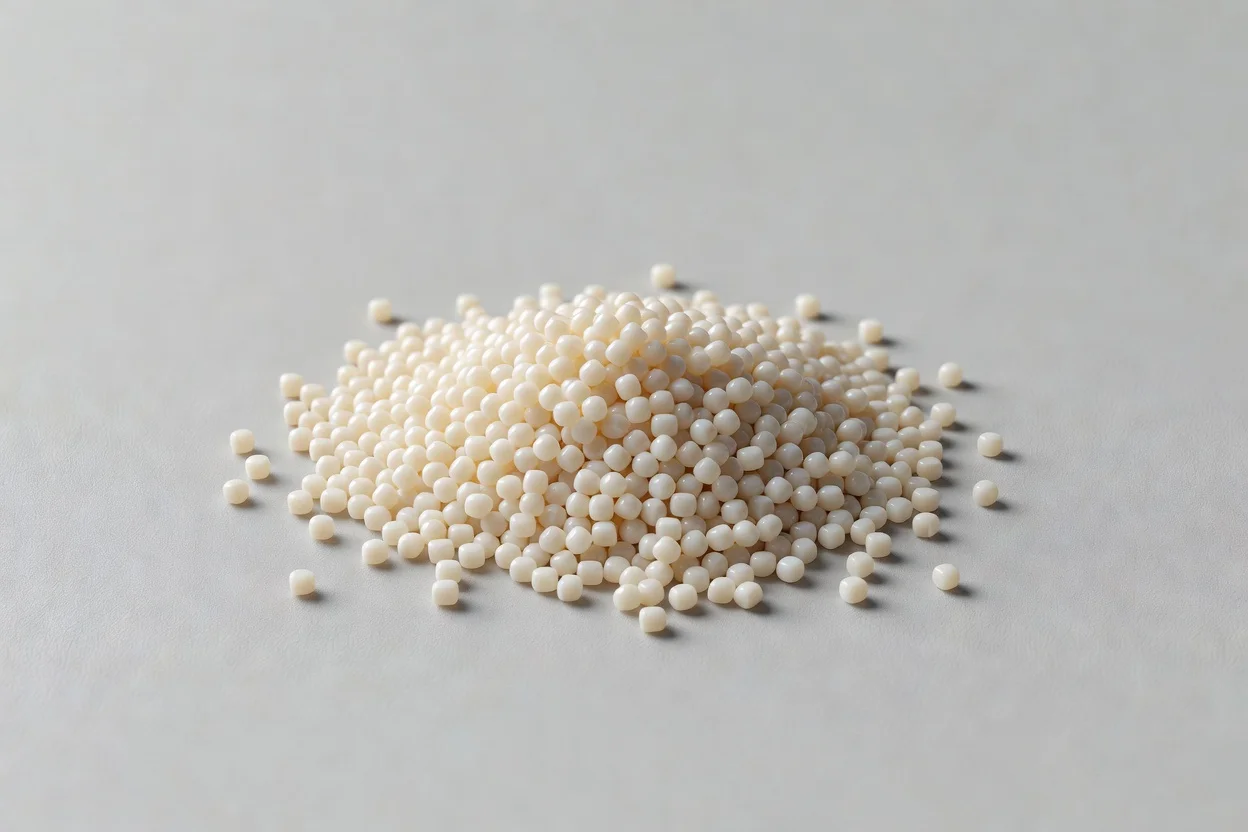
Chlorinated polyvinyl chloride (CPVC) is a chlorinated thermoplastic derived from PVC that is valued for its higher heat resistance, improved chemical resistance, and strong fire performance compared with standard polyvinyl chloride. Its main industrial role is in pressure piping, especially hot and cold potable water, fire sprinkler systems, and corrosive fluid transport, but it is also used in fittings, sheet, tanks, and selected industrial components.
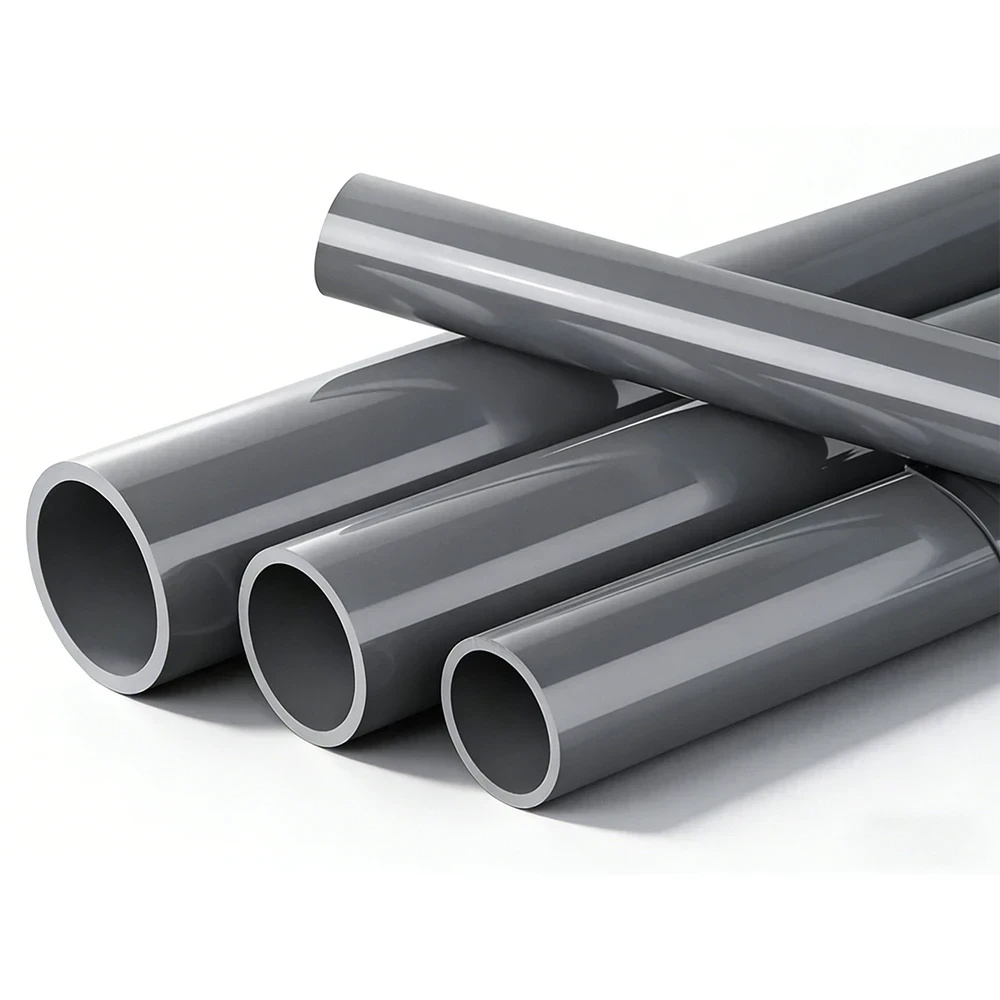
CPVC sits within the broader PVC family, yet its added chlorine content changes the polymer’s thermal and mechanical behavior enough to open service ranges that PVC cannot reliably handle. The material became commercially established in plumbing and process applications after the mid-20th century and has since developed into a specialized engineering resin with distinct grades, fabrication methods, and installation standards.
In sustainability terms, CPVC presents a mixed profile: its durability and long service life can reduce replacement demand, while its chlorine chemistry and limited recycling infrastructure complicate end-of-life management. Current innovation is focused on improved formulations, broader recycling pathways, lower-carbon manufacturing, and application-specific grades that preserve performance while reducing material intensity.
History and Development
CPVC was developed by post-chlorinating PVC to increase its usable temperature window and chemical resistance. The material gained traction when plumbing and industrial users needed a plastic alternative capable of handling hot water, aggressive chemicals, and fire-safety requirements where unmodified PVC was insufficient.
Over time, CPVC evolved from an early specialty resin into a mature building and industrial material with standardized pipe systems, solvent-cement joining methods, and dedicated fittings and codes. The largest historical driver of demand has been water distribution and fire protection, where CPVC’s balance of cost, corrosion resistance, and installability made it a practical substitute for metal piping in many applications.
Chemical Structure and Key Properties
CPVC is produced by free-radical chlorination of PVC resin, which introduces additional chlorine atoms into the polymer backbone. This modification increases chlorine content from the approximate level of standard PVC to a substantially higher range, commonly reported around 63% to 69% by weight, depending on grade and process control.
The added chlorine raises the glass transition temperature and improves resistance to heat, flame, and many corrosive media. It also makes CPVC denser and generally more rigid than PVC, while preserving the base polymer’s corrosion resistance and processability.
Key technical characteristics include:
- Maximum continuous service temperature of about 93°C / 200°F for many piping grades.
- Good resistance to acids, salts, and many oxidizing chemicals.
- Self-extinguishing behavior and strong fire performance relative to many commodity plastics.
- Moderate impact resistance, which can decline at low temperatures or under improper installation conditions.
- Higher density than standard PVC due to the extra chlorine content.
A few important practical limits are worth noting:
- Heat resistance limit → standard PVC softens at lower temperatures → CPVC is used where hot-water or elevated-temperature service is required.
- Chemical resistance limit → CPVC performs poorly with some amines and ammonia-bearing environments → material selection must be checked against the specific chemical exposure.
- Impact toughness limit → CPVC can become more brittle in cold conditions → designers often use proper support spacing, impact-resistant formulations, or alternative materials in low-temperature service.
A useful comparison is shown below:
| Property | PVC | CPVC |
|---|---|---|
| Typical chlorine content | about 56% to 57% | about 63% to 69% |
| Maximum service temperature | about 60°C / 140°F | about 93°C / 200°F |
| Chemical resistance | Good | Very good to excellent |
| Fire performance | Self-extinguishing | Self-extinguishing, often better in high-heat service |
| Density | Lower | Higher |
| Main strength | General-purpose piping and profiles | Hot water, chemical, and fire-service piping |
Production Processes and Raw Feedstocks
CPVC begins with PVC resin, usually suspension-grade PVC, which is then chlorinated in a controlled post-treatment step. Two common industrial routes are described in the literature: chlorination in a water slurry and chlorination in a fluidized bed.
The production sequence generally involves:
- PVC resin preparation
- Controlled chlorination under UV or free-radical initiation conditions
- Removal of residual chlorine and stabilization
- Compounding with heat stabilizers, lubricants, impact modifiers, and processing aids
- Conversion into pipe, fittings, sheet, or industrial shapes
Feedstock quality matters because the base PVC morphology influences how evenly chlorine is introduced and how the final resin performs in service. In practice, CPVC manufacturers aim for consistent chlorination, molecular weight control, and stabilizer systems tailored to the end use.
CPVC processing is often associated with:
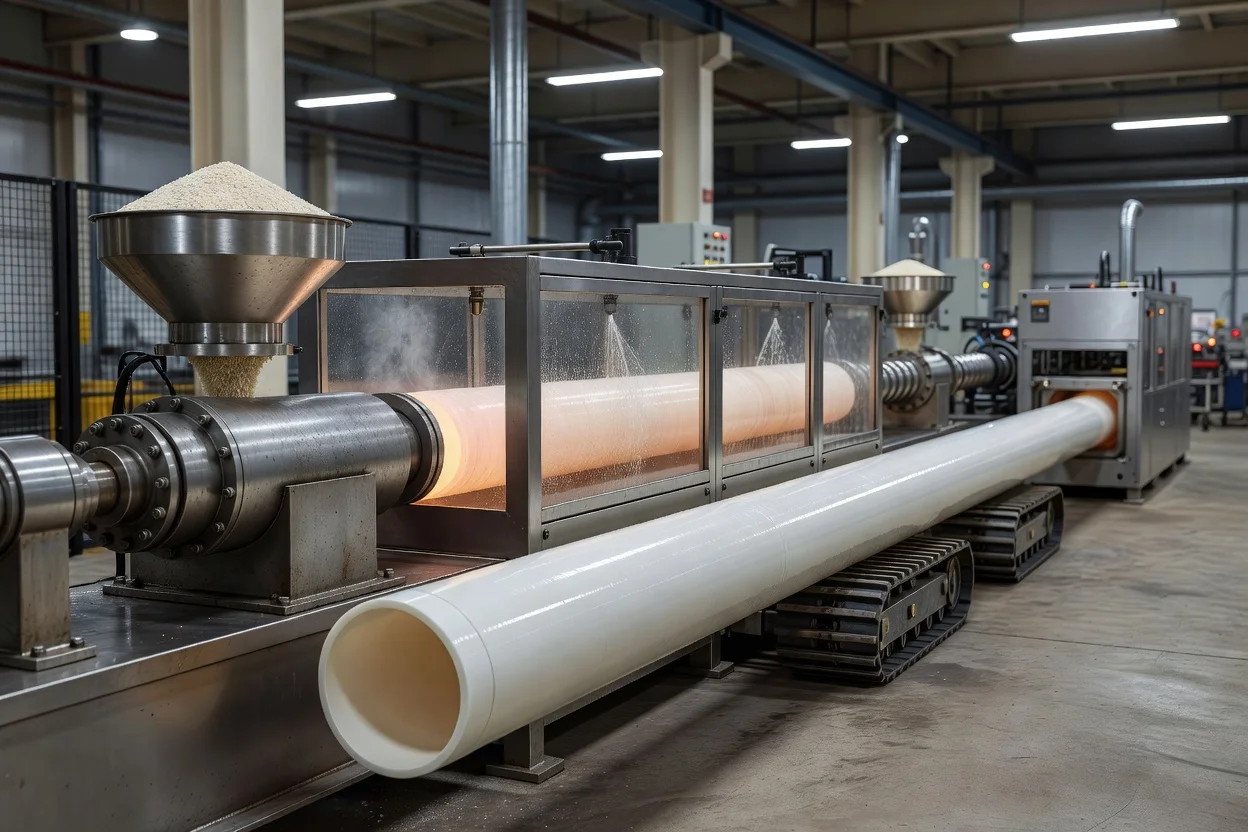
- Extrusion for pipe and tubing
- Injection molding for fittings and valves
- Sheet extrusion for chemical equipment and linings
- Thermoforming and fabrication for tanks, scrubbers, and ventilation components
Applications and End-Use Markets
CPVC’s largest market remains plumbing and fluid transport, where elevated temperature performance is decisive. It is especially common in residential, commercial, and industrial hot-water distribution, as well as in fire sprinkler networks and chemical service lines.
Major application areas include:
- Potable water piping Usually pipe-grade CPVC in pressure-rated systems, selected for hot and cold water distribution because it maintains strength at higher temperatures.
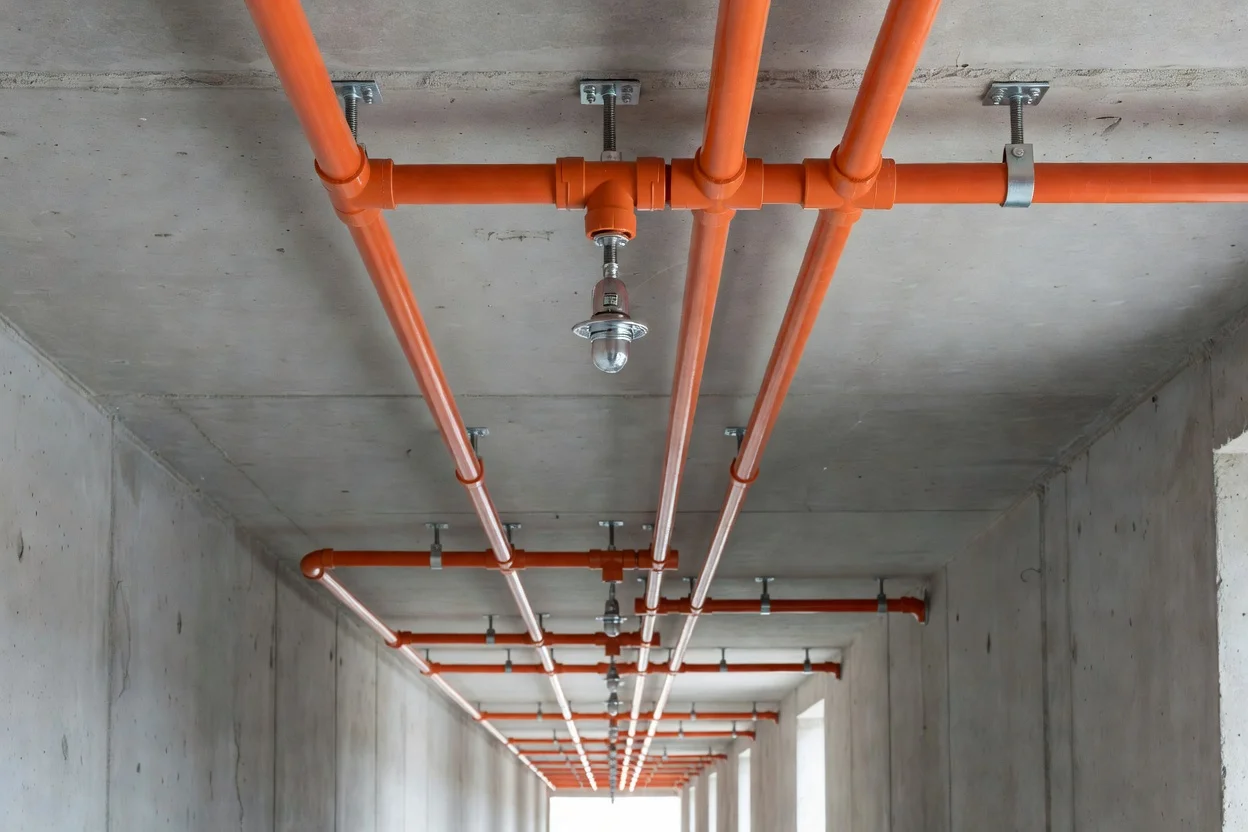
- Fire sprinkler systems Typically pipe and fitting systems designed for code compliance and reliable self-extinguishing behavior.
- Chemical processing and industrial fluids Often Schedule 80 pipe, valves, and sheet products where corrosion resistance and elevated-temperature service are required.
- Sheet, tanks, and scrubbers Usually fabricated CPVC sheet or lined assemblies for corrosive process environments.
- Electrical and electronic components Selected molded parts and protective covers that benefit from flame resistance and dimensional stability.
- Reclaimed water, hydronic, and chilled-water systems Common in building infrastructure where corrosion resistance and lower weight are valuable.
A poor-fit use is high-impact service in very cold environments, where CPVC’s brittleness can be a disadvantage compared with some tougher engineering plastics or metal alternatives.
Environmental and Sustainability Aspects
CPVC has a durability advantage: long service life can lower maintenance frequency and reduce replacement-related material use. In water and process systems, this can translate into lower corrosion losses and fewer failure-related disruptions than some metallic alternatives.
At the same time, CPVC raises sustainability concerns because:
- It is a chlorine-based polymer derived from petrochemical feedstocks and PVC resin.
- Mechanical recycling is limited by collection complexity, additive packages, and contamination issues in pipe waste streams.
- End-of-life management can be complicated by the need to separate CPVC from other plastics and by local restrictions on mixed PVC-family waste.
Potential sustainability pathways include:
- Improved take-back and sorting systems for pipe scrap
- Greater use of controlled regrind in suitable closed-loop applications
- Formulation changes that reduce additive intensity or improve processing efficiency
- Design-for-disassembly in piping networks
- Lower-emission production and more efficient chlorination processes
Biobased substitution is less straightforward for CPVC than for some other plastics because the material’s defining performance comes from chlorinated PVC chemistry rather than from a simple renewable feedstock swap. As a result, sustainability progress is more likely to come from circularity, durability, and process decarbonization than from near-term bio-based CPVC replacements.
Economic and Global Market Impact
CPVC is a niche specialty resin compared with commodity PVC, but it plays an outsized role in building services and corrosion-resistant infrastructure. Demand is closely linked to housing construction, plumbing codes, fire protection adoption, and industrial renovation cycles.
The most important economic advantages of CPVC are:
- Lower installed cost than many metal piping systems in hot-water and corrosive-service applications
- Reduced labor due to lightweight handling and solvent-cement joining
- Corrosion resistance that can lower lifecycle maintenance costs
- Broad standardization in pipe and fitting ecosystems
Leading producers and branded systems have been influential in scaling the market, particularly through pipe-grade formulations and certified plumbing systems. The most visible global business model is the integration of resin development, pipe/fitting production, and code-supported system sales, which has helped CPVC maintain a stable position in building and industrial infrastructure.
Current Challenges and Innovations
Current challenges include:
- Achieving consistent long-term performance across different chlorination and compounding routes
- Managing impact strength, especially in cold service or mechanically abused installations
- Expanding recycling and responsible disposal options
- Meeting evolving fire, potable-water, and chemical-resistance regulations
- Reducing cost pressure relative to commodity PVC and alternative piping materials
Innovation is concentrated in:
- Toughened CPVC formulations that improve impact resistance without sacrificing temperature capability
- Improved stabilizer systems for processing and long-term durability
- Faster, more reliable solvent-cement joining systems and inspection practices
- Better pipe-grade quality control for hydrostatic strength and dimensional stability
- Recycled-content strategies where application standards permit
A practical formulation example is the use of impact modifiers at low but meaningful loading levels to improve low-temperature toughness while retaining stiffness and heat resistance; these are typically paired with heat stabilizers to preserve processing stability during extrusion or molding. Another example is the use of lubricant packages in pipe compounding to control melt flow and surface finish, which helps reduce processing defects and improve output consistency.
Future Outlook
CPVC is likely to remain important in hot-water plumbing, fire protection, and corrosive-fluid handling because its core value proposition is difficult to replicate with standard PVC. The material’s future will depend less on basic chemistry breakthroughs than on how effectively the industry improves recyclability, lowers manufacturing emissions, and tailors formulations to specific end uses.
The strongest growth opportunities are likely in:
- Building infrastructure modernization
- Fire protection systems
- Industrial chemical handling where corrosion resistance matters
- Markets that value lightweight, code-compliant alternatives to metal piping
Longer term, CPVC’s competitive position will depend on whether producers can combine its established performance with improved circularity, better documentation of lifecycle benefits, and tighter control of product consistency across global supply chains.
Summary
CPVC is a chlorinated derivative of PVC that delivers higher temperature resistance, stronger chemical durability, and good fire performance, making it a specialized material for plumbing, fire protection, and industrial fluids. Its main trade-offs are higher density, more complex end-of-life handling, and some brittleness limitations, but its long service life and infrastructure value continue to support broad industrial use.
References
- •
Chlorinated polyvinyl chloride. (2005, August 10). Wikipedia. https://en.wikipedia.org/wiki/Chlorinated_polyvinyl_chlorideLink
- •
What is the difference between CPVC and PVC? (2017, December 20). Corzan. https://www.corzan.com/en-us/blog/what-is-the-difference-between-cpvc-and-pvcLink
- •
What is chlorinated polyvinyl chloride (CPVC)? (n.d.). Corzan. https://www.corzan.com/en-us/material-advantages/what-is-chlorinated-polyvinyl-chloride-cpvcLink
- •
Chlorinated polyvinyl chloride water supply system: Comprehensive analysis of material properties, manufacturing processes, and infrastructure applications. (n.d.). PatSnap Eureka. https://eureka.patsnap.com/materials/cpvc-water-supply-systemsLink
- •
CPVC vs PVC pipes: A professional technical comparison. (2025, March 21). Huada Plastics. https://www.huadaplastics.com/news/cpvc-vs-pvc-pipes-a-professional-technical-comparison.htmlLink
- •
Chlorinated polyvinyl chloride polymer. (n.d.). PatSnap Eureka. https://eureka.patsnap.com/materials/cpvc-synthesis-propertiesLink
- •
PVC vs CPVC pipe: Key differences. (2025, March 17). Projectmaterials. https://blog.projectmaterials.com/quick-answers/pipes/pvc-vs-cpvc-pipe/Link
- •
What is CPVC | Properties, characteristics & uses. (n.d.). PVC Pipe Supplies. https://pvcpipesupplies.com/what-is-cpvcLink
- •
Chlorinated polyvinyl chloride: Advanced manufacturing processes. (n.d.). PatSnap Eureka. https://eureka.patsnap.com/materials/cpvc-manufacturing-propertiesLink
- •
What is the difference between PVC and CPVC? (2025, May 9). Oatey. https://www.oatey.com/faqs-blog-videos-case-studies/blog/what-difference-between-pvc-and-cpvcLink
- •
ChlorinatedPolyvinylChloride | 68648-82-8. (2025, April 22). ChemicalBook. https://www.chemicalbook.com/ChemicalProductProperty_EN_CB01024690.htmLink
- •
Chlorinated poly vinyl chloride (CPVC) - Pipe & fittings. (2023, November 20). The Home Depot. https://www.homedepot.com/b/Plumbing-Pipe-Fittings/Chlorinated-Poly-Vinyl-Chloride-CPVC/N-5yc1vZbqpfZ1z0tupxLink
- •
Technical data sheet CPVC. (n.d.). Laminated Plastics. https://laminatedplastics.com/cpvc.pdfLink
- •
Microsoft Word - Homework 10.doc. (n.d.). IIT Bombay. https://www.che.iitb.ac.in/web/faculty/madhu/CL152/Homework/Homework%2010.pdfLink
- •
CPVC pipe and tubing. (n.d.). Plastic Pipe & Fittings Association. https://plasticpipe.org/BuildingConstruction/BuildingConstruction/CPVC.aspxLink
- •
CPVC vs PVC: Key differences, properties & applications guide. (2025, June 19). DXD Polytech. https://dxdpolytech.com/cpvc-vs-pvc/Link
- •
Chlorinated polyvinyl chloride homopolymer. (n.d.). PatSnap Eureka. https://eureka.patsnap.com/materials/cpvc-homopolymer-synthesisLink
- •
PVC vs. CPVC pipes: Differences, & uses. (2022, February 3). Laird Plastics. https://lairdplastics.com/resources/pvc-vs-cpvc-pipes-differences-uses/Link
- •
PVC vs CPVC: What's the difference? Pipe types explained. (2020, September 21). Interplay Learning. https://www.interplaylearning.com/blog/pvc-vs-cpvc-how-to-determine-what-types-of-pipe-a-structure-has/Link
- •
PVC vs CPVC: Which is better? (2024, March 1). Polymershapes. https://polymershapes.com/pvc-versus-cpvc/Link
- •
What is chlorinated polyvinyl chloride (CPVC)? (2023, November 26). Durastream. https://www.durastream.com/en/products/cpvc/Link
- •
Application of CPVC resin-333. (2024, November 25). WatchChem. https://www.watchchem.com/news_details/19.htmlLink
- •
CPVC essentials: Properties, uses & performance guide. (2025, September 11). DXD. https://dxdpolytech.com/cpvc-essentials/Link
- •
CPVC vs PVC pipe comparison and differences. (n.d.). PVC Pipe Supplies. https://pvcpipesupplies.com/cpvc-vs-pvcLink
- •
What is CPVC? Advantages, disadvantages, properties. (2025, September 23). SWD Plastic. https://swdplastic.com/what-is-cpvc/Link
- •
PVC vs. CPVC pipes: Differences and how to choose. (2021, December 6). MT Copeland. https://mtcopeland.com/blog/pvc-vs-cpvc-pipes-whats-the-difference/Link
- •
Polyvinyl chloride. (2001, October 24). Wikipedia. https://en.wikipedia.org/wiki/Polyvinyl_chlorideLink
- •
Ethene, chloro-, homopolymer, chlorinated. (2025, July 8). PubChem. https://pubchem.ncbi.nlm.nih.gov/compound/Ethene_-chloro-_-homopolymer_-chlorinatedLink
- •
CPVC pipe and tubing. (n.d.). Plastic Pipe & Fittings Association. https://plasticpipe.org/PowerCommunications/BuildingConstruction/CPVC.aspxLink
- •
Top FAQs about CPVC (chlorinated polyvinyl chloride). (n.d.). PPFA. https://www.ppfahome.org/page/faq-cpvcLink
- •
Pipe grade chlorinated polyvinyl chloride: Advanced material. (n.d.). PatSnap Eureka. https://eureka.patsnap.com/materials/pipe-grade-cpvc-propertiesLink
- •
CPVC - Chlorinated polyvinylchloride. (n.d.). Simtech USA. https://www.simtechusa.com/resources/material-guide/cpvcLink
- •
Chemical resistance and. (n.d.). PatSnap Eureka. https://eureka.patsnap.com/materials/cpvc-pipe-propertiesLink
- •
CPVC chemical resistance guide. (n.d.). IPEX Inc. https://ipexna.com/wp-content/uploads/2022/08/chemical-guide-caen-ipex-cpvc.pdfLink
- •
Solved! What is CPVC and what is it used for? (2021, May 28). Bob Vila. https://www.bobvila.com/articles/what-is-cpvc/Link
- •
Chlorinated polyvinyl chloride - CPVC chlorinated PVC. (2001, August 31). AZoM. https://www.azom.com/article.aspx?ArticleID=775Link
- •
Comparison of CPVC material with other materials. (2024, June 26). Durastream. https://www.durastream.com/en/product-comparison/other-materials/Link
- •
The properties of chlorinated polyvinyl chloride (CPVC). (2022, October 22). NovistaChem. https://www.novistachem.com/blog/the-properties-of-chlorinated-polyvinyl-chloride-cpvc-74387.htmlLink