
Introduction
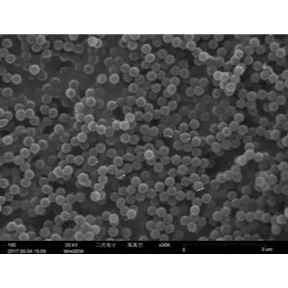
Nano-additives are nanoscale particles or structured materials incorporated into plastics and other polymer systems at very low loadings to improve performance, functionality, or processing behavior. In the plastics industry, they are used to enhance barrier performance, mechanical strength, flame retardancy, electrical conductivity, wear resistance, optical properties, and heat management, often by mechanisms that depend on their extremely high surface area and strong interfacial interaction with the polymer matrix.
In practice, nano-additives occupy a broad technical category that includes nanoclays, nanosilica, carbon nanotubes, graphene-family materials, metal oxides, nanocellulose, and other engineered nanoparticles. Their importance has grown alongside demand for lighter, thinner, more durable, and more multifunctional plastics in packaging, automotive, electronics, construction, coatings, energy systems, and medical products. At the same time, their adoption is constrained by dispersion challenges, health and regulatory questions, cost, and end-of-life uncertainty, making nano-additives a highly promising but carefully managed class of auxiliaries rather than a universal solution.
History and Development
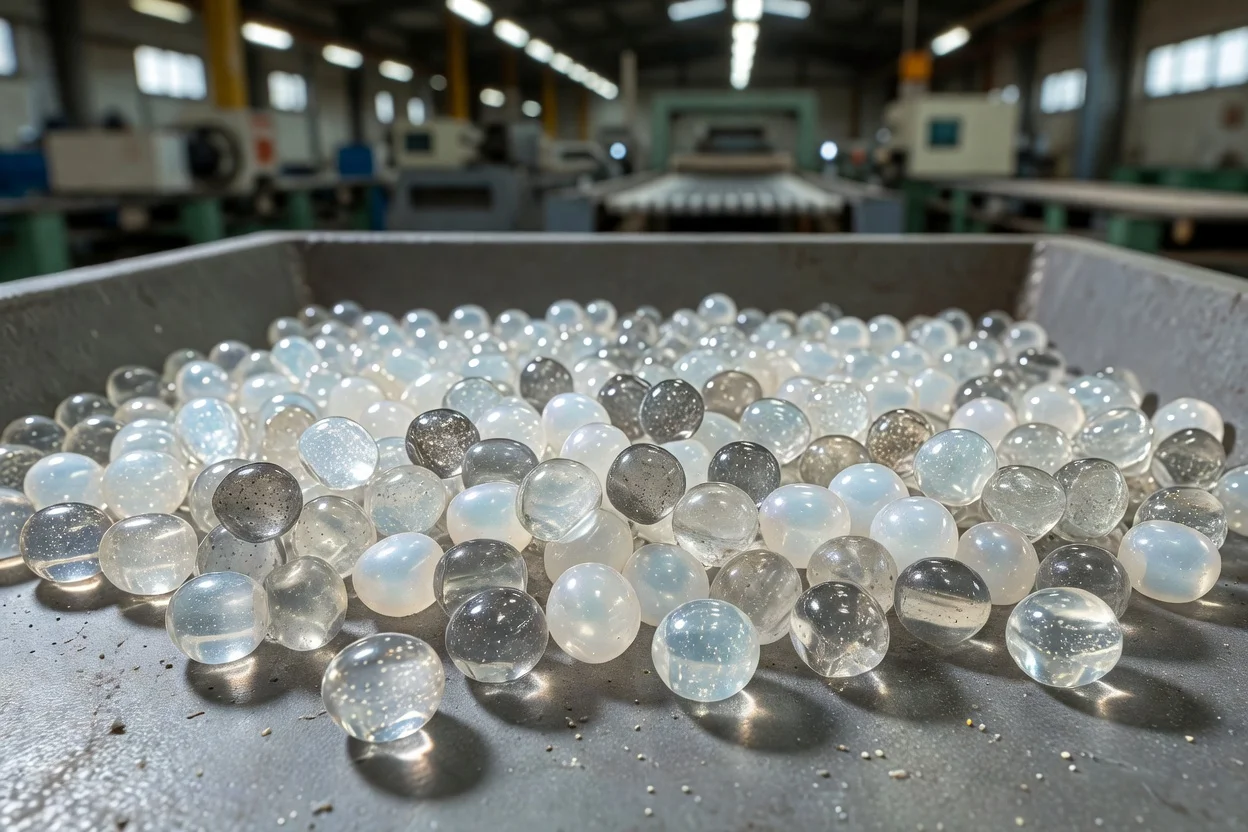
The use of nanoscale reinforcing and functional particles expanded from laboratory polymer nanocomposites into industrial formulations as dispersion technology, surface treatment chemistry, and compounding equipment improved. Early commercial interest centered on barrier and reinforcement effects in thermoplastics, followed by broader use in flame-retarded systems, conductive compounds, coatings, and specialty elastomers.
Development accelerated because nano-additives can deliver measurable property gains at low dosage, which is economically attractive in high-value applications. This value proposition has also encouraged their use beyond plastics, especially in construction, lubricants, inks, and additive manufacturing feedstocks, where nanoscale effects can modify rheology, curing, tribology, or microstructure.
Chemical Structure and Key Properties
Nano-additives are defined more by scale and function than by one chemistry. Their performance arises from particle size typically in the nanometer range, high specific surface area, and the ability to interact with polymer chains, fillers, flame-retardant systems, or interfaces at the molecular level.
Common classes include:
- Nanoclays: layered silicates that create tortuous diffusion pathways in films and molded parts, improving gas barrier and stiffness.
- Nanosilica: used for reinforcement, rheology control, scratch resistance, and sometimes transparency retention in polymers and coatings.
- Carbon nanotubes and graphene derivatives: used for conductivity, antistatic behavior, and mechanical reinforcement.
- Metal oxides such as titanium dioxide, zinc oxide, alumina, and iron oxides: used for UV screening, photocatalytic activity, reinforcement, or multifunctionality.
- Nanocellulose and bio-based nanomaterials: used for strengthening and barrier improvement while reducing fossil-derived content.
Their main technical advantages are:
| Property effect | Typical mechanism |
|---|---|
| Reinforcement | Particle-matrix interfacial load transfer and crack deflection |
| Barrier improvement | Longer diffusion path through exfoliated or well-dispersed platelets |
| Conductivity | Formation of percolation networks with carbon-based nanofillers |
| Flame retardancy | Char promotion, heat shielding, or synergy with conventional flame retardants |
| Rheology control | Increased viscosity, thixotropy, or suspension stability |
| Wear reduction | Formation of protective tribofilms and reduced asperity contact |
Real limits are important:
- Poor dispersion in the polymer melt → agglomeration and property loss → surface functionalization, masterbatches, high-shear compounding, or compatibilizers
- High surface energy and particle-particle attraction → difficult processing and inconsistent performance → silane treatment, grafting, or encapsulation
- Limited transparency in some systems → light scattering from aggregates → sub-100 nm particles, index-matched design, or lower loading
- Potential migration or release concerns in sensitive uses → regulatory and safety uncertainty → immobilization in matrices, exposure control, and application-specific testing
For polymer films, one of the most valued outcomes is barrier enhancement, while a frequent processing trade-off is increased melt viscosity. In coated or foamed systems, nano-additives may improve scratch resistance or nucleation, but excessive loading can embrittle the material or destabilize processing windows.
Production Processes and Raw Feedstocks
Nano-additives are produced through top-down or bottom-up methods, depending on the chemistry and required morphology.
- Top-down routes include milling, exfoliation, and mechanical size reduction.
- Bottom-up routes include precipitation, sol-gel synthesis, hydrothermal growth, chemical vapor methods, and controlled precipitation from solution.
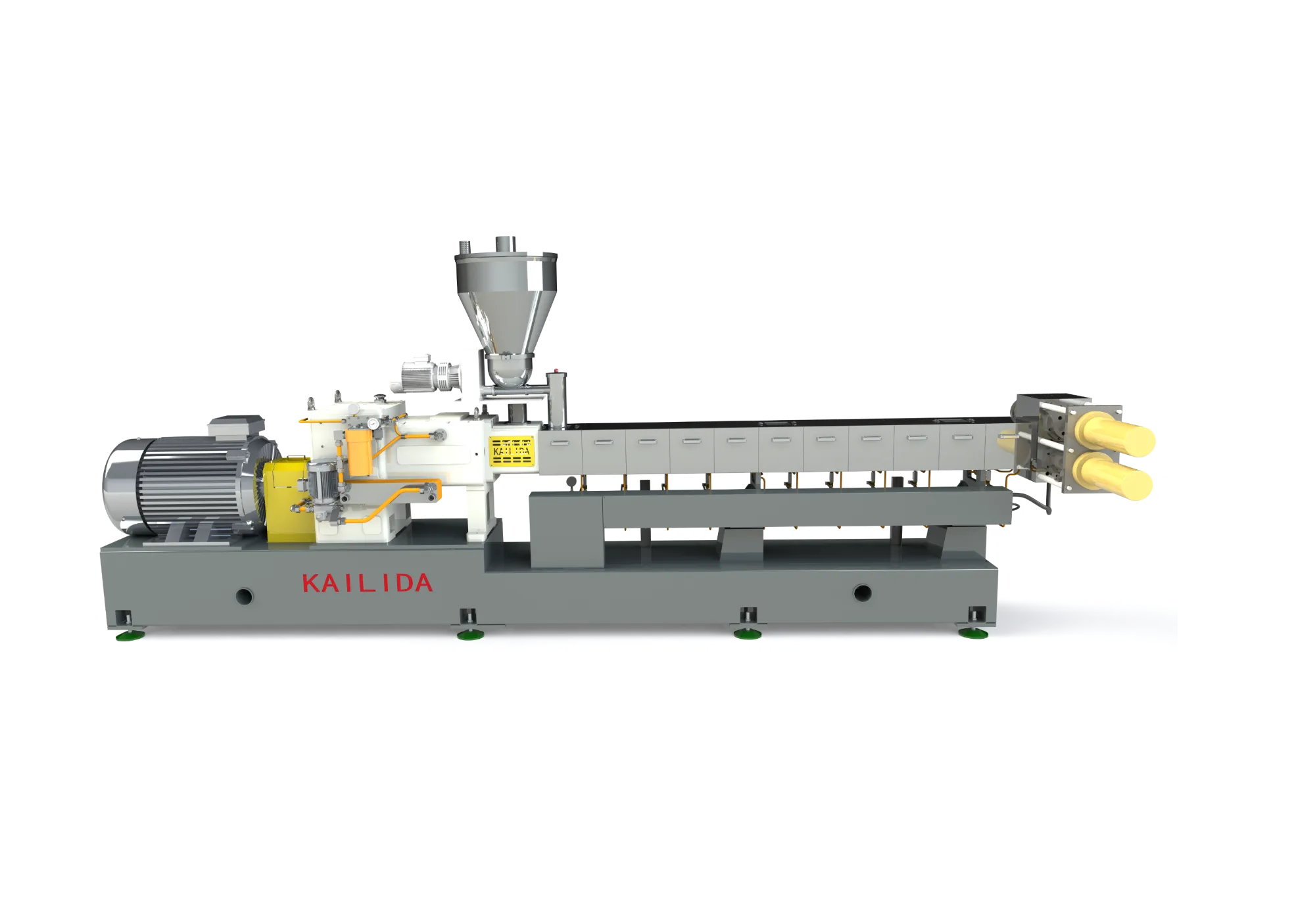
For plastic compounding, the key industrial challenge is not only making nanoparticles, but also integrating them into polymer feedstocks in a repeatable way. Common approaches include:
- Masterbatch preparation for easier dosing and dispersion
- Melt compounding in twin-screw extruders
- Solution blending for coatings and specialty films
- In situ polymerization for highly dispersed nanocomposites
- Surface modification using coupling agents, surfactants, or grafted polymers to improve compatibility
Raw feedstocks vary by additive family:
- Silica precursors for nanosilica
- Aluminosilicates for nanoclays
- Hydrocarbons or biomass-derived carbon sources for carbon nanomaterials
- Metal salts for oxide nanoparticles
- Cellulose-rich biomass for nanocellulose
In many formulations, nano-additives are used at low loadings, often below 5 wt.%, and sometimes at fractions of a percent, because the objective is property amplification rather than bulk substitution.
Applications and End-Use Markets
Nano-additives are used across plastics and related materials wherever small amounts of functionality can displace heavier, thicker, or more specialized formulations.
| End use | Common nano-additives | Usual benefit | Typical processing route |
|---|---|---|---|
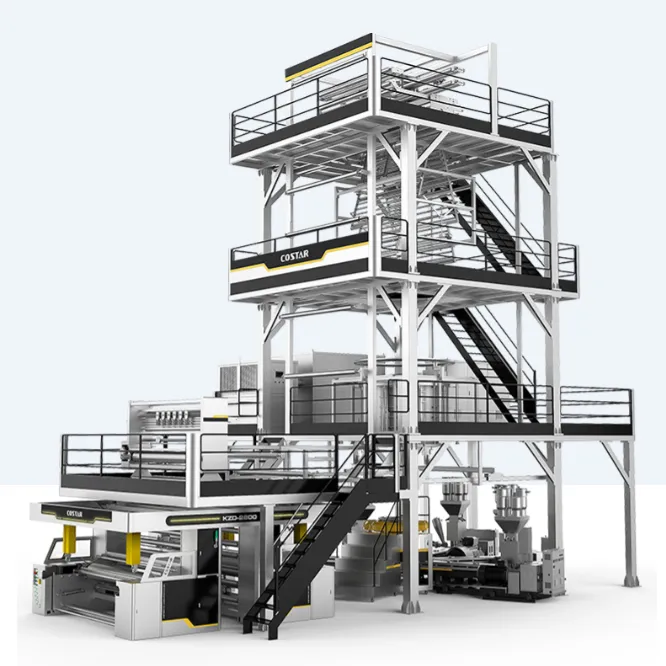
| Packaging films | Nanoclays, nanosilica, graphene derivatives | Gas barrier, stiffness, thermal stability | Blown film, cast film |
| Containers and closures | Nanosilica, nanoclays | Rigidity, scratch resistance, shelf-life support | Injection molding, extrusion |
| Automotive parts | Nanoclays, carbon nanotubes, nanosilica | Weight reduction, heat resistance, conductivity | Injection molding, compounding |
| Electrical and electronic compounds | Carbon nanotubes, graphene, metal oxides | Antistatic or conductive behavior | Compounding, extrusion |
| Construction plastics and coatings | Nanosilica, TiO2, ZnO | Durability, UV resistance, abrasion resistance | Coatings, extrusion, molding |
| Cable compounds | Nanofillers, metal oxides | Flame retardancy, tracking resistance | Cable extrusion |
| Medical and specialty devices | Silver-, silica-, and carbon-based nano-additives | Antimicrobial or mechanical performance | Injection molding, coating |
| Additive manufacturing feedstocks | Nanofillers and conductive nanomaterials | Printability, mechanical or electrical function | FDM, SLS, SLA feedstocks |
The strongest market pull comes from packaging, transport, electronics, construction, and high-performance consumer goods. In packaging, nano-additives are attractive because they can improve oxygen and moisture barrier without dramatically increasing thickness, supporting downgauging strategies. In automotive and aerospace, they can improve stiffness-to-weight ratio and heat performance, which aligns with lightweighting goals.
A poor-fit use is general-purpose, low-cost commodity plastic where property gains do not justify the added cost, quality-control burden, or regulatory review. In such cases, conventional fillers or standard stabilizer packages are usually more economical.
Environmental and Sustainability Aspects
The sustainability case for nano-additives is mixed and highly application-dependent. On the positive side, they can reduce material intensity by enabling thinner films, lighter parts, longer service life, or partial replacement of more resource-intensive ingredients. Some nano-enabled systems also support substitution of problematic chemistries, such as reducing reliance on certain halogenated flame retardants through multifunctional nanofiller design.
Bio-based nano-additives, especially nanocellulose, are receiving increasing attention because they can combine performance gains with reduced fossil dependence. In principle, nano-additives can also support circularity by extending product lifetimes and lowering virgin polymer demand through downgauging or higher-functionality formulations.
However, several concerns remain:
- Recyclability: nano-additives may complicate recycling streams if they alter melt behavior, color, conductivity, or sorting performance.
- Exposure and fate: free nanoparticles raise questions about occupational exposure, migration, and release during abrasion or disposal.
- LCA uncertainty: benefits from downgauging can be offset by energy-intensive synthesis or low yields in some nano-material routes.
- Regulatory complexity: food-contact, medical, and consumer applications often require case-by-case evaluation.
The most sustainable nano-additive systems are generally those that use low doses, stable embedding in the matrix, scalable synthesis, and a clear end-use benefit that outweighs added manufacturing complexity.
Economic and Global Market Impact
Nano-additives are a value-creation technology rather than a bulk commodity. Their economic role is to unlock performance per unit mass, which can justify premium pricing in specialized sectors. Their adoption is strongest where small performance improvements produce large downstream savings, such as lower package weight, longer service life, reduced maintenance, or higher operating efficiency.
Industry discussions commonly highlight stronger demand in high-performance polymer sectors, especially packaging, automotive, coatings, cable, and construction materials. Market growth is also being supported by nanotechnology integration into additive manufacturing and smart materials, where nanoscale fillers can improve printability or enable electrical and structural functions in one part.
Current Challenges and Innovations
The main technical challenges are:
- Dispersion control
- Cost-performance balance
- Health and exposure management
- Standardization of test methods
- Long-term aging and migration behavior
- Recycling compatibility
Current innovation directions include:
- Surface-functionalized nanoparticles for better matrix compatibility
- Hybrid nanofiller systems that combine platelets, spheres, and carbon structures for synergistic effects
- Bio-based nanofillers such as nanocellulose and nano-lignin derivatives
- Multifunctional masterbatches for easier industrial handling
- Nano-enabled flame retardancy that reduces additive loading while maintaining performance
- Conductive and sensing nanocomposites for smart packaging and electronics
In some formulations, small dosages of nanosilica or nanoclays are used to tune crystallization, increase stiffness, or improve barrier properties, while carbon-based nano-additives are selected when conductivity or electromagnetic shielding is required. A typical mechanism is percolation: once enough conductive particles form a connected network, electrical conductivity rises sharply even at low loading.
Future Outlook
The future of nano-additives in plastics will likely be shaped by three priorities: safer design, easier processing, and measurable sustainability benefit. Growth is expected in barrier packaging, electric and electronic materials, lightweight transport components, additive manufacturing, and bio-based nanocomposites.
The most commercially durable opportunities will probably be in applications where nano-additives solve a clear bottleneck:
- barrier without thickening
- conductivity without metalization
- reinforcement without heavy fillers
- flame retardancy without legacy chemistries
- durability without major redesign
As circularity requirements tighten, the strongest nano-additive platforms will be those that are compatible with recycling, validated for exposure safety, and able to deliver performance at very low loading with robust process control.
Summary
Nano-additives are a high-impact class of plastic auxiliaries that enable major property gains at low dosage through nanoscale interaction with the polymer matrix. Their value lies in multifunctionality: improved barrier, strength, conductivity, flame resistance, durability, and process control across packaging, automotive, electronics, construction, coatings, and advanced manufacturing.
Their limitations are equally important: dispersion, cost, safety, and recycling compatibility remain decisive barriers to widespread use. The most successful nano-additive systems are therefore those that combine strong technical benefit with scalable compounding, low loading, and a credible sustainability case.
References
- •
Applications of nano additives in polymeric and rubber composites: A comprehensive review. (2025, March 7). https://www.orientjchem.org/vol41no2/applications-of-nano-additives-in-polymeric-and-rubber-composites-a-comprehensive-review/Link
- •
Nano-additives in construction and building materials. (n.d.). https://nanoscalereports.com/index.php/nr/article/download/118/166/210Link
- •
Which polymers benefit most from nanoadditives? (2026, April 21). https://blog.polymernanocentrum.cz/which-polymers-benefit-most-from-nanoadditives/Link
- •
Nanoadditives - an overview. (n.d.). https://www.sciencedirect.com/topics/materials-science/nanoadditivesLink
- •
(Nano)additives - Partikelentwicklung am Fraunhofer ISC. (2024, November 14). https://www.partikel.fraunhofer.de/en/application/nano-additives.htmlLink
- •
Research on the application of nano-additives in gel-like lubricants. (2025, July 14). https://pmc.ncbi.nlm.nih.gov/articles/PMC12294172/Link
- •
Valorization of nano additives effects on the physical, ... (2025, April 25). https://pmc.ncbi.nlm.nih.gov/articles/PMC12032053/Link
- •
Table 1. (2025, January 1). https://pmc.ncbi.nlm.nih.gov/articles/PMC12692790/table/nanomaterials-15-01773-t001/Link
- •
Polymer nanocomposites - additives, properties, applications, environmental aspects. (n.d.). https://www.nanowerk.com/spotlight/spotid=57487.phpLink
- •
Nano-additives for food industries. (n.d.). https://link.springer.com/chapter/10.1007/978-3-030-05846-3_4Link
- •
[PDF] Using nanotechnology to improve concrete admixture for a lower ... (n.d.). https://aus.sika.com/dam/dms/au01/v/CIA-2023%20Improving%20admixture%20with%20nanotech%20-%20Sika%20-%20Full.pdfLink
- •
From chemistry to performance: How nano additives are ... (n.d.). https://www.sciencedirect.com/science/article/pii/S016773222500409XLink
- •
Nanoparticle additives: Enhancing material properties. (n.d.). https://www.flyriver.com/g/nanoparticle-additivesLink
- •
Exploring current role of nanotechnology used in food processing industry to control food additives and their biochemical mechanisms. (2022, January 1). https://pubmed.ncbi.nlm.nih.gov/34915833/Link
- •
How small raw materials can create big benefits. (2026, March 20). https://blog.nanochemigroup.cz/how-small-raw-materials-can-create-big-benefits/Link
- •
7 proven ways nanomaterials enhance manufacturing. (2026, March 9). https://www.manufacturenow.in/blogs/nanomaterials-in-manufacturingLink
- •
7. Review of nanoparticle additives. (2025, May 16). https://www.scribd.com/document/673537058/7-Review-of-nanoparticle-additivesLink
- •
Applications of nano-additives in internal combustion engines. (n.d.). https://link.springer.com/article/10.1007/s10973-022-11199-6Link
- •
Application of nano-additives reinforcement towards ... (2022, October 11). https://irispublishers.com/ctcse/fulltext/Application-of-Nano-Additives-Reinforcement-towards-Concrete-with-Excellent-Mechanical-Properties-A-Review.ID.000707.phpLink
- •
Behavior evaluation of bituminous mixtures reinforced with nano-sized additives: A review. (2020, September 29). https://www.mdpi.com/2071-1050/12/19/8044Link
- •
Nano-additive manufacturing and non-destructive testing of ... (2023, October 10). https://pmc.ncbi.nlm.nih.gov/articles/PMC10609085/Link
- •
Nanomaterials as promising additives for high- ... (2023, April 22). https://pmc.ncbi.nlm.nih.gov/articles/PMC10180160/Link
- •
A review on nanomaterial-based additive manufacturing: Dynamics in properties, prospects, and challenges. (n.d.). https://link.springer.com/article/10.1007/s40964-023-00514-8Link
- •
Reinforcing concrete with nano-enhanced bio-additives. (n.d.). https://link.springer.com/article/10.1007/s44416-025-00022-8?error=cookies_not_supported&code=0423a1d3-b76f-4554-9a34-a591af64b10dLink
- •
[PDF] Nano-particles additives as a promising trend in tribology. (n.d.). https://catalog.lib.kyushu-u.ac.jp/opac_download_md/4742121/777-798.pdfLink
- •
Article 1.p65. (n.d.). https://epubs.icar.org.in/ejournal/index.php/IJDS/article/download/45669/19818Link
- •
Additive (nano)manufacturing perspectives: The use of nanofillers and tailored materials. (n.d.). https://mfr.edp-open.org/articles/mfreview/full_html/2017/01/mfreview170003/mfreview170003.htmlLink
- •
Vol. 18(30), pp. 946-961, October, 2019. (n.d.). https://academicjournals.org/journal/AJB/article-full-text-pdf/62B50C662158.pdfLink
- •
A review on current progress of nano additives in pulp ... (n.d.). https://www.tandfonline.com/doi/full/10.1080/15440478.2026.2622995Link
- •
Nano-enabled chemical additives for industrial applications market. (2026, June 23). https://marketintelo.com/report/nano-enabled-chemical-additives-for-industrial-applications-marketLink
- •
ISSN: 1988‐2688. (n.d.). https://pdfs.semanticscholar.org/cb72/e3cbfe74822879445afa58478fbeb048384a.pdfLink
- •
Latest development in microalgae-biofuel production ... (2019, May 20). https://pmc.ncbi.nlm.nih.gov/articles/PMC6528301/Link
- •
Nanoparticle reinforced composites for rapid prototyping ... (n.d.). https://www.internationaljournalssrg.org/IJME/2026/Volume13-Issue5/IJME-V13I5P104.pdfLink
- •
A review of friction performance of lubricants with nano additives. (2021, October 22). https://pmc.ncbi.nlm.nih.gov/articles/PMC8585442/Link
- •
[PDF] Additive manufacturing (AM) and nanotechnology: Promises and ... (n.d.). http://utw10945.utweb.utexas.edu/Manuscripts/2011/2011-56-Ivanova.pdfLink
- •
Materials for additive manufacturing. (2018, August 1). https://www.uni-due.de/barcikowski-group/matfraen.phpLink
- •
Industry embraces additive manufacturing with nanotech. (2023, October 3). https://blog.polymernanocentrum.cz/industry-embraces-additive-manufacturing-with-nanotechnology/Link
- •
Nano-level additive manufacturing: Condensed review of ... (n.d.). https://www.mdpi.com/2227-7080/12/7/117Link
- •
Recent developments of nanomaterial applications in ... (n.d.). https://www.sciencedirect.com/science/article/abs/pii/S2211339820300198Link
- •
Sustainable machining with nano-fluids | PDF. (2026, April 12). https://www.scribd.com/document/683531909/2018-Sustainability-Assessment-of-Machining-with-Nano-Cutting-Fluids-119ec3f16beb8b4b8eafd67a79a4211dLink
- •
Applications of nanotechnology. (2026, April 20). https://www.nano.gov/about-nanotechnology/applications-nanotechnology/Link
- •
The best nanoparticles for additive manufacturing. (2021, December 3). https://www.azonano.com/article.aspx?ArticleID=5898Link
- •
IJIPE Vol.3 No.3 (2025). (n.d.). https://journals.unizik.edu.ng/ijipe/article/download/6007/5270/14421Link
- •
Additive nanomanufacturing: What is it and how does it ... (2025, December 23). https://www.azonano.com/article.aspx?ArticleID=6980Link
- •
An overview of the applications of nanomaterials and ... (2020, February 3). https://pmc.ncbi.nlm.nih.gov/articles/PMC7074443/Link
- •
How nanomaterials can transform manufacturing. (2017, May 10). https://www.asme.org/topics-resources/content/how-nanomaterials-can-transform-manufacturingLink