

Introduction
Nanocomposites are multiphase materials in which at least one constituent has dimensions in the nanometer range, typically below 100 nm, or where the phase separation itself occurs on a nanoscopic scale. In plastics and allied materials technology, the term usually refers to a polymer matrix reinforced with nano-sized fillers such as nanoclays, silica, carbon nanotubes, graphene derivatives, metal oxides, or nanocellulose, although the concept also extends to metal- and ceramic-matrix systems.
Their industrial significance lies in the ability of a very small filler loading to produce disproportionate changes in stiffness, barrier performance, thermal resistance, flame retardancy, conductivity, and other properties through the extremely large interfacial area between filler and matrix. This makes nanocomposites strategically important in packaging, automotive, electronics, energy storage, biomedical devices, coatings, and environmental technologies, while also placing them at the center of current debates about recyclability, exposure control, and life-cycle sustainability.
History and Development
Nanocomposites emerged from broader composite-material research as scientists began to exploit nanoscale dispersion rather than conventional micron-scale reinforcement. Early work established that property gains could be achieved when fillers were distributed at the nanoscale, creating new interfacial phenomena rather than simply acting as conventional load-bearing particles.
Over time, the field expanded from layered silicates and carbon-based fillers into a wider family of nanofillers, including nanocellulose, metal oxides, nanosilver, and two-dimensional materials. More recent work has focused on multifunctional systems that combine structural, electrical, sensing, or barrier functions in a single material platform.
Chemical Structure and Key Properties
Nanocomposites are defined less by a single chemistry than by their architecture: a continuous matrix containing a dispersed phase with nanoscale dimensions. In polymer nanocomposites, the matrix may be a thermoplastic, thermoset, or elastomer, while the nanofiller may be plate-like, tubular, spherical, fibrous, or network-forming.
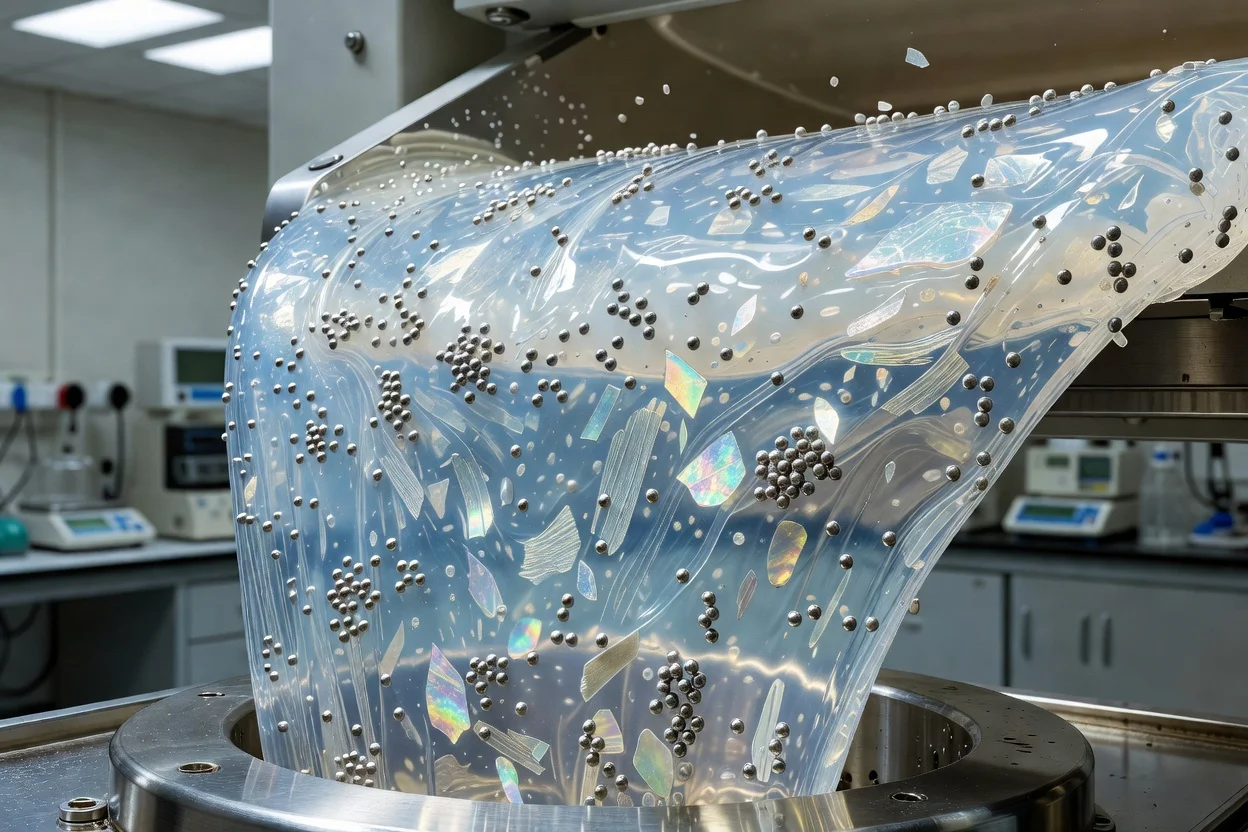
The main property gains arise from three mechanisms:
- Interfacial amplification: a large filler surface area creates strong matrix–filler interactions and can modify crystallization, chain mobility, and stress transfer.
- Tortuous-path effects: plate-like fillers force gas or vapor molecules to follow longer diffusion paths, improving barrier properties.
- Percolation effects: conductive fillers form connected networks at low loadings, enabling electrical or thermal transport.
Typical advantages include:
- higher stiffness and strength at low filler loading,
- lower gas and water permeability,
- improved flame retardancy,
- enhanced electrical or thermal conductivity when conductive fillers are used,
- improved optical, magnetic, catalytic, or sensing behavior in functional systems.
Important limits remain:
- Poor O₂/grease barrier in many neat polymer matrices → cause: polymer free volume and molecular permeability are too high for demanding packaging uses → workaround: add nanoclays, graphene-like platelets, or nanocellulose to create a tortuous diffusion path.
- Low surface energy and weak adhesion before treatment → cause: many polymers, especially polyolefins, bond poorly to inks, coatings, or adhesives → workaround: surface activation, compatibilizers, or grafted coupling agents are used to improve interfacial bonding.
- Agglomeration at higher loading → cause: high surface energy of nanoparticles promotes clustering → workaround: surface functionalization, masterbatch dilution, in situ polymerization, or shear-intensive compounding are used to improve dispersion.
A practical formulation example is 0.5–5 wt% of a high-aspect-ratio nanofiller in a polymer matrix, which is often sufficient to produce measurable improvements because the filler acts through interfacial and network effects rather than bulk replacement.
Production Processes and Raw Feedstocks
Nanocomposites are manufactured by combining a polymer matrix with nanoscale fillers through melt blending, solution mixing, in situ polymerization, sol–gel routes, or surface-grafted dispersion methods. Industrially, melt compounding is attractive because it fits existing plastics processing lines, but achieving uniform dispersion remains the central technical challenge.
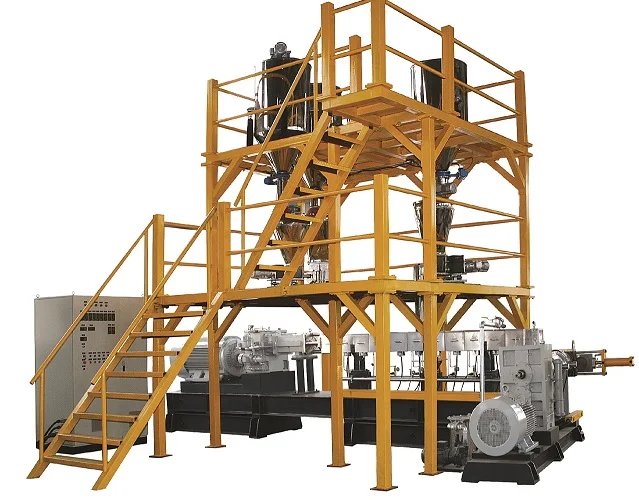
Common feedstock classes include:
- Polymer matrices: polyethylene, polypropylene, polyethylene terephthalate, polyamide, epoxy, polyurethane, and other thermoplastics or thermosets.
- Nanofillers: nanoclays, silica, alumina, titanium dioxide, zinc oxide, carbon nanotubes, graphene-family materials, nanocellulose, and hybrid fillers.
- Compatibilizers and surface modifiers: coupling agents, maleic-anhydride-grafted polymers, silanes, surfactants, and functional polymers that improve wetting and dispersion.
For packaging and commodity plastics, a common industrial logic is to add a nanofiller at low dosage so the base resin retains processability while gaining a targeted property uplift. In functional systems, filler chemistry is selected to create a conductive, antimicrobial, catalytic, or responsive surface rather than purely mechanical reinforcement.
Applications and End-Use Markets
Nanocomposites are used where a conventional plastic is not sufficiently strong, protective, conductive, or functional, but where a fully different engineering material would be too heavy, expensive, or difficult to process.
| Sector | Typical nanocomposite function | Common matrix/filler pairing | Usual process or form |
|---|---|---|---|
| Packaging | Barrier, stiffness, active surfaces | Polyolefin or polyester with nanoclay, nanocellulose, or oxide fillers | Film extrusion, coating, multilayer structures |
| Automotive and transport | Weight reduction, toughness, dimensional stability | Polyamide, polypropylene, epoxy with clay, glass-free nanofillers, CNTs | Injection molding, compounding, structural panels |
| Electronics | Conductivity, EMI shielding, thermal management | Epoxy, TPU, or thermoplastics with CNTs, graphene, metal oxides | Thin films, molded housings, printed layers |
| Energy storage | Electrode performance, flexible substrates | Polymer matrices with carbon nanostructures or metal-oxide nanofillers | Coatings, membranes, electrode binders |
| Biomedical | Biocompatibility, scaffold behavior, drug delivery | Biopolymers, hydrogels, nanocellulose, bioactive oxides | Scaffolds, films, coatings, gels |
| Water treatment and environment | Adsorption, catalysis, filtration | Polymer or hybrid matrices with oxide or carbon nanomaterials | Membranes, beads, porous structures |
| Construction | Crack resistance, fire performance, durability | Cementitious or polymeric systems with nanofillers | Panels, coatings, sealants |
| Textiles and coatings | Antimicrobial, UV resistance, antistatic behavior | Polymer coatings with oxides, silver, or carbon nanofillers | Surface finishing, fiber coatings |
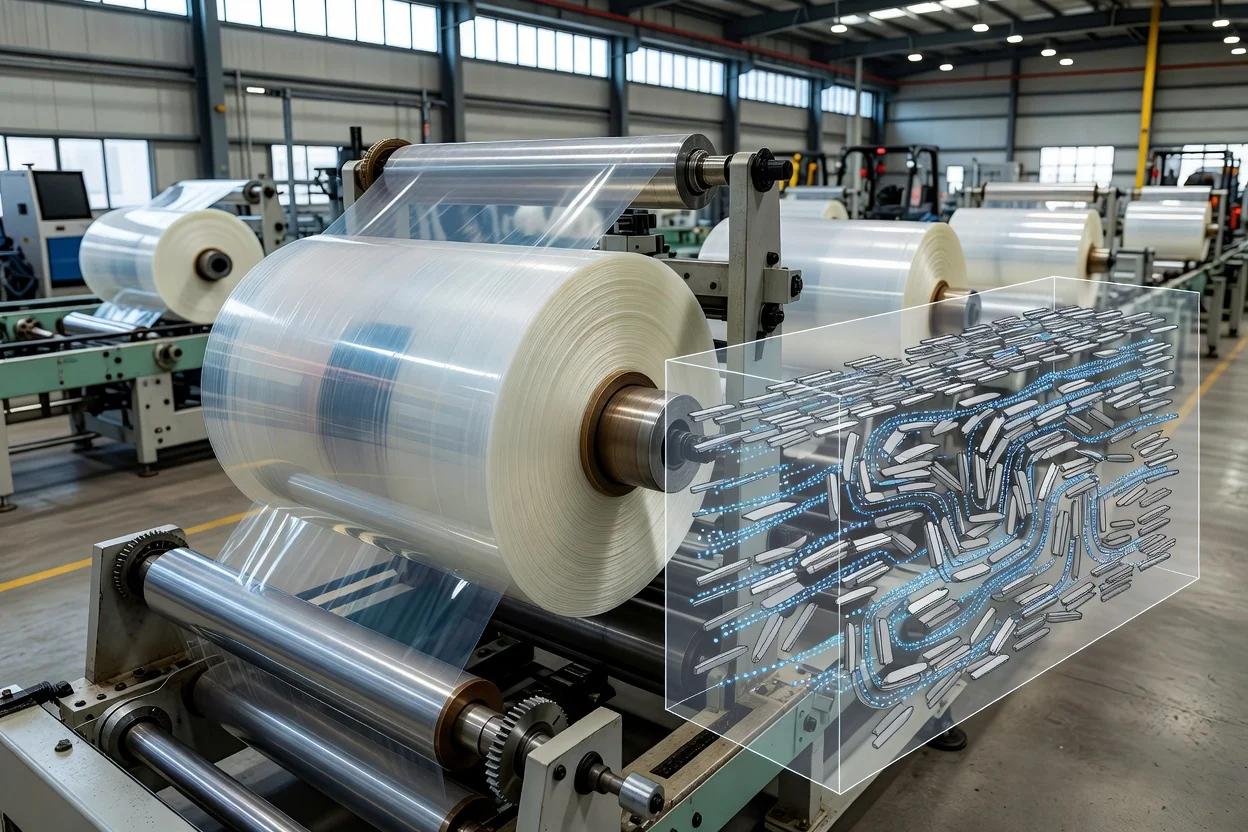
In packaging, nanocomposites are especially valuable because low filler loadings can improve gas barrier and heat resistance without making films brittle. In automotive and aerospace-related uses, they are valued for a high strength-to-weight ratio and for enabling lightweight components that support fuel efficiency and lower emissions. In electronics and sensors, the main attraction is the creation of conductive or responsive networks at very low filler levels.
A notable poor-fit use is high-transparency optical glazing when heavily filled: if dispersion is imperfect or the refractive index mismatch is too large, haze and light scattering can negate the advantage of the nanocomposite approach.
Environmental and Sustainability Aspects
The sustainability profile of nanocomposites is mixed and highly formulation-dependent. On the positive side, they can reduce material use by achieving higher performance at low filler loading, extend component service life, improve energy efficiency through lightweighting, and in some cases replace heavier or more resource-intensive materials.
Nanocellulose is a particularly important sustainable reinforcement because it offers renewable sourcing, low density, and strong mechanical potential in packaging, biomedical, and electronics applications. Bio-based nanocomposite designs are also being explored to reduce fossil feedstock dependence and broaden the use of renewable polymers and fillers.
At the same time, several concerns remain:
- Recyclability may be reduced if fillers are incompatible with mechanical recycling streams or if the nanofiller network alters reprocessing behavior.
- Life-cycle impacts depend on energy use in nanofiller production, surface modification, and end-of-life handling.
- Occupational and environmental exposure requires careful control because nanoscale particles can present inhalation and dispersion risks during manufacture or compounding.
- End-of-life separation is difficult because many nanocomposites are designed for intimate interfacial integration rather than easy delamination.
The sustainability case is strongest when nanocomposites deliver a measurable service-life or mass-reduction benefit that outweighs the added complexity of filler production and recycling.
Economic and Global Market Impact
Nanocomposites are a high-value specialty segment rather than a single commodity market, and demand is driven by performance requirements in packaging, electronics, transport, healthcare, and energy systems. Growth is associated with the broader shift toward lightweight materials, smart packaging, multifunctional surfaces, and miniaturized devices.
The market is fragmented across polymer processors, specialty additive producers, nanofiller suppliers, and compounders. Leading activity is concentrated in regions with strong plastics conversion, electronics manufacturing, and advanced materials industries, particularly North America, Europe, China, Japan, and South Korea. Production leadership tends to be application-specific rather than universal, because commercial success depends on filler technology, dispersion know-how, and regulatory acceptance as much as on resin volume.
Current Challenges and Innovations
The main technical challenge remains dispersion control: the superior properties of nanocomposites depend on maintaining nanoscale separation rather than allowing filler agglomeration. Related challenges include cost, scale-up, viscosity increase during processing, interfacial stability, color control, and consistent performance across large production lots.
Current innovation directions include:
- Surface functionalization to improve compatibility between filler and matrix.
- Hybrid nanofillers that combine two or more nanoscale additives to balance barrier, strength, and conductivity.
- Bio-based nanocomposites using nanocellulose and other renewable fillers.
- Multifunctional packaging films that combine barrier, antimicrobial, and sensing functions.
- Energy and electronics platforms that exploit conductive networks for flexible devices and storage components.
A useful formulation example is nanoclay at low single-digit loading in a polymer film, where platelets are oriented during extrusion to create a tortuous path that slows oxygen and moisture transport. Another is carbon nanotube loading below the percolation threshold used in some antistatic or conductive plastics, where the aim is to create just enough network connectivity for electrical function without excessive cost or viscosity rise.
Future Outlook
The most likely future for nanocomposites is continued specialization rather than universal substitution of conventional plastics. Growth is likely to be strongest in applications where small property gains have high commercial value: barrier packaging, lightweight transport parts, sensors, membranes, biomedical scaffolds, and energy devices.
Future development will likely be shaped by three pressures:
- Performance integration: more products will combine structural, sensing, and protective functions in one material.
- Sustainability requirements: designers will increasingly favor renewable or recyclable matrices, lower-toxicity fillers, and life-cycle-optimized formulations.
- Manufacturing robustness: scalable dispersion methods and process-compatible masterbatches will determine whether many laboratory systems become industrial products.
Summary
Nanocomposites are advanced multiphase materials in which nanoscale fillers or phase structures create property combinations that are difficult to achieve with conventional composites. In plastics, they are especially important because low filler loadings can deliver large gains in barrier, mechanical, thermal, electrical, and functional performance, but only when dispersion, interfacial design, and end-of-life considerations are carefully managed.
References
- •
Nanocomposite. (n.d.). In Merriam-Webster.Link
- •
Nanocomposite. (2006, June 22). In Wikipedia.Link
- •
Application of starch as an active ingredient for the fabrication of nanocomposite in food packaging. (2012, October 30). ScienceDirect Topics.Link
- •
Nanocomposites - Properties and applications. (2001, September 27). AZoM.Link
- •
Perspective chapter: Nanocomposites – Unlocking the future of advanced materials. (2024, May 13). IntechOpen.Link
- •
Materiales nanocompuestos. (2020, June 27). IntechOpen.Link
- •
Nanocomposites: Synthesis, structure, properties and new application opportunities. (n.d.). Matéria (Rio de Janeiro).Link
- •
Applications of nanocomposites. (n.d.). UnderstandingNano.Link
- •
Nanocomposites. (n.d.). Kanatzidis Research Group.Link
- •
Nanocomposite - An overview. (n.d.). ScienceDirect Topics.Link
- •
Recent progress and overview of nanocomposites. (2022, May 19). IntechOpen.Link
- •
Nano-enhanced polymer composite materials. (2025, March 26). PMC.Link
- •
Progress and applications of nanocomposites in the ... (2025, December 18). PMC.Link
- •
Nanocomposites: Preparation, properties, and applications. (2015, February 1). International Journal of Latest Technology in Engineering, Management & Applied Science.Link
- •
1 Introduction to nanocomposites. (n.d.). Wiley-VCH.Link
- •
Recent advances in applications of nanocomposites: A brief review. (2026, January 8). Springer.Link
- •
Nanocomposite - An overview. (2004, October 21). ScienceDirect Topics.Link
- •
Nanocomposite materials. (n.d.). CUTM Courseware.Link
- •
A comprehensive review on advances in synthesis and ... (2025, September 1). Wiley.Link
- •
Nanocomposites – An overview of properties, applications ... (2007, January 24). AZoNano.Link
- •
Advances in nanocomposites. (2024, December 16). PMC.Link
- •
A 30-year review on nanocomposites: Comprehensive bibliometric ... (2024, February 27). PMC.Link
- •
Nanocomposite [PPT]. (2014, September 24). SlideShare.Link
- •
Polymeric nanocomposites for environmental and industrial ... (2022, January 18). PMC.Link
- •
Special issue “Novel structural and functional material properties enabled by nanocomposite design”. (2023, February 1). PMC.Link
- •
NANOCOMPOSITES MATERIALS DEFINITIONS, TYPES AND SOME ... (n.d.). Neliti.Link
- •
What are the different types of nanocomposites? (2026, March 31). AZoNano.Link
- •
Brief review: Applications of nanocomposite in ... (2023, March 16). PMC.Link
- •
Chemistry, structures, and advanced applications of nanocomposites from biorenewable resources. (2020, July 30). ACS Publications.Link
- •
Polymer-nanoparticle composites: From synthesis to ... (2010, May 28). PMC.Link
- •
Nanocellulose-based nanocomposites for sustainable applications. (2022, October 5). PMC.Link
- •
Nanocomposites. (2026, July 23). Taylor & Francis Online.Link
- •
A brief review on polymer nanocomposites and its ... (n.d.). Materials Today: Proceedings.Link
- •
Nanocomposite - An overview. (n.d.). ScienceDirect Topics.Link
- •
Nanocomposite [PPTX]. (2013, January 10). SlideShare.Link