
Introduction
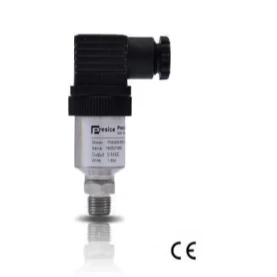
Sensors are devices that detect physical, chemical, or biological changes and convert them into signals that can be measured, processed, and used for control or monitoring in plastic processing machinery. In the plastics industry, they are fundamental to stable process operation, product quality, energy efficiency, predictive maintenance, and integration with automation and Industry 4.0 systems.
In plastic processing equipment, sensors are used to measure variables such as temperature, pressure, position, flow, level, vibration, humidity, speed, and current. These measurements support closed-loop control in machines such as injection molding systems, extruders, blow molding machines, thermoformers, granulators, dryers, conveyors, and recycling lines. As processing systems become more digitalized, sensor networks increasingly provide the real-time data needed for machine optimization, defect prevention, traceability, and remote diagnostics.
History and Development
Early industrial sensing in plastics processing was based on relatively simple electromechanical devices, especially switches, thermostats, pressure gauges, and analog indicators. As polymer processing became more precise, machine builders began incorporating transducers and electronic sensors that could feed signals directly into controllers and later programmable logic controllers.
Three major milestones shaped modern sensor use in plastics machinery:
- Transition from analog to electronic control: thermocouples, RTDs, strain-gauge pressure sensors, and encoders replaced many purely mechanical indicators, enabling tighter control of barrel zones, mold cavities, screw position, and drive systems.
- Expansion of multi-sensor automation: machine control systems began combining temperature, pressure, position, and vibration data to support higher repeatability in injection molding and extrusion, especially where melt stability and cycle consistency are critical.
- Integration with intelligent manufacturing: recent industrial digitization has connected sensors to edge controllers, cloud analytics, and condition-monitoring platforms, supporting predictive maintenance, energy monitoring, and adaptive process control.
A notable development in recent years has been the wider use of non-contact and distributed sensing, including infrared temperature measurement, optical encoders, ultrasonic level detection, and machine-vision-based inspection, which reduce wear and allow faster feedback in demanding production environments.
Technical Overview
A sensor is generally defined as a device that detects a physical parameter and converts it into an electrical signal for measurement or control. In plastics machinery, the practical value of a sensor depends not only on the sensing element but also on signal conditioning, sampling rate, mounting location, temperature tolerance, contamination resistance, and calibration stability.
Main sensor functions in plastics processing
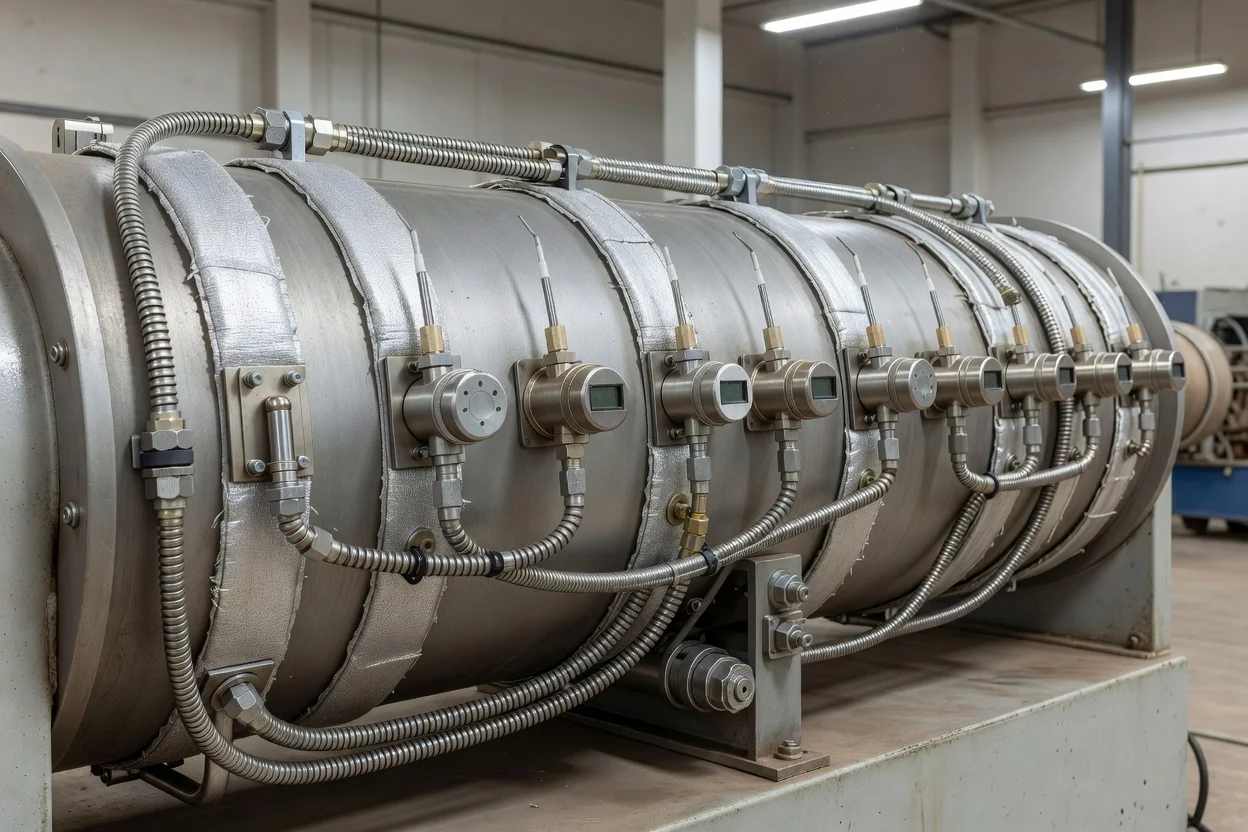
- Temperature sensing for heaters, barrels, dies, molds, dryers, and cooling circuits, commonly using thermocouples, RTDs, thermistors, or infrared sensors.
- Pressure sensing in hydraulic systems, melt streams, pneumatic systems, and cavity monitoring, often using strain-gauge or piezoelectric transducers.
- Position and speed sensing for screw travel, clamp motion, servo axes, and rotary drives, typically using encoders, LVDTs, potentiometers, or proximity sensors.
- Flow and level sensing in cooling water, resin conveying, drying, and additive dosing systems.
- Vibration and current sensing for condition monitoring of motors, pumps, gearboxes, fans, and compressors.
Performance characteristics
For plastics machinery, sensor performance is usually evaluated by:
- Accuracy and repeatability
- Response time
- Drift over time and temperature
- Resistance to melt pressure, abrasion, moisture, and chemicals
- Compatibility with industrial communication networks
- Calibration stability under continuous operation
In high-precision molding or extrusion, even small sensing errors can affect melt temperature, screw speed control, cavity pressure, or material residence time, which in turn influence dimensional stability, surface quality, and scrap rate.
Key Characteristics and Engineering Details
Sensors used in plastics machinery are rarely stand-alone devices; they are part of a measurement chain that includes the sensing element, signal converter, controller, and actuator. The engineering challenge is to obtain reliable data in harsh conditions involving heat, vibration, resin dust, fillers, and cleaning chemicals.
Common sensor types in plastics equipment
| Sensor type | Typical measured variable | Typical role in plastics machinery |
|---|---|---|
| Thermocouple | Temperature | Barrel zones, hot runners, dies, ovens, dryers |
| RTD | Temperature | Higher-stability temperature control in process zones |
| Pressure transducer | Melt or hydraulic pressure | Injection molding cavities, extrusion dies, hydraulic circuits |
| Encoder | Position, speed | Screw rotation, servo drives, robots, pullers |
| Proximity sensor | Presence, position | Mold open/close detection, part ejection, guarding |
| Flow sensor | Coolant or resin flow | Mold cooling, water circuits, dosing lines |
| Level sensor | Solid or liquid level | Hopper fill, drying bins, additive tanks |
| Vibration sensor | Acceleration or velocity | Bearings, motors, gearboxes, rotating auxiliaries |
| Current sensor | Motor load, energy use | Drives, heaters, auxiliary equipment |
| Humidity sensor | Moisture in air or material environment | Dryers, material handling, storage control |
Quantitative benchmarks in recycling and material handling
Although sensor specifications vary by vendor and application, plastics-recycling and granulation systems often provide useful practical benchmarks:
- Granulate or flake size after size reduction commonly ranges from about 6–12 mm for many recycling and regrind applications, with downstream requirements varying by process and contaminant sensitivity.
- Centrifugal dewatering systems often reduce residual surface moisture to roughly 1–2%, while optimized drying trains can go lower depending on polymer, residence time, and line configuration.
- Throughput in industrial recycling lines can range from a few hundred kg/h in compact systems to several t/h in larger washing and extrusion lines.
- Rotor speeds in shredding or granulation equipment commonly span from relatively low-speed torque systems to high-speed granulators operating at several hundred to several thousand rpm, depending on material type and desired particle geometry.
- Specific energy consumption varies widely with process and feedstock, but modern sensor-assisted control is often used to reduce unnecessary load peaks, over-drying, and idle consumption.
Why these details matter
- In injection molding, cavity pressure sensors can reveal packing behavior and detect short shots, flash risk, or gate freeze-off.
- In extrusion, melt pressure and temperature sensors help stabilize output, reduce surging, and protect dies and screens.
- In recycling, sensors monitor contamination, moisture, material flow, and machine loading to improve throughput and reduce reject material.
- In auxiliary systems, current, vibration, and temperature sensors enable early fault detection in motors, pumps, and dryers.
Types and Variations
Sensors in plastics machinery can be classified in several ways.
By operating principle
- Active sensors, which require external excitation or power to generate a measurable output.
- Passive sensors, which generate or modify a signal from the measured phenomenon without requiring separate excitation in the same sense.
By output form
- Analog sensors, which provide continuous output proportional to the measured quantity.
- Digital sensors, which provide discrete signals or encoded data for direct processing by controllers and networks.
By measured variable
- Temperature sensors
- Pressure sensors
- Position sensors
- Motion and vibration sensors
- Flow sensors
- Level sensors
- Humidity sensors
- Chemical and gas sensors
- Optical and vision sensors
By installation method
- Contact sensors, such as embedded thermocouples or pressure transducers
- Non-contact sensors, such as infrared temperature sensors, optical encoders, and photoelectric detectors
Applications and Uses
Sensors are embedded throughout plastics processing lines, from raw-material handling to final inspection.
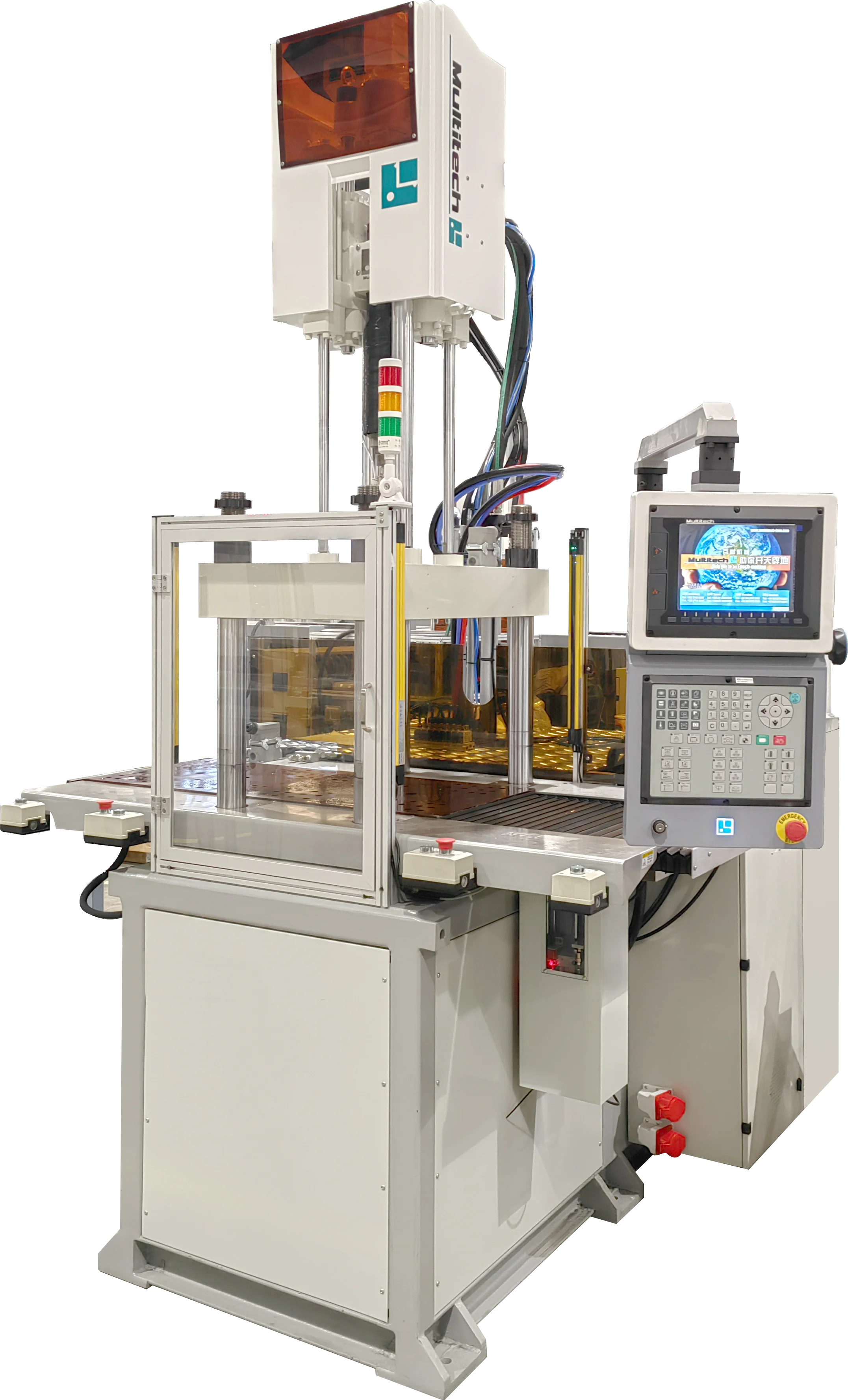
Injection molding
- Barrel temperature sensors regulate heater bands and melt preparation.
- Cavity pressure sensors support mold filling analysis and part-quality control.
- Linear position sensors track screw movement, clamp stroke, and ejector position.
- Safety and proximity sensors monitor guards, doors, and machine interlocks.
Extrusion
- Melt pressure sensors stabilize extrusion output and protect screens and dies.
- Temperature sensors maintain thermal balance across zones and downstream tooling.
- Speed and torque sensors optimize screw performance and detect overload.
- Level sensors manage gravimetric or volumetric feed systems.
Blow molding
- Parison temperature and position monitoring improve wall distribution.
- Pressure sensors control compressed air and hydraulic systems.
- Vision sensors inspect container geometry and seal integrity.
Thermoforming
- Infrared sensors and temperature feedback support sheet heating uniformity.
- Position sensors coordinate sheet transport, mold closing, and trim operations.
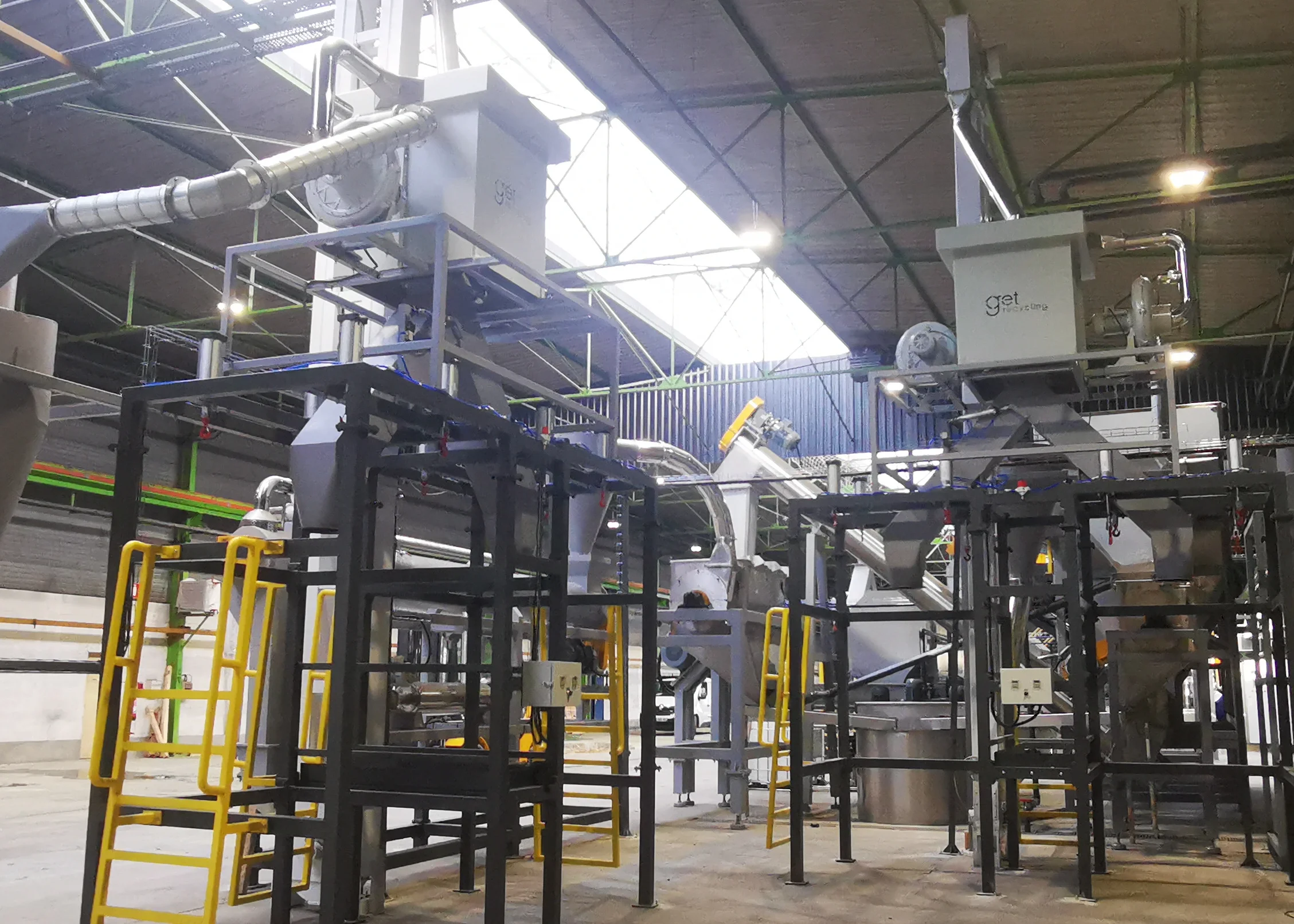
Recycling and reprocessing
- Moisture sensors and dryer monitoring are important for hygroscopic polymers.
- Metal detection and optical sensors assist in contamination removal.
- Vibration and current sensors track the condition of shredders, granulators, and conveyors.
- Flow and level sensors help regulate washing, separation, and dosing systems.
Auxiliary equipment
- Current sensors monitor motors in chillers, dryers, pumps, and compressors.
- Flow sensors regulate cooling water and process media.
- Pressure sensors supervise pneumatic and hydraulic auxiliaries.
Poor-fit use case
Sensors are less effective when installed in locations with severe fouling, extreme abrasion, or unstable mounting, such as directly in heavily contaminated scrap streams without protective design. In such cases, sensor reliability can degrade quickly, and indirect measurement or protected housings are usually preferable.
Technological Innovations and Automation
Modern plastics machinery increasingly uses smart sensors connected to PLCs, industrial PCs, and cloud platforms. These systems support:
- Closed-loop control for temperature, pressure, speed, and flow
- Predictive maintenance based on vibration, temperature, and current signatures
- Condition-based alarm systems for early fault detection
- Machine learning and analytics for quality prediction and process optimization
- Digital twins for simulating process behavior and tuning machine parameters
A major trend is the combination of multiple sensor streams into a unified process model. For example, in injection molding, cavity pressure, screw position, and barrel temperature data can be used together to infer melt behavior more accurately than any single signal alone.
Environmental and Sustainability Aspects
Sensors contribute to sustainability in plastics processing in several practical ways:
- Energy efficiency: tighter control of heaters, drives, compressors, and dryers reduces unnecessary energy use.
- Material waste reduction: early detection of drift, contamination, and underfilling lowers scrap and rework.
- Water optimization: flow and temperature sensors improve cooling efficiency and reduce coolant waste.
- Circular economy support: recycling lines depend on sensors for sorting, moisture control, contamination detection, and throughput monitoring.
At the same time, sensor-rich systems add electronics, calibration needs, and maintenance complexity. The sustainability benefit is strongest when sensors are selected for measurable process gains rather than added without a clear control objective.
Economic and Global Market Impact
Sensors are a foundational component of the global plastics-machinery value chain because they influence machine performance, uptime, and product consistency. Their economic impact appears in several ways:
- Higher throughput through better process stability
- Lower scrap rates through early defect detection
- Reduced downtime through condition monitoring
- Improved labor productivity through automation
- Better compliance and traceability in regulated applications
Demand is especially strong in regions and sectors emphasizing industrial digitalization, energy efficiency, automotive lightweighting, packaging productivity, medical plastics, and recycled-content processing. Growth in smart manufacturing and connected equipment has also expanded the market for sensor-enabled retrofits on existing machinery.
Current Challenges and Innovations
Despite their importance, sensor systems in plastics machinery face several challenges:
- Heat and contamination can shorten sensor life or cause drift.
- Calibration and validation are necessary to preserve measurement integrity.
- Data overload can obscure actionable signals if systems are not properly configured.
- Interoperability remains uneven across machine builders, controllers, and software platforms.
- Cost sensitivity is high in commodity processing, where added instrumentation must justify itself through clear savings.
Current innovation is focused on:
- Ruggedized sensors with better thermal and chemical resistance
- Embedded sensing in molds, screws, dies, and tooling
- Wireless and low-power sensing for rotating or hard-to-wire components
- Self-diagnostic sensors that detect drift or failure
- AI-assisted analytics that turn sensor data into maintenance and quality predictions
Future Outlook
Sensors are likely to become even more deeply integrated into plastics machinery as processors pursue higher automation, more recycled content, tighter quality tolerances, and lower energy intensity. Future systems will increasingly combine multi-parameter sensing, edge computing, and adaptive control so that machines can respond dynamically to changing resin lots, ambient conditions, and product specifications.
The most important long-term direction is not simply more sensors, but better use of sensor data: faster interpretation, stronger process models, and more reliable closed-loop decisions. In that sense, sensors are evolving from measurement devices into the nervous system of intelligent plastics processing equipment.
References
- •
Sensors: Working principles, types, and application. (n.d.). https://www.etei.com/news/sensors-working-principles-types-and-applicationLink
- •
30 types of sensors and their applications: An overview. (2025, July 22). https://www.theknowledgeacademy.com/blog/types-of-sensors/Link
- •
What is a sensor? Types & how they work. (2020, March 9). Dewesoft. https://dewesoft.com/blog/what-is-a-sensorLink
- •
Sensors explained. (2025, March 27). Gantner Instruments. https://www.gantner-instruments.com/support-downloads/gi-academy/sensors-explained/Link
- •
Sensor. (2003, May 28). Wikipedia. https://en.wikipedia.org/wiki/SensorsLink
- •
传感器技术及其应用发展态势分析. (2014, April 14). 中国仪器仪表行业协会. http://cima.org.cn/nnews.asp?vid=12007Link
- •
Position sensors. (2023, August 20). Thomasnet. https://www.thomasnet.com/articles/instruments-controls/types-of-sensors/Link
- •
18 types of sensors to know. (2024, October 24). Built In. https://builtin.com/articles/types-of-sensorsLink
- •
What is a sensor, different types of sensors. (2024, September 9). Electronics Hub. https://www.electronicshub.org/different-types-sensors/Link
- •
深入了解传感器技术:定义、概念与应用. (n.d.). https://cloud.baidu.com/article/3152553Link
- •
褚君浩:智能“传感”,“感知”天下. (2024, January 29). 中国科学院. https://www.cas.cn/zjs/202402/t20240201_5004606.shtmlLink
- •
What are sensors and how do they work? (2022, August 16). TechTarget. https://www.techtarget.com/whatis/definition/sensorLink
- •
Passive sensors examples. (2026, September 17). RealPars. https://www.realpars.com/blog/types-of-sensorsLink
- •
Different types of sensors and their working. (2021, April 9). Circuit Digest. https://circuitdigest.com/tutorial/different-types-of-sensors-and-their-workingLink
- •
Types of industrial sensors and how they work. (2026, March 10). Tractian. https://tractian.com/en/glossary/sensorsLink
- •
24 types of sensors. (n.d.). Simplicable. https://simplicable.com/technology/sensorsLink
- •
哪些应用场景最常用到传感器技术,快来看看. (n.d.). https://www.163.com/dy/article/J1HL4MBV05561BQA.htmlLink
- •
What is a sensor? Different types of sensors with applications. (2022, September 30). Electrical Technology. https://www.electricaltechnology.org/2018/11/types-sensors-applications.htmlLink
- •
传感器技术演变:未来趋势与应用. (n.d.). https://www.penguinsolutions.com/zh-cn/resources/blog/advanced-and-wide-variety-of-sensorsLink
- •
What is sensor data? Examples of sensors and their uses. (2025, August 4). TechTarget. https://www.techtarget.com/iotagenda/definition/sensor-dataLink
- •
IC sensors. (2016, August 19). element14 Community. https://community.element14.com/learn/learning-center/essentials/w/documents/1729/ic-sensorsLink
- •
Sensor. (n.d.). Analog Devices. https://www.analog.com/en/resources/glossary/sensor.htmlLink
- •
[PDF] 智能时代传感器发展及应用报告. (n.d.). https://www.te.com/content/dam/te-com/documents/sensors/chn/sensor-development-and-application-report-cn-2019.pdfLink
- •
Sensors types. (2025, May 6). TE Connectivity. https://www.te.com/en/products/sensors.htmlLink
- •
传感器技术发展与应用趋势. (2025, March 23). https://finance.sina.com.cn/tech/roll/2025-03-23/doc-ineqrier4875477.shtmlLink
- •
关于 传感器 的详细解析,涵盖定义、分类、工作原理、常见类型、应用领域、技术挑战及未来趋势,结合实例帮助理解其核心概念. (2025, April 17). https://blog.csdn.net/zp357252539/article/details/147297108Link
- •
传感器技术的未来发展:新兴趋势与创新成果. (2025, January 9). https://finance.sina.com.cn/tech/roll/2025-01-09/doc-ineeitpc6506794.shtmlLink
- •
【医疗电子技术-2】生物医学传感器及检测技术原创. (2025, June 10). https://blog.csdn.net/m0_56997192/article/details/148540283Link
- •
Definitions. (2009, October 6). NIST. https://www.nist.gov/el/intelligent-systems-division-73500/definitionsLink
- •
传感器是什么?传感器功能类型和传感器工作原理. (2023, February 10). RS 欧时. https://www.rsonline.cn/web/content/discovery/ideas-and-advice/sensors-guideLink
- •
传感器与传感技术:从原理到应用的深度解析. (n.d.). https://cloud.baidu.com/article/3152533Link
- •
物联网“兴奋剂”让传感器应用遍地开花. (2017, July 17). 阿里云开发者社区. https://developer.aliyun.com/article/129309Link
- •
清华大学精密仪器系:智能传感器太重要了!. (2025, July 25). https://blog.csdn.net/cf2SudS8x8F0v/article/details/122518401Link
- •
做强智能传感产业. (2026, September 10). 新华网. http://www.xinhuanet.com/liangzi/20260910/c592188bf2594cfe82649ab165d7540b/c.htmlLink
- •
工業感測器入門指南:種類與應用. (2024, April 9). RS台灣. https://twcn.rs-online.com/web/content/discovery/ideas-and-advice/sensors-guideLink
- •
关柏鸥:30年攻坚光纤传感!不盲从热点,成就感源自“解.... (2026, January 6). Sohu. https://www.sohu.com/a/972989807_121679925Link
- •
All IDTechEx research reports: Alphabetic list. (2025, January 1). IDTechEx. https://www.idtechex.com/zh/research-reports?wtid=0Link