
Introduction
Solvent-based adhesives are adhesive systems in which a polymer or resin is dissolved in an organic solvent, then applied as a liquid and converted to a bond as the solvent evaporates. Their principal value lies in strong initial tack, excellent wetting of difficult substrates, and reliable bonding across porous and non-porous materials, which has made them important in transportation, footwear, packaging, construction, furniture, textiles, and general industrial assembly.
In plastics and related materials, solvent-based adhesives occupy a distinctive position because they can bond thermoplastics, elastomers, foams, coated fabrics, laminates, and mixed-material assemblies that are often difficult to join with purely waterborne or hot-melt systems. The technology is commonly associated with contact adhesives and solventborne polyurethane, acrylic, chloroprene, rubber, and nitrocellulose formulations, each tuned for different substrate combinations, setting speeds, and service conditions.
Their industrial importance has been shaped by two opposing trends. On one hand, solvent-based systems remain valued for performance, especially where fast cycle times, high bond strength, and aggressive substrate wetting are essential. On the other hand, they face increasing pressure from VOC regulation, flammability concerns, worker-exposure requirements, and the shift toward lower-emission alternatives such as waterborne, high-solids, hot-melt, and reactive solvent-free technologies.
History and Development
Solvent-based adhesives developed from earlier solvent-cement and contact-adhesive practices in which natural or synthetic rubbers, resins, and later engineered polymers were dissolved in volatile organic liquids to create brushable, sprayable, or coatable adhesives. As polymer chemistry advanced, suppliers expanded the chemistry palette to include polychloroprene, SBR, polyurethane, acrylic, and other resin families adapted for industrial bonding.
A major technical milestone was the refinement of contact adhesives, in which adhesive is applied to one or both surfaces, the solvent is allowed to flash off, and the dry films are joined under pressure to produce immediate bond formation through interdiffusion and cohesive development at the interface. This mechanism made the technology especially attractive for assembly lines and lamination processes where fast handling strength was more important than long open time.
From the late twentieth century onward, environmental policy increasingly influenced formulation choices. Manufacturers responded with lower-VOC solvent systems, better solvent recovery, and hybrid formulations, while competing chemistries such as waterborne adhesives improved to the point that many applications could be converted. Nevertheless, solvent-based adhesives have remained entrenched in applications where demanding surface energy, heat resistance, or quick grab still justify their use.
Chemical Structure and Key Properties
At a formulation level, solvent-based adhesives are usually composed of a base polymer or resin, a volatile solvent package, and optional additives such as tackifiers, plasticizers, stabilizers, crosslinkers, fillers, or rheology modifiers. The solvent does not usually provide the final bond; rather, it acts as a carrier that temporarily reduces viscosity, promotes wetting, and enables application before evaporating to leave behind the polymer film.
Typical polymer chemistries
- Polychloroprene: widely used in contact adhesives for high tack and fast grab, especially in footwear, laminates, and rubber-to-substrate bonding.
- Polyurethane: valued for flexibility, toughness, and adhesion to diverse substrates, including flexible packaging laminates, textiles, automotive interiors, and construction materials.
- Acrylic: often chosen where clarity, aging resistance, or specific substrate compatibility is needed.
- Rubber-based systems such as SBR or related elastomers: commonly used where elasticity and fast-setting behavior are important.
Key properties
| Property | Technical significance |
|---|---|
| High initial tack | Helps bonds develop quickly under assembly-line conditions. |
| Excellent wetting | Organic solvents lower surface tension and improve contact with low-energy or slightly contaminated surfaces. |
| Broad substrate compatibility | Useful for plastics, metals, rubber, leather, foams, textiles, and laminates. |
| Fast drying/setting | Solvent evaporation enables rapid handling strength. |
| Flexible bond line | Important for footwear, automotive trim, and textiles that undergo cyclic flexing. |
Real limits and practical workarounds
- Poor VOC profile → emissions and exposure concerns → use local exhaust ventilation, solvent recovery, and lower-VOC or waterborne substitutions where performance allows.
- Flammability → volatile hydrocarbon or ketone solvents can create fire risk → use explosion-rated equipment, grounded application systems, and controlled storage/handling.
- Limited heat or chemical resistance in some formulations → bond failure under severe service → use crosslinked PU, acrylic, or specially formulated industrial grades.
- Surface contamination sensitivity → oils, dust, and moisture reduce adhesion → clean, dry, and sometimes lightly abrade the substrate before application.
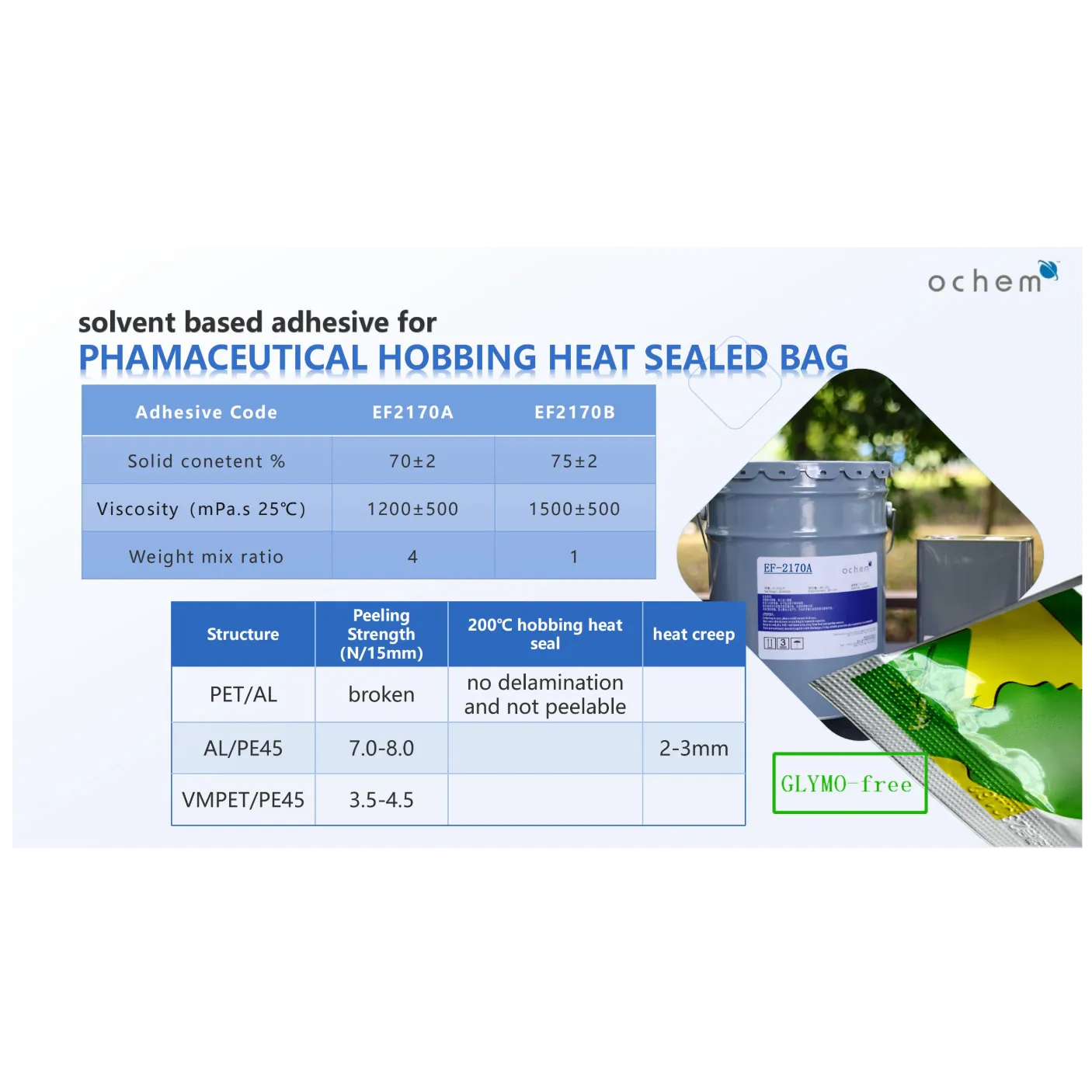
A useful formulation example is a solventborne polychloroprene contact adhesive used with tackifying resins and small amounts of chlorinated-rubber modifier; the additive package can improve initial bonding strength and rubber-to-metal adhesion by enhancing interfacial compatibility and cohesive development. Another common example is a solventborne polyurethane laminating adhesive in flexible packaging, where the dissolved PU wets polymer films well and then forms a durable interlayer after solvent evaporation.
Production Processes and Raw Feedstocks
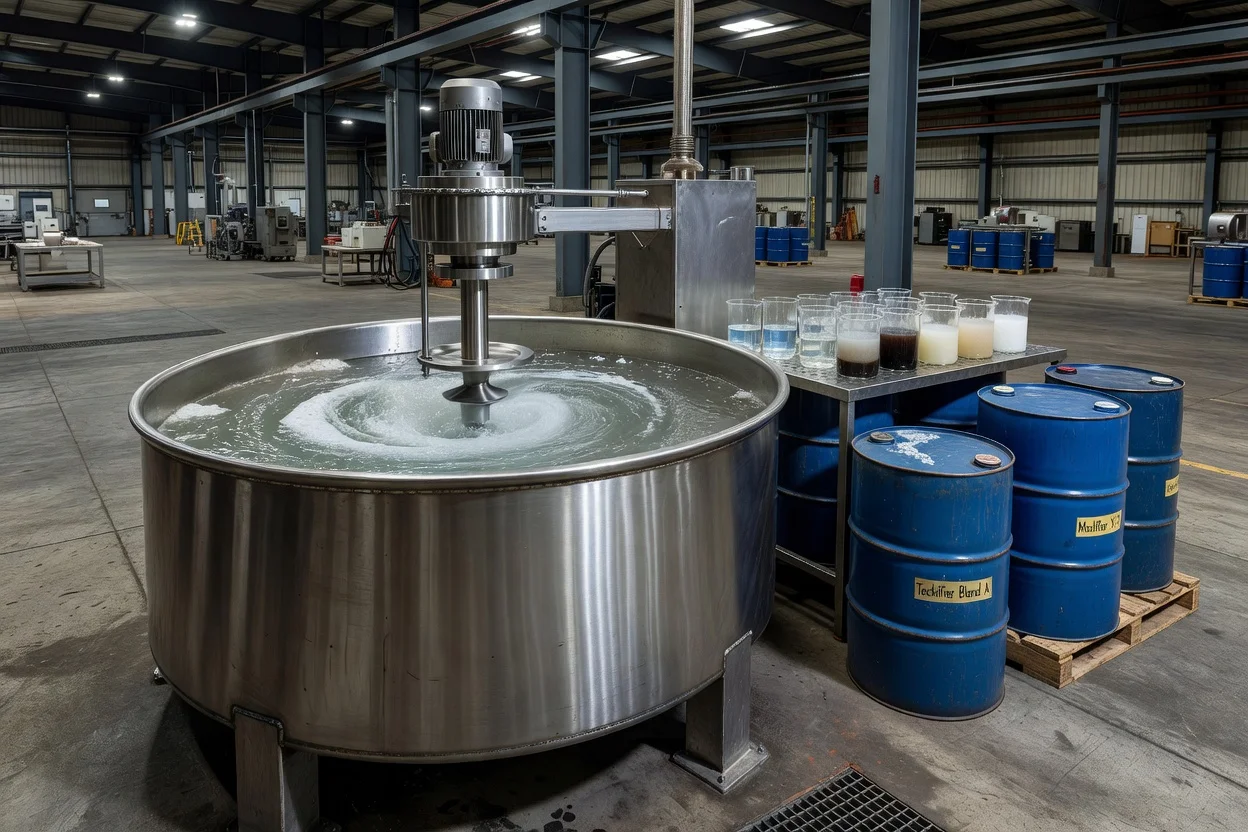
Solvent-based adhesive production begins with selection of the target resin or polymer, dissolution in a suitable solvent blend, and incorporation of additives to tailor tack, viscosity, open time, flexibility, and aging behavior. The solvent is typically chosen for evaporation rate, solvency power, safety profile, and compatibility with the resin and application method.
Typical manufacturing steps
- Polymer synthesis or procurement
- Dissolution in a selected solvent system
- Addition of tackifiers, stabilizers, plasticizers, or crosslinking components
- Filtration and viscosity adjustment
- Packaging for spray, brush, roller, bead, or coil application
Common raw feedstocks
- Base polymers/resins: chloroprene rubber, polyurethane prepolymers or resins, acrylics, nitrile rubbers, SBR, nitrocellulose, and related thermoplastic or elastomeric binders.
- Solvents: ketones, esters, alcohols, aliphatics, aromatics, and mixtures selected for specific drying and wetting behavior.
- Functional additives: tackifiers, plasticizers, anti-oxidants, stabilizers, crosslinkers, pigments, and sometimes chlorinated-rubber modifiers for improved initial strength.
The manufacturing logic is straightforward: the adhesive is engineered to remain processable in the can, then to “build” adhesive strength as solvent leaves the film and polymer chains come into closer contact, with some systems also developing secondary interchain interactions or crosslinks afterward.
Applications and End-Use Markets
Solvent-based adhesives are used where strong wetting, immediate handling strength, and dependable bonding of challenging materials are required. The usual grade and process depend heavily on the end use.
| End-use sector | Common grade or chemistry | Usual process | Typical substrates |
|---|---|---|---|
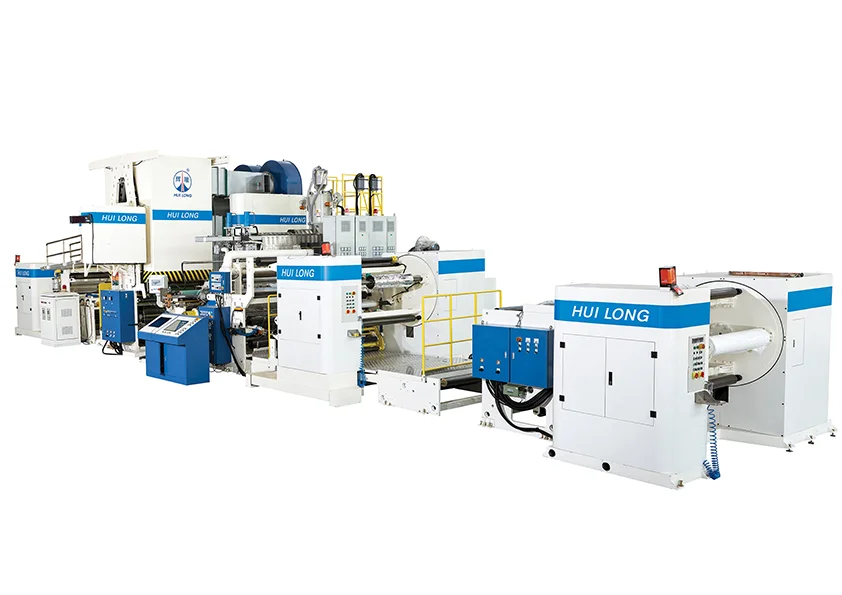
| Flexible packaging | Solventborne polyurethane | Lamination | PET, PE, BOPP, CPP, aluminum foil structures. |
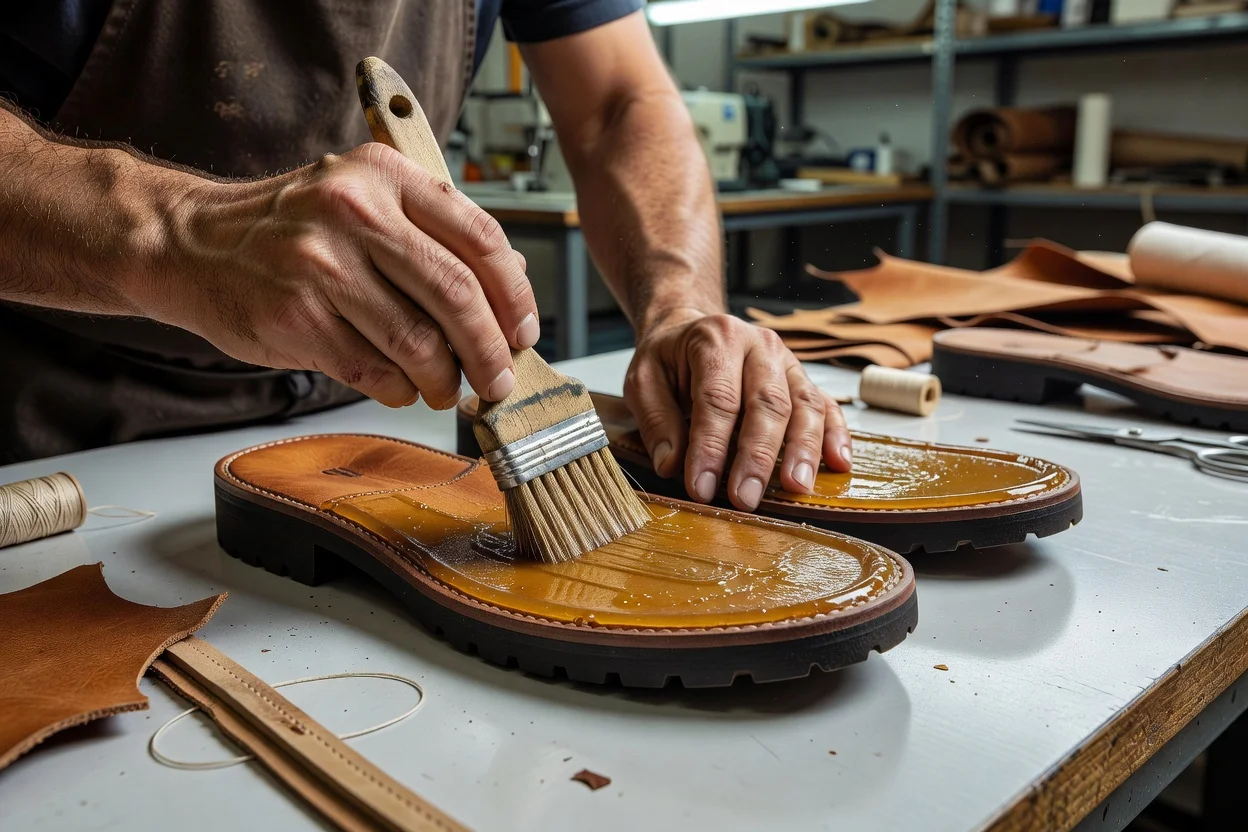
| Footwear | Polychloroprene or PU contact adhesive | Double-coat contact bonding | Leather, rubber, synthetic uppers, foam. |
| Automotive interiors | PU, chloroprene, or acrylic | Lamination, trim assembly | Foams, fabrics, plastics, vinyl, headliners. |
| Construction | Rubber or PU laminating adhesive | Panel bonding, membrane lamination | Insulation, roofing membranes, wood products. |
| Furniture and woodworking | Contact adhesive, PU, acrylic | Veneer, laminate, edge and surface bonding | Wood, laminates, decorative surfacing. |
| Textiles and coated fabrics | PU or acrylic | Lamination, coating | Fabrics, synthetic leather, interlinings. |
| Industrial assembly | Acrylic, PU, chloroprene | Spray, roller, or bead application | Metals, plastics, rubber, composites. |
Major market characteristics
- Flexible packaging often uses solventborne PU adhesives for multilayer laminates because they bond dissimilar films and provide durable interlayer performance.
- Footwear remains a classic solvent-based domain because contact adhesives give strong early grab and flexibility under repeated bending.
- Automotive interiors use these adhesives for trim laminations and composite assemblies where vibration damping, thermal endurance, and adhesion to mixed substrates matter.
- Construction applications include insulation boards, roofing membranes, and decorative laminates, especially where fast installation and high initial grab are valuable.
- Furniture and décor use them for veneers, laminates, wall coverings, and ceiling materials, particularly in contact adhesive formats.
A less ideal fit is high-temperature structural bonding, where solvent-based adhesives are often outperformed by engineered structural epoxy, reactive polyurethane, or other thermosetting systems that deliver higher long-term heat and creep resistance. Solvent-based adhesives are generally better suited to flexible, rapid, or surface-sensitive bonding than to heavily loaded structural joints.
Environmental and Sustainability Aspects
The principal environmental drawback of solvent-based adhesives is their reliance on volatile organic solvents, which contribute to VOC emissions, odor, flammability, and workplace exposure concerns. Regulatory pressure has therefore been a major force pushing the market toward lower-emission systems and improved process controls.
Recyclability and circularity
- Mechanical recycling compatibility is limited when adhesives contaminate plastic streams, especially in multilayer laminates or heavily bonded assemblies.
- Design for disassembly is difficult when the bond is intentionally permanent or highly tacky.
- Chemical recycling and solvent-based delamination approaches may help in selected multilayer structures, but these are not universal solutions.
- Solvent recovery systems can reduce emissions and improve economics in large-scale plants, although they add capital and operating cost.
Bio-based and lower-impact alternatives
- Waterborne adhesives reduce VOCs and are increasingly competitive in many packaging, furniture, and construction uses.
- High-solids systems lower solvent content while preserving some of the wetting and processing advantages of solventborne chemistries.
- Hot-melt and reactive systems eliminate solvent evaporation entirely in many applications.
- Bio-based solvents and resins are under development, but performance, cost, and regulatory qualifications remain application-specific.
The carbon footprint of solvent-based adhesives is shaped not only by resin production but also by solvent manufacture, recovery, disposal, and loss to atmosphere. In many industrial settings, the largest sustainability gains come from substituting lower-emission chemistries or from redesigning the product architecture to avoid adhesive-intensive laminates where feasible.
Economic and Global Market Impact
Solvent-based adhesives remain economically important because they support established manufacturing lines, especially in footwear, flexible packaging, automotive interiors, furniture, and construction laminates. Their market position is strongest where conversion to waterborne systems would require major requalification, new drying infrastructure, or performance trade-offs.
Leading global suppliers include large adhesive and specialty-chemicals companies such as 3M, H.B. Fuller, Covestro-related technology platforms, and other industrial formulators serving regional manufacturing clusters. The market is also fragmented by local adhesive producers that tailor formulations to substrates, climate, and equipment constraints.
According to recent industry discussions, demand is being shaped by:
- growth in flexible packaging and lightweight interiors,
- continued manufacturing in footwear and furniture supply chains,
- regulatory tightening around VOCs,
- and steady substitution by lower-emission technologies in mature markets.
Current Challenges and Innovations
The core challenge is balancing performance against environmental and regulatory constraints. That tension is driving several innovation paths.
- Low-VOC formulations: reformulation with reduced solvent content while preserving tack and wetting.
- Safer solvent systems: shifting toward less hazardous solvent blends where possible, though trade-offs remain in drying rate and solvency.
- Improved application control: spray, coil, and roller systems with better metering reduce overspray and solvent loss.
- Enhanced bond design: additives and resin architecture are being tuned to improve resistance to heat, moisture, and plasticizer migration.
- Substrate-specific adhesion: new grades target low-surface-energy plastics and coated materials that are difficult to bond reliably.
A practical technical trend is the use of carefully chosen additive packages at modest loadings to improve performance without sacrificing processability. For example, chlorinated-rubber modifiers in polychloroprene contact adhesives can significantly raise initial bond strength on rubber-to-metal systems, while tackifiers in rubber-based adhesives can improve wet grab and pressure-sensitive behavior.
Future Outlook
Solvent-based adhesives are unlikely to disappear, but their role is expected to become more specialized. They will remain important in applications where substrate diversity, fast tack, and mature process compatibility outweigh the disadvantages of VOC emissions and safety controls.
The most likely future pattern is a narrower but technically stronger market:
- Retained use in footwear, certain laminates, specialty automotive trim, and difficult-to-bond industrial assemblies.
- Gradual displacement in applications where waterborne, hot-melt, or reactive solvent-free systems can match performance.
- Continued reformulation toward lower-VOC, safer, and more efficient products.
- Greater emphasis on circularity, including easier disassembly, lower contamination of recycling streams, and solvent-recovery integration.
In the broader plastics ecosystem, solvent-based adhesives will continue to function as enabling materials for composites, multilayer laminates, flexible packaging structures, and mixed-material assemblies. Their long-term competitiveness will depend on whether they can preserve their well-known processing advantages while meeting tightening sustainability and occupational-safety expectations.
Summary
Solvent-based adhesives are high-performance bonding materials built around dissolved polymers that form a bond after solvent evaporation. They remain technically valuable for rapid tack, strong wetting, and robust bonding of difficult substrates, especially in packaging, footwear, automotive interiors, construction, textiles, and furniture. Their central challenge is environmental: VOC emissions, flammability, and regulatory pressure are steadily pushing the industry toward lower-emission alternatives and more specialized, optimized formulations.
References
- •
Solvent-Based Adhesives: Types, Applications, and How to Choose ... (2026, August 20). https://www.zjhyang.com/news/industry-news/solventbased-adhesives-types-applications-and-how-to-choose-the-right.htmlLink
- •
Solvent-based polyurethane adhesives: properties, applications, and performance characteristics. (2025, August 11). https://www.polyether-factory.com/archives/37437Link
- •
Solvent-Based Adhesives: Uses & Benefits in Industry - Unichem. (2025, September 22). https://unicheminc.com/industrial-adhesives/solvent-based-adhesives-in-modern-manufacturing-advantages-and-applications-2/Link
- •
Solvent-Based Adhesives. (n.d.). https://aleenes.com/blogs/glossary/solvent-based-adhesivesLink
- •
Why choose solvent-based adhesives? (2025, June 23). https://rhadhesives.com/why-chose-solvent-based-adhesives/Link
- •
Solvent-Based Adhesives | Acrylic, Thermoplastic & .... (n.d.). https://www.hbfuller.com/en/technologies/solvent-based-adhesivesLink
- •
How Solvent-Based Adhesives Work - Engineer Fix. (2025, October 31). https://engineerfix.com/how-solvent-based-adhesives-work/Link
- •
Solvent-Based Adhesive - 3 Sigma. (2022, May 25). https://3sigma.cc/pressure-sensitive-adhesives/solvent-based-adhesive/Link
- •
Solvent Based Adhesives. (n.d.). https://www.silmid.com/us/adhesives/solvent-based-adhesives/Link
- •
How Solvent-Based Adhesives Works — In One Simple .... (2025, October 24). https://www.linkedin.com/pulse/how-solvent-based-adhesives-works-one-simple-lb2afLink
- •
How Solvent-Based Adhesives Works — In One Simple Flow (2025). (2025, November 5). https://www.linkedin.com/pulse/how-solvent-based-adhesives-works-one-simple-flow-2025-wnmreLink
- •
Solvent-Based Polyurethane Adhesives: Composition, Performance .... (n.d.). https://www.ruicoglobal.com/news/solventbased-polyurethane-adhesives-composition-performance-and-industrial-applications.htmlLink
- •
Solvent-Based vs Waterborne vs High-Solids Coatings. (2026, June 5). https://www.globalformulation.com/solvent-based-vs-waterborne-vs-high-solids-coatings-adhesives/Link
- •
Solvent-based adhesives. (n.d.). https://www.kleiberit.com/en/products/solvent-based-adhesivesLink
- •
Solvent-based adhesive - ACROM. (n.d.). https://www.acrom.fr/en/industrial-adhesives/solvent-based-adhesive/Link
- •
Solvent-Based Adhesives | ForzaBuilt. (n.d.). https://forzabuilt.com/chemistries/solvent-based/Link
- •
Scotch-Weld Solvent-based Adhesives. (2025, January 1). https://www.3m.com/3M/en_US/p/c/adhesives/flexible/solvent-based/b/scotch-weld/Link
- •
Adhesive, Solvent Based, Epoxy Glue | Rainbow Adhesives. (2020, September 3). https://rainbowadhesives.com/solvent-based-adhesivesLink
- •
3M Solvent-based Adhesives. (n.d.). https://www.3m.com/3M/en_US/p/c/adhesives/flexible/solvent-based/Link
- •
第201篇|溶劑型接著劑. (n.d.). https://aplc.com.tw/news/details.php?id=50953Link
- •
A guide to solvent-based Adhesives -. (n.d.). http://www.chemoxy.com/about-2/knowledge-hub/a-guide-to-solvent-based-adhesives/Link
- •
Uncategorized Archives. (2025, June 23). https://rhadhesives.com/category/uncategorized/Link
- •
Types of solvent-based adhesives - صنایع شیمیایی چسب و رزین بن. (2026, February 23). https://bonadhesive.ir/en/glue/solvent-based-adhesive/Link
- •
Solventborne adhesives | Technology by Covestro. (n.d.). https://solutions.covestro.com/en/highlights/articles/theme/product-technology/solventborne-adhesivesLink
- •
Solvent vs. Solvent-Free Adhesives Explained. (2026, April 15). https://www.bond-tech-industries.com/blog/what-is-the-difference-between-solvent-and-non-solvent-adhesives-a-side-by-side-comparison/Link
- •
Solvent Based - Ellsworth Adhesives. (n.d.). https://www.ellsworth.com/products/adhesives/solvent-based/Link
- •
Contact Adhesives. (2004, June 16). https://www.specialchem.com/adhesives/guide/contact-adhesivesLink
- •
Unveiling Solvent-Based Adhesives. (n.d.). https://apexadhesive.com/unveiling-solvent-based-adhesives-versatility-applications-and-considerations-for-strong-bonds/Link
- •
Solvent-Based Adhesives | Chemical Concept. (2022, April 16). https://www.chemical-concepts.com/product-category/adhesives/solvent-based/Link
- •
Solvent-Based vs. Water-Based Adhesives. (2026, March 5). https://www.linkedin.com/pulse/solvent-based-vs-water-based-adhesives-whats-real-difference-slglcLink
- •
Solvent Based Adhesive vs Water Based Adhesive - Citifix. (2026, August 22). https://citifix.in/blog/solvent-based-vs-water-based-adhesive-indiaLink
- •
Solvent-Based vs. Water-Based Adhesives: Pros and Cons. (2023, November 19). https://forzabuilt.com/blog/solvent-based-vs-water-based-adhesives-pros-and-cons/Link
- •
Solvent-free v solvent-based adhesive: Which is best for you? (2022, June 27). https://www.forgeway.com/learning/blog/solvent-free-v-solvent-based-adhesiveLink
- •
Low VOC solvent-based polychloroprene contact adhesive. (2001, June 29). https://patents.google.com/patent/US6469082B1/enLink
- •
Solvent Based Adhesive - Contact Adhesive Supplier. (n.d.). https://www.plywoodcompany.com/pl/adhesives-contact-adhesive-contact-adhesive-solvent-based-adhesive/831Link
- •
Question about solvent based adhesives : r/chemistry. (2025, October 6). https://www.reddit.com/r/chemistry/comments/1ni6033/question_about_solvent_based_adhesives/Link