
Introduction
Crosslinking agents are chemical additives or reactive compounds used to join polymer chains into a three-dimensional network, changing a material from a melt-processable or soluble state into a more permanent structure with higher strength, heat resistance, chemical resistance, and lower creep. In plastics and related materials, they are central to curing thermosets, vulcanizing rubbers, modifying coatings and adhesives, and producing specialty networks such as hydrogels and biomaterials.
Although the term is used broadly across chemistry and life sciences, in the plastics industry it most often refers to agents such as peroxides, silanes, isocyanates, epoxies, aziridines, carbodiimides, and multifunctional monomers that create covalent links between polymer chains during or after polymerization. Their importance spans commodity and engineering plastics, elastomers, adhesives, coatings, composites, medical materials, and waterborne systems.
Crosslinking has a long industrial history through rubber vulcanization and thermoset curing, but modern development has focused on lower-emission chemistries, better process control, and recyclable or reversible network concepts. Current innovation is shaped by two opposing demands: ever-higher performance in demanding applications, and greater pressure to reduce toxicity, improve worker safety, and support circular-economy design.
History and Development
Crosslinking as an industrial concept emerged from rubber chemistry, where sulfur-based vulcanization created tougher, more durable elastomers by connecting polymer chains. This principle was later extended to thermosets, adhesives, coatings, and engineering polymers, where controlled curing produced materials that no longer softened like thermoplastics when heated.
As polymer chemistry diversified, the range of crosslinking agents expanded from sulfur and metal oxides to organics such as peroxides, isocyanates, epoxies, multifunctional acrylates, and silanes. The rise of waterborne coatings and adhesives accelerated demand for low-VOC, formaldehyde-free, and blocked-reactive systems, including carbodiimides, aziridines, and blocked isocyanates.
More recent development has focused on precisely engineered crosslink density, latent curing, and reversible or dynamic bonds for self-healing, stimuli-responsive, and recyclable materials. In parallel, biomedical research has broadened the concept to include chemical and physical crosslinkers used in hydrogels and tissue scaffolds, although these applications are distinct from bulk plastics processing.
Chemical Structure and Key Properties
Crosslinking agents are typically multifunctional molecules or compounds with two or more reactive groups capable of bonding with polymer chains. Their function is not simply to “thicken” a resin; rather, they build a network architecture that changes mobility at the molecular level and alters macroscopic properties such as modulus, solvent resistance, and thermal stability.
Main classes used in plastics and auxiliaries
| Class | Typical reactivity | Common industrial role |
|---|---|---|
| Organic peroxides | Radical generation | Polyolefin and rubber crosslinking |
| Silanes | Hydrolysis/condensation | Moisture-curable cable and pipe systems |
| Isocyanates | Reaction with hydroxyl, amine, water-sensitive groups | Polyurethanes, coatings, adhesives |
| Epoxies | Ring opening with active hydrogens | Resins, coatings, fiber finishes |
| Aziridines | Reaction with carboxyl and other nucleophiles | Waterborne coatings and adhesives |
| Carbodiimides | Stabilize carboxyl-containing systems | Hydrolysis resistance in coatings, adhesives |
| Multifunctional acrylates | Photopolymerization or radical curing | UV-curable inks, coatings, resists |
Crosslinking usually improves heat resistance, chemical resistance, creep resistance, and dimensional stability by restricting chain motion. In elastomers, it converts a soft, deformable polymer into a resilient network that can recover after deformation. In thermosets and cured coatings, it creates a permanent structure that cannot be remelted in the ordinary sense.
Important real-world limits
- Poor O2 and grease barrier in unmodified polyolefins → caused by nonpolar hydrocarbon structure and low polarity → workaround: add barrier layers, EVOH/PA multilayers, coatings, or higher-performance network architectures rather than relying on crosslinking alone.
- Low surface energy before treatment → caused by nonpolar, chemically inert polymer surfaces such as PE and PP → workaround: corona, flame, plasma, primers, or chemical grafting before adhesion, printing, or coating.
- Reduced melt reprocessability after curing → caused by permanent covalent network formation → workaround: use controlled crosslink density, thermoplastic elastomers, reversible/dynamic crosslinks, or pre-cure processing windows.
Crosslink density is a key design parameter: too little gives inadequate performance, while too much can make materials brittle, difficult to process, or poorly recyclable. This trade-off is especially important in cable insulation, pipe, foams, coatings, and rubber articles.
Production Processes and Raw Feedstocks
Crosslinking agents are produced through specialty chemical synthesis, and their selection is tightly linked to the polymer system, cure method, and final application. Many are formulated as liquid blends, solid powders, blocked adducts, or masterbatches to improve handling and dosing.
Major production and use pathways
- Peroxide crosslinkers are manufactured as organic peroxide intermediates and dosed into polyolefin or elastomer compounds; they decompose thermally to generate radicals that initiate chain coupling and branching.
- Silane systems are often used as graftable, moisture-curable packages in which a silane is first grafted onto a polymer backbone and then condensed in the presence of moisture, catalyst, and heat.
- Isocyanate and epoxy systems are supplied as reactive hardeners or latent curing agents for resins, coatings, and adhesives, where cure occurs by nucleophilic addition or ring opening.
- Aziridines and carbodiimides are mainly used in waterborne coatings and adhesives to improve water resistance, wet adhesion, and hydrolytic stability.
- Multifunctional acrylates such as ethylene glycol dimethacrylate or pentaerythritol triacrylate are used in UV-curable formulations and specialty polymerization systems.
Examples of dosage and mechanism
- Dicumyl peroxide is often used at low phr levels in polyolefin or elastomer compounds; it decomposes into radicals that abstract hydrogen and create polymer radicals, leading to chain coupling and network formation.
- Carbodiimide crosslinkers are commonly used in waterborne coatings at modest additive levels; they react with carboxyl groups to form more hydrolysis-resistant linkages and reduce water sensitivity.
Raw feedstocks vary by family. Peroxides depend on petrochemical intermediates, silanes on organosilicon chemistry, isocyanates on aromatic or aliphatic feedstocks, and many acrylic crosslinkers on C3–C4 petrochemical chains. This means crosslinking agents occupy a specialized, feedstock-sensitive segment of the plastics additives value chain.
Applications and End-Use Markets
Crosslinking agents are used wherever a polymer must gain durability, chemical resistance, or shape retention beyond what a linear thermoplastic can provide. Their choice depends on the resin, processing temperature, safety constraints, cure speed, and service environment.
Major sectors
| End use | Typical crosslinking system | Usual process / note |
|---|---|---|
| Rubber goods and tires | Sulfur, peroxides, accelerators | Vulcanization and post-cure |
| Wire and cable insulation | Silane or peroxide systems | Moisture cure or continuous vulcanization |
| PEX pipe | Peroxides, silanes, irradiation-related cure packages | High-temperature network formation |
| Adhesives and sealants | Epoxies, isocyanates, aziridines, carbodiimides | Two-part or moisture-cure systems |
| Coatings and inks | Multifunctional acrylates, isocyanates, aziridines, melamine-type systems | Thermal or UV curing |
| Foams and elastomers | Isocyanates, peroxides, polyols with crosslinking functionality | Polyurethane and rubber network formation |
| Composites and thermosets | Epoxy hardeners, peroxides, amines | Resin cure in molded parts |
| Hydrogels and biomaterials | Dialdehydes, carbodiimides, genipin, ionic crosslinkers | Specialty non-bulk-plastics applications |
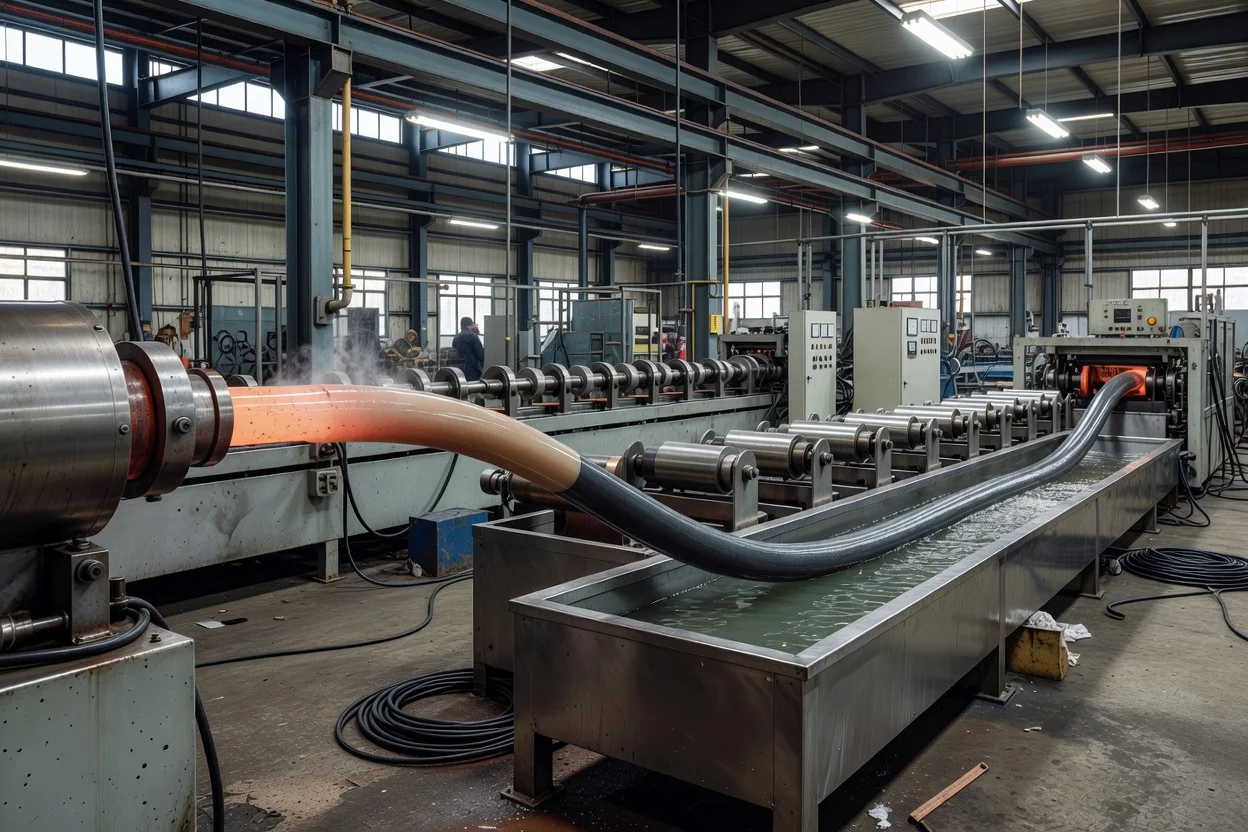
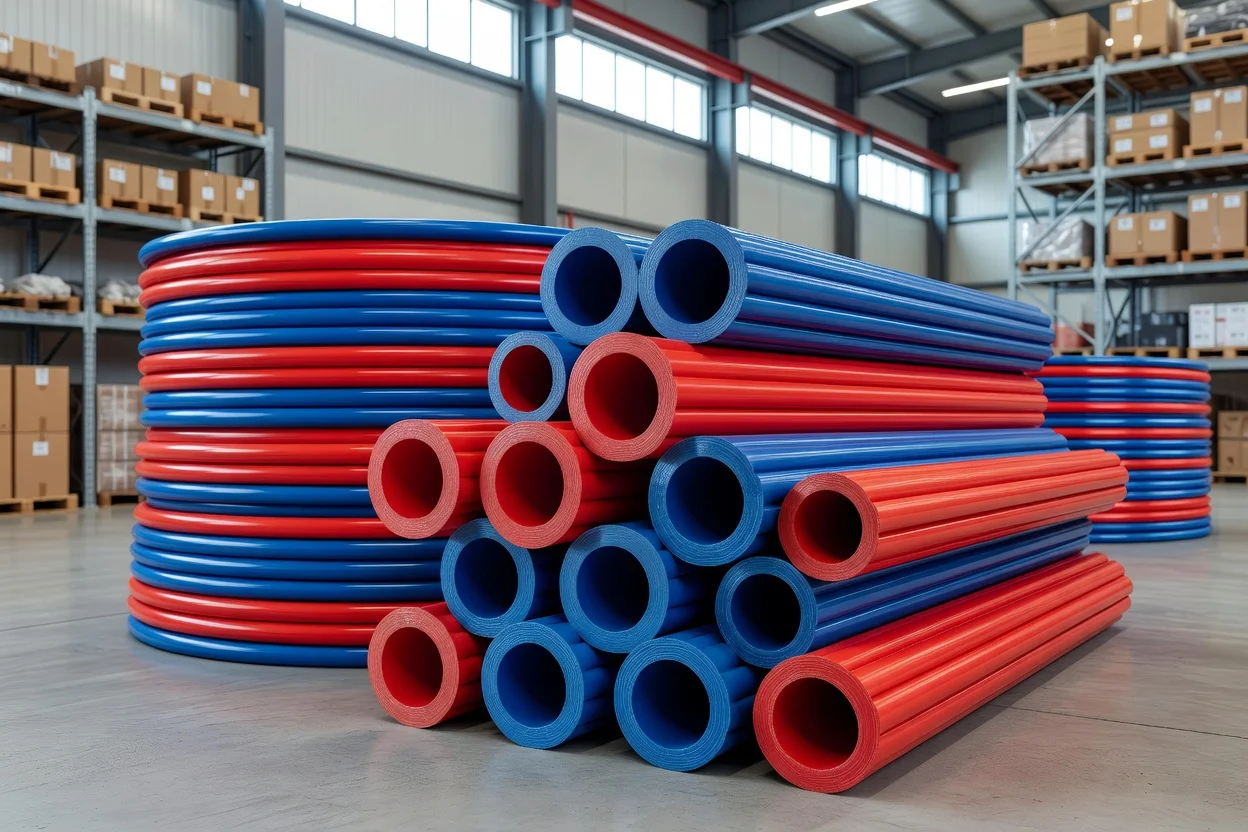
In plastics, crosslinkers are especially important in polyethylene pipe, cable, rotomolded parts, foams, adhesives, and coatings, where improved thermal performance and environmental stress cracking resistance are valuable. Crosslinked polyethylene, often abbreviated PEX, is a major example because it can withstand higher service temperatures than untreated polyethylene while maintaining toughness.
A notable poor-fit use is applications that require repeated remelting and easy mechanical recycling, because crosslinking deliberately reduces flow and remeltability. For this reason, heavily crosslinked materials are generally unsuitable where closed-loop melt reprocessing is the primary design objective.
Environmental and Sustainability Aspects
Crosslinking agents present a mixed sustainability profile. On one hand, they can extend product life, improve durability, reduce replacement frequency, and enable lower material use in high-stress applications. On the other hand, permanent networks can make recycling difficult, and several conventional chemistries raise concerns related to toxicity, worker exposure, or emissions.
Recyclability and circularity
- Heavily crosslinked materials are difficult to melt-reprocess because network formation prevents conventional remelting.
- Mechanical recycling is therefore limited for many vulcanized rubbers, thermosets, and crosslinked polyolefins.
- Chemical recycling or energy recovery may be used in some cases, but each has trade-offs in cost, energy demand, and yield.
- Dynamic covalent networks and reversible crosslinking are attracting attention because they can preserve performance while improving repairability or reprocessability.
Bio-based and lower-toxicity alternatives
Research and commercial development increasingly include genipin, enzyme-based systems, tannic acid, and other lower-toxicity crosslinkers for specialty materials. In industrial coatings and adhesives, formaldehyde-free and low-VOC formulations are receiving strong attention. However, these alternatives often face higher cost, slower cure, narrower formulation latitude, or lower ultimate performance than conventional systems.
Carbon footprint considerations
The climate impact of a crosslinking system depends on feedstock origin, cure temperature, process efficiency, and product lifetime. A crosslinker that increases service life in wire, pipe, or protective coatings can reduce life-cycle impact by delaying replacement, even if the additive itself is petrochemical-derived. Conversely, formulations that require high-temperature curing or create non-recyclable waste can increase overall footprint.
Economic and Global Market Impact
Crosslinking agents are a relatively small but strategically important specialty chemicals segment because they influence the performance of much larger downstream markets. Demand is tied to construction, automotive, electrical, industrial coatings, adhesives, and consumer goods, with cable, pipe, and protective coatings representing especially important volume drivers.
The market is fragmented across chemical families, but major production is concentrated among global specialty chemical and polymer additive suppliers in Europe, China, Japan, and North America. Product leadership tends to vary by chemistry: peroxide systems, silanes, isocyanates, epoxies, and waterborne-curing auxiliaries each have different supply chains and regulatory pressures.
Pricing is typically more volatile than for bulk polymers because feedstocks are specialty intermediates, performance requirements are demanding, and many products are sold with application-specific technical support. This makes crosslinking agents a high-value, formulation-sensitive segment rather than a commodity additive class.
Current Challenges and Innovations
The main technical challenge is balancing performance, processability, and end-of-life management. Stronger crosslinking usually improves service properties but reduces melt recycling and can make processing less forgiving.
Key challenges
- Health and safety concerns for reactive chemistries such as isocyanates and aziridines in handling and residual monomer control.
- Recyclability constraints caused by irreversible network formation.
- Process control issues such as scorch safety, cure uniformity, and incomplete reaction.
- Regulatory pressure on formaldehyde-releasing or high-toxicity chemistries.
Innovation directions
- Latent crosslinkers that remain stable during storage but react rapidly under controlled conditions.
- Blocked or encapsulated systems for safer handling and improved pot life.
- Dynamic covalent crosslinks that allow repair, reshaping, or reprocessing under specific conditions.
- Waterborne and formaldehyde-free systems for adhesives, coatings, and textile finishing.
- Tailored network design using multifunctional monomers and reactive oligomers to tune modulus, swelling, and chemical resistance.
In practice, the most valuable innovation is often not a new chemistry alone, but a formulation that delivers the required performance with lower hazard, lower energy use, and better compatibility with downstream recycling strategies.
Future Outlook
Crosslinking agents are likely to remain essential in high-performance plastics, elastomers, coatings, and adhesives because many applications still require properties that linear thermoplastics cannot provide. Growth is likely to be strongest in electrical infrastructure, durable construction materials, protective coatings, mobility components, and specialty biomedical systems.
At the same time, the next generation of products will likely emphasize safer chemistry, lower emissions, better network control, and greater circularity. Dynamic networks, bio-based crosslinkers, and hybrid systems that combine permanent and reversible linkages are especially promising where durability must be balanced with repairability or recyclability.
For the plastics industry, the strategic role of crosslinking agents will increasingly be defined not only by what they add to performance, but by how they fit into a broader materials system that must be durable, compliant, manufacturable, and more resource-efficient.
Summary
Crosslinking agents are indispensable additives and reactive auxiliaries that create three-dimensional polymer networks and thereby transform the performance profile of plastics, rubbers, adhesives, coatings, and specialty materials. Their value lies in enabling heat resistance, chemical resistance, dimensional stability, and durability, while their main drawback is that permanent crosslinking often complicates recycling and end-of-life management.
References
- •
Classification and selection of crosslinking agents. (n.d.). Yg-1. https://www.yg-1.com/news/classification-and-selection-of-crosslinking-agents.htmlLink
- •
Crosslinking - an overview. (2025, March 3). ScienceDirect. https://www.sciencedirect.com/topics/chemistry/crosslinkingLink
- •
Crosslinker: A comprehensive guide to crosslinking agents. (2025, August 24). Joshua Humphrey. https://www.joshuahumphrey.co.uk/crosslinker/Link
- •
Types of crosslinkers and their applications in biomaterials and. (n.d.). Semantic Scholar. https://pdfs.semanticscholar.org/7607/069894e8f4c9ae64b089e566df2b3aee89f3.pdfLink
- •
What are the different types of crosslinking reagents? (n.d.). AAT Bioquest. https://www.aatbio.com/resources/faq-frequently-asked-questions/what-are-the-different-types-of-crosslinking-reagentsLink
- •
Cross-linking agents: Key industrial applications. (2025, June 12). Sinocure Chem. https://www.sinocurechem.com/2025/06/12/cross-linking-agent-applications/Link
- •
Crosslinker. (2024, December 27). Gz-jychem. http://en.gz-jychem.com/product/37/Link
- •
NH2. (n.d.). Thermo Fisher Scientific. https://tools.thermofisher.com/content/sfs/brochures/1602163-Crosslinking-Reagents-Handbook.pdfLink
- •
Jenis agen crosslinking. (2021, February 20). Liuyang Sanji Chemical. https://id.sanjitaic.com/info/type-of-crosslinking-agent-54243244.htmlLink
- •
Classification and selection of crosslinking agents. (2025, March 9). Chemix. https://www.chemix-tech.com/blog/classification-selection-crosslinking-agentsLink
- •
Cross-linking agents in three-component materials. (2024, September 23). PMC. https://pmc.ncbi.nlm.nih.gov/articles/PMC11435819/Link
- •
Quick primer. (2025, October 8). LinkedIn. https://www.linkedin.com/pulse/crosslinking-agent-real-world-5-uses-youll-actually-asogcLink
- •
Cross-linking agents. (n.d.). Springer. https://link.springer.com/referenceworkentry/10.1007/978-3-642-37179-0_82-2Link
- •
Cross-link. (2004, October 21). Wikipedia. https://en.wikipedia.org/wiki/Cross-linkLink
- •
Classification and selection guide of crosslinking agents. (2025, April 2). Chemix. https://www.chemix-tech.com/blog/classification-selection-guide-crosslinking-agentsLink
- •
Protein crosslinking. (n.d.). Thermo Fisher Scientific. https://www.thermofisher.com/us/en/home/life-science/protein-biology/protein-labeling-crosslinking/protein-crosslinking.htmlLink
- •
Cross-linking agent - an overview. (n.d.). ScienceDirect. https://www.sciencedirect.com/topics/engineering/cross-linking-agentLink
- •
Crosslinking agents: Peroxides, silanes and isocyanates. (2026, June 3). Safic-alcan. https://www.safic-alcan.com/en-fr/industry-articles/crosslinking-agents-peroxides-silanes-and-isocyanates/Link
- •
Significance of crosslinking agent. (2025, March 4). Wisdomlib. https://www.wisdomlib.org/concept/crosslinking-agentLink
- •
What is crosslinking? (n.d.). Stahl. https://www.stahl.com/beyond-chemistry-from-a-to-z/what-is-crosslinkingLink
- •
Protein crosslinking applications. (n.d.). Thermo Fisher Scientific. https://www.thermofisher.com/us/en/home/life-science/protein-biology/protein-biology-learning-center/protein-biology-resource-library/pierce-protein-methods/crosslinking-applications.htmlLink
- •
Chemistry of crosslinking. (n.d.). Thermo Fisher Scientific. https://www.thermofisher.com/us/en/home/life-science/protein-biology/protein-biology-learning-center/protein-biology-resource-library/pierce-protein-methods/chemistry-crosslinking.htmlLink
- •
Significance of cross linking agent. (2025, July 18). Wisdomlib. https://www.wisdomlib.org/concept/cross-linking-agentLink
- •
Crosslinker. (2025, October 29). ScienceDirect. https://www.sciencedirect.com/topics/engineering/crosslinkerLink
- •
Hydrogel and effects of crosslinking agent on cellulose. (2022, September 7). PMC. https://pmc.ncbi.nlm.nih.gov/articles/PMC9498307/Link
- •
How a crosslinking agent enhances material durability. (2025, February 25). Chemix. https://www.chemix-tech.com/blog/crosslinking-agent-enhances-material-durabilityLink
- •
Crosslinkers. (n.d.). Sigma-Aldrich. https://www.sigmaaldrich.com/US/en/products/chemistry-and-biochemicals/chemical-biology/crosslinkersLink
- •
Crosslinking of DNA. (2006, December 17). Wikipedia. https://en.wikipedia.org/wiki/Crosslinking-of-DNALink
- •
Crosslinking agents in the targeted design of. (2025, December 15). Journals.rcsi.science. https://journals.rcsi.science/0023-2912/article/view/376456Link
- •
Microsoft Word - Article-006. (n.d.). Udea. https://bibliotecadigital.udea.edu.co/bitstream/10495/35696/1/RojasJohn_2011_FunctionalizationCrosslinking.pdfLink
- •
Crosslinking agents. (2022, September 7). Bocsci. https://polymer.bocsci.com/products/crosslinking-agents-4193.htmlLink
- •
Crosslinking agent, crosslinked polymer and their uses. (2009, March 18). Google Patents. https://patents.google.com/patent/JP2010077385A/enLink
- •
Crosslinking agents. (n.d.). Erteco. https://www.erteco.se/en/materialfamilj-gummi/crosslinking-agents/Link
- •
How to enhance polymer properties through crosslinking? (2024, June 13). Specialchem. https://www.specialchem.com/polymer-additives/guide/crosslinkingLink
- •
Crosslinking protein interaction analysis. (n.d.). Thermo Fisher Scientific. https://www.thermofisher.com/us/en/home/life-science/protein-biology/protein-biology-learning-center/protein-biology-resource-library/pierce-protein-methods/crosslinking-protein-interaction-analysis.htmlLink
- •
Cross-linking agents. (n.d.). Springer. https://link.springer.com/referenceworkentry/10.1007/978-3-642-37179-0_82-1Link
- •
Crosslinkers selection guide. (2025, July 1). Sigma-Aldrich. https://www.sigmaaldrich.com/US/en/technical-documents/technical-article/chemistry-and-synthesis/adc-and-bioconjugation/crosslinkers-selection-guideLink
- •
Influence of cross-linking agents on the structure and stability of. (2026, January 13). PMC. https://pmc.ncbi.nlm.nih.gov/articles/PMC12844490/Link
- •
The application as a “crosslinking agent” for epoxy resins. (2024, May 1). Nagase. https://group.nagase.com/nagasechemtex/denacol/en/column/20240501/Link
- •
What is crosslinking agent in water based adhesive? (2025, August 15). Carbodiimide. https://carbodiimide.com/what-is-crosslinking-agent-in-water-based-adhesive/Link
- •
Crosslinking agents. (n.d.). Sigma-Aldrich. https://www.sigmaaldrich.com/deepweb/assets/sigmaaldrich/marketing/global/documents/428/074/crosslinking_agents.pdfLink
- •
Understanding the effects of crosslinking and. (2021, June 7). PMC. https://pmc.ncbi.nlm.nih.gov/articles/PMC8201363/Link
- •
Cross-linking agents in three-component materials. (n.d.). Mdpi. https://www.mdpi.com/2073-4360/16/18/2679Link
- •
Crosslinking agents. (2000, January 1). Lohtragon. https://www.lohtragon.com/applications/polymer-additives/crosslinking-agents/Link
- •
Significance of crosslinking approaches in the development. (2021, February 28). PMC. https://pmc.ncbi.nlm.nih.gov/articles/PMC7997321/Link