
Introduction
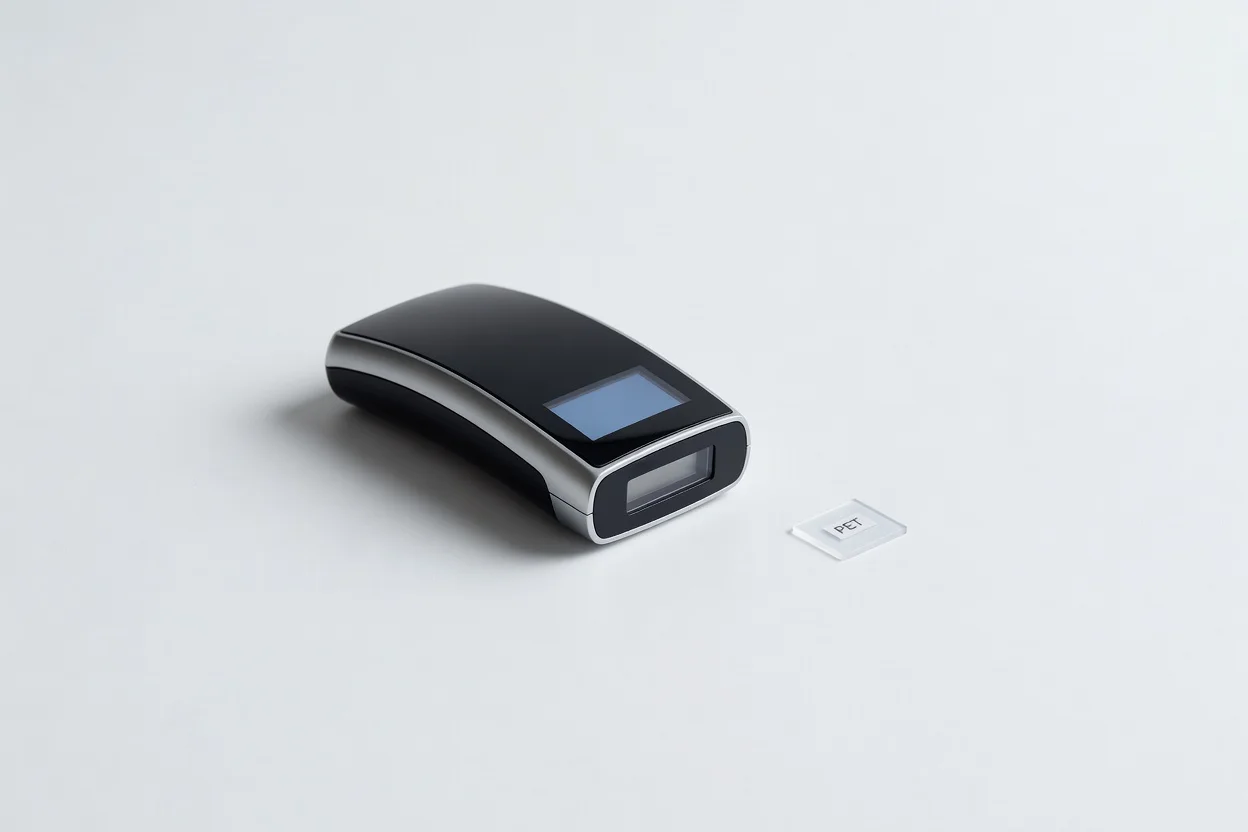
Plastic types identification equipment refers to instruments and systems used to determine the polymer composition of plastic articles, flakes, pellets, films, and mixed waste streams. In plastics processing and recycling, these devices support incoming quality control, contamination screening, sorting, formulation verification, and resin-code confirmation, with near-infrared (NIR) spectroscopy currently the most common field and plant-floor method for rapid identification.
These systems range from simple handheld analyzers to stationary laboratory and production-line units. Handheld NIR devices can identify many common polymers in seconds, while more advanced platforms may distinguish light and dark materials, detect additives, and support flakes, granulates, or crushed material in automated workflows. Their importance has increased with the growth of post-consumer recycling, stricter material traceability requirements, and the need to reduce mis-sorting, rework, and downcycling.
History and Development
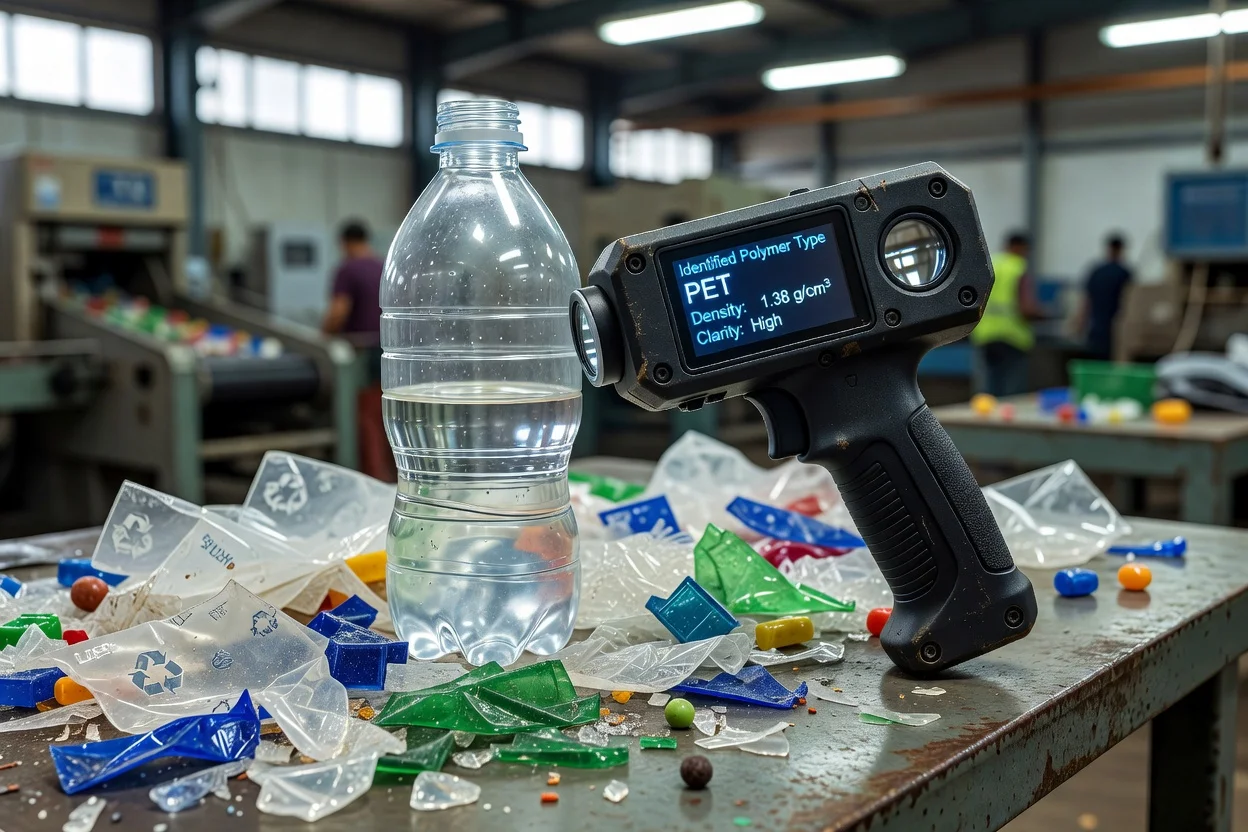
Early plastic identification relied on manual methods such as density tests, burn tests, and visual inspection of resin markings, which remain useful as quick screening tools but are limited in precision and repeatability. As recycling systems became more industrialized, these techniques were supplemented by spectroscopic analysis, especially infrared methods, because each polymer has a characteristic spectral fingerprint.
A major milestone was the development of compact handheld NIR spectrometers, which moved identification from the laboratory to the plant floor and sorting line. Commercial devices now offer results in roughly one to a few seconds, making them practical for on-site receiving checks, waste audits, and field sorting.
A second milestone has been the extension of identification beyond transparent and light-colored plastics. Some modern analyzers are marketed for black plastics, additive detection, and broader material libraries, including certain technical polymers and blends. This reflects improved detector design, signal processing, and library-based classification.
A third development is the integration of cloud software, machine learning, and mobile connectivity. Several systems now store measurements, manage libraries, and support remote analysis or reporting, which is especially useful for quality assurance and circular-economy documentation.
Key Characteristics and Technical Overview
Plastic identification equipment is defined by three technical functions: excitation of the sample, measurement of a response signal, and comparison against a reference library. In practical use, the most common platforms are NIR reflection or transmittance devices, though Raman-based analyzers and FTIR systems are also used for specialized applications.
Operating principle
- NIR spectroscopy measures reflected or transmitted light in the near-infrared range and matches the resulting spectrum to stored polymer signatures.
- Raman spectroscopy uses laser excitation to read a molecular fingerprint and is often promoted for verifying polymers in field settings.
- ATR-FTIR is frequently used in laboratory and quality-control settings because it can identify plastics within seconds with minimal preparation.
Typical performance parameters
- Identification time: commonly under 1 second to a few seconds for handheld devices; some stationary or extended analysis modes take longer.
- Material libraries: commonly include major resins such as PET, PE, PP, PVC, PS, ABS, PC, PA, PMMA, POM, PLA, and related engineering plastics.
- Sample form: many systems can analyze bottles, flakes, pellets, granulates, scraps, sheets, rolls, bales, and mixed waste, depending on optical access and sample color.
- Black plastics: specialized systems may identify dark or carbon-black-containing materials, though this is still more demanding than identifying clear or light-colored polymers.
Stationary and laboratory systems
Stationary analyzers are used when higher throughput, better repeatability, or more controlled sampling is required. One commercial system is described as capable of analyzing up to 200 g of non-carbon-black colored flakes, pellets, granulates, or crushed material and determining purity and composition in about 15 minutes. Such systems are suited to incoming inspection, batch verification, and R&D support.
Quantitative process benchmarks
In recycling and plastics processing, plastic identification equipment is often used alongside sorting and dewatering operations. In the broader mechanical recycling chain, flake preparation typically targets particle sizes suitable for downstream separation and reprocessing, while centrifugal dewatering can reduce residual moisture to low single-digit percentages before drying and extrusion. Although those figures belong to the preparation line rather than the identifier itself, they matter because clean, dry, and well-sized material improves optical access and measurement reliability.
Types and Variations
| Type | Main principle | Typical strengths | Typical limitations |
|---|---|---|---|
| Handheld NIR analyzer | Reflectance or transmittance spectroscopy | Fast, portable, non-destructive, suited to field sorting | Limited on black materials, coatings, multilayers, or highly filled compounds |
| Stationary NIR system | Automated sample presentation and spectral matching | Better repeatability, can handle flakes and pellets, suitable for QA and recycling plants | Higher cost and less mobility |
| Raman analyzer | Laser-based molecular fingerprinting | Useful for polymer verification and some complex materials | Fluorescence and safety considerations may limit use in some applications |
| ATR-FTIR system | Infrared absorption with contact accessory | Strong laboratory identification performance, minimal prep | Less suited to rapid field sorting than handheld NIR |
| Camera/app-based tools | Image-assisted classification or phone-linked devices | Low barrier to use, good for education and basic screening | Less reliable than spectroscopy for formal sorting decisions |
Applications and Uses
Plastic identification equipment is used wherever polymer identity affects processability, product performance, or recycling value.
- Recycling plants: sorting PET, PP, PE, PS, PVC, ABS, PC, and engineering plastics into clean fractions for resale or reprocessing.
- Incoming quality control: verifying resin shipments, purge, regrind, and recovered material before compounding or molding.
- Post-industrial waste management: distinguishing production scrap, runners, and off-spec parts for internal reuse or sale.
- Municipal and commercial waste audits: assessing packaging composition, contamination rates, and recovery potential.
- Research and development: confirming new formulations, blends, or proprietary compounds during material development.
- Education and training: demonstrating polymer families, resin codes, and recycling concepts.
A notable poor-fit use is highly filled, coated, laminated, or metalized parts, where optical spectra may be distorted and identification confidence can fall; such cases often require complementary analytical methods.
Technological Innovations and Automation
Modern equipment increasingly combines spectroscopy with digital workflow tools. Mobile analyzers may connect to smartphones or tablets, display results within seconds, and save measurements to cloud databases for traceability and reporting.
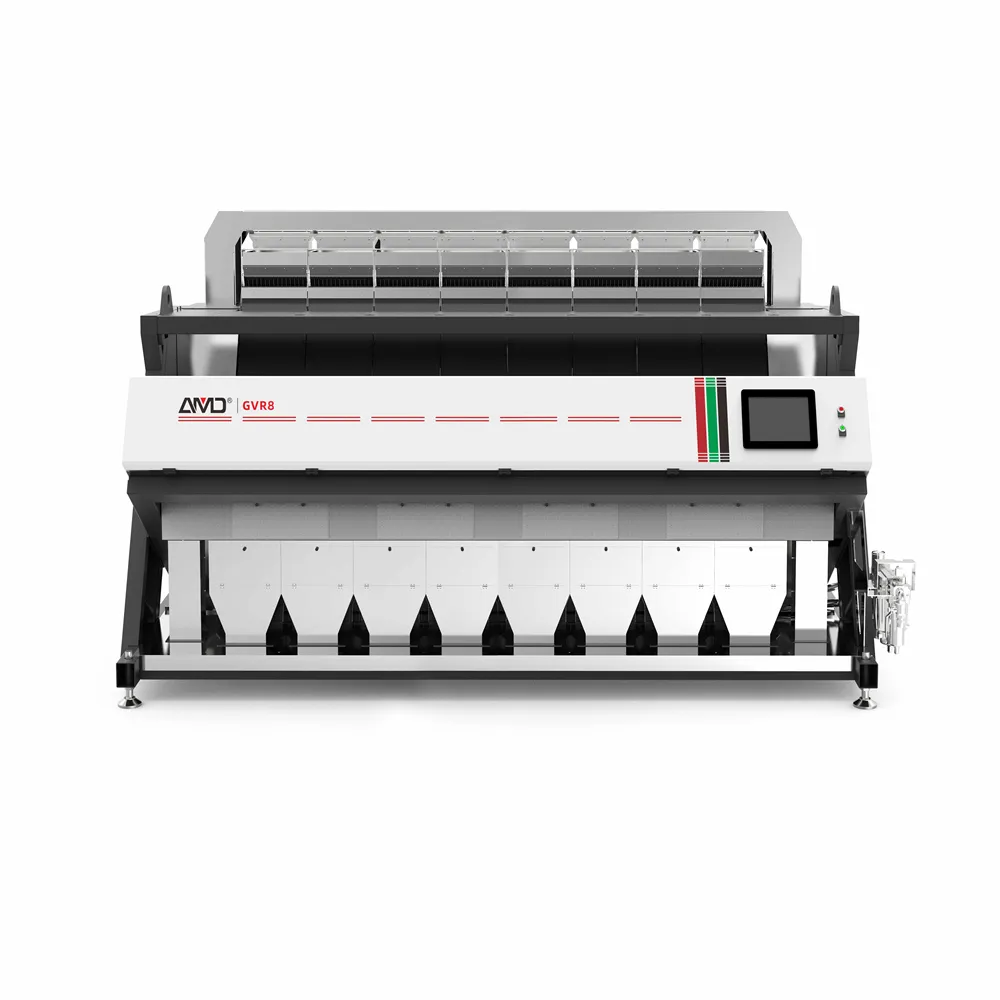
Automation is also advancing on the sorting-line side. Optical sorters use NIR sensing, fast processors, and air-jet ejection to identify and separate plastic particles in real time, with vendor specifications often emphasizing millisecond-level decision and actuation speeds. This makes plastic identification not only a quality-control task but also a core element of high-throughput recycling automation.
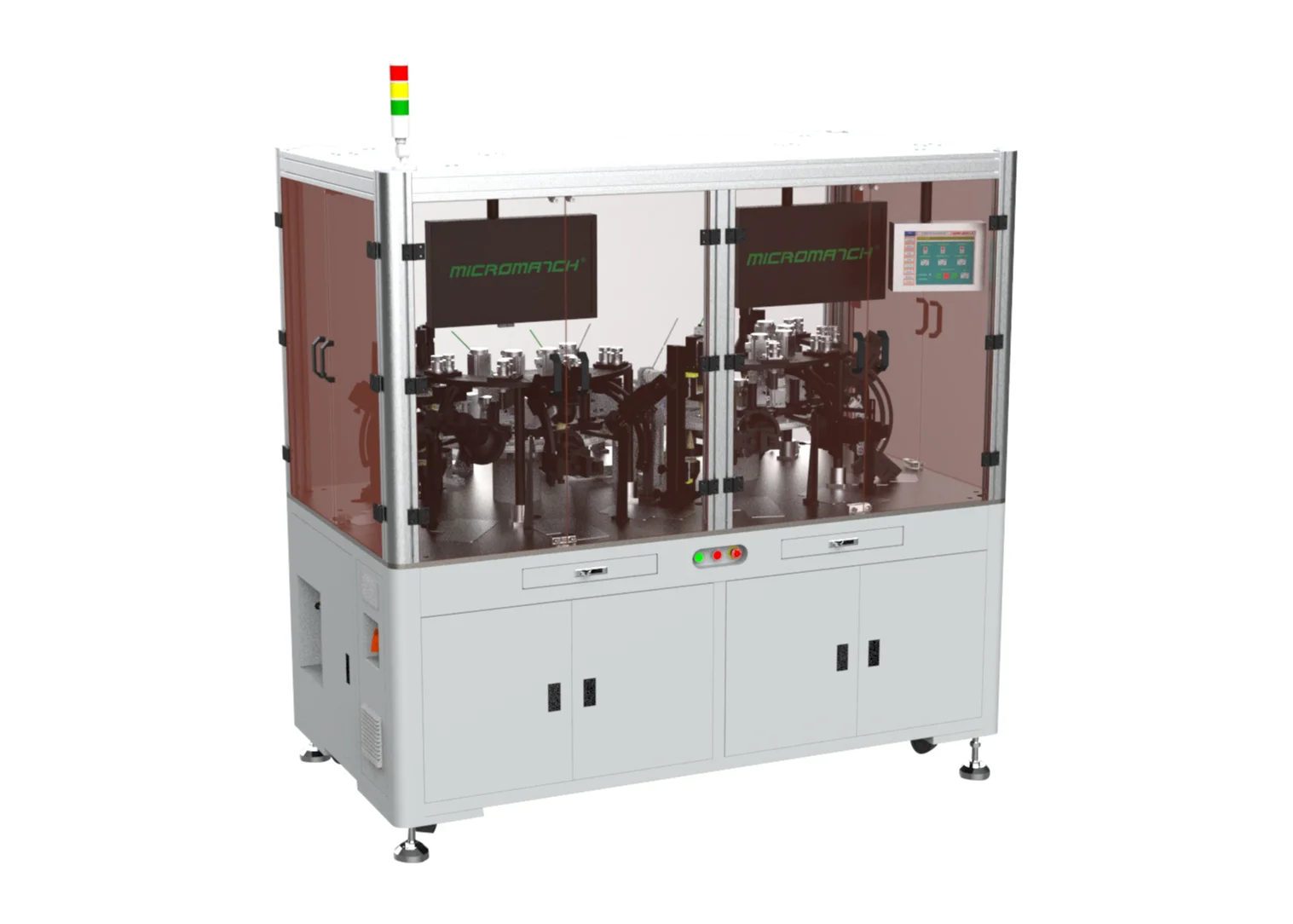
Machine learning has become an important development area. Some systems use onboard algorithms to improve recognition across different polymers and sample conditions, while research shows that spectral quality and model design strongly affect classification accuracy. In practice, this means that library quality, calibration discipline, and sample preparation remain as important as sensor hardware.
Environmental and Sustainability Aspects
Plastic identification equipment contributes directly to material recovery by reducing false sorting, lowering contamination, and improving the quality of recycled output. Better identification enables higher-value recycling routes, supports recycled-content targets, and helps preserve polymer properties by avoiding incompatible mixing.
From a sustainability perspective, the main benefits are:
- Reduced waste: fewer rejected batches and less material sent to disposal or downcycling.
- Improved circularity: cleaner polymer streams increase the chance of closed-loop reuse.
- Lower energy burden: accurate sorting can reduce unnecessary reprocessing and repeated washing or re-extrusion.
- Better traceability: digital records help manufacturers document recycled content and material provenance.
The trade-off is that electronic analyzers themselves require capital investment, calibration, operator training, and periodic maintenance. For many facilities, the sustainability case depends on throughput, contamination severity, labor cost, and the value of cleaner output.
Economic and Global Market Impact
The market for plastic identification equipment is closely tied to recycling infrastructure, extended producer responsibility programs, and the economics of secondary polymers. As recycled material becomes more important to brand owners and converters, demand rises for faster and more defensible verification tools.
Handheld analyzers are especially attractive to small and medium operators because they reduce dependence on centralized laboratories and allow decisions to be made at the point of receipt or sorting. Stationary systems, by contrast, are more common where throughput, batch consistency, and integration with automated sorting justify the higher cost.
Commercial activity in the segment includes portable NIR instruments, Raman analyzers, lab FTIR systems, and turnkey identification-and-sorting solutions from specialized industrial vendors. Competitive differentiation typically centers on polymer library size, black-plastic performance, speed, ruggedness, and software integration.
Current Challenges and Innovations
Several technical challenges remain unresolved across the sector.
- Black plastics: carbon black absorbs strongly in NIR, making identification more difficult for many sensors.
- Blends and multilayers: packaging structures and compounded materials can produce ambiguous spectra.
- Additives and fillers: flame retardants, pigments, glass fiber, and mineral loading can alter spectral signatures.
- Surface contamination: dirt, labels, coatings, moisture, and residual product can reduce accuracy.
- Operator consistency: measurement angle, contact pressure, and sampling position can affect handheld results.
Innovation is focusing on broader spectral libraries, better signal processing, multi-location scanning, and the use of complementary techniques. Systems that combine polymer identification with additive screening or cloud-based confidence scoring are increasingly important in industrial use.
Future Outlook
Future development is likely to emphasize greater robustness, multi-parameter analysis, and tighter integration with sorting automation. Portable analyzers will probably continue to improve in speed, usability, and support for dark or complex materials, while stationary systems will become more deeply linked to plant data systems and quality-management platforms.
The most significant technical trend is the move from simple resin recognition toward decision support for circular manufacturing. That includes verification of recycled content, contamination detection, blend assessment, and documentation for compliance and customer certification. As recycling feedstocks become more heterogeneous, equipment that can combine polymer ID with broader compositional insight will gain importance.
Summary
Plastic types identification equipment is now a core technology for recycling, quality assurance, and polymer processing. Its main value lies in fast, non-destructive, and increasingly portable recognition of polymer type, with NIR spectroscopy leading the market and Raman and FTIR serving specialized roles. The field is moving toward more automated, data-rich, and sustainability-oriented systems that improve material recovery and support the circular plastics economy.
References
- •
Plastics material identification devices. (n.d.).Link
- •
Plastic Identification Systems - IoSys-Seidel. (2024, October 8).Link
- •
Portable Plastic Identification Sensor Embodies Ricoh's ... (2023, May 19).Link
- •
Portable Plastic Identification with NIR - Solid Scanner. (2026, June 11).Link
- •
PSMK3 - Plastic Scanner. (n.d.).Link
- •
Plastic identification spectrometer. (n.d.).Link
- •
Plastic analyzer | Ntyrimai. (n.d.).Link
- •
Detect plastics ➾ use mobile spectrometers. (n.d.).Link
- •
Plastic identification. (n.d.).Link
- •
Portable Plastic Analyzer for Sorting & QA – trinamiX PAL One. (2026, June 6).Link
- •
Plastics identification. (n.d.).Link
- •
Handheld Plastic Analyzers. (2022, March 21).Link
- •
Analyzer can identify major types of plastics. (2015, September 22).Link
- •
Plastic identification, verification and classification. (2024, January 25).Link
- •
[PDF] Instant Identification of Plastics, Polymers and Resins for Quality ... (n.d.).Link
- •
Laser vision. (2015, July 7).Link
- •
Polymers. (2024, April 22).Link
- •
Plastic Sorting Machine. (n.d.).Link
- •
[PDF] Plastics identification made simple - Matoha. (n.d.).Link
- •
GitHub - KyleJewiss/plastic-scanner: My engineering thesis. (2023, June 20).Link
- •
Plastics Material Identification Kits. (n.d.).Link
- •
This Small Device Can Be A Big Help in Combating Plastic Waste. (n.d.).Link
- •
Resource Futures | Plastics Analyser. (n.d.).Link
- •
Machine Learning-Based Identification of Plastic Types Using ... (2025, June 17).Link
- •
How to Identify Plastic Types: Resin Codes, Float Test & More. (2025, August 15).Link
- •
Plastics Identification Using ATR-FTIR Spectroscopy. (2025, May 27).Link
- •
Simple manual tests to identify an unknown plastic material. (n.d.).Link