
Introduction
Flame retardants are chemicals or chemical systems used to reduce the ignitability of combustible materials and slow the spread of fire in plastics, textiles, foams, coatings, and building products. The term describes a function rather than a single chemical family, because flame-retardant performance can be delivered by many chemistries and by either additive or reactive incorporation into a polymer matrix.
In the plastics industry, flame retardants are especially important because many high-volume polymers are inherently flammable and because fire performance requirements are often tied to product safety standards in electronics, transportation, construction, and consumer goods. The field includes halogenated, phosphorus-based, nitrogen-based, mineral, boron-containing, and carbon-based systems, with selection determined by the polymer, processing temperature, required fire test, smoke behavior, mechanical property retention, and regulatory constraints.
Historically, flame retardants became widely used from the 1970s onward as fire safety standards tightened across consumer and industrial products. More recently, the sector has shifted toward lower-hazard, lower-persistence formulations, driven by toxicology concerns, restrictions on certain legacy chemistries, and growing demand for alternatives that preserve fire safety while improving environmental profiles.
A useful way to understand the topic is to distinguish between major classes and how they act:
- Halogenated systems often suppress combustion in the gas phase by interrupting radical chain reactions.
- Phosphorus-based systems may promote char formation, reduce heat release, or act in both the gas and condensed phases.
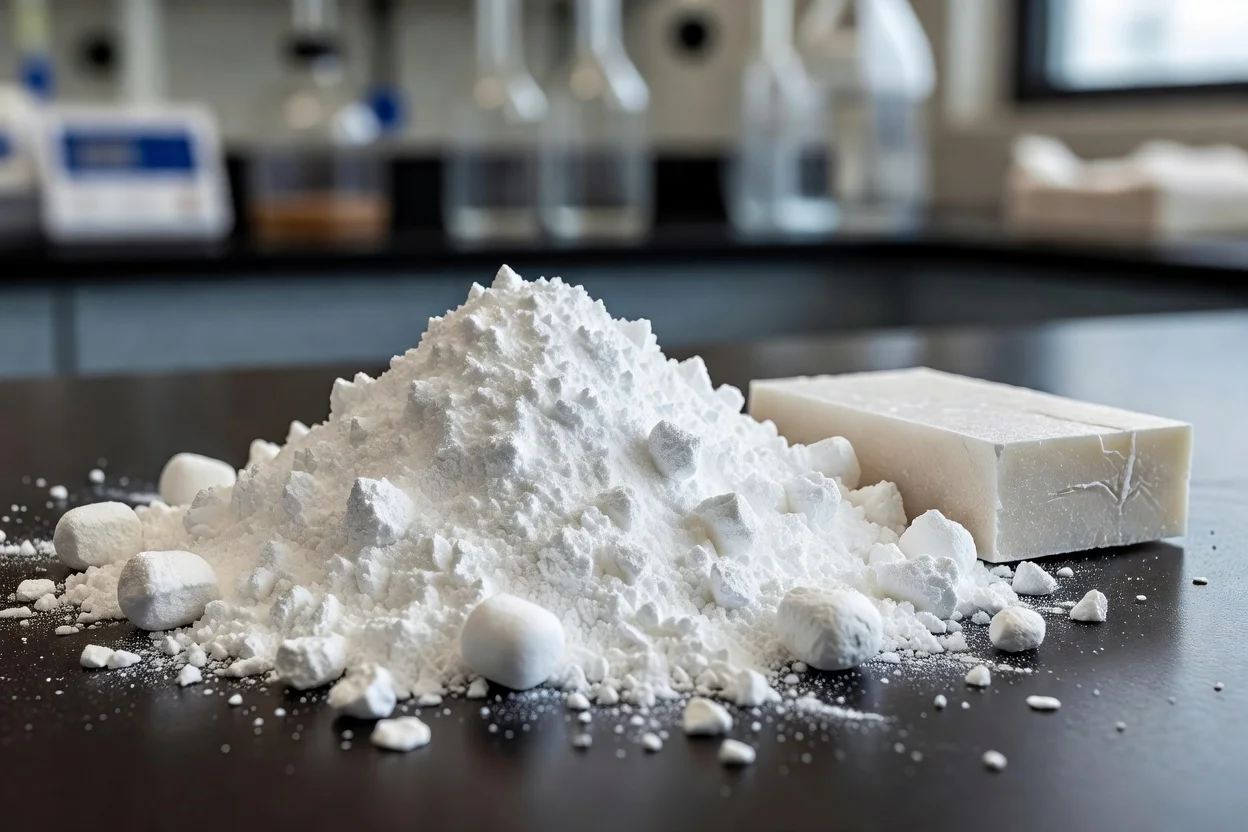
- Mineral hydroxides such as aluminum hydroxide and magnesium hydroxide mainly act endothermically, releasing water and cooling the material while diluting flammable gases.
- Intumescent systems expand into insulating char layers that protect the underlying polymer.
The sustainability profile of flame retardants is complex. They can prevent fires and buy escape time, but some legacy chemistries have been associated with persistence, bioaccumulation, endocrine effects, and environmental transport, which has led to bans, phase-outs, and reformulation efforts. Current innovation is therefore focused on safer-by-design chemistries, better polymer compatibility, improved recycling pathways, and multifunctional additives that combine fire performance with lower smoke toxicity and reduced regulatory risk.
History and Development
Early flame-retardant use was driven by practical fire safety needs in upholstery, wire insulation, electrical equipment, and construction materials, especially as synthetic polymers became more common in mass-produced goods. As plastics expanded into electronics, transport interiors, and insulation, the need for materials that could meet increasingly strict flammability requirements accelerated additive development.
Legacy brominated and chlorinated systems were widely adopted because they often delivered strong flame performance at relatively low loading levels and were effective in many engineering plastics. However, over time, a substantial body of evidence linked some organohalogen flame retardants to persistence in the environment, bioaccumulation, and adverse health outcomes, contributing to regulatory restrictions and substitution pressure.
This has helped drive the rise of phosphorus, nitrogen, mineral-hydroxide, and intumescent technologies, as well as reactive flame retardants that are chemically bound into polymers rather than merely blended in. More recent development has also emphasized smoke suppression, lower corrosivity, compatibility with recycling, and reduced additive migration from finished articles.
Chemical Structure and Key Properties (Technical Overview)
Flame retardants are best understood as a performance class rather than a single substance category. Their chemistry ranges from small-molecule additives to polymeric systems and reactive monomers, and their mode of action depends on whether they operate in the gas phase, condensed phase, or both.
Main technical classes
| Class | Typical mechanism | Common strengths | Common limitations |
|---|---|---|---|
| Halogenated | Radical scavenging in the flame zone | High efficiency at low loadings, strong performance in many plastics | Regulatory pressure, smoke/toxicity concerns for some chemistries |
| Phosphorus-based | Char promotion, radical quenching, condensed-phase action | Broad formulation flexibility, often lower smoke than halogenated systems | Can affect hydrolysis stability, color, or processing window depending on grade |
| Nitrogen-based | Gas-phase dilution and synergy with phosphorus | Often used in intumescent packages | Usually not sufficient alone for demanding applications |
| Mineral hydroxides | Endothermic decomposition and water release | Low toxicity profile, good smoke performance | High loading demand can reduce mechanical properties and raise viscosity |
| Intumescent systems | Expansion into protective char | Useful for coatings, cables, and some plastics | Formulation complexity and sensitivity to processing conditions |
Real technical limits and workarounds
- High loading requirement → viscosity rise and property loss → use synergists, particle surface treatment, or intumescent systems to reduce total additive demand.
- Additive migration → gradual loss of fire performance and potential exposure → use reactive flame retardants or polymeric grades with lower mobility.
- Many flame-retarded plastics are difficult to recycle cleanly → select chemistry compatible with mechanical recycling or design for disassembly and lower additive burden.
Illustrative dosage examples
- Aluminum hydroxide is often used at high loadings, commonly in the tens of percent by weight, where it releases water endothermically and cools the polymer while diluting combustible volatiles.
- Phosphorus-based intumescent packages are also typically used at relatively substantial loadings, where an acid source, carbon source, and blowing agent form a foamed char layer that insulates the polymer and slows oxygen access.
Production Processes and Raw Feedstocks
Flame retardants are produced through distinct chemical routes depending on the active element and desired reactivity. Halogenated grades may be based on brominated or chlorinated aromatic or alicyclic feedstocks, while phosphorus systems are often derived from phosphates, phosphonates, phosphinates, or reactive organophosphorus intermediates.
Additive versus reactive incorporation
- Additive flame retardants are physically mixed into the polymer compound, which makes them versatile and easy to formulate but can increase migration risk in some products.
- Reactive flame retardants are chemically built into the polymer backbone or network, improving permanence and reducing leaching, but requiring tighter synthesis and compatibility control.
Typical raw feedstocks and intermediates
- Phosphorus compounds from phosphate and phosphite chemistry, widely used in engineering plastics, coatings, and intumescent systems.
- Mineral hydroxides such as aluminum hydroxide and magnesium hydroxide, produced from mineral processing and used as low-toxicity fillers and flame retardants.
- Nitrogen-rich compounds such as melamine derivatives, often deployed in combination with phosphorus to build intumescent char.
- Halogenated intermediates for high-performance legacy systems, although many are now constrained by regulation and substitution trends.
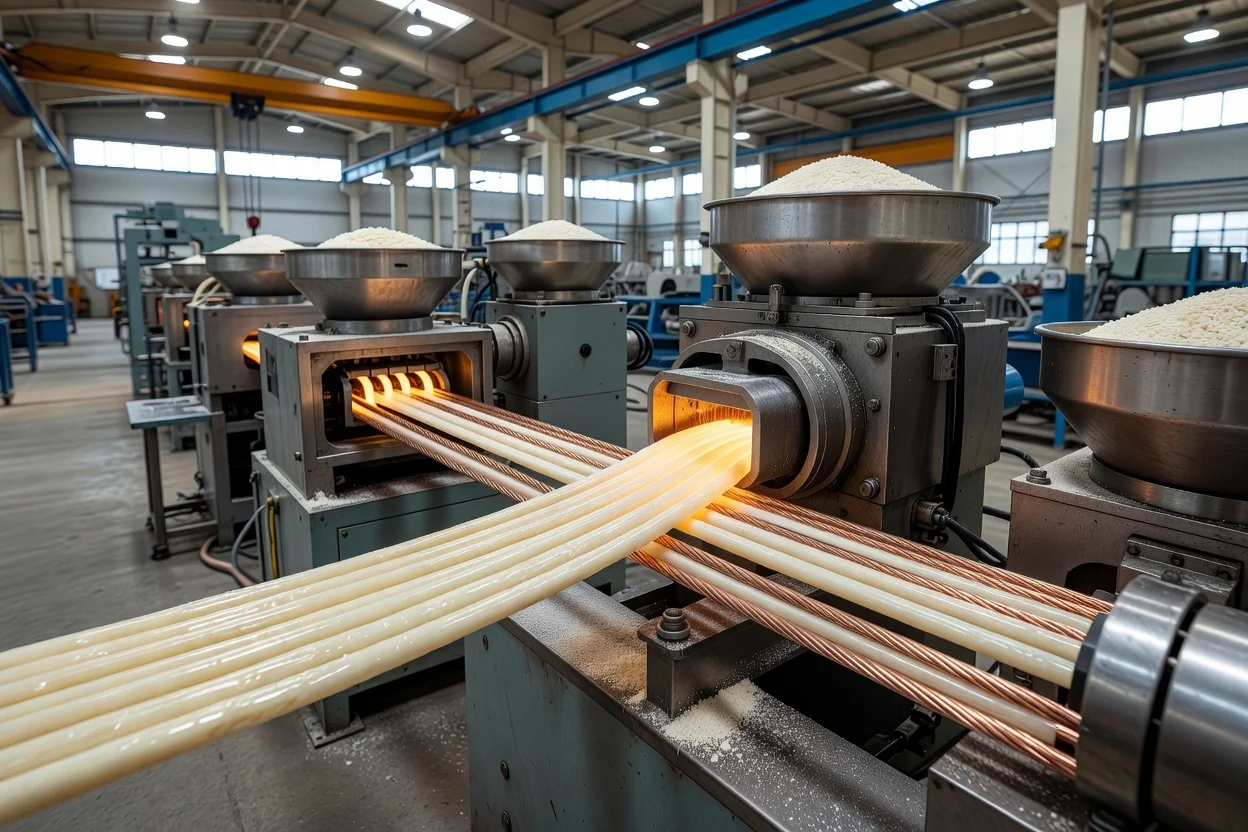
Processing performance matters because flame retardants can affect melt viscosity, dispersion, thermal stability, and surface appearance. This is particularly important in extrusion, injection molding, cable compounding, and coating formulations, where additive distribution and thermal history directly influence fire testing outcomes and part quality.
Applications and End-Use Markets
Flame retardants are used across a broad range of plastics and allied materials, with the most important markets being electronics, electrical equipment, building and construction, transportation, furniture, and textiles. According to recent industry analyses, global demand is substantial, with one estimate placing annual usage at about 3.5 million metric tons, most of it in plastics.
Major end uses and typical fits
| End use | Common polymer or substrate | Usual flame-retardant approach | Notes |
|---|---|---|---|
| Electrical and electronic housings | ABS, HIPS, polycarbonate blends, epoxy systems | Phosphorus, brominated legacy systems, reactive systems | Requires UL-style performance and low smoke in many cases |
| Wire and cable | PVC, polyolefins, elastomers | Mineral hydroxides, phosphorus, synergists | High smoke suppression and insulation integrity are critical |
| Building insulation and panels | Foams, rigid plastics, coatings | Intumescents, phosphorus, mineral systems | Fire spread and smoke performance are central |
| Furniture and upholstery | Foams, textiles, coatings | Additive or reactive systems, often phosphorus-based | Regulatory and exposure concerns are significant |
| Automotive and transport interiors | Polypropylene, polyurethane, textiles | Mineral, phosphorus, nitrogen synergists | Weight, emissions, and smoke toxicity are key design constraints |
| Textiles and protective materials | Fibers, coatings, backings | Reactive or coating-based systems | Durability to washing and wear matters |
One poor-fit use
- Highly flexible polyolefin foams requiring very low density are often a poor fit for heavy mineral flame-retardant loading, because the additive demand can severely compromise softness, resilience, and weight targets.
Fire-retardant coatings are also important, especially in construction and transport. These include nonintumescent and intumescent systems that can be applied to surfaces rather than compounded throughout the bulk material.
Environmental and Sustainability Aspects
The sustainability debate around flame retardants is unusually polarized because the same additives that improve fire safety may also create environmental and health burdens. The key issue is not whether fire protection is needed, but which chemistries deliver it with the lowest overall risk.
Main concerns
- Some legacy organohalogen flame retardants are persistent and can bioaccumulate in people and wildlife.
- Certain flame retardants have been associated with endocrine, neurodevelopmental, reproductive, and cancer-related concerns in toxicological and epidemiological literature.
- Additive flame retardants can migrate out of products over time, contributing to indoor dust and environmental dispersion.
- Flame-retarded plastics can complicate recycling because additive packages may contaminate polymer streams or alter material performance in recyclate.
Lower-impact pathways
- Reactive systems reduce migration and can improve lifetime permanence.
- Phosphorus, nitrogen, and mineral-based formulations are increasingly preferred where they can meet performance requirements with acceptable smoke and processing behavior.
- Design for recycling is gaining attention, including additive packages compatible with mechanical recycling and product architectures that simplify sorting.
- Bio-based or bio-derived building blocks are being explored for some phosphorus-containing and intumescent systems, although this does not automatically guarantee lower toxicity or lower carbon footprint.
The environmental trade-off is therefore context-specific: a flame retardant may be beneficial if it prevents a fire, but less desirable if it persists, migrates, or obstructs circularity.
Economic and Global Market Impact
Flame retardants are economically important because they underpin compliance in safety-critical plastics markets, especially electronics, wire and cable, construction, and transport. Demand is shaped by regulation, consumer product standards, substitution trends, and the cost of alternative chemistries.
Recent industry commentary has estimated global use at about 3.5 million metric tons per year, with roughly 85% entering plastics. The market is therefore tightly linked to polymer compounding, masterbatch supply, and downstream brand-owner specification decisions.
Leading producers and suppliers vary by chemistry and region, but the global landscape typically includes large specialty chemical groups, additive formulators, and companies focused on phosphorus, mineral, or synergist technologies. Competitive advantage increasingly depends on regulatory readiness, non-halogenated portfolios, and the ability to support customer certification programs.
Current Challenges and Innovations
The main technical challenge is to reconcile fire safety, health, and recyclability without sacrificing polymer performance. That is difficult because many of the most efficient flame-retardant chemistries also create formulation, regulatory, or end-of-life complications.
Key challenges
- Achieving demanding fire standards at lower additive loadings
- Controlling smoke density and smoke toxicity
- Preventing additive migration and dust exposure
- Maintaining color, toughness, and processing stability
- Preserving recyclability and recycled-content targets
Active innovation areas
- Halogen-free replacements based on phosphorus, nitrogen, mineral hydrates, and hybrid char-forming systems.
- Reactive flame retardants that become part of the polymer network.
- Nanocomposite and synergist approaches that improve char strength and reduce total additive demand.
- Low-smoke intumescent coatings for building and transport applications.
- Safer-by-design toxicology screening and more transparent hazard assessment during product development.
Future Outlook
The future of flame retardants is likely to be shaped by three forces: tighter safety regulation, stronger sustainability requirements, and continued demand for lightweight polymeric materials in electrification, construction, and mobility. This will favor chemistries that are effective at lower loadings, less likely to migrate, more compatible with recycling, and easier to qualify globally.
Phosphorus-based, mineral, and hybrid intumescent systems are likely to gain further share where performance targets can be met without compromising processing or mechanical properties. At the same time, product designers may increasingly use system-level fire engineering rather than relying solely on additive chemistry, combining material selection, geometry, coatings, barriers, and safer product architecture.
Summary
Flame retardants are a broad class of additives and reactive systems that help plastics and other materials resist ignition, slow flame spread, and improve escape time in fires. Their industrial importance is high, but so are the challenges associated with toxicity, persistence, smoke behavior, and recycling. The field is moving toward non-halogenated, reactive, and multifunctional systems that better align fire safety with environmental and circular-economy goals.
References
- •
National Institute of Environmental Health Sciences. (2026, March 19). Flame retardants. https://www.niehs.nih.gov/health/topics/agents/flame_retardantsLink
- •
Flame retardant. (2004, July 10). In Wikipedia. https://en.wikipedia.org/wiki/Flame_retardantLink
- •
Chemical Safety Facts. (2026, May 18). Flame retardants: Uses, safety, and U.S. regulations. https://www.chemicalsafetyfacts.org/chemicals/flame-retardants/Link
- •
United Nations Environment Programme. (2024, August 14). Flame retardants. https://www.unep.org/flame-retardantsLink
- •
Collaborative for Health & Environment. (n.d.). Flame retardants. https://www.healthandenvironment.org/resources/environmental-hazards/chemicals-and-materials/flame-retardantsLink
- •
BSEF. (n.d.). Flame retardants. https://www.bsef.com/wp-content/uploads/2021/11/flameretardantsguide-en.pdfLink
- •
National Institute of Environmental Health Sciences. (n.d.). Flame retardants and your health fact sheet. https://www.niehs.nih.gov/sites/default/files/health/materials/flame_retardants_508.pdfLink
- •
Washington State Department of Ecology. (n.d.). Flame retardants: A report to the legislature. https://apps.ecology.wa.gov/publications/documents/1404047.pdfLink
- •
U.S. Environmental Protection Agency. (n.d.). Flame retardants in printed circuit boards—Final report, August 2015—Chapter 3. https://www.epa.gov/sites/default/files/2015-08/documents/pcb_ch3.pdfLink
- •
Favorchem. (2025, December 11). Flame retardant types and their mechanisms: A technical deep analysis. https://www.favorchem.cn/blog/flame-retardant-types-and-their-mechanisms-a-technical-deep-analysis.htmlLink
- •
Polymer Solutions. (2016, August 23). 5 major categories of flame retardants. https://www.polymersolutions.com/major-categories-flame-retardants/Link
- •
SpecialChem. (2025, June 30). Flame retardants: How to select the right grade for plastics? https://www.specialchem.com/polymer-additives/guide/flame-retardantsLink
- •
Fire retardant. (2005, October 4). In Wikipedia. https://en.wikipedia.org/wiki/Fire_retardantLink
- •
PMC. (2025, June 29). Fire-resistant coatings: Advances in flame-retardant technologies. https://pmc.ncbi.nlm.nih.gov/articles/PMC12251703/Link
- •
Építőanyag. (n.d.). Flame retardants. https://epa.oszk.hu/02200/02231/00071/pdf/EPA02231_epitoanyag_2022_01_02-08.pdfLink
- •
Wiley. (n.d.). Flame retardants: Chemistry, applications, and environmental impacts. https://onlinelibrary.wiley.com/doi/10.1002/9783527628148.hoc017Link
- •
UK Government. (n.d.). Flame retardant scoping review. https://assets.publishing.service.gov.uk/media/684c057dda3d1b49e6797030/Flame_retardant_scoping_review_-_report.pdfLink
- •
Green Science Policy Institute. (n.d.). Some flame retardants of concern. https://greensciencepolicy.org/harmful-chemicals/flame-retardants/fr-list/Link
- •
National Institute of Standards and Technology. (n.d.). Polymer flame retardant chemistry. https://www.nist.gov/document/2-morganpdfLink
- •
U.S. Environmental Protection Agency. (n.d.). Q. & A. consumer fact sheet on flame retardants. https://19january2021snapshot.epa.gov/sites/static/files/2014-06/documents/flameretardant_consumerfactsheet.pdfLink
- •
NIH. (2024, May 18). A comprehensive review of reactive flame retardants for ... https://pmc.ncbi.nlm.nih.gov/articles/PMC11121908/Link
- •
List of fire-retardant materials. (2003, December 22). In Wikipedia. https://en.wikipedia.org/wiki/List_of_fire-retardant_materialsLink
- •
PubMed. (2002, January 1). [Flame retardants—use and hazards for human]. https://pubmed.ncbi.nlm.nih.gov/12621885/Link
- •
BBC. (2019, July 16). Toxic chemicals: How safe is your furniture? https://www.bbc.com/news/uk-49000966Link
- •
C&EN. (2025, November 7). Slow burn: The vital need for benign flame retardants. https://cen.acs.org/materials/slow-burn-vital-need-benign-flame-retardants/103/web/2025/09Link
- •
PubMed. (n.d.). Halogenated flame retardants: Do the fire safety benefits ... https://pubmed.ncbi.nlm.nih.gov/21268442/Link
- •
PMC. (2022, July 17). Flame retardant coatings: Additives, binders, and fillers. https://pmc.ncbi.nlm.nih.gov/articles/PMC9324192/Link
- •
UK Parliament. (2017, January 1). TCS0005. https://committees.parliament.uk/writtenevidence/99955/html/Link
- •
Toxic-Free Future. (2025, July 22). Get the facts: Toxic flame retardants. https://toxicfreefuture.org/toxic-chemicals/toxic-flame-retardants/Link
- •
U.S. Environmental Protection Agency. (n.d.). What are flame retardant chemicals and ... https://www.epa.gov/sites/default/files/2016-05/documents/flame_retardant_fact_sheet_3-22-16.pdfLink
- •
Health Canada. (2025, December 18). Flame retardants. https://www.canada.ca/en/health-canada/services/chemicals-product-safety/flame-retardants.htmlLink
- •
UCSF. (2025, December 5). Minimizing exposure to toxic flame-retardants. https://cchp.ucsf.edu/resources/fact-sheets-families/minimizing-exposure-toxic-flame-retardantsLink
- •
CNN. (2024, April 1). Common flame retardants linked to deaths from cancer in ... https://www.cnn.com/2024/04/01/health/flame-retardant-pbdes-cancer-wellnessLink
- •
ScienceDirect. (n.d.). Flame retardant—An overview. https://www.sciencedirect.com/topics/earth-and-planetary-sciences/flame-retardantLink
- •
Vichem. (2025, September 4). Flame retardants—Applications in plastics and textiles. https://vichem.vn/en/flame-retardants-applications-in-plastics-and-textiles/Link
- •
Inchem.org. (n.d.). Flame retardants (EHC 192, 1997). https://www.inchem.org/documents/ehc/ehc/ehc192.htmLink
- •
ScienceDirect. (n.d.). Flame retardant—An overview. https://www.sciencedirect.com/topics/pharmacology-toxicology-and-pharmaceutical-science/flame-retardantLink
- •
ScienceDirect. (n.d.). A new consensus on reconciling fire safety with environmental & health impacts of chemical flame retardants. https://www.sciencedirect.com/science/article/pii/S0160412023000557Link
- •
Proposition 65 Warnings. (n.d.). Flame retardants. https://www.p65warnings.ca.gov/fact-sheets/flame-retardantsLink
- •
Lanxess. (2023, September 11). Flame retardants. https://lanxess.com/en/products/industries/polymer-additives/flame-retardantsLink