
Introduction
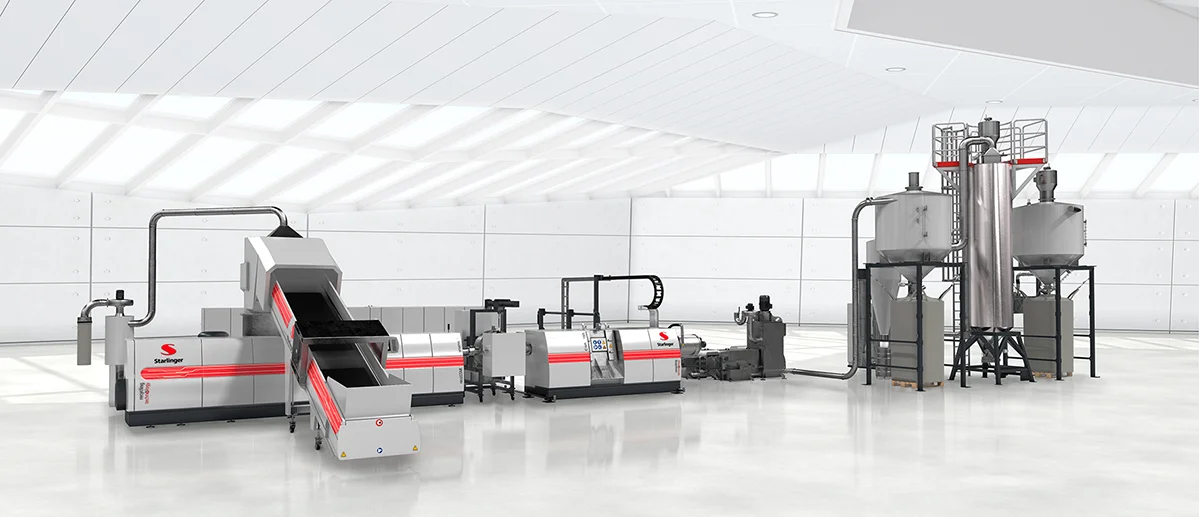
Recycling plants are industrial facilities that receive waste materials, sort and clean them, and prepare them for reuse as secondary raw materials or, in some cases, finished new products. In the plastics industry, the term is often used more broadly to include materials recovery facilities (MRFs), plastics reprocessors, and specialized plants for washing, shredding, extrusion, pelletizing, or chemical conversion, all of which support the circular economy by returning recovered material to manufacturing.
From a plastics-processing perspective, recycling plants sit between collection and remanufacturing: they turn post-consumer or post-industrial streams into specifications that downstream processors can handle consistently. Modern facilities range from relatively simple sorting centers to highly automated plants with optical sorters, magnets, eddy-current separators, shredders, washing lines, dewatering equipment, and pelletizers. Their technical evolution has been driven by higher contamination levels in waste streams, stricter quality requirements for recyclate, rising demand for recycled resin, and pressure to reduce landfill and virgin-material dependence.
The sector now includes different plant types for different feedstocks, such as single-stream, dual-stream, and mixed-waste MRFs, as well as dedicated plastics recycling plants for PET, HDPE, film, rigid packaging, and industrial scrap. Sustainability performance is increasingly judged not only by diversion from landfill, but also by energy consumption, water use, residue rates, and the ability to produce high-purity output suitable for closed-loop applications. Looking ahead, the most important trends are greater automation, more sophisticated sensor-based sorting, tighter traceability, and broader integration of mechanical and chemical recycling pathways.
History and Development
Recycling plants developed as waste management systems evolved from basic collection and manual sorting into industrial-scale material recovery operations. Early facilities focused mainly on separating paper, metals, and glass for resale, while modern plants increasingly handle complex commingled waste streams and plastics with varying polymer chemistry, additives, labels, inks, and multilayer structures.
Key milestones in the development of recycling plants include:
- The rise of materials recovery facilities as specialized sorting hubs that separate recyclables into marketable fractions before further reprocessing.
- The introduction of mechanical separation technologies such as magnets, vibrating screens, air separators, and eddy-current separators, which improved the recovery of ferrous metals, aluminum, and light fractions.
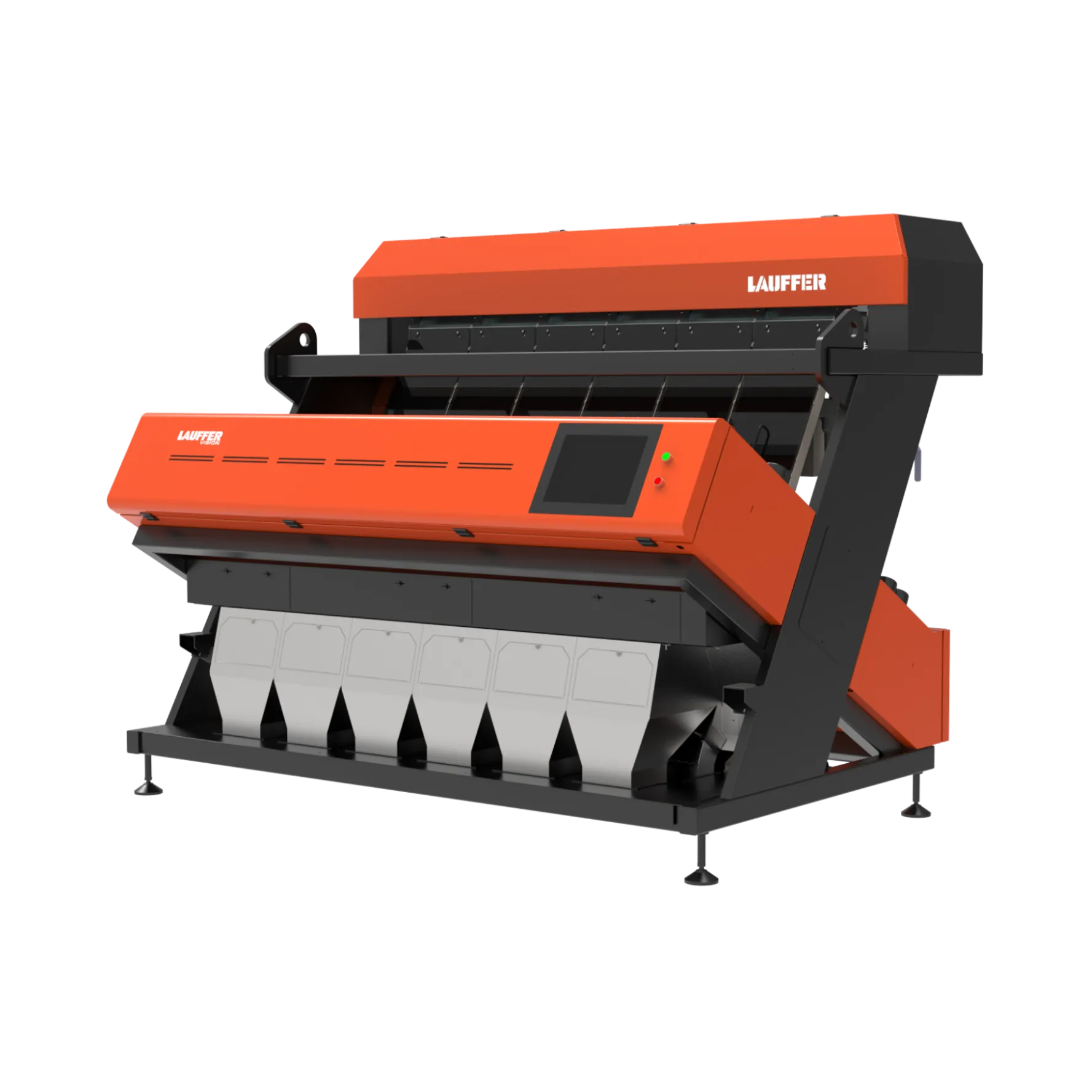
- The spread of optical sorting systems using near-infrared and related sensor technologies to distinguish plastic polymers by spectral response, enabling cleaner PET, HDPE, PP, and mixed-plastic streams.
In plastics recycling specifically, the industry moved from simple bale-and-resell models toward integrated washing and pelletizing plants capable of producing flake and pellet grades for direct use in extrusion, injection molding, and film or sheet production. More recent development has emphasized automation, data logging, and robotic sorting to improve throughput and reduce human exposure to dust, contamination, and repetitive tasks.
Key Characteristics and Technical Overview
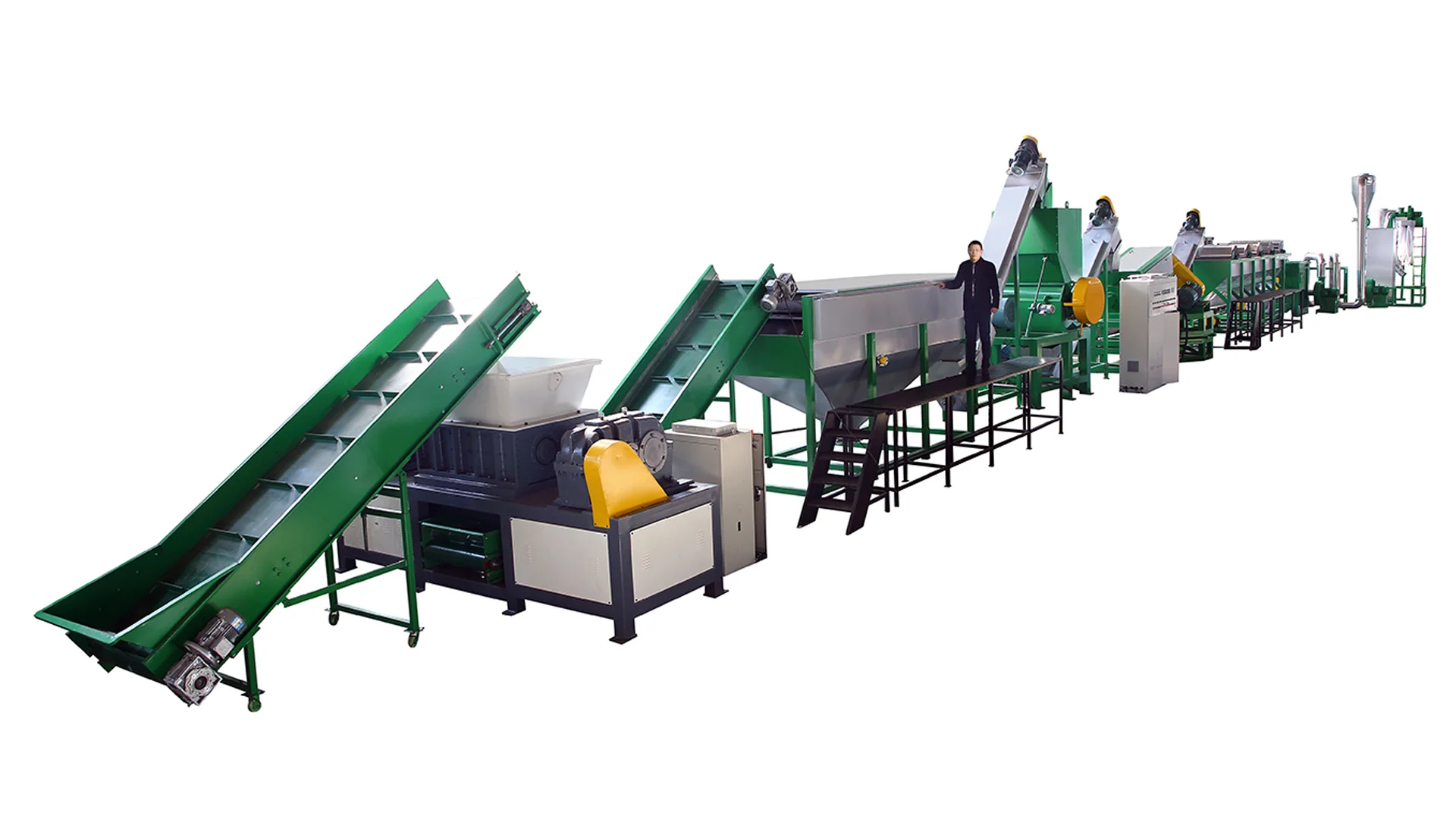
A recycling plant is defined less by one machine than by a process train. The exact line depends on the feedstock, contamination level, and required output purity, but most plants follow a sequence of receiving, pre-sorting, size reduction, separation, cleaning, and output preparation.
Core process stages
- Receiving and weighing: incoming loads are weighed, logged, and directed to appropriate tipping floors or reception areas.
- Pre-sorting: operators remove oversize items, hazardous materials, and non-target objects that could damage equipment or reduce product quality.
- Primary separation: screens, trommels, ballistic separators, air classifiers, magnets, and eddy-current separators divide the stream by size, density, and material response.
- Optical sorting: sensors classify plastics and other recyclables by polymer type, color, or material signature, followed by air-jet ejection.
- Size reduction and washing: shredders, granulators, crushers, and friction washers reduce the material and remove labels, dirt, food residue, adhesives, and fines.
- Dewatering and drying: centrifuges, squeeze dryers, and thermal dryers reduce moisture before storage or extrusion.
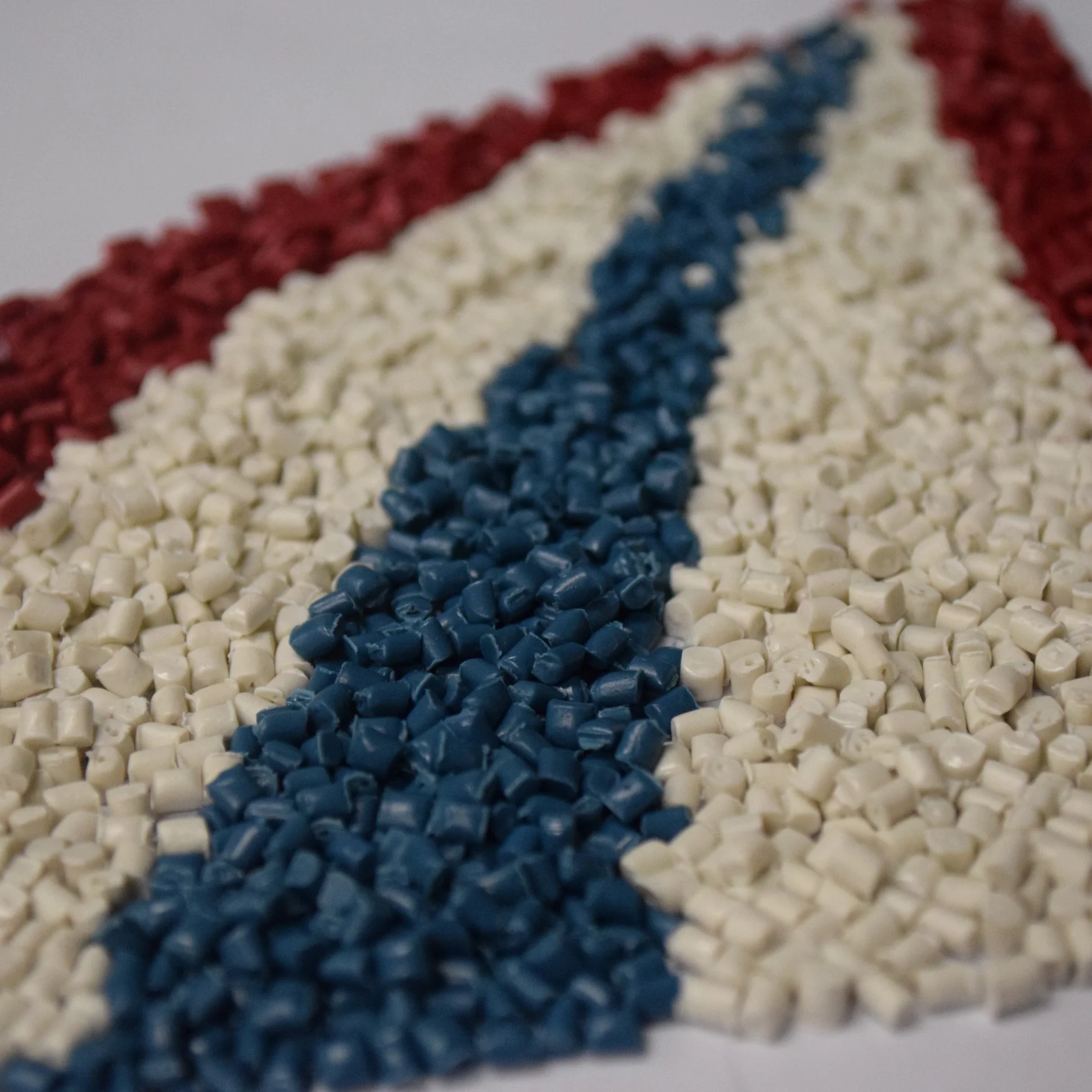
- Output preparation: recovered material is baled, flaked, compounded, pelletized, or otherwise converted into a specification suitable for sale to end users.
Typical technical benchmarks in plastics recycling
- Flake size after shredding or granulation is commonly in the range of about 8–20 mm, depending on screen size and final application; finer sizes are used where washing efficiency or downstream extrusion consistency is critical.
- Centrifugal dewatering commonly reduces moisture on washed plastic flake to roughly 1–3% residual moisture, with final drying steps lowering it further for higher-grade pelletizing applications.
- Throughput varies widely: compact lines may process a few hundred kg/h, while larger industrial plastic recycling plants can run at several t/h and, in some waste streams, much higher when configured for bulk pre-processing rather than final-grade output.
- Rotor speeds in granulators and shredders are application-specific; many plastics granulators operate at several hundred to over a thousand rpm, while slower-shaft shredders use lower speeds and higher torque for tougher, contaminated inputs.
- Specific energy consumption depends heavily on contamination, washing intensity, and drying requirements, but recycling lines are often judged by energy per ton of output and by the trade-off between higher purity and higher utility demand.
Engineering considerations
The technical performance of a recycling plant depends on:
- Feedstock variability, including moisture, contamination, and polymer mix.
- Separation efficiency, which determines product purity and residual loss.
- Wear resistance, especially in shredders, knives, screens, pumps, and conveying components exposed to abrasive contaminants.
- Water management, particularly in wet washing systems where filtration, recirculation, and wastewater treatment are essential.
- Downstream compatibility, meaning the output must match the melt flow, contamination, and color requirements of the target manufacturing process.
Types and Variations
Recycling plants can be classified by function, feedstock, or level of processing.
| Plant type | Main function | Typical output |
|---|---|---|
| MRF / sorting plant | Separates mixed recyclables into commodity streams | Baled paper, metals, plastics, glass |
| Plastics reprocessing plant | Washes, grinds, dries, and pelletizes plastics | Flake, regrind, pellets |
| Mixed-waste plant | Extracts recyclables from unsorted municipal waste | Lower-purity recoverables, RDF residue |
| C&D recycling plant | Processes construction and demolition waste | Aggregates, wood, metals, inert fractions |
| Specialized recovery plant | Targets one waste stream, such as cables, e-waste, or film | Material-specific secondary raw materials |
Common MRF configurations
- Clean or source-separated MRFs handle pre-sorted materials and generally produce higher-purity output with less residue.
- Single-stream MRFs receive mixed dry recyclables together and rely on heavier mechanical sorting and quality control.
- Dirty or mixed-waste MRFs process commingled municipal waste and require more robust separation equipment.
Plastics recycling plant variants
- PET bottle recycling plants typically focus on de-labeling, grinding, hot washing, sink-float separation, drying, and flake or pellet production.
- Film recycling plants often require aggressive pre-shredding, contamination control, and controlled drying because thin films trap moisture and dirt more readily.
- Rigid plastics plants commonly handle HDPE, PP, and mixed rigid packaging using sorting, washing, and extrusion lines.
- Industrial scrap recovery plants process production waste such as sprues, runners, offcuts, and purge, often with cleaner feedstock and lower washing demand.
Applications and Uses
Recycling plants are used across municipal, commercial, and industrial waste streams, with different machine configurations suited to each sector.
- Municipal solid waste: MRFs and mixed-waste plants recover paper, plastics, metals, and glass from household discards.
- Packaging recovery: high-speed sorting and washing lines reclaim PET bottles, HDPE containers, caps, films, and multilayer fractions where feasible.
- Construction and demolition waste: specialized plants recover concrete, brick, metals, wood, asphalt, and inert fractions for reuse in aggregates or energy recovery.
- Industrial plastics scrap: shredders, granulators, and pelletizing lines convert manufacturing scrap into reusable resin.
- E-waste and cable recovery: plants combine size reduction with metal separation and controlled handling of hazardous components.
A poor-fit use is highly contaminated organic waste mixed with plastics, which usually requires biological treatment, composting, anaerobic digestion, or waste-to-energy routes rather than a conventional plastics recycling line.
Technological Innovations and Automation
Automation has become central to recycling plant design because feedstocks are heterogeneous and labor-intensive to sort manually. Current systems increasingly combine machine vision, infrared spectroscopy, robotics, data analytics, and programmable control to raise purity and stabilize throughput.
Major innovations
- Optical sorters identify polymer types and color fractions with high speed and accuracy.
- Robotic picking systems replace or assist manual pre-sort and quality control tasks.
- Digital monitoring tracks throughput, contamination, downtime, and product quality in real time.
- AI-supported sorting improves recognition of difficult items, especially in single-stream and mixed-waste plants.
- Closed-loop process control helps optimize washers, dryers, and pelletizers based on moisture and contamination measurements.
Automation improves consistency, but it also introduces higher capital cost, greater maintenance complexity, and dependence on high-quality sensor calibration. For operators, the central engineering question is not whether to automate, but how far automation should extend relative to feedstock quality and market requirements.
Environmental and Sustainability Aspects
Recycling plants are a core infrastructure for waste reduction and circularity because they reduce landfill disposal and return material to production loops. Their environmental value, however, depends on the balance between recovery yield, contamination control, energy use, and residual disposal.
Sustainability benefits
- Landfill diversion of paper, plastics, metals, glass, and construction waste.
- Reduced virgin material demand when recycled output substitutes for primary resin or raw materials.
- Lower embodied emissions in many recycling pathways compared with virgin material production, especially where collection and processing are efficient.
- Circular economy compatibility through secondary raw material production for packaging, automotive parts, textiles, and building products.
Sustainability challenges
- Energy demand rises with washing, drying, extrusion, and high-purity sorting.
- Water use and wastewater are significant in plastics washing lines.
- Residual fractions can still be substantial in dirty or low-quality streams.
- Material degradation limits the number of cycles for many polymers, especially where contamination or thermal history is severe.
In plastics, the best environmental outcomes usually come from clean feedstocks, efficient separation, and design-for-recycling packaging that reduces labels, inks, multilayer complexity, and incompatible additives.
Economic and Global Market Impact
Recycling plants form an important link in the secondary materials market, where baled commodities, flakes, and pellets are sold to manufacturers. Their economics depend on collection costs, commodity prices, contamination levels, plant utilization, energy costs, labor availability, and regulatory requirements.
Market role
- They stabilize supply for recycled polymers and other secondary materials.
- They support local and regional waste management systems by reducing disposal volumes.
- They create demand for specialized equipment such as conveyors, separators, shredders, washers, and pelletizers.
- They influence packaging and product design because material recoverability now affects compliance and purchasing decisions.
The global market is shaped by uneven recycling infrastructure, differences in source separation discipline, and divergent regulatory frameworks. In regions where contamination is high or collection systems are inconsistent, plant design tends to emphasize robust sorting and residue handling over premium-grade output.
Current Challenges and Innovations
The main technical challenge is material heterogeneity. Recyclers must process waste that varies by polymer type, shape, moisture, labeling, additives, and contamination, often with limited control over incoming quality.
Current challenges
- Contamination from food residue, mixed polymers, paper, moisture, and non-recyclable items.
- Complex packaging such as multilayer films and composite structures that are difficult to separate economically.
- Quality loss during repeated recycling, especially for heat-sensitive or impurity-sensitive polymers.
- Residue management, which affects landfill diversion and process economics.
- Regulatory variability across jurisdictions, which complicates plant design and output specifications.
Active innovations
- Better sensor fusion for polymer identification and impurity detection.
- More durable shredder and granulator tooling for abrasive and contaminated feedstocks.
- Improved wash chemistry and water recirculation for lower utility intensity.
- Integration of mechanical recycling with chemical recycling for fractions that cannot be economically recovered as high-quality recyclate.
- Expanded use of traceability systems to document material origin, contamination, and recycled content claims.
Future Outlook
Recycling plants are likely to become more specialized, more automated, and more tightly integrated with manufacturing supply chains. In plastics, this will favor facilities that can deliver predictable flake or pellet quality rather than merely maximize diversion tonnage.
Several trends are likely to shape the next generation of plants:
- Greater adoption of high-resolution optical sorting and AI-assisted recognition.
- More modular plant design, allowing operators to adapt to changing waste streams and regional regulations.
- Higher emphasis on closed-loop plastics recycling, especially for PET, HDPE, and selected rigid packaging formats.
- Increased use of hybrid recycling systems that combine mechanical and chemical processes where material quality is otherwise unrecoverable.
- Stronger performance metrics around energy, water, and purity, not only throughput.
The long-term competitive advantage in recycling plants will belong to operations that combine robust process engineering with market-aware output specifications, because a recycling plant is valuable only when its recovered material can reliably re-enter manufacturing.
References
- •
RecycleNation. (n.d.). A look inside a recycling plant – How your items get sorted and recycled. https://recyclenation.com/2020/08/a-look-inside-a-recycling-plant-how-your-items-get-sorted-and-recycled/Link
- •
Reverter Industries. (2024, November 7). Recycling plant: What it is and how it works. https://reverterindustries.com/en/recycling-plant-en/how-a-recycling-plant-works/Link
- •
Sintac. (2023, January 24). What is a recycling plant? https://sintac.es/en/what-is-a-recycling-plant/Link
- •
Camec. (n.d.). Recycling plants. https://www.camec.net/en/resources/recycling-plantsLink
- •
Mucci Cloud. (n.d.). What happens in a recycling plant? https://www.muccycloud.com/2019/03/what-happens-in-recycling-plant.htmlLink
- •
Recycling Today. (2025, November 13). ¿Qué es una planta de reciclaje y cómo funciona? https://www.recyclingtoday.org/es/blogs/news/what-is-a-recycling-plant-and-how-does-it-workLink
- •
GD Environmental. (2026, January 30). How recycling facilities actually work in 2025. https://gd-environmental.co.uk/how-recycling-facilities-work/Link
- •
IMARC Engineering. (2026, May 21). Recycling plant setup in India (2026): Cost, machinery, licenses. https://www.imarcengineering.com/blog/recycling-plant-setup-in-indiaLink
- •
WeighPay. (2026, June 4). Understanding the different types of recycling plants. https://weighpay.com/blog/understanding-the-different-types-of-recycling-plantsLink
- •
CleanTech Rising. (2018, April 11). Here’s your guide to how recycling actually works. https://medium.com/cleantech-rising/heres-your-guide-to-how-recycling-actually-works-1f3d97b37904Link
- •
CRS Northern Ireland. (2026, January 22). Designing the right recycling plant: Insights from an experienced. https://crsni.com/recycling-plant-design-insights/Link
- •
Wikipedia. (2005, February 21). Materials recovery facility. https://en.wikipedia.org/wiki/Materials_recovery_facilityLink
- •
Eggersmann Recycling Technology. (n.d.). What are waste treatment plants? https://www.eggersmann-recyclingtechnology.com/en/recycling-glossary/what-are-waste-treatment-plants/Link
- •
The Recycling Partnership. (2019, May 15). Recycling – How it works. https://recyclingpartnership.org/communitiesforrecycling/recycling-how-it-works/Link
- •
GBD Magazine. (2024, November 20). 4 types of recycling systems. https://gbdmagazine.com/types-of-recycling-systems/Link
- •
Renovables Verdes. (2024, October 28). Recycling plants: Process and key features. https://en.renovablesverdes.com/recycling-plant/Link
- •
Recycling Today. (2025, November 15). How recycling plants turn waste into valuable resources. https://www.recyclingtoday.org/blogs/news/how-recycling-plants-turn-waste-into-valuable-resourcesLink
- •
Constro Facilitator. (n.d.). An overview of C&D waste recycling plants and their demand. https://constrofacilitator.com/an-overview-of-cd-waste-recycling-plants-and-their-demand/Link
- •
U.S. Environmental Protection Agency. (2026, January 22). The U.S. recycling system. https://www.epa.gov/circulareconomy/us-recycling-systemLink
- •
California Institute for Local Government. (n.d.). A primer on recycling facilities. https://www.ca-ilg.org/sites/main/files/file-attachments/formatted_primer_on_recycling_facilities_draft_kj10-24.pdfLink
- •
Circulogy. (2026, June 1). Material recovery facility in solid waste management. https://circulogy.com/library/blogs/material-recovery-facility-in-solid-waste-managementLink
- •
Wikipedia. (2002, August 10). Recycling. https://en.wikipedia.org/wiki/RecyclingLink
- •
For Rec. (2025, January 27). Solutions for industrial and urban waste recycling. https://www.forrec.eu/Link
- •
Plastics Recycling. (2024, September 5). The plastic recycling process. https://plasticsrecycling.org/how-recycling-works/the-plastic-recycling-process/Link
- •
Umbrex. (2025, May 23). How the recycling industry works. https://umbrex.com/resources/how-industries-work/waste-management-sustainability/how-the-recycling-industry-works/Link
- •
Reduce Reutiliza Recicla. (2024, May 27). Plantas de reciclaje en España, qué son y cómo funcionan. https://reducereutilizarecicla.org/plantas-de-reciclaje-en-espana/Link
- •
Reddit. (n.d.). ELI5: How do recycling factories deal with the problem of. https://www.reddit.com/r/explainlikeimfive/comments/d6u0i3/eli5_how_do_recycling_factories_deal_with_the/Link
- •
Jefferson Recycling. (2017, March 8). What are the different types of recycling facilities? https://www.jefferson-recycling.com/2017/03/different-types-recycling-facilities/Link
- •
Sanwa Engineering. (n.d.). Material recycling centers. http://sanwaeng.co.jp/en/product4/Link
- •
Genius Plas. (2025, February 25). Choosing the right plastic recycling plant for my business. https://www.geniusplas.com/en/article/Plastic-Recycling-Plant.htmlLink
- •
U.S. Environmental Protection Agency. (2026, June 22). Recycling basics and benefits. https://www.epa.gov/recycle/recycling-basics-and-benefitsLink
- •
Recycling Today. (n.d.). Recycling equipment. https://www.recyclingtoday.org/pages/recycling-equipmentLink
- •
Banyan Nation. (2026, March 11). Material recovery facility in waste management: Types & process. https://www.banyannation.com/blog/material-recovery-facility/Link
- •
Environ. (n.d.). Solid waste recycling and. http://www.environ.ir/wp-content/uploads/2020/11/Waste-Processing-and-Recycling-Unit-Operations-20202021.pdfLink
- •
Recycle Now. (2024, July 16). What happens to my recycling? https://www.recyclenow.com/how-to-recycle/what-happens-to-my-recyclingLink