
Introduction
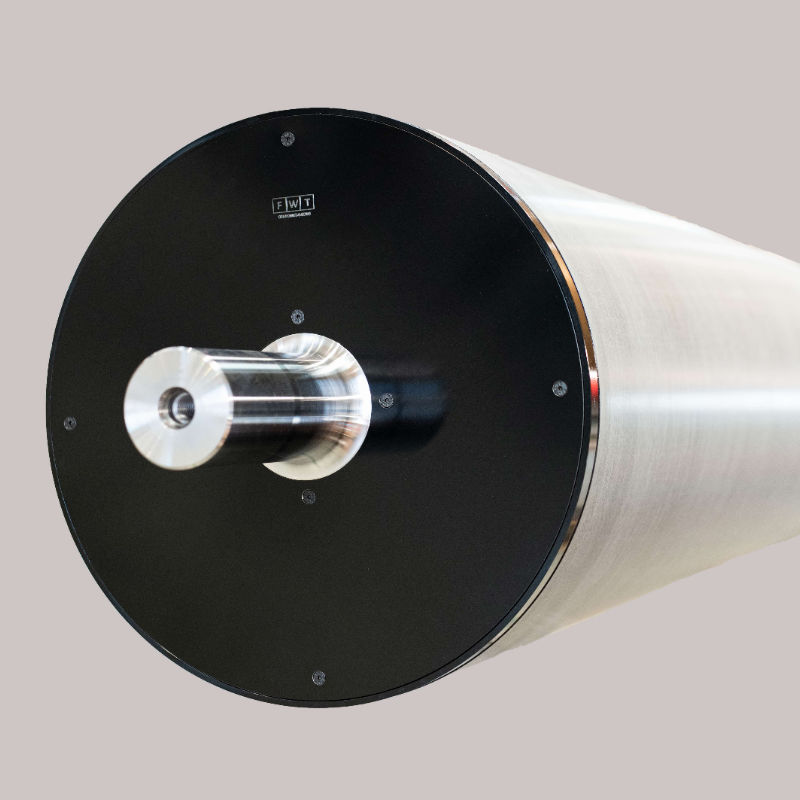
Rolls are cylindrical components used in plastics processing to convey, compress, calender, smooth, cool, emboss, or meter polymer materials, typically in pairs or multi-roll arrangements within continuous production lines. In the plastics industry, the term most commonly refers to machine rolls or roller assemblies rather than the general English word “rolls,” and in Chinese industrial usage the closest technical term is 辊 (gǔn), meaning a rotating cylindrical machine part. The role of rolls is especially important in calendering, sheet and film finishing, lamination, nip control, and certain extrusion downstream systems, where surface quality, thickness uniformity, and thermal management depend strongly on roll design and operating conditions.
Rolls are not a single machine type but a family of engineered components whose geometry, surface finish, temperature control, drive arrangement, and load-bearing capacity are matched to the polymer, line speed, and product specification. In modern plastics processing, they are increasingly integrated with servo drives, closed-loop temperature control, precision bearing systems, and digital monitoring to improve dimensional consistency and reduce scrap. At the same time, energy efficiency, heat-transfer performance, and compatibility with recycled or bio-based polymers have become central design priorities in roll-based processing systems.
History and Development
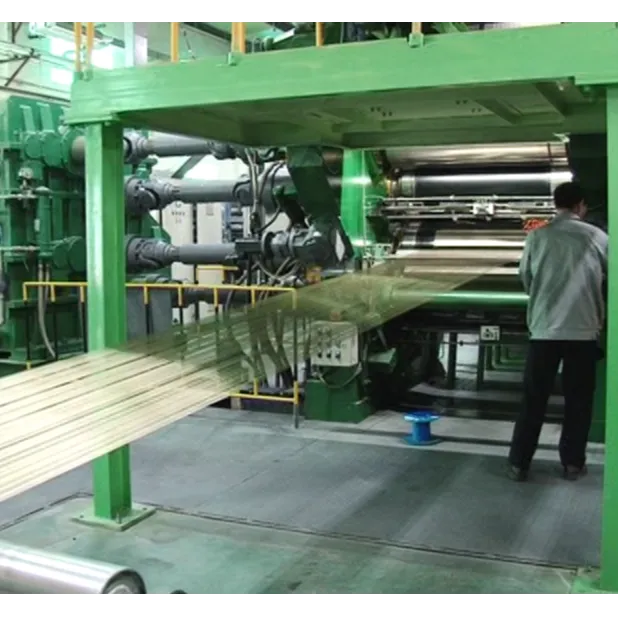
The industrial use of rolls in plastics processing developed alongside the broader mechanization of sheet and film manufacturing. Early rubber and plastic finishing relied on mechanically simple roll pairs for compression and smoothing, but as polymer production expanded, rolls became precision components for controlling thickness, gloss, and thermal profile.
Key milestones include:
- Early calendering systems adapted from rubber and textile machinery, which established the roll nip as a core principle for forming continuous web products.
- Postwar expansion of polymer sheet and film production, which drove the development of polished steel rolls, chrome-plated surfaces, and more accurate bearing systems for consistent gauge control.
- Modern thermally controlled and digitally monitored roll trains, which use internal heat-transfer channels, automatic gap adjustment, and integrated sensor feedback to support high-output extrusion and film lines.
In recent decades, roll technology has advanced from a mainly mechanical subsystem to a precision process platform that affects optics, barrier performance, dimensional stability, and downstream convertibility.
Key Characteristics and Technical Overview
A plastics-processing roll is typically a cylindrical metal body mounted on bearings and rotated by a drive or by contact with other moving surfaces. Its main engineering functions are to:
- create a nip for compressing or shaping material,
- provide heat exchange by internal circulation or external contact,
- maintain surface smoothness for optical quality,
- impose pressure and tension on films, sheets, webs, or laminates,
- support calibration and thickness control.
Core design parameters
Important technical variables include:
- Diameter and face length: selected according to line width, pressure requirement, and stiffness.
- Surface finish: polished, ground, chrome-plated, engraved, textured, or coated depending on release, gloss, or embossing needs.
- Temperature control: rolls may be heated or cooled by water, thermal oil, or other heat-transfer media.
- Runout and concentricity: low geometric error is essential for uniform thickness and stable web tracking.
- Nip pressure: affects calendering quality, lamination bond strength, and sheet flatness.
- Peripheral speed matching: critical in paired-roll systems to prevent wrinkling, stretching, or surface damage.
Typical operating ranges
Technical values vary by process, but common industry ranges include:
- Roll surface speeds in the rough range of a few meters per minute in low-speed finishing applications to several hundred meters per minute in high-output film and sheet lines.
- Roll temperatures often controlled from near ambient cooling conditions to well above \(100^\circ\text{C}\) in heated calendering or embossing applications, depending on polymer softening behavior.
- Nip pressures ranging from light finishing contact to high-pressure compression in calender stacks and laminating systems.
- Line widths from narrow specialty webs to wide sheet and film formats exceeding several meters in industrial calendering.
Engineering examples
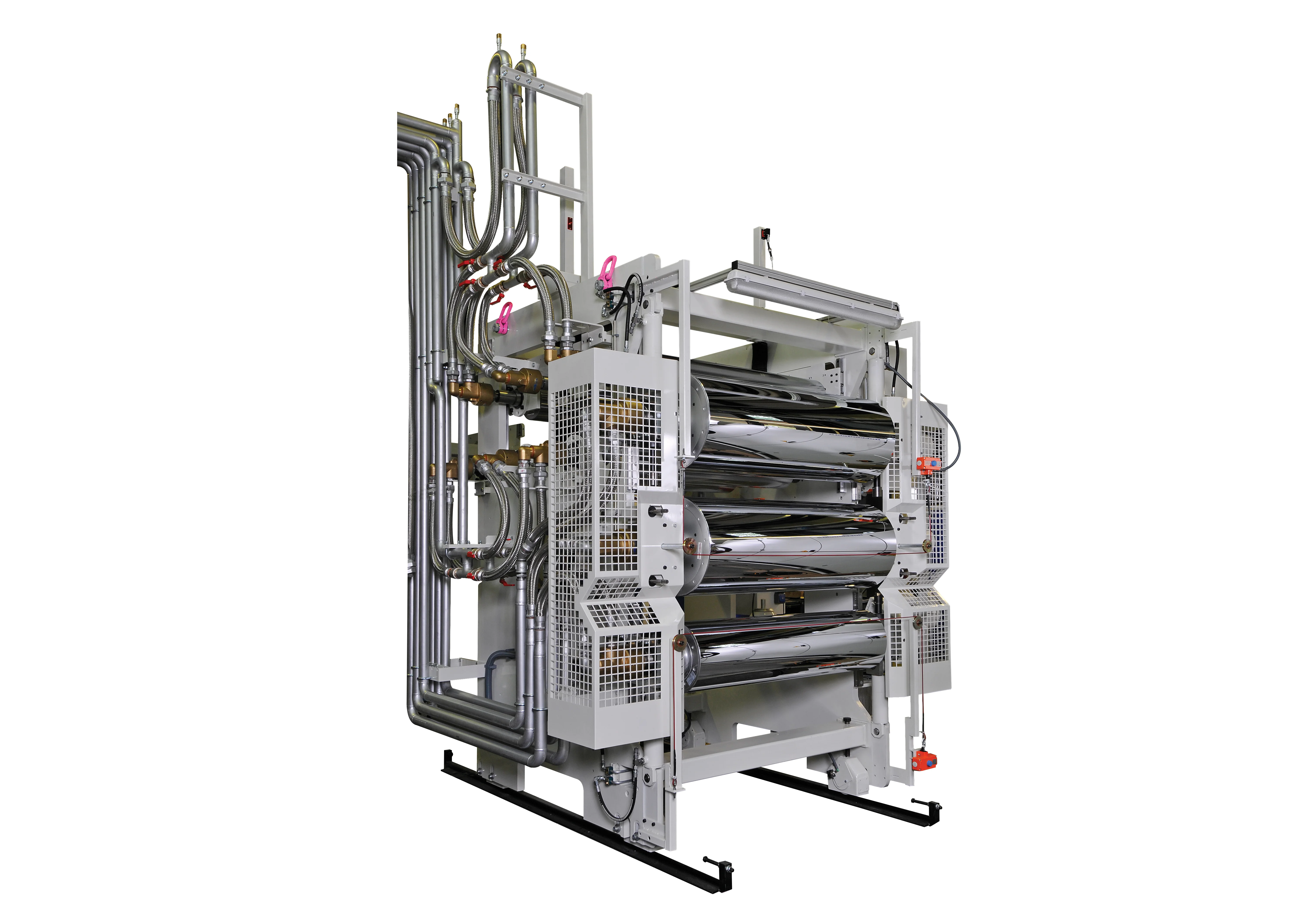
- In three-roll and four-roll calenders, successive nips progressively reduce thickness and improve surface finish.
- In chill-roll stacks, a hot extruded sheet is rapidly solidified to lock in gauge and surface texture.
- In lamination lines, a heated or pressure-controlled roll pair bonds layers while limiting trapped air and maintaining registration.
Quantitative notes for adjacent roll-based systems
Where rolls are used in downstream plastic recycling or size-reduction lines, related technical benchmarks are often cited by equipment makers:
- Granulator flake size commonly falls in the approximate range of 10–50 mm, depending on screen opening and rotor configuration.
- Residual moisture after centrifugal dewatering is often reduced to roughly 1–3%, sometimes lower with optimized washing and dewatering stages.
- Throughputs can range from hundreds of kilograms per hour in compact lines to multiple tonnes per hour in large industrial systems.
- Rotor speeds in cutting and shredding equipment are commonly measured in the hundreds to several hundred rpm, while certain high-speed systems operate higher depending on tool geometry and material.
- Specific energy consumption varies widely by process and feedstock, but modern optimized systems are designed to reduce kWh per tonne through improved drive efficiency, low-friction bearings, and better thermal integration.
These figures are process-dependent rather than universal roll specifications, but they are relevant because roll-assisted downstream systems frequently interface with plastics washing, pelletizing, and reprocessing equipment.
Types and Variations
Rolls in plastics processing are commonly classified by function.
| Type of roll | Main function | Typical use |
|---|---|---|
| Calender rolls | Compress and form a continuous sheet | PVC sheet, film, flooring, coated webs |
| Chill rolls | Remove heat and solidify melt | Extruded sheet, film, profile finishing |
| Nip rolls | Apply pressure and traction | Lamination, web transport, web tension control |
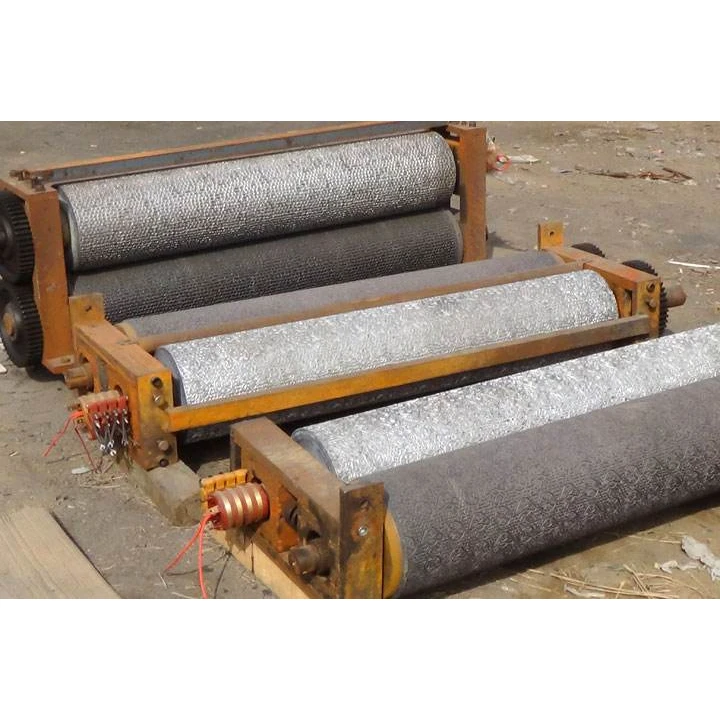
| Embossing rolls | Impart texture or pattern | Decorative film, leather-like surfaces, packaging film |
| Guide rolls | Redirect and stabilize web path | Film and sheet lines, printing and converting |
| Metering rolls | Control coating or transfer | Surface coating, adhesive application |
| Rubber-covered rolls | Provide compliant contact | Sensitive webs, traction, low-marring applications |
Material and surface variations
- Hardened steel rolls are favored for stiffness and wear resistance.
- Chromium-plated rolls offer improved surface hardness and corrosion resistance.
- Polished mirror-finish rolls are used where gloss and optical clarity are important.
- Rubber-coated or polyurethane-covered rolls provide compliance and grip.
- Textured rolls are used to generate matte or structured surfaces.
- Precision temperature-controlled rolls are increasingly used in high-performance film and sheet lines.
Applications and Uses
Rolls appear across a wide portion of plastics processing, especially in continuous or semi-continuous operations.
- Calendering of PVC and specialty thermoplastics: multi-roll stacks form sheet, film, flooring, and coated products with controlled thickness and surface appearance.
- Extruded sheet and film production: chill-roll systems set the final gauge and surface quality of the web.
- Lamination and multilayer bonding: nip rolls combine films, foils, foams, and textile backings.
- Embossing and decorative finishing: patterned rolls create surface structure for consumer goods and interior materials.
- Coating and adhesive transfer: metering and application rolls regulate film thickness and coating uniformity.
- Printing and converting: guide and support rolls maintain web alignment in secondary processing.
A comparatively poor-fit use is highly abrasive mineral-filled compounds in unprotected roll surfaces, where wear and surface damage can accelerate maintenance demand and reduce product quality unless specialized coatings or materials are used.
Technological Innovations and Automation
Roll systems have become more intelligent and more tightly integrated with line controls.
Notable innovations include:
- Servo-driven gap adjustment for precise nip control.
- Closed-loop temperature regulation using embedded sensors and optimized heat-transfer circuits.
- Online thickness measurement linked to roll gap correction.
- Predictive maintenance based on vibration, bearing temperature, and thermal uniformity.
- Digital twins and process analytics for tuning roll pressure, speed synchronization, and thermal response.
- Low-friction bearing and seal systems that reduce energy loss and extend service life.
These developments support tighter gauge tolerances, less waste, and better reproducibility, especially in high-value packaging, medical, and technical film applications.
Environmental and Sustainability Aspects
Roll-based systems influence sustainability in several ways.
- Energy efficiency improves when thermal mass is reduced, heat transfer is optimized, and drive losses are minimized.
- Material waste reduction depends on precise nip control, stable temperature management, and minimized start-up scrap.
- Recycled content compatibility can be challenging when melt viscosity varies, so rolls must tolerate wider process windows without surface defects.
- Circular economy compatibility improves when roll systems can handle recycled polyolefins, rPET sheet, and reprocessed compounds without compromising product quality.
- Maintenance and refurbishment of roll surfaces can extend service life and reduce embodied material consumption.
A major sustainability trade-off is that precision rolls often require substantial energy for heating or cooling, so manufacturers increasingly evaluate the balance between product quality and thermal efficiency rather than focusing on output alone.
Economic and Global Market Impact
Rolls are not usually sold as stand-alone consumer products; they are capital equipment components embedded in larger processing lines. Their market impact is therefore tied to demand in sheet, film, packaging, construction, automotive, and industrial plastics.
Their economic importance arises from:
- direct influence on product yield and scrap rate,
- effect on surface quality, which determines saleability in visible applications,
- role in line speed, which affects throughput and unit cost,
- contribution to maintenance intervals and downtime risk.
Machine builders with strong positions in calendering, web handling, or extrusion finishing often compete on roll precision, thermal control, and service support rather than on component price alone.
Current Challenges and Innovations
Several technical challenges continue to shape roll development.
- Thermal uniformity: uneven heating or cooling can create thickness variation and optical defects.
- Wear and contamination: fillers, pigments, recycled material, and abrasive additives can degrade surfaces.
- Dynamic stability: at higher line speeds, vibration and deflection become more significant.
- Cleaning and changeover: residue buildup can interrupt production and reduce consistency.
- Compatibility with new polymers: bio-based and recycled resins may require different temperature and pressure profiles.
Current innovation focuses on harder surface coatings, improved bearing systems, smarter web control, and more adaptive thermal management. The growing use of recycled feedstocks has also increased the need for rolls that can tolerate wider rheological variation while maintaining tight product tolerances.
Future Outlook
The future of roll technology in plastics processing is likely to be shaped by four trends:
- Greater automation, with sensor-rich systems correcting gap, speed, and temperature in real time.
- Higher energy efficiency, especially in heated and cooled roll trains.
- Broader recycled-material compatibility, requiring more robust process control.
- Integration with Industry 4.0, including condition monitoring, remote diagnostics, and predictive quality control.
In premium sheet, film, and lamination lines, rolls will remain indispensable because no alternative technology currently matches their combination of pressure control, surface engineering, and thermal regulation. The most advanced systems will increasingly be judged not only by mechanical precision but also by their contribution to waste reduction, energy performance, and stable processing of variable feedstocks.
Summary
Rolls are foundational precision components in plastics processing, especially in calendering, sheet and film production, lamination, and finishing operations. Their performance depends on geometry, surface condition, pressure, temperature control, and synchronization with the surrounding line. As plastics manufacturing shifts toward higher efficiency, digital process control, and recycled-material use, rolls are evolving from passive mechanical elements into highly engineered process tools with direct impact on product quality, sustainability, and manufacturing economics.
References
- •
Merriam-Webster. (n.d.). Definition of roll. In Merriam-Webster.com dictionary.Link
- •
Cambridge University Press. (n.d.). Roll. In Cambridge English dictionary.Link
- •
Reddit user. (2022, April 6). The meaning of "roll" [Online forum post].Link
- •
Merriam-Webster. (n.d.). Definition of rolls. In Merriam-Webster.com dictionary.Link
- •
The Free Dictionary. (n.d.). Rolls.Link
- •
Baidu. (n.d.). 辊.Link
- •
Hgcha. (n.d.). 輥.Link
- •
Lingoland. (n.d.). What does rolls mean? - English-English dictionary.Link
- •
Zdic. (n.d.). 輥 gǔn.Link
- •
Britannica. (n.d.). Roll definition & meaning. In Britannica dictionary.Link
- •
Sapling. (n.d.). “Roles” or “rolls”—which to use?Link
- •
Zdic. (n.d.). 辊 gǔn.Link
- •
Collins. (n.d.). Roll definition and meaning. In Collins English dictionary.Link
- •
Hanzi8. (n.d.). 辊是什么意思.Link
- •
Zdic. (n.d.). “辊”字的解释.Link
- •
Shyyp. (n.d.). '辊'字用粵語廣東話怎麼讀.Link
- •
Hwxnet. (n.d.). 最近查询.Link
- •
Zdic. (n.d.). 輥的意思.Link
- •
Dictionary.com. (n.d.). Roll definition & meaning.Link
- •
Hanzidb. (n.d.). Roller - Chinese-English dictionary.Link
- •
Hanzi8. (n.d.). 輥是什么意思.Link
- •
Languagehat. (2026, April 10). How “roll” rolls.Link
- •
Hsk Academy. (n.d.). 辊 meaning and pronunciation.Link
- •
Yellowbridge. (n.d.). What is 辊 in English translation?Link
- •
Etwxw. (n.d.). 辊辊.Link
- •
Weblio. (n.d.). 辊の日本語訳.Link
- •
Cambridge. (n.d.). Roller. In Cambridge dictionary (English-Chinese traditional).Link
- •
Multitran. (n.d.). Roll – 中文 翻译.Link
- •
Oxford. (n.d.). Roll noun - Definition, pictures, pronunciation and usage notes. In Oxford learner's dictionaries.Link
- •
Collins. (n.d.). Rolls definition in American English. In Collins English dictionary.Link
- •
Ldoceonline. (n.d.). Roll | meaning of roll in Longman dictionary.Link
- •
Dictionary.com. (n.d.). Rolls definition & meaning.Link
- •
Cambridge. (n.d.). 軋輥. In Cambridge dictionary.Link
- •
Wiktionary. (n.d.). 輥. In Wiktionary, the free dictionary.Link
- •
Yabla. (n.d.). Yabla Chinese.Link
- •
Cambridge. (n.d.). Roller. In Cambridge dictionary (English-Chinese simplified).Link
- •
Wiktionary. (n.d.). 發音. In Wiktionary.Link
- •
Hanzidb. (n.d.). Dictionary - results for roll.Link
- •
Multitran. (n.d.). 辊 – фразы.Link
- •
Merriam-Webster. (n.d.). 'Role' and 'roll': What is the difference?Link
- •
Yellowbridge. (n.d.). Roller 什么意思?Link
- •
Koolearn. (n.d.). Roll翻译_用法- 英语词典 - 新东方在线.Link
- •
Dict.cn. (n.d.). Roller.Link
- •
Lingolandedu. (n.d.). Rolls 是什麼意思? | Lingoland 英漢字典.Link
- •
Wiktionary. (n.d.). 輥 - Wiktionary, the free dictionary.Link
- •
Cambridge. (n.d.). Roll. In Cambridge dictionary (English-Chinese traditional).Link
- •
Cambridge. (n.d.). Roll. In Cambridge dictionary (English-Chinese simplified).Link
- •
Linguee. (n.d.). Drums - Chinese translation – Linguee.Link
- •
Linguee. (n.d.). 轧 - English translation – Linguee.Link
- •
Linguee. (n.d.). Drum roll - Chinese translation – Linguee.Link