
Introduction
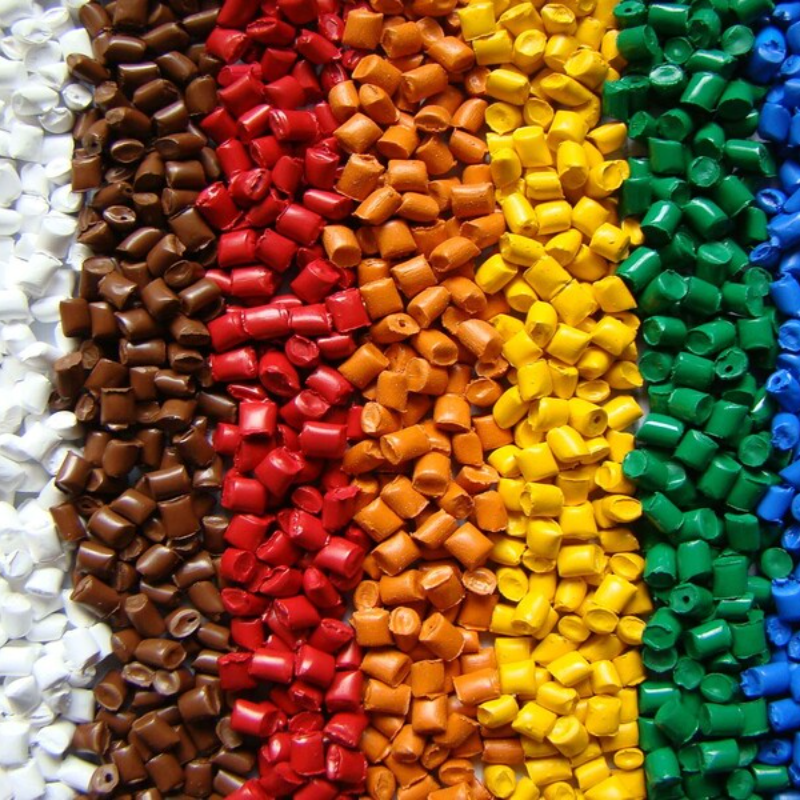
Functional masterbatches are concentrated additive systems used in plastics processing to impart non-color performance properties such as UV resistance, antistatic behavior, flame retardancy, antimicrobial activity, slip, antiblock, processing aid effects, conductivity, and thermal stabilization. Unlike color masterbatches, which primarily provide pigmentation, functional masterbatches are engineered to modify how a polymer performs during processing, in service, or under environmental exposure.
These products occupy a strategic position in the plastics value chain because they simplify dosing, improve additive dispersion, reduce handling of powders, and allow manufacturers to tailor commodity and engineering resins for specific end uses without redesigning the base polymer. In practice, they are widely used in packaging, film, fibers, cables, molded parts, automotive components, construction products, and certain medical and electrical applications.
The market for functional masterbatches has expanded with demand for higher-performance plastics, stricter safety requirements, and greater pressure to improve durability and circularity. Current development is increasingly focused on multifunctional packages, compatibility with recycled polymers, lower-migration formulations, and additive systems designed for bio-based or compostable resins.
History and Development
Masterbatching emerged as a practical method for incorporating small but critical quantities of additives into polymers by first dispersing them in a carrier resin and then diluting them during final processing. This approach improved consistency compared with direct powder dosing, particularly for additives that are difficult to disperse, hazardous to handle, or sensitive to heat and shear.
Functional masterbatches developed as plastics applications became more demanding. As packaging, electrical, automotive, and construction sectors required better weathering resistance, flame performance, and surface functionality, additive concentrates evolved from simple processing aids into highly specialized formulations. More recent product development has moved toward combination masterbatches that merge several functions, such as UV stabilization with antioxidants or antistatic behavior with slip control.
Chemical Structure and Key Properties
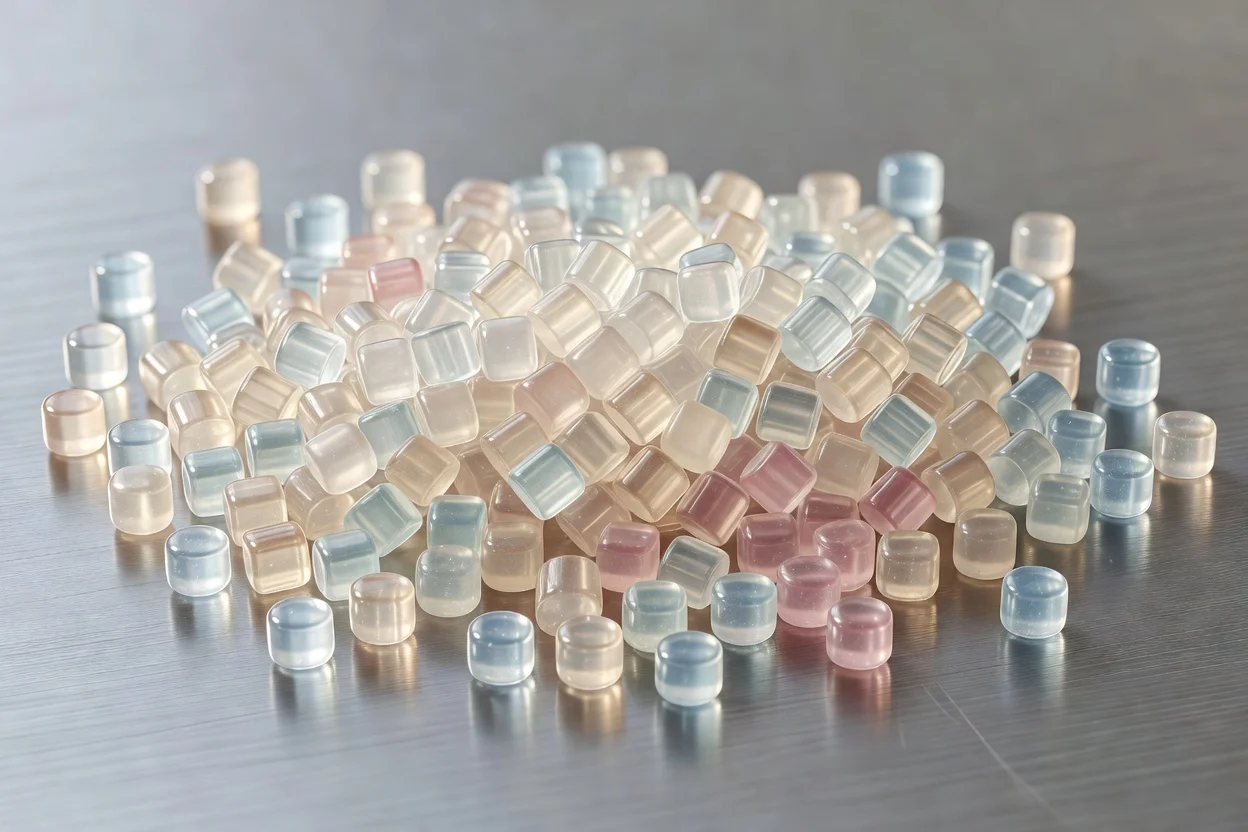
Functional masterbatches are usually pelletized concentrates consisting of a carrier resin, one or more active additives, and often dispersants, lubricants, or processing aids. The carrier is commonly polyethylene, polypropylene, or another resin selected for melt compatibility with the target polymer. The active component may be an organic molecule, inorganic particulate, polymeric stabilizer, or synergistic blend, depending on the desired effect.
Typical let-down levels are low relative to the finished part, often around 0.5 to 5%, although exact dosage depends on the additive chemistry, target performance, and the host polymer. High pre-dispersion improves reproducibility, reduces agglomeration, and helps preserve the host resin’s processing window.
Typical functional masterbatch categories
| Function | Main purpose | Common use areas |
|---|---|---|
| UV stabilizer | Slows sunlight-driven degradation | Outdoor film, profiles, agricultural plastics, construction parts |
| Antistatic | Reduces charge build-up | Electronics packaging, films, clean-room and handling components |
| Flame retardant | Lowers ignition or slows flame spread | Cable, building products, appliances, engineering plastics |
| Antimicrobial | Suppresses microbial growth or odor formation | Packaging, hygiene products, consumer goods, some medical items |
| Slip / antiblock | Improves surface handling and film winding | Packaging film and sheet |
| Processing aid | Reduces friction, die build-up, or processing instability | Extrusion and injection molding |
| Conductive | Dissipates static or enables EMI-related performance | ESD packaging, electronics, specialty housings |
Important limits and workarounds
- Poor dispersion → some additives agglomerate or separate when dosed as raw powder → use a pre-dispersed masterbatch with an appropriate carrier resin and dispersant system.
- Additive migration or bloom → certain low-molecular-weight ingredients can move to the surface over time → use higher-compatibility carriers, optimized loading, or polymeric/less mobile additive chemistries.
- Thermal decomposition → heat-sensitive additives may degrade during compounding or molding → introduce them in stabilized masterbatch form and select a processing profile matched to the additive’s stability window.
- Carrier incompatibility → the masterbatch may not blend well with the host polymer → match the carrier to the base resin whenever possible or use universal carrier systems where validated.
A concrete example is a UV stabilizer masterbatch used at low single-digit loading in outdoor polyethylene articles; it works by absorbing or quenching high-energy radiation and slowing chain scission and surface embrittlement. Another example is an antistatic masterbatch in packaging film, where ionic or conductive ingredients increase surface conductivity and reduce charge accumulation that would otherwise attract dust or interfere with handling.
Production Processes and Raw Feedstocks
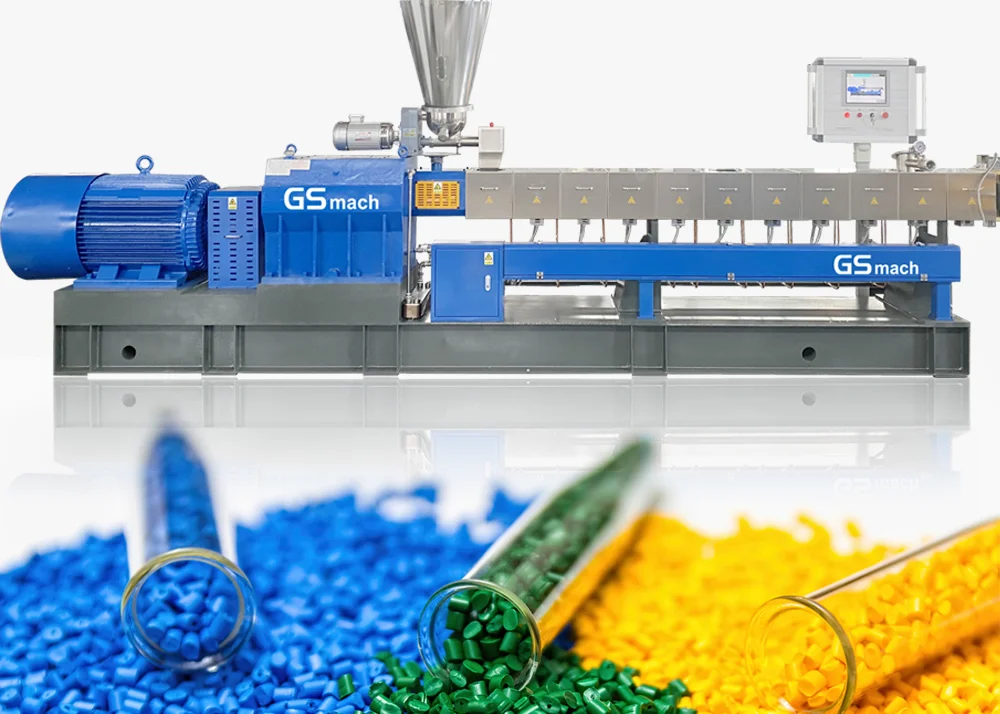
Functional masterbatches are produced by compounding active ingredients with a carrier resin in high-shear equipment, most commonly twin-screw extrusion, followed by cooling and pelletizing. The process is designed to maximize wetting and dispersion of the additive while maintaining a stable pellet form suitable for downstream dosing.
Main raw materials
- Carrier resins: polyethylene, polypropylene, polystyrene, polyester, engineering-plastic-compatible carriers, or specialty “universal” carriers.
- Functional additives: UV absorbers, hindered amine stabilizers, antistatic agents, halogenated or halogen-free flame retardants, antimicrobial actives, lubricants, processing aids, conductive fillers, antioxidants, and nucleating agents.
- Auxiliaries: dispersants, coupling agents, waxes, surfactants, and processing aids that help wet the additive and improve extrusion stability.
Typical production route
- Weighing and premixing of carrier, active additive, and auxiliaries.
- Melt compounding under controlled temperature and shear to distribute the active phase.
- Devolatilization or filtration where required to remove air, moisture, or contaminants.
- Pelletizing into uniform granules for storage and dosing.
- Quality control for additive content, melt flow, dispersion quality, bulk density, and performance consistency.
The key manufacturing advantage is that the additive is already dispersed before it enters the final processing machine, which reduces feed variability and improves output consistency in extrusion, injection molding, blow molding, and film conversion.
Applications and End-Use Markets
Functional masterbatches are selected according to the performance target, base resin, process type, and end-use environment. The same additive family may be used in multiple markets, but the grade and carrier are often tailored to the processing method.
Major application sectors
- Packaging and film
- Usual functions: antiblock, slip, antistatic, UV stabilization, antimicrobial, processing aid.
- Usual process: blown film, cast film, sheet extrusion.
- Notes: these grades are often optimized for haze, sealability, winding behavior, and migration control.
- Bottles, containers, and closures
- Usual functions: impact modification, UV protection, antioxidant systems, antimicrobial effects.
- Usual process: injection molding, blow molding.
- Cable and wire
- Usual functions: flame retardancy, smoke-related performance, UV stability, antistatic control.
- Usual process: extrusion.
- Notes: flame-retardant masterbatches are especially important where electrical safety standards apply.
- Construction and infrastructure
- Usual functions: UV stabilization, flame retardancy, antistatic or conductive control, weatherability, processing aid.
- Usual process: extrusion, injection molding, profile production.
- Notes: outdoor service life often drives additive selection more than initial mechanical strength.
- Automotive and transportation
- Usual functions: flame retardancy, scratch and mar resistance, antistatic control, thermal stabilization.
- Usual process: injection molding, extrusion, compounding.
- Consumer and industrial goods
- Usual functions: antimicrobial, odor control, slip, conductive, appearance-preserving additives.
- Usual process: injection molding and extrusion.
- Engineering plastics
One poor-fit use
Functional masterbatches are a poor fit where the additive is required at very high loading or where severe thermal or chemical constraints make pre-dispersed concentrates impractical; in such cases, direct compounding or a purpose-built compound may be more appropriate.
Environmental and Sustainability Aspects
Functional masterbatches can support sustainability by improving durability, reducing scrap, enabling lower additive dust exposure, and helping plastics perform longer in demanding service conditions. Longer life can reduce replacement frequency, especially in outdoor and infrastructure applications.
At the same time, the environmental profile depends strongly on the additive chemistry and the host polymer. Flame retardant, antimicrobial, and conductive systems may raise questions about toxicity, recyclability, odor, or regulatory compliance depending on the formulation and jurisdiction. Some additives can also complicate mechanical recycling if they reduce melt stability, contaminate recyclate streams, or create property variability.
Sustainability trends
- Recyclability-compatible formulations that minimize contamination of reprocessing streams.
- Lower-migration and lower-volatility additives to improve safety and reduce surface transfer.
- Bio-based and compostable resin compatibility, especially for packaging and short-life applications.
- Down-gauging and life extension, where enhanced performance allows thinner or longer-lasting products.
- Functional masterbatches for recycled content, including odor control, IV restoration support in polyester systems, and stabilization packages that compensate for prior thermal history.
From a carbon-footprint perspective, the main benefit is often indirect: if a small additive dose extends service life or allows use of recycled resin, the overall life-cycle footprint may improve even if the additive itself is petrochemical-derived.
Economic and Global Market Impact
Functional masterbatches create value by lowering dosing errors, reducing waste, improving process stability, and enabling manufacturers to buy a base resin and then customize properties only where needed. This can be more economical than purchasing a fully compounded specialty polymer for every application, especially in high-volume markets.
The sector is highly fragmented, with many regional and global suppliers serving niche performance requirements. Publicly visible suppliers include firms such as Luvobatch, RTP Company, Granula, Microban-related formulations, and various Asian compounders and masterbatch producers. Competition is driven by additive expertise, dispersion quality, regulatory support, and the ability to tailor formulations to specific polymers and processing lines.
Current Challenges and Innovations
Key challenges
- Dispersion control in highly filled or high-performance systems.
- Regulatory pressure on certain additive chemistries, especially in food contact, medical, and consumer applications.
- Compatibility with recycled polymers, which can vary in contamination, melt history, and additive residue.
- Balancing performance with recyclability, particularly for antimicrobial and flame-retardant systems.
- Processing sensitivity, where high additive levels can affect flow, shrinkage, surface finish, or mechanical balance.
Innovation directions
- Multifunctional masterbatches combining two or more performance roles, such as stabilization plus processing aid or UV plus antimicrobial action.
- Nano- and micro-dispersed systems, including conductive networks and highly dispersed specialty fillers.
- Lower-dosage, higher-efficiency additives that reduce impact on base resin properties.
- Design for recycling, with formulations intended to preserve sortability and reprocessability.
- Performance packages for engineering plastics, especially in electrical, automotive, and outdoor applications.
Future Outlook
Functional masterbatches are likely to remain important as plastics manufacturers demand more precise property control, faster line changeovers, and better compatibility with recycled and alternative feedstocks. Growth is likely to be strongest in packaging, wire and cable, technical molding, and outdoor applications where targeted functionality adds measurable value.
The most significant future shift is likely to be from single-function concentrates toward integrated systems that combine stabilization, processing support, and end-use performance in a way that is compatible with circular-material strategies. In parallel, regulatory scrutiny will continue to shape which chemistries can be used in food contact, medical, and consumer products.
Summary
Functional masterbatches are pre-dispersed additive concentrates that make plastics more durable, safer, easier to process, or more specialized without changing the base polymer platform. Their main strengths are dosing precision, dispersion quality, and formulation flexibility, while their main challenges are additive compatibility, regulatory complexity, and recyclability trade-offs.
References
- •
Functional masterbatches. (2022, January 1). Lehvoss. https://www.lehvoss.de/en/Masterbatches/masterbatches/functional-masterbatchesLink
- •
Types of functional masterbatches. (n.d.). Ambition Chem. https://www.ambitionchem.com.cn/new_detail/nid/83865.htmlLink
- •
What is functional masterbatch and how does it work? (2025, November 20). Anhui Huasu. https://www.ah-hsxcl.com/what-is-functional-masterbatch-and-how-does-it-work/Link
- •
Functional masterbatch: Types, benefits & applications. (2026, June 25). Ry Masterbatch. https://www.rymasterbatch.com/news/industry-news/functional-masterbatch-types-benefits-applications.htmlLink
- •
Functional masterbatch and its applications in plastic processing. (2023, November 27). Global Polyester. https://globalpolyester.com/functional-masterbatch-and-its-applications-in-plastic-processing/Link
- •
Functional masterbatch. (2025, November 5). Beyou Extrusion Machinery. https://www.njbeyou.com/hi/functional-masterbatch/Link
- •
Functional masterbatch. (n.d.). Boppexperts. https://boppexperts.com/Functional-masterbatch-c250552/Link
- •
Masterbatch. (2011, July 25). Wikipedia. https://en.wikipedia.org/wiki/MasterbatchLink
- •
LUVOBATCH®. (n.d.). Lehvoss. https://www.lehvoss.de/fileadmin/user_upload/luvobatch/Downloads/LUVOBATCH_Functional_Masterbatches_EN_2022.pdfLink
- •
Additive. (n.d.). RTP Company. https://www.rtpcompany.com/wp-content/uploads/RTP-Company-Additive-Masterbatches.pdfLink
- •
Beyond basics: The growing importance of functional masterbatch in high-performance plastics. (2025, February 18). Masterbatch Global. https://masterbatchglobal.com/articles/functional-masterbatch-performance/Link
- •
Additive (functional) masterbatches types. (2025, July 23). Honyemb. https://www.honyemb.com/products/functional-masterbatch/Link
- •
5 composition of master batch: A comprehensive guide. (2025, November 5). Charming MB. https://www.charmingmb.com/2025/11/05/5-composition-of-master-batch-a-comprehensive-guide/Link
- •
3 types of masterbatch and their uses. (2025, October 13). Charming MB. https://www.charmingmb.com/2025/10/13/3-types-of-masterbatch-and-their-uses/Link
- •
Masterbatch classification. (2025, November 3). Mantsen. https://mantsen.com/?list_109/1073.htmlLink
- •
Functional masterbatches for PBT and PET. (n.d.). One-Up-Tech. https://en.one-up-tech.com/ourproducts/143Link
- •
How to choose masterbatch for packaging materials. (2024, February 18). Alibaba Reads. https://reads.alibaba.com/how-to-choose-masterbatch-for-packaging-materials/Link
- •
An overview: Masterbatch. (n.d.). Plastics Technology. https://www.plastics-technology.com/articles/an-overview-masterbatch-plastics-technologyLink
- •
Masterbatch: An overview. (2010, October 19). ScienceDirect. https://www.sciencedirect.com/topics/engineering/masterbatchLink
- •
Functional masterbatch's blog. (n.d.). Functional Masterbatch. https://www.functionalmasterbatch.com/blogLink
- •
What is masterbatch meaning? A complete guide for 2025. (2025, November 20). Charming MB. https://www.charmingmb.com/2025/11/20/what-is-masterbatch-meaning-a-complete-guide-for-2025/Link
- •
Definition of masterbatch and conductive masterbatch. (2025, August 1). Conductive Masterbatch. https://www.conductivemasterbatch.com/news/definition-of-masterbatch-and-conductive-masterbatch-227568.htmlLink
- •
Functional masterbatches. (2024, December 16). Granula Group. https://www.granula.eu/en/products/functional-masterbatchesLink
- •
Comprehensive guide to functional masterbatch for engineering plastics. (2026, April 7). Kerke Extruder. https://www.kerkeextruder.com/news/industry-news/comprehensive-guide-to-functional-masterbatch-for-engineering-plastics-pa-pc-abs-compatibility-and-performance/Link
- •
Types of masterbatch and their individual uses. (n.d.). Abbey MB. https://www.abbeymb.com/types-of-masterbatch-and-their-individual-uses/Link
- •
Functional masterbatches. (n.d.). Functional Masterbatch. https://www.functionalmasterbatch.com/Functional-MasterbatchesLink
- •
Understanding masterbatch: Benefits and types. (2026, June 30). Distil. https://distil.market/feeds/blog/masterbatchLink
- •
Top 5 benefits of using polymer masterbatches. (2019, March 29). Microban. https://www.microban.com/blog/top-5-benefits-of-using-polymer-masterbatchesLink
- •
Polyethylene additive masterbatch. (n.d.). Eureka PatSnap. https://eureka.patsnap.com/materials/pe-additive-masterbatchLink
- •
Functional masterbatches/compound. (2023, September 29). Artience Group. https://www.artiencegroup.com/en/products/plastic-colorants/functional/Link