
Introduction
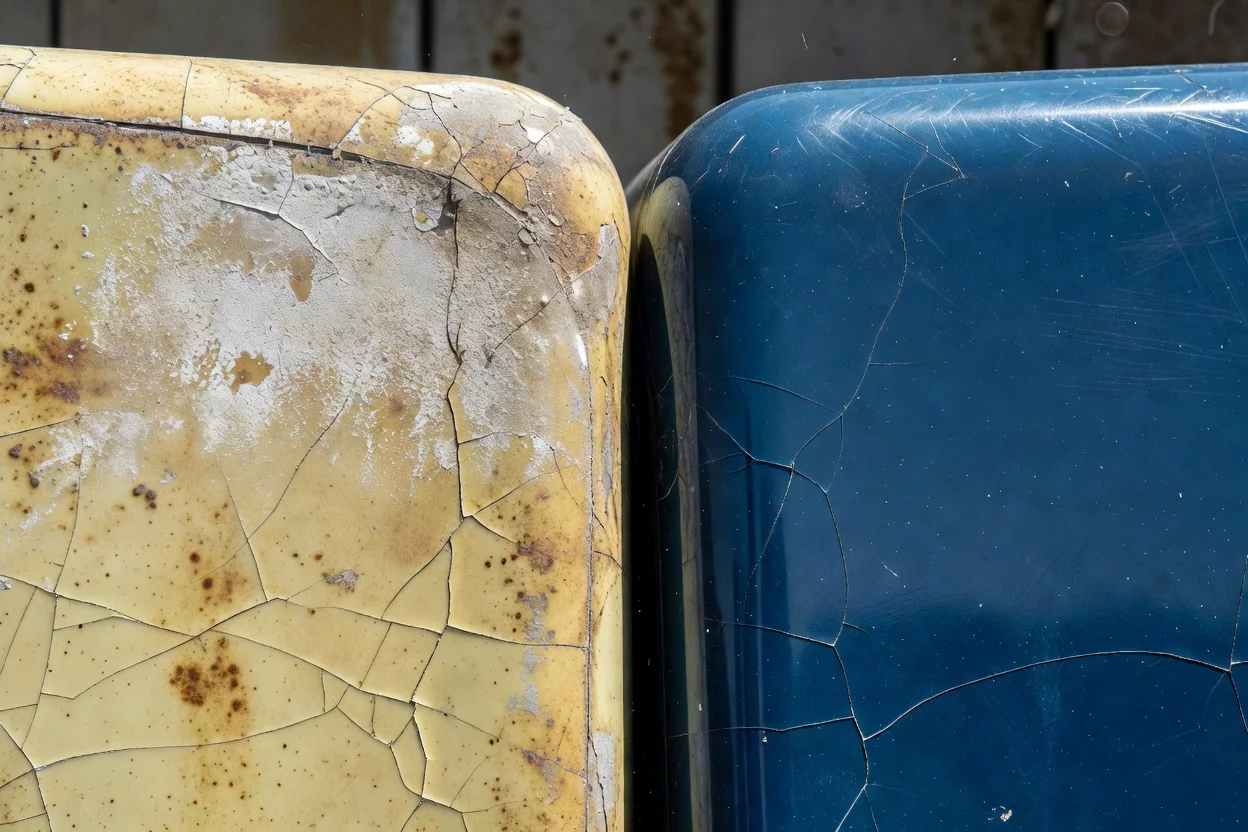
Light / UV stabilizers are additive packages used to protect plastics and other polymer-based materials from sunlight and artificial ultraviolet exposure, primarily by slowing photo-oxidation, preserving appearance, and extending service life. In plastics, they are especially important for outdoor and high-light applications because UV exposure can cause discoloration, embrittlement, loss of tensile strength, and surface cracking.
The term covers several closely related additive families, most notably UV absorbers and hindered amine light stabilizers (HALS). UV absorbers function mainly by capturing UV radiation and dissipating the energy as heat, while HALS do not absorb UV in the same way; instead, they interrupt the radical chain reactions that drive photodegradation. In practice, commercial formulations often combine stabilizers with antioxidants, pigments, or other auxiliaries to create a broader protective system.
Their importance has grown alongside the expansion of outdoor polymers in automotive, construction, agriculture, packaging, coatings, textiles, and electrical applications. At the same time, the sector is being reshaped by sustainability pressures, including additive migration concerns, recyclability requirements, and the need to design longer-lasting materials that reduce replacement frequency and total lifecycle emissions.
History and Development
Early light stabilization in polymers relied on relatively simple UV-screening approaches, including pigments and metal-containing quenchers, but these systems often had drawbacks in color, durability, or compatibility. The development of HALS marked a major advance because they offered long-term stabilization through radical scavenging rather than simple UV absorption.
Since then, the technology has diversified into specialized UV absorbers, polymeric HALS, low-volatility grades for transparent systems, and multifunctional packages for demanding sectors such as automotive coatings, agricultural films, and engineering plastics. More recently, suppliers have emphasized tailored formulations for clear packaging, solar-related materials, and applications requiring both UV protection and optical clarity.
Chemical Structure and Key Properties
Light stabilizers are not a single chemical class but a functional category defined by performance. Their chemistry is selected according to polymer type, processing temperature, transparency requirements, weathering intensity, and regulatory constraints.
| Main class | Typical mechanism | Strengths | Common limitations |
|---|---|---|---|
| UV absorbers | Absorb UV and release energy as heat | Good for clear or lightly colored products | Can be consumed over time; effectiveness depends on concentration and thickness |
| HALS | Scavenge radicals formed during photo-oxidation | Very effective in polyolefins and long-life outdoor products | Performance can be reduced in acidic systems or in some highly filled formulations |
| Physical light blockers | Reflect or scatter UV | Useful in some opaque systems | Often impair transparency and may affect appearance |
A key technical limitation is that UV absorbers can be exhausted or lose effectiveness under prolonged exposure, because their protection depends on continuous absorption of incident radiation → cause: molecular photochemical workload and environmental aging → workaround: use higher-retention grades, combine with HALS, or increase pigment/CoUV protection in the formulation. A second important limit is that HALS are highly effective in polyolefins but less universally robust across all polymer systems → cause: interactions with acidic species, certain pigments, or specific resin chemistries → workaround: select stabilized masterbatches, adjust package balance, or use polymer-specific HALS grades.
For clear or translucent plastics, the chief design challenge is maintaining optical quality while increasing weatherability. UV absorbers are often favored where transparency matters, whereas HALS are often preferred for long-term outdoor durability, especially in polyolefins.
Production Processes and Raw Feedstocks
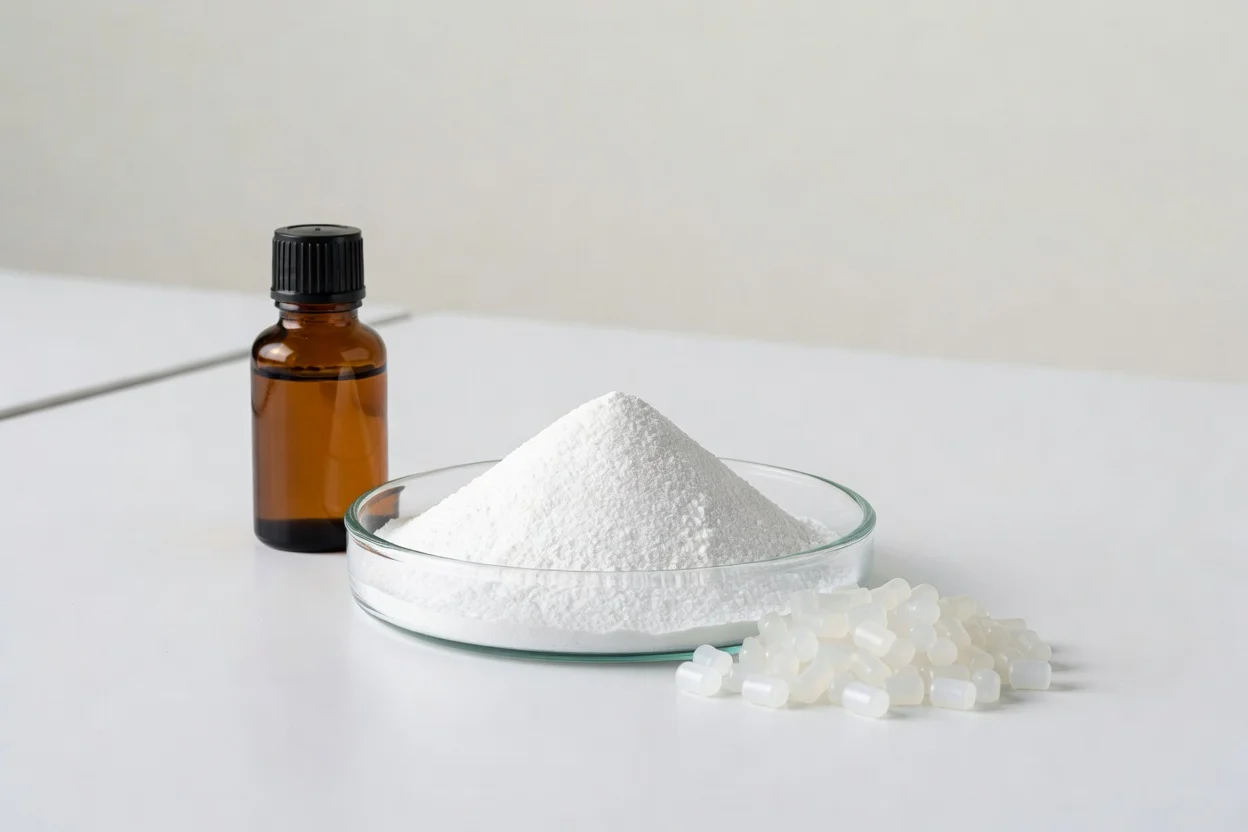
Light stabilizers are produced through fine chemical synthesis, followed by purification, formulation, and often compounding into masterbatches or additive concentrates for easier processing in plastics plants. Commercial products are typically supplied as powders, liquids, or pre-dispersed concentrates depending on the end-use process.
Common chemical families include:
- Benzotriazoles and benzophenones as UV absorbers.
- HALS based on hindered piperidine structures.
- In some specialized or legacy systems, nickel-containing quenchers have been used, although they are far less common today because of color and heavy-metal concerns.
Typical incorporation routes include:
- Direct dry blending into resin
- Masterbatch addition during extrusion
- Let-down concentrates for film, fiber, and molding compounds
- Coating or surface-treatment formulations for paints and varnishes
One practical dosage example is the use of HALS at low weight-percent levels, often well below 1% in finished plastics, because the mechanism is catalytic radical scavenging rather than bulk consumption; the stabilizer regenerates during the reaction cycle, so only small amounts are needed relative to the polymer mass. A second example is benzotriazole UV absorbers in transparent coatings or films, where low loading levels are chosen to preserve clarity while absorbing the damaging UV-A and UV-B bands.
Applications and End-Use Markets
Light stabilizers are used across nearly every plastic segment that faces sunlight, weathering, or artificial UV exposure. Their exact formulation depends on polymer type, product thickness, color, expected service life, and whether optical clarity is required.
| End-use sector | Typical materials | Usual stabilizer choice | Processing/form factor |
|---|---|---|---|
| Packaging | Clear and translucent films, containers, closures | UV absorbers, HALS, light-blocking additives | Film extrusion, injection molding, masterbatch |
| Construction | PVC profiles, siding, roofing, sealants, pipes | HALS, UV absorbers, pigments | Extrusion, calendaring, compounding |
| Automotive | Interior trim, bumpers, lenses, coatings | HALS, UV absorbers | Injection molding, coatings |
| Agriculture | Greenhouse film, mulch film, shade nets, silage film | HALS, UV absorbers | Film extrusion, textile extrusion |
| Coatings and adhesives | Clear coats, varnishes, epoxy systems | UV absorbers, HALS | Liquid formulation, curing systems |
| Textiles and fibers | Outdoor fabrics, geotextiles, agrotextiles | HALS, UV absorbers | Fiber spinning, weaving, coating |
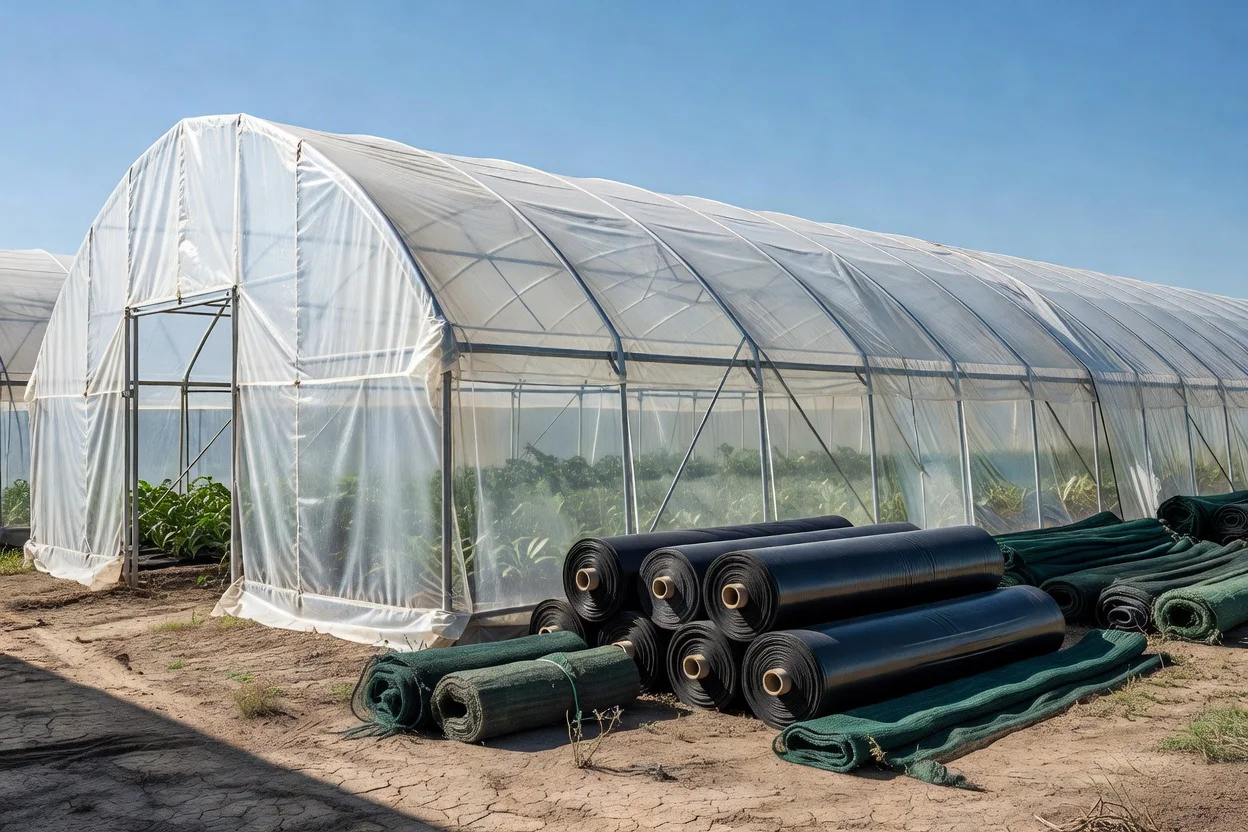
The largest application area is plastics and polymers, which industry analyses estimate account for the majority of UV stabilizer demand, with coatings, adhesives, textiles, and related sectors forming smaller but important markets. In agriculture, stabilizers are critical for greenhouse and mulch films that must endure intense solar loading while retaining mechanical integrity over a growing season or longer. In automotive and construction, they help reduce fading, cracking, and warranty risk in exposed components.
A poor-fit use is high-clarity packaging for very light-sensitive contents when the stabilizer package is not carefully selected; in that case, adding too much UV protection can conflict with optical requirements or with the need to protect sensitive formulations inside the package. Manufacturers therefore often distinguish between stabilizing the package itself and blocking light from reaching the packaged product.
Environmental and Sustainability Aspects
From a durability perspective, light stabilizers can improve sustainability by extending product life and reducing premature replacement, especially for building products, agricultural films, and outdoor consumer goods. Longer service life often means lower material throughput over time, which can offset some of the additive-related footprint.
However, sustainability assessment is more complicated in several respects:
- Additives can affect recyclability if they interact with reprocessing, color sorting, or downstream performance retention.
- Some light stabilizers must be carefully selected for food-contact or sensitive packaging applications because of migration, extraction, or odor considerations.
- Transparent systems often require a balance between UV protection and material clarity, which can limit the use of heavily pigmented or opaque solutions.
Industry suppliers increasingly emphasize additive packages designed for circularity, including formulations that remain effective after multiple heat histories, and packages that preserve properties in recycled resins. Bio-based or lower-carbon alternatives exist in broader polymer additive portfolios, but for UV stabilization the dominant market remains synthetic fine chemicals because performance requirements are stringent and highly application-specific.
Economic and Global Market Impact
Light stabilizers are a mature but strategically important segment of the plastics additives market. Demand is closely linked to construction cycles, automotive output, agricultural film consumption, and the growth of durable consumer goods.
The market is shaped by a relatively small number of multinational additive producers and specialty chemical suppliers, including BASF, Syensqo, Avient, and other established formulators with broad portfolios in light stabilization and related additives. Competitive advantage typically comes from formulation know-how, application support, regulatory compliance, and the ability to deliver additive packages tailored to resin systems rather than from commodity pricing alone.
Current Challenges and Innovations
Current technical challenges include:
- Maintaining long-term performance in thin-wall articles and thin films, where additive depletion can be faster.
- Ensuring compatibility with recycled polymers and variable feedstock quality.
- Meeting regulatory and customer requirements for low migration, low odor, and reduced environmental concern.
- Balancing UV protection with optical clarity, processability, and cost.
Innovation is concentrated in several areas:
- Next-generation HALS with improved permanence and broader resin compatibility.
- Synergistic packages that combine UV absorbers, HALS, antioxidants, and pigments for layered protection.
- Low-migration additives for packaging and consumer products.
- Masterbatch delivery systems that simplify dosing and improve dispersion in extrusion and molding operations.
Mechanistically, the most advanced packages increasingly use a dual strategy: UV absorbers reduce the incoming photon load, while HALS intercept the radicals that still form, limiting the self-propagating oxidation cycle.
Future Outlook
The future of light stabilization is likely to be defined by three priorities: longer service life, improved recyclability, and tighter formulation control for regulated applications. Demand should remain robust in outdoor plastics, solar-adjacent materials, agriculture, and durable packaging, where sunlight resistance directly affects performance and economics.
The most promising direction is not simply “more stabilizer,” but better integrated materials design: stabilizer packages matched to resin chemistry, processing history, end-of-life route, and exposure profile. As recycled polymers move into higher-value applications, the role of light stabilizers is expected to become more important, because recycled streams often carry a reduced margin of performance and a greater need for durability reinforcement.
Summary
Light / UV stabilizers are essential polymer additives that protect plastics from sunlight-induced degradation through UV absorption, radical scavenging, or light blocking. They are central to the performance of outdoor films, construction products, automotive parts, coatings, and many packaging applications, while also presenting formulation trade-offs related to clarity, recyclability, and regulatory compliance.
References
- •
UV/Light Stabilizers for Adhesives. (2025, July 2). SpecialChem. https://www.specialchem.com/adhesives/guide/uv-light-stabilizers-state-of-the-artLink
- •
How do UV stabilizers work? (n.d.). Welltchem. https://www.welltchem.com/how-do-uv-stabilizers-work/Link
- •
Types of UV Stabilizers for Polymers & Their Uses. (2026, July 26). Kandui Industries. https://www.kandui.in/blog/types-of-uv-stabilizers-for-polymers-their-applicationsLink
- •
UV Stabilizers and Light Stabilizers: A Practical HALS Guide. (2026, April 22). Safic-Alcan. https://www.safic-alcan.com/en-us/industry-articles/uv-stabilizer-light-stabilizer/Link
- •
Ultimate Guide to UV Stabilizers. (2025, June 10). Number Analytics. https://www.numberanalytics.com/blog/ultimate-guide-to-uv-stabilizersLink
- •
Exciting Applications of UV Absorbers and Stabilizers. (2025, March 26). Tilley Distribution. https://www.tilleydistribution.com/insights/uv-stabilizer-and-absorber-additives-add-real-value-to-coatings/Link
- •
Light Stabilizers. (2022, June 9). BASF. https://plastics-rubber.basf.com/global/en/plastic_additives/products/light-stabilizersLink
- •
Unlocking UV Stability in Polymers. (2025, June 18). Number Analytics. https://www.numberanalytics.com/blog/ultimate-guide-to-uv-stabilizers-polymer-physicsLink
- •
Light stabilizers: How to select the right grade for plastics? (2025, June 30). SpecialChem. https://www.specialchem.com/polymer-additives/guide/light-uv-stabilizers-selection-for-polymersLink
- •
Light Stabilizers and UV Absorbers. (n.d.). Tintoll. https://www.uvabsorber.com/uploads/file/light-stabilizers-and-uv-absorbers.pdfLink
- •
Light stabilizer. (2018). Scienoc. https://www.scienoc.com/uv_absorbers.htmlLink
- •
UV-Chek Light Stabilizers. (2021, November 11). Valtris. https://www.valtris.com/product/other/uv-chek-light-stabilizers/Link
- •
Ultraviolet Stabilizing Agent - an overview. (n.d.). ScienceDirect. https://www.sciencedirect.com/topics/chemistry/ultraviolet-stabilizing-agentLink
- •
Light Stabilizers. (2022, September 23). BASF. https://plastics-rubber.basf.com/asiapacific/en/plastic_additives/products/light-stabilizersLink
- •
Markets: Polymer Additives & UV Light Stabilizers. (n.d.). Syensqo. https://www.syensqo.com/en/chemical-categories/polymer-additives-uv-light-stabilizers-antioxidants-and-antistatic-agents/marketsLink
- •
Light Stabilizer. (n.d.). Dynasty-Chem. https://www.dynasty-chem.com/products/3434.htmlLink
- •
UV Stabilizers - Knowledge. (2023, June 3). Disheng Chemchina. https://www.dishengchemchina.com/info/uv-stabilizers-82934218.htmlLink
- •
UV Stabilizer Additive for Polymer and Plastic Manufacturing. (2025, October 9). Wellt Chemicals. https://welltchemicals.com/blog/why-are-stabilizers-added-to-plastics/Link
- •
UV Stabilizer 101: Everything You Need to Know. (2024, November 27). EyouAgro. https://eyouagro.com/blog/uv-stabilizer-101/Link
- •
紫外線吸收劑 & 光安定劑. (2018). Eutec Chemical. https://www.eutec.com.tw/en/article/detail/51Link
- •
UV Light Stabilizers. (2025, September 4). BASF. https://care360.basf.com/emea/en/industries/personal-care/concepts-trends/concepts/basf-stabilizer-portfolio/uv-light-stabilizersLink
- •
The Science Behind UV Stabilizers. (2025, June 18). Number Analytics. https://www.numberanalytics.com/blog/science-behind-uv-stabilizers-polymersLink
- •
Ultraviolet Stabilization of Polymers: Development with Hindered-Amine Light Stabilizers. (2025, March 31). ACS Publications. https://pubs.acs.org/doi/10.1021/ba-1978-0169.ch010Link
- •
What are UV Stabilisers for polymers? (2023, February 8). Welltchem. https://www.welltchem.com/what-are-uv-stabilisers-for-polymers/Link
- •
UV Light Stabilizers. (2025, September 4). BASF. https://care360.basf.com/asiapacific/en/industries/personal-care/concepts-trends/concepts/basf-stabilizer-portfolio/uv-light-stabilizersLink
- •
Essential light stabilizers and additives for enhanced material durability. (2024, September 18). FSCI Chem. https://www.fscichem.com/essential-light-stabilizers-and-additives-for-enhanced-material-durabilityLink
- •
UV Stabilizer Additives Industry Insights and Forecasts. (2026, May 8). Market Report Analytics. https://www.marketreportanalytics.com/reports/uv-stabilizer-additives-176180Link
- •
What is the difference between UV absorbers and light stabilisers? (2026, May 6). Partinchem. https://partinchem.com/blog/difference-uv-absorbers-light-stabilisers/Link
- •
Ultraviolet Light Stabilizers & UV Masterbatches. (2012, August 14). Ampacet. https://www.ampacet.com/faqs/ultraviolet-light-stabilizers/Link
- •
標題標題標題標題標題. (n.d.). PCImag. https://www.pcimag.com/ext/resources/Events/CTT/2019ppt/PatelArun_Everlight.pdfLink
- •
UV Stabilizers as Plastic Additives in Manufacturing. (2025, September 30). Wellt Chemicals. https://welltchemicals.com/blog/uv-stabilizers-as-plastic-additives-in-manufacturing/Link
- •
Light Stabilizers. (2023, April 3). BASF. https://www.basf.com/eg/en/products/segments/industrial_solutions/dispersions_and_pigments/performance_and_formulation_additives/products/light-stabilizers-landing-pageLink
- •
UV & Light Blocking Additives. (n.d.). Avient. https://www.avient.com/products/polymer-additives/uv-and-light-blocking-additivesLink
- •
Light Stabilizers / UV Absorbers. (2025, June 26). SpecialChem. https://www.specialchem.com/polymer-additives/pf-light-stabilizers-uv-absorbersLink
- •
UV Absorber & Light Stabilizer for Plastic & Polymer. (2026, June 30). Wellt Chemicals. https://welltchemicals.com/blog/uv-absorbers-for-plastics/Link
- •
What is UV Stabilized Plastic and Why It Matters for OEMs. (2025, November 24). Lincoln Plastics. https://www.lincoln-plastics.com/news-post/what-is-uv-stabilized-plastic-and-why-it-matters-for-oe-msLink
- •
What Is UV Stabilized Plastic and Why Is It Useful? (2025, September 22). Phoenix Plastics. https://phoenixplastics.com/what-is-uv-stabilized-plastic-why-is-it-useful/Link
- •
What is a UV Inhibitor and How Does It Work? (2026, April 2). Uni-Powder. https://www.uni-powder.com/blog/uv-inhibitor-and-how-it-works/Link