
Introduction
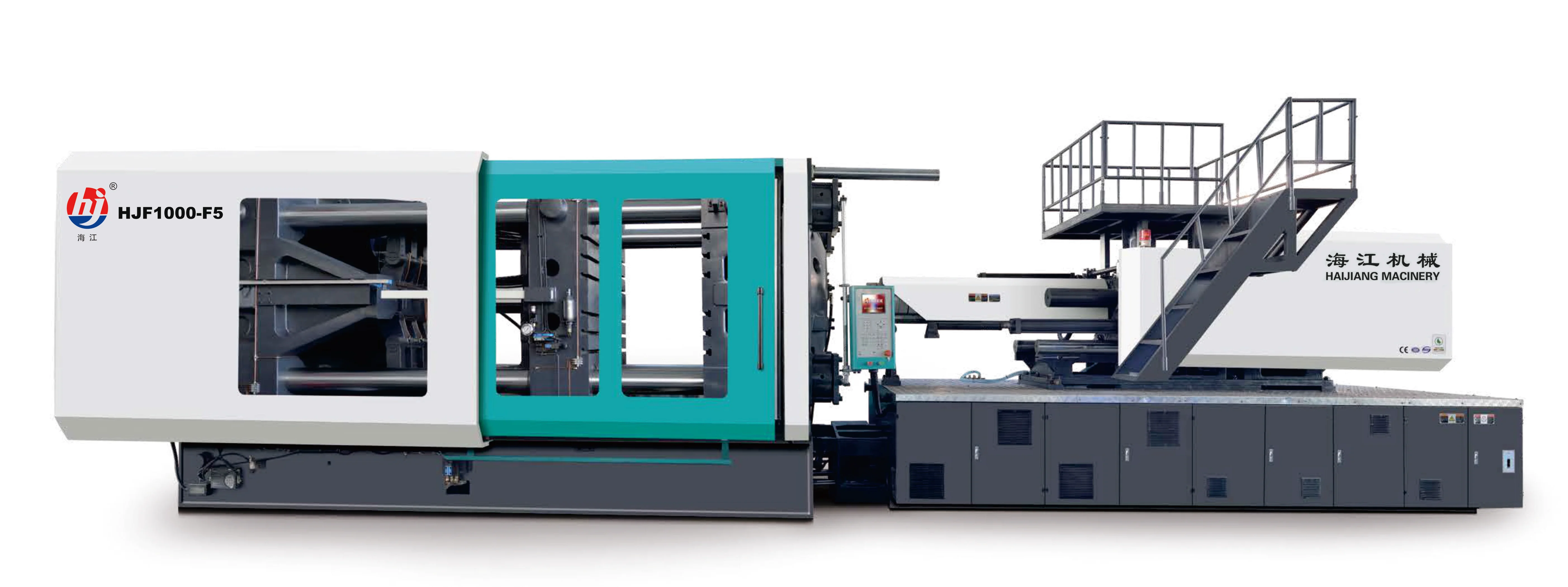
General-purpose injection molding machines are versatile plastics-processing systems designed to produce a broad range of thermoplastic parts with repeatable quality, moderate cycle times, and flexible mold compatibility. They are the standard machine class for high-volume production of everyday products such as closures, housings, containers, technical components, and consumer goods, and they are typically configured with a balance of clamping force, injection capacity, and control precision rather than specialization for one niche application.
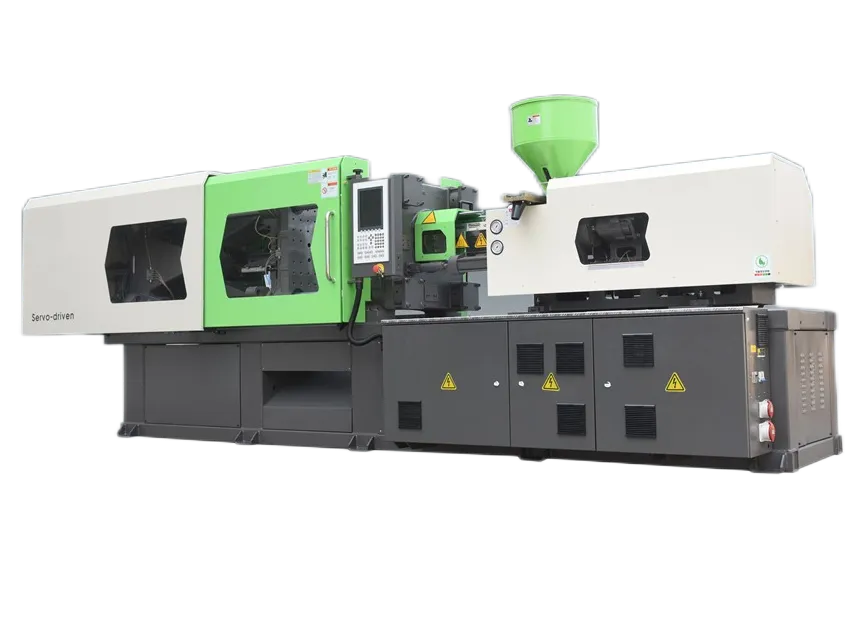
These machines are commonly built around an injection unit and a clamping unit, with hydraulic, electric, or hybrid drive architectures used to match different priorities in energy consumption, precision, and cycle speed. In practice, the “general-purpose” category spans compact entry-level machines for small technical parts and large-tonnage systems for oversized molded products, while modern versions increasingly add servo drives, digital controls, centralized lubrication, and robot interface standards to improve efficiency and automation readiness.
History and Development
The modern injection molding machine developed from early plunger-based molding equipment into the screw-plasticizing systems that dominate contemporary production. The shift to the reciprocating screw was a major milestone because it combined melting, homogenization, metering, and injection in one mechanism, improving melt quality and process stability.
A second key milestone was the industrial standardization of the two-main-unit machine architecture: a plasticizing/injection unit paired with a clamping unit. This configuration enabled faster mold opening and closing, more reliable part ejection, and better matching of machine size to mold tonnage requirements.
A third milestone has been the broad adoption of servo-hydraulic, all-electric, and hybrid platforms, especially from the 2000s onward. These systems reduced idle energy losses, improved repeatability, and enabled more advanced machine-to-robot communication and data collection for factory automation.
Key Characteristics and Technical Overview
General-purpose injection molding machines are designed to process widely used thermoplastics such as PE, PP, PVC, PS, ABS, nylon, and PC, often with screw and barrel combinations selected to suit common viscosities and thermal sensitivities. Many general-purpose screws use a standard compression geometry, while optional screws and barrels are available for abrasive, heat-sensitive, or high-flow materials.
The process follows four main stages:
- Plasticizing: pellets are melted and homogenized in the barrel.
- Injection: the screw or plunger drives melt into the mold cavity under pressure.
- Packing and holding: pressure compensates for shrinkage during solidification.
- Cooling and ejection: the part is cooled, then removed by ejectors or automation.

Typical machine elements include:
- Injection unit for melting and metering
- Clamping unit for mold closure and retention against injection pressure
- Drive system that may be hydraulic, electric, or servo-assisted
- Control system with temperature, pressure, velocity, and position management
Common technical features in contemporary general-purpose machines include:
- Double-cylinder injection units for improved nozzle centering and balanced force application
- PID barrel temperature control with multiple heating zones for thermal stability
- Automatic lubrication, safety doors, and mold protection functions
- Euromap-compatible robot locating interfaces for automation integration
Representative performance figures vary by model and application, but several practical benchmarks are widely seen in the segment:
- Clamping force: from small machines of a few tons to large systems exceeding 3,000 tons for very large molds
- Shot volume: for medium machines, commonly in the range of roughly 90–330 cm³ in compact general-purpose models
- Cycle efficiency: fast-closing toggle or optimized servo-hydraulic systems are designed to reduce dry-cycle time and improve throughput
- Energy use: servo-electric and servo-hydraulic machines generally reduce idle losses versus conventional hydraulic systems, with savings depending on duty cycle and mold profile
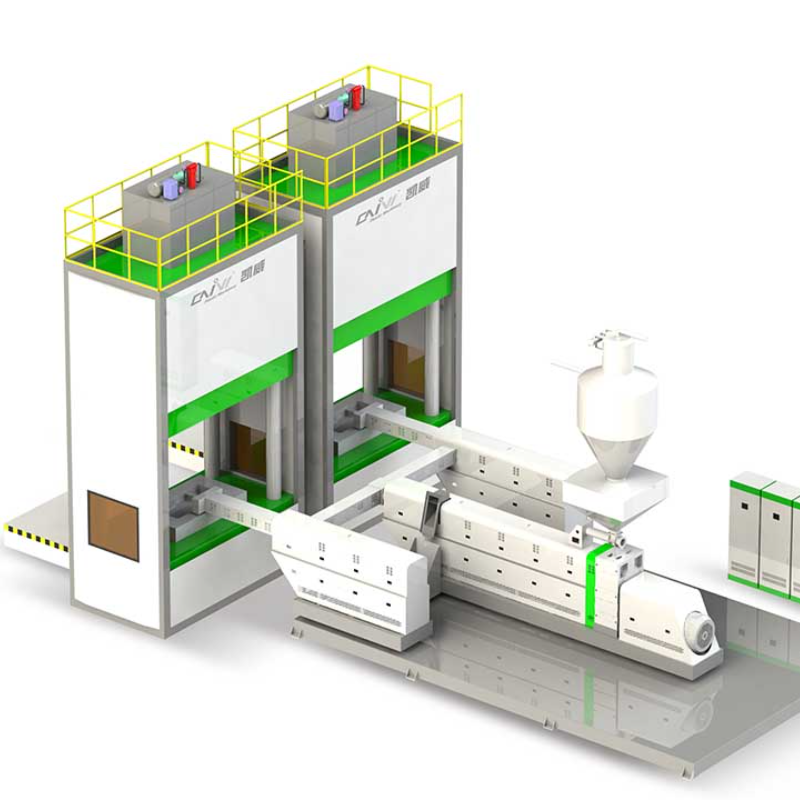
For recycled or reprocessed materials, general-purpose machines are often paired with upstream dewatering or drying systems. In plastics recycling lines, centrifugal dewatering units commonly reduce flake moisture to low single-digit percentages before extrusion or injection feed, though the exact target depends on polymer type and downstream quality requirements.
Types and Variations
| Type | Main strength | Typical trade-off |
|---|---|---|
| Hydraulic | High clamping power, robustness, strong suitability for large molds | Higher energy use and more maintenance than electric systems in many operating profiles |
| All-electric | High precision, cleaner operation, lower idle energy consumption | Higher upfront cost and less tolerance for some heavy-duty mold conditions |
| Hybrid | Combines hydraulic force with electric efficiency and motion control | More complex system integration |
| Two-platen | Efficient use of floor space for large molds, strong accessibility | Typically favored for larger-tonnage applications rather than small parts |
| Vertical | Useful for insert molding and embedded components | Less suited to standard high-volume horizontal production |
General-purpose designs may also be differentiated by clamp mechanism:
- Toggle clamp machines for rapid dry cycles and efficient locking force multiplication
- Direct hydraulic clamp machines for force density and flexibility
- Two-platen machines for large molds and reduced machine length
Applications and Uses
General-purpose injection molding machines are used across most major plastics-consuming industries because they offer a strong balance of precision, throughput, and tooling flexibility.
- Packaging: caps, closures, thin-wall containers, tubs, and logistics crates are common because cycle speed and part uniformity are critical.
- Automotive: dashboards, interior trim, clips, brackets, housings, and some exterior components are produced where appearance and repeatability matter.
- Electronics and electrical: enclosures, connector bodies, switch housings, and component trays require dimensional stability and clean surface finish.
- Medical and healthcare: disposable device housings, syringes, IV connectors, and laboratory consumables benefit from repeatability and controlled contamination risk.
- Consumer goods and appliances: kitchenware, toothbrushes, power-tool housings, appliance panels, and household containers are classic general-purpose outputs.
- Construction and industrial goods: fittings, brackets, clips, fasteners, and utility parts are often molded in standard thermoplastics.
A relatively poor-fit use is very high-temperature thermoset processing or highly specialized reactive systems, where dedicated machine designs, barrels, or metering equipment are often more appropriate than a standard general-purpose thermoplastic machine.
Engineering Considerations
Machine selection is usually driven by part geometry, material flow behavior, and the required production rate rather than by tonnage alone. Important engineering variables include:
- Clamp force sufficient to resist mold separation during filling and packing
- Shot size matched to part mass and runner system
- Screw L/D ratio and compression geometry matched to resin behavior
- Injection speed profile for filling thin walls or avoiding jetting
- Holding pressure profile to control shrinkage and warpage
- Cooling capacity to limit cycle time bottlenecks
General-purpose machines are frequently chosen because they tolerate a broad process window. This is especially valuable for molders serving multiple customers or product families, where frequent material or tool changes are common.
Technological Innovations and Automation
Modern general-purpose machines increasingly integrate:
- Servo-hydraulic drive systems for lower power draw and finer motion control
- Digital closed-loop controls for pressure, velocity, and screw position
- Robot interface standards such as Euromap locating provisions for pick-and-place automation
- Predictive diagnostics for injection failure detection, lubrication status, and barrel condition
- HMI platforms that simplify recipe management and mold setup
Automation improves consistency and labor efficiency, but it also raises the importance of process monitoring, upstream mold maintenance, and data discipline. In general-purpose production, the strongest gains usually come from reducing setup variability and improving first-pass yield rather than from automation alone.
Environmental and Sustainability Aspects
General-purpose injection molding machines influence sustainability primarily through energy consumption, material efficiency, and scrap reduction. Servo-driven machines and optimized clamp designs can reduce energy use relative to older constant-displacement hydraulic systems, particularly in cycles with long idle or holding phases.
Material sustainability is shaped by machine capability as well as process control:
- Precise metering reduces overpacking and flash
- Stable temperature control reduces degradation and rejects
- Compatible drying and dehumidification support recycled-content processing
- Automation reduces handling damage and contamination risk
The segment is also relevant to the circular economy because general-purpose machines can often process a mix of virgin and recycled thermoplastics, provided melt filtration, drying, and screw design are correctly matched to the feedstock.
Economic and Global Market Impact
General-purpose injection molding machines are central to global plastics manufacturing because they serve the widest range of standard thermoplastic applications. Their broad utility supports machine sales in packaging, consumer goods, automotive components, electronics, and medical disposables, which together represent a substantial share of molded polymer demand.
Competition in the segment is shaped by:
- Equipment price and lifecycle cost
- Energy efficiency and uptime
- Local service availability
- Control-system usability
- Compatibility with automation and Industry 4.0 practices
Because these machines are used in both high-volume commodity production and precision technical molding, the market remains sensitive to resin prices, labor costs, and regional manufacturing shifts.
Current Challenges and Innovations
Key challenges include:
- Rising energy and utility costs, especially for older hydraulic platforms
- Shorter product life cycles, which increase mold-change frequency
- Labor shortages, which push demand for easier setup and automation
- Tolerance demands, especially in electronics and medical applications
- Processing recycled polymers, which can raise variability in viscosity and contamination risk
Current innovation trends include higher-efficiency servo systems, improved screw metallurgy, faster clamp motion, better predictive maintenance diagnostics, and tighter integration with robots and quality-monitoring systems. Some manufacturers also emphasize compact footprints, improved accessibility, and lower floor-space requirements as production sites become more constrained.
Future Outlook
General-purpose injection molding machines are likely to remain the workhorse platform of plastics processing, but their role will increasingly center on data-rich, energy-aware, and automation-compatible production. The most competitive future machines will likely combine flexible material handling with higher process stability, lower specific energy use, and stronger digital connectivity.
Near-term development priorities are expected to include:
- Expanded servo-electric and hybrid adoption
- Better compatibility with recycled and bio-based polymers
- More closed-loop process control using sensor data
- Faster mold changeovers and recipe transfer
- Stronger machine-to-robot and machine-to-MES communication
Summary
General-purpose injection molding machines are versatile, high-output systems that combine plasticizing, injection, clamping, and ejection in a single platform to produce a very broad range of molded thermoplastic parts. Their enduring importance comes from their adaptability: they can be configured for small precision components, medium technical parts, or very large molded products, while ongoing advances in servo drives, digital control, and automation continue to improve efficiency and sustainability.
References
- •
Yizumi. (n.d.). SKII series general-purpose injection molding machine. https://www.yizumi.com/uploads/2023-01-07/f5add19d-1117-4b18-b18b-52d69cfb89bf1673060774492.pdfLink
- •
Wikipedia. (2007, June 6). Injection molding machine. https://en.wikipedia.org/wiki/Injection_molding_machineLink
- •
E Kou. (2000, January 1). HSG/HSB series. http://www.ekou.com/mach1-2.aspLink
- •
Hubs. (n.d.). What are injection molding machines and how do they work? https://www.hubs.com/knowledge-base/injection-molding-machines-and-how-do-they-work/Link
- •
APSX. (n.d.). Desktop plastic injection molding machine | APSX-PIM V3. https://apsx.com/desktop-injection-molding-machineLink
- •
Market Prospects. (2026, August 10). Mold manufacturing machines: Types, functions, and applications. https://www.market-prospects.com/articles/mold-manufacturing-machinesLink
- •
Machinery Center. (2021, May 16). Injection molding machines guide. https://machinerycenter.com/blog/102-injection-molding-machines-guideLink
- •
Multiplas Enginery Co., Ltd. (2025, January 1). Rigorous quality control. https://pdf.directindustry.com/pdf/multiplas-enginery-co-ltd/rigorous-quality-control/74312-912086.htmlLink
- •
HiTech Machinery. (2026, May 18). Applications of injection molding machines. https://hitech-machinery.com/applications-of-injection-molding-machines/Link
- •
Matsuda Seisakusho Co., Ltd. (2000, January 1). Injection molding machines. https://www.mtd.co.jp/en/product_injection_molding/Link
- •
EdeX. (n.d.). What are injection molding machines? What are the types? https://www.edex-injection.com/what-are-injection-molding-machines---what-are-the-typesLink
- •
Xometry. (2022, April 29). Plastic injection molding machines: Types, parts, and uses. https://www.xometry.com/resources/injection-molding/plastic-injection-molding-machine/Link
- •
Thy Precision. (2024, February 26). In-depth look at injection molding machine types & uses. https://www.thy-precision.com/in-depth-look-at-injection-molding-machine-types-uses/Link
- •
Rex Plastics. (2023, February 27). A guide to plastic injection molding machines. https://rexplastics.com/plastic-injection-molding/a-guide-to-plastic-injection-molding-machines/Link
- •
Alibaba. (2026, February 23). Exploring Haitian Ma1600: Composition, mechanical ... https://www.alibaba.com/product-insights/haitian-ma1600.htmlLink
- •
ENGEL. (2022, August 22). Injection molding machines at a glance. https://www.engelglobal.com/en/us/products/injection-molding-machinesLink
- •
Negri Bossi. (2023, August 1). VECTOR sT injection molding machines. https://www.negribossi.com/en-us/products/vector-650-1300-injection-molding-machines/Link
- •
Negri Bossi. (2022, September 26). Two platen injection molding machines - BIPOWER. https://www.negribossi.com/en-us/products/bipower-ip-injection-molding-machines/Link
- •
Multiplas Enginery Co., Ltd. (2025, January 1). Vertical injection molding machine (material side-ln). https://pdf.directindustry.com/pdf/multiplas-enginery-co-ltd/vertical-injection-molding-machine-material-side-ln/74312-1056381.htmlLink
- •
Elastec JSC. (2025, June 6). The most common types of industrial plastic injection ... https://elastecjsc.com/en/news/industrial-plastic-injection-molding-machines/Link
- •
NPC Injection. (2024, April 30). Types of injection molding machines. https://www.npcinjection.com/news/types-of-injection-molding-machines.htmlLink
- •
Arlington Machinery. (n.d.). Plastic injection molding machines. https://www.arlingtonmachinery.com/injection-molding/Link
- •
3ERP. (2024, March 19). What is injection molding machine: Definition, types & characteristics. https://www.3erp.com/blog/injection-molding-machine/Link
- •
LinkedIn. (2023, October 8). Injection molding machine: Complete guide to FAQs. https://www.linkedin.com/pulse/injection-molding-machine-complete-guide-faqsLink
- •
Kuraray. (2026, August 3). Injection molding. https://elastomer.kuraray.com/us-en/blog/injection-molding/Link
- •
SpecialChem. (2026, April 2). Injection molding: Definition, types & processing techniques. https://www.specialchem.com/plastics/guide/injection-moldingLink
- •
Huarong Group. (2026, August 27). Precision thread unscrewing and high-speed injection for high-volume food packaging components. https://www.huarong.com.tw/page/news/en/company_news/detail/209/Link
- •
Xometry. (2022, April 29). What are the industries that use injection plastic molding? https://www.xometry.com/resources/injection-molding/industries-using-plastic-injection-molding/Link
- •
Kuraray Elastomer Division. (2026, July 21). Injection molding. https://elastomer.kuraray.com/in-en/blog/injection-molding/Link
- •
Protolabs. (2025, October 3). Common applications of injection moulding. https://www.protolabs.com/en-gb/resources/blog/common-applications-of-injection-moulding/Link
- •
ENGEL. (2022, August 22). ▷ Injection moulding machines at a glance. https://www.engelglobal.com/en/products/injection-moulding-machinesLink
- •
LSRPF. (2024, October 23). What are the applications of injection molding? https://www.lsrpf.com/blog/what-are-the-applications-of-injection-moldingLink
- •
Wireproauto. (2023, September 22). Injection molding machines: Introduction, classification, ... https://www.wireproauto.com/injection-molding-machines-introduction-classification-applications-and-comparison-table/Link
- •
Essentra Components. (2019, September 1). What is plastic injection molding and how does it work? https://www.essentracomponents.com/en-us/news/manufacturing/injection-molding/what-is-plastic-injection-molding-and-how-does-it-workLink
- •
Chem-Trend. (2025, May 27). Different types of injection moulding machines & application. https://in.chemtrend.com/news/different-types-of-injection-moulding-machines-and-their-applications/Link
- •
Prototool. (2023, December 12). Injection molding machine: Types, brands, prices and Q&A. https://prototool.com/injection-molding-machine/Link
- •
Hubs. (n.d.). What are the common applications of injection molding and ... https://www.hubs.com/knowledge-base/injection-molding-applications-and-benefits/Link
- •
BPF. (n.d.). Injection moulding. https://www.bpf.co.uk/plastipedia/processes/Injection_Moulding.aspxLink
- •
Makerverse. (2025, July 17). 7 types of injection moulding: Materials, processes & uses. https://www.makerverse.com/resources/injection-molding/types-of-injection-moulding/Link
- •
Log Machine. (n.d.). Types of injection molding machines: Buying guide. https://www.log-machine.com/types-of-injection-molding-machine/Link
- •
Milacron. (2025, July 21). Injection: High performance injection molding machines. https://www.milacron.com/injection/Link
- •
Scribd. (2025, December 15). Id HM | PDF | Valve | Pump. https://www.scribd.com/document/681655264/ID-HMLink
- •
3ERP. (2023, December 1). What products are commonly... https://www.3erp.com/blog/injection-molding-applications/Link
- •
LinkedIn. (2025, December 23). Understanding injection moulds: Design, materials, and ... https://www.linkedin.com/posts/anuj-maurya-rp98267_an-injection-mould-is-a-metal-tool-usually-activity-7409255944632582145-LF28Link
- •
Firstmold. (2026, January 21). Authoritative global top 10 injection molding machine brands. https://firstmold.com/guides/injection-molding-machine/Link
- •
IEN. (n.d.). What products can be made from injection molding? https://www.ien.com/product-development/article/21014543/what-products-can-be-made-from-injection-moldingLink
- •
Fictiv. (2023, June 28). Injection molding 101 | Molds, materials, machines and more. https://www.fictiv.com/articles/injection-molding-101Link
- •
Reddit. (n.d.). What injection mold maschine is the best to buy? ... https://www.reddit.com/r/InjectionMolding/comments/171o1us/what_injection_mold_maschine_is_the_best_to_buy/Link
- •
Hanoimould. (2024, December 18). Applications of plastic injection molding in the automotive ... https://hanoimould.com/applications-of-plastic-injection-molding-in-the-automotive-and-electronics-industries/Link
- •
Conairgroup. (2022, February 9). Injection molding processing: The basic guide to using ... https://www.conairgroup.com/resources/resource/injection-molding-processing-the-basic-guide-to-using-auxiliary-equipment/Link