
Introduction
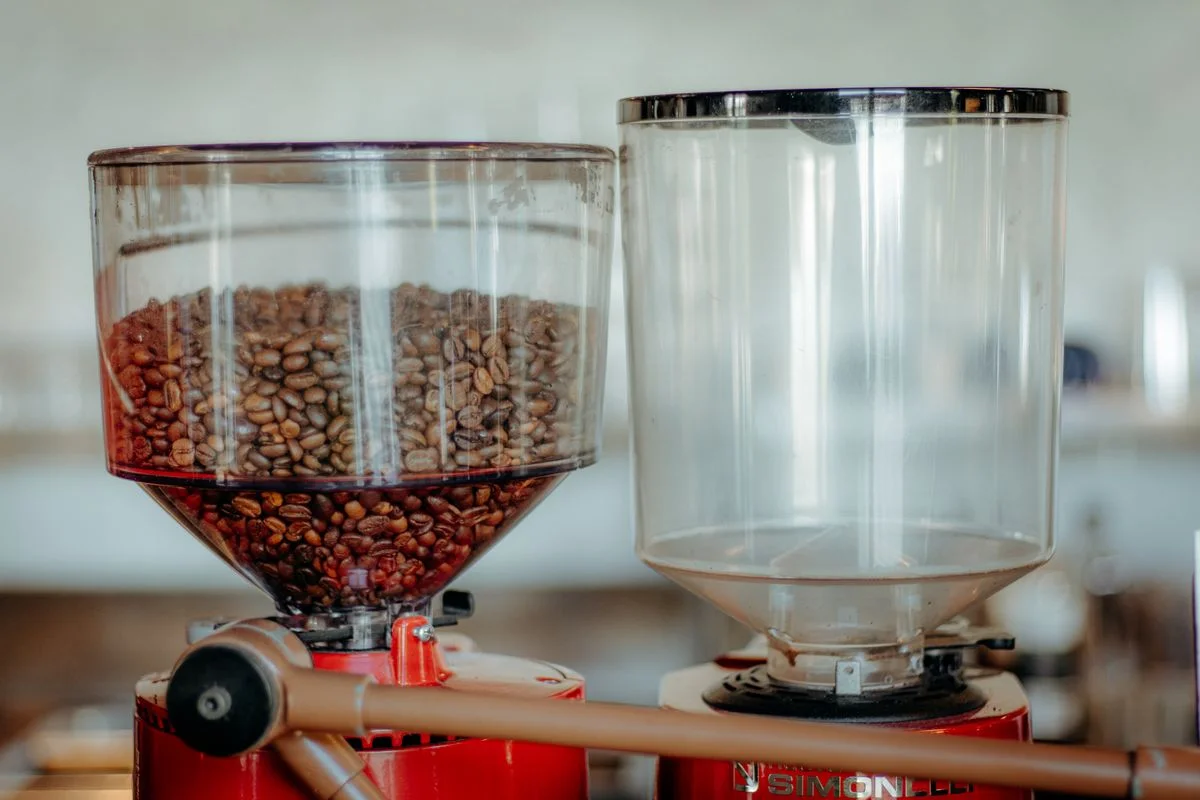
Dosing and metering equipment refers to the machines, pumps, feeders, scales, and control systems used to deliver a specified quantity of material into a process with controlled timing, rate, and repeatability. In plastics processing, the term most often covers the accurate addition of polymers, masterbatch, fillers, colorants, additives, and sometimes liquids or regrind into extrusion, compounding, injection molding, blow molding, and packaging lines.
In industrial practice, this equipment is commonly divided into volumetric and gravimetric systems, with further distinctions between solid, liquid, and gas handling, and between batch and continuous operation. Gravimetric systems are preferred when high accuracy, formulation traceability, or compensation for bulk-density variation is required, while volumetric systems are valued for simplicity, compactness, and lower cost.
Within plastics machinery, dosing and metering equipment plays a decisive role in product quality because small deviations in additive concentration can change color, mechanical properties, flame retardancy, processability, or recycled-content consistency. The same equipment family is also central to material-saving strategies, waste reduction, automatic recipe management, and integration with plant-wide automation and Industry 4.0 systems.
History and Development
Early dosing systems were largely mechanical and operator dependent, using manual weighing, timed feed screws, or simple pump settings to control material addition. As plastics production became more continuous and formulation-sensitive, the industry shifted toward dedicated feeders, metering pumps, and weigh-based batch systems that could reproduce recipes with far less human variation.
A major development was the spread of gravimetric control, especially loss-in-weight and batch-weighing methods, which measure material by mass rather than by volume and therefore remain more stable when density, moisture, or particle behavior changes. This was a significant step for masterbatch, additive, and compounding applications where exact proportioning directly affects final properties.
More recent advances include fully automated dosing skids, recipe management software, traceability functions, and networked controllers that communicate with plant control platforms. In parallel, manufacturers have expanded the same control concepts from powders and pellets to liquids, pastes, and difficult-to-handle media, including high-viscosity ingredients and poorly flowing powders.
Key Characteristics and Technical Overview
Dosing and metering equipment is defined by its ability to control flow rate, dispensed mass or volume, repeatability, and process synchronization. In plastics applications, the core engineering challenge is not only measuring quantity but also maintaining stable feeding under changing bulk density, vibration, segregation risk, bridging, static charge, and varying screw or process demand.
Main operating principles
- Volumetric dosing uses a known displacement volume per revolution, stroke, or cycle, making it relatively simple and fast but more sensitive to changes in bulk density and flowability.
- Gravimetric dosing measures mass directly, typically by weighing a hopper, vessel, or package before, during, or after discharge, and is therefore better suited to precise formulation control.
- Positive-displacement metering is widely used for liquids, where piston, diaphragm, plunger, or gear pumps deliver a repeatable volume per stroke or revolution.
- Flowmeter-based metering is used when continuous liquid control and feedback regulation are required, especially where plant integration and closed-loop adjustment are important.
Typical technical benchmarks
- For solid plastics feeders, published industrial examples show throughputs from about 0.005 to 150 kg/h for small volumetric dosing units and substantially higher capacities for packaging or bulk systems.
- Continuous industrial feeding systems commonly rely on load-cell feedback with high measurement update rates to improve control of feed rate and batch accuracy.
- In liquid metering, metering pumps may be specified from very low flows up to around 1,027 l/h in standard industrial product ranges, depending on pump type and pressure requirement.
- Residual moisture after centrifugal dewatering in recycling and wash-line integration is commonly reduced to low single-digit percentages in well-designed systems; the exact value depends strongly on polymer type, particle size, and line configuration. This benchmark is important because moisture affects downstream dosing stability, especially in compounding and extrusion.
- In plastics recycling, the final flake size after granulation or shredding is often selected to balance downstream washing, drying, feeding, and re-extrusion behavior; practical systems frequently target flakes in the few-millimeter range to support consistent conveying and metering.
- Rotor speeds in granulation and size-reduction systems are application-specific, but high-speed cutting mills and granulators commonly operate at several hundred to several thousand revolutions per minute, with energy consumption varying sharply by material hardness, cutter design, and screen size.
- Specific energy consumption in dosing itself is usually low compared with the main process machine, but the total energy footprint rises when dosing is combined with drying, conveying, agitation, dust collection, or vacuum loading.
Core components
A complete system may include:
- Hoppers or storage vessels for powders, pellets, flakes, or liquid ingredients.
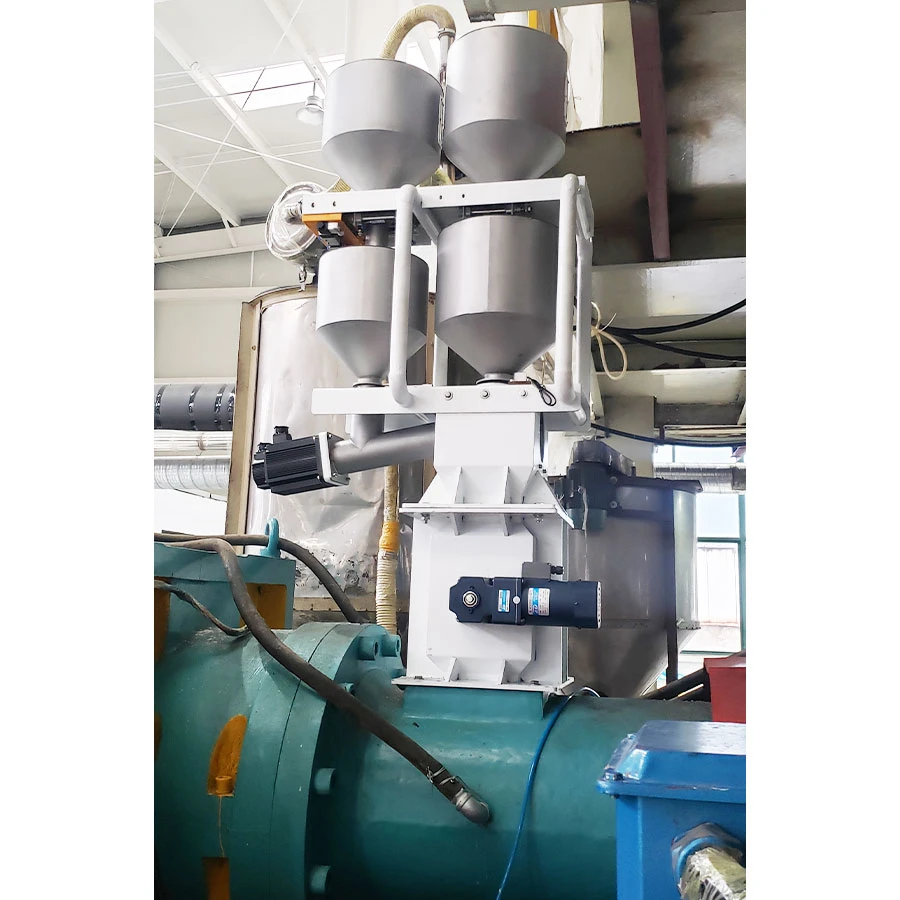
- Feeding elements such as screw feeders, rotary valves, belt feeders, pumps, or piston assemblies.
- Weighing sensors such as load cells in gravimetric systems.
- Instrumentation for flow, level, pressure, temperature, and sometimes viscosity or concentration monitoring.
- Control hardware and software for recipe storage, synchronization with the extruder or molding machine, alarms, batch records, and traceability.
Engineering priorities in plastics processing
- Preventing segregation of additives and fillers during handling.
- Minimizing pulsation or surging in liquid dosing.
- Maintaining stable feed density for regrind and flakes.
- Achieving fast recipe changeover without cross-contamination.
- Managing abrasive or corrosive materials through wear-resistant and chemically compatible construction.
Types and Variations
| Type | Typical materials | Main advantage | Main limitation |
|---|---|---|---|
| Volumetric feeder | Pellets, powders, masterbatch, regrind | Simple, compact, economical | Accuracy changes when bulk density varies |
| Gravimetric feeder | Pellets, powders, additives, flakes | High accuracy and traceability | Higher cost and more complex control |
| Loss-in-weight feeder | Continuous extrusion and compounding feeds | Real-time mass control | Sensitive to vibration and refill transitions |
| Batch weighing system | Resin, fillers, colorants | Good for recipe preparation | Slower than continuous dosing |
| Metering pump system | Liquids, catalysts, plasticizers, colorants | Precise liquid delivery | Requires pressure and viscosity matching |
| Multi-component dosing/blending system | Masterbatch, virgin resin, regrind, additives | Recipe flexibility | Higher integration complexity |
In plastics machinery, the most common solid-feeding configurations are single-ingredient feeders, twin or multiple component gravimetric blenders, and central conveying systems feeding multiple process lines. Liquid dosing is more often handled by metering pumps, skid-mounted systems, or integrated dose-and-blend stations.
Applications and Uses
Dosing and metering equipment is used wherever exact formulation or controlled addition affects the final product.
- Extrusion and compounding: resin, filler, masterbatch, impact modifier, flame retardant, stabilizer, and regrind dosing are typically handled by gravimetric feeders or weigh-blend systems.
- Injection molding: colorants, liquid additives, and sometimes recycled content are metered to maintain part consistency and reduce off-spec production.
- Blow molding and thermoforming: accurate additive and regrind proportioning helps stabilize melt behavior and wall-thickness consistency.
- Recycling and reprocessing: dosing equipment is used to blend washed flake, virgin resin, and additives, especially where moisture and bulk density vary.
- Liquid chemical addition: metering pumps are used for catalyst dosing, cleaning chemicals, pH control, plasticizer addition, and specialty formulations.
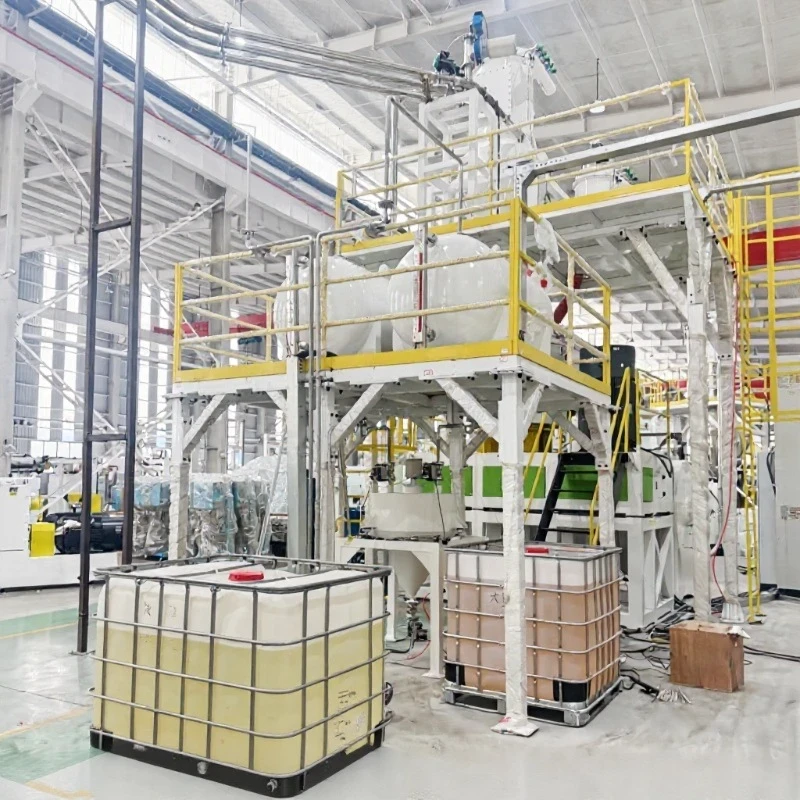
- Packaging and filling: weigh-based filling and dosing systems are used for powders, pellets, and liquids in bags, drums, IBCs, and smaller containers.
A weaker fit is highly abrasive, irregular scrap with severe contamination, where conventional precision feeders may struggle and upstream sorting, drying, or pre-size reduction becomes necessary before accurate dosing can be achieved.

Technological Innovations and Automation
Modern dosing systems increasingly combine mechanical feeding with digital control. Typical features include automatic recipe selection, closed-loop mass control, remote diagnostics, batch documentation, and integration with extruders, mixers, and plant MES or SCADA systems.
Key innovations include:
- Loss-in-weight control for real-time correction of feed fluctuations.
- Multi-component blending with automatic proportion adjustment for virgin resin, colorant, and regrind.
- Traceability functions that record actual ingredient additions for quality assurance.
- Adaptive control algorithms that compensate for poor flow, vibration, or changing material behavior.
- Hygienic and cleanable designs originally developed in food, pharmaceutical, and chemical industries and increasingly adapted to polymer processing where cross-contamination is critical.
Environmental and Sustainability Aspects
Dosing and metering equipment supports sustainability mainly by reducing material giveaway, avoiding over-addition of additives, and improving the consistent use of recycled content. In plastics processing, even small reductions in off-spec production can have a large effect because scrap rework often consumes additional energy and labor.
Gravimetric systems can also help manufacturers increase recycled or variable-feedstock content because they compensate for changes in bulk density more effectively than purely volumetric devices. This is especially relevant for reclaimed pellets, flakes, and regrind, which can vary significantly from batch to batch.
Energy use is a more mixed topic. Precision dosing can lower waste and rework, but integrated systems may increase electricity demand through sensors, controls, vacuum transport, stirring, and dehumidification. The environmental value therefore depends on total line efficiency rather than feeder power alone.
Economic and Global Market Impact
The economic significance of dosing equipment lies in its leverage over material cost, which is often far higher than the cost of the feeder itself. In plastics processing, where resin, masterbatch, and additives represent a major share of production expense, accurate metering can quickly pay back through reduced scrap, fewer batch corrections, and better consistency.
Globally, demand is shaped by three broad forces: increasing use of automation, stricter quality control requirements, and the growth of recycling and compound formulation. Liquid metering, gravimetric feeding, and integrated batch systems are therefore expanding across both high-volume commodity plastics and higher-value specialty applications.
Current Challenges and Innovations
Several technical challenges remain central:
- Bulk-density variation in powders, flakes, and regrind can undermine volumetric accuracy.
- Bridging, rat-holing, and segregation complicate flow in hoppers and bins.
- Abrasive wear from glass fiber, mineral fillers, and contaminated recyclate shortens component life.
- Cross-contamination is a concern during fast recipe changes or multi-material processing.
- Calibration and validation become more demanding when the same line is expected to handle multiple products and regulatory requirements.
Current innovation is concentrated on better sensor fusion, smarter refill algorithms, improved hopper design, wear-resistant metering screws and valves, and more robust control software for unstable or recycled feedstocks.
Future Outlook
The future of dosing and metering equipment in plastics is likely to be shaped by greater digital integration, higher tolerance for recycled materials, and more precise recipe control across decentralized manufacturing networks. Systems will increasingly be designed not just to feed material, but to document provenance, verify quantity, and adapt automatically to changing feedstock properties.
In plastics machinery specifically, the most important development path is the convergence of metering hardware with closed-loop process control. That includes automatic compensation for screw load, melt pressure, material moisture, and feed variability, as well as tighter integration with quality systems that track each batch from raw material intake to finished product.
Summary
Dosing and metering equipment is the precision layer of plastics processing, linking formulation design to real-world product quality. Its main distinction is between volumetric simplicity and gravimetric accuracy, with liquid metering pumps, weigh feeders, and integrated blending systems serving different materials and process needs.
Across the plastics industry, this equipment supports color control, additive delivery, recycled-content use, traceability, and waste reduction, making it a small but strategically important class of machinery whose influence extends from raw-material handling to final part performance.
References
- •
Craft Automation. (2026, June 4). Ingredient dosing and metering systems. https://craftautomation.com/products/ingredient-dosing-and-metering-systems/Link
- •
Tanksandcovers.com. (n.d.). Metering, pumping & mixing. https://www.tanksandcovers.com/metering-instrumentationLink
- •
SPX Flow. (n.d.). Dosing equipment for precise, reliable process control. https://www.spxflow.com/product-types/dosing-equipment/Link
- •
Kral. (n.d.). Dosing equipment manufacturer for industry and shipping. https://www.kral.at/products/en/dosing-devicesLink
- •
PackPart. (n.d.). Dosing system. https://packpart.eu/en/packaging-machines/dosing-system/Link
- •
Dosingcontrols.com. (n.d.). Chemical dosing pumps, metering equipment & instrumentation supplier. https://www.dosingcontrols.com/Link
- •
Grundfos. (2025, June 5). Dosing and metering pumps from Grundfos. https://cbeuptime.com/products/pumps/dosing-metering/Link
- •
Trantec Solids Handling. (2025, January 17). Metering & dosing solutions. https://www.trantec.net/metering-and-dosing-solutions/Link
- •
Accepta. (n.d.). Chemical dosing pumps, meters & control equipment for industry. https://accepta.com/chemical-dosing-pumps-meters-control-equipmentLink
- •
Harton. (n.d.). Metering pumps for precise fluid dosing. https://www.harton.de/en/dosing-pumpsLink
- •
DirectIndustry. (n.d.). 固体定量机. https://www.directindustry-china.cn/zhizaoshang-gongye/gu-ti-ding-liang-ji-94014.htmlLink
- •
ILC Dover. (2025, February 26). Dosing-weighing equipment. https://www.ilcdover.com/en/pharmaceutical-manufacturing/powder-containment/dosing-weighing-equipment/Link
- •
Medicalexpo. (n.d.). 定量加药装置产品信息 - 医疗器械. https://www.medicalexpo.com.cn/zhizaoshang-yiliao/ding-liang-jia-yao-zhuang-zhi-27668.htmlLink
- •
DirectIndustry. (n.d.). Chemical dosing dispenser. https://www.directindustry.com/industrial-manufacturer/chemical-dosing-dispenser-138153.htmlLink
- •
Thermo Fisher Scientific. (n.d.). Radiation dosimeters. https://www.thermofisher.com/search/browse/category/us/en/90150456Link
- •
Mettler Toledo. (2025, October 28). 自动化称重系统_自动包装机. https://www.mt.com/cn/zh/home/products/Industrial_Weighing_Solutions/weighing-system-cn.htmlLink
- •
DirectIndustry. (n.d.). Water dosing dispenser. https://www.directindustry.com/industrial-manufacturer/water-dosing-dispenser-223991.htmlLink
- •
Mahr. (2000, January 1). Liquid metering. https://metering.mahr.com/en-int/applications/liquid-meteringLink
- •
Global Pumps. (n.d.). Diaphragm metering pumps. https://www.globalpumps.com.au/product-by-pumps/diaphragm-metering-pumpsLink
- •
IQS Directory. (2026, May 14). Types, uses and functions of metering pumps. https://www.iqsdirectory.com/articles/metering-pump.htmlLink
- •
DirectIndustry. (2025, January 1). 自动定量分配机. https://www.directindustry-china.cn/zhizaoshang-gongye/zi-dong-ding-liang-fen-pei-ji-185537-_3.htmlLink
- •
Holyan. (2026, August 19). 充填機怎麼選? 計量方式與真空充填指南. https://0523.tw/holyan/filling-machine-guide/Link
- •
DirectIndustry. (n.d.). 容积式配混料机产品信息 - DirectIndustry. https://www.directindustry-china.cn/zhizaoshang-gongye/rong-ji-shi-pei-hun-liao-ji-105030.htmlLink
- •
ProMinent. (2026, September 22). Metering pumps. https://www.prominent.com/en/Products/Products/Metering-Pumps/pg-metering-pumps.htmlLink
- •
DirectIndustry. (n.d.). 定量分配机. https://www.directindustry-china.cn/zhizaoshang-gongye/ding-liang-fen-pei-ji-60757.htmlLink
- •
Strassburger Filter. (n.d.). 配有调频搅拌装置的DOS定量加料器. https://strassburger-filter.de/zh/chan-pin/dos-ding-liang-jia-liao-qiLink
- •
DirectIndustry. (n.d.). 定量给料机产品信息、经销网络. https://www.directindustry-china.cn/zhizaoshang-gongye/ding-liang-gei-liao-ji-93391.htmlLink
- •
Mettler Toledo. (2025, November 18). 自動充填機/罐裝機(Filling & Dosing). https://www.mt.com/tw/zt/home/applications/industrial_weighing/filling.htmlLink
- •
Transactions of the Chinese Society of Agricultural Engineering. (2025, January 15). 颗粒农产品非连续累计自动定量加料技术. http://www.tcsae.org/article/doi/10.11975/j.issn.1002-6819.202408117Link
- •
Szlongxin.com. (2019, December 30). 几种全自动定量包装机的计量原理. https://szlongxin.com/newsshow-4-548-1.htmlLink
- •
Mettler Toledo. (2020, September 16). 连续定量给料系统称重解决方案. https://www.mt.com/cn/zh/home/library/collections/industrial-scales/continuous-dosing.htmlLink
- •
Making.com. (n.d.). Dosing. https://making.com/technologies/dosingLink
- •
Mettler Toledo. (2024, September 4). 通用灌装机¦ 加料和分配. https://www.mt.com/cn/zh/home/applications/industrial_weighing/filling.htmlLink
- •
Mettler Toledo. (2025, October 13). 液体定量灌装设备. https://www.mt.com/cn/zh/home/products/Industrial_Weighing_Solutions/weighing-system-cn/YCS-series-filling-scale.htmlLink
- •
Google Patents. (2013, December 20). CN103754658A - 一种粉体连续加料装置及实时控制方法. https://patents.google.com/patent/CN103754658A/zhLink
- •
Piovan. (2021, June 1). 计量&混料- 百旺集团. https://www.piovan.com/zh/products/plastic/dosing-blending/Link
- •
Durr. (n.d.). 计量系统 – 适合所有要求的计量装置. https://www.durr.com/cn/products/sealing-gluing-technology/sealing-gluing-application/dosing-systemsLink
- •
Mettler Toledo. (2025, October 28). 定量包装机(包装秤). https://www.mt.com/cn/zh/home/products/Industrial_Weighing_Solutions/weighing-system-cn/DCS-series-electronic-packing-scale.htmlLink
- •
Mettler Toledo. (2026, August 20). 工业称重与系统. https://www.mt.com/hk/zh/home/products/Industrial_Weighing_Solutions.htmlLink