
Introduction
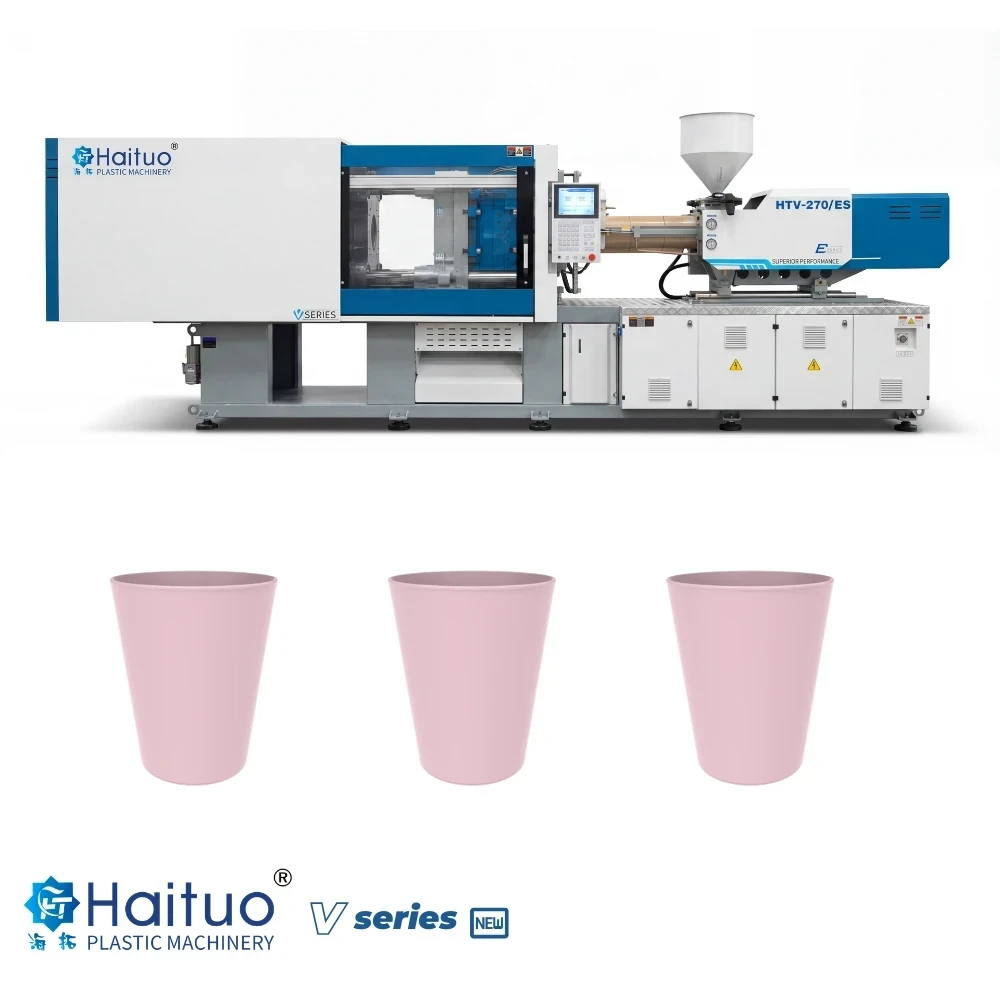
Injection molding machines are precision industrial presses that melt polymer granules, inject the melt into a closed mold, and then cool and eject the finished part in a repeating cycle. They are the central equipment class in high-volume plastics manufacturing and are used across automotive, medical, consumer goods, electronics, packaging, and industrial product sectors.
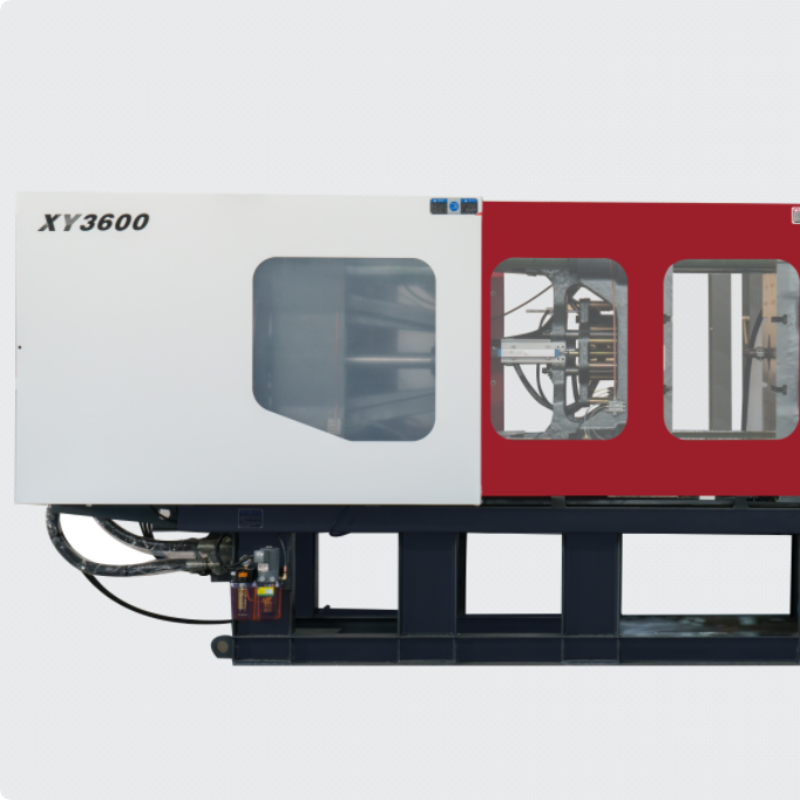
The modern machine is usually organized around four major subsystems: the injection unit, clamping unit, drive system, and control system. In practice, the market is dominated by hydraulic, electric, and hybrid machines, with horizontal and vertical configurations also widely used depending on part geometry, insert molding, automation layout, and production economics.
Technologically, injection molding machines have evolved from mechanically simple presses into highly instrumented platforms with servo drives, closed-loop process control, and integrated automation for part handling, inspection, and assembly. Their future is increasingly shaped by energy efficiency, digital process monitoring, lower scrap rates, and compatibility with recycled and bio-based polymers, while the core engineering challenge remains the same: delivering repeatable melt delivery, cavity filling, packing, cooling, and ejection under tightly controlled pressure and temperature conditions.
History and Development
Early injection molding machines were developed to industrialize the forming of thermoplastics by forcing heated material into a mold cavity under pressure. Over time, the process shifted from basic plunger-type systems toward reciprocating screw designs, which improved plasticization, melt homogeneity, and shot consistency.
Three important development milestones shaped the present machine class:
- The adoption of the reciprocating screw created a single mechanism for plasticizing, metering, and injecting melt, which greatly improved cycle stability and part quality.
- The broad industry transition from purely hydraulic systems to all-electric and servo-hydraulic hybrid platforms increased positioning accuracy, repeatability, and energy efficiency.
- The integration of PLC-based control, cavity sensing, and automation interfaces enabled real-time adjustment of injection pressure, holding pressure, clamp force, and cooling profiles for demanding applications such as medical and precision electronics molding.
Large-machine development also expanded the upper end of the market. Current commercial portfolios span from compact machines with relatively low clamp force to very large presses exceeding tens of thousands of kilonewtons, reflecting demand for both micro-parts and large structural components.
Key Characteristics and Technical Overview
An injection molding machine operates as a cyclic system. Pellets enter the hopper, are conveyed through a heated barrel by a screw, plasticized into a melt, and injected through the nozzle into a closed mold. After cavity fill, the machine applies packing/holding pressure, cools the part until solid enough for ejection, opens the mold, and removes the part before the next cycle begins.
Main machine subsystems
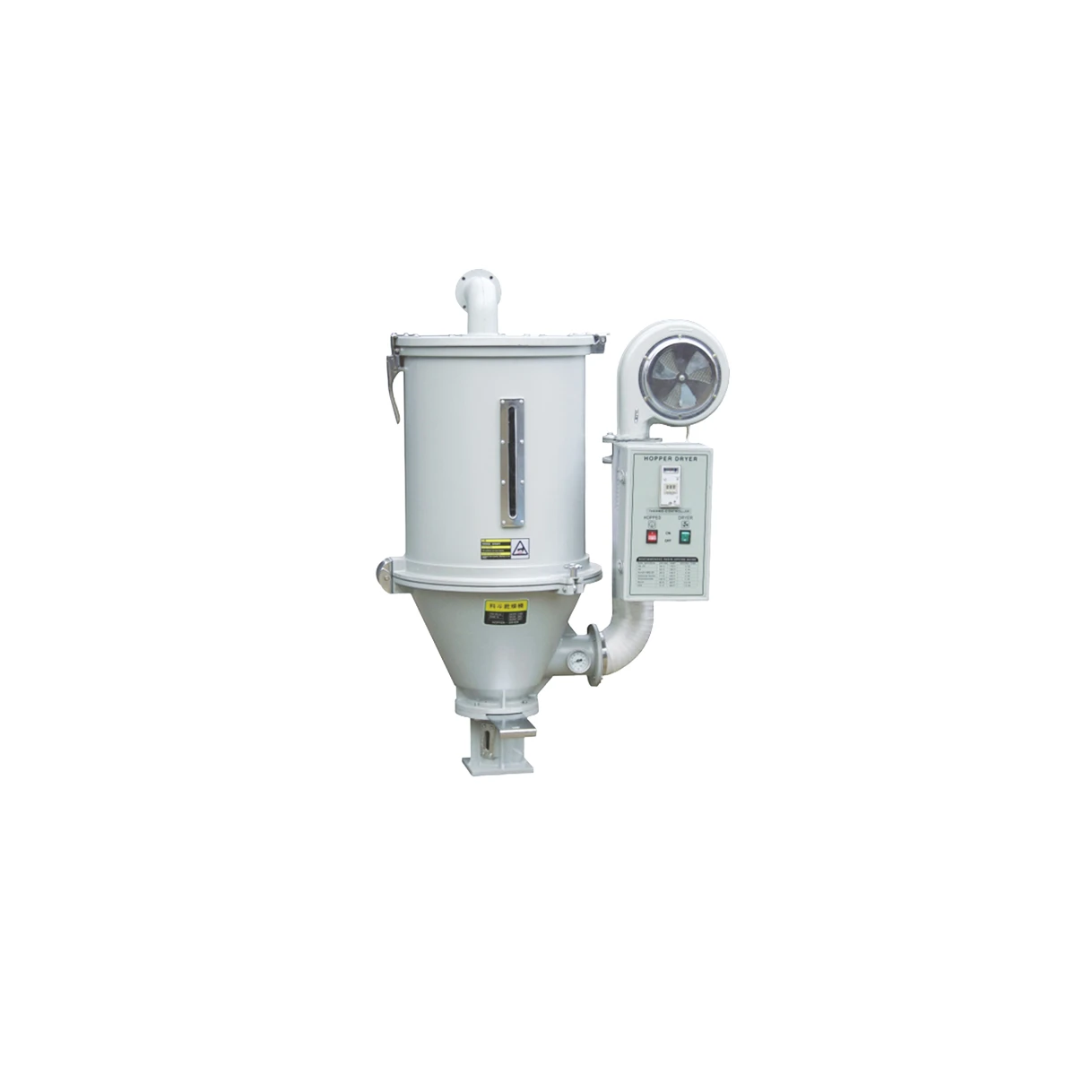
- Injection unit: Contains the hopper, barrel, screw, heater bands, check valve, and nozzle; it meters shot volume and builds injection pressure.
- Clamping unit: Closes the mold, resists cavity pressure, and provides mold opening and ejection stroke; it may use toggle or hydraulic clamping.
- Drive system: Supplies motion and force through hydraulic cylinders, electric servomotors, or a hybrid architecture.
- Control system: Coordinates speed, position, pressure, temperature, and timing across the cycle.
Typical process parameters
- Injection pressure commonly reaches approximately 10,000 to 30,000 psi depending on resin, part geometry, and wall thickness.
- Clamp pressure is much lower than melt injection pressure but must be sufficient to keep the mold closed against cavity forces; one source describes typical clamp pressure in the range of 500 to 3,000 psi, though actual machine sizing is usually specified in tonnage or kilonewtons.
- Cooling often dominates cycle time, especially for thick-wall parts, and may account for a large share of the total cycle in many products.
- Clamping force is available from compact machines measured in hundreds of kilonewtons to large machines measured in tens of thousands of kilonewtons; one commercial portfolio ranges from 280 kN to 55,000 kN, and another from 500 kN to 60,000 kN.
Material and shot characteristics
- Thermoplastics are the most common feedstock because they can be melted, injected, cooled, and remelted in repeated cycles.
- Thermosets require specialized machine and screw/barrel designs because they cure irreversibly rather than remelt in service.
- Multi-material and multi-shot systems allow sequential or simultaneous injection of different polymers or colors into one mold, reducing secondary assembly and enabling functional integration.
Quantitative performance benchmarks
Engineering benchmarks vary widely by machine class and product size, but several practical indicators are commonly used:
- Rotor or screw speeds in plasticizing can vary from low single-digit rpm in large, viscous or heat-sensitive applications to several hundred rpm in compact, high-speed machines; the exact range depends on resin and screw design.
- Throughput ranges from small-part production rates of a few kilograms per hour in precision applications to very high output in packaging or thin-wall molding, where total system throughput may reach much higher levels when combined with hot-runner molds and automation.
- Specific energy consumption is generally lowest in optimized all-electric systems and highest in older hydraulic platforms, with servo-hydraulic machines occupying an intermediate position; the actual figure depends strongly on part geometry, cycle time, and auxiliary equipment.
- Holding time, cooling time, and decompression settings are often more critical to part quality than peak injection force alone, because they govern shrinkage, sink marks, warpage, and dimensional stability.
Key engineering variables
- Melt temperature
- Mold temperature
- Injection speed
- Peak injection pressure
- Packing pressure and time
- Cooling time
- Screw recovery time
- Clamp force and mold alignment
Types and Variations
Injection molding machines are commonly classified by drive system, clamping architecture, and application-specific design.
| Type | Main characteristics | Typical strengths | Typical trade-offs |
|---|---|---|---|
| Hydraulic | Uses hydraulic cylinders for clamp and injection force | High clamp force, robust construction, broad process flexibility | Higher energy use, more maintenance, lower positioning precision than electric systems |
| Electric | Uses servo motors for screw, clamp, and ejector motion | High precision, clean operation, lower energy consumption | Higher initial cost, less common in some very large-tonnage applications |
| Hybrid | Combines hydraulic power with electric servo control | Balance of force, speed, and energy efficiency | More complex integration and service requirements |
| Horizontal | Mold closes on a horizontal axis | Broadest general-purpose use, easy automation integration | Requires more floor length for automation cells |
| Vertical | Mold closes on a vertical axis | Strong for insert molding and gravity-assisted loading | Less common for fully automated high-volume general molding |
| Toggle clamp | Mechanical toggle linkage creates clamping force | Fast clamp motion, efficient force build-up | Can be less flexible for very large molds or specialized processes |
| Two-platen | Uses two platens rather than three or more | Compact for large molds, reduced machine footprint | Often higher complexity and cost for large-tonnage systems |
| Multi-shot / multi-color | Two or more injection units or materials | Multi-material parts, reduced assembly | Tooling and process control are more demanding |
A secondary classification divides machines by material process: thermoplastic, thermoset, gas-assisted, co-injection, and multi-component machines are all distinct process variants within the broader machine family.
Applications and Uses
Injection molding machines are used wherever complex, repeatable plastic parts must be produced at scale with good dimensional consistency.
- Automotive: interior trim, housings, connectors, clips, structural modules, and under-hood components; medium to large horizontal machines are common.
- Medical: syringes, diagnostic housings, drug-delivery components, and laboratory consumables; electric or high-precision hybrid machines are often preferred.
- Consumer electronics and 3C products: device housings, buttons, connectors, and precision cosmetic parts; high repeatability and low flash are critical.
- Packaging: closures, caps, thin-wall containers, and high-cavity molds; high-speed machines and automation are often used.
- Appliances and household goods: panels, knobs, handles, and covers; medium-tonnage general-purpose presses dominate.
- Industrial and technical parts: gears, housings, fixtures, and enclosures where dimensional stability matters more than appearance.
- Insert molding and overmolding: vertical machines or specialized horizontal systems are used when metal inserts, cables, or soft-touch layers must be integrated.
A poor-fit use case is very long-run, low-volume, highly customized metal parts, because the tooling cost, mold complexity, and cycle economics of injection molding are unfavorable compared with machining, casting, or additive manufacturing.
Technological Innovations and Automation
Modern machines increasingly function as nodes in automated production cells rather than stand-alone presses.
- Servo drives improve response, repeatability, and energy efficiency relative to conventional hydraulic systems.
- Real-time process monitoring uses pressure, position, and temperature feedback to stabilize fill and pack behavior.
- Robotic part removal shortens cycle time and reduces handling damage.
- In-mold sensing supports cavity-pressure control and better compensation for resin variability.
- Integrated assembly and inspection are increasingly offered by major suppliers as part of broader molding automation platforms.
These innovations are particularly important for thin-wall packaging, precision medical components, and multi-cavity consumer products, where small deviations can produce visible defects or reject rates.
Environmental and Sustainability Aspects
Injection molding machines influence sustainability through energy use, scrap generation, resin compatibility, and process efficiency.
- Energy efficiency is typically best in all-electric systems and improved servo-hydraulic platforms, especially in plants with short cycles and frequent idle periods.
- Material waste reduction is supported by accurate shot control, closed-loop pressure monitoring, hot-runner tooling, and optimized start-up scrap reduction.
- Recycling compatibility is strong for many thermoplastics, including the use of recycled content where material properties and contamination control permit.
- Cycle efficiency lowers unit energy demand because the machine can produce more parts per kilowatt-hour when mold cooling, plasticizing, and automation are well coordinated.
At the same time, sustainability trade-offs remain important. High-performance automation can reduce rejects but may increase capital intensity, and advanced electric machines do not automatically guarantee low footprint if poorly matched to the process or if auxiliary systems are inefficient.
Economic and Global Market Impact
Injection molding machines are among the most important capital assets in the plastics processing industry because they determine throughput, part quality, labor intensity, and plant flexibility.
- Large global manufacturers include ENGEL, KraussMaffei, Arburg, Sumitomo Heavy Industries, Sumitomo (SHI) Demag, Milacron, and YIZUMI, each with different strengths in machine class, tonnage range, or automation integration.
- Competitive differentiation increasingly depends on energy efficiency, digital control, precision, cycle reliability, and integration with robotics and mold-monitoring systems rather than clamp force alone.
- The machine market is closely linked to downstream demand in automotive electrification, medical consumables, consumer electronics miniaturization, and packaging, all of which reward high uptime and stable process windows.
Because machine purchases are capital-intensive, buyers often evaluate total cost of ownership rather than purchase price alone, including energy use, maintenance, spare parts, mold changeover time, and scrap rates.
Current Challenges and Innovations
Several technical and economic pressures are shaping current machine development.
- Decarbonization and energy cost pressure are pushing users toward servo-electric and optimized hybrid platforms.
- Processing recycled polymers can be difficult because variability in melt flow, contamination, and moisture increases sensitivity to process drift.
- Labor shortages accelerate the need for lights-out automation, predictive maintenance, and user-friendly interfaces.
- Tighter part tolerances in medical and electronic products require better process repeatability and in-mold sensing.
- Large part molding continues to challenge clamp rigidity, platen deflection control, and uniform filling in high-tonnage systems.
Innovation is therefore concentrated in adaptive process control, better screw and barrel designs, low-energy drive architectures, and machine-cell integration.
Future Outlook
The future of injection molding machines is likely to be defined by three converging trends:
- Higher digitalization, including more extensive sensor networks, data logging, and machine-to-system connectivity.
- Greater electrification, especially in machines where precision, cleanliness, and energy reduction justify the higher upfront cost.
- Circular-material compatibility, as processors increasingly demand stable performance with recycled, regrind, and engineered sustainable polymers.
For manufacturers, the most important strategic issue will be matching machine architecture to part family, resin behavior, mold design, and automation level. The machine itself will remain the core asset, but competitive advantage will increasingly come from how effectively it is integrated with tooling, materials, quality systems, and production analytics.
Summary
Injection molding machines are the foundational presses of modern plastics manufacturing, converting polymer pellets into precision parts through a controlled sequence of melting, injection, packing, cooling, and ejection. Their major variants—hydraulic, electric, and hybrid—support different balances of force, precision, energy use, and investment cost, while ongoing advances in automation and process control are making the technology cleaner, more efficient, and better suited to complex, high-quality plastic products.
References
- •
Injection molding machine. (2007, June 6). Wikipedia. https://en.wikipedia.org/wiki/Injection_molding_machineLink
- •
What are injection molding machines and how do they work? (n.d.). Hubs. https://www.hubs.com/knowledge-base/injection-molding-machines-and-how-do-they-work/Link
- •
Injection molding machines at a glance. (2022, August 22). ENGEL. https://www.engelglobal.com/en/us/products/injection-molding-machinesLink
- •
YIZUMI Global. (2026, August 25). YIZUMI. https://www.yizumi.com/en/Link
- •
Injection moulding machines at a glance. (2022, August 22). ENGEL. https://www.engelglobal.com/en/products/injection-moulding-machinesLink
- •
How an injection molding machine works (2026 guide). (2026, June 18). PLC Programming. https://plcprogramming.io/blog/injection-molding-machine-explainedLink
- •
Injection: High performance injection molding machines. (2025, July 21). Milacron. https://www.milacron.com/injection/Link
- •
How does the injection molding machine work? Complete guide. (2024, July 10). ZetarMold. https://zetarmold.com/how-does-injection-machine-work/Link
- •
How does the injection molding machine work? (2025, May 16). ZetarMold. https://zetarmold.com/injection-molding-machine-work/Link
- •
How does the injection moulding machine work. (2025, July 14). ZetarMold. https://zetarmold.com/injection-moulding-machine-work-2/Link
- •
Understanding injection molding machine types: Advantages and.... (2024, August 22). Huarong. https://www.huarong.com.tw/page/news/en/company_news/detail/100/Link
- •
Injection molding machines. (n.d.). Sumitomo Heavy Industries. https://www.shi.co.jp/english/products/machinery/injection/index.htmlLink
- •
Classification of injection molding machines. (n.d.). Guanxin Machinery. https://guanxin-machinery.com/classification-of-injection-molding-machines-2/Link
- •
What is plastic injection molding and how does it work? (2023, December 11). Essentra Components. https://www.essentracomponents.com/en-us/news/manufacturing/injection-molding/what-is-plastic-injection-molding-and-how-does-it-workLink
- •
Complete guide to types of injection molding machines. (2026, March 31). YIZUMI. https://www.yizumi.com/en/news/product/IMM/complete-guide-to-types-of-injection-molding-machinesLink
- •
Plastic injection molding machines: Types, parts, and uses. (2022, April 29). Xometry. https://www.xometry.com/resources/injection-molding/plastic-injection-molding-machine/Link
- •
In-depth look at injection molding machine types & uses. (2024, February 26). THY Precision. https://www.thy-precision.com/in-depth-look-at-injection-molding-machine-types-uses/Link
- •
How does an injection molding machine work? (2026, March 6). Orange Plastics. https://orangeplastics.com/en/how-does-an-injection-molding-machine-work/Link
- •
Injection molding machines. (n.d.). DerFactory. https://derfactory.com/categories/injection-molding-machines/Link
- •
Types of injection molding machines. (2024, April 30). NPC Injection. https://www.npcinjection.com/news/types-of-injection-molding-machines.htmlLink
- •
Classification of injection machine. (2019, December 11). Gud Mould. https://gudmould.wordpress.com/2019/12/11/classification-of-injection-machine/Link
- •
What is injection molding machine: Definition, types & characteristics. (2024, March 19). 3ERP. https://www.3erp.com/blog/injection-molding-machine/Link
- •
Injection molding machines 500-60000 kN. (n.d.). KraussMaffei. https://www.kraussmaffei.com/en/injection-molding-machinery/injection-molding-machinesLink
- •
Injection molding machine: Types, brands, prices and Q&A. (2023, December 12). Prototool. https://prototool.com/injection-molding-machine/Link
- •
1KK K-4S. (2023, April 7). MachineTools. https://www.machinetools.com/en/models/type/injection-molding-machinesLink
- •
How does injection molding work a complete step-by-step guide. (2025, November 18). Jino Plastics. https://jinoplastics.com/how-does-injection-moulding-work/Link
- •
Leading injection molding machine manufacturer & supplier. (2026, August 25). YIZUMI. https://www.yizumi.com/en/imsLink
- •
What are injection molding machines? What are the types? (n.d.). EdeX. https://www.edex-injection.com/what-are-injection-molding-machines---what-are-the-typesLink
- •
Injection molding: Definition, types, diagram. (2022, April 29). Xometry. https://www.xometry.com/resources/injection-molding/types-of-injection-molding-technology/Link
- •
Inventory. (2019, December 18). Absolute Machinery. https://www.absolutemachinery.com/listingsLink
- •
Injection molding machines. (2025, March 11). Wilmington Machinery. https://wilmingtonmachinery.com/machinery/injection-molding/Link
- •
Different types of injection molding machines: A guide to choosing the right one. (2024, November 11). JYC Machinery. https://jycmachinery.com/blog/886-different-types-of-injection-molding-machinesLink
- •
Types of injection molding machine: Choose hydraulic, electric or.... (2024, July 22). CLF. https://www.clf.com.tw/en/article/types-of-Injection-molding-machine.htmlLink
- •
Injection molding machines. (n.d.). Sumitomo (SHI) Demag North America. https://sumitomo-shi-demag.us/machines/Link
- •
Injection moulding. (2003, September 23). Wikipedia. https://en.wikipedia.org/wiki/Injection_mouldingLink
- •
How does an injection molding machine work with animation. (2023, September 30). Boyanmfg. https://boyanmfg.com/how-does-injection-molding-machine-work/Link
- •
How injection moulding works: Complete step-by-step process. (2025, July 17). Makerverse. https://www.makerverse.com/resources/injection-molding/how-injection-moulding-works-complete-step-by-step-process/Link
- •
Injection molding machine. (n.d.). ARBURG. https://www.arburg.com/en/us/product-world/injection-molding-machines/Link
- •
Types of injection molding machines: Buying guide. (n.d.). LOG Machine. https://www.log-machine.com/types-of-injection-molding-machine/Link
- •
#1 used injection molding machines. (2025, August 1). Elite Machinery Systems. https://elitemachinerysystems.com/Link
- •
New & used injection molding machine for sale. (n.d.). Machinery Center. https://machinerycenter.com/categories/5056-injection-molding-machineLink
- •
The injection moulding process: A complete guide. (n.d.). Geomiq. https://geomiq.com/injection-moulding-guide/Link
- •
Plastic injection molding machines: Types and benefits. (2017, May 25). Midstate Mold. https://www.midstatemold.com/injection-molding-machines/Link
- •
Which injection molding machine is best for your project? (2019, July 10). Kaysun. https://www.kaysun.com/blog/injection-molding-machineLink
- •
Injection molding: Definition, types & processing techniques. (2026, April 2). SpecialChem. https://www.specialchem.com/plastics/guide/injection-moldingLink
- •
Top 6 best injection molding machines. (2024, August 20). Plastics Engineering. https://www.plasticsengineering.org/2024/08/top-6-best-injection-molding-machines-006166/Link