
Introduction
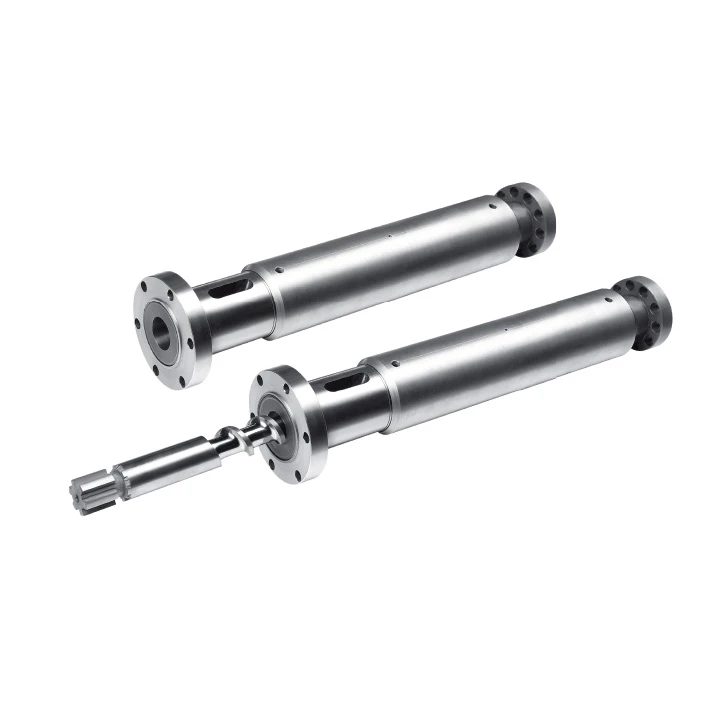
In plastics processing, barrels usually refer to the cylindrical heated housing of an extruder or injection molding machine, while in broader machine terminology the same English word can also denote a roller, press roll, or rotating cylindrical component depending on context. In Chinese technical usage, the user-provided terms 机筒 and 压辊/滚桶 point to two related but distinct machine families: the barrel of a processing machine and the roller used for conveying, calendering, pressing, laminating, or surface finishing. The plastics industry uses both concepts extensively, and their performance directly affects melt quality, dimensional accuracy, output stability, and energy consumption.
Within plastics machinery, the machine barrel is one of the core thermal and mechanical elements of an extruder or injection unit, because it houses the screw, constrains pressure, and provides controlled heating and cooling. In rolling and finishing equipment, press rolls and rollers perform compaction, calendering, dewatering, laminating, embossing, or transport functions, often with tight requirements for roundness, runout, surface finish, and thermal uniformity. Modern designs increasingly integrate wear-resistant metallurgy, precise temperature control, automation, and energy-saving features, reflecting the industry’s broader shift toward higher throughput, lower scrap, and circular-economy compatibility.
History and Development
The barrel as a mechanical concept predates plastics processing, but its role in polymer machinery expanded with the development of continuous extrusion and injection molding. Early extruders adopted relatively simple steel barrels, later improved through zoned heating, better screw-barrel clearances, and wear-resistant liners to handle filled and abrasive compounds.
Three practical milestones shaped modern barrel and roller systems in plastics processing:
- The commercialization of single-screw and twin-screw extrusion created the need for precisely machined barrels with stable thermal zones and controlled residence time, enabling continuous compounding and shaping.
- The spread of wear-resistant bimetallic barrels, nitrided bores, and corrosion-resistant alloys improved service life in filled, glass-fiber-reinforced, and halogenated formulations. This development was especially important for PVC, flame-retarded compounds, and engineering plastics.
- The growth of automation and digital process control made barrel temperature profiling, screw torque monitoring, and melt-pressure feedback standard practice in high-output lines, while roller-based finishing equipment adopted tighter control of nip pressure, alignment, and surface temperature.
Technical Overview
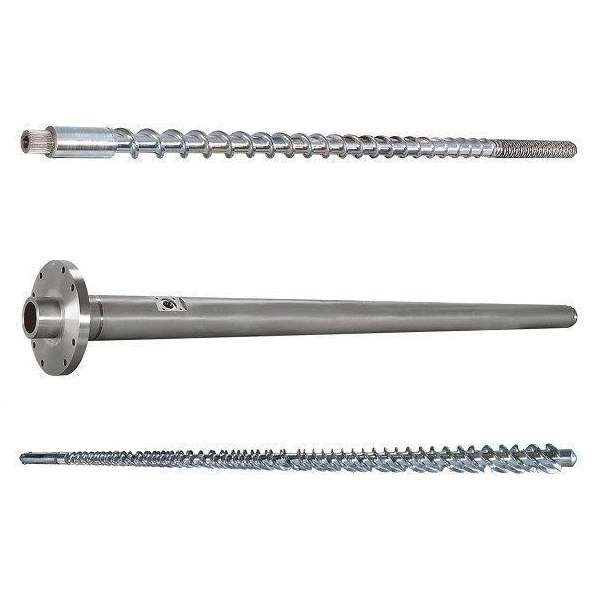
A plastics-processing barrel is typically a precision-bored cylindrical housing surrounding the screw. Its engineering function is to combine conveying, melting, mixing, pressurizing, and metering in a controlled thermal environment. The barrel must resist abrasive wear, corrosive attack, and thermal cycling while maintaining a stable clearance with the screw to limit backflow and preserve efficiency.
Typical construction
- Base materials: alloy steel, nitrided steel, bimetallic liners, and corrosion-resistant alloys are commonly used where wear or chemical attack is severe.
- Heating system: electrical band heaters or cast-in heaters provide zoned heating; cooling is often by air or water channels.
- Instrumentation: thermocouples, pressure sensors, melt temperature probes, and torque monitoring are used to stabilize process conditions.
- Geometry: barrel length-to-diameter ratios commonly fall in the range used by the machine type, with the exact ratio chosen to balance melting, mixing, and residence time.
Operating benchmarks
- Throughput: small compounding or specialty lines may operate at tens of kilograms per hour, while industrial extrusion systems can reach hundreds to several thousand kg/h, and high-output sheet or pipe lines may reach multiple t/h depending on formulation and screw design.
- Temperature control: multiple zones are used because polymer melting, devolatilization, and pumping require different thermal profiles along the barrel.
- Wear life: service life depends strongly on filler content, screw speed, polymer chemistry, and cleaning practices; abrasive and corrosive compounds shorten it substantially.
- Specific energy consumption: modern well-optimized extrusion and roll-processing systems can operate at materially lower specific energy than older machines, but values vary widely with resin, output rate, and auxiliary equipment.
Roller and press-roll performance
In roll-based plastics machinery, the critical parameters include:
- Roll diameter and length
- Crowning and deflection control
- Surface roughness or mirror finish
- Thermal uniformity
- Nip pressure and line speed
- Dynamic balance and runout
These factors govern sheet thickness, gloss, embossing fidelity, and bonding quality in calendering, laminating, and film finishing. Press rolls used in dewatering or consolidation processes must also maintain stable pressure distribution to avoid local defects and nonuniform moisture removal.
Types and Variations
By plastics-processing function
| Type | Main function | Typical use |
|---|---|---|
| Extruder barrel | Melts, mixes, and pressurizes polymer | Pipe, profile, film, sheet, compounding |
| Injection barrel | Plasticizes and meters melt into the mold | Molded parts for packaging, appliances, automotive |
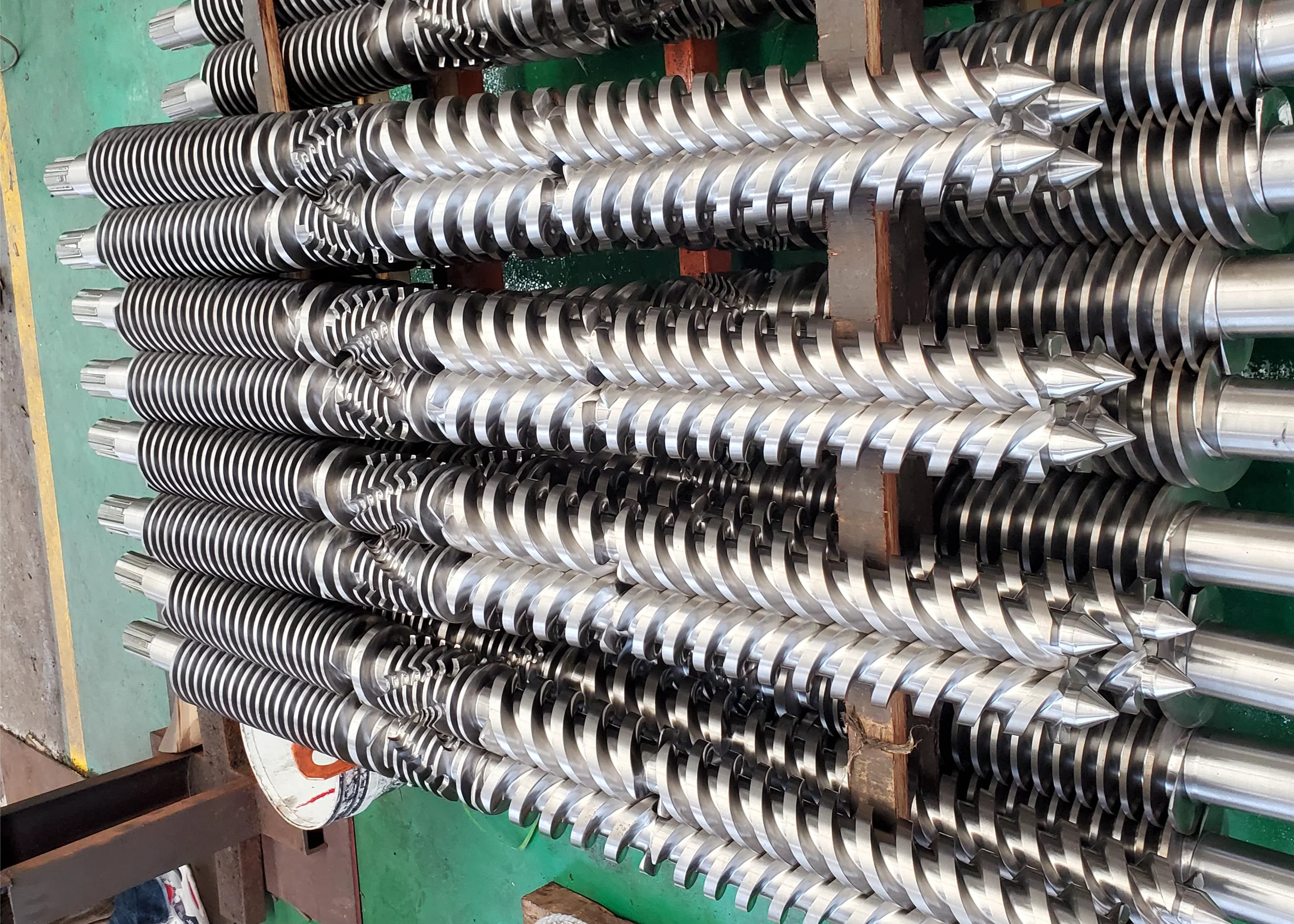
| Twin-screw segmented barrel | Provides modular processing zones | Compounding, reactive extrusion, masterbatch |
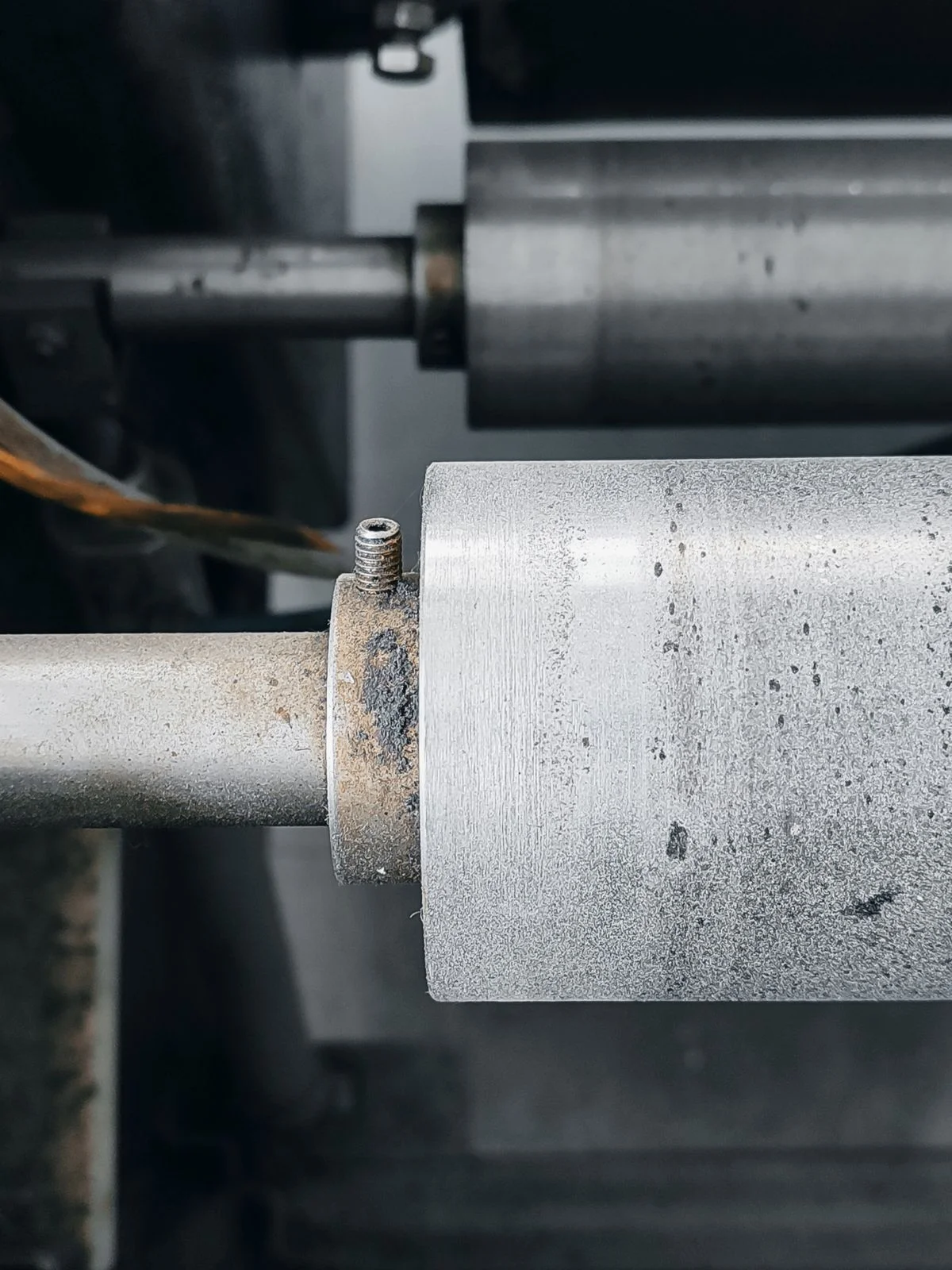
| Roller / press roll | Applies pressure, transport, or surface treatment | Calendering, laminating, embossing, conveying |
| Cooling or chill roll | Controls thickness and solidification | Film, sheet, coated webs |
| Embossing roll | Imprints surface texture or pattern | Decorative sheet, flooring, films |
By construction
- Solid-barrel designs emphasize mechanical robustness and simpler maintenance.
- Segmented barrels allow interchangeable process sections, venting, mixing, and degassing.
- Bimetallic barrels are preferred for abrasive or corrosive formulations.
- Coated rollers may use chrome, carbide, ceramic, rubber, polyurethane, or engineered coatings depending on the application.
Applications and Uses
Barrels and rollers appear across nearly every plastics-processing route because they support both primary shaping and downstream finishing.
- Packaging films and sheets: barrels in extrusion lines melt and homogenize polyethylene, polypropylene, or multilayer structures, while chill rolls and press rolls control thickness, gloss, and flatness.
- Pipe and profile: long-barrel extrusion systems stabilize output and pressure for PVC, PE, PP, and technical profiles.
- Injection-molded parts: the injection barrel plasticizes resin and produces consistent shot-to-shot quality.
- Compounding and masterbatch: twin-screw barrels enable intense mixing, filler incorporation, devolatilization, and reactive processing.
- Calendered PVC and flexible sheet: roller stacks shape thickness and surface finish.
- Lamination and adhesive bonding: press rolls consolidate films, foils, or coated webs onto substrates.
A less suitable application is highly abrasive mineral-filled processing without wear protection, because an untreated barrel or soft-surfaced roller will wear rapidly and destabilize dimensional control.
Technological Innovations and Automation
Current barrel and roller systems increasingly incorporate:
- Advanced metallurgy and coatings to extend life in abrasive and corrosive service.
- Closed-loop temperature control to reduce drift and improve melt consistency.
- Servo-driven nip and gap adjustment in roller systems for repeatable thickness control.
- Condition monitoring for torque, vibration, temperature, and wear.
- Digital process integration for recipe management, traceability, and predictive maintenance.
In plastics production, these developments reduce scrap, improve startup behavior, and support more stable processing of recycled and variable feedstocks.
Environmental and Sustainability Aspects
Barrel and roller design now plays a direct role in sustainability because processing losses occur not only in the resin but also in energy use, downtime, and off-spec output.
- Energy efficiency: improved heating control, better insulation, and optimized screw-barrel interaction reduce unnecessary thermal load.
- Material waste reduction: stable barrel temperature and wear resistance lower scrap rates and avoid contamination from degraded metal surfaces.
- Recycling compatibility: recycled polymers often vary in melt flow and contamination, so barrels with stronger mixing and wear protection are better suited to recycled content.
- Longer service life: harder linings and replaceable segments reduce replacement frequency and embodied material use.
Roll-based finishing systems also contribute by improving web control, reducing wrinkling, and limiting reject rates in thin-gauge products.
Economic and Global Market Impact
Barrels and rollers are not usually purchased as standalone consumer products; they are capital-intensive machine components whose value is tied to machine uptime, output stability, and maintenance cost. For processors, the economic impact comes from:
- higher throughput with stable melt quality,
- lower maintenance downtime,
- reduced power and scrap losses,
- improved product uniformity and yield.
In global terms, demand is strongest where plastics conversion capacity is expanding, especially in packaging, construction, automotive, electrical, and recycling-related equipment. The replacement market is also significant because wear components must be refurbished or renewed during machine life.
Current Challenges and Innovations
Key engineering challenges include:
- Wear in recycled and filled materials, especially glass fiber, mineral filler, and contaminated regrind.
- Corrosion from aggressive additives, including flame retardants and certain stabilizer systems.
- Thermal nonuniformity, which can produce degradation, unmelted inclusions, or output instability.
- Gap control and alignment drift in roller systems, which can cause thickness variation and surface defects.
- Balancing durability and efficiency, because harder wear layers may complicate machining or repair.
Recent innovation focuses on optimized alloy selection, modular replaceable sections, better surface engineering, and sensor-driven maintenance planning.
Future Outlook
The next generation of plastics-processing barrels and rollers is likely to emphasize:
- greater compatibility with recycled polymers and bio-based materials,
- more precise thermal zoning and digital control,
- predictive maintenance using condition data,
- longer-life surface treatments and modular repairability,
- lower energy intensity through integrated machine optimization.
As plastics processors face tighter quality requirements and higher sustainability expectations, the barrel and the roller will remain fundamental components whose design increasingly determines overall process competitiveness.
References
- •
Barrel. (2004, May 7). In Wikipedia. https://en.wikipedia.org/wiki/BarrelLink
- •
Barrel. (n.d.). In Vocabulary.com. https://www.vocabulary.com/dictionary/barrelLink
- •
Barrel. (2025, August 8). In Collins English Dictionary. https://www.collinsdictionary.com/dictionary/english/barrelLink
- •
Barrel (unit). (2004, April 13). In Wikipedia. https://en.wikipedia.org/wiki/Barrel_(unit)Link
- •
Barrel. (2020, March 24). In Britannica. https://www.britannica.com/technology/barrel-containerLink
- •
Barrel. (2026, January 1). In Cambridge English Dictionary. https://dictionary.cambridge.org/us/dictionary/english/barrelLink
- •
Barrel. (2025, December 11). In Merriam-Webster. https://www.merriam-webster.com/dictionary/barrelsLink
- •
Barrels. (n.d.). In VDict. https://vdict.com/barrels,7,0,0.htmlLink
- •
Barrel. (2025, August 2). In Collins English Dictionary. https://www.collinsdictionary.com/english-language-learning/barrelLink
- •
Barrel. (n.d.). In Longman Dictionary of Contemporary English. https://www.ldoceonline.com/dictionary/barrelLink
- •
Barrel. (n.d.). In Oxford Learner's Dictionaries. https://www.oxfordlearnersdictionaries.com/definition/english/barrel_1Link
- •
Barrel. (2025, July 1). In Britannica Dictionary. https://www.britannica.com/dictionary/barrelLink
- •
Barrels. (n.d.). In Dictionary.com. https://www.dictionary.com/browse/barrelsLink
- •
關於滾筒的一切- 材料、加工、產品- Richconn. (2024, September 7). https://www.richconn-cnc.com/zh-TW/verything-about-roller-materials-processing-products-we-have-all-you-want.htmlLink
- •
Barrel. (2026, January 1). In Cambridge Learner's Dictionary. https://dictionary.cambridge.org/dictionary/learner-english/barrelLink
- •
基本规划. (n.d.). https://www.interroll.com/fileadmin/user_upload/Downloads__PDF_/Rollers/Technische_Grundlagen_Foerderrollen_ZH.PDFLink
- •
壓延機生產 辊筒直徑與橫壓力和功率長徑比與功率的關係. (2024, April 22). https://www.365union.com/article/gongsidongtai/175.htmlLink
- •
高精度辊筒定制專家. (2026, September 11). https://www.wancili.com/pinpai/9697572.htmlLink
- •
Press roll. (n.d.). https://dict.zhuaniao.com/en/press+roll/Link
- •
什麼是輥壓機?提高材料加工的精度和效率. (n.d.). https://zh.kindle-tech.com/faqs/what-is-a-roll-pressLink
- •
壓輥. (2023, December 24). https://baike.baidu.com/item/%E5%8E%8B%E8%BE%8A/8601569Link
- •
輸送機配件. (2021, November 15). http://www.xingdeshun.com/xinwen/358.htmlLink
- •
Barrels的中文解釋和發音 - 歐路詞典. (n.d.). https://dict.eudic.net/dicts/en/barrelsLink
- •
辊筒. (2023, November 8). In 維基百科. https://zh.wikipedia.org/zh-hans/%E8%BC%A5%E7%AD%92Link
- •
滾子設計和製造分析- 您想知道的一切都在這裡:揭示滾輪設計 ... (2024, October 2). https://www.richconn-cnc.com/zh-TW/roller-design-and-manufacturing-analysis-everything-you-want-to-know-is-here-revealing-the-complexities-of-roller-design-and-manufacturing.htmlLink
- •
辊筒的分類,應用以及保養. (n.d.). http://www.kyssj.com/news/new-395.htmlLink
- •
滾筒. (n.d.). https://www.newton.com.tw/wiki/%E6%BB%BE%E7%AD%92Link
- •
四川辊筒-膠輥-鏡面辊-辊筒廠家-紹興福天機械有限公司. (2026, June 1). https://www.rollerft.cn/sichuan/Link
- •
什麼是辊筒? (2023, April 17). https://www.sl-fa.com/article/artcle_info/33-40-816.htmlLink
- •
辊筒 - 博路威機械江蘇有限公司. (n.d.). http://www.broadenwin.com/product_category/gtp.htmlLink
- •
Meincke 3388 壓輥 - Buhler Group. (n.d.). https://www.buhlergroup.com/global/zh/products/pressing_roller_meincke3388.htmlLink
- •
Mill roller. (n.d.). https://scidict.org/items/Mill%20RollerLink
- •
花輥. (2024, March 1). https://baike.baidu.com/item/%E8%8A%B1%E8%BE%8A/11057634Link
- •
鐵姆肯公司. (n.d.). https://www.timken.com/resources/products-and-applications-for-primary-metals/Link