
Introduction
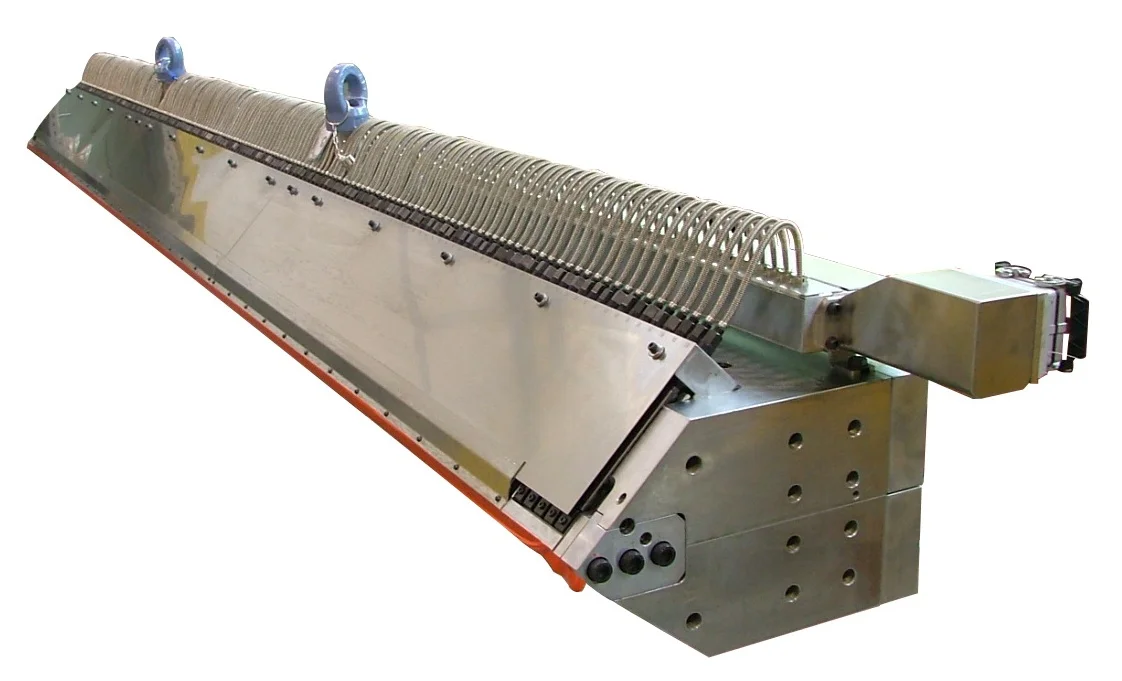
Moulds & dies are precision tools used to shape plastics, metals, rubber, and other materials into repeatable parts with defined geometry, surface finish, and dimensional tolerance. In plastics processing, moulds are the dominant tool class for injection moulding, blow moulding, compression moulding, and related forming methods, while dies are more commonly associated with metal forming, although the term is also used in some plastics and polymer-shaping contexts such as extrusion dies.
Within the plastics industry, moulds and dies are central to mass production because they translate polymer melt behavior, cooling, shrinkage, and ejection requirements into a reusable production tool. Their design affects cycle time, part quality, scrap rate, and the economic viability of high-volume manufacturing, which is why the sector is often described as a core enabling segment of modern manufacturing.
The field spans conventional steel tooling, aluminium prototypes, multi-cavity and hot-runner moulds, precision inserts, and increasingly digital workflows that combine CAD/CAM, simulation, CNC machining, and EDM. Recent market reports describe the die-and-mould sector as a steady-growth industry, reflecting demand from automotive, electronics, packaging, appliances, construction, and industrial goods, with moulds especially important in plastics and dies especially important in metal forming.

History and Development
The modern mould-and-die industry grew alongside industrial mass production, when interchangeable tooling became essential for consistent output and lower unit cost. Over time, tooling evolved from largely hand-fitted workshop practice into a highly engineered discipline involving metallurgy, precision machining, and computer-assisted design.
Several development milestones shaped the sector:
- The rise of precision machine tools made repeatable cavity production possible for both moulds and dies, improving consistency and reducing dependence on manual fitting.
- The adoption of CNC machining, EDM, and grinding transformed toolmaking by allowing complex cavities, sharp corners, and tight tolerances that are difficult to achieve with conventional cutting alone.
- The spread of CAD/CAM and simulation enabled virtual validation of material flow, cooling, warpage, and forming stresses before steel is cut, reducing rework during tool tryout.
In plastics processing, these developments were especially important because polymer parts are highly sensitive to gate location, venting, cooling channel design, and shrinkage compensation. As a result, mould making became a highly specialized engineering activity rather than a simple fabrication task.
Key Characteristics and Technical Overview
A mould or die is a tooling system, not merely a cavity. It typically includes plates, inserts, runners or gating, cooling or heating circuits, ejection systems, alignment elements, and wear-resistant surfaces. The precise configuration depends on the process: injection moulds emphasize flow control and cooling, blow moulds emphasize parison or preform shaping, and compression tools emphasize pressure distribution and release.
Main engineering functions
- Geometry replication: The cavity determines the external shape and, in many cases, internal features of the part.
- Material control: Gates, runners, vents, and flow paths manage polymer filling and pressure loss.
- Thermal management: Cooling circuits strongly influence cycle time, shrinkage, and warpage in plastic parts.
- Release and ejection: Draft angles, surface finish, ejector pins, air assists, and parting-line design control demoulding without damage.
Typical technical benchmarks
Quantitative values vary widely by process and part size, but common industrial ranges include:
- Injection moulded plastic parts: mould cavity temperatures are typically controlled to suit the polymer, with cycle time often dominated by cooling rather than filling.
- Moulded part tolerances: high-precision tooling can hold very tight dimensional variation, but the final part tolerance depends on polymer shrinkage, tool temperature, and machine stability.
- Machined cavity finishes: polishing and surface treatment are often used to achieve the required gloss, texture, or release behavior.
- Tool production lead time: one manufacturer-oriented source notes typical mould production times of about 4–8 weeks, though complex multi-cavity or high-polish tools can take longer.
For plastics-specific tooling, numerical process parameters are usually more informative than a single “standard” specification. Injection moulds, for example, are designed around polymer viscosity, expected melt temperature, clamping force, gate freeze time, and cooling efficiency rather than a universal size or speed benchmark.
Manufacturing methods used for moulds and dies
- CNC milling for bulk material removal and general cavity creation.
- EDM for sharp corners, deep ribs, fine details, and hardened steel features.
- Grinding for flatness, parallelism, and finishing accuracy.
- Polishing and surface texturing for optical quality, release performance, or cosmetic appearance.
Types and Variations
Moulds and dies are often grouped by process rather than by appearance. Industry classification commonly includes press dies, plastic moulds, die-casting dies, forging dies, powder metallurgy dies, rubber dies, and ceramic tools.
| Type | Primary material formed | Typical process | Main plastics relevance |
|---|---|---|---|
| Injection mould | Thermoplastics and thermosets | Injection moulding | Highest-volume plastic part production |
| Blow mould | Polyethylene, PET, PP and related polymers | Blow moulding | Bottles, containers, hollow goods |
| Compression mould | Thermosets, elastomers, some composites | Compression moulding | Electrical, automotive, heat-resistant parts |
| Extrusion die | Melted polymer profile | Extrusion | Pipes, profiles, sheets, film-related tooling |
| Die-casting die | Molten metal | Die casting | Not plastic, but important adjacent tooling category |
| Stamping die | Sheet metal | Stamping and forming | Outside plastics, but often grouped in tooling market studies |
Plastic moulds are often further differentiated as single-cavity, multi-cavity, family, hot-runner, cold-runner, insert, and stack moulds. These variants affect output, scrap, balance, maintenance complexity, and initial investment.
Applications and Uses
Moulds are widely used in sectors that rely on high-volume repeatability, especially when parts must be lightweight, dimensionally consistent, and economically produced at scale.
- Automotive: dashboards, trim, clips, connectors, fluid reservoirs, lamp housings, and many interior and under-hood polymer components.
- Packaging: bottles, closures, preforms, caps, thin-wall containers, and lids, usually via injection moulding or blow moulding.
- Consumer electronics: housings, frames, connectors, and accessory components requiring fine detail and good cosmetic finish.
- Household goods and appliances: containers, handles, switches, covers, and structural plastic parts.
- Medical and laboratory products: disposable devices, diagnostic housings, and precision plastic components requiring clean processing and tight quality control.
- Construction and infrastructure: pipe fittings, window and door profile tooling, cable-management parts, and insulation-related components.
A poor-fit use is large, low-volume, highly variable custom fabrication, where the cost of a dedicated mould or die is difficult to justify relative to machining, additive manufacturing, or manual assembly.
Technological Innovations and Automation
Tooling technology is increasingly digital and data-driven. Modern mould and die development commonly begins in 3D CAD, proceeds through flow and thermal simulation, and is then executed on CNC machining centers, EDM systems, and precision inspection equipment.
Key innovations include:
- Conformal cooling in mould inserts to shorten cycle time and improve temperature uniformity.
- Hot-runner systems to reduce runner scrap and stabilize filling.
- In-mould sensors for cavity pressure, temperature, and process monitoring.
- Digital metrology and vision inspection for cavity verification and wear tracking.
- Tool-traceability software that records maintenance history, tryout data, and production performance.
Automation has also improved tryout and production readiness, but it introduces trade-offs. Higher automation can reduce variability and labour dependence, yet it requires more sophisticated engineering, better preventive maintenance, and tighter data integration between toolroom, press, and quality control.
Environmental and Sustainability Aspects
Sustainability in moulds and dies is mainly about material efficiency, energy efficiency, and tool life. Because these tools determine the output of thousands or millions of parts, small design improvements can produce large downstream reductions in scrap and energy use.
Important sustainability strategies include:
- Runner reduction and hot-runner adoption to reduce polymer waste.
- Shorter cycle times through optimized cooling and thermal balancing, lowering energy per part.
- Longer tool life via better steel selection, coatings, and maintenance, reducing replacement demand.
- Reconfigurable or modular tool architectures that support faster changeover and lower idle capacity.
- Design for recyclability, especially in packaging tools where mono-material parts are increasingly favored.
The environmental impact of a tool should therefore be assessed not only by its manufacturing footprint but also by the life-cycle performance of the parts it produces. In this sense, a well-designed mould can contribute materially to circular-economy goals by enabling lightweight parts, reduced scrap, and stable reprocessing streams.
Economic and Global Market Impact
Moulds and dies are capital goods with strong leverage over industrial productivity, so demand tends to track manufacturing investment, especially in automotive, electronics, construction, appliances, and packaging. Industry reports show a broad global market with steady medium-term growth, although published size estimates differ significantly across research providers because of differences in scope, geography, and whether dies and moulds are combined or segmented.
Regional competitiveness often depends on:
- Toolroom skill depth
- Access to precision machine tools
- Steel and alloy supply
- Cost of engineering labour
- Proximity to end-use manufacturing clusters
One association source notes that mould and die production is commonly concentrated in small and medium-sized enterprises in some markets, which helps explain why the sector can be fragmented even when demand is large.
Current Challenges and Innovations
The mould-and-die sector faces a combination of technical and commercial pressures:
- Skill shortages: high-precision toolmaking requires experienced designers, machinists, polishers, and tryout technicians.
- Cost pressure: customers increasingly demand shorter lead times, lower tooling cost, and higher output from the same tool.
- Complexity growth: thinner walls, stricter cosmetics, tighter tolerances, and more integrated components make design and validation harder.
- Maintenance and wear: high-volume production increases risk of erosion, galling, corrosion, and dimensional drift.
Recent innovation has focused on simulation-driven design, faster machining, advanced steels and coatings, improved venting, and better tool monitoring. In plastics processing, these advances are especially valuable because a small tooling defect can scale into major production losses across an entire programme.
Future Outlook
The future of moulds and dies is likely to be shaped by digital manufacturing, higher precision, and sustainability-led redesign. Toolmakers will increasingly integrate simulation, machining, metrology, and production analytics into a single workflow, reducing trial-and-error and improving time-to-market.
For plastics processing, the most important trends are likely to include:
- more sensorized moulds for process control,
- wider use of lightweight, recyclable polymer designs,
- greater adoption of hot-runner and low-scrap systems,
- improved conformal cooling and additive-manufactured inserts,
- and deeper integration between mould design and downstream automation.
As part geometries become more demanding and manufacturing increasingly depends on data, moulds and dies will remain foundational assets: invisible in the finished product, but decisive in how efficiently and accurately that product can be made.
References
- •
Die mold industry - An overview. (2024, June 9). LinkedIn. https://www.linkedin.com/pulse/die-mold-industry-overview-chandrashekhar-bapat-lmqsfLink
- •
Die and mould market size ($21.5 billion) 2030. (2024, January 1). Strategic Market Research. https://www.strategicmarketresearch.com/market-report/die-mould-marketLink
- •
What are mould and die. (n.d.). Malaysian Special Tooling and Machining Association. https://www.mstma.org.my/about-us/what-are-mould-and-die/Link
- •
Moulds and dies research reports and market analysis. (2025, December 11). Mordor Intelligence. https://www.mordorintelligence.com/market-analysis/moulds-and-diesLink
- •
Dies and molds market in India 2026–2030. (n.d.). Research and Markets. https://www.researchandmarkets.com/reports/5239177/dies-and-molds-market-in-india-2026-2030Link
- •
Mold and die industry: Applications, supply chain, and manufacturing trends. (2026, August 10). Market Prospects. https://www.market-prospects.com/articles/mold-and-die-industryLink
- •
E.5.7 Mould and dies. (2024, July 30). Arudam Kana Teknik. https://www.arudamkanateknik.com/2024/07/e57-mould-and-dies.htmlLink
- •
Die & mould 2025–2033 analysis: Trends, competitor dynamics, and growth opportunities. (2024, July 13). Pro Market Reports. https://www.promarketreports.com/reports/die-mould-32930Link
- •
Dies and molds market size to reach USD 2,551.75 Mn by 2031. (2024, November 16). Reanin. https://www.reanin.com/reports/global-dies-and-molds-marketLink
- •
Tools, dies, and industrial molds. (n.d.). U.S. International Trade Commission. https://www.usitc.gov/publications/332/pub3556.pdfLink
- •
Overview of the mold and die in mechanical engineering. (2025, September 12). Rapid Protos. https://www.rapid-protos.com/overview-of-the-mold-and-die-in-mechanical-engineering/Link
- •
Manufacturing of dies and molds. (n.d.). CIRP Annals. https://www.sciencedirect.com/science/article/pii/S0007850607629886Link
- •
What are dies and molds? A clear guide to their types and applications. (2024, January 2). Metrol. https://metrol-sensor.com/blog/2024/01/02/90533/Link
- •
What are dies and molds? (2022, June 10). BB Jump. https://www.bbjump.com/what-are-dies-and-molds/Link
- •
Machining of molds and dies. (2022, March 6). Ferrotall. https://www.ferrotall.com/en/machining-of-molds-and-dies/Link
- •
Global and China mould and die industry report. (n.d.). ResearchInChina. http://www.researchinchina.com/UpLoads/ArticleFreePartPath/20140331113339.pdfLink
- •
Mold and die machining: Complete guide & best practices. (2026, July 29). WSM Technology. https://www.wsmtechnology.com/feeds/blog/mold-die-machiningLink
- •
The mold and die tooling industry. (2022, June 10). Epic Tool. https://epictool.ca/the-mold-and-die-tooling-industry/Link
- •
Dies (molds) - Introduction to machining. (n.d.). Keyence. https://www.keyence.com/ss/products/measure-sys/machining/peripherals/mold.jspLink
- •
The types of die and mold (mould). (n.d.). B2B Molding. https://www.b2bmolding.com/types-of-die-mold.htmlLink
- •
Die and mould market size, share & report [2033]. (2025, July 11). Business Research Insights. https://www.businessresearchinsights.com/market-reports/die-and-mould-market-125035Link
- •
Three-way to tell you the difference between mold and die. (n.d.). B2B Molding. https://www.b2bmolding.com/die--mold.htmlLink
- •
Market prospects | Mold and die industry: Applications, supply chain, and manufacturing trends. (2026, August 10). Market Prospects. https://www.market-prospects.com/index.php/articles/mold-and-die-industryLink
- •
Die and mould in the real world: 5 uses you'll actually need to know. (2025, October 15). LinkedIn. https://www.linkedin.com/pulse/die-mould-real-world-5-uses-youll-actually-vfmccLink
- •
Global mould and die industry trends analysis report. (2026, January 15). Market Research. https://www.marketresearch.com/Maia-Research-v4212/Global-Mould-Die-Trends-Forecast-43434470/Link
- •
India dies and molds market analysis, size, and forecast 2026–2030. (2026, May 7). Technavio. https://www.technavio.com/report/dies-and-molds-market-in-india-industry-analysisLink
- •
Dies and molds market growth, trends analysis report by 2035. (n.d.). Market Growth Reports. https://www.marketgrowthreports.com/market-reports/dies-and-molds-market-114852Link
- •
Dies and moulds. (2025, August 27). Scribd. https://www.scribd.com/document/213121229/dies-and-mouldsLink
- •
Mould & die. (2026, July 2). Gühring KG. https://guehring.com/de-en/industries/mould-die/Link
- •
Sandvik Part_1.pdf. (2025, July 23). Scribd. https://www.scribd.com/document/316653898/Sandvik-Part-1-pdfLink
- •
Observation and measurement of moulds and dies using a digital microscope. (n.d.). Keyence. https://www.keyence.eu/ss/products/microscope/vhx-casestudy/automobile/mold.jspLink
- •
Custom moulds & dies manufacturing Riyadh. (2015, January 1). Taj Al Khalij. https://www.tajal-khalij.com/custom-moulds-and-dies-manufacturing-riyadhLink
- •
Mold design and manufacturing. (2025, October 23). Yamada Industries Co., Ltd. https://www.yamadase.co.jp/en/pages/92/Link
- •
Manufacturing of dies and molds. (n.d.). Semantic Scholar. https://www.semanticscholar.org/paper/Manufacturing-of-Dies-and-Molds-Altan-Lilly/08d3c8273207defaabc77b58210b2de30551f443Link
- •
A comprehensive summary of injection moulding processing. (2024, January 22). Wotek. https://www.endmills-wotek.com/en/blog/detail/37Link
- •
Die and mould market size and forecast. (2025, September 4). Verified Market Research. https://www.verifiedmarketresearch.com/product/die-and-mould-market/Link
- •
Design and manufacture of dies and molds. (n.d.). CIRP Annals. https://www.sciencedirect.com/science/article/abs/pii/S0007850607607471Link
- •
Die and mould market research report 2034. (2025, January 7). DataIntelo. https://dataintelo.com/report/die-and-mould-marketLink
- •
Die & mold handling applications and equipment guide. (2026, July 16). Metal Press Machinery. https://metalpressmachinery.com/die-mold-handling-applications/Link
- •
Mould die casting: Complete guide to die design, types, and applications. (2025, July 23). Raga Group. https://ragagroup.com/mould-die-casting/Link
- •
How die and mould works — In one simple flow (2025). (2025, October 11). LinkedIn. https://www.linkedin.com/pulse/how-die-mould-works-one-simple-flow-2025-key-success-factors-hvskfLink
- •
Mould and die design and manufacturing. (2024, February 14). Hexagon. https://hexagon.com/solutions/mould-die-design-manufacturingLink
- •
Injection moulding. (2003, September 23). Wikipedia. https://en.wikipedia.org/wiki/Injection_mouldingLink