
Introduction
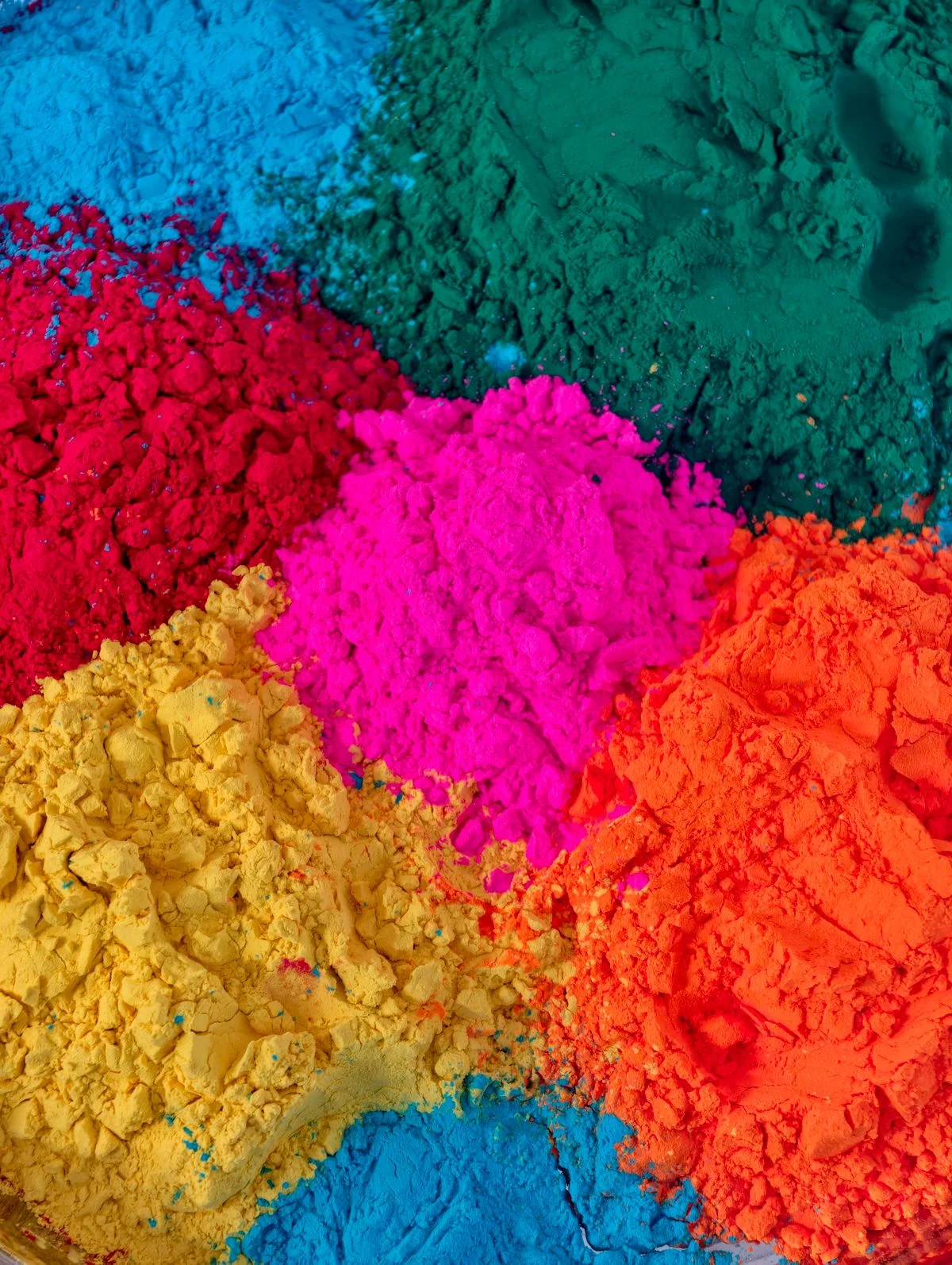
Photosensitive pigments are light-responsive colorants or pigment-like materials whose optical properties change when exposed to radiation, most commonly ultraviolet light. In industrial plastics and coatings, the term usually refers to photochromic pigments, dyes, and microencapsulated systems that reversibly change color, whereas in biology it can also refer more broadly to photopigments and visual pigments that absorb light and undergo chemical change.
In the plastics value chain, photosensitive pigments occupy a specialized niche between decorative colorants and functional additives. They are used to create color-changing consumer products, security features, smart labels, coatings, inks, and molded parts, and they are typically formulated as organic molecules or hybrid systems designed to survive compounding, processing, and repeated light cycling. Their development has been shaped by advances in photochemistry, encapsulation technology, and polymer-compatible masterbatch design, while sustainability debates focus on durability, microencapsulation chemistry, additive complexity, and the limited recyclability of colored multilayer products.
This article focuses primarily on the industrial meaning of photosensitive pigments in plastics and related auxiliaries, while noting the scientific roots of the term in photopigments and photoreceptive systems.
History and Development
The scientific basis of photosensitivity emerged from early studies of photochemistry and vision, where researchers identified pigments that change structure after absorbing light. In biology, the classic example is rhodopsin, in which light absorption triggers isomerization of the chromophore and a downstream signaling cascade.
Industrial photochromic colorants developed later, driven by demand for reversible color change in eyewear, novelty goods, security printing, and specialty coatings. As plastics processing expanded, manufacturers adapted these materials for injection molding, extrusion, and masterbatch production, which required better thermal stability and compatibility with polyolefins, styrenics, PVC, and engineering polymers. More recent development has emphasized microencapsulation, improved lightfastness, and broader compatibility with water-based and solvent-based inks, coating systems, and polymer matrices.
Chemical Structure and Key Properties
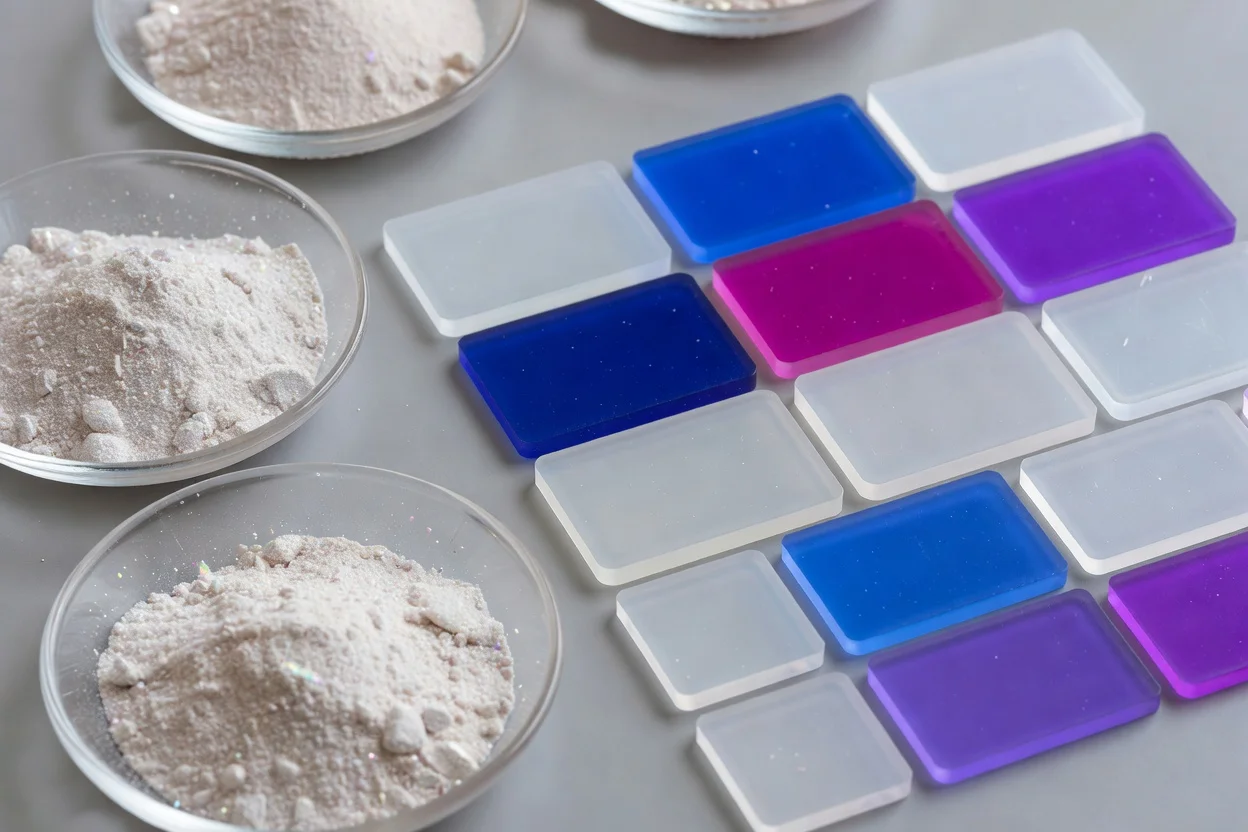
Industrial photosensitive pigments are not a single chemical class. They include photochromic dyes, microencapsulated pigments, and related chromogenic systems that undergo reversible structural changes under light exposure. Common molecular motifs include spirooxazines, spiropyrans, and naphthopyrans, which switch between a closed, often colorless state and an open, colored state after UV excitation; this change alters the conjugation pattern and therefore the visible absorption spectrum.
Key properties include:
- Reversible color change under UV or sunlight exposure, often with thermal or dark reversion.
- Spectral selectivity, meaning the pigment responds to specific wavelength bands rather than all light equally.
- Process compatibility, especially when supplied in encapsulated or masterbatch form for plastics.
- Sensitivity to processing heat and shear, which can degrade performance if formulation limits are exceeded.
Main technical limits and practical workarounds:
- Heat sensitivity → molecular degradation during melt processing → use lower-temperature compounding, post-addition masterbatching, or encapsulation to protect the active chromophore.
- UV exposure fatigue → reduced switching amplitude after repeated cycling → use stabilizer packages, protective overcoats, or lower-loading formulations to extend service life.
- Limited transparency control in thick or highly pigmented systems → light scattering and screening reduce activation → use clear or translucent resins and place the photochromic system near the surface.
- Poor fit with highly colored or carbon-black-filled plastics → visible light cannot reach the chromophore effectively → select lightly tinted substrates or formulate for surface coating rather than bulk coloration.
A typical industrial dosage example is 0.8–3% photochromic pigment in transparent or translucent plastic molding compounds, with the exact level depending on target color depth, switching speed, and resin clarity. In coatings and inks, higher loading is often used because the pigment resides nearer the surface and does not need to transmit through bulk material.
Production Processes and Raw Feedstocks
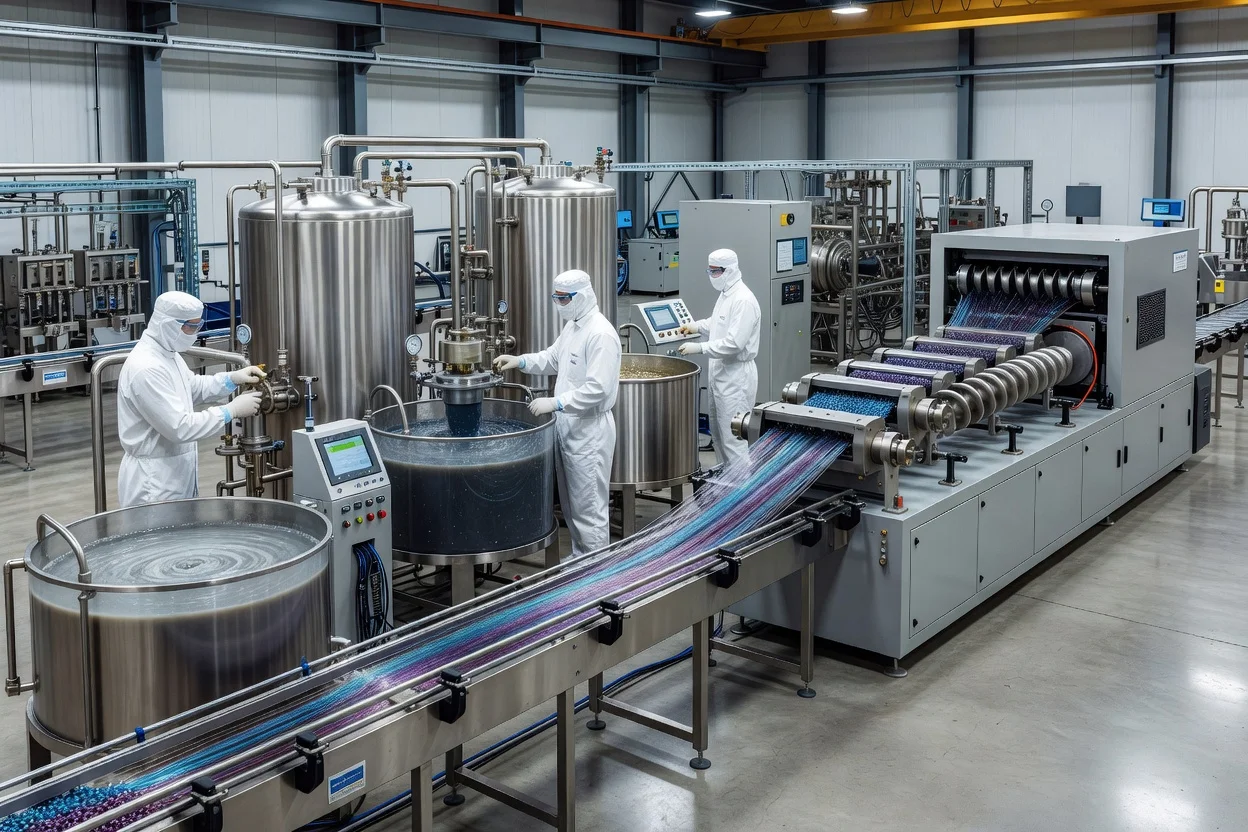
Photosensitive pigments for plastics are generally produced through a combination of organic synthesis, pigment purification, microencapsulation, and dispersion into carriers. The active chromophore may be synthesized as a discrete dye molecule or as part of a more complex photochromic system, then protected in polymeric microcapsules or dispersed in a resin-compatible vehicle.
Typical production steps include:
- Synthesis of the active photochromic molecule from aromatic or heterocyclic precursors.
- Purification and grading to control particle size, switching kinetics, and color consistency.
- Microencapsulation to improve handling, isolate the active ingredient from oxygen, moisture, and processing heat, and enhance compatibility with inks or plastics.
- Masterbatch compounding into PE, PP, ABS, PS, PVC, PU, TPU, EVA, PMMA, or similar polymer systems.
Raw feedstocks are usually petrochemical aromatics, intermediates for dye synthesis, encapsulation polymers, and processing auxiliaries such as dispersants, stabilizers, and compatibilizers. In plastics, the quality of the carrier resin matters as much as the pigment itself, because switching behavior depends on transparency, dispersion, and thermal history.
Applications and End-Use Markets
Photosensitive pigments are used where a visible response to light adds value, either functionally or aesthetically.
| End-use sector | Typical grade or format | Usual processing route | Functional role |
|---|---|---|---|
| Eyewear and lenses | Highly purified photochromic systems | Lens casting or coating | Sun-responsive tinting and glare reduction |
| Plastics and toys | Masterbatch or microencapsulated pigment | Injection molding, extrusion | Color change for consumer appeal and signaling |
| Inks and printing | Dispersion or microcapsule ink | Screen, flexographic, solvent-based, water-based systems | Security printing, marketing, variable graphics |
| Coatings and paints | Coating-grade pigment paste | Spray, roll, or printed coatings | Dynamic visual effects and UV indication |
| Packaging and labels | Low-dose photochromic additive | Film, label, overprint varnish | Smart labels, authentication, exposure indicators |
| Security and anti-counterfeiting | Fine-particle or encapsulated systems | Printing or coating | Authentication features for documents and goods |
A common plastics application is transparent or translucent injection molding, where the pigment is incorporated into PE, PP, ABS, PS, PVC, or EVA to produce color-changing parts. Another important use is in security inks for passports, certificates, and branded packaging, where reversible color change provides a covert or semi-covert authenticity feature.

One poor-fit use is highly opaque, heavily carbon-filled, or dark masterbatch systems, because the active molecules need light penetration to function and the color change becomes weak or invisible.
Environmental and Sustainability Aspects
The environmental profile of photosensitive pigments depends strongly on formulation, durability, and end-use design rather than on the concept alone. In durable goods, the main sustainability value proposition is functional: a small dose can add smart behavior without replacing an entire part or device, which may extend product utility.
Key sustainability considerations include:
- Recyclability: photochromic plastics are generally compatible with mechanical recycling only if the additive package is stable and the product stream is clean; mixed-color, multilayer, or coated articles remain difficult to recycle.
- Additive complexity: microencapsulation and multi-component formulations can complicate sorting, reprocessing, and quality control in recycled polymers.
- Bio-based alternatives: there is growing interest in bio-derived resins and lower-toxicity chromophores, but performance parity, lightfastness, and thermal stability remain the main barriers.
- Carbon footprint: the climate impact is usually driven more by resin choice, processing energy, and product lifetime than by the pigment mass itself, because dosage levels are typically low.
A practical circularity strategy is to design photochromic features for surface coatings, replaceable films, or mono-material packaging components, rather than embedding them in complex multi-resin structures.
Economic and Global Market Impact
Photosensitive pigments are a specialty additive market rather than a commodity pigment segment, and their economics are shaped by technical performance, intellectual property, and end-use differentiation. Demand is strongest where visual novelty, authentication, and responsive optics justify the higher cost relative to standard organic pigments.
Market activity is concentrated among specialty colorant suppliers, photochromic material formulators, and coating and ink compounders, with production often distributed across Asia, Europe, and North America through contract manufacturing and downstream conversion. The most competitive suppliers are those that can combine high switching speed, good reversibility, thermal survivability, and reliable dispersion in customer-ready formats.
Current Challenges and Innovations
The main technical challenge is achieving a durable balance between responsiveness and robustness. If the pigment is too sensitive, it may fade too quickly or degrade during processing; if it is too protected, its color change may become slow or weak.
Current innovation directions include:
- Higher-temperature photochromic systems for plastics processing windows that are closer to standard compounding conditions.
- Improved microcapsule shells that protect against oxygen, moisture, and shear while preserving fast optical response.
- Hybrid systems that combine photochromism with thermochromism or fluorescence for multi-modal sensing and design effects.
- Better dispersion technology for clearer films, more uniform tinting, and reduced additive usage.
- Functional security coatings that support anti-counterfeiting, traceability, and UV-exposure indicators.
A notable formulation example is the use of spirooxazine-based dyes in reversible daylight-responsive products, where the molecule switches from a colorless to a darker state under UV irradiation and returns after removal from light; this behavior is central to many photochromic consumer and security applications.
Future Outlook
The future of photosensitive pigments in plastics will likely be defined by three trends: smarter functional products, more sustainable formulation, and tighter process integration.
Near-term opportunities include:
- Smart packaging and labels that indicate exposure, authenticity, or product handling conditions.
- Durable photochromic films and coatings for glazing, architecture, and transport surfaces.
- More recyclable mono-material plastic articles with functional surface-treated photochromic layers rather than bulk-dyed systems.
- Specialty medical, optical, and industrial products where reversible optical signaling adds measurable value.
Longer term, progress will depend on designing chromophores and encapsulation systems that withstand industrial processing while remaining compatible with circular material systems. The most successful products are likely to be those that treat photosensitivity not as a novelty effect, but as a controlled functional property integrated into polymer design.
References
- •
Photopigment. (2004, December 2). Wikipedia. https://en.wikipedia.org/wiki/PhotopigmentLink
- •
Photopigment - an overview. (n.d.). ScienceDirect. https://www.sciencedirect.com/topics/biochemistry-genetics-and-molecular-biology/photopigmentLink
- •
感光色素. (2025, August 30). 維基百科. https://zh.wikipedia.org/zh-hk/%E6%84%9F%E5%85%89%E8%89%B2%E7%B4%A0Link
- •
感光色素. (2025, August 30). 维基百科. https://zh.wikipedia.org/zh/%E6%84%9F%E5%85%89%E8%89%B2%E7%B4%A0Link
- •
Visual pigment - an overview. (2022, October 12). ScienceDirect. https://www.sciencedirect.com/topics/pharmacology-toxicology-and-pharmaceutical-science/visual-pigmentLink
- •
What is a photo pigment? (2020). ScienceLine. http://scienceline.ucsb.edu/getkey.php?key=812Link
- •
What are photopigments? (2026, March 2). Kidspattern. https://www.kidspattern.com/learn/what-are-photopigments/Link
- •
Microencapsulated photosensitive inks. (n.d.). IPS Industrial. https://ips-industrial.it/en/microencapsulated-products/capsular-ink/microencapsulated-photosensitive-inks/Link
- •
The relationship between photosynthetic pigments and light absorption. (n.d.). Atophort. https://www.atophort.com/news/the-relationship-between-photosynthetic-pigments-and-light-absorption.htmlLink
- •
Photopigment. (2025, October 13). ArabPsych. https://scales.arabpsychology.com/trm/photopigment/Link
- •
Photochromic pigment. (2023, July 24). Photoluminescentcn. https://www.photoluminescentcn.com/product/photochromic-pigment/Link
- •
Sun reactive photochromic UV pigment powder. (2017, April 29). SFXC. https://www.sfxc.co.uk/products/sfxc-photochromic-sun-sensitive-reversible-pigmentLink
- •
Photosensitivity. (n.d.). Freeman. http://bcs.whfreeman.com/webpub/biology/sadavalife9e/animated%20tutorials/life9e_4602_script.htmlLink
- •
George Wald - Nobel lecture. (n.d.). UCI Physics. https://www.physics.uci.edu/~tritz/senses/wald-lecture.pdfLink
- •
Photopigment. (n.d.). Weblio. https://ejje.weblio.jp/content/photopigmentLink
- •
Introduction to how pigments work. (2024, October 1). Nature Friend Magazine. https://naturefriendmagazine.com/introduction-to-how-pigments-work/Link
- •
Important! Two major effects of 730nm far-red LEDs on plants growth. (2018, October 27). Medium. https://medium.com/@sinjialighting/important-two-major-effects-of-730nm-far-red-leds-on-plants-growth-52d2681477baLink
- •
Rod and cone visual pigments and phototransduction. (2011, November 10). PMC. https://pmc.ncbi.nlm.nih.gov/articles/PMC3265844/Link
- •
Discover all about photochromic materials. (2021, September 10). OliKrom. https://www.olikrom.com/en/blog-olikrom/the-expert-eye/all-about-photochromic-materials/Link
- •
Fabrication and characterization of color photosensitive. (n.d.). J-STAGE. https://www.jstage.jst.go.jp/article/photopolymer/25/4/25_409/_pdfLink
- •
Definition of photopigments. (2024, November 1). The Free Dictionary. https://medical-dictionary.thefreedictionary.com/photopigmentsLink
- •
Molecular genetics of color vision and color vision defects. (2000, May 1). JAMA Ophthalmology. https://jamanetwork.com/journals/jamaophthalmology/fullarticle/413200Link
- •
Photopigment - an overview. (n.d.). ScienceDirect. https://www.sciencedirect.com/topics/agricultural-and-biological-sciences/photopigmentLink
- •
UCSB science line. (n.d.). UCSB. http://scienceline.ucsb.edu/getkey.php?key=813Link
- •
28.8: Chemistry of vision. (2014, November 26). LibreTexts. https://chem.libretexts.org/Bookshelves/Organic_Chemistry/Basic_Principles_of_Organic_Chemistry_(Roberts_and_Caserio)/28:_Photochemistry/28.08:_Chemistry_of_VisionLink
- •
Visual pigment - an overview. (n.d.). ScienceDirect. https://www.sciencedirect.com/topics/medicine-and-dentistry/visual-pigmentLink
- •
Definition of iodopsins. (2024, August 5). Merriam-Webster. https://www.merriam-webster.com/dictionary/iodopsinsLink
- •
Azo dyes having improved solubility in organic solvent. (n.d.). EPO. https://data.epo.org/publication-server/rest/v1.0/publication-dates/19911002/patents/EP0449650NWA2/document.pdfLink
- •
SFXC® photochromic sun sensitive reversible pigment - orange. (2019, June 11). SFXC. https://www.sfxc.co.uk/products/sfxc-orange-photochromic-pigmentLink
- •
Photochromic pigment uses – Ranbar green GS4010. (n.d.). Ranbar. https://ranbarr.com/products/photochromic-pigment-uses-gs4010/Link
- •
Iodopsin definition and meaning. (n.d.). Collins. https://www.collinsdictionary.com/dictionary/english/iodopsinLink
- •
High performance photochromic pigments, inks and paints. (2023, July 21). OliKrom. https://www.olikrom.com/en/photochromic-materials/Link
- •
Mammalian photoreceptors use sunlight to rapidly regenerate visual pigments. (2017, May 4). UCLA Newsroom. https://newsroom.ucla.edu/releases/mammalian-photoreceptors-use-sunlight-to-rapidly-regenerate-visual-pigmentsLink
- •
Photosynthesis, chloroplast. (n.d.). Nature. https://www.nature.com/scitable/topicpage/photosynthetic-cells-14025371/Link
- •
Basic visual chemistry. (n.d.). UPenn. https://www.sas.upenn.edu/~scottds/vision/vischem.htmLink
- •
How photosynthetic pigments harvest light. (2017, January 11). MIT News. https://news.mit.edu/2017/photosynthetic-pigments-harvest-light-artificial-photosynthesis-0111Link
- •
Wavelengths of light and photosynthetic pigments. (2025, July 17). Khan Academy. https://www.khanacademy.org/science/biology/photosynthesis-in-plants/the-light-dependent-reactions-of-photosynthesis/a/light-and-photosynthetic-pigmentsLink
- •
Photopigment. (2025, June 24). Britannica. https://www.britannica.com/science/photopigmentLink
- •
Photosynthetic pigments. (n.d.). Passel. https://passel2.unl.edu/view/lesson/920a6340a995/2Link
- •
Pigments based photosensitizers. (2018, September 1). Science.gov. https://www.science.gov/topicpages/p/pigments+based+photosensitizersLink
- •
Photochromic pigment uses. (2024, June 18). KingChroma. https://www.kingchroma.com/example-of-pigments-uses/photochromic-pigment-usesLink
- •
Photosensitive dye – Ranbar gray DP0080. (2024, February 1). Ranbar. https://ranbarr.com/products/photosensitive-dye-dp0080/Link
- •
How photochromic pigment works and its use in various industries. (2023, March 29). Photochromicpigments. https://photochromicpigments.com/blog/how-photochromic-pigment-works-and-its-use-in-various-industries/Link
- •
Pigment and colored photosensitive composition. (n.d.). EPO. https://data.epo.org/publication-server/rest/v1.2/publication-dates/20130731/patents/EP2620476NWA1/document.pdfLink
- •
ELI5: How does photosensitivity work chemically. (2020, November 22). Reddit. https://www.reddit.com/r/explainlikeimfive/comments/jz04sg/eli5_how_does_photosensitivity_work_chemically/Link
- •
Visual pigment. (1998, July 20). Britannica. https://www.britannica.com/science/visual-pigmentLink
- •
Light sensitive dye – Ranbar blue DP5060. (2024, January 31). Ranbar. https://ranbarr.com/products/light-sensitive-dye-dp5060/Link
- •
Phototransduction in rods and cones. (2018, July 30). NCBI. https://www.ncbi.nlm.nih.gov/books/NBK52768/Link
- •
Top 7 applications of photochromic pigment in industry. (2026, July 7). Insilico Materials. https://insilico-materials.com/photochromic-pigment-applications/Link
- •
Photosensitive & thermosensitive pigments. (2026, March 27). VD Glass. https://vdglass.it/en/customization/photosensitive-and-thermosensitive-pigments/Link
- •
Photosensitive dyes. (n.d.). Ranbar. https://ranbarr.com/product/color-changing-pigment/photochromic-dyes/Link
- •
What are the innovative applications of photochromic pigments? (2025, June 6). Yayang Global. https://www.yayangglobal.com/what-are-the-innovative-applications-of-photochromic-pigments/Link
- •
How does temperature-sensitive pigment work. (2026, July 22). Nichwell Chem. https://nichwellchem.com/how-does-temperature-sensitive-pigment-work/Link
- •
Photochromic pigments applications and benefits. (2019, December 25). Colour Changing Pigment. https://colourchangingpigment.com/blogs/news/photochromic-pigments-applications-and-benefitsLink
- •
Role of visual pigment properties in rod and cone. (2003, October 2). PMC. https://pmc.ncbi.nlm.nih.gov/articles/PMC2581816/Link
- •
Photosensitive materials and their applications. (2025, July 24). SAMaterials. https://www.samaterials.com/blog/photosensitive-materials-and-their-applications.htmlLink
- •
Pigment. (2022, September 1). EBSCO. https://www.ebsco.com/research-starters/chemistry/pigmentLink