
Introduction
Purging compounds are specialized cleaning materials used in plastics processing to remove residual polymer, colorants, degradation products, and other contaminants from equipment such as injection molding machines, extruders, blow molding machines, and hot runners. They are an important auxiliary in the plastics value chain because they reduce changeover time, lower scrap generation, and help maintain part quality during transitions between colors, polymers, or production campaigns.
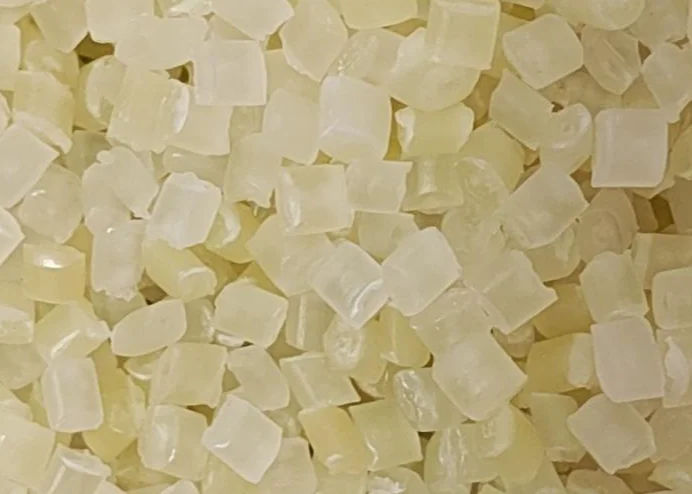
In practice, purging compounds are not production resins but engineered cleaning formulations. They are commonly supplied as pellets, liquids, powders, or concentrates and are designed to flow through the same process equipment as the production material while dislodging contamination through mechanical action, thermal action, chemical action, or a combination of these mechanisms. Their use has expanded as processors handle more frequent color changes, tighter quality tolerances, and increasingly expensive engineering polymers and masterbatch systems.
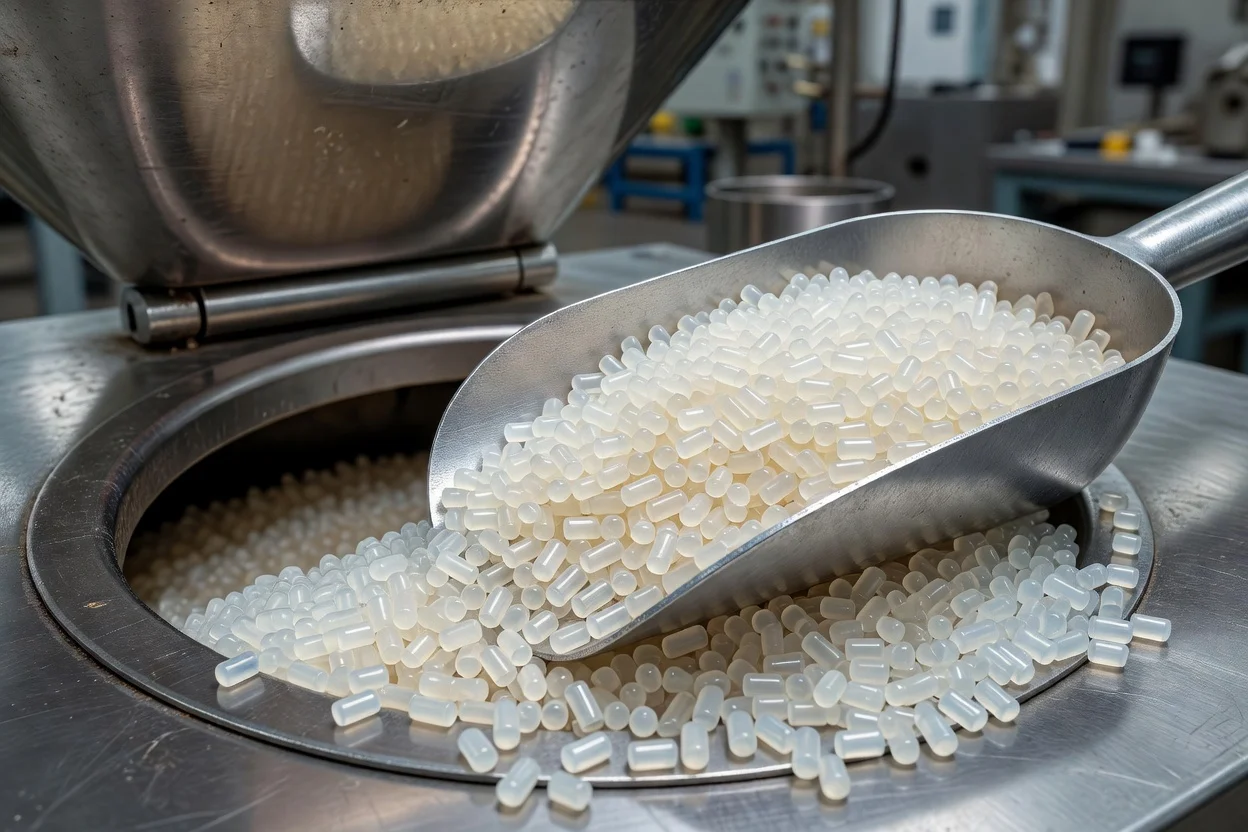
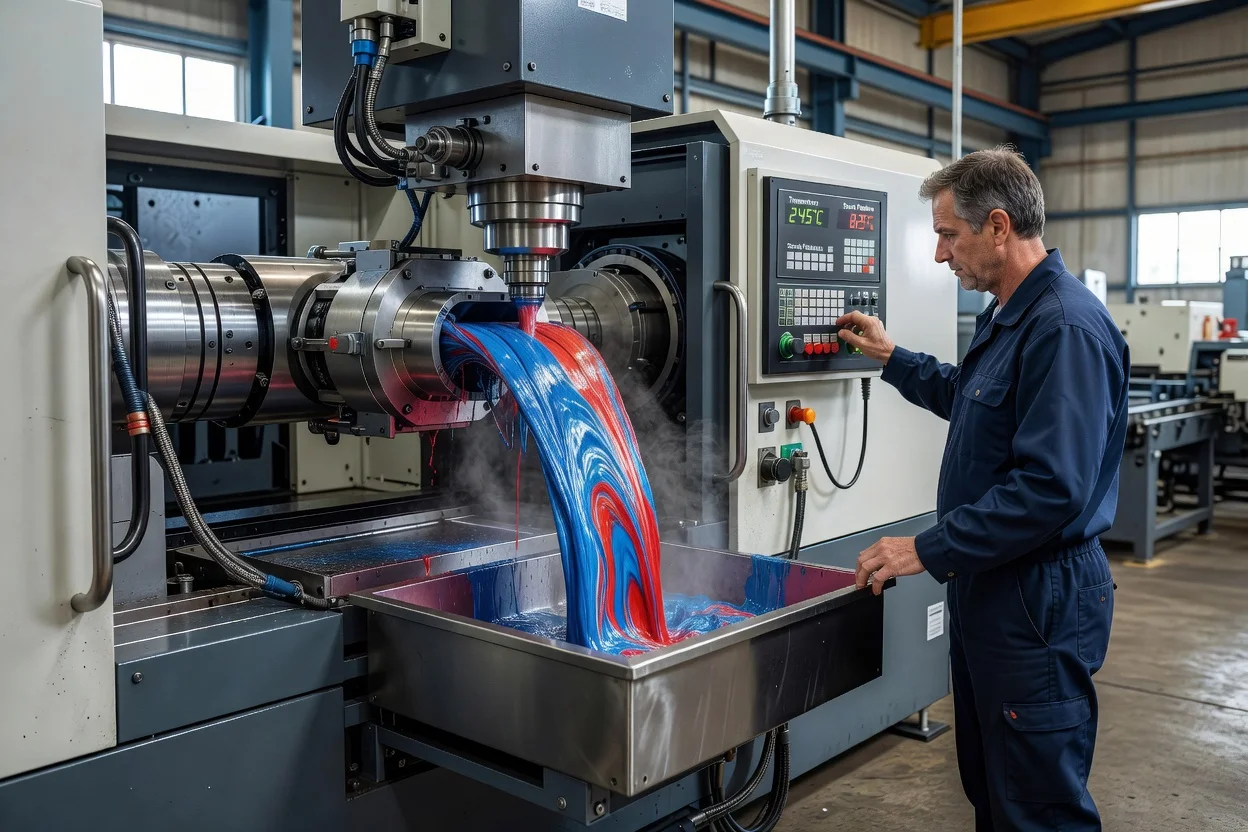
The category includes several broad types, notably mechanical or abrasive purges, chemical purges, and hybrid formulations that combine both approaches. Mechanical grades rely on shear and abrasive particles to scour deposits from screws, barrels, and dies, while chemical grades use heat-activated reactions to soften, destabilize, or break down stubborn residues, especially in low-flow or low-pressure regions such as hot runners, manifold corners, and die edges.
From an industrial perspective, purging compounds are a response to one of the most persistent operational problems in thermoplastic conversion: contamination during changeover and shutdown. Their economic value comes from shortening downtime and reducing the amount of virgin resin consumed for cleaning, while their technical value lies in improving consistency when moving between incompatible polymers, difficult-to-clean dies, or heat-sensitive materials. At the same time, they raise sustainability questions because they are themselves consumed materials, and their environmental profile depends on formulation, purge efficiency, and the extent to which they replace wasteful resin-only purging practices.
History and Development
Purging compounds developed as plastics processing became more complex, with higher production volumes, more frequent product switches, and greater use of colored, filled, and heat-sensitive polymers. Early changeover practices often relied on flushing equipment with the next production resin or dismantling the plasticating unit for manual cleaning, both of which were time-consuming and material-intensive.
Commercial purging compounds evolved to meet those operational limits by combining cleaning functionality with process compatibility. Over time, manufacturers introduced products tailored to specific temperature windows, resin families, and equipment types, including formulations for injection molding, extrusion, blow molding, and hot-runner systems. More recent developments have emphasized specialized chemistries for high-temperature engineering polymers, low-temperature resins such as PVC, and severe contamination scenarios such as black specks and carbonized deposits.
Chemical Structure and Key Properties (Technical Overview)
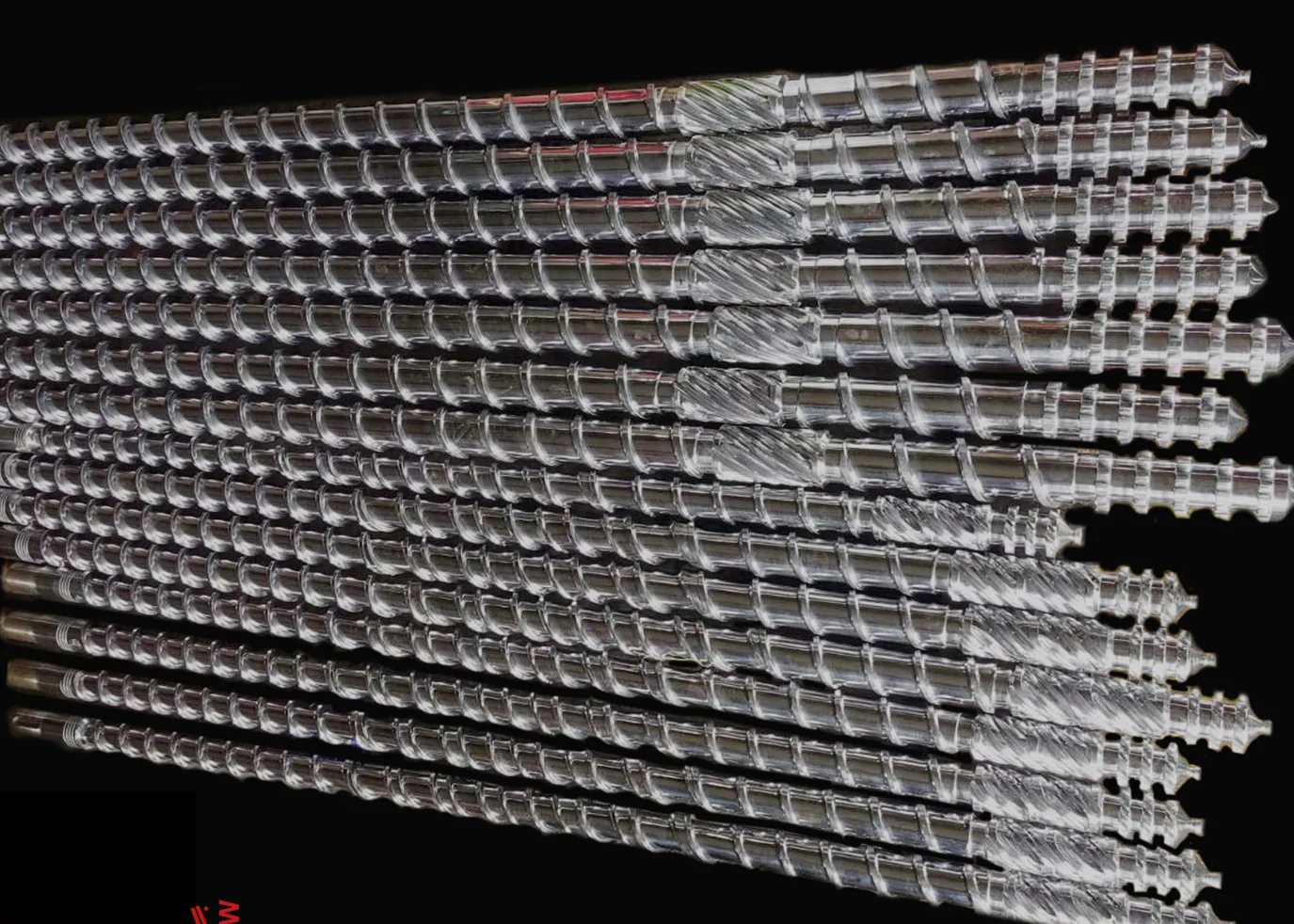
Purging compounds are typically blends of a carrier resin plus functional additives that create a cleaning effect at the metal-polymer interface. The carrier resin provides melt flow, transport, and compatibility with the process equipment, while the active phase may include abrasive solids, surfactant-like components, reactive agents, foaming aids, lubricants, or thermal modifiers.
Main functional attributes
- Viscosity and flow control: The purge must process like a resin well enough to enter the screw, barrel, and die system, but it also needs to maintain enough body or reactivity to strip contamination effectively.
- Cleaning mechanism: The formulation is chosen to match the contamination type, such as pigment residue, degraded polymer, carbonized deposits, or additive films.
- Thermal stability: The purge must tolerate the operating temperature without burning, gelling, or decomposing before it can work.
- Residue management: A good purge leaves minimal residue after cleaning so that it does not itself become a source of contamination.
Typical limits and workarounds
- Poor performance in low-flow regions → cause: mechanical purges depend on shear and bulk flow, so they may not clean dead zones, hot runners, or die edges effectively → workaround: use a chemical or hybrid purge that acts in low-pressure areas and can be given a short soak time.
- Risk of inadequate cleaning across incompatible polymers → cause: a “universal” purge often works best only within a compatible matrix and melt-flow range → workaround: select a specialized purge matched to the polymer family and temperature gap.
- Potential wear concerns in aggressive mechanical systems → cause: abrasive components can be effective but may be unsuitable for delicate tooling or sensitive hot-runner parts → workaround: choose non-abrasive chemical grades or limit abrasive use to severe barrel contamination.
Mechanisms of action
| Type | Dominant mechanism | Typical strength | Typical limitation |
|---|---|---|---|
| Mechanical | Shear, abrasion, displacement | Strong on heavy barrel contamination and color carryover | Weaker in low-pressure or low-flow regions |
| Chemical | Heat-activated reaction and residue softening | Strong on carbon, degraded polymer, and hard-to-reach deposits | Often requires correct temperature control and sometimes soak time |
| Hybrid | Combined mechanical and chemical action | Broad applicability and balanced performance | Usually more application-specific than a universal purge |
Example formulations and dosage logic
- Some commercial concentrates are used at about 8% loading in the process stream, where the concentrate is blended with a suitable resin to create the purge mix; the cleaning effect depends on temperature, soak behavior, and the residue type.
- Reactive purge systems may use heat plus short dwell or soak periods to reduce deposit adhesion and lower melt viscosity, which helps flush contamination out of the machine more efficiently.
Production Processes and Raw Feedstocks
Purging compounds are manufactured as formulated products rather than bulk polymers. Their production begins with selection of a carrier resin that is compatible with the intended process window, followed by incorporation of cleaning agents and functional additives that define the purge’s behavior.
Common supply forms
- Pellets or granules: Most common for feeding through standard plastics processing equipment.
- Concentrates: Blended at the plant with a base resin before use.
- Liquids or emulsions: Used in some applications, especially certain hot-runner or injection-molding purge systems.
- Powders: Less common, but available for selected applications.
Raw feedstock considerations
The main raw material decisions include:
- Carrier resin selection: Must match the target process temperature and residence behavior.
- Abrasive phase: Used in mechanical grades, often to create strong scrubbing action.
- Reactive additives: Used in chemical grades to soften or break down residue.
- Processing aids: Improve flow, lubricity, residue release, and thermal stability.
Manufacturers also tailor formulations to equipment geometry. For example, hot-runner cleaning often requires non-abrasive chemistries that can pass through gates and manifolds safely, while extrusion dies and sheet dies may benefit from chemical action that reaches low-pressure dead zones.
Applications and End-Use Markets
Purging compounds are used across the thermoplastics industry wherever frequent changeovers or contamination risk justify rapid cleaning.
Major application areas
- Injection molding: The largest and most familiar use case, especially for color changes, resin changes, and pre-shutdown cleaning.
- Extrusion: Used for screws, barrels, dies, and sheet or film lines where residue can accumulate in dead zones.
- Blow molding: Helps clear color and polymer remnants from extrusion heads and downstream equipment.
- Hot runners and manifolds: Requires formulations that can clean narrow flow paths without damaging equipment.
- Compounding and masterbatch production: Particularly important because expensive additives and pigments make material loss costly.
Typical grade-to-use matching
| End use | Usual purge type | Why it fits |
|---|---|---|
| Frequent color change in injection molding | Mechanical or universal purge | Good shear cleaning and fast turnaround |
| Carbon buildup in extrusion | Chemical or hybrid purge | Better action on degraded residue and low-flow zones |
| Hot runner cleaning | Chemical, non-abrasive purge | Must reach narrow passages safely |
| Severe black specks or old resin | Aggressive mechanical purge | Strong scrubbing and residue removal |
| High-temperature engineering polymers | High-thermal-stability specialized purge | Must remain effective at elevated temperatures |
Poor-fit use case
A universal purge is often a poor fit for highly incompatible polymers, large processing-temperature gaps, or severe contamination where dedicated chemistry is needed. In such cases, processors generally choose a specialized mechanical, chemical, or hybrid grade instead.
Environmental and Sustainability Aspects
Purging compounds can improve sustainability in plastics processing by reducing scrap, shortening startup losses, and lowering the amount of virgin resin consumed during changeovers. This is especially important when processors handle costly engineering polymers or additive-rich formulations, where discard losses are economically and environmentally significant.
At the same time, purging compounds are not inherently low-impact materials. They are consumed during cleaning and can add material throughput to the plant unless they demonstrably reduce total waste and energy use at the system level. Their environmental profile therefore depends on whether they replace inefficient practices such as prolonged flushing with production resin or repeated machine teardown.
Key sustainability themes include:
- Waste reduction: Less off-spec product, fewer purge-start scrap rolls, and fewer discarded startup shots.
- Downtime efficiency: Shorter cleaning cycles can reduce energy use per production changeover.
- Material optimization: Better purge selection can lower resin loss and improve yield in costly formulations.
- Compatibility with circularity: Effective purging can support recycled-content production by reducing cross-contamination between virgin and recycled streams, although it does not itself make the process circular.
Bio-based or recycled-content purge concepts are discussed in the broader market, but the most important practical benchmark remains whether the purge reduces total scrap and operating burden more than it adds material complexity.
Economic and Global Market Impact
The commercial value of purging compounds comes from plant-level economics rather than volume tonnage alone. The principal return on investment is usually measured in reduced downtime, lower scrap, fewer manual cleanouts, and more predictable start-up quality.
Market drivers
- More frequent product customization and shorter production runs.
- Greater use of expensive engineering resins and masterbatches.
- Tighter quality requirements in packaging, medical, automotive, and consumer goods.
- Greater need to clean difficult-to-service equipment such as hot runners and high-output extrusion dies.
Industry structure
The market includes global specialty suppliers and regional formulators offering ready-to-use or application-specific systems. Recent industry materials indicate continued expansion in the use of commercial purges across molding and compounding operations as processors seek lower downtime and less wasted resin.
Current Challenges and Innovations
Current challenges
- Application specificity: No single purge works equally well across all resins, temperatures, and machine geometries.
- Low-pressure cleaning: Dead zones and narrow passages remain difficult to clean with purely mechanical systems.
- Balancing aggressiveness and safety: Stronger mechanical formulations can improve cleaning but may raise concerns about wear, residue, or equipment compatibility.
- Validation: Processors still need disciplined trials to match purge type, temperature, residence time, and endpoint criteria to the real contamination problem.
Innovations
- Heat-activated chemical purges designed for low-flow regions and hard-to-clean dies.
- Hybrid systems that combine scrubbing and chemical action for broader contamination coverage.
- Specialized formulations for PVC, high-temperature engineering polymers, and severe carbon buildup.
- Liquefaction or controlled-flow approaches aimed at difficult temperature transitions and sensitive equipment.
- Application-guided selection tools that help processors match purge type to machine type, contamination severity, and resin family.
Future Outlook
Purging compounds are likely to remain a specialized but essential auxiliary as plastics processing continues toward shorter runs, more frequent changeovers, and greater use of higher-value polymers. Demand should be supported by the need to minimize downtime, especially in sectors where material waste is costly and contamination tolerance is low.
Future technical development is likely to focus on:
- Better performance in low-flow and hard-to-reach equipment zones.
- Reduced residue and improved compatibility with sensitive tooling.
- Formulations adapted for recycled-content production and contamination control.
- More precise matching of purge chemistry to resin family and process window.
The most important strategic shift is that purging compounds are increasingly treated not as a cleaning afterthought but as a process-control tool. In advanced plastics operations, purge selection can influence throughput, scrap, quality stability, and changeover economics as directly as the choice of production resin itself.
Summary
Purging compounds are engineered cleaning auxiliaries that keep thermoplastic processing equipment free of residual resin, color, and degradation products. Their main value lies in faster changeovers, lower scrap, and more reliable production, with formulations ranging from abrasive mechanical grades to heat-activated chemical systems and hybrids.
Their technical effectiveness depends on matching the purge to the contamination type, machine geometry, temperature window, and resin family. As plastics production becomes more complex and sustainability expectations rise, purging compounds will remain an important lever for operational efficiency and waste reduction in the global plastics industry.
References
- •
What is a purging compound? (2021, April 20). https://purgexonline.com/what-is-a-purging-compound/Link
- •
What is a purging compound? Types, uses & benefits explained. (2025, February 20). https://in.chemtrend.com/news/what-is-a-purging-compound/Link
- •
Purging compounds: The chemistry that determines.... (2026, January 26). https://stonermolding.com/blog/purging-compounds-chemistryLink
- •
What is a purging compound? (n.d.). https://purgeright.com/what-is-a-purging-compound/Link
- •
Customize your GlobalSpec experience. (2025, January 1). https://www.globalspec.com/learnmore/materials_chemicals_adhesives/chemicals_raw_materials/purging_compoundsLink
- •
What are purging compounds? A complete guide for plastics.... (2026, March 11). https://www.pekutherm.org/post/what-are-purging-compounds-a-complete-guide-for-plastics-processors-2026Link
- •
Purging compound for injection molding: A practical guide. (2026, July 9). https://polyram-group.com/purging-compound-for-injection-molding/Link
- •
What is purging compounds? Uses, how it works & top.... (2025, October 3). https://www.linkedin.com/pulse/what-purging-compounds-uses-how-works-top-mvn9eLink
- •
Purging 101: Asaclean®'s ultimate guide.... (n.d.). https://www.asaclean.com/ultimate-guide-to-purge-compoundsLink
- •
Purge. (n.d.). https://www.a1impex.com/purge.phpLink
- •
Purging compounds target downtime. (n.d.). https://voelpker.com/fileadmin/user_upload/2021_09_CW_purging_compounds.pdfLink
- •
Purging compounds. (n.d.). https://www.dme.net/Purging-Compounds.htmlLink
- •
Purging compounds. (n.d.). https://chemtrend.com/wp-content/uploads/2019/03/chem-trend-faq-documents-purging-compounds-color-f-210308.pdfLink
- •
What are purging compounds? (2025, June 5). https://phoenixplastics.com/what-are-purging-compounds/Link
- •
Commercial purging compounds: Now more than ever. (2016, January 14). https://dynapurge.com/resources/articles/commercial-purging-compounds-now-more-than-ever/Link
- •
What are the different types of purging compounds available in the market? (2024, January 1). https://chemtrend.com/faq/what-are-the-different-types-of-purging-compounds-available-in-the-market/Link
- •
Purging compound solutions for thermoplastics processing. (n.d.). https://chemtrend.com/solution/purging-compounds/Link
- •
Making the right choice for your purging compound. (2018, October 22). https://www.asaclean.com/blog/making-the-right-choice-for-your-purging-compoundLink
- •
Reactive purge compound for polymer purging. (2009, July 14). https://patents.google.com/patent/US8080506B2/enLink
- •
How to choose the right purging compound for your needs. (2025, February 20). https://in.chemtrend.com/news/how-to-choose-the-right-purging-compound-for-your-needs/Link
- •
Purging compounds for use when molding thermoplastics. (n.d.). https://solutions.covestro.com/-/media/covestro/solution-center/whitepapers/purging-compounds-for-use-when-molding-thermoplastics.pdfLink
- •
Chemical purging compounds. (2025, August 27). https://www.asaclean.com/purging-products/chemical-purging-compoundsLink
- •
Liquid purging compound. (n.d.). https://www.slideproducts.com/purging-compoundsLink
- •
The role of purging compounds in injection molding. (2024, May 18). https://www.unicleanplus.com/clearing-the-path-understanding-the-role-of-purging-compounds-in-injection-molding/Link
- •
The difference between resins & purging compounds. (2024, November 21). https://phoenixplastics.com/the-difference-resins-and-purging-compounds/Link
- •
Maximizing the benefits of purging compounds: Expert.... (2025, January 7). https://www.asaclean.com/blog/maximizing-the-benefits-of-purging-compounds-expert-tips-for-2025Link
- •
Evaluation of processing conditions in the performance.... (n.d.). https://www.mdpi.com/2504-4494/7/1/31Link