
Introduction
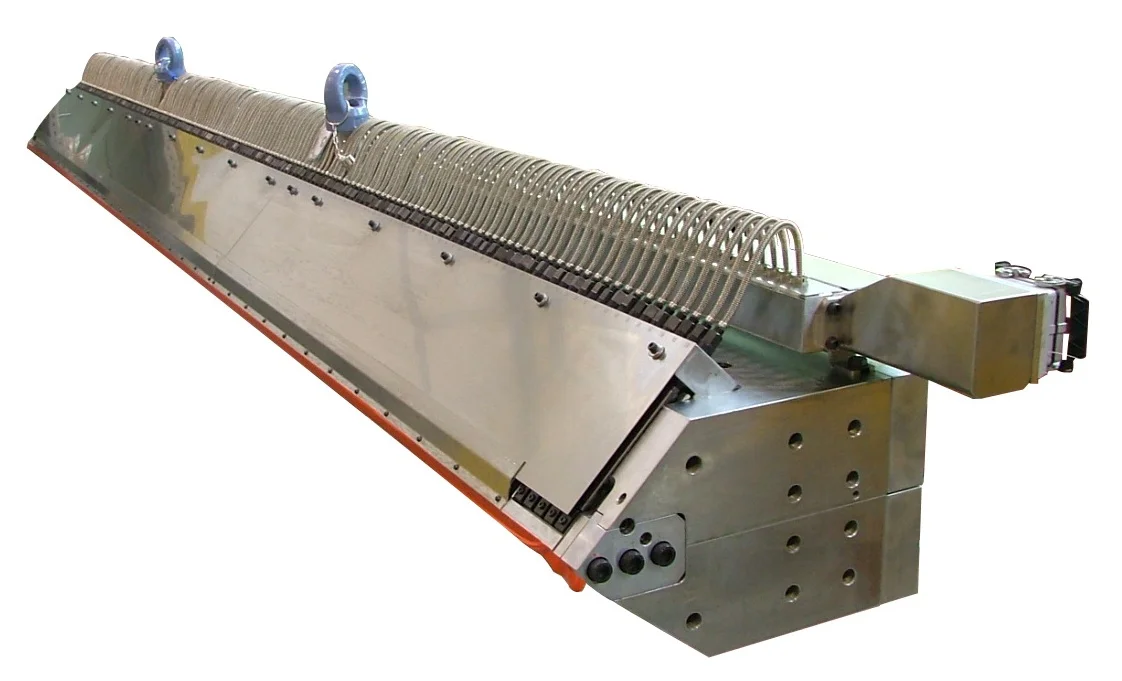
Extrusion dies are precision-engineered tools that shape molten polymer into a continuous profile with a fixed cross-section, making them one of the most important components in plastics extrusion. They are used to produce sheet, film, pipe, tubing, profile, wire coating, and coextruded multilayer products, and their geometry strongly determines output quality, thickness uniformity, surface finish, and productivity.
In plastics processing, the die sits at the delivery end of the extruder and transforms pressurized melt into the final emerging shape; in broad terms, extrusion dies are commonly grouped by outlet geometry into slot/flat dies, annular dies, circular dies, and more specialized coextrusion or cross-head configurations. The topic also has a strong engineering dimension because flow balancing, die swell, thermal control, and land design can determine whether a line runs stably at high throughput or produces gauge variation and surface defects.
History and Development
Early extrusion tooling evolved from metalworking principles, but polymer extrusion die design became a distinct discipline as thermoplastics entered high-volume production in the twentieth century. As extrusion moved from simple rods and tubes into broader packaging, construction, and electrical uses, die systems became more complex to support wider webs, thinner gauges, and tighter tolerances.
Several milestones shaped modern die technology:
- Adoption of modular plate and manifold designs made it possible to distribute melt more evenly across wide sheet and film dies, improving gauge control and manufacturability.
- Cross-head and coextrusion dies enabled in-line coating and multilayer structures, expanding the use of extrusion into wire and cable, barrier packaging, and functional film construction.
- Computer-aided flow simulation and thermal control improved the ability to predict pressure drop, residence time, and melt distribution, reducing trial-and-error in die setup and helping manufacturers optimize throughput and dimensional stability.
Technical Overview
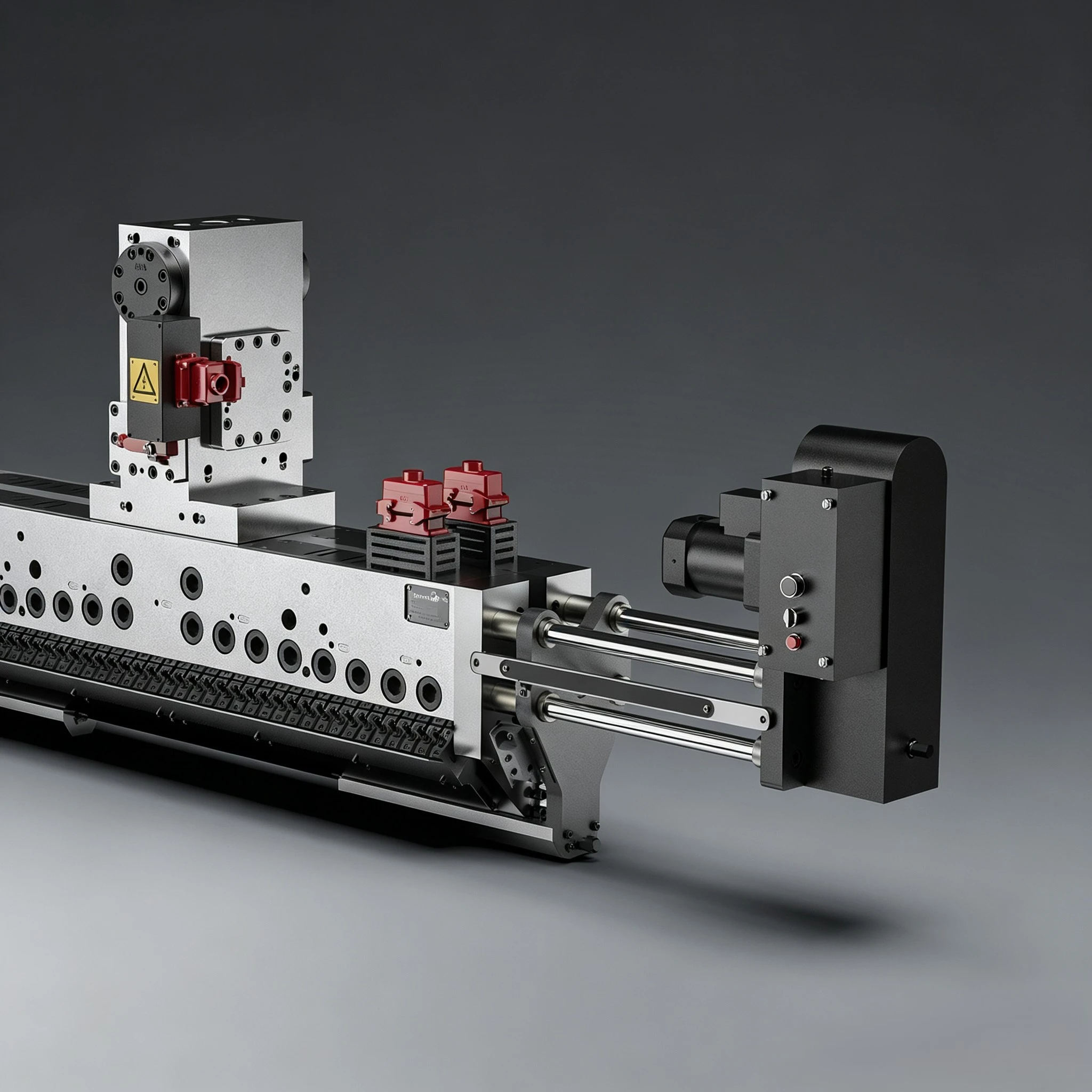
An extrusion die is essentially a shaped flow channel that converts the round discharge from an extruder into a useful product geometry. A typical die assembly includes the die block or body, an adapter, a manifold or distribution section, and a land that stabilizes the melt before exit; hollow-section dies may also include a mandrel and spider supports.
The operating principle is straightforward, but the internal fluid mechanics are not. The die must:
- distribute polymer melt uniformly across the outlet width,
- minimize stagnation zones that can degrade heat-sensitive resins,
- generate the desired final shape with acceptable pressure drop,
- compensate for viscoelastic effects such as die swell, and
- maintain stable temperature across the flow path.
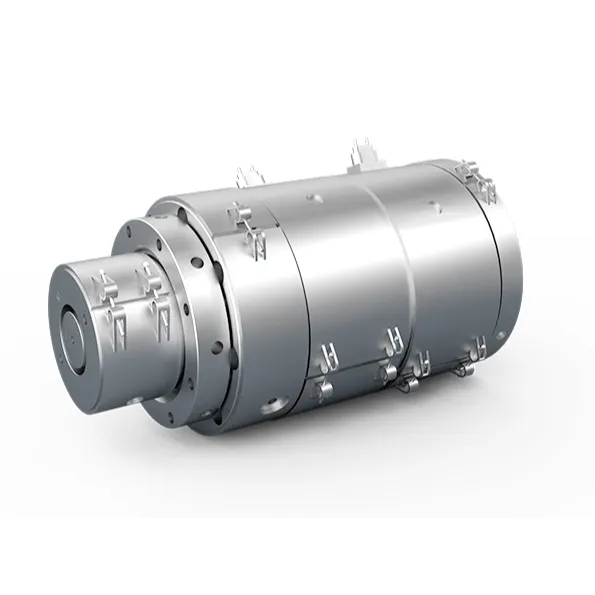
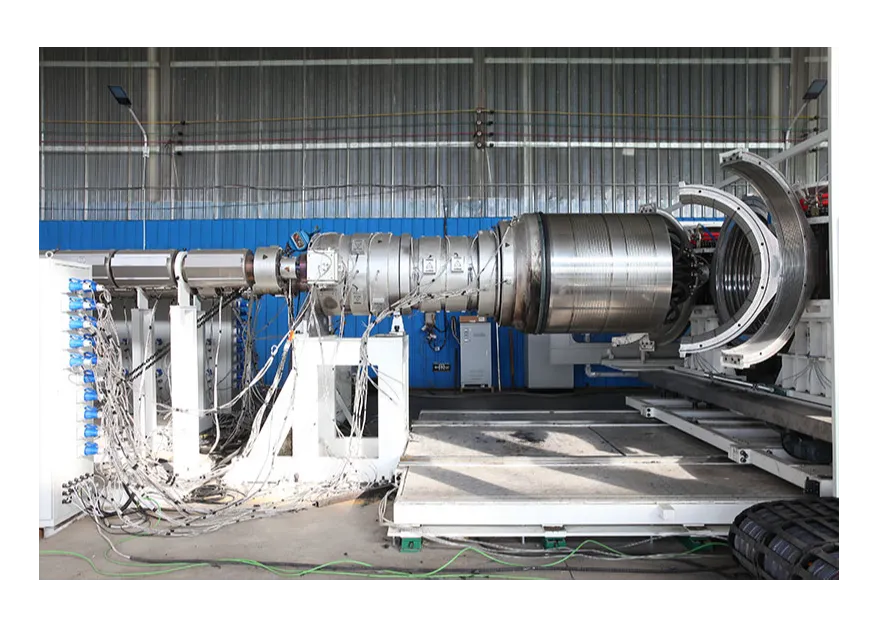
For sheet and film dies, melt is usually delivered through a T-die or similar slot geometry, then spread laterally across a wide lip opening to form a flat web. For pipe and tubing, the melt passes through an annular die around a mandrel to form the hollow section. For wire and cable, a cross-head die allows polymer to wrap concentrically around the conductor.
Typical Engineering Characteristics
The exact dimensions depend on product and resin, but several practical benchmarks are widely used in die design and operation:
- Sheet and film die gap: commonly fractions of a millimeter to a few millimeters, depending on target gauge and output rate; thin-film dies require very precise lip control.
- Land length: often designed to be long enough for stress relaxation and flow stabilization; a common rule of thumb is a land length of at least about 10 times product thickness for many polymer extrusion designs.
- Throughput: small profile and tubing dies may operate from tens to hundreds of kg/h, while wide sheet and film systems can run at substantially higher rates; large industrial lines can reach multi-hundred-kg/h or higher output depending on resin and width.
- Rotor speed relevance: die performance is indirectly affected by extruder screw speed, because melt temperature, pressure, and output stability govern die feed consistency rather than the die rotating itself.
- Specific energy use: overall extrusion energy demand varies widely by polymer, machine size, and line design; die efficiency matters because pressure drop and thermal imbalance increase load on the extruder and downstream cooling equipment.
In polymer processing, die swell is a central issue: after exiting the die, the melt expands because elastic stresses relax. This effect is especially important in profile extrusion, where corners and asymmetrical sections can distort more than sheet or tube products.
Main Types and Variations
| Die type | Main output | Typical features | Common concerns |
|---|---|---|---|
| Flat / sheet die | Sheet, film, laminate | Wide slot, adjustable lips, manifold flow distribution | Gauge variation, edge build-up, thermal nonuniformity |
| Annular / pipe and tubing die | Pipe, tube, hose | Circular flow around mandrel | Concentricity, melt fracture, sag |
| Profile die | Solid profiles, trims, custom shapes | Shaped outlet tailored to cross-section | Die swell, corner distortion, cooling asymmetry |
| Cross-head die | Wire and cable coating | Melt turns around a conductor or core | Eccentric coating, insulation thickness control |
| Coextrusion die | Multilayer sheet, film, coating | Multiple melt streams merged in one die | Interfacial instability, layer balance |
| Blown-film die | Tubular film bubble | Circular die with air expansion downstream | Bubble stability, gauge control, frost line management |
Flat extrusion dies are sometimes called T-dies because of the internal melt path shape, and they are the dominant architecture for sheet and cast film production. Coextrusion dies are designed to combine multiple polymer streams into a layered structure, which is essential for barrier films, tie-layer systems, and functional packaging.
Applications and Uses
Extrusion dies are used across the plastics industry wherever continuous profiles are needed.
- Packaging: cast film, sheet, and multilayer barrier structures use flat and coextrusion dies to control thickness and functional layering.
- Construction: pipe, window profiles, siding, and trim rely on annular and profile dies to produce long, consistent sections.
- Wire and cable: cross-head dies coat conductors with insulation and jacketing, where concentricity is critical.
- Medical and precision tubing: tubing dies are designed for tight dimensional control and clean melt flow paths.
- Consumer and industrial profiles: seals, channels, edging, and custom shapes are made with profile dies.
A poor-fit application is low-volume, highly discrete part production, where injection molding is usually more economical and flexible than an extrusion die system because extrusion is optimized for continuous output rather than isolated components.
Design Principles and Process Control
High-performing die systems are built around a few core design principles:
- Balanced flow across the full width or perimeter of the outlet to prevent thick and thin zones.
- Streamlined internal passages to reduce stagnation, thermal degradation, and color streaking.
- Adjustable lips or restrictors on wide dies to fine-tune gauge profile across the web.
- Adequate support and heat management to maintain shape under pressure and at processing temperature.
- Maintainable modular construction so that cleaning, resin changeover, and lip adjustment can be performed efficiently.
For hollow profiles, especially in tubing and cable coating, the die must also control weld lines or seam formation. Cross-head designs and optimized mandrel support can improve concentricity and surface quality compared with simpler inline arrangements.
Technological Innovations and Automation
Modern extrusion dies increasingly integrate with digital line control. Common innovations include:
- Thermal zoning for lip and manifold stabilization
- Automated die-lip adjustment to correct gauge variation in real time
- Flow simulation software for manifold and land optimization
- Quick-clean modular plate systems for faster changeovers
- Sensors and closed-loop control linked to downstream thickness gauging and haul-off systems
These developments reduce startup scrap and improve consistency, especially on wide sheet and film lines where small flow imbalances can create significant waste over the full width.
Environmental and Sustainability Aspects
Extrusion dies influence sustainability primarily through material efficiency, energy use, and recyclability compatibility. Better flow balancing reduces off-spec output, while more stable temperature control lowers scrap during startup and changeover.
Key sustainability considerations include:
- Lower waste generation through tighter gauge control and fewer defects
- Reduced energy intensity by minimizing pressure drop and avoiding unnecessary overheating
- Compatibility with recycled polymers, although recycled feedstocks may require die designs that tolerate greater viscosity variation and contamination risk
- Support for downgauging, especially in packaging, where thinner structures can reduce material use if the die and process maintain quality
The trade-off is that highly optimized multilayer and precision dies may be more complex to clean and recycle at the end of life, particularly when processing mixed-material structures.
Economic and Global Market Impact
Extrusion dies are a high-value segment of plastics tooling because their performance directly affects line efficiency, product quality, and scrap rates. A well-designed die can raise output, reduce downtime, and improve tolerance control, which is especially important in film, pipe, and profile operations that run continuously at industrial scale.
The market is global and closely linked to demand in packaging, construction, automotive, electrical, and medical sectors. Die suppliers compete on flow-control capability, custom engineering, lead time, and support for specialty polymers rather than on standardized commodity tooling alone.
Current Challenges and Innovations
Current technical challenges include:
- Processing narrow-processing-window polymers, such as heat-sensitive or highly filled compounds
- Controlling die swell and edge effects in profiles and thin-wall products
- Handling recycled feedstocks with variable melt flow behavior
- Achieving stable multilayer distribution in coextrusion
- Reducing maintenance downtime caused by die build-up, contamination, or lip damage
Innovation is focused on better simulation, adaptive adjustment, improved surface coatings, and die geometries that reduce stagnation and improve cleanability.
Future Outlook
Future extrusion dies are likely to become more data-driven, modular, and materials-adaptive. Wider use of inline measurement, digital twins, and automated adjustment should improve control of gauge, symmetry, and output stability, especially on high-speed packaging and precision profile lines.
Sustainability pressures will also favor dies that run efficiently with recycled and bio-based polymers, minimize scrap, and support downgauging without sacrificing performance. In practice, the competitive advantage will continue to come from the combination of die design, extruder compatibility, downstream cooling, and process control rather than from the die alone.
Summary
Extrusion dies are the shaping core of polymer extrusion, converting pressurized melt into continuous products with defined geometry. Their design governs flow distribution, dimensional accuracy, surface finish, throughput, and material efficiency, making them central to both product quality and manufacturing economics.
References
- •
Aluminum Extrusion Dies & Tooling | AEC (n.d.). https://aec.org/dies-toolingLink
- •
Plastic Extrusion Die: How It Works, Structure & Common ... (n.d.). https://www.gmatw.com/en/article/Here-are-10-key-points-to-understand-extrusion-dies.htmlLink
- •
Types of extrusion dies 1) Flat Faced ... (n.d.). https://www.idc-online.com/technical_references/pdfs/mechanical_engineering/Dies_and_Toolings.pdfLink
- •
Extrusion Dies - an overview. (2016, October 30). https://www.sciencedirect.com/topics/engineering/extrusion-diesLink
- •
Understanding Aluminum Extrusion Die Types. (2026, March 22). https://mmgextrusions.com/resources/aluminum-extrusion-die-types/Link
- •
Types of Extrusion Dies | PDF - Scribd. (2016, October 30). https://es.scribd.com/document/781131532/Types-of-Extrusion-DiesLink
- •
Types of Plastic Extrusion Dies: Flat, Profile & Coextrusion (n.d.). https://www.gmatw.com/en/article/The-Multiverse-of-Extrusion-Dies--Flat--Profile--and-Multi-Layer-Coextrusion-Dies.htmlLink
- •
Extrusion Die. (n.d.). https://link.springer.com/referenceworkentry/10.1007/978-1-4419-6247-8_4723Link
- •
Aluminum Extrusion Dies: This is What Designers Should ... (2020, September 8). https://www.gabrian.com/aluminum-extrusion-dies/Link
- •
Main Types of Extrusion Dies: Technical Analysis and ... (2026, March 26). https://www.jurryextrusion.com/news/main-types-of-extrusion-dies-technical-analysis-and-selection-guide-for-2026/Link
- •
Extrusion Die Secrets: From Flow Balancing to Flawless Parts. (2026, July 21). https://www.nhyscrews.com/blog/extrusion-dieLink
- •
Types of extrusion dies | PPTX. (2015, November 21). https://www.slideshare.net/slideshow/types-of-extrusion-dies/55364566Link
- •
Extrusion Die | Types Of Extrusion Die. (2025, April 27). https://vijshi.in/2021/03/extrusion-die-types-extrusion-die/Link
- •
Understanding the Basics: What is an Extrusion Die? (2023, September 25). https://www.custom-profile.com/blog/understanding-the-basics-what-is-an-extrusion-die/Link
- •
PE103445_PE12 (n.d.). https://res.cloudinary.com/sternwald-systems/raw/upload/v1/hugoprd/ARTIKEL_ATTACH/00243595_739E7BB194EF/9a2712bf54080ec3233bfe8936a46e1f502967e1/PE_2005_12_Extrusion-Dies-Variety-by-the-Meter.pdfLink
- •
Types of extrusion dies | PPTX - Slideshare. (2015, November 21). https://www.slideshare.net/slideshow/types-of-extrusion-dies-55364630/55364630Link
- •
Understanding Aluminum Extrusion Dies. (2024, September 5). https://geminigroup.net/understanding-aluminum-extrusion-dies/Link
- •
Extrusion. (2004, July 25). https://en.wikipedia.org/wiki/ExtrusionLink
- •
Aluminium Extrusion Press Tooling Equipment Die. (2025, August 20). https://www.scribd.com/document/893558031/Aluminium-Extrusion-Press-Tooling-Equipment-DieLink
- •
EDI® Extrusion Dies and Coextrusion Dies for Polymer ... (2023, April 6). https://www.nordson.com/en/divisions/polymer-processing-systems/extrusion-and-coextrusion-dies---product-category-pageLink
- •
Under Pressure: How Aluminum Extrusions Are Made. (2020, August 13). https://hackaday.com/2020/08/13/under-pressure-how-aluminum-extrusions-are-made/Link
- •
The Types of Extrusion Dies and Their Uses. (2025, May 23). https://www.custom-profile.com/blog/the-types-of-extrusion-dies-and-their-uses/Link
- •
Extrusion Die Design. (2015, November 21). https://www.scribd.com/document/182520576/Extrusion-Die-DesignLink
- •
[PDF] Extrusion Dies and Presses (n.d.). https://uomustansiriyah.edu.iq/media/lectures/5/5_2021_01_16!07_57_30_PM.pdfLink
- •
Extrusion - Equipment, Processing Techniques & Troubleshooting. (2025, July 8). https://www.specialchem.com/plastics/guide/an-in-depth-look-at-extrusionLink
- •
Plastic extrusion. (2006, June 11). https://en.wikipedia.org/wiki/Plastic_extrusionLink
- •
Extrusion – Introduction to Mechanical Design and Manufacturing. (2024, May 6). https://uark.pressbooks.pub/mechanicaldesign/chapter/extrusion/Link
- •
How are hollow aluminum tubes extruded : r/AskEngineers. (2020, August 19). https://www.reddit.com/r/AskEngineers/comments/ickhc5/how_are_hollow_aluminum_tubes_extruded/Link