
Introduction
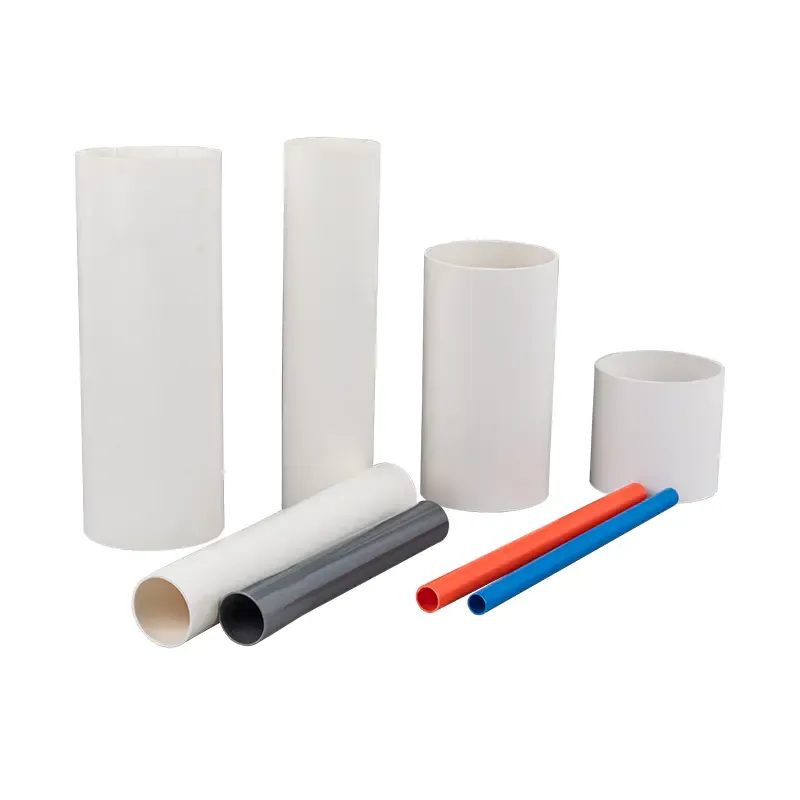
Extrusion lines for pipes and profiles are integrated manufacturing systems that convert thermoplastic raw material into continuous products with a constant cross-section, such as pressure pipe, conduit, window profiles, cable ducts, trim, and technical sections. In industrial practice, these lines combine the extruder, die or head, calibration and cooling equipment, haul-off, and cutting or coiling units into a synchronized process designed for high output, tight dimensional control, and repeatable surface quality.
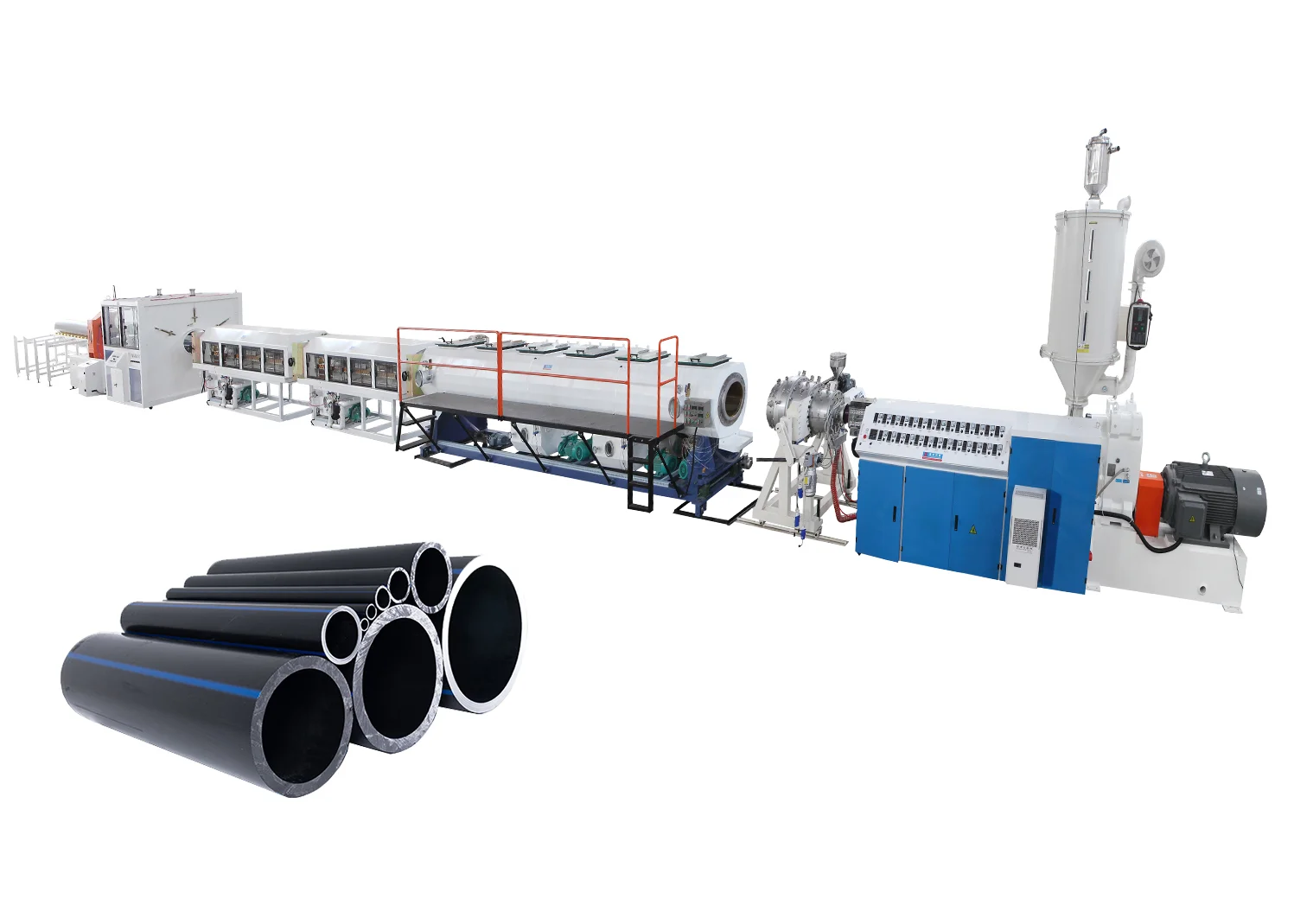
Pipe lines and profile lines share the same process logic but differ in downstream design and process control: pipe extrusion emphasizes vacuum sizing, wall stability, ovality control, and cut-to-length or coiling, while profile extrusion emphasizes shape retention for often complex, asymmetric cross-sections. Modern systems range from compact lines for small tubes and technical profiles to high-output lines for large-diameter pressure and drainage pipe, with recent industry offerings highlighting modularity, energy efficiency, automation, and integration of co-extrusion for multilayer products.
Sustainability has become a central design theme in this segment. Manufacturers increasingly optimize screw geometry, drive systems, downstream cooling, and digital controls to reduce specific energy consumption, while also enabling higher use of regrind, recycled polymers, and multilayer structures that balance performance with material efficiency. The future of these lines is being shaped by tighter quality requirements, Industry 4.0 connectivity, and growing demand for pipes and profiles in water infrastructure, construction, electrification, and industrial systems.
History and Development
The industrial extrusion of pipes and profiles developed from the broader plastics extrusion industry, which established continuous thermoplastic shaping as a high-volume manufacturing method for packaging, construction, and infrastructure products. Early pipe and profile lines relied on relatively simple single-screw extrusion, manual adjustment, and basic water cooling, but demand for dimensional precision and higher productivity steadily pushed the technology toward integrated automation and specialized downstream equipment.
A major milestone was the widespread adoption of vacuum calibration for pipes, which stabilized the molten tube immediately after the die and made it possible to produce dimensionally consistent pressure pipe and conduit at industrial scale. A second milestone was the development of dedicated conical and parallel counter-rotating twin-screw extruders for rigid PVC pipe and profile production, where strong mixing, stable plastication, and controlled throughput are especially valuable. A third milestone was the move toward complete turnkey lines with closed-loop control, co-extrusion capability, automatic cut-to-length systems, and integrated inspection, allowing producers to manage more complex product families with less manual intervention.
More recent development has focused on energy-efficient drives, modular downstream systems, and digital process monitoring. Suppliers now market compact lines for small profiles and pipes, as well as large turnkey systems for diameters reaching 630 mm for PVC and 1200 mm for PE in some configurations, showing how the field has expanded from basic forming equipment into highly engineered production platforms.
Technical Overview
At the core of the line, the extruder melts polymer pellets or powder and generates pressure to force the melt through a shaped die. For pipes, the die forms a tubular melt that is then stabilized by a vacuum sizing system; for profiles, the die and calibrators define an often more complex geometry that must be preserved through cooling. The process is continuous as long as material feed, temperature profile, screw speed, haul-off speed, and cooling are kept in balance.
A typical pipe line includes:
- Raw material handling such as drying, blending, gravimetric dosing, and conveying.
- A single-screw or twin-screw extruder sized to the material and output target.
- A pipe die head or profile die.
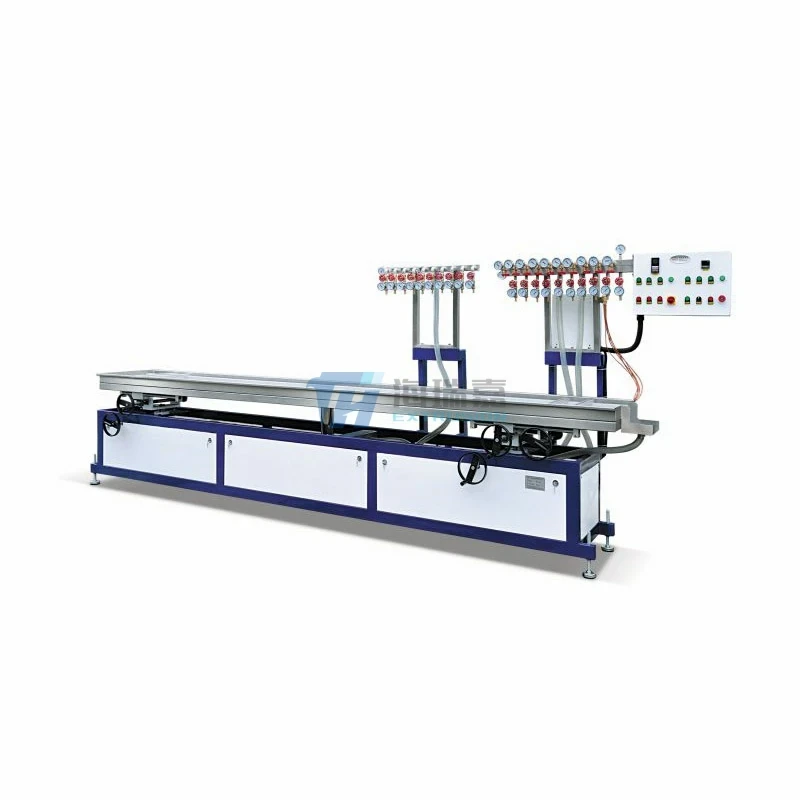
- One or more vacuum sizing tanks and cooling tanks.
- A haul-off or caterpillar puller that sets line speed and stabilizes dimensions.
- A cutter, saw, or winder/coiler depending on product format.
- Optional equipment such as belling machines, printers, leak testers, stackers, and co-extrusion units.
Typical engineering benchmarks vary by product and material, but several practical ranges are common in the market:
- Small-profile and tubing lines may use extruders in the 20–45 mm class and produce tubes up to about 50 mm diameter.
- Commercial pipe lines are offered from roughly 50–60 kg/h up to 1000 kg/h, with some systems marketed up to 1500 kg/h for pipe diameters roughly 8–1000 mm.
- Publicly advertised production ranges include PVC pipe up to 630 mm and PE pipe up to 1200 mm in certain turnkey systems.
- In pipe production, vacuum calibration is essential to prevent collapse and to control outside diameter, wall concentricity, and ovality.
In practice, rotor and screw speed are chosen to match resin behavior and output requirements rather than fixed universal values. High-output pipe lines for polyolefins generally run faster than rigid PVC profile systems, while profile extrusion often uses lower line speeds to preserve shape fidelity in more intricate cross-sections. Specific energy consumption is highly line- and material-dependent, but modern systems increasingly emphasize reduced energy per kilogram through optimized drive packages, efficient heaters, improved cooling, and better material conveyance.
For downstream cooling, pipe lines commonly use a combination of vacuum sizing, water tanks, and spray cooling to remove heat without distorting the geometry. Profile lines may use calibrating tables, cooling benches, or air/water-assisted cooling, depending on wall thickness and section complexity. The quality-critical output measures are typically outer diameter, wall thickness, concentricity, straightness, ovality, surface finish, and in profile extrusion, corner definition and dimensional stability across the entire cross-section.
Main Types and Variations
| Type | Main purpose | Typical materials | Key equipment emphasis |
|---|---|---|---|
| Single-screw pipe lines | High-volume pipe for water, drainage, conduit, irrigation | PE, PP, PPR, PVC in some applications | Stable throughput, vacuum sizing, cooling, haul-off |
| Twin-screw rigid PVC lines | Rigid PVC pipe and many technical profiles | PVC, CPVC, filled compounds | Mixing, plastication, output stability, profile control |
| Profile extrusion lines | Window sections, ducts, trims, gaskets, technical profiles | PVC, ABS, PC, PMMA, WPC, TPU | Calibration of complex geometry, surface finish |
| Co-extrusion lines | Multilayer pipes or capped profiles | PE, PP, PVC, specialty compounds | Multiple extruders, co-extrusion die, layer bonding |
| Small tubing lines | Small-diameter tubing and technical micro-sections | PVC, PU, PE, PP, elastomers | Fine control, compact vacuum tanks, precision cutting |
Pipe lines are often differentiated by output architecture:
- Single-layer pipe lines for standard pressure, drainage, and conduit products.
- Multilayer lines for barrier, reinforcement, or recycled-material structures.
- Spiral or metal-core systems for specialty mechanical or structural pipe applications.
- Double-exit and multi-strand lines for small-diameter pipe, used to increase productivity.
Profile lines are typically differentiated by product function:
- Rigid profiles for window and door systems, cable trunking, and construction sections.
- Flexible profiles for seals, edging, and gaskets.
- Co-extruded profiles combining weatherable outer layers and recycled or structural cores.
- Foamed profiles for weight reduction and insulation, especially in construction applications.
Applications and Uses
Extrusion lines for pipes and profiles are central to construction, water infrastructure, electrical systems, agriculture, furniture, and industrial equipment. The choice of line configuration depends on the target product, resin, and dimensional demands.
Common application sectors include:
- Water supply and plumbing, where PE, PP, PPR, and PVC pipe lines produce pressure pipe for potable water and hot/cold distribution.
- Sewerage, drainage, and irrigation, where large-diameter pipe lines support municipal and agricultural infrastructure.
- Electrical and cable management, where profile lines make cable ducts, conduit, trunking, and protective sections.
- Windows, doors, and building envelopes, where profile extrusion supplies frames, sash sections, glazing beads, and sealing profiles.
- Industrial and technical components, including hoses, tubes, machine guards, and custom cross-sections.
A poor-fit use for these lines is the production of highly discontinuous, thick 3D parts with complex internal cavities, which are better suited to injection molding or additive manufacturing rather than continuous extrusion.
Materials and Process Compatibility
Pipe and profile extrusion lines are usually optimized for PVC, PE, PP, PPR, ABS, TPU, PC, PMMA, WPC, and specialty compounded materials. Material choice strongly influences screw design, temperature profile, cooling intensity, and downstream calibration strategy.
Important material-process relationships include:
- PVC often favors counter-rotating twin-screw systems because of its sensitivity to thermal history and the need for consistent mixing.
- PE and PP are common in pipe extrusion because they support excellent chemical resistance, toughness, and long service life in infrastructure applications.
- ABS, PC, and PMMA are often used for technical profiles where surface quality, stiffness, or optical appearance matters.
- Recycled or filled compounds can be used in selected lines if screw design, venting, and filtration are properly matched to the formulation.
Automation and Digitalization
Modern extrusion lines increasingly use PLC-based controls, recipe management, remote diagnostics, gravimetric dosing, and synchronized drive systems to reduce operator dependence and improve repeatability. Automation is especially valuable in pipe production, where haul-off speed, vacuum level, melt pressure, and cooling rate must remain synchronized to prevent diameter drift or wall variation.
Typical digital features include:
- Closed-loop control of line speed and haul-off ratio.
- Monitoring of melt pressure, temperature zones, and vacuum calibration.
- Automatic meter-weight control for pipe.
- Data logging for quality traceability and statistical process control.
- Remote service and predictive maintenance functions on newer line platforms.
Automation delivers clear productivity benefits, but it also introduces trade-offs: capital cost rises, maintenance becomes more software-dependent, and operators need stronger process and controls knowledge. In return, producers gain tighter tolerance control, lower scrap, and easier integration of multilayer and high-specification products.
Sustainability and Environmental Aspects
Sustainability in pipe and profile extrusion is shaped by three main priorities: energy efficiency, material efficiency, and recyclability. Modern lines aim to reduce the specific energy required per kilogram by improving screw design, motor efficiency, thermal insulation, cooling management, and downstream coordination.
Key sustainability measures include:
- Use of regrind and recycled polymers where product standards permit.
- Co-extrusion architectures that allow a recycled core with a virgin or weatherable outer skin.
- Reduced trim loss through better calibration, stable haul-off control, and automatic cut optimization.
- Water recirculation and more efficient cooling systems.
- Longer service life in infrastructure applications, which can lower lifecycle environmental impact when pipes and profiles replace less durable alternatives.
At the same time, the sustainability profile depends on the application. For example, pressure pipe and building profiles may offer long service life and low maintenance, but they also require careful end-of-life strategies to support circular-economy goals. The most credible approach in this segment is not material simplification alone, but system-level optimization across design, production, use, and recycling.
Economic and Global Market Relevance
Extrusion lines for pipes and profiles occupy a strategic position in the plastics machinery market because they serve infrastructure-heavy sectors with persistent replacement and expansion demand. Demand is supported by water distribution, drainage, electrification, housing, renovation, and industrial construction, all of which rely on standardized continuous products with relatively low unit cost and high installed volume.
Market competition is shaped by:
- Throughput and uptime, especially for pipe producers operating near full capacity.
- Dimensional precision, surface quality, and compliance with international standards.
- Turnkey integration, where major suppliers differentiate themselves by offering the extruder, die, downstream, and controls as a coordinated system.
- Regional specialization, with some manufacturers stronger in PVC profile systems, others in large-diameter pipe, and others in compact technical lines.
Companies in the segment are generally discussed by their technical role rather than by universal ranking. Examples include suppliers known for complete lines, downstream systems, or compact profile platforms. This segment is therefore less about a single dominant machine type than about matching process architecture to local resin availability, labor structure, utility costs, and end-market standards.
Current Challenges and Innovations
The main technical challenges in pipe and profile extrusion are dimensional stability, melt homogeneity, cooling efficiency, material variability, and line synchronization. These issues become more demanding as producers push for higher speed, thinner walls, more recycled content, and multilayer structures.
Current innovations include:
- Improved co-extrusion dies for multilayer pipe and capped profiles.
- More compact and energy-conscious lines for small profiles and tubes.
- Better downstream calibration systems for faster startup and less scrap.
- Advanced control systems that reduce operator intervention and stabilize output quality.
- Lines adapted for specialized sectors such as medical tubing, WPC profiles, and technical building products.
A notable trend is the convergence of pipe and profile platforms: manufacturers increasingly design modular lines that can be reconfigured for related product families, improving asset utilization and reducing the need for separate production islands.
Future Outlook
The future of extrusion lines for pipes and profiles is likely to be shaped by three forces: infrastructure investment, manufacturing digitalization, and circular-material requirements. Pipe systems should continue to benefit from long-life water and sanitation projects, while profile extrusion will remain linked to construction, renovation, and electrification demand.
Technologically, the strongest directions are:
- Higher automation with deeper process analytics and predictive maintenance.
- Multilayer and co-extrusion growth for performance tailoring and recycled-content strategies.
- Lower-energy line design through improved drives, heating, and cooling efficiency.
- Modular line architectures that support product diversification without full retooling.
- Greater emphasis on quality traceability and digital records for regulated markets.
The segment is unlikely to become less important in the plastics industry. Instead, it is moving toward more precise, more connected, and more material-efficient systems that preserve the core advantage of extrusion: continuous, high-volume production of standardized products with strong engineering utility.
References
- •
Meadoworks. (2026, August 15). Used pipe & profile extrusion lines for sale. https://www.meadoworks.com/equipment/extrusion-machinery/type/pipe-profileLink
- •
APM. (2022, March 18). Plastic extrusion equipment | Battenfeld-Cincinnati extruders. https://www.apmsands.com/extrusion-equipment/Link
- •
Battenfeld-Cincinnati. (n.d.). Tailor-made downstream equipment for the plastics extrusion. https://www.battenfeld-cincinnati.com/products/downstream-systemsLink
- •
Exelliq. (n.d.). TEC.LINE – Operator-friendly, space‑saving, energy‑efficient. https://www.exelliq.com/en/products/extrusion-lines/tec-lineLink
- •
Dura Exports. (n.d.). Dura Exports. http://duraexports.com/Link
- •
KraussMaffei. (n.d.). System solutions for economical. https://www.kraussmaffei.com/media/datastore/cms/media/ext/downloads/ext-br-rohrextrusionsanlagen-en.pdfLink
- •
Bausano. (2022, September 23). Bausano: Plastic extrusion lines & compounding machinery. https://www.bausano.com/enLink
- •
Battenfeld-Cincinnati. (n.d.). Extruders are the basis of efficient extrusion lines. https://www.battenfeld-cincinnati.com/products/extrudersLink
- •
Wanplas. (2026, June 15). Pipe extrusion line. https://www.wanplas.com/products/extrusion/pipe-extrusion-line/Link
- •
Tecno System. (n.d.). Tecno System | Customized extrusion lines for profiles, tubes, and. https://www.tecnosystemfe.it/en/Link
- •
JF Extruder. (n.d.). Products. https://jfextruder.com/plastic-extrusion-line/Link
- •
Polytechme. (2025, August 18). Extrusion lines: Definition, components, types, and. https://polytechme.com/extrusion-lines/Link
- •
KRExtrusion. (2026, August 20). Plastic pipe extrusion machine, profile production line. https://www.krextrusion.com/Link
- •
Comprex. (n.d.). Extrusion lines - Comprex – Cable machines producer. https://comprex.com.pl/en/products/extrusion-linesLink
- •
GERMAAT. (n.d.). GERMAAT - Polymere und Maschinen. http://www.germaat.com/maschinen/en/extrusion.htmLink
- •
RDN Manufacturing Co., Inc. (2022, June 30). Downstream plastic extrusion machines. https://www.rdnmfg.com/products-downstream-extrusion-equipment/Link
- •
Hans Weber. (n.d.). Pipe extrusion. https://www.hansweber.de/en/extrusion/technology/pipe-extrusionLink
- •
Bausano. (n.d.). Plastic pipe extrusion lines. https://www.bausano.com/en/complete-lines/extrusion-lines-for-pipesLink
- •
Polytechme. (2025, September 16). Plastic extrusion lines by POLYTECH. https://polytechme.com/plastic-extrusion-lines/Link
- •
Extrudamerica. (2024, April 1). AMUT pipe extrusion – PVC, PE, PEX, drip & 5-layer lines. https://www.extrudamerica.com/amut-pipeLink
- •
Plastcompany. (n.d.). Complete extrusion lines. https://1plastcompany.com/complete-extrusion-linesLink
- •
Extrusion360. (2026, April 19). PE pipe production lines. https://extrusion360.com/pe-pipe-production-lines/Link
- •
Liansu Machinery. (n.d.). LIANSU MACHINERY: Plastic extrusion line manufacturer. https://www.ls-extrusion.com/Link
- •
JWELL. (n.d.). China pipe extrusion line manufacturers suppliers factory. https://www.jwell-pipe.com/pipe-extrusion-line/Link
- •
Polestar Machinery. (n.d.). Products. https://www.polestarmachinery.com/product/Link
- •
Labtech Engineering. (2023, February 25). Extrusion line for tubing, hose, pipe and other small. https://labtechengineering.com/group/extrusion-line-for-tubing-hose-pipe-and-other-small-profiles-line/Link
- •
Plastcompany. (n.d.). Extrusion. https://1plastcompany.com/extrusionLink
- •
Anxing China. (n.d.). China PVC pipe extrusion machine manufacturers suppliers factory. https://www.anxing-china.com/plastic-pipe-production-line/pvc-pipe-extrusion-machine/Link
- •
Sincere Extruder. (2017, January 1). Plastic equipment professional manufacturer. https://www.sincere-extruder.com/product/list_6_2.htmlLink
- •
Plastiwin. (n.d.). Downstream equipment | Pipe & profile extrusion equipment. https://plastiwin.com/product-category/extrusion/downstream/pipe-profile/Link
- •
Wanplas. (2026, June 15). Profile extrusion line. https://www.wanplas.com/products/extrusion/profile-extrusion-line/Link
- •
Intype. (2000, January 1). Pipe / tube extrusion machine | Medical tube extrusion equipment. https://www.intype.com.tw/en/category/CAT-Pipe_Tube-Extrusion.htmlLink
- •
Mikrosan. (n.d.). EXTRUSION LINES MIKROSAN. https://www.datria.cz/documents/downloads/en/extrusion-lines.pdf?v=1Link
- •
Polytechme. (2025, December 6). Plastic extrusion equipment. https://polytechme.com/plastic-extrusion-equipment/Link
- •
Liansu Machinery. (2024, July 11). New line delivery I HDPE multi-layer coextusion pipe line. https://www.ls-extrusion.com/page/hdpepipe.htmlLink
- •
JF Extruder. (2026, May 19). China plastic extrusion line manufacturer | Custom single screw. https://jfextruder.com/Link
- •
PEMUSA. (n.d.). Plastics extrusion machinery (PEM) | Downstream equipment. https://www.pemusa.com/Link
- •
Lianshun Machine. (n.d.). High speed high efficient PE pipe extrusion line. https://www.lianshunmachine.com/high-output-pe-pipe-extrusion-line-product/Link
- •
Extrutech. (2025, August 8). Pipe extrusion lines. https://extrutech.in/products/pipe-extrusion-lines/Link
- •
Meadoworks. (2026, August 15). Used plastic extruders & extrusion equipment for sale. https://www.meadoworks.com/equipment/extrusion-machineryLink
- •
Bausano. (n.d.). Single screw extruder for plastics. https://www.bausano.com/en/extruders-range/single-screw-extrudersLink
- •
Plastiwin. (2023, July 30). Pipe & profile extrusion equipment | Downstream equipment. https://plastiwin.com/product-category/extrusion/downstream/pipe-profile/page/2/Link
- •
Battenfeld-Cincinnati. (n.d.). Extruder and extrusion systems for pipe. https://www.battenfeld-cincinnati.com/applications/pipeLink
- •
Beier Machinery. (2020, August 20). PVC pipe extrusion line | Beier Machinery is a supplier and. https://www.beierextrusion.com/pipe-extrusion-line/Link
- •
Made-in-China. (2024, January 22). Profile extrusion production line. https://plasticmachinery.made-in-china.com/products/Profile-Extrusion-Production-Line-1.htmlLink
- •
Hans Weber. (n.d.). Extrusion machines | Hans WEBER Maschinenfabrik GmbH. https://www.hansweber.de/en/extrusionLink
- •
Boston Matthews. (2024, June 20). Flexible and rigid profiles - Extrusion lines. https://www.bostonmatthews.com/extrusion-lines/flexible-and-rigid-profiles/Link
- •
Arlington Machinery. (2013, January 1). Used pipe and profile extrusion lines for sale. https://www.arlingtonmachinery.com/plastic-extruder/pl.c.1046.0/pipe-profile-extrusion-lines/Link
- •
Deutsche Nationalbibliothek. (n.d.). [PDF] Inhaltsverzeichnis zu "Plastics extrusion technology, 2. ed.". https://d-nb.info/950047368/04Link
- •
Scribd. (2026, February 24). Extruders catalog main house PDF | PDF | Extrusion. https://www.scribd.com/document/957116515/extruders-catalog-main-house-pdfLink
- •
AC Cextrusion. (2025, August 19). How a plastic pipe extrusion line boosts efficiency in pipe. https://www.accextrusion.com/news/plastic-pipe-extrusion-line-efficiency/Link
- •
AC Cextrusion. (2023, March 21). The design and components of plastic pipe extrusion line. https://www.accextrusion.com/news/the-design-and-components-of-plastic-pipe-extrusion-line/Link
- •
Wikipedia. (2006, June 11). Plastic extrusion. https://en.wikipedia.org/wiki/Plastic_extrusionLink
- •
DRTS. (2024, December 3). What is the pipe extrusion process? https://drts.com/what-is-the-pipe-extrusion-process/Link