
Introduction
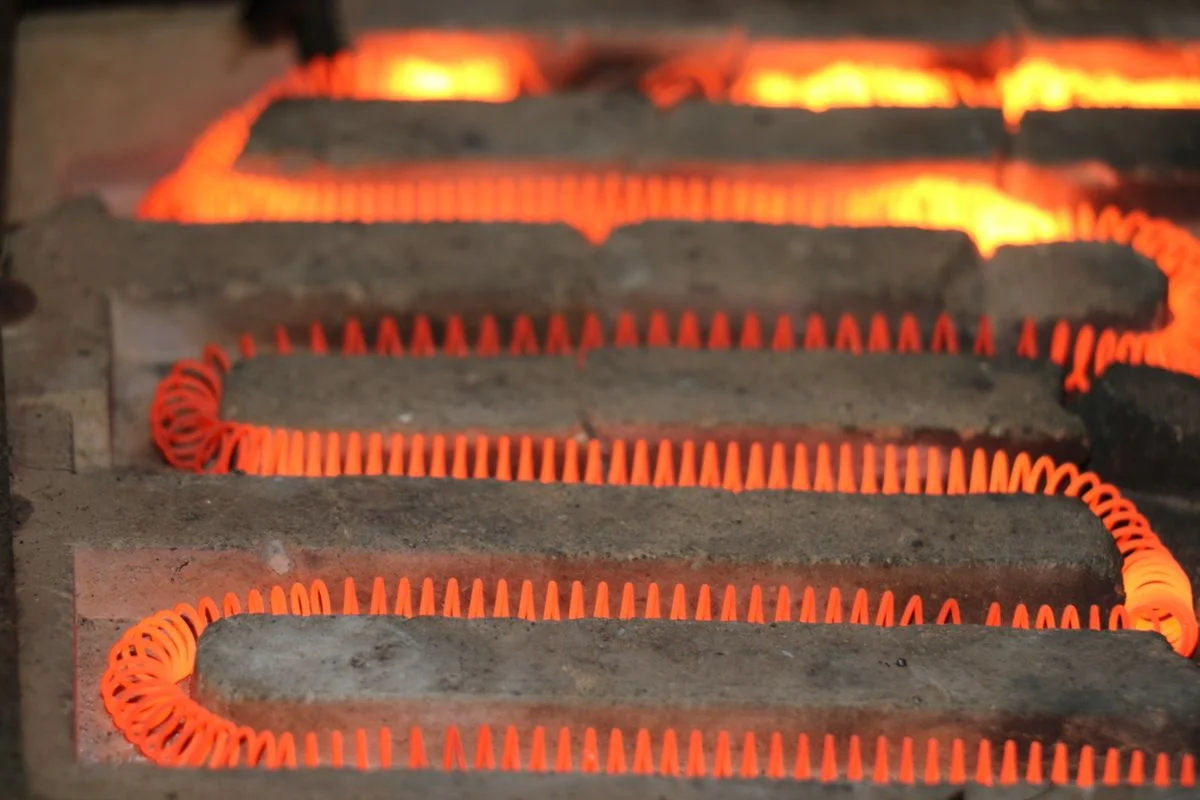
Heating elements are resistive components that convert electrical energy into heat through Joule heating, and they are used throughout plastics processing wherever controlled thermal energy is required. In the plastics industry, heating elements are central to injection molding barrels and nozzles, extrusion zones, hot runner systems, dryers, thermoforming ovens, and auxiliary equipment, where stable temperature control directly affects melt quality, cycle time, throughput, and product consistency.
In plastics machinery, the term usually refers not to a complete heater, but to the active resistive part of an assembly that also includes terminals, insulation, sheathing, clamps, and control interfaces. Common forms include band heaters, cartridge heaters, tubular heaters, immersion heaters, and ceramic or infrared elements, each selected according to temperature range, heat-transfer mode, space constraints, and the thermal sensitivity of the polymer being processed.
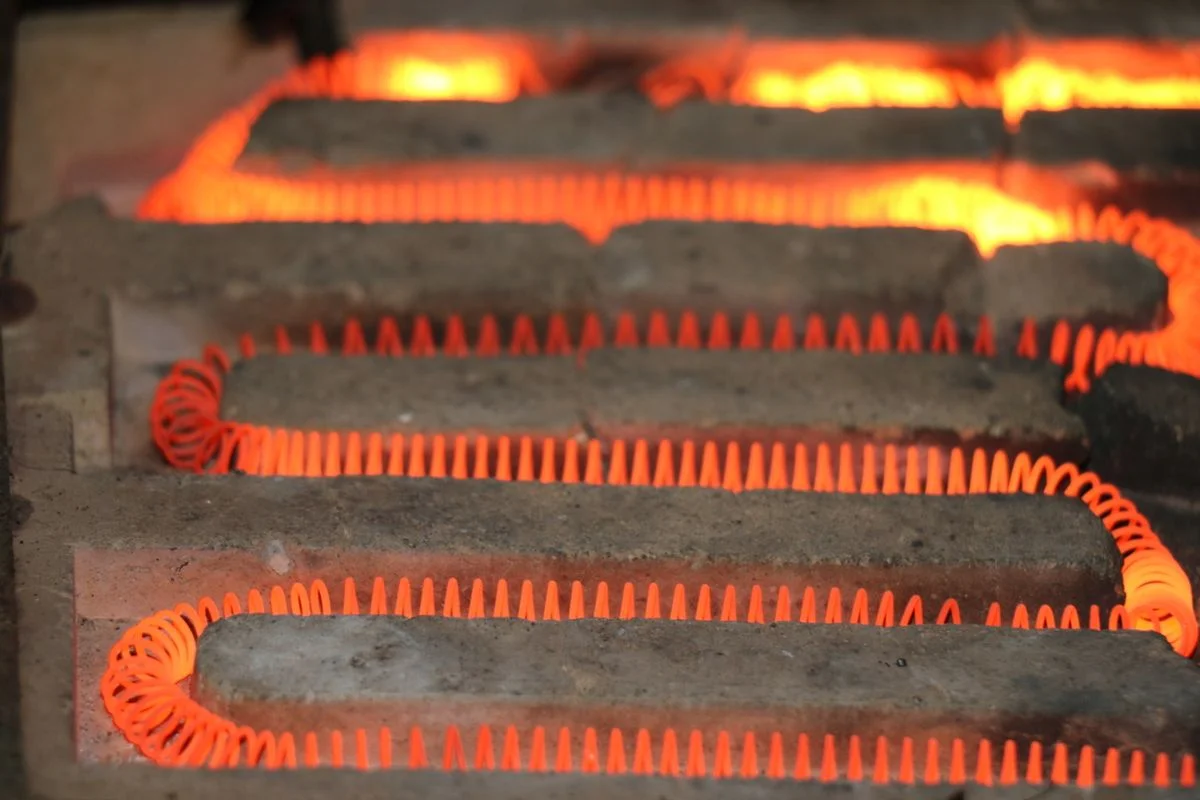
The technology has evolved from simple nichrome wire coils to engineered alloy, ceramic, and composite systems designed for higher durability, faster response, improved oxidation resistance, and tighter process control. Current development is increasingly shaped by energy efficiency, electrification of process heat, sensor integration, and the need to support material recovery and circular-economy workflows through more accurate and repeatable heating.
History and development
Early heating elements were based on high-resistance metal wires and coils, with nichrome becoming widely adopted because it offers stable resistance and good oxidation resistance at elevated temperatures. This established the basic architecture still used in many plastics-processing heaters: a resistive conductor, an electrically insulating support, and a protective outer construction.
A major industrial step was the development of iron-chromium-aluminum (FeCrAl) alloys, which enabled higher-temperature service and improved oxidation performance in demanding furnace and processing applications. These materials broadened the use of electric heat from domestic appliances into continuous industrial duties such as extrusion, heat treatment, and mold temperature control.
More recently, heating-element design has shifted from simple wire devices to engineered assemblies with improved fit, heat flux distribution, and temperature uniformity, including cartridge heaters for drilled mold bores, mica or ceramic band heaters for barrels, and radiant systems for sheet and thermoforming ovens. In parallel, digital temperature controllers and closed-loop process monitoring have made element performance more tightly linked to machine productivity and scrap reduction.
Technical overview
A heating element operates by passing current through a material with intentionally high electrical resistance, producing heat according to the resistive-heating principle. In practical machine design, the element must balance several properties: resistivity, maximum allowable surface temperature, oxidation resistance, mechanical toughness under thermal cycling, and compatibility with the surrounding polymer-processing environment.
For plastics machinery, the most relevant engineering measures are:
- Heat flux and temperature uniformity, especially in barrels, nozzles, and hot runners, where nonuniform heating can create viscosity gradients and degradation.
- Response time, which matters in start-up, short-cycle molding, and rapid thermal profiling.
- Specific power density, which must be matched to polymer melt demand and barrel geometry.
- Thermal endurance, because repeated heating and cooling accelerates oxidation, scale formation, and resistance drift.
Typical industrial heating-element configurations used in plastics processing include:
| Type | Typical use in plastics machinery | Key features |
|---|---|---|
| Band heater | Injection molding barrels, extrusion barrels, hot runners | Wraparound design, good contact heating, common in cylindrical zones |
| Cartridge heater | Mold inserts, manifolds, dies, platen bores | High power density, localized heat, fast response |
| Tubular heater | Ovens, dryers, air heaters, dies | Flexible geometry, can be bent or formed |
| Immersion heater | Thermal-oil tanks, water baths, process tanks | Direct liquid heating, high transfer efficiency |
| Ceramic or infrared element | Thermoforming ovens, sheet heating, radiant zones | Higher surface temperature, noncontact heating |
Material selection strongly affects operating window. Nichrome is widely used for its stable resistance and ease of fabrication, while FeCrAl is favored where higher temperature and better oxidation resistance are needed. For very high-temperature industrial service, silicon carbide and molybdenum disilicide appear in specialized furnaces rather than in most standard plastics machines.
Types and variations
Resistance-wire elements
These are the most common heating elements in plastics machinery and are made from coiled or wound resistive wire in alloy grades such as nichrome or FeCrAl. They are often enclosed in sheaths or bands to improve heat transfer and protection.
Band heaters
Band heaters wrap around the outside of an extrusion or injection barrel and transfer heat by conduction into the metal wall. They are typically selected where compact installation and maintainable zone heating are required.
Cartridge heaters
Cartridge heaters are cylindrical elements inserted into drilled holes in molds, dies, and tooling blocks. Their main advantage is localized heating with high watt density, which is useful when the thermal mass is small and precise control is necessary.
Tubular heaters
Tubular heaters can be straight or bent into custom forms for air heating, ovens, or die heating. They are common where the process requires tailored geometry and moderate to high temperatures.
Ceramic and infrared elements
Ceramic heaters and quartz/infrared elements are used where radiative heating is more effective than conduction, such as thermoforming lines and surface-heating applications. These elements are especially important where rapid heating of sheet stock is needed before forming.
Applications and uses in plastics machinery
Heating elements are used across almost every major plastics-processing platform:
- Injection molding: barrel zones, nozzle heaters, hot runner manifolds, and mold temperature control.
- Extrusion: barrel sections, dies, adapters, and auxiliary dryers for feed preparation.
- Blow molding: parison and preform conditioning, die head heating, and ancillary temperature stabilization.
- Thermoforming: radiant oven panels and sheet-heating zones.
- Film and sheet lines: die heating, chill-roll auxiliaries, and process-air heating.
- Recycling and compounding: melt filtration systems, extruder barrels, dryers, and melt-processing auxiliaries.
One poor-fit use is direct, high-output open-air space heating in large, uninsulated facilities: although heating elements can supply such heat, plastics plants usually rely on more system-efficient HVAC or heat-recovery strategies because exposed resistive heat is not the most economical option for large-volume ambient heating.
Performance characteristics and practical benchmarks
In plastics processing, the element itself is only one part of thermal performance; installation quality and machine design often dominate outcomes. Still, several practical benchmarks are commonly used in specification and troubleshooting:
- Rotor-free systems do not apply here; the relevant measures are watt density, sheath temperature, and zone stability.
- Cartridge heaters commonly deliver high local watt density for molds and dies, enabling rapid heat-up in small thermal masses.
- Band heaters are chosen for barrels where uniform circumferential heat is more important than extreme point intensity.
- Infrared ovens can reduce warm-up time in thermoforming because energy is transferred directly to the sheet surface rather than first heating large air volumes.
Quantitative values vary widely by design and application, but industry practice commonly uses:
- Kilowatt-class heating zones on molding and extrusion barrels.
- Hundreds of watts to several kilowatts per cartridge heater, depending on bore size and duty.
- Surface temperatures above several hundred degrees Celsius for metal-sheathed and ceramic elements in industrial service.
Because plastics are sensitive to overtemperature, process engineers often prioritize tight temperature uniformity over maximum temperature alone; this is especially important for PVC, engineering thermoplastics, and filled compounds that degrade or discolor if overheated.
Technological innovations and automation
Modern heating-element systems are increasingly integrated with PID temperature controllers, thermocouples, SSRs, and machine-network diagnostics. This allows more stable melt temperature, less overshoot at start-up, and better repeatability from cycle to cycle.
Key innovations include:
- Multi-zone control, which reduces axial temperature gradients in barrels and dies.
- Embedded sensing, allowing alarms for heater breakage, open circuits, or abnormal resistance drift.
- Improved insulation and reflective barriers, which reduce heat loss and lower energy demand.
- Electrified process heat, which fits broader manufacturing efforts to reduce direct combustion on the shop floor.
For plastics processors, the main trade-off is that higher automation increases diagnostic capability and consistency, but also adds cost, wiring complexity, and dependence on control-system integrity.
Environmental and sustainability aspects
Heating elements can support sustainability goals when they improve energy efficiency, reduce scrap, and shorten process stabilization time. In plastics processing, poor temperature control can cause degraded melt, dimensional instability, color variation, and startup scrap, all of which waste material and embedded energy.
Sustainability-relevant design strategies include:
- Better thermal insulation around barrels and ovens to reduce heat loss.
- Zoned control to avoid heating unused sections of tooling.
- Faster-response elements that shorten warm-up and reduce idle losses.
- Stable control loops that limit overshoot and material degradation.
Electric heating is also compatible with plant electrification and with future decarbonization when electricity supply becomes lower-carbon. The principal limitation is that resistive heating remains energy-intensive if it is poorly insulated or overdesigned for the duty cycle.
Economic and global market impact
Heating elements are a large but often underrecognized component of plastics machinery economics because their failure can stop production, cause product defects, or prolong downtime. In high-throughput processes such as extrusion and continuous sheet production, heater reliability has direct effects on output stability and maintenance cost.
Global demand is shaped by several linked trends:
- Growth in injection molding and extrusion capacity in Asia and other manufacturing regions.
- Expansion of recycling and reprocessing lines, which need precise thermal control for variable feedstocks.
- Greater use of automation and condition monitoring, which raises the specification level for heaters and controls.
For machinery builders, heater choice affects not only machine performance but also serviceability, spare-parts strategy, and compliance with safety and electrical standards.
Current challenges and innovations
The main engineering challenges are:
- Oxidation and element aging, especially in cyclic-duty service.
- Uneven heat transfer caused by poor clamping, contamination, or thermal gaps.
- Resistance drift and eventual burnout under high thermal stress.
- Energy losses from insufficient insulation or overspecified wattage.
- Material compatibility, particularly where overheated polymer can carbonize on the heater surface and reduce performance.
Current innovation is focused on longer-life alloys, better sheathing and insulation systems, smarter controllers, and designs that simplify replacement without disturbing machine alignment or process calibration.
Future outlook
Heating elements in plastics machinery are likely to become more sensor-rich, energy-aware, and application-specific. The most important developments are expected in:
- Predictive maintenance, using resistance trend data and temperature feedback.
- Higher-efficiency electrified heating, especially in plants replacing fossil-fuel process heat.
- Additive and modular heater construction, reducing downtime for repairs.
- Tighter integration with machine control, enabling adaptive heating profiles for recycled and variable feedstocks.
As plastics processing moves toward lower waste, higher automation, and improved thermal precision, heating elements will remain a foundational technology rather than a commodity part, because they directly shape melt quality, process stability, and the economics of production.
Summary
Heating elements are the core thermal components that make electrically heated plastics machinery possible, from injection molding and extrusion to thermoforming and recycling. Their performance depends on material choice, geometry, control integration, and installation quality, and future gains will come less from raw heating power than from smarter control, better efficiency, and longer service life.
References
- •
Types of heating elements: A comprehensive guide. (2026, April 20). North NJ HVAC. https://northnjhvac.com/types-heating-elements/Link
- •
Heating element. (2004, December 31). Wikipedia. https://en.wikipedia.org/wiki/Heating_elementLink
- •
How do heating elements work? (2009, December 25). Explain that Stuff. https://www.explainthatstuff.com/heating-elements.htmlLink
- •
Heating elements: Types and properties. (2026, June 16). IQS Directory. https://www.iqsdirectory.com/articles/heating-element.htmlLink
- •
Heating element. (n.d.). Dictionary.com. https://www.dictionary.com/browse/heating-elementLink
- •
Heating element. (2024, August 5). Merriam-Webster. https://www.merriam-webster.com/dictionary/heating%20elementLink
- •
How do heating elements work? (2025, April 23). Carlton Technologies. https://www.carltontech.co.uk/how-heating-elements-work/Link
- •
What is a heating element and what is its primary function. (2026, August 20). Kintek Furnace. https://kintekfurnace.com/faqs/what-is-a-heating-element-and-what-is-its-primary-functionLink
- •
A look at heating elements. (2025, February 11). Farnam Custom. https://farnam-custom.com/heating-elementsLink
- •
What is a heating element? The engine of controlled heat. (2000, January 1). Kintek Furnace. https://kintekfurnace.com/faqs/what-is-a-heating-elementLink
- •
How does a heating element work? (2025, February 27). Sears Home Services. https://www.searshomeservices.com/blog/how-does-a-heating-element-work-explanationLink
- •
Heating element. (2023, September 11). Simple Wikipedia. https://simple.wikipedia.org/wiki/Heating_elementLink
- •
What is a heating element and how does it work? (2026, March 11). Science Insights. https://scienceinsights.org/what-is-a-heating-element-and-how-does-it-work/Link
- •
Types of heating elements. (n.d.). Heating Element Alloy. https://www.heating-element-alloy.com/article/heating-elements-properties-and-types.htmlLink
- •
Heating element types, uses & selection guide. (2025, July 28). iSquared R Element. https://isquaredrelement.com/heating-element-types-high-temperature-uses/Link
- •
What are heating elements? (2022, February 20). Under Control Instruments Ltd. https://www.undercontrol.co.uk/blogs/uci-blog/what-are-heating-elementsLink
- •
Determining a heater element guide. (2022, September 13). Wattco. https://www.wattco.com/2022/09/heater-element-guide/Link
- •
Heating element. (n.d.). The Free Dictionary. https://www.thefreedictionary.com/heating+elementLink
- •
What is a heating element? Understanding its function and types. (2025, March 23). PTC Yidu. https://www.ptcyidu.com/blog/What-Is-a-Heating-Element-Understanding-Its-Function-and-TypesLink
- •
హీటింగ్ ఎలిమెంట్స్: రకాలు, అప్లికేషన్లు మరియు ప్రయోజనాలు. (2025, March 21). MKM Heater. https://www.mkmheater.com/te/news/understanding-heating-elements-types-applications-and-benefits/Link
- •
Heating element glossary. (n.d.). Canadian Heating Elements. https://canadianheatingelements.ca/glossary/Link
- •
Types of industrial heating elements: A complete guide. (2026, April 23). CoolElement. https://cooplelement.xyz/en/blog/types-of-heating-elements/Link
- •
Type of heating element. (n.d.). TS Heater. https://www.tsheater.com/info/type-of-heating-element-95057891.htmlLink
- •
What are heating elements and what types are there? (2022, October 28). Bro Furnaces. https://brofurnaces.com/wiki/what-are-heating-elements-221028.htmlLink
- •
How do heating elements convert electrical energy into heat energy. (2026, September 4). Kintek Furnace. https://kintekfurnace.com/faqs/how-do-heating-elements-convert-electrical-energy-into-heat-energyLink
- •
How does heating elements work? (2023, July 31). Jaye Heater. https://www.jaye-heater.com/info/heating-elements-84993666.htmlLink
- •
Heating element alloys. (n.d.). Heating Element Alloy. https://www.heating-element-alloy.com/Link
- •
Resistance of heating elements. (2015, February 26). JLim Learning. https://sites.google.com/site/jlimlearning/physics/resistance-of-heating-elementsLink
- •
Heating elements. (2025, November 5). RS Components. https://uk.rs-online.com/web/c/automation-control-gear/process-control/heating-elements/Link
- •
Electric heater heating element material comparison. (2026, April 4). Alibaba Seller. https://seller.alibaba.com/blogs/2026/southeast-asia/heating-equipment/heating-element-material-comparison-guide-alibaba-b2bLink
- •
ELI5: How do heating elements and filaments work. (2013, February 28). Reddit. https://www.reddit.com/r/explainlikeimfive/comments/19ejzb/eli5_how_do_heating_elements_and_filaments_work/Link
- •
Electric heating elements: Working principles, and applications. (2026, February 10). Wattco. https://www.wattco.com/electric-heating-elements/Link
- •
Resistive heating elements: Types, features, applications. (2025, December 27). JLCPCB. https://jlcpcb.com/blog/guide-to-resistive-heating-elements-types-applicationsLink
- •
How to choose the right heating element for your home or business. (2025, January 17). Elekheat. https://elekheat.com/14-heating-elements-best-application/Link
- •
Electric heating elements. (2015, September 22). Indeeco. https://indeeco.com/news/2015/09/22/electric-heating-elements/Link
- •
How does a heating coil system work? (2023, January 30). Scott Precision Wire. https://www.scottprecisionwire.com/how-does-a-heating-coil-system-work/Link
- •
Sequence of operation for a dual element electric water heater. (2005, October 4). Canton.edu. https://www.canton.edu/media/employee/elec141/Sequence_hot_water_heater.pdfLink
- •
How does a heating coil work? Why does it not electrocute you when you touch it? (2013, November 17). Reddit. https://www.reddit.com/r/askscience/comments/1qss3e/how_does_a_heating_coil_work_why_does_it_not/Link