
Introduction
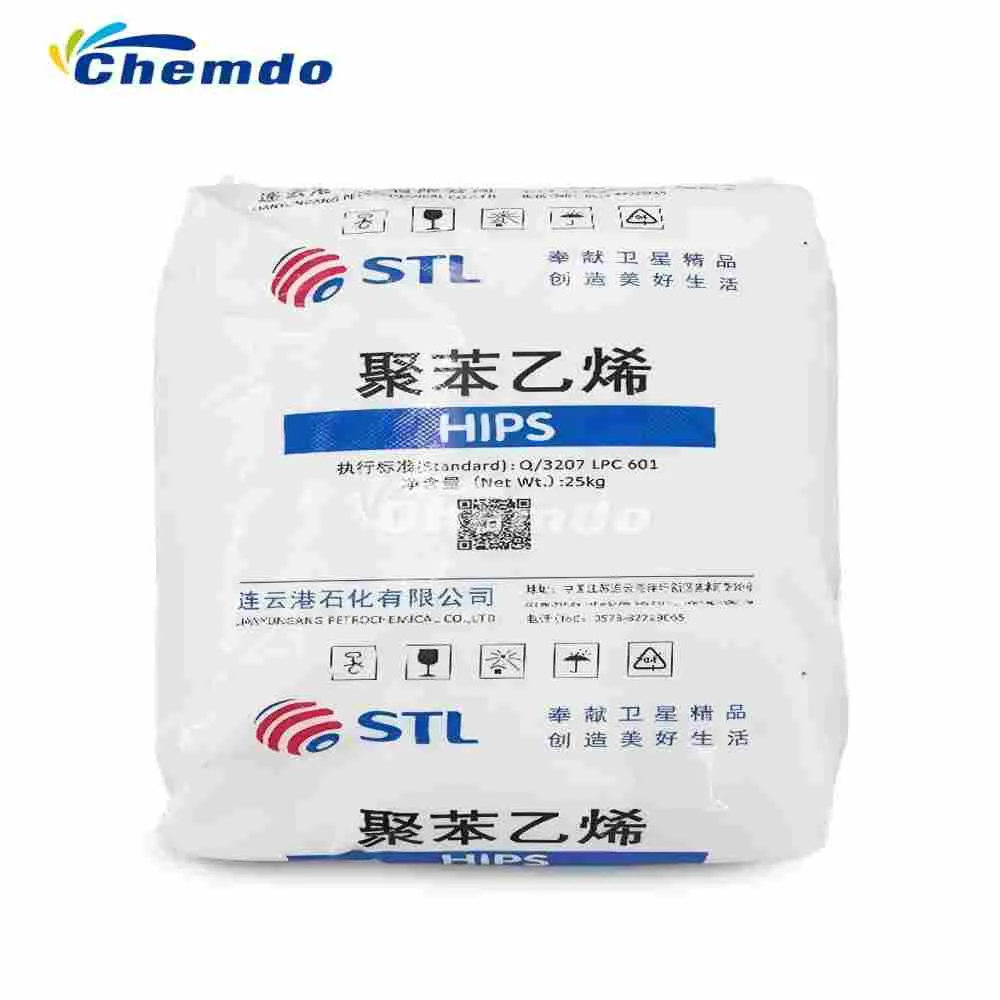
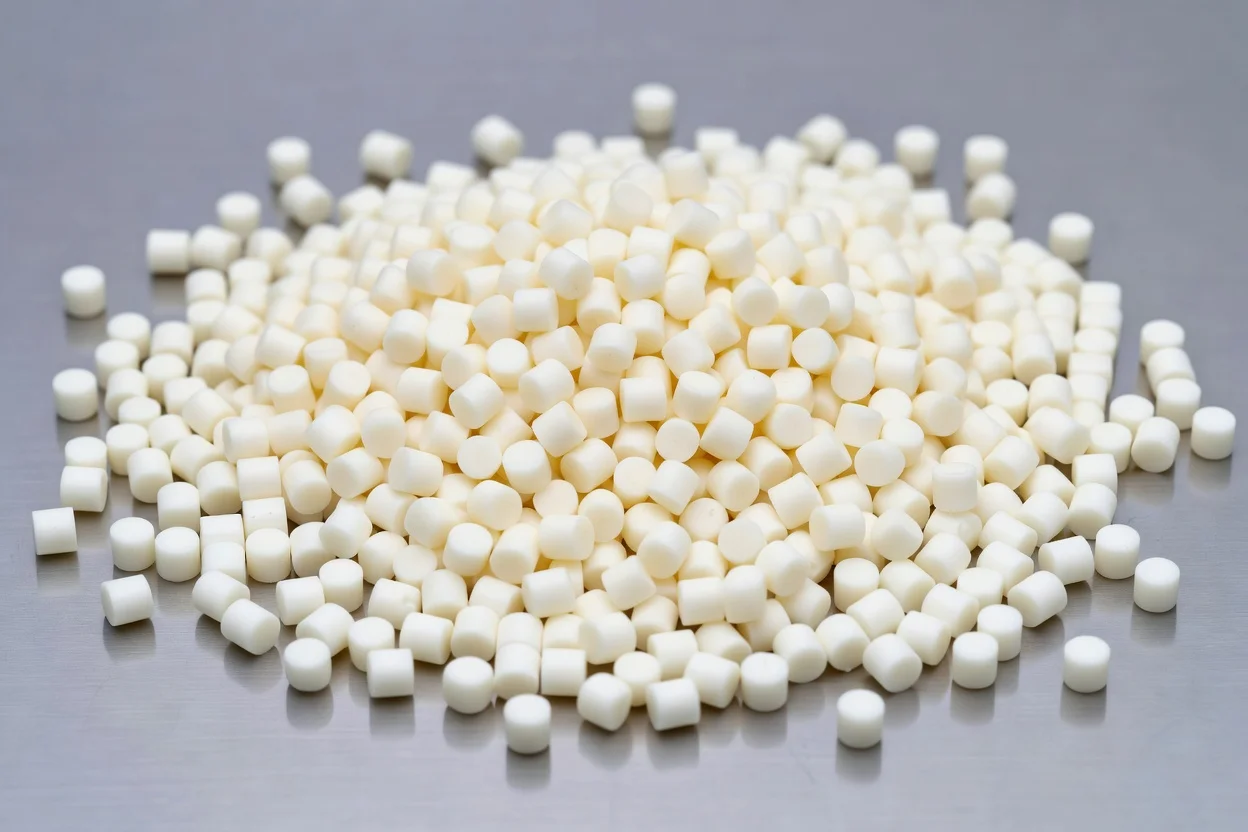
High impact polystyrene (HIPS) is a rubber-modified styrenic thermoplastic designed to retain the easy processing and low cost of polystyrene while substantially improving toughness and impact resistance. It is widely used in packaging, consumer goods, appliance housings, electronics, and thermoformed parts, where a balance of stiffness, surface quality, and moldability is more important than high heat or chemical resistance.
HIPS is usually produced by incorporating elastomeric phases, most commonly polybutadiene rubber or styrene-butadiene copolymers, into a polystyrene matrix, creating a heterogeneous morphology that dissipates impact energy through crazing and shear band formation. This structure makes HIPS one of the most important impact-modified commodity plastics, especially in cost-sensitive applications that require more durability than general-purpose polystyrene.
Its industrial relevance is also tied to its processing flexibility: HIPS is commonly injection molded, thermoformed, and extruded, and it is favored for parts that need good printability, paintability, and machinability. At the same time, its sustainability profile is mixed, because it is based on fossil-derived styrenic feedstocks, yet it remains mechanically recyclable in many established streams and is also used in some recycled-content and circularity initiatives.
History and Development
HIPS emerged from the broader development of impact-modified styrenic polymers intended to overcome the brittleness of neat polystyrene. The key breakthrough was the use of dispersed rubber particles within the thermoplastic matrix, a strategy that became a standard route for improving impact performance without sacrificing the processing advantages of styrenics.
As plastics consumption expanded in the postwar period, HIPS gained adoption in consumer products, appliance components, food packaging, and electronics housings because it offered a favorable cost-performance ratio. Over time, grade development broadened its use into flame-retardant, food-contact, anti-static, and higher-gloss or higher-impact variants.
More recently, research has focused on optimizing rubber particle size, morphology, and interfacial adhesion to improve toughness further while maintaining stiffness and surface aesthetics. These developments have supported specialized grades for thermoforming, appliance liners, signage, and 3D-printing support materials.
Chemical Structure and Key Properties
HIPS is an amorphous thermoplastic built around a continuous polystyrene phase containing dispersed rubber particles, typically polybutadiene-rich domains. The polystyrene phase provides rigidity, dimensional stability, and surface finish, while the rubber phase absorbs and dissipates impact energy.
Core property profile
| Property | Typical characterization |
|---|---|
| Appearance | Opaque to translucent, often matte or semi-gloss |
| Density | About 1.04 to 1.06 g/cm3 |
| Impact resistance | Much higher than general-purpose polystyrene |
| Processability | Easy to thermoform, injection mold, and machine |
| Surface finish | Good for printing, bonding, and decorative finishing |
| Heat resistance | Moderate; suitable for lower-heat service |
Technical behavior
The rubber phase creates localized stress concentrations that trigger energy-dissipating crazes and shear bands when the material is struck. This mechanism is why HIPS is significantly tougher than unmodified polystyrene while remaining relatively rigid.
Typical commercial formulations show a glass transition near 100°C for the polystyrene-rich phase, while heat deflection temperature is usually well below the level expected for engineering plastics used in high-temperature service. As a result, HIPS is best viewed as a toughened commodity polymer rather than a high-heat engineering resin.
Real limits and workarounds
- Poor heat resistance → the amorphous styrenic matrix softens at moderate temperatures → use lower-service-temperature applications, add flame-retardant or heat-stabilized formulations, or switch to ABS, PP, PC, or reinforced polymers when sustained heat is critical.
- Poor chemical resistance to many solvents and oils → the styrenic matrix can be attacked or stress-cracked by aggressive chemicals → use protective coatings, limit contact with incompatible chemicals, or select a more chemically resistant polymer such as PP, PE, or specialized engineering plastics.
- Limited outdoor/UV durability → unprotected HIPS can degrade under prolonged UV exposure → use UV stabilizers, pigments, surface coatings, or avoid long-term exterior exposure.
- Lower barrier performance than multilayer packaging materials → the polymer is not a high-barrier resin → combine it with barrier layers, coatings, or choose PET, EVOH-containing structures, or other barrier packaging systems when oxygen or aroma retention is important.
Production Processes and Raw Feedstocks
HIPS is manufactured by polymerizing styrene in the presence of rubber, most commonly polybutadiene, so that the rubber phase becomes dispersed in the forming polystyrene matrix. The process is closely related to bulk or mass polymerization routes used in styrenics production, with morphology control being central to final performance.
Typical feedstocks
- Styrene monomer as the primary building block for the rigid matrix.
- Polybutadiene rubber or styrene-butadiene copolymers as the impact modifier.
- Additives such as heat stabilizers, flame retardants, pigments, antistatic agents, and processing aids for grade-specific performance.
Process features
- Particle morphology is critical; smaller, more uniformly dispersed rubber particles usually improve impact behavior.
- Rubber content and phase architecture are tuned to balance toughness, stiffness, gloss, and processability.
- Commercial grades are often optimized for injection molding, thermoforming, or sheet extrusion.
Industry leadership
Large global styrenics producers are central to HIPS supply, including SABIC, INEOS Styrolution, Trinseo, PS Japan, LG Chem, Chi Mei, and Supreme Petrochem, with product portfolios spanning general-purpose, high-impact, flame-retardant, and specialty HIPS grades. In practice, market leadership tends to be defined by integrated styrene capacity, grade breadth, regional supply position, and downstream application support rather than by HIPS alone.
Applications and End-Use Markets
HIPS is used where a material must be tough, easy to form, inexpensive, and visually acceptable. Its end-use profile is strongly shaped by its balance of rigidity and impact resistance.
| Sector | Typical HIPS use | Usual grade/process |
|---|---|---|
| Food packaging | Yogurt cups, trays, lids, clamshells | Thermoforming, food-contact sheet grades |
| Consumer goods | Toys, storage items, housings | Injection molding, general-purpose grades |
| Appliances | Refrigerator liners, inner panels, small appliance housings | Thermoformed or molded appliance grades |
| Electronics | TV backs, printer housings, equipment enclosures | Injection molding, often flame-retardant grades |
| Signage and displays | Printed panels, point-of-sale displays, sign faces | Sheet extrusion and thermoforming, high-printability grades |
| Automotive interiors | Trim parts, interior panels, non-structural components | Molded specialty grades |
| Medical and lab packaging | Trays, organizational inserts, non-sterile housings | Clean, rigid thermoformed grades |
| 3D printing support | Dissolvable support structures for ABS prints | Filament grades soluble in d-limonene |
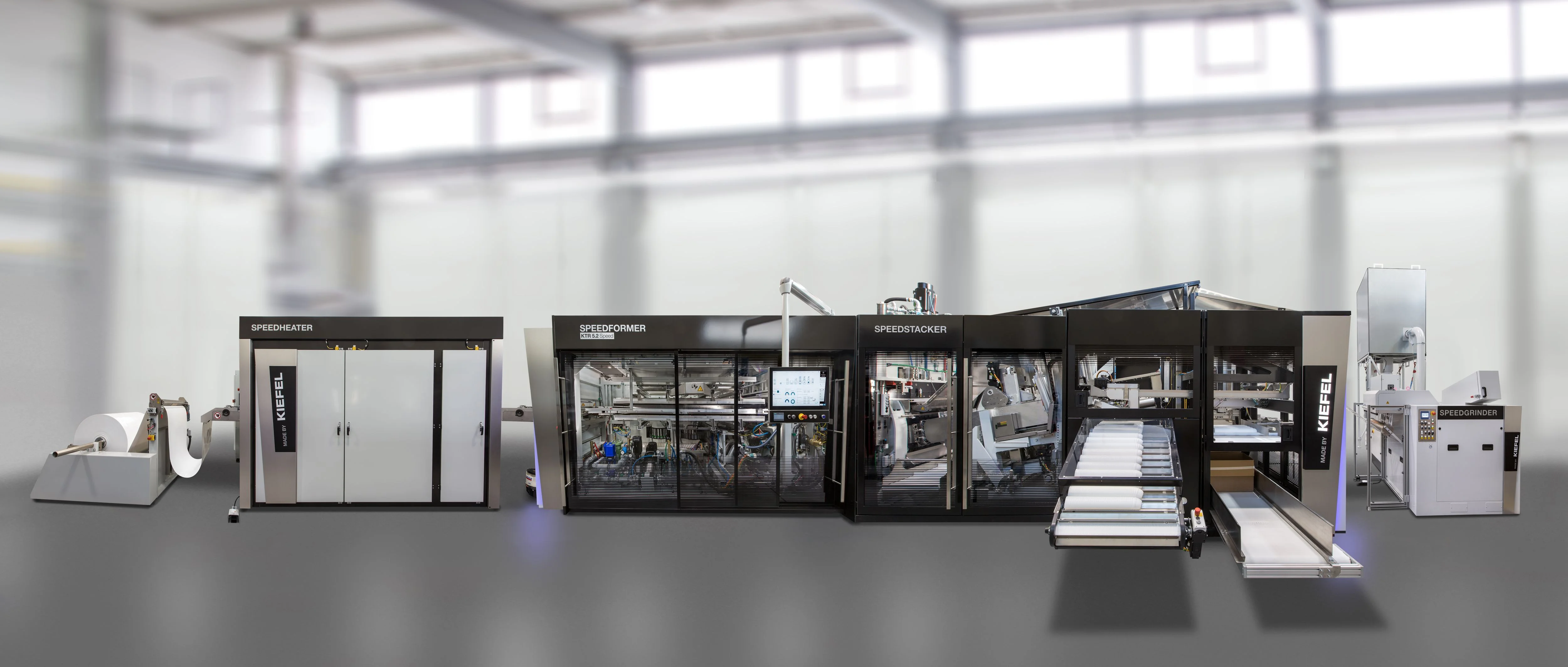
HIPS performs particularly well in thermoformed packaging, appliance liners, and printed display parts because it combines good forming behavior with a surface that accepts inks, adhesives, and coatings readily. It is also useful in electrical and electronics housings because it is naturally insulating and can be formulated for flame retardancy.

A poorer-fit use is high-temperature structural parts, because HIPS lacks the heat resistance and long-term load-bearing performance expected of engineering polymers such as ABS, PC, PA, or reinforced blends.
Environmental and Sustainability Aspects
HIPS has a sustainability profile that reflects both its commodity-plastic advantages and its petrochemical origin. It is based on styrenic feedstocks derived from fossil resources, which means its virgin carbon footprint is tied to upstream hydrocarbon production and polymerization energy use.
Recyclability and circularity
- HIPS is generally considered mechanically recyclable when collected in suitable streams, particularly clean post-industrial scrap and some post-consumer rigid waste.
- Recycling performance is strongly affected by contamination, colorants, additives, and the presence of multilayer structures or incompatible plastics.
- In practice, HIPS recycling is more straightforward in controlled industrial loops than in mixed municipal waste streams.
Bio-based and lower-carbon pathways
- Bio-attributed or bio-based styrenic feedstocks are being explored in the broader styrenics value chain, although these remain niche relative to conventional supply.
- Recycled content use is one of the most realistic near-term decarbonization strategies for HIPS, especially in rigid packaging and non-critical interior parts.
- Lightweighting and downgauging in thermoformed packaging can reduce material use, but must be balanced against stiffness and impact needs.
Trade-offs in packaging
HIPS remains attractive because it is inexpensive, formable, and visually versatile, but it is not a high-barrier packaging resin and is not generally the preferred choice where oxygen sensitivity or long shelf-life protection is critical. In those cases, multilayer barrier structures or alternative polymers often provide better performance.
Economic and Global Market Impact
HIPS is a globally important commodity thermoplastic because it occupies a price-sensitive segment with broad industrial demand. Its economic value is closely linked to the scale of the styrenics industry, resin pricing cycles, and end-market demand in packaging, appliances, electronics, and consumer goods.
Market position
- HIPS is valued for its low cost-to-performance ratio, especially in thermoformed and molded parts.
- Demand is strongest where manufacturers need acceptable toughness and appearance without moving to higher-cost engineering polymers.
- The material competes most directly with GPPS, ABS, PP, PET, and, in some applications, PVC or PE-based structures.
Regional and producer dynamics
Asia remains a major production and consumption center for HIPS and broader styrenics, supported by large integrated petrochemical and converting industries. Suppliers such as Supreme Petrochem and other major styrenics producers compete on grade consistency, conversion support, regional logistics, and downstream relationships with packagers, appliance makers, and electronics assemblers.
Current Challenges and Innovations
Main challenges
- Property ceiling: HIPS cannot match engineering polymers in heat resistance, chemical resistance, or long-term structural durability.
- Circularity pressure: single-use packaging and mixed plastic waste streams create recycling challenges and policy scrutiny.
- Feedstock volatility: styrene and rubber raw material prices can move sharply with petrochemical cycles.
- Substitution risk: PP, PET, ABS, and recycled-polymer structures continue to displace HIPS in some applications.
Innovation directions
- Morphology engineering to improve impact strength without sacrificing surface finish.
- Flame-retardant HIPS for electronics and appliance applications requiring electrical safety compliance.
- Anti-static and conductive grades for electronics packaging and sensitive components.
- Better thermoforming grades for thin-wall packaging and appliance liners with improved drawability and stiffness retention.
- Support-material formulations for additive manufacturing, where HIPS is valued for its removability in d-limonene.
A practical formulation example is a flame-retardant HIPS grade using brominated or non-halogen FR packages at low loadings, often paired with antimony or mineral synergists in some systems; the mechanism is suppression of flame propagation and reduced heat release, while the base HIPS matrix still provides the molded shape and impact performance. Another example is conductive or anti-static HIPS incorporating carbon-based or antistatic additives at relatively low concentrations to reduce surface charge accumulation in electronics packaging.
Future Outlook
HIPS is likely to remain important where cost, formability, and moderate toughness are the decisive criteria, especially in thermoformed packaging, appliances, and molded consumer products. Its future depends on three linked forces: the competitiveness of styrenics feedstocks, the ability to increase recycled content, and the material’s role in value-engineered applications where it can outperform alternatives on total system cost.
Innovation is expected to focus on lighter-gauge sheet, better recycled-content performance, improved flame-retardant and anti-static grades, and higher-quality post-consumer recycling systems. In parallel, some traditional HIPS markets will continue to face substitution from PET, PP, ABS, and bio-based or recycled multilayer structures, particularly where sustainability targets or higher-performance requirements dominate procurement decisions.
Summary
HIPS is a rubber-toughened polystyrene that combines easy processing, low cost, and improved impact resistance in a single, widely used thermoplastic. Its main strengths are in thermoformed packaging, appliance parts, electronics housings, consumer goods, and signage, while its main weaknesses are moderate heat resistance, limited chemical durability, and relatively modest barrier performance.
The material remains strategically important because it sits at the intersection of commodity economics and functional performance: it is simple enough for high-volume processing, yet versatile enough to support many specialized grades. Its long-term position will depend on how effectively producers and converters improve recyclability, lower carbon intensity, and refine morphology and additive packages for new performance targets.
References
- •
HIPS masterbatch and application. (2024, July 17). Dai A Industry. https://daiaplastic.com/hips-masterbatch-and-application/Link
- •
Polystyrene HIPS (High Impact Polystyrene). (2026, August 10). Boedeker Plastics. https://www.boedeker.com/Product/HIPSLink
- •
High-impact polystyrene (HIPS): Definition, properties, and uses. (2025, December 4). Xometry. https://www.xometry.com/resources/materials/high-impact-polystyrene-hips/Link
- •
High impact polystyrene (HIPS): Comprehensive analysis. (n.d.). Patsnap Eureka. https://eureka.patsnap.com/materials/hips-polymer-analysisLink
- •
HIPS (high impact polystyrene) [PDF]. (n.d.). Plastics International. https://www.plasticsintl.com/media/q1unrohn/polystyrene-hips-data-sheet.pdfLink
- •
What is high impact polystyrene (HIPS) and why it versatile? (2025, July 4). Patsnap Eureka. https://eureka.patsnap.com/blog/material-tech-resources/high-impact-polystyrene-hips/Link
- •
High impact polystyrene (HIPS): Rubber modified polystyrene. (n.d.). Patsnap Eureka. https://eureka.patsnap.com/materials/hips-rubber-modified-polystyreneLink
- •
What is high impact polystyrene (HIPS) and why it versatile? (2025, July 4). Patsnap Eureka. https://eureka.patsnap.com/blog/high-impact-polystyrene-hips/Link
- •
Polystyrene (high impact) HIPS. (n.d.). British Plastics Federation. https://www.bpf.co.uk/plastipedia/polymers/HIPS.aspxLink
- •
High impact polystyrene - HIPS. (2001, May 11). AZoM. https://www.azom.com/article.aspx?ArticleID=424Link
- •
High impact polystyrene (HIPS) sheet: Properties, grades, and industrial applications. (2026, April 14). PET Plastic Film. https://www.pet-plasticfilm.com/properties-grades-and-industrial-applications.htmlLink
- •
High impact polystyrene: Versatile and tough plastic. (2024, October 21). Patsnap Eureka. https://eureka.patsnap.com/blog/material-tech-resources/what-is-high-impact-polystyrene/Link
- •
High impact polystyrene (HIPS) extrusion. (2026, June 4). Northland Plastics. https://northlandplastics.com/materials-colorants-plastic-extrusion-materials/hips/Link
- •
High impact polystyrene (HIPS). (n.d.). FSRI Materials Database. https://materials.fsri.org/materialdetail/high-impact-polystyrene-hipsLink
- •
HIPS. (n.d.). Plastics International. https://www.plasticsintl.com/products/hipsLink
- •
All about high impact polystyrene [HIPS plastic]. (2026, February 11). Exir Polymer. https://exirpolymer.com/all-about-high-impact-polystyrene/Link
- •
Super HIPS: Improved high impact polystyrene with two sources of rubber particles. (2004, November 26). Polymer. https://www.sciencedirect.com/science/article/abs/pii/S0032386104009723Link
- •
HIPS - high impact polystyrene datasheet [PDF]. (n.d.). Bay Plastics. https://www.bayplastics.co.uk/downloads/datasheets/High%20Impact%20Polystyrene%20(HIPS)%20Datasheet.pdfLink
- •
High impact polystyrene properties and uses. (2018, July 30). Polymershapes. https://polymershapes.com/high-impact-polystyrene-properties-and-uses/Link
- •
High-impact polystyrene (HIPS). (2025, November 18). Phoenix Polimer. https://phoenixpolimer.com/en/high-impact-polystyrene-hips/Link
- •
All about HIPS 3D printing filament: Materials, properties, definition. (2023, October 5). Xometry. https://www.xometry.com/resources/3d-printing/hips-3d-printing-filament/Link
- •
High impact polystyrene: Comprehensive analysis of composition. (n.d.). Patsnap Eureka. https://eureka.patsnap.com/materials/high-impact-polystyrene-analysisLink
- •
High impact polystyrene industrial applications. (n.d.). Patsnap Eureka. https://eureka.patsnap.com/materials/hips-industrial-applicationsLink
- •
What makes HIPS plastic a popular choice in manufacturing? (2024, October 21). Patsnap Eureka. https://eureka.patsnap.com/blog/material-tech-resources/hips-plastic/Link
- •
High impact polystyrene engineering plastic. (n.d.). Patsnap Eureka. https://eureka.patsnap.com/materials/hips-engineering-plasticLink
- •
High impact polystyrene: Comprehensive analysis of composition. (n.d.). Patsnap Eureka. https://eureka.patsnap.com/materials/high-impact-polystyreneLink
- •
High impact polystyrene (HIPS) frequently asked questions. (2024, October 2). Advanced Plastiform. https://advancedplastiform.com/materials/hips/frequently-asked-questions/Link
- •
High impact polystyrene thermoforming and injection molding. (2025, January 13). Advanced Plastiform. https://advancedplastiform.com/materials/hips/Link
- •
High impact polystyrene properties. (2025, February 3). Curbell Plastics. https://www.curbellplastics.com/materials/plastics/high-impact-polystyrene/Link
- •
High impact polystyrene (HIPS). (2025, November 19). Supreme Petrochem Ltd. https://supremepetrochem.com/hips/Link
- •
Process data set: High impact polystyrene (HIPS); polymerisation of styrene in the presence of polybutadiene. (2013, September 19). PlasticsEurope. https://plasticseurope.lca-data.com/datasetdetail/process.xhtml?uuid=aed8d428-25bc-4b69-8722-d3e26975dc5b&version=06.10.000Link
- •
High impact polystyrene (HIPS) thermoplastic material. (2025, October 30). Polymershapes. https://polymershapes.com/product/high-impact-polystyrene-hips/Link
- •
What makes HIPS plastic a popular choice in manufacturing? (2024, October 21). Patsnap Eureka. https://eureka.patsnap.com/blog/hips-plastic/Link
- •
POLYMERSHAPES 4 ft. X 8 ft. X 0.030 in. White high impact polystyrene HIPS sheet. (2026, April 10). The Home Depot. https://www.homedepot.com/p/4-ft-X-8-ft-X-0-030-in-White-High-Impact-Polystyrene-HIPS-Sheet-21118103/326764587Link
- •
Thermoforming with HIPS high impact polystyrene. (2026, March 12). RapidMade. https://rapidmade.com/thermoforming-with-hips-high-impact-polystyrene/Link
- •
Understanding the common uses for HIPS plastics. (2024, November 19). GAR Plastics. https://www.garplastics.com/blog/understanding-the-common-uses-for-hips-plastics/Link
- •
What are the uses of HIPS plastic and why they matter. (2026, July 13). Lincoln Plastics. https://lincoln-plastics.com/news-post/what-are-the-uses-of-hips-plastic-and-why-they-matterLink
- •
High impact polystyrene electrical insulation: Advanced analysis. (n.d.). Patsnap Eureka. https://eureka.patsnap.com/materials/hips-electrical-insulationLink
- •
High impact polystyrene (HIPS). (2025, March 18). Good Fish Group. https://www.goodfishgroup.com/high-impact-polystyrene-hipsLink
- •
Introduction to versatile high impact polystyrene (HIPS) sheets. (n.d.). Cosmo Films. https://www.cosmofilms.com/blog/versatile-high-impact-polystyrene-sheetsLink
- •
Hot isostatic pressing. (2004, November 28). Wikipedia. https://en.wikipedia.org/wiki/Hot_isostatic_pressingLink
- •
What makes HIPS plastic a popular choice in manufacturing? (2024, October 21). Patsnap Eureka. https://eureka.patsnap.com/blog/tech-seek/hips-plastic/Link
- •
Comprehensive comparison of HIPS vs HDPE. (2025, April 7). Serwall Outdoor. https://serwalloutdoor.com/furniture-info/hips-vs-hdpe-exploring-two-popular-materials-for-outdoor-furniture/Link