
Introduction
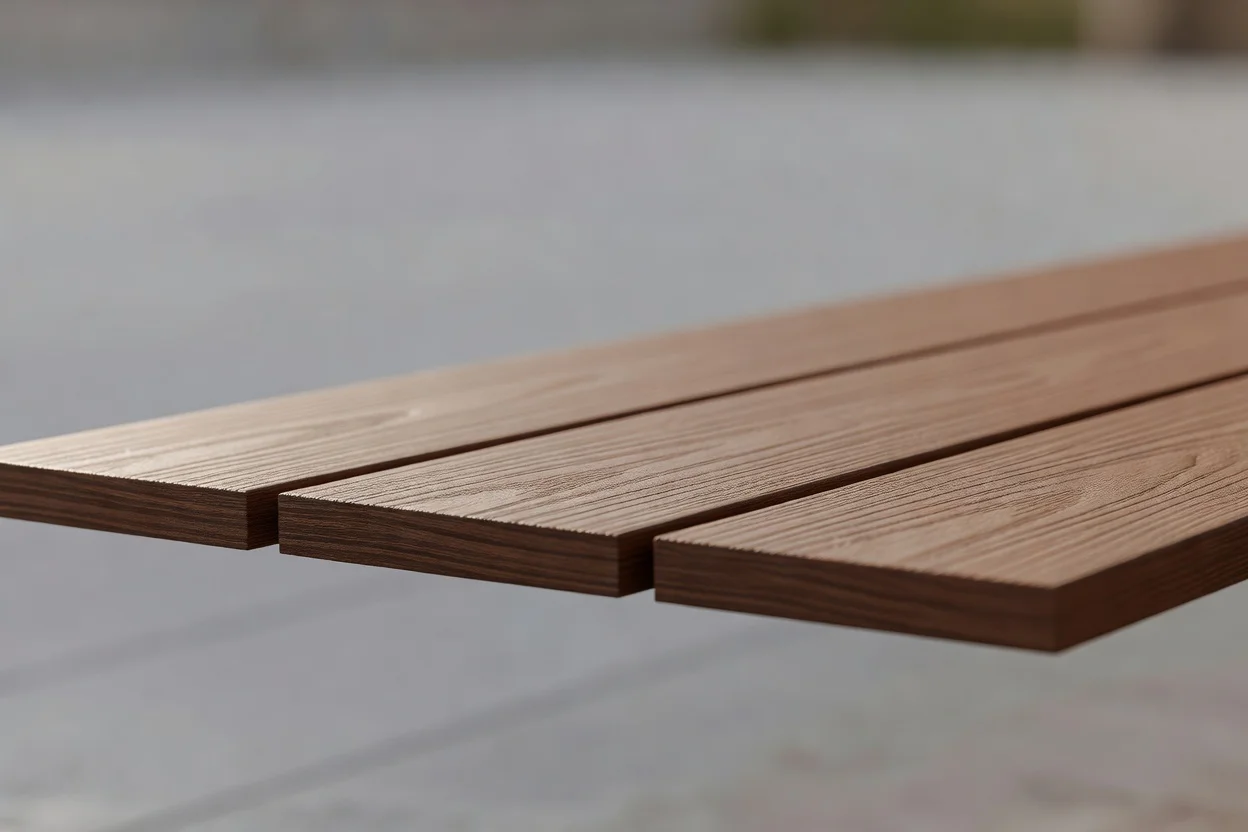
Wood plastic composites (WPCs) are engineered materials made by combining wood flour, wood fibers, or other lignocellulosic particles with a thermoplastic polymer matrix, usually with additives to improve processing and performance. They occupy a middle ground between natural wood and pure plastic, offering wood-like appearance and workability together with improved moisture resistance, dimensional stability, and durability in many outdoor and semi-structural uses.
WPCs are best known for decking, cladding, fencing, window and door profiles, and automotive interior parts, but their use extends to furniture, landscaping products, railings, pallets, and a range of molded or extruded components. Their technical and economic appeal comes from the use of recycled or low-value feedstocks, relatively low material cost, and the ability to shape products into complex profiles that are difficult or costly to achieve with solid wood.
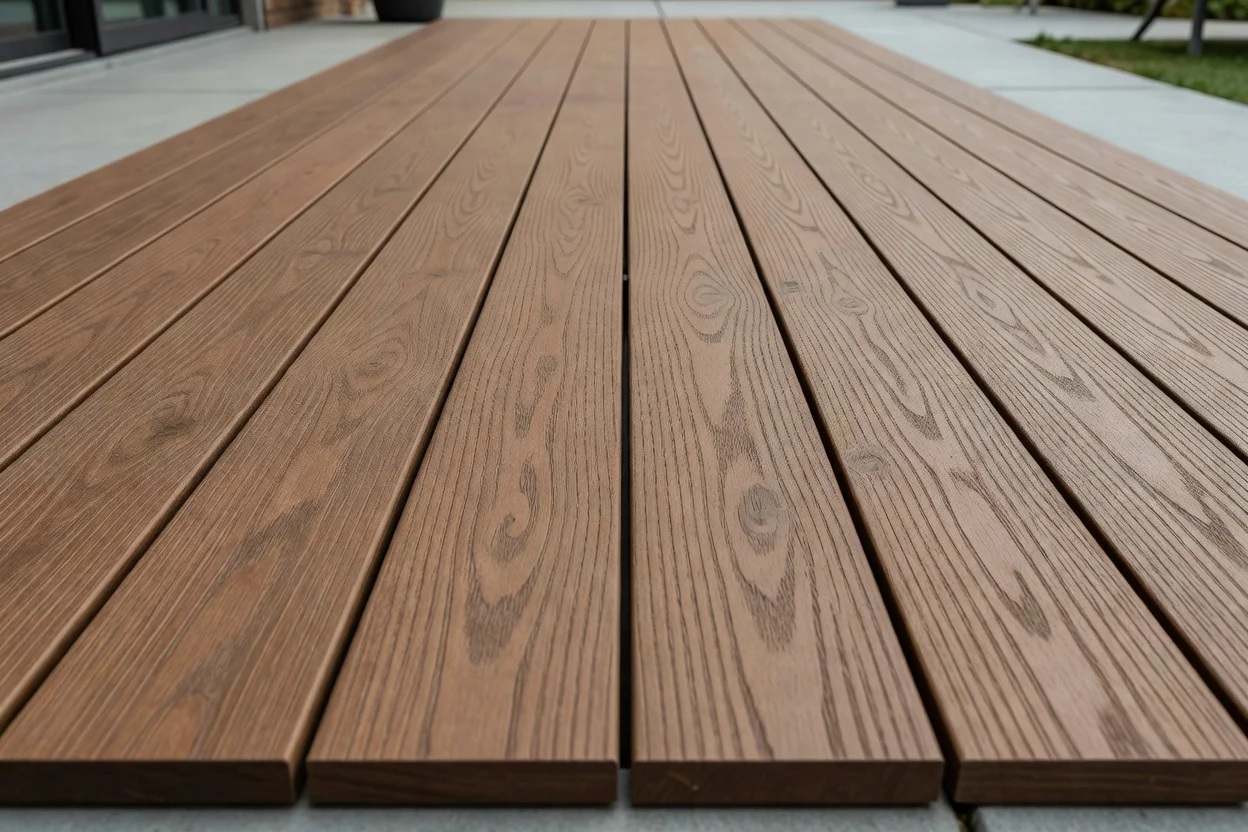
At the same time, WPCs are not a universal substitute for wood or engineering plastics. Their performance depends strongly on formulation, particle size, interfacial adhesion, moisture control, and processing conditions, and they face persistent trade-offs in recyclability, long-term weathering, creep resistance, and end-of-life separation from mixed waste streams.
History and Development
WPCs emerged as part of broader efforts to reuse wood residues and recycled plastics in value-added products. Early development was driven by the need to convert sawdust, wood flour, and polymer waste into useful building materials rather than landfill disposal. Over time, product quality improved as compounding, coupling agents, extrusion, and surface technologies became more sophisticated.
The market matured first in applications where low maintenance mattered more than structural load-bearing performance, especially outdoor decking and trim products. In Europe, WPC adoption expanded into automotive interiors and architectural products, while North American markets emphasized residential exterior building products. More recent research has focused on co-extrusion, advanced compatibilizers, nano-additives, and bio-based or recycled polymer matrices to improve durability and reduce environmental impact.
Chemical Structure and Key Properties
WPCs are composites, not single polymers. Their structure typically includes:
- A wood or lignocellulosic phase that provides stiffness and a natural look
- A thermoplastic matrix such as polyethylene, polypropylene, polyvinyl chloride, or polylactic acid
- Additives such as coupling agents, lubricants, UV stabilizers, pigments, foaming agents, and processing aids
Typical composition and structure
Many commercial WPCs contain roughly equal or near-equal proportions of wood and polymer, although formulations vary widely by application. Wood content can range broadly depending on desired stiffness, density, surface finish, and processability. The wood phase is often in the form of flour or fine particles, which improves mixing and extrusion consistency.
Key properties
WPCs are valued for:
- Lower moisture uptake than untreated wood
- Improved dimensional stability in humid environments
- Resistance to rot, decay, and insects
- Good color and texture versatility through pigmentation and embossing
- Lower density than many mineral-filled or solid polymer alternatives
Real limitations and workarounds
- Poor O₂ and grease barrier → caused by the porous, lignocellulosic structure and partial permeability of common thermoplastics → workaround: apply co-extruded cap layers, surface coatings, or barrier films for niche packaging or protective uses.
- Low surface energy before treatment → caused by the polyolefin-rich matrix, which resists paint and adhesive wetting → workaround: use corona, plasma, flame treatment, sanding, or compatible primers before finishing or bonding.
- Moisture sensitivity and swelling → caused by hygroscopic wood particles → workaround: dry feedstocks carefully, use coupling agents, and limit exposed end grain or unsealed cut surfaces.
- Creep under sustained load → caused by thermoplastic viscoelasticity and elevated temperatures → workaround: design for moderate loads, add reinforcements, or select stiffer matrices and optimized formulations.
Important mechanism note
A common compatibilizer in polyolefin-based WPCs is maleic-anhydride-grafted polyethylene or polypropylene, typically used at low percentages as a coupling agent. Its role is to improve interfacial adhesion between hydrophilic wood fibers and hydrophobic plastic, which increases stress transfer, reduces fiber pullout, and can improve stiffness and impact performance.
Production Processes and Raw Feedstocks
WPCs are commonly produced in a two-step process: compounding followed by forming.
Raw feedstocks
- Wood flour, wood fibers, sawdust, and other lignocellulosic residues from forestry, sawmills, and agricultural by-products
- Thermoplastics, especially HDPE, LDPE, PP, PVC, and in some cases PLA
- Additives, including coupling agents, lubricants, stabilizers, colorants, foaming agents, impact modifiers, and fire-retardant packages
Manufacturing route
- Compounding: wood and polymer are blended above the polymer melting temperature, often in a twin-screw extruder, to distribute the wood phase and additives evenly.
- Profile formation: the compound is then extruded, injection molded, or compression molded into boards, profiles, or shaped parts.
- Surface finishing: products may be embossed, sanded, co-extruded with a cap layer, or textured to improve appearance and weathering resistance.
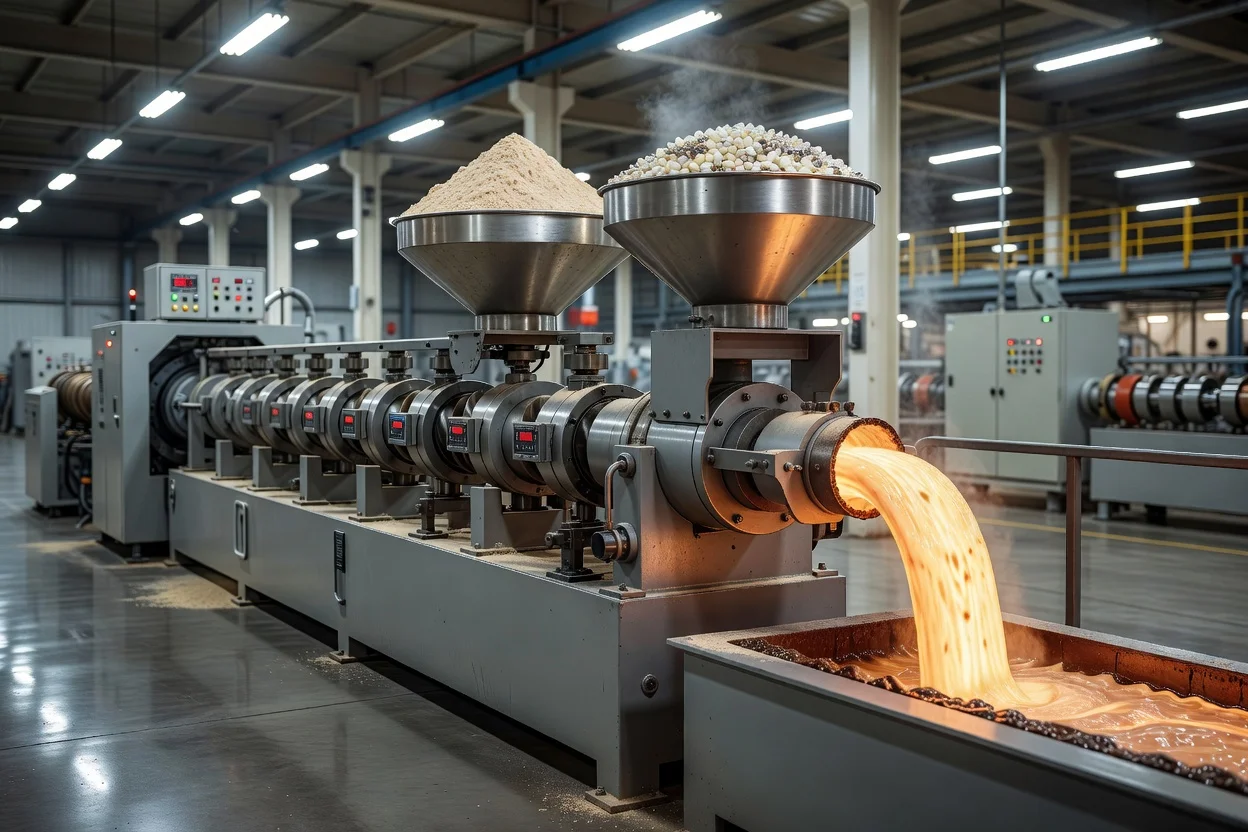
Extrusion is the dominant process for decking, cladding, fencing, and similar profiles. Injection molding is used for smaller parts and complex shapes, while compression molding is less common but useful for specific panel or structural formats.
Production challenges
- Wood moisture must be tightly controlled to prevent voids, poor surface quality, and hydrolytic degradation.
- Fiber loading must balance cost and stiffness against brittleness and poor flow.
- Process temperatures must be high enough for melting and mixing but low enough to avoid wood degradation.
Applications and End-Use Markets
WPCs are used primarily where the appearance of wood and the durability of plastics are both desirable.
| End-use sector | Typical products | Common grades/processes | Why WPC fits |
|---|---|---|---|
| Building and construction | Decking, railings, cladding, fascias, trims, window and door frames | Extruded profiles, sometimes co-extruded | Moisture resistance, low maintenance, design flexibility |
| Outdoor and landscape products | Fencing, garden furniture, park benches, landscaping timbers | Extrusion, molding | Rot resistance and weather durability |
| Automotive | Interior panels, trim, non-structural components | Injection molded or pressed composites | Weight reduction and acoustic benefits |
| Furniture and interiors | Cabinets, shelving, decorative panels, worktops | Extrusion and panel processing | Wood-like aesthetics with improved dimensional stability |
| Infrastructure and municipal uses | Boardwalks, barriers, pallets, molded outdoor fixtures | Extrusion, compression molding | Resistance to moisture and outdoor exposure |
The most established market remains residential decking and related outdoor building products. This is because WPCs provide a practical combination of wood-like appearance, resistance to splintering, and lower maintenance than painted or stained lumber.
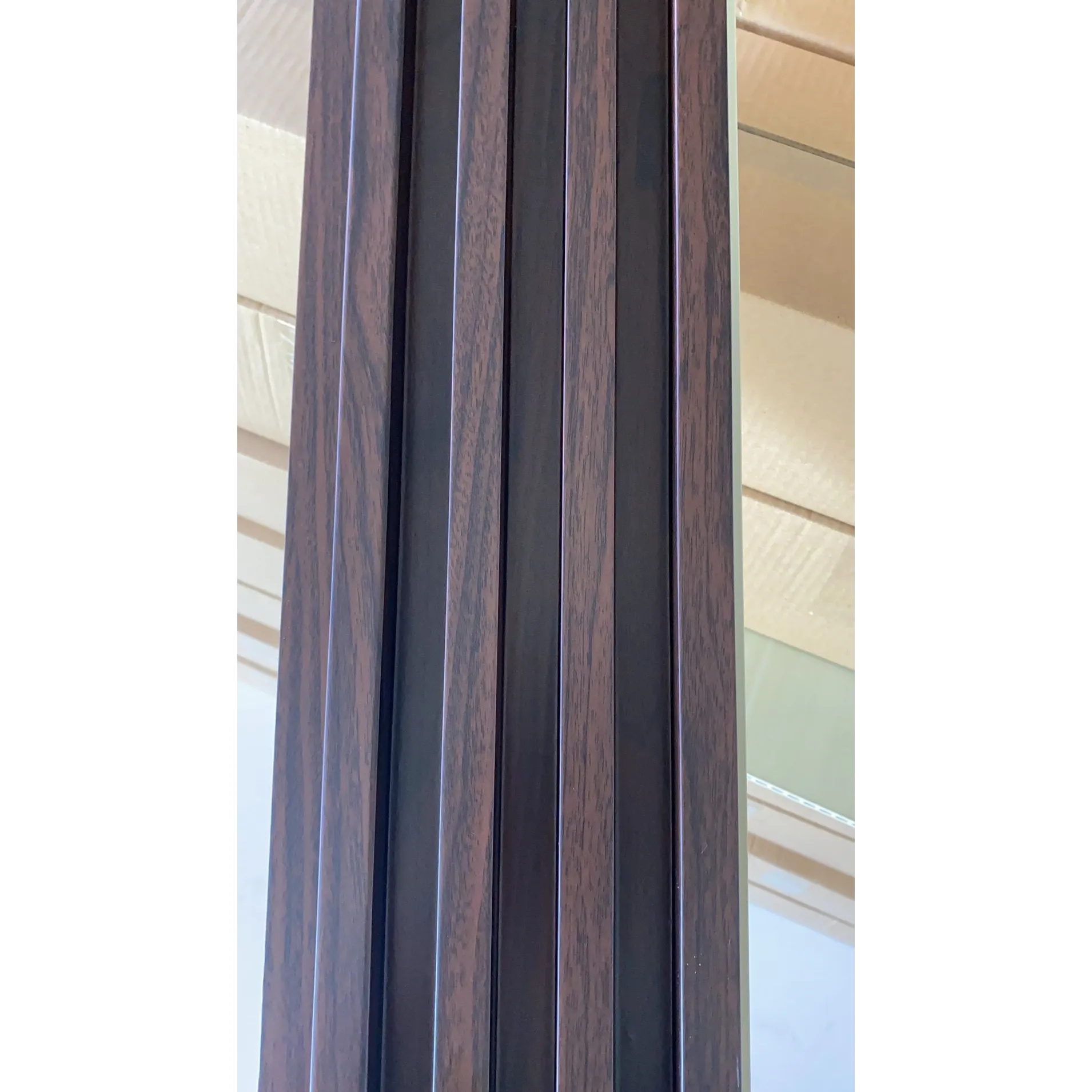
A poor-fit use is primary structural load-bearing construction, especially where high creep resistance, low thermal expansion, or verified long-term structural certification is required. WPCs can support many non-structural or lightly loaded applications, but they are not generally a direct substitute for structural timber, steel, or reinforced engineering plastics in demanding load paths.
Environmental and Sustainability Aspects
WPCs are often promoted as a circular-economy material because they can incorporate recycled plastic and wood residues that would otherwise have limited value. This can reduce reliance on virgin feedstocks and divert some waste streams from disposal.
Sustainability advantages
- Uses secondary wood and recycled thermoplastics in many formulations
- Extends the service life of wood-like products in wet or outdoor environments
- Reduces maintenance demand because painting, sealing, and replacement are less frequent
Sustainability limitations
- Many WPCs are still based on fossil-derived polymers, especially PE, PP, and PVC.
- Mixed-material construction complicates mechanical recycling and sorting at end of life.
- Outdoor exposure can degrade properties over time, limiting reuse quality and narrowing recycling options.
- Some additives and coatings can complicate recovery if the material enters mixed waste streams.
Bio-based and lower-carbon alternatives
Research and development are increasingly exploring:
- PLA-based WPCs and other bio-based matrices
- Improved recycling pathways for post-industrial and post-consumer WPC waste
- Lower-toxicity additive systems and better moisture barriers
- Surface cap technologies that extend life and reduce replacement frequency
The sustainability profile of WPCs is therefore mixed: they can be beneficial when they replace short-lived wood products or displace virgin polymers in durable outdoor uses, but their environmental value depends on feedstock sourcing, longevity, and end-of-life management.
Economic and Global Market Impact
WPCs are economically significant because they convert relatively low-cost feedstocks into finished products with strong consumer appeal in construction and outdoor living markets. Their value proposition is strongest where labor costs, maintenance costs, and replacement frequency matter as much as initial material price.
Market drivers
- Growth in outdoor living and low-maintenance building products
- Expansion of architectural cladding and modern façade systems
- Demand for lightweight, moldable, and aesthetically versatile materials in transport and interiors
- Availability of recycled wood and plastic feedstocks in some regions
Industry leadership
Publicly available sources identify a broad and fragmented global supply base rather than a single dominant producer class. Major contributions tend to come from:
- North America, where WPC decking and railing systems are well established
- Europe, where automotive interiors and architectural applications have been important growth areas
- China and other Asian markets, where product diversity includes doors, wall panels, pallets, and outdoor profiles.
Because WPCs are often sold as branded profiles, boards, or compound systems, leadership is frequently split between polymer suppliers, compounding specialists, extrusion-profile manufacturers, and finished-goods brands rather than concentrated in one segment.
Current Challenges and Innovations
Main challenges
- Interfacial compatibility: Wood and thermoplastics naturally adhere poorly without coupling agents.
- Weathering: UV light, heat, and moisture can cause color change, surface erosion, and property loss.
- Fire performance: Many formulations need flame-retardant solutions for stricter building requirements.
- Recycling complexity: Mixed-material construction complicates closed-loop recycling.
- Process sensitivity: Moisture, particle size, and thermal history strongly affect quality.
Innovation directions
- Co-extruded cap layers for stain resistance, color retention, and moisture protection.
- Nanofillers and hybrid reinforcements to enhance stiffness, thermal stability, and barrier behavior.
- Advanced coupling agents for stronger wood-polymer adhesion.
- Bio-based or recycled polymer matrices to lower fossil dependence.
- Improved rheology control for faster extrusion, better surface finish, and more complex profiles.
A practical formulation example is a polyolefin-based decking compound with wood flour, lubricants, pigments, UV stabilizers, and a coupling agent at low loading. In such systems, the coupling agent improves interfacial bonding, while lubricants reduce melt friction and help stabilize extrusion throughput.
Future Outlook
WPCs are likely to remain important in outdoor construction, landscape products, and selected transport applications because they solve a real materials problem: they combine the feel and stiffness of wood with the weather resistance and design freedom of plastics. Future growth is most likely to come from higher-performance formulations, better surface protection, and more credible end-of-life pathways rather than from simple volume expansion alone.
The most promising development areas are:
- Higher-durability exterior profiles with capped or layered structures
- Recyclable or lower-carbon matrix systems
- Better compatibilization chemistry to raise fiber loading without sacrificing toughness
- Improved sorting and reuse systems for construction and demolition waste streams
As sustainability standards tighten, the most competitive WPCs will likely be those that combine recycled or bio-based inputs, long service life, and clearly managed end-of-life routes.
Summary
WPCs are versatile wood-polymer composites that leverage wood residues and thermoplastics to create durable, low-maintenance products for construction, automotive, furniture, and outdoor markets. Their success depends on formulation control, processing discipline, and careful balancing of performance with recyclability and environmental impact.
References
- •
Wood plastic composites: A primer. (n.d.). UT Institute of Agriculture. https://utia.tennessee.edu/publications/wp-content/uploads/sites/269/2023/10/PB1779.pdfLink
- •
Wood–plastic composite. (2004, December 20). Wikipedia. https://en.wikipedia.org/wiki/Wood%E2%80%93plastic_compositeLink
- •
Wood-plastic composites. (2014, April 2). Natural Resources Canada. https://natural-resources.canada.ca/forests-forestry/forest-industry-trade/wood-plastic-compositesLink
- •
What is wood plastic composite? Uses and benefits. (2026, March 18). Science Insights. https://scienceinsights.org/what-is-wood-plastic-composite-uses-and-benefits/Link
- •
Wood plastic composites: Their properties and applications. (2021, August 24). IntechOpen. https://www.intechopen.com/chapters/77629Link
- •
Wood plastic composite. (n.d.). ScienceDirect. https://www.sciencedirect.com/topics/agricultural-and-biological-sciences/wood-plastic-compositeLink
- •
A concise review of the components and properties of wood–plastic composites. (2024, May 31). PMC. https://pmc.ncbi.nlm.nih.gov/articles/PMC11174370/Link
- •
What is wood plastic composite: Uses and benefits. (n.d.). Bausano. https://www.bausano.com/en/press-and-news/what-is-wood-plastic-composite-uses-and-benefitsLink
- •
What is wood plastic composite? (2016, January 7). Oklahoma State University. https://extension.okstate.edu/fact-sheets/what-is-wood-plastic-composite.htmlLink
- •
Wood–plastic composites: Manufacturing, rheology and applications. (2025, August 28). PMC. https://pmc.ncbi.nlm.nih.gov/articles/PMC12429556/Link
- •
Wood plastic composite (WPC): The future of sustainable building and innovative materials. (2025, November 30). Bohai Woods. https://bohaiwoods.com/blogs/news/wood-plastic-composite-wpc-the-future-of-sustainable-building-and-innovative-materialsLink
- •
Wood–plastic composite. (2004, December 20). Wikipedia. https://en.wikipedia.org/wiki/Wood_plastic_compositeLink
- •
Wood plastic composite information. (n.d.). Washington State University. https://wpcinfo.org/consumers/Link
- •
Wood-plastic composites (WPCs). (n.d.). Tangram Technology Ltd. https://tangram.co.uk/wp-content/uploads/Plastics-Topics-Wood-plastic-composites-WPCs.pdfLink
- •
What is wood-plastic composite? Definition, types, uses. (2023, September 1). Behin Polymer Co. https://behinpolymerco.com/en/wpc/Link
- •
Wood plastic composite industrial applications: Advanced material. (n.d.). Eureka. https://eureka.patsnap.com/materials/wpc-industrial-applicationsLink
- •
What is wood plastic composite (WPC)? (2026, May 22). Mascom Global. https://mascomglobal.com/what-is-wood-plastic-composite-wpc/Link
- •
Towards sustainable wood–plastic composites: Polymer types, properties, processing and future prospects. (n.d.). RSC Publishing. https://pubs.rsc.org/en/content/articlepdf/2025/su/d5su00153f?page=searchLink
- •
Comprehensive overview of wood polymer composite: Formulation. (n.d.). ScienceDirect. https://www.sciencedirect.com/science/article/abs/pii/S2214993724001635Link
- •
Co-extruded wood-plastic composites: Their structure, properties. (2024, June 21). IntechOpen. https://www.intechopen.com/chapters/1188377Link
- •
Wood plastic composite. (n.d.). Reschcor. https://reschcor.com/by-material/wood-plastic-composite/Link
- •
Wood plastic composite uses & benefits. (2024, June 7). General Kinematics. https://www.generalkinematics.com/blog/wood-plastic-composite-uses-benefits/Link
- •
WPC wood plastic composite and its wide applications. (2025, March 5). Wallong WPC. https://www.wallong-wpc.com/wpc-wood-plastic-composite-and-its-wide-applications.htmlLink
- •
Production of wood plastic composite. (n.d.). Oklahoma State University. https://extension.okstate.edu/fact-sheets/print-publications/fapc-food-and-agricultural-products-center/what-is-wood-plastic-composite-fapc-170.pdfLink
- •
Towards sustainable wood–plastic composites: Polymer types. (2025, July 2). RSC Publishing. https://pubs.rsc.org/en/content/articlehtml/2025/su/d5su00153fLink
- •
Wood-plastic-composite. (2005, October 1). Wikipedia. https://de.wikipedia.org/wiki/Wood-Plastic-CompositeLink
- •
Wood-plastic composite. (n.d.). ScienceDirect. https://www.sciencedirect.com/topics/materials-science/wood-plastic-compositeLink
- •
The re-/up-cycling of wood waste in wood–polymer composites. (2023, August 19). PMC. https://pmc.ncbi.nlm.nih.gov/articles/PMC10459235/Link
- •
Advantages and disadvantages of WPC boards. (2022, April 12). Meghmani Global. https://www.meghmaniglobal.com/advantages-and-disadvantages-of-wpc-boards/Link
- •
WPC products – Wood-plastic composite products. (n.d.). WPC Products. https://wpcproducts.com/Link
- •
Wood plastic composites based wood wall's structure and. (2024, June 7). ScienceDirect. https://www.sciencedirect.com/science/article/pii/S2369969821000062Link